Experts Matter. Find Yours.
Connect for media, speaking, professional opportunities & more.

Voters Split on Whether Trump Should be Removed from Office Former U.S. Vice President Joe Biden has widened his lead to 26 points among Florida voters in the race for the Democratic party’s nomination for president in 2020, according to a statewide survey by the Florida Atlantic University Business and Economics Polling Initiative (FAU BEPI). Among the Democratic candidates, Biden has increased his support to 42 percent, up from 34 percent in BEPI’s September 2019 poll. U.S. Sen. Bernie Sanders jumped into second place at 14 percent, while U.S. Sen. Elizabeth Warren fell to third at 10 percent, down significantly from 24 percent support in September. Former New York City Mayor Michael Bloomberg came in fourth at 7 percent, followed by U.S. Sen. Amy Klobuchar at 6 percent, entrepreneur Andrew Yang at 5 percent and South Bend, Indiana Mayor Pete Buttigieg at 3 percent. A majority of Democratic primary voters (54 percent) said they will definitely vote for their top choice, with 46 percent saying there is a chance they could change their minds and vote for someone else. The Florida Democratic primary is March 17. “Joe Biden continues to be in a very strong position in Florida,” said Monica Escaleras, Ph.D., director of the FAU BEPI. “However, it will be interesting to see what impact the early contests in New Hampshire and Iowa will have on voters in Florida regarding their support for Biden.” Sanders fared best among Florida voters in head-to-head matchups against U.S President Donald Trump, with a 53-to-47 percent advantage on the president. Biden and Warren have narrow two-point leads on Trump, 51 to 49 percent, while Buttigieg finished in a 50-50 dead heat with the president. In September, Trump held small leads in each of these head-to-head matchups. With an impeachment trial in the U.S. Senate looming, Florida voters are split on whether Trump should be removed from office, with 51 percent saying he should be removed while 49 percent are against removal. Voters are also split about how their Congress person’s decision whether or not to impeach Trump will affect their support for them as a candidate, with 40 percent saying it will make them less likely to support the candidate, 38 percent saying they would be more likely to support them and 21 percent saying it would have no effect. Florida Gov. Ron DeSantis, who has just completed his first year in office, is popular among voters with 48 percent approval and 28 percent disapproval, while 25 percent of voters were neutral or had no opinion. With tensions rising with Iran, 61 percent of voters do not think the U.S. is going to get into a war with Iran, while 39 percent think recent military action will lead to war. Trump’s approval rating is slightly above water among Florida voters, with 45 percent approval and 43 disapproval. He continues to be hugely popular among GOP voters, with a 66-point lead on his Republican rivals, former U.S. Rep. Joe Walsh and former Massachusetts Gov. Bill Weld. “Floridians are deeply divided on the president and on impeachment,” said Kevin Wagner, Ph.D., professor of political science at FAU and a research fellow of the Initiative. “Nonetheless, Mr. Trump continues to perform better in Florida than in national polls.” The survey was conducted Jan. 9-12 and polled 1,285 Florida registered voters. The survey has a margin of error of +/- 2.6 percentage points. The margin of error for both the Republican primary and the Democratic primary is +/- 4.4 percentage points. The data was weighted by ethnicity, age, education, party affiliation, region and gender based on a 2016 voter model. It is important to remember that subsets carry with them higher margins of error, as the sample size is reduced. Data was collected using both an Interactive Voice Response (IVR) system of landlines and an online panel provided by Dynata. Are you a journalist covering the role Florida will play in the upcoming election? If so, let our experts help with your coverage. Kevin Wagner's research and teaching interests include presidential and judicial politics, political behavior and legislative behavior. Monica Escaleras is the Director of the Business and Economics Polling Initiative at Florida Atlantic University. Both experts are available to speak with reporters - simply click on either icon to arrange an interview.


The link between veterans coming home and racial violence in America. Our expert can explain.
There is a long history of white supremacist and white-power ideology developing out of the wars the United States has fought. In Bring the War Home: The White Power Movement and Paramilitary America (Harvard University Press, 2018), Kathleen Belew shows that, beginning in the 1970s, a small but committed number of Vietnam War veterans took the racist understanding of the Vietnamese and Asians more broadly that the U.S. military taught them and became instrumental in building the current white-power movement. These vets often did not initially know each other, but they eventually built a wide variety of organizations: the White Aryan Resistance, the latest, post-Civil Rights Era iteration of the Ku Klux Klan, various Christian Identity and white skinhead organizations, and the militia movement of the 1980s and 1990s. In his forthcoming book, Guarding the Empire: Soldier Strikebreakers on the Long Road to the Ludlow Massacre, Otterbein’s Dr. Anthony DeStefanis has found that the men who fought the Plains Indians in the late nineteenth century and who served in Cuba and the Philippines during the Spanish-American-Filipino War (1898-1902) came to understand Native Americans, Cubans, and Filipinos as formidable but racially inferior enemies. When these same men joined the National Guards in states across the country and were called out on strike duty during the late nineteenth and early twentieth century, they took what they learned on the Plains and overseas to create a racist rationale for breaking the labor strikes of a working class that was increasingly made up of southern and eastern European, Mexican, and Asian immigrants. Many of these same men also joined the Second Ku Klux Klan that emerged in the late 1910s and became a nationwide organization by expanding the targets of its hatred beyond African Americans to include Jews, Catholics, and immigrants. Racism is a many-headed hydra with multiple roots in experience at home and abroad. Some white southerners who were central in the project of creating and maintaining Jim Crow white supremacy were Confederate military veterans and it is clear that wars across the twentieth century – from Cuba and the Philippines to Vietnam – pushed some veterans into the white- power movement. Today, we know that white-power organizations concentrate on recruiting military veterans and we have seen a spike in support for these organizations among current members of the military. It’s no accident that some of these active troops and veterans served in the Iraq and Afghan Wars, where they faced a Muslim enemy with unfamiliar social and cultural practices, and who did not welcome the U.S. military presence with open arms. Clearly, we must reckon with what our wars overseas have brought back to the United States. If you are a reporter covering this topic – let the experts from Otterbein University help. Dr. Anthony DeStefanis is an associate professor of history at Otterbein University. He specializes in modern U.S. history with an emphasis on labor and the working class and immigration, race, and ethnicity. Dr. DeStefanis is available to speak with media regarding the history of racial violence in America – simply click on his icon to arrange an interview.

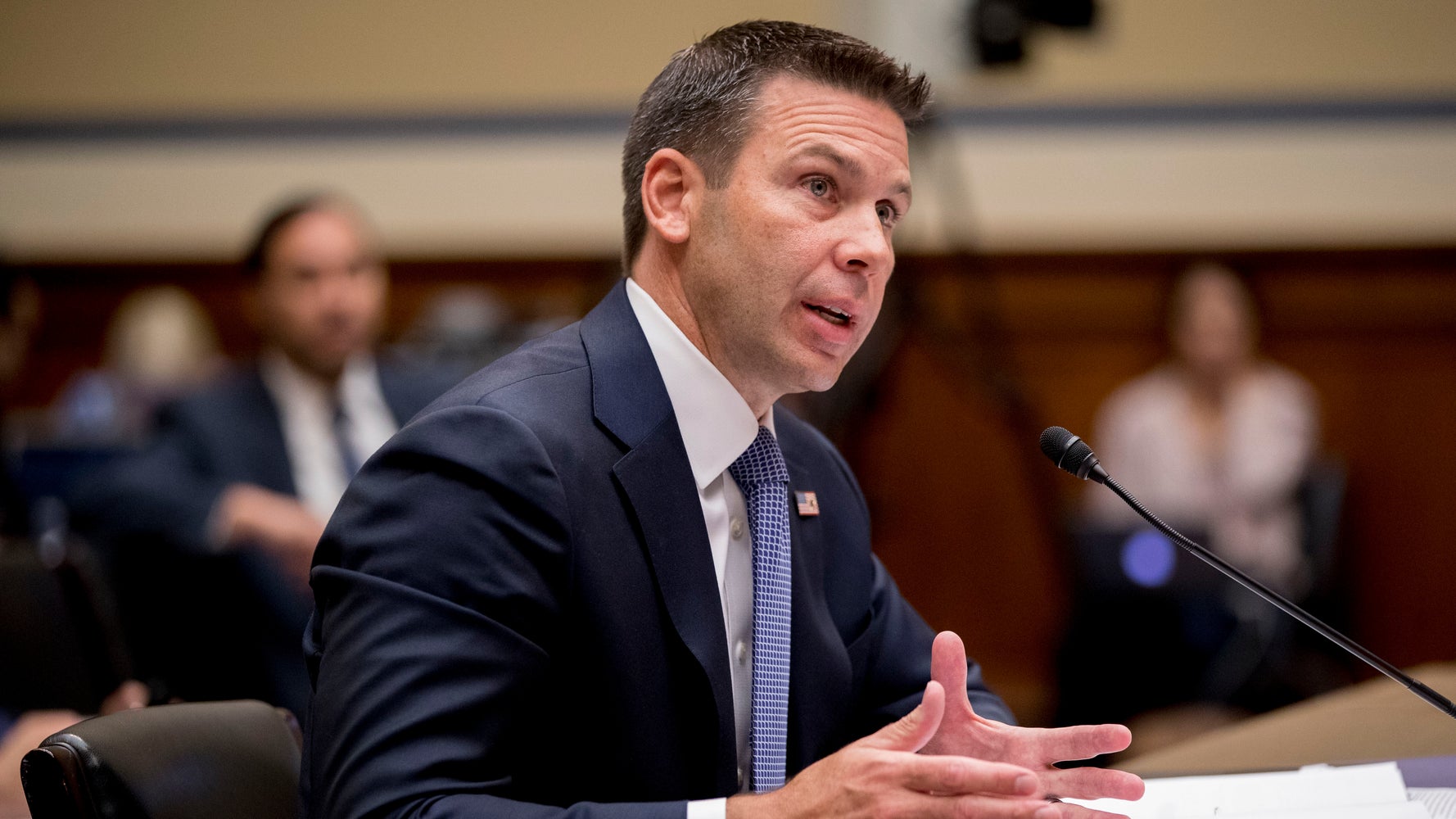
On August 3, 2019, a white power-inspired gunman killed 24 people and injured 22 others at a Wal-Mart in El Paso, Texas. We tend to understand mass shootings as isolated events committed by “lone wolf” gunmen who might have mental health problems, but what we know about the El Paso gunman – as well as the terrorists who carried out mass killings at the Al Noor Mosque and Linwood Islamic Center in Christchurch, New Zealand in March 2019, the Tree of Life Synagogue in Pittsburgh in 2018, and at the Emanuel African Methodist Episcopal Church in Charleston, South Carolina in 2015 – tell a different story. The evidence investigators have complied shows that these white-power terrorists had never met one another, but that they lived in an on-line world created by 4chan, 8chan, and white-power organizations’ websites, where they consumed racist ideas and propaganda that shaped their decision to kill African-Americans, Muslims, Jewish people, and Mexicans and Mexican-Americans. We also know that white-power terrorists have particular goals in mind. Message boards like 8chan reveal a competition among participants about who can top the number of people killed in the last mass shooting. There is also a strong belief expressed on-line that killing racial minorities will foment a race war and allow white-power advocates to create an all-white world. I describe these terrorists as advocates of white power because it is important to understand that “white power” and “white nationalism,” a term often used in the media to describe the perpetrators of recent mass killings and the movement that animates them, are not the same thing. White nationalism calls to mind an effort to shore up the interests of white people within the American nation as it currently exists. The white-power movement, on the other hand, imagines a transnational, Aryan nation of white people living in an all-white world after wiping out non-whites. This might sound far-fetched, but does not mean that those who carry out mass killings in pursuit of this goal are mentally ill. Rather, their actions are the result of a white-power ideology fostered and spread on-line. What is new about how white-power advocates communicate with each other is that some of it now happens on-line. Interaction between racists who never met one another, however, has a long history in the United States. Approximately 4,100 African Americans were lynched between the end of the Civil War in 1865 and the 1960s. The white perpetrators of these lynchings lived hundreds of miles apart and often did not know one another, but they were united in a collective effort to enforce Jim Crow white supremacy in the American South (I use “white supremacist” here because white southerners who carried out lynchings did not, broadly speaking, subscribe to white power as the current movement defines it: the creation of a transnational, Aryan nation of white people living in an all-white world after wiping out non-whites). Lynchings were sometimes public events that drew hundreds or thousands of people with the purpose of “teaching” southern African Americans what would happen to them if they violated the rules of Jim Crow. Southern newspapers ran stories that justified lynchings; perpetrators took pieces of flesh, body parts, and hair from lynching victims as souvenirs and passed them around; and white southerners took lynching photographs, turned them into postcards, and mailed them to friends, family, business associates, and fellow travelers in the white supremacist movement. This racist community building had the goal of creating and maintaining white supremacy and, of course, it all happened without the help of the Internet. Communication, whether on-line or through the more traditional means has played an integral role in fostering and perpetuating racial violence and hatred. If you are a reporter covering this topic – let one of our experts help. Dr. Anthony DeStefanis is an associate professor of history at Otterbein University. He specializes in modern U.S. history with an emphasis on labor and the working class and immigration, race, and ethnicity. Dr. DeStefanis is available to speak with media regarding the history of racial violence in America – simply click on his icon to arrange an interview.
Privilege Creates a Different Starting Line in “Race to the Jobs”
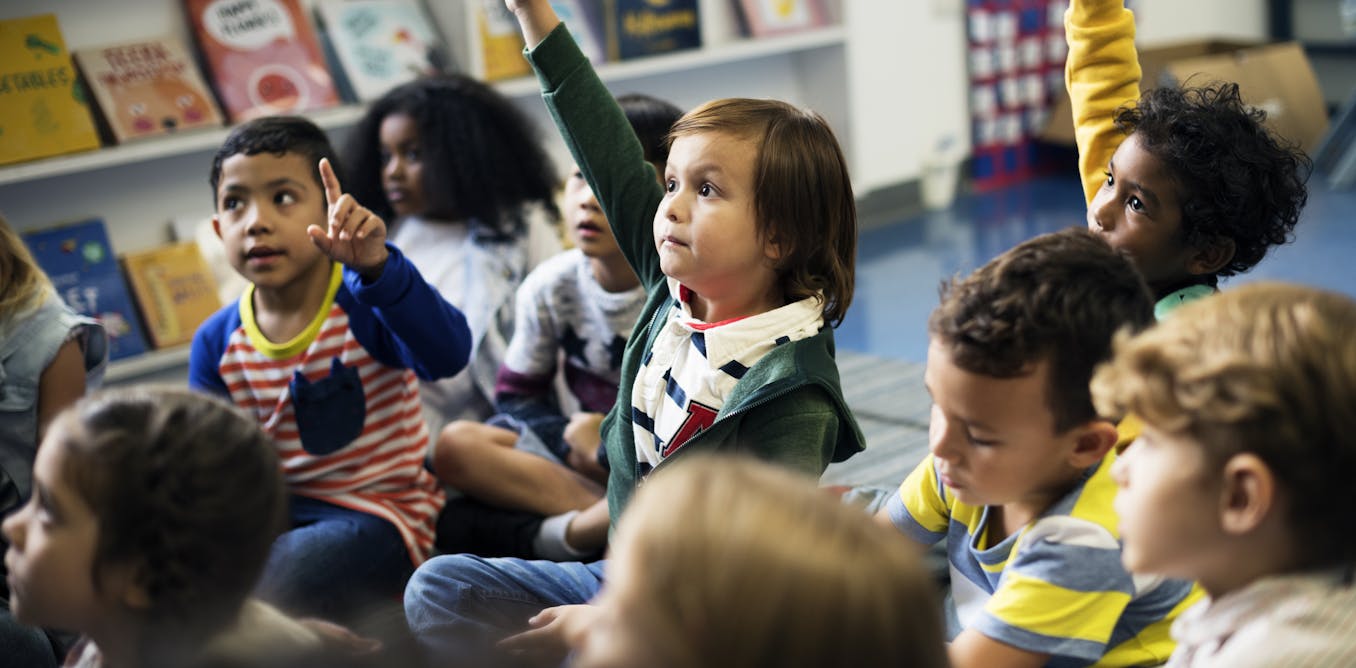
College is a unique microcosm of society where students from a variety of backgrounds come together in one place. Many times, students have not been exposed to people from backgrounds that differ from their own. I consider this an opportunity to teach my students at Otterbein University about social inequality and privilege. In my Sociology of Sport course, I illustrate to students that the societal “playing field” isn’t always equal for everyone in visible or obvious ways. I use athletics as an entry point to teach them about the different privileges – or disadvantages – each of us have. I take students to the football field, where everyone starts at the 25 yard line facing the end zone. Standing in the end zone, I represent each student’s dream job or career path. Then I proceed to read statements out loud – and if that statement applies to them, students take a step forward or step back, depending on the directions given. My statements range from “if you have immediate family members who are doctors, lawyers, or other professionals, take one step forward” to “if you were ever called names or ridiculed because of your race, ethnicity, or social class background, take one step backward.” Each of the statements read are beyond the students’ control. Once I’m through reading all of the statements, I ask students to look around, noticing who is in front of them, who is behind them. Then they sprint to my position, and the first one to reach me is the winner of the race, representing the competition to the dream job.. However, through this activity, it’s clearly seen that not everyone had the same advantages as the others. Before they begin the race to me in the end zone, ready to run toward their dream job, students are already noticing the advantages some have over others. It really begins to sink in once they look around and see how everyone is staggered across the field. There is no even starting line – we all start from positions on the field. This Race to the Jobs activity, originally conceived by social justice activist Paul Kivel, becomes a springboard in our class for a better understanding of our own privilege and how we can all help create more opportunities for those who need help to overcome an obstacle. Doing this active learning makes it that much more impactful and poignant. Taking a different approach to showing these issues can make a big difference in student’s perceptions. They open their minds up to new – and sometimes difficult or challenging concepts of privilege and oppression – becoming more self-aware. The students begin to see that, just as in our classroom discussions and course readings, not everyone can be a LeBron James, born into a relatively difficult situation, and rise to his level of success on luck or talent alone. We need to examine our own privilege because if we don’t know who we are, we will never see our blind spots. Kristy McCray, Ph.D., is an Otterbein assistant professor in sport management. Contact her if you have any questions or wish to arrange an interview by clicking on her icon at the top.

Americans Are Happier in States That Spend More on Libraries, Parks and Highways
Such ‘public goods’ also are less likely to spark political conflict, Baylor researcher says Americans are happier in states where governments spend more on public goods, such as libraries, parks, highways, natural resources and police protection, a Baylor University study has found. “Public goods are things you can’t exclude people from using — and one person using them doesn’t stop another from doing so,” said researcher Patrick Flavin, Ph.D., associate professor of political science in Baylor’s College of Arts & Sciences. “They’re typically not profitable to produce in the private market, so if the government doesn’t provide them, they will either be under-provided or not at all.” Public goods spending makes communities “more livable, with more amenities,” Flavin said. “If roads are completed and kept up, so that people aren’t stuck in traffic, they have more time to do things they enjoy doing. Large parks are social spaces — and one clear finding of happiness studies is that people who are more socially connected tend to be happier.” Another benefit of spending money on public goods is that such amenities generally boost home values — and “while higher property taxes generally accompany higher home values, it seems that the good outweighs the unfortunate part about having to pay higher taxes,” Flavin said. In his study, published in the journal Social Science Research, Flavin analyzed data on respondents’ self-reported levels of happiness for 1976-2006 from the General Social Survey, a representative sample of Americans that monitors social characteristics and attitudes of Americans and is a project of the independent research organization NORC at the University of Chicago. Flavin also analyzed detailed government spending data for states from the U.S. Census Bureau for 1976-2006. Revenues to fund state public goods are raised from a combination of state taxes and transfers from the federal government to states, averaging 22.5 percent of total state revenues for that 30-year period. “We can look at the city where people live, their neighborhoods, and see how public goods spending predicts happiness after taking other important factors, such as marital status, health, education and income, into account,” Flavin said. He also found that public goods spending has broad benefits across income, education, gender and race/ethnicity lines. “Compared to a lot of the other government spending, public goods tend to be less controversial between liberals and conservatives, Democrats and Republicans, compared to poverty assistance or unemployment benefits, where there is definite disagreement between political parties,” Flavin said. “I think there is less political conflict over public goods spending simply because if they government doesn’t provide them, they won’t be provided at all.” Flavin cautioned that there is not necessarily a cause-and-effect relationship between public goods and happiness. “It could be that happier citizens self-select by moving to states that spend comparatively more on public goods,” he said. “It also is possible that happier citizens support higher spending on public goods and elect state officials to deliver on that policy.” Because some spending for public goods comes from local government, Flavin hopes to do a study linking citizens to their local city instead of only to the state. And because living a happy and satisfying life is a nearly universal human goal, he predicts that better understanding of how policies concretely impact quality of life will receive increasing attention from researchers in the years to come. ABOUT BAYLOR UNIVERSITY Baylor University is a private Christian University and a nationally ranked research institution. The University provides a vibrant campus community for more than 17,000 students by blending interdisciplinary research with an international reputation for educational excellence and a faculty commitment to teaching and scholarship. Chartered in 1845 by the Republic of Texas through the efforts of Baptist pioneers, Baylor is the oldest continually operating University in Texas. Located in Waco, Baylor welcomes students from all 50 states and more than 80 countries to study a broad range of degrees among its 12 nationally recognized academic divisions. ABOUT BAYLOR COLLEGE OF ARTS & SCIENCES The College of Arts & Sciences is Baylor University’s oldest and largest academic division, consisting of 25 academic departments and seven academic centers and institutes. The more than 5,000 courses taught in the College span topics from art and theatre to religion, philosophy, sociology and the natural sciences. Faculty conduct research around the world, and research on the undergraduate and graduate level is prevalent throughout all disciplines.



Election 2018: Wake Forest University experts
From state constitutional amendments to immigration, Wake Forest faculty experts can comment on a variety of 2018 midterm election-related topics. ___________________________________________________________________________________________ John Dinan, professor of political science and international affairs North Carolina Politics State Constitutional Amendments Congressional Redistricting Author of the book, “State Constitutional Politics: Governing by Amendment in the American States,” Dinan is available to comment on amendments appearing on the 2018 ballot in North Carolina and in 28 other states. From voter ID to judicial vacancies, he can place particular amendments in nationwide and historical perspective. Based on his research, he can also address the arguments and issues that routinely surface in campaigns supporting and opposing various amendments. Dinan closely follows North Carolina political races and teaches courses on campaigns and elections, state politics and Congress and policymaking. ___________________________________________________________________________________________ Allan Louden, professor of communication Political Campaigns and Advertising Political Debates Social Media and Politics From presidential debates to political advertising, Louden has provided expert commentary and analysis for a wide range of national and regional media outlets. He follows political advertising and candidates’ debates in presidential, Senate, gubernatorial and high-profile House races. Under Louden’s leadership, Wake Forest University’s debate team won the national debate tournament. He can comment on political advertising strategies and how social media, including viral videos, impacts races. ___________________________________________________________________________________________ John Llewellyn, associate professor of communication Political Speeches Political Scandals Public Apologies Llewellyn focuses on political speeches and rhetoric. He is a scholar of rhetoric whose work includes analyzing persuasive language from the nation’s most prominent politicians, coaches and civil rights leaders. A former speechwriter and public information officer, Llewellyn also specializes in crisis communication, having studied the intersection of politics and public relations for nearly 30 years. He can also comment on political scandals and public apologies. ___________________________________________________________________________________________ Betina Wilkinson, associate professor of political science and international affairs Latina/o/x Voters Wilkinson can offer insights and commentary on Latino voters for the midterm elections. She is an expert on Latino political behavior in the U.S., studies Latinos in U.S. politics, national and local immigration policy, and racial attitudes among Latinos and other ethnic groups. She can discuss the demographics and election-related priorities of Latinos. Wilkinson authored a chapter “North Carolina Latinos: And Emerging Influential Electorate in the South” in the book “The Pivotal Role of the Latino Electorate in the 2012 Election.” She is also the author of “Partners or Rivals? Power and Latino, Black and White Relations in the 21st Century.” ___________________________________________________________________________________________ Katy Harriger, professor of politics and international affairs Young Voters Federal Special Prosecutor/Robert Mueller U.S. Supreme Court A leading national expert on the federal special prosecutor, Harriger can address the influence the Mueller investigation may have on the 2018 elections. She is the author of The Special Prosecutor in American Politics and is regularly interviewed by national media outlets on the use of federal special prosecutors in American government. Harriger also studies political participation and voting among young people (including college students) and is the co-author of “Speaking of Politics: Preparing College Students for Democratic Citizenship through Deliberative Dialogue.” She can provide expert commentary on the latest Supreme Court developments and how they will likely impact midterm elections. She co-authored the book “American Constitutional Law” published in 2017. ___________________________________________________________________________________________ Michael Pisapia, assistant professor of politics and international affairs Gender and Politics Teacher Protests Political Parties and Education Reform Women Running for Congress Gender Equality and Constitutional Law Kavanaugh Hearings Pisapia studies American political development with a focus on women, gender and politics and can comment on tensions between liberal and conservative social groups and the unprecedented number of women who are engaged in political movements, and who are seeking elective office this year. He can also address partisan polarization around education policy, religious freedom and, sex and gender equality in constitutional law, including the significance of the Kavanaugh hearings in the context of the #metoo Movement. Pisapia is working on a book titled, “Educating a Nation: Women’s Empowerment and the Shape of American Federalism. He won the 2013 Carrie Chapman Catt Prize for scholarship on women and politics. He teaches courses on American politics and political thought. ___________________________________________________________________________________________ Hana Brown, associate professor of sociology and Gale Faculty Fellow Immigration Brown studies the effects of immigration and racial divisions on policy outcomes and the micro-level effects of state actions on the lives of racial minorities and immigrants. Her research also focuses on the political origins and political consequences of social inequalities. She teaches courses on political sociology, social inequality, and race and ethnicity in politics. ___________________________________________________________________________________________


“When in doubt, choose a different costume,” Baylor expert says Megyn Kelly, host of NBC’s “Megyn Kelly Today,” is facing national criticism for her suggestion during a roundtable discussion this week that it was OK for white people to dress in blackface for Halloween. After two days of backlash, media accounts reveal that the future of her career is in question. But the questions she raised regarding blackface and cultural appropriation should be addressed, especially as Halloween approaches, said Mia Moody-Ramirez, Ph.D., professor of journalism, public relations and new media in Baylor University’s College of Arts & Sciences. She is a nationally known expert on mass media representations of minorities, women and other underrepresented groups and coauthored the new book "From Blackface to Black Twitter: Reflections on Black Humor, Race, Politics, & Gender." Moody-Ramirez said people need to understand the historical significance of blackface to grasp its negative reception today. “When you know better, you do better,” she said. At its base form, she said, blackface is the use of makeup by a nonblack person to appear black. She added that many people do not understand why the seemingly simple act of a white person darkening his skin like a black person at Halloween – even if it’s an act to honor a favorite entertainer or sports figure – can be offensive. “Dressing in blackface during Halloween is inappropriate because the blackface tradition is founded upon the enactment of demeaning stereotypes of black people,” Moody-Ramirez explained. “Blackface has been frowned upon since the blackface minstrel shows of 18th and 19th centuries when various aspects of African/African American culture were appropriated and used for profit. Dressing up in blackface invokes representations of unflattering images of blacks as lazy, unintelligent and criminal in nature.” Yet the issue is bigger than blackface. Any cultural appropriation – defined as the adoption of elements of a minority culture by members of the dominant culture – can be deemed inappropriate and offensive. “Cultural appropriation is distinct from equal cultural exchange because of the presence of power inequities that are a consequence of oppression,” Moody-Ramirez said. “Cultural appropriation is important to consider during Halloween because this is the time of year when we are most likely to dress up in a costume that is representative of another culture.” Common cultural appropriation missteps include darkening one’s face, wearing ethnic garb and/or dressing up to provoke laughter rather than show respect for a group/person, she said. “When considering a costume, think of whether it would show honor or disrespect for a group/person,” Moody-Ramirez advised. “If you don’t know the meaning of the ethnic attire you are considering for Halloween, you shouldn’t wear it. For instance, tribal markings, headdresses and turbans would not be appropriate costume attire because they are tied to a specific ceremony or religious meaning.” Showing respect for other cultures should include honoring their traditions. “Some cultures have laws that ban or restrict individuals from wearing religious attire in public places. Other cultures save certain attire for special ceremonies and honors,” Moody-Ramirez said. Moody-Ramirez offered the following tips to consider when choosing a Halloween costume this year. Avoid dressing in a costume that will reflect another ethnicity or culture. Choose something that is fun and tasteful – animals, movie characters (without darkening your skin), ghosts, ghouls, etc. If you dress like someone of a different ethnicity/culture, don’t darken your face or emphasize features like eyes, teeth or noses. Think about whether the costume will be perceived as tasteful or tasteless. Use the grandmother test. If you post it on social media, would your grandmother be proud or disappointed? “When in doubt,” she said, “choose a different costume.” ABOUT MIA MOODY-RAMIREZ, Ph.D. Mia Moody-Ramirez, Ph.D., is the director of graduate studies, director of American studies and professor of journalism, public relations and new media in the Baylor University College of Arts & Sciences. Her research emphasizes mass media representations of women, minorities and other underrepresented groups. She recently coauthored the book "From Blackface to Black Twitter: Reflections on Black Humor, Race, Politics, & Gender." Other books include: “The Obamas and Mass Media: Race, Gender, Religion, and Politics (Palgrave Macmillan) with Dr. Jannette Dates, and “Black and Mainstream Press’ Framing of Racial Profiling: A Historical Perspective” (University Press of America). Ramirez is head of the Minorities and Communication division of the Association for Education in Journalism and Mass Communication (AEJMC), which is committed to advancing research, teaching and professional freedom and responsibility scholarship and initiatives that explore the relationship between racial and ethnic minorities and mass communication. In August, she was presented with AEJMC’s Lionel Barrow Jr. Award for Distinguished Achievement in Diversity Research and Education and also was recognized as one of nine Institute for Diverse Leadership in Journalism and Communication Fellows. ABOUT BAYLOR UNIVERSITY Baylor University is a private Christian University and a nationally ranked research institution. The University provides a vibrant campus community for more than 17,000 students by blending interdisciplinary research with an international reputation for educational excellence and a faculty commitment to teaching and scholarship. Chartered in 1845 by the Republic of Texas through the efforts of Baptist pioneers, Baylor is the oldest continually operating University in Texas. Located in Waco, Baylor welcomes students from all 50 states and more than 80 countries to study a broad range of degrees among its 12 nationally recognized academic divisions. ABOUT BAYLOR’S COLLEGE OF ARTS & SCIENCES The College of Arts & Sciences is Baylor University’s oldest and largest academic division, consisting of 25 academic departments and seven academic centers and institutes. The more than 5,000 coursestaught in the College span topics from art and theatre to religion, philosophy, sociology and the natural sciences. Faculty conduct research around the world, and research on the undergraduate and graduate level is prevalent throughout all disciplines. Visit www.baylor.edu/artsandsciences.

Multiracial Congregations Have Nearly Doubled, But They Still Lag Behind the Makeup of Neighborhoods
About one in five American congregants attends a racially mixed place of worship, Baylor University study find The percentage of multiracial congregations in the United States nearly doubled from 1998 to 2012, with about one in five American congregants attending a place of worship that is racially mixed, according to a Baylor University study. While Catholic churches remain more likely to be multiracial — about one in four — a growing number of Protestant churches are multiracial, the study found. The percentage of Protestant churches that are multiracial tripled, from 4 percent in 1998 to 12 percent in 2012, the most recent year for which data are available. In addition, more African-Americans are in the pulpits and pews of U.S. multiracial churches than in the past, according to the study. Multiracial congregations are places of worship in which less than 80 percent of participants are of the same race or ethnicity. “Congregations are looking more like their neighborhoods racially and ethnically, but they still lag behind,” said lead author Kevin D. Dougherty, Ph.D., associate professor of sociology in Baylor’s College of Arts & Sciences. “The average congregation was eight times less diverse racially than its neighborhood in 1998 and four times less diverse in 2012.” “More congregations seem to be growing more attentive to the changing demographics outside their doors, and as U.S. society continues to diversify by race and ethnicity, congregations’ ability to adapt to those changes will grow in importance,” said co-author Michael O. Emerson, Ph.D., provost of North Park University in Chicago. For the study, Dougherty and Emerson analyzed data from the National Congregations Study, a nationally representative survey conducted in 1998, 2006-2007 and 2012, with a cumulative sample of 4,071 congregations. The study by Dougherty and Emerson — “The Changing Complexion of American Congregations” — is published in the Journal for the Scientific Study of Religion. The study found that: One-third of U.S. congregations were composed entirely of one race in 2012, down from nearly half of U.S. congregations in 1998. Multiracial congregations constituted 12 percent of all U.S. congregations in 2012, up from 6 percent in 1998. The percentage of Americans worshipping in multiracial congregations climbed to 18 percent in 2012, up from 13 percent in 1998. Mainline Protestant and Evangelical Protestant churches have become more common in the count of multiracial congregations, but Catholic churches continue to show higher percentages of multiracial congregations. One in four Catholic churches was multiracial in 2012. While whites are the head ministers in more than two-thirds (70 percent) of multiracial congregations, the percentage of those led by black clergy has risen to 17 percent, up from fewer than 5 percent in 1998. Blacks have replaced Latinos as the most likely group to worship with whites. In the typical multiracial congregation, the percentage of black members rose to nearly a quarter in 2012, up from 16 percent in 1998. Meanwhile, Latinos in multiracial congregations dropped from 22 percent in 1998 to 13 percent in 2012. The percentage of immigrants in multiracial congregations decreased from over 5 percent in 1998 to under 3 percent in 2012. Previous research shows that congregations have adopted varying ways to encourage racial diversity, among them integrating music genres, using more participatory worship, hosting small groups to foster interracial networks and creating programs to address racial or ethnic issues. Churches with shorter histories are more likely to have diversity, and change is harder to bring about in long-established congregations. The new study by Dougherty and Emerson concluded that the complexion of American congregations is indeed changing — and the authors see benefits for American society. “During a several-year period of heightened racial tensions, the growth of multiracial congregations is a dramatic development,” Emerson said. “Such congregations are places of significantly increased cross-racial friendships and cross-racial common experiences.” ABOUT BAYLOR UNIVERSITY Baylor University is a private Christian University and a nationally ranked research institution. The University provides a vibrant campus community for more than 17,000 students by blending interdisciplinary research with an international reputation for educational excellence and a faculty commitment to teaching and scholarship. Chartered in 1845 by the Republic of Texas through the efforts of Baptist pioneers, Baylor is the oldest continually operating University in Texas. Located in Waco, Baylor welcomes students from all 50 states and more than 80 countries to study a broad range of degrees among its 12 nationally recognized academic divisions. ABOUT BAYLOR COLLEGE OF ARTS & SCIENCES The College of Arts & Sciences is Baylor University’s oldest and largest academic division, consisting of 25 academic departments and seven academic centers and institutes. The more than 5,000 courses taught in the College span topics from art and theatre to religion, philosophy, sociology and the natural sciences. Faculty conduct research around the world, and research on the undergraduate and graduate level is prevalent throughout all disciplines.