
Experts Matter. Find Yours.
Connect for media, speaking, professional opportunities & more.

Paper ballots, risk-limiting audits can help defend elections and democracy, IU study finds
BLOOMINGTON, Ind. -- With just over two months before the 2020 election, three professors at the Indiana University Kelley School of Business offer a comprehensive review of how other nations are seeking to protect their democratic institutions and presents how a multifaceted, targeted approach is needed to achieve that goal in the U.S., where intelligence officials have warned that Russia and other rivals are again attempting to undermine our democracy. But these concerns over election security are not isolated to the United States and extend far beyond safeguarding insecure voting machines and questions about voting by mail. Based on an analysis of election reforms by Australia and European Union nations, they outline steps to address election infrastructure security -- such as requiring paper ballots and risk-limiting audits -- as well as deeper structural interventions to limit the spread of misinformation and combat digital repression. "In the United States, despite post-2016 funding, still more than two-thirds of U.S. counties report insufficient funding to replace outdated, vulnerable paperless voting machines; further help is needed," said Scott Shackelford, associate professor of business law and ethics in the Kelley School, executive director of the Ostrom Workshop and chair of IU's Cybersecurity Program. "No nation, however powerful, or tech firm, regardless of its ambitions, is able to safeguard democracies against the full range of threats they face in 2020 and beyond. Only a multifaceted, polycentric approach that makes necessary changes up and down the stack will be up to the task." For example, Australia -- which has faced threats from China -- has taken a distinct approach to protect its democratic institutions, including reclassifying its political parties as "critical infrastructure." This is a step that the U.S. government has yet to take despite repeated breaches at both the Democratic and Republican national committees. Based on an analysis of election reforms by Australia and European Union nations, they outline steps to address election infrastructure security -- such as requiring paper ballots and risk-limiting audits -- as well as deeper structural interventions to limit the spread of misinformation and combat digital repression. "In the United States, despite post-2016 funding, still more than two-thirds of U.S. counties report insufficient funding to replace outdated, vulnerable paperless voting machines; further help is needed," said Scott Shackelford, associate professor of business law and ethics in the Kelley School, executive director of the Ostrom Workshop and chair of IU's Cybersecurity Program. "No nation, however powerful, or tech firm, regardless of its ambitions, is able to safeguard democracies against the full range of threats they face in 2020 and beyond. Only a multifaceted, polycentric approach that makes necessary changes up and down the stack will be up to the task." For example, Australia -- which has faced threats from China -- has taken a distinct approach to protect its democratic institutions, including reclassifying its political parties as "critical infrastructure." This is a step that the U.S. government has yet to take despite repeated breaches at both the Democratic and Republican national committees. The article, "Defending Democracy: Taking Stock of the Global Fight Against Digital Repression, Disinformation and Election Insecurity," has been accepted by Washington and Lee Law Review. Other authors are Anjanette "Angie" Raymond, associate professor of business law and ethics, and Abbey Stemler, assistant professor of business law and ethics, both at Kelley; and Cyanne Loyle, associate professor of political science at Pennsylvania State University and a global fellow at the Peace Research Institute Oslo. Aside from appropriating sufficient funds to replace outdated voting machines and tabulation systems, the researchers said that Congress should encourage states to refuse to fund voting machines with paperless ballots. The researchers also suggest requiring risk-limiting audits, which use statistical samples of paper ballots to verify official election results. Other suggested steps include: Congress requiring the National Institute of Standards and Technology to update their voting machine standards, which state and county election officials rely on when deciding which machines to purchase. Australia undertook such a measure. Creating a National Cybersecurity Safety Board to investigate cyberattacks on U.S. election infrastructure and issue post-elections reports to ensure that vulnerabilities are addressed. Working with universities to develop training for election officials nationwide to prepare them for an array of possible scenarios, and creating a cybersecurity guidebook for use by newly elected and appointed election officials. "With regards to disinformation in particular, the U.S. government could work with the EU to globalize the self-regulatory Code of Practice on Disinformation for social media firms and thus avoiding thorny First Amendment concerns," Raymond said. "It could also work to create new forums for international information sharing and more effective rapid alert and joint sanctions regimes. "The international community has the tools to act and hold accountable those actors that would threaten democratic institutions," added Stemler, who also is a faculty associate at Harvard University's Berkman Klein Center for Internet and Society. "Failing the political will to act, pressure from consumer groups and civil society will continue to mount on tech firms, in particular Facebook, which may be sufficient for them to voluntarily expand their efforts in the EU globally, the same way that more firms are beginning to comply with its General Data Protection Regulation globally, as opposed to designing new information systems for each jurisdiction."


Georgia Southern University saw a significant increase in grant and contract funding awarded to its faculty for research in the 2020 fiscal year. Georgia Southern faculty and staff received 144 awards totaling $10.7 million, which represents nearly a 67% increase over the previous year. The University received $6.4 million in FY2019 and $5.6 million in FY2018. This year marks the first time that faculty-led research at Georgia Southern broke the $10 million threshold. Vice Provost for Research Christopher Curtis, Ph.D., praised the faculty for their achievements. “These are highly competitive awards from the state, the federal government and private enterprises,” he said. “To grow our research portfolio in a national environment of diminishing funding is truly remarkable and a testament to the intellectual firepower and creativity of our professors. Georgia Southern is a Public Impact Research university, which means that the success of these researchers will be felt well beyond the confines of the University and will extend across the region.” Faculty engage in research that contributes significantly to the University’s $1.4 billion economic impact on the coastal region and that makes Georgia Southern a leading Public Impact Research university in the Southeast. The Allen E. Paulson College of Engineering and Computing, the College of Science and Mathematics and the Jiann-Ping Hsu College of Public Health each received over $2 million in sponsored awards in FY2020. If you have any questions about the faculty research being conducted at Georgia Southern University, or if you are a journalist looking to cover this topic - let us help. Christopher Curtis is the Vice Provost for Research at Georgia Southern University. Simply click on his icon to arrange an interview today.


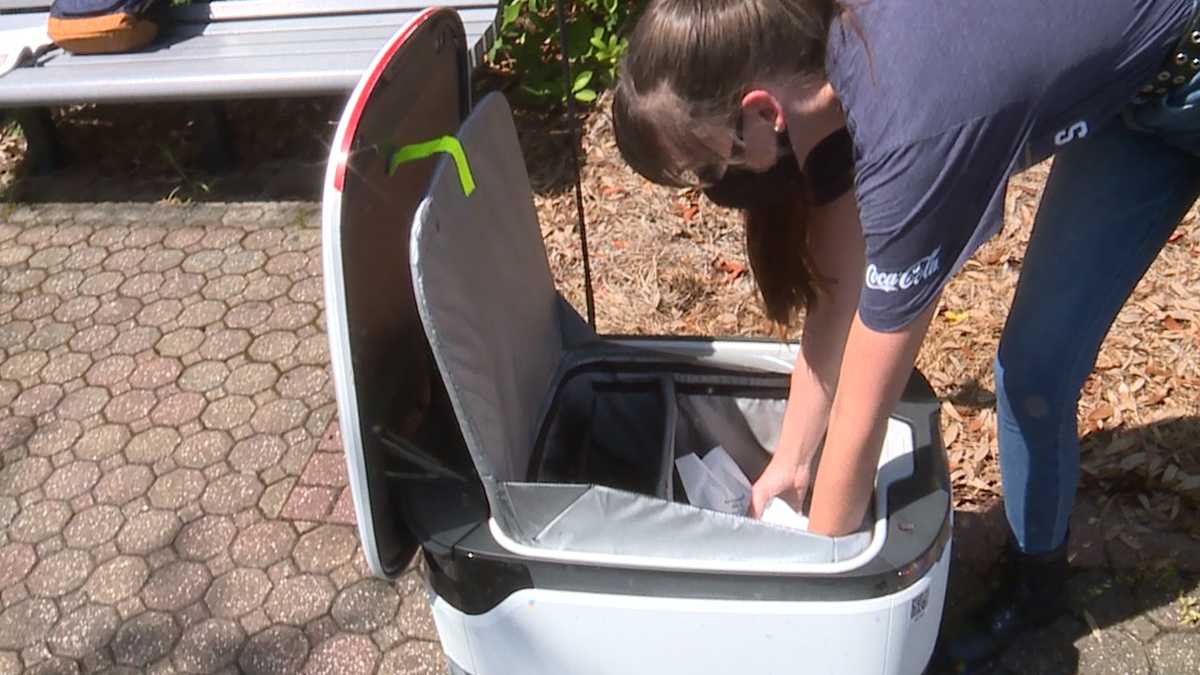
Six-wheeled robots independently navigating the streets and sidewalks on Georgia Southern’s Statesboro Campus may look a little strange. But it will soon be commonplace as these ground robots, which look like a cooler on wheels, have been mapping routes to campus locations in preparation for contactless food delivery this fall. Thanks to a partnership with Starship Technologies, Georgia Southern is the first university in the state to provide faculty, staff, and students with 20 autonomous delivery robots to deliver food from on-campus dining locations to designated pickup locations. Since August, Starship’s robots have been delivering food ordered on the Starship app from University dining facilities and places such as Starbucks, Market Street Deli and Sushi with Gusto to patrons around campus. The robots, which are energy efficient, can have their location and delivery time tracked by recipients through the app. They can also maneuver around obstacles such as pedestrians. “My hope is that it brings a sense of enhanced safety and convenience to our students,” said Clint Bridges, IT Business Owner at Georgia Southern University. “While we are all living through the COVID-19 pandemic, we are hoping that the robots will allow for easier social distancing. The fact that students can order a meal from their residence hall room and have it delivered by an automated delivery vehicle keeps them close to home where they can feel the most at ease and still enjoy a meal from one of our dining locations on campus.” Starship Technologies officials say the robots have been proven to be popular. “Students are looking for ways to get food delivered in the safest and most convenient way possible at the moment,” said Ryan Tuohy, senior vice president of Business Development at Starship Technologies. “Our robots are fast, friendly and help make life a little bit easier, especially in these challenging times.” If you are journalist and would like to know more about how Georgia Southern is constantly innovating and discovering new ways to safely enhance the on-campus experience for students - simply reach out to Georgia Southern Director of Communications Jennifer Wise at jwise@georgiasouthern.edu to learn more and arrange an interview today.
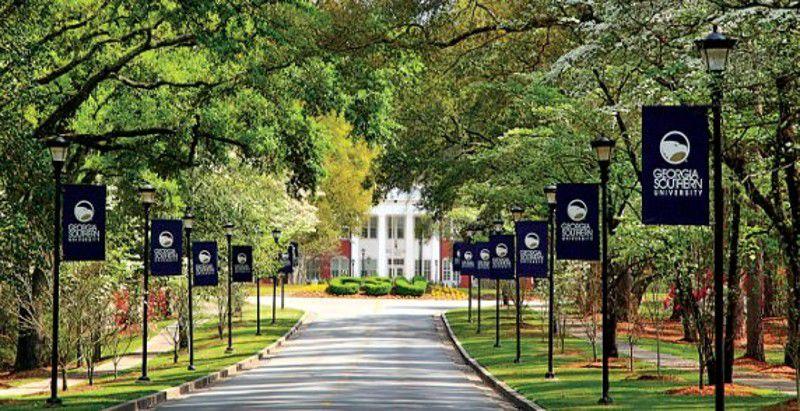
Georgia Southern University – is thinking BIG when it comes to entrepreneurs and small business
Through the CARES Act and the U.S. Department of Commerce, Georgia Southern University’s Business Innovation Group (BIG) has received $300,000 in grant funding to expand its services to the region in an effort to help communities and businesses respond to and recover from the economic impact of the coronavirus pandemic. “This will really allow us to help businesses and entrepreneurs throughout the entire state ideally get access to the skills, knowledge and services that Georgia Southern has to offer,” said Dominique Halaby, DPA, director of BIG. Over the next two years, BIG will use these funds to expand their services through the Georgia Enterprise Network for Innovation and Entrepreneurship (GENIE). “We’re hoping that we can demonstrate to budding entrepreneurs and small business owners that Georgia Southern can help them develop and grow,” Halaby said. “We are hopeful that in two years’ time people are going to have a heightened aerial view of awareness for Georgia Southern and our Business Innovation Group services, but more importantly, that they are going to get the type of resources to be able to launch the business that they’ve always wanted to launch.” Halaby said offering these resources to the region is important for economic growth. “Any time that we have an ability to do something, we have a responsibility to do it,” Halaby said. “The needs of our community are great. Our ability to service those needs by connecting those with the resources on our campus and with the skills that we have fostered within BIG puts us in a very unique position. This way, we are able to provide services to help as many entrepreneurs and to help as many people looking for jobs as we possibly can.” BIG will also use part of the grant funding to work with Georgia Southern faculty to strengthen patent and licensing activity. “We’re working with our intellectual property committee and through the University to let faculty know that if they’ve got a concept, that BIG can help them flesh that out. We can work with them to do an analysis to see the marketability for their concept and determine if it’s patentable or licensable,” Halaby said. If you’re a journalist looking to know more about how Georgia Southern University is assisting regional businesses or its Business Innovation Group (BIG) – then let our experts help with your coverage. Dominique Halaby, DPA, is the Director of the Business Innovation Group (BIG) at Georgia Southern University. In 2015, BIG was recognized as a Gold Award Winner in Entrepreneurship by the International Economic Development Council. Simply click on his icon now to arrange an interview today.

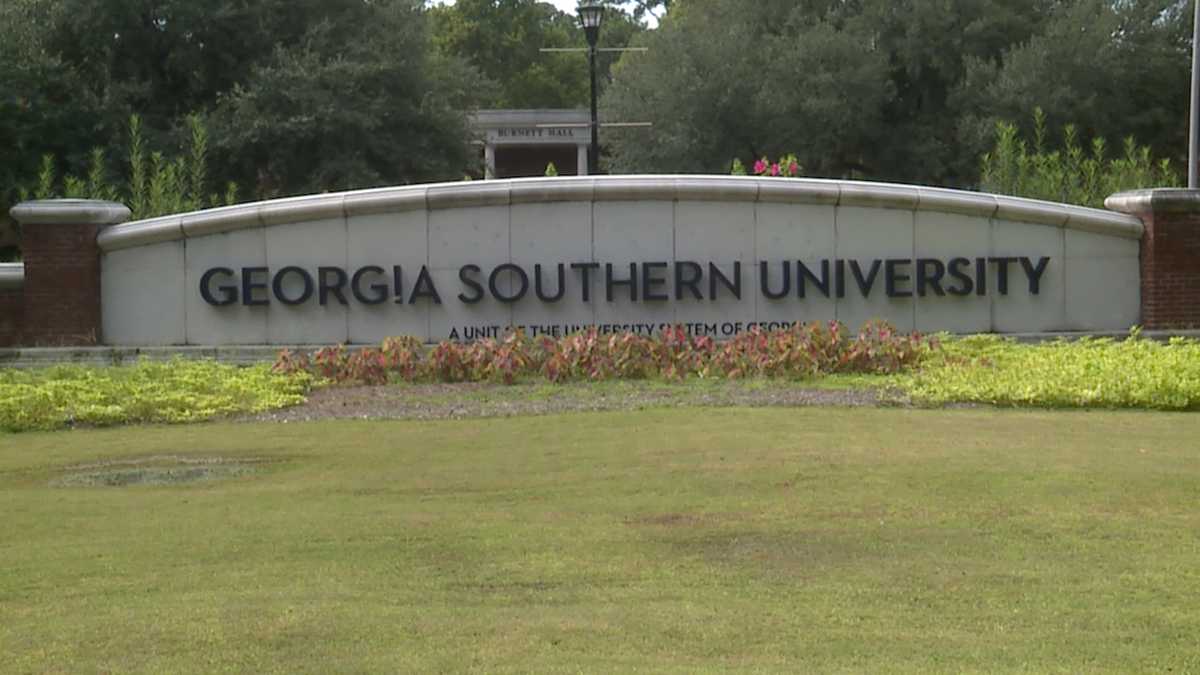
Georgia Southern University President Kyle Marrero delivered a virtual State of the University fall 2020 address to faculty and staff, broadcast live from the Performing Arts Center on the Statesboro Campus on Aug. 12. Maxing out with 1,507 viewers at one point, University members tuned in from remote locations to hear the president discuss how Georgia Southern is successfully adapting during extraordinarily difficult times and will continue to be nimble during the fall semester. “We are being asked to be innovative, flexible, nimble and willing to adapt and change,” Marrero said after welcoming all back to the three campuses. “And I want to thank you. You all have been tremendous, remarkable, heroic even, as we made it through these times and as we navigate through these uncertain times.” Marrero touted the herculean efforts of faculty and staff, who maintained the integrity of the University’s five pillars — student success, teaching and research, inclusive excellence, operational efficiency, effectiveness and sustainability, and community engagement, in the midst of a pandemic that caused the University to move fully online in March. He cited specific examples of performance excellence since March with the following collective efforts: Moved more than 5,000 classes to fully online to complete the Spring 2020 Semester; Delivered summer term fully online while seeing credit-hour generation move up by more than 4%, compared to the Summer 2019 Semester; Moved 4,600 students out of housing and provided support for more than 100 students who remained on campus; Refunded almost $11 million in housing, dining and fees to students; Held virtual Spring 2020 Commencement, viewed by more than 100,000 worldwide; Provided more than $11 million in CARES Act grant funding directly to students; Developed and began implementation of Initial Return to Campus and Return to Campus Plans, based on input from more than 130 faculty staff across campus and public health guidance from the Centers for Disease Control and Prevention and the Georgia Department of Public Health; Modeled a 14% state budget reduction for FY21, then completed a 10% realized reduction, totaling $14.2 million; Developed and implemented flexible and remote work processes; Assessed and modified almost 5,000 courses for fall 2020; Prepared campus with signage, cloth face coverings, face shields, PPE, hand sanitizer stations; Formed and implemented the CARES Service Center; Continued communication, coordination and monitoring of community health care providers, public/private schools, municipalities and agencies. Marrero also presented August figures showing that fall 2020 enrollment looks strong compared to this same time last year, however, he was quick to note that the figures may fluctuate based on various factors throughout the semester. Final fall enrollment figures will be released in October. “We can continue to move forward,” he said. “We can continue to elevate and live our mission and our vision and our values even in these times. We will adapt, we’ll be nimble and we’ll ensure that every day that the public health and safety of our faculty, staff, students and our community is of paramount importance. “I am confident that we are ready as we can be and together we’ll assess and navigate the entirety of the fall semester with the goal and outcome of our students being successful. As a whole Georgia Southern University can make it through this together.” If you are journalist and would like to know more about Georgia Southern university and how it is succeeding during COVID-19, simply reach out to Georgia Southern Director of Communications Jennifer Wise at jwise@georgiasouthern.edu to arrange an interview today.

Airing commercials after political ads actually helps sell nonpolitical products
About $7 billion reportedly will be spent this fall on television and digital commercials from political campaigns and political action committees, filling the airwaves with political ads many viewers dislike. Companies running ads immediately afterward have been concerned about the potential of a negative spillover effect on how they and their products and services are perceived. But new research from the Indiana University Kelley School of Business finds that the opposite is true. Contrary to mainstream thought, political ads instead yield positive spillover effects for nonpolitical advertisers. And this happens regardless of whether the political ad is an attack ad or not, who the ad supports, and whether it's sponsored by a candidate, political party or PAC. Political advertising accounts for nearly 10 percent of all U.S. television ad revenue. The findings are in the article "Impact of Political Television Advertisements on Viewers' Response to Subsequent Advertisements" -- accepted for publication in Marketing Science -- by Beth Fossen, assistant professor of marketing; Girish Mallapragada, associate professor of marketing and Weimer Faculty Fellow; and doctoral candidate Anwesha De, all from the Kelley School of Business. "Our investigations provide insights into the previously unexplored ad-to-ad spillover effects and, more broadly, provides insights into how political messages influence consumers," Fossen said. "Nonpolitical ads that follow political ads benefit through a reduction in audience decline and an increase in positive post-ad chatter." Using data for 849 national prime-time ads during the 2016 U.S. general election, the researchers found that ads airing after a political commercial saw an 89 percent reduction in audience decline and a 3 percent increase in post-ad chatter online. Their findings remained consistent when examining the effect by TV network and political party affiliation. "It seems reasonable to assume that Fox News viewers are more likely to be positively stimulated by pro-Republican ads than viewers of other channels," researchers wrote. "However, evidence from our data suggests that the positive spillover from pro-Republican ads is not higher and is nearly lower on Fox News viewership decline than when pro-Republican ads air on other channels." They found a similar trend when it came to advertising on MSNBC, whose viewers frequently identify with the Democratic Party and progressive causes. Mallapragada said the findings show that television networks and stations can leverage the positive spillover effects on subsequent ads by implementing differential pricing and systematic ad sequencing. Prevailing belief in the business industry has suggested that political ads on television hurt the effectiveness of subsequent ads. To illustrate this concern, during the 2020 Super Bowl, game broadcaster Fox isolated political ads from other paying advertisers in their own ad breaks, a decision that cost the network millions in ad revenue, because it ran nonpaid show promos alongside the political ads instead of commercials from paying advertisers. "The insights from this research enable advertisers to advocate for the inclusion of ad positioning in ad buys and, specifically, negotiate that their ads follow political ads," he said. "Our results may also encourage advertisers outside of the television context to experiment with advertising next to political content, an experimentation that may be especially beneficial for online advertisers given that they commonly blacklist political topics to avoid having their ads appear near political content." Editors: Contact George Vlahakis at vlahakis@iu.edu for a copy of the paper.

Black Gospel Music Expert Shares 10 of the Most Powerful, Enduring Freedom Songs, Protest Spirituals
By Robert F. Darden, Professor of Journalism, Public Relations & New Media, Founder and Director of the Black Gospel Music Restoration Project at Baylor University WACO, Texas (June 19, 2020) – As the protests following the death of George Floyd began to roil the country, it was only a few days before the demonstrators began to sing an array of freedom songs and protest spirituals, as well as a few new adaptations, including Bill Withers’ “Lean on Me.” Some of these songs have been sung by people fighting nonviolently for freedom and justice for hundreds of years. Many have been sung continually in the United States since the 1800s, right through the #blacklivesmatter and #metoo movements. Others have been adopted by freedom fighters in the Arab Spring, at Tiananmen Square and even now in Hong Kong. The Black Gospel Music Restoration Project at Baylor University has the world’s largest collection of digitized vinyl songs and sermons from gospel’s “golden age.” Not surprisingly, there are hundreds of freedom songs and protest spirituals in the collection as well. Below is a list of some of the most influential, most powerful, most enduring and beloved songs that have inspired and encouraged sings for two centuries. Each song is available for listening in the digital collections of the Black Gospel Music Restoration Project. (Assistance provided by Baylor Libraries’ Digitization and Digital Preservation Services.) 10. “We Shall Not Be Moved” and “Which Side Are You On?” When labor unions admitted African Americans in the 1930s and '40s, labor protesters quickly absorbed and adapted the great protest spirituals. These two old union songs were quickly adopted and expanded by the civil rights movement of the '50s and '60s. Listen to “I Shall Not Be Moved” by the Mighty Wonders of Aquasco, Maryland. 9. “A Charge to Keep Have I” In the days before hymnals, a song-leader would sing or speak a line and the congregation, whether in a church or at a mass meeting, would sing it back, called “lining out.” One of the most popular lined-out hymns during the movement was the old hymn, “A Charge to Keep Have I.” Listen to “A Charge to Keep” by Betty Simmons. 8. “Up Above My Head, I Hear Freedom in the Air” This old spiritual became a favorite in the great singing protests of Albany, Georgia, and quickly spread throughout the South. Listen to “Up Above My Head, I Hear Freedom in the Air” by Sister Rosetta Tharpe. 7. “If I Can Help Somebody” Not all freedom songs were defiant in tone. Some provided comfort in difficult times. Some helped encourage those in despair. This is one of those songs. Listen to “If I Can Help Somebody” by Dorothy Love Coates and the Gospel Harmonettes from the LP, Till My Changes Come. 6. “Freedom Highway” Some original songs were composed during the movement that were not only quickly adopted by the civil rights activists, they’ve remained in the repertoire of freedom fighters everywhere. One such song is “Freedom Highway” by the Staple Singers who themselves marched many miles with Dr. Martin Luther King Jr. Listen to “Freedom Highway” by the Staple Singers. 5. “Keep Your Eyes on the Prize”/“Hold On” There are dozens of variations of this civil rights-era favorite. Most include the couplet about Paul and Silas in jail, but all were sung to bolster spirits in tough times. Listen to “Keep Your Hands on the Plow” by The Famous Ward Singers from the LP on Vista Records. 4. “This Little Light of Mine” Fannie Lou Hamer made this old children’s song one of the most popular and righteous of the freedom songs. It was easily adaptable to every situation and good for naming the names of your oppressors. Listen to “The Little Light of Mine” by the Ward Singers. 3. “99 ½ Won’t Do” “99 ½ Won’t Do” was one of the most powerful songs to come out of the Birmingham freedom movement, sung by choirs and soloists alike, and it has since become a staple for many gospel singers, along with “I’m a Soldier in the Army of the Lord.” Listen to “99 ½ Won’t Do” by the Greater Sabathani Baptist Church Mass Choir. 2. “Don't Let Nobody Turn You Around” This freedom song has been sung repeatedly during the George Floyd protests – and has been sung for a hundred years or more. It lends itself well to a tone of defiance against great odds and was another freedom song that was infinitely adaptable to the situation. Listen to “Don't Let Nobody Turn You Around” by the Five Trumpets. 1. “We Shall Overcome” Few songs can match the majesty and soulful power of “We Shall Overcome,” always sung standing, with arms crossed clasping the hands of those on either side. It is at its most powerful -- then and now -- when the lines “black and white together” are included. Listen to “We Shall Overcome” from the 45 by Alice McClarty and the Traveling Echoes. ABOUT BAYLOR UNIVERSITY Baylor University is a private Christian University and a nationally ranked research institution. The University provides a vibrant campus community for more than 18,000 students by blending interdisciplinary research with an international reputation for educational excellence and a faculty commitment to teaching and scholarship. Chartered in 1845 by the Republic of Texas through the efforts of Baptist pioneers, Baylor is the oldest continually operating University in Texas. Located in Waco, Baylor welcomes students from all 50 states and more than 90 countries to study a broad range of degrees among its 12 nationally recognized academic divisions.


Ask an Expert: How can you recognize false information about the virus?
Lisa K. Fazio, assistant professor of psychology at Vanderbilt Peabody College of education and human development, gives tips to social media consumers on how to recognize misleading information about COVID-19. For more information, read an essay about ways to identify misinformation written by Fazio for the Peabody Reflector. Vanderbilt University faculty are sharing their expertise on a range of topics related to COVID-19. Subscribe to Vanderbilt’s “Ask an Expert” series on YouTube to get the latest updates.


As the COVID-19 pandemic unfolded and healthcare organizations began experiencing shortages of personal protective equipment (PPE), faculty, staff and students at Georgia Southern University stepped up to fulfill a need. Making use of the 3D printers on the Statesboro and Armstrong campuses, as well as at the FabLab at the Business Innovation Group’s (BIG) downtown Statesboro location, the campus communities quickly began production of protective face shields and respirators. “We can’t afford to sit back and wait for things to happen,” said Dominique Halaby, DPA, director of the BIG. “We have to make them happen. We have this responsibility to make a difference, to be a part of that front line, whether it’s immediately in our community, our state or our respective area.” To date, the Department of Manufacturing Engineering has sent 200 3D-printed protective face shields with headbands to Augusta, Georgia, for healthcare workers at Augusta Medical Center, while the BIG has sent 100 face shields and 10 “Montana Masks,” a 3D-printable respirator filtration mask that can be fitted to a healthcare provider’s face and sanitized between uses, to Atlanta-area hospitals. The Department of Mechanical Engineering on the Armstrong Campus has also printed Montana Masks that will be delivered to workers in the St. Joseph’s/Candler Hospital System (SJCHS) in Savannah, Georgia, while the Respiratory Therapy Program in the Waters College of Health Professions donated 10 ventilators to the Georgia Emergency Management Agency. “I am unbelievably proud of our faculty, staff and students who have their own families to take care of, but are putting themselves on the line to help our medical professionals in this time of critical need,” said Mohammad Davoud, Ph.D., dean of the Allen E. Paulson College of Engineering and Computing. Wayne Johnson, Ph.D., professor of mechanical engineering, believes providing these materials to the Savannah community during a time of critical need is reinforcing a longtime commitment to the region. “The Armstrong Campus of Georgia Southern has a long history of working within the Savannah community, and during this pandemic, it was especially important for mechanical engineering faculty and students at the Armstrong Campus to step up during a time of great need,” said Johnson. “ Our work with SJCHS to develop, test and donate 3D-printed respirators may also lead to other research and development collaborations in the post-COVID-19 future.” In addition to benefiting area healthcare workers, Johnson believes this project is a great way for students to put their classroom skills into practice. If you would like to learn more about how the students, staff and faculty at Georgia Southern University are helping out during the COVID-19 crisis – the let our experts help. Wayne Johnson is an expert in additive manufacturing, mechatronics, biomechanics and engineering education. He is available to speak with media about this great initiative, simply click on his icon to arrange an interview today.
Diary of a COVID-19 crisis nurse in NYC: A Georgia Southern student’s first job
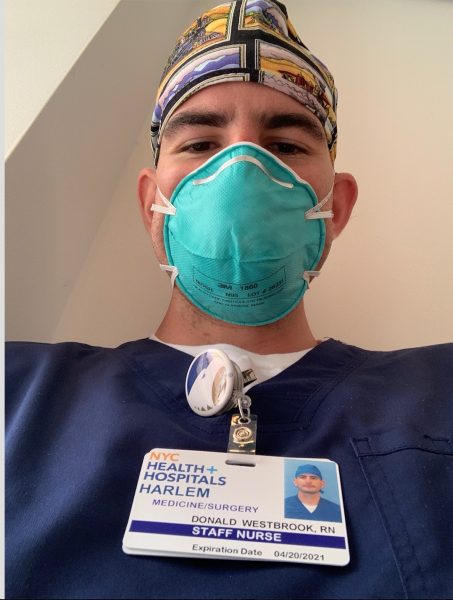
On May 1, Tucker Westbrook could finally sleep in. He’d been on duty as a COVID-19 crisis nurse at Harlem Hospital Center in New York City for 11 consecutive days, with a routine that began before the sun came up and ended long after the city had gone dark. Most mornings, he’d wake at 5:45 am., center himself with prayer and meditation, eat breakfast, and hop on a bus in time to clock in for his shift at the largest public hospital in Central Harlem by 7 a.m. Each day as he entered the halls of the facility’s surgical floor, which was transformed into a COVID-19 holding unit for the larger part of his three-week work rotation, he was unsure of what he’d encounter. Just weeks earlier, Westbrook, a May 2019 Georgia Southern University nursing graduate from Butler, Georgia, accepted a short-term contract to assist with the Coronavirus pandemic in the epicenter of the U.S. outbreak. This was Westbrook’s first professional job, following what was supposed to be a yearlong mission trip in Southeast Asia, but was cut short due to the pandemic, and nothing could fully prepare him for the impact of his initial experience. “The first day, I thought, ‘I’m not prepared for this,’” he admitted. “Those first few days I was on pins and needles and thought, ‘how am I going to mess up?’” The stakes were high. By the time he arrived in New York City, thousands had already been hospitalized, and many had died. Seasoned nurses and doctors were depleted and morale was low across the city, he explained on the phone as he looked out over a desolate Times Square from his hotel window. “They asked me, ‘why did you come here?’” Westbrook recalled. “And I said that I wanted to be, hopefully, a light in this dark place right now. The patients, the doctors, the nurses, the nursing assistants, the janitorial assistants — my goal is to learn everyone’s names and greet them with a smile behind my mask.” A friend encouraged Westbrook to look for a temporary nursing job upon his return from abroad. When he applied for highly competitive positions with a crisis staffing agency, he requested placement in an area hard hit by the pandemic. “Just like Southeast Asia, I wanted to go where there was the biggest need, and I had enough gifts to meet that need,” Westbrook said. This was Westbrook’s first trip to New York, and he stepped into a scene where images of makeshift morgues and ventilator shortages splashed across the media came to life in front of him. “It has been surreal to see,” he said. Assigned to provide cluster care to potential COVID-19-positive patients for minimal exposure, Westbrook also focused on simple acts of kindness to help ease increased anxiety among the patients. “That might be things as small as giving a wet rag to wipe their face,” Westbrook said. “It may be filling their jars with ice cold water in the morning. Whatever might help them feel more comfortable.” Westbrook’s patients were diverse: a teenage gunshot victim who sobbed at the prospect of being infected with the virus; an adult male who discussed intimate thoughts about death with his family over the phone; and a woman who was depressed until Westbrook sat with her so she didn’t feel alone. Experiencing humanity in its most delicate form was life-defining. “I was learning more about nursing care but also continuing to serve (my patients) beyond simply giving them medicine,” Westbrook said. “I was able to advocate for them with the doctor, especially without their families there. I’m learning how to go above and beyond, and what our job responsibilities are. I want to keep growing and learning to continue to give care to my patients.” The hospital staff also offered enormous support and guidance to Westbrook, who almost two weeks into the job felt exponentially more confident in his abilities. “If you had told me about any of this I wouldn’t believe it,” he said. “It has been incredible. I did not think I could do that at all, and here I am on the other side. This was such a lofty and high goal to complete this and do well. I’m thankful to even be here and have this opportunity.” Westbrook credits his father for encouraging him to study nursing, and Georgia Southern faculty for their expert instruction, which he put to use in New York, as well as their sage advice. “I wasn’t sure I was going to get my license,” he said. “My desire to become a doctor or a missionary became more and more compelling, but my professors assured me that it would be worthwhile to pursue my license, and they were right.” Following a quarantine in his family’s home, Westbrook will begin pre-medicine classes at Georgia Southern this summer. If you are a journalist looking to know more about Tucker’s story or the nursing program at Georgia Southern University – let us help with your coverage. Barry Joyner is the dean of Georgia Southern University’s Waters College of Health Professions - simply click on his icon to arrange an interview today.
