
Experts Matter. Find Yours.
Connect for media, speaking, professional opportunities & more.

Wilmington Campus Receives $1 Million Donation From the Rocco A. and Mary Abessinio Foundation
ChristianaCare has received a $1 million gift from The Rocco A. and Mary Abessinio Foundation Inc. in support of ChristianaCare’s Wilmington Campus. “All families and communities deserve the excellent care that Wilmington Hospital and ChristianaCare provide,” said Rocco and Mary Abessinio. “It is an honor for our family to support the health and wellbeing of the Wilmington community.” The funds will support areas of greatest need, including the expansion of patient care initiatives aimed at reducing disparities in screening and treatment for cancer and cardiovascular disease in the city of Wilmington. “We are tremendously grateful to the Rocco A. and Mary Abessinio Foundation for their continued, generous support of the Wilmington Campus – a vital resource serving the greater Wilmington community,” said Janice Nevin, M.D., MPH, ChristianaCare president and CEO. “With their help, we are closing gaps in health disparities and improving health for everyone, including some of Delaware’s most vulnerable populations.” The Rocco A. and Mary Abessinio Foundation provided a $1 million gift in 2014 for the redesign and renovation of the health center, which was then named the Rocco A. Abessinio Family Health Center at Wilmington Hospital. The health center is home to three primary care practices and other programs and services that offer high-quality health care, wellness and preventive health visits for people of all ages, regardless of their income or ability to pay. “As a result of the Abessinio family’s longstanding partnership and investment in our mission of service, we are making significant progress in addressing disparities and building strong and healthy communities,” said LeRoi S. Hicks, M.D., MPH, FACP, campus executive director of ChristianaCare’s Wilmington Hospital. A Wilmington landmark in the heart of the city, the ChristianaCare Wilmington Hospital has been serving the diverse medical needs of the city and surrounding region for over 125 years. “Philanthropy is essential to ChristianaCare’s mission of service to our community, and we extend our heartfelt thanks and appreciation to Rocco and Mary Abessinio for their inspiring and visionary philanthropic leadership in support of the Wilmington Campus,” said Dia Williams Adams, MPA, vice president of philanthropy at ChristianaCare. “Their gift is a legacy that not only allows us to increase our ability to make a positive impact on patients and community, but honors the incredible work that our caregivers do every day.” For more information about ways to support ChristianaCare’s mission of service to the community, visit: https://christianacare.org/us/en/make-a-gift.


Together We Soar Campaign surpasses $100 million milestone
The Georgia Southern University Foundation, Inc. and the Georgia Southern University Athletic Foundation, Inc. are pleased to announce a significant milestone in its ambitious fundraising campaign, “Together We Soar.” The generous support of the community has enabled the campaign to soar past the $100 million mark, a remarkable achievement in the University’s path toward its $125 million goal. Launched October 2023, the “Together We Soar” public phase of the campaign set out with a bold vision to elevate Georgia Southern’s mission and impact: “People. Purpose. Action. Growing ourselves to grow others.” Through this initiative, the University aimed to strengthen its commitment to prioritize student success and support its communities. The overwhelming response and unwavering support from our donors and alumni have propelled us toward this momentous achievement. “This milestone is a testament to the incredible generosity and belief in our mission,” said Georgia Southern University President Kyle Marrero. “We are deeply humbled and grateful for the outpouring of support that has brought us to this point. Together, we are making a tangible difference in the lives of our students and shaping a brighter future for generations to come.” Throughout the campaign so far, 106 new endowments have been created covering all areas of academic study. The Goel Scholars was established and provides a full ride scholarship opportunity for the Honors College, and the first class has begun their studies. The School of Music was named the Fred and Dinah Gretsch School of Music. Buildings such as the Jack and Ruth Ann Hill Convocation Center, the Anthony P. Tippins Family Training Center, renovations made to the J.I. Clements Baseball stadium, and the renamed Evans Family Field at Allen E. Paulson Stadium contributes significantly to the landscape of the Statesboro Campus. Significant gifts made by the Crider family will propel the Manufacturing Engineering program, while a commitment by Centene Corporation will put healthcare at the forefront for years to come. The success of the “Together We Soar” campaign underscores the power of collective action and the impact that philanthropy can have on communities. Every contribution, no matter the size, has played a vital role in reaching this milestone and advancing the shared vision. “As we celebrate this achievement, we also recognize that our work is far from over, said Trip Addison, vice president for University Advancement. “With $25 million left to reach our goal, we remain committed to forging ahead, united in our dedication to Georgia Southern’s mission and the individuals and communities we serve. We extend our deepest gratitude to all who have contributed to the “Together We Soar” campaign. Your support is not only transforming lives but also inspiring hope and creating lasting change.” For more information on how to join the mission or contribute to the campaign, please visit GeorgiaSouthern.edu/TogetherWeSoar. For more information, contact Georgia Southern's Director of Communications Jennifer Wise at jwise@georgiasouthern.edu to arrange an interview today.


On this day in 1981, the Centers for Disease Control and Prevention (CDC) reported the first cases of what would later be known as Acquired Immunodeficiency Syndrome (AIDS). This event marks a crucial moment in medical history, heralding the beginning of an epidemic that would profoundly impact millions of lives globally. This topic remains newsworthy due to its lasting implications on public health, medical research, and social stigma. Understanding the evolution of the AIDS crisis provides insights into ongoing challenges in healthcare, policy, and community support. Key story angles that may engage a broad audience include: Historical Overview of the AIDS Epidemic: Tracing the timeline of the AIDS crisis from its early days to the present, highlighting key medical and social milestones. Advancements in HIV/AIDS Treatment and Research: Exploring the breakthroughs in antiretroviral therapies, the search for a cure, and the latest research developments. Public Health Policies and Responses: Analyzing the effectiveness of public health initiatives and policies in managing and preventing HIV/AIDS, including current strategies and future directions. Social and Cultural Impact: Investigating how the AIDS epidemic has influenced societal attitudes, policies towards marginalized communities, and the ongoing fight against stigma and discrimination. Global Perspective: Examining the global impact of HIV/AIDS, comparing responses and outcomes in different regions, and the role of international organizations in combating the epidemic. Personal Stories and Advocacy: Sharing personal narratives of those affected by HIV/AIDS, the role of advocacy groups, and the importance of community support in addressing the epidemic's challenges. These angles provide journalists with a range of perspectives to explore, ensuring comprehensive coverage of the historical, medical, and societal dimensions of the AIDS epidemic. Connect with an Expert about the History of AIDS in America: Dr. Adey Nyamathi Founding Dean and Distinguished Professor of Nursing · UC Irvine Petra Molnar Associate Director · Refugee Law Lab, Osgoode Hall Law School Andrea Benoit Assistant Professor (Adjunct) · Western University David J. Hardy Professor of Psychology | Psychological Science · Loyola Marymount University Valerie Earnshaw Associate Professor, Human Development and Family Sciences · University of Delaware To search our full list of experts visit www.expertfile.com Photo credit: Ehimetalor Akhere Unuabona


Approximately 4,200 degrees conferred during Georgia Southern’s 2024 Spring Commencement ceremonies
In May, approximately 4,200 graduates from Georgia Southern University’s Statesboro, Armstrong and Liberty campuses received associate, baccalaureate, masters, specialist and doctoral degrees in five Spring 2024 Commencement ceremonies. Georgia Southern President Kyle Marrero welcomed the graduates and their guests to the ceremonies, held at the Allen E. Paulson Stadium in Statesboro on May 7, 8 and 9, and at the EnMarket Arena in Savannah on May 11. “Graduates, I don’t need to tell you about your unique college journey, which has been challenging,” said Marrero to the crowds. “I am very proud of how, together, we have persevered allowing us to have a successful semester and today, our commencement ceremony. This graduation is a momentous occasion for Georgia Southern University, as well as for all of you. Today, you are part of history at Georgia Southern.” Speakers included: Mackenzie Anderson (’07), global director of Corporate Communications at Nike Alton M. Standifer, Ph.D. (’12, ’14), vice provost for Inclusive Excellence and chief of staff to the provost at the University of Georgia (UGA) Kim Greene, chairman, president and chief executive officer of Georgia Power Chris Ahearn (’09), director of research and trade development for the World Trade Center Savannah Candicee Childs, M.D., (’19) an emerging beacon of inspiration in the fields of medicine and literature. At present, she is a resident physician at Massachusetts General Hospital, the largest teaching hospital of Harvard Medical School, with a focus on child and adolescent psychiatry Anderson opened the graduation ceremonies in Statesboro, following a warm introduction from Marrero, who described her leadership role at Nike. “I’m sure you probably expected me to get up here and say something like, ‘Class of 2024, go out into the world and ‘Just Do It,’” Anderson mused. “But here’s the deal. I don’t have to tell you to just do it because you just did it. You did the impossible by making it through the pandemic. “Today you aren’t just graduating with a degree in whatever is written on your diploma. You’re also graduating with a degree in doing hard things. And today we celebrate you.” She continued, saying that earning a degree in “doing hard things” has no doubt been a challenge, but the graduates will soon find out that this is also their superpower. They produced their own playbook, as unique and rare as they are. How they use the playbook moving forward is up to them — to wit, be curious, be wrong while giving yourself permission to make mistakes, be humble and be persistent. “Launch into the world,” Anderson concluded. “And whether you land just across the street, across the country like me or somewhere around the world, remember where you came from. Today you are etching your name alongside a proud Eagle alumni network of more than 147,000 strong. “It is my honor to be the first to say, ‘Georgia Southern University graduating Class of 2024, welcome to the alumni family.'” Standifer shared his own story as a young man, undecided about going to college while he worked as a cashier. A regular customer, Mr. Paul, continuously asked Standifer about whether he’d attend college, until one day Standifer told him he was going to attend Georgia Southern University. With a wide grin, Mr. Paul congratulated him and handed him a $100 bill. Incredulous, Standifer asked why he’d given him such a large tip. Mr. Paul told him it wasn’t a tip. It was an investment, and he’d continue to mentor Standifer in the following years, and remain a profound influence in his life. “I want to encourage you all to think of the Mr. Paul’s in your life,” Standifer said. “Think of the people who have helped you get to today. And then when you leave here, make the conscious effort that you will be Mr. Paul for someone else.” In Savannah, Ahearn shared his journey of discovery in Georgia Southern’s classrooms where he explored Irish film, an introduction to the United Nations, abnormal psychology, Celtic identity and conflict, psychology and law, and gangs, drugs and criminal justice. “There’s a whole menu of choices for you and experiences for you to choose from to really help you discover who you are, where you fit, what drives you, what gets your creative juices flowing, and what options are out there when you graduate from these key interactions,” Ahearn said. Following, he pursued a master’s in international relations in Ireland that gave him a deeper perspective on how the world operates and how interconnected we all are. Ensuing professional roles in higher education, international networking and fundraising, culminated in his current role at World Trade Center, Savannah. From the stage, Ahearn stressed his key takeaways: network, stay in touch with your classmates, be authentic and perhaps, most importantly, travel. “Go outside your comfort zone,” he encouraged. “Try things you’d never try. Expand your horizons. This is your opportunity to learn about different cultures, to embrace the differences and similarities we share with our fellow global citizens and find common ground.” In closing: “Many of you may stay in the region to leave your impact as this community continues to expand,” Ahearn said. “There are plenty of great employment opportunities at your fingertips. Many of you will leave to follow your careers wherever they take you. But please know that you’re part of this institution’s history. You’ll always be an Eagle, and Georgia Southern will always welcome you home." Interested in learning more about Georgia Southern University? Contact Georgia Southern's Director of Communications Jennifer Wise at jwise@georgiasouthern.edu to arrange an interview today.

It's Pride Month - We have experts who can help with all your coverage.
Pride Month stands as a vital commemoration of the LGBTQ+ community's ongoing fight for equality, acceptance, and visibility. Rooted in the historic Stonewall Riots of 1969, Pride Month not only celebrates the progress made in LGBTQ+ rights but also highlights the persistent struggles faced by the community. This topic is newsworthy due to its significant social, cultural, and political implications, reflecting broader societal issues of human rights, diversity, and inclusion. Furthermore, Pride Month's impact on public discourse, policy changes, and cultural awareness underscores its relevance. Key story angles include: The Evolution of Pride: Tracing the history of Pride Month from the Stonewall Riots to its current global celebrations, and its role in shaping LGBTQ+ rights. Intersectionality in the LGBTQ+ Community: Exploring the experiences and challenges faced by LGBTQ+ individuals who belong to multiple marginalized groups. Policy and Legal Milestones: Reviewing significant legal and policy advancements in LGBTQ+ rights and the ongoing legislative battles. Corporate and Community Engagement: Analyzing how businesses and local communities are participating in Pride Month, including corporate responsibility and support for LGBTQ+ causes. Media Representation: Investigating the portrayal of LGBTQ+ individuals in media and entertainment, and its impact on public perception and acceptance. Mental Health and Well-being: Discussing the mental health challenges within the LGBTQ+ community and the resources available to support them. Connect with an Expert about the History of Pride Month: Margaret Galvan Assistant Professor · University of Florida Genny Beemyn Director of The Stonewall Center · University of Massachusetts Amherst Melanie Wilcox, PhD Assistant Professor and Researcher · Department of Psychological Sciences, the Institute of Public and Preventive Health, and the Department of Psychiatry · Augusta University Emily Fisher Professor · Loyola Marymount University Ryan J. Watson, Ph.D. Ryan J. Watson, Ph.D. Assistant Professor of Human Development and Family Studies · University of Connecticut To search our full list of experts visit www.expertfile.com Photo credit: Sara Rampazzo

The harmful impact of stigma on individuals struggling with opioid addiction
People in recovery from opioid use disorder often struggle with decisions to tell others about their past substance use, treatment, and/or recovery. Although disclosures that go well can lead to social support that is helpful for recovery, disclosures that go poorly can lead to stigma that can harm recovery. Valerie Earnshaw, associate professor in the College of Human Development and Family Sciences at the University of Delaware, specializes in speaking about addiction and stigma and can speak on this phenomenon. She recently spoke about this topic a the annual Marion H. Steele Symposium at UD. Earnshaw charted the growth of the opioid crisis in the United States, discussed stigma as a complex social process with the power to affect health outcomes and shared her work on an intervention she designed to help people with the disclosure process. She can be contacted by clicking her "View Profile" button.


The ChristianaCare Hospital Care at Home program, a national leader in providing acute care in a place most familiar to patients – their own homes – has reached a new milestone with more than 1,000 admissions since opening in December 2021. ChristianaCare’s innovative program enables patients with common chronic conditions, such as congestive heart failure and diabetes complications, as well as infections like pneumonia, to receive hospital-level care at home through virtual and in-person care provided by a team of physicians, nurse practitioners, paramedics and others. Technology kits deployed to patient homes ensure round-the-clock access to a health care professional, along with twice daily visits from caregivers, medication deliveries and mobile laboratory services. ‘Absolutely amazing’ for patients Patients are evaluated for the hospital care at home program when they come to Wilmington or Christiana hospital emergency departments. Those who can be treated at home receive a technology kit that connects them to the command center, powered by the ChristianaCare Center for Virtual Health. With a touch of a button, they can access an expert team of ChristianaCare doctors and nurses. But hospital care at home isn’t just virtual care — the technology supports an entire care team that works inside the patient’s home and remotely to provide optimal support at all times — just like in a hospital. Carol Bieber, whose 98-year-old father Bill has been a hospital care at home patient, sees the difference it makes for him to wake up in his own bed, sit in his own living room and still get the care he needs to get better. “The whole hospital care at home experience is really calm and easy and familiar to him,” said Bieber, who lives in Newark, Delaware. “My dad is a people person, so to be able to connect with everybody who comes in to see him or talk to him on the screen is just amazing.” Innovative solutions for in-home care ChristianaCare’s Hospital Care at Home program was developed in 2021 after the Centers for Medicaid & Medicare Services (CMS) began the Acute Hospital Care at Home waiver program to allow Medicare beneficiaries to receive acute-level health care services in their home. U.S. Sen. Tom Carper, who represents Delaware, worked to pass the bipartisan “Hospital Inpatient Services Modernization Act” in 2023 that extended this program. Last month. Sen. Carper introduced the bipartisan “At-Home Observation and Medical Evaluation (HOME) Services Act” that would expand this lifesaving and cost-saving program. “Hospital at Home – which grew out of the COVID pandemic – was an opportunity for us to meet seniors where they are,” Carper said. “It has delivered positive outcomes, higher patient satisfaction, and saves money.” Sarah Schenck, M.D., FACP, executive director of the ChristianaCare Center for Virtual Health, said the hospital care at home program has yielded lower readmission rates than brick-and-mortar hospitals. Patient experience scores are about three times higher than a national average traditional hospital experience. “We’ve been conditioned to believe that care only happens within the four walls of a hospital. For our patients who have loved ones at home or their pets, a favorite chair or favorite food, they’re now able to have all of that as they heal,” Schenck said. “Once our patients have experienced this, what we hear from them is that they are truly grateful.” Promoting healing – at home Helping patients recover in their homes also has been transformational for caregivers who get to see a different side of their patients and better understand what they need to successfully recover. “I can’t express how much I enjoy the patients and their families,” said Heather Orkis, a paramedic with Hospital Care at Home. “To be able to enjoy the family and see these people get better in their own homes, with their families, their grandkids, their dogs, their cats – it’s just a completely different kind of medicine.” For Bill Bieber’s family, hospital care at home is more than health care. “It’s just the best thing ever,” Carol Bieber said.

Climate change research trailblazer elected to prestigious list of AAAS Fellows
University of Delaware professor Rodrigo Vargas has been elected as a fellow of the American Association for the Advancement of Science (AAAS) — one of the largest scientific societies in the world and publisher of the Science family of journals. The new class of AAAS Fellows includes 502 scientists, engineers and innovators across 24 disciplines, who are being honored for their scientifically and socially distinguished achievements. Vargas, professor of ecosystem ecology and environmental change in UD’s College of Agriculture and Natural Resources, is recognized "for distinguished contributions to carbon dynamics across the terrestrial-aquatic interface, development of environmental networks, novel data analysis tools and his leadership in creating a more diverse scientific workforce." Deborah Allen, who retired from UD in 2019 as a professor of biological sciences, was also names as a fellow. She was cited “for transformational contributions to STEM education nationally and internationally, particularly for developments in problem-based learning and faculty development.” Vargas is an ecosystem ecologist who studies how nature-based solutions can help address global environmental change in both terrestrial and coastal ecosystems, Vargas uses a variety of research methods, including data mining, machine learning, remote sensing, measurements of greenhouse gas fluxes and modeling techniques for forecasting applications.

Healthy Environment, Healthy People: The Intersection Between Climate and Health
How is climate change influencing our health? Why does climate change have a greater impact on vulnerable populations and low-income people? How does the U.S. health care system affect the climate? How can health care systems improve their impact on the climate and the environment? ChristianaCare’s inaugural Climate and Health Conference addressed these topics and raised possible solutions at the John H. Ammon Medical Education Center on the Newark, Delaware, campus on April 12. At the conference, the common denominator was this: An unhealthy environment can lead to illnesses and deaths from air pollution, high heat, contaminated water and extreme weather events. Health systems, government entities, community organizations and individuals all have a role to play in decreasing these effects. “Climate, the environment and health care systems are intertwined,” said Greg O’Neill, MSN, APRN, AGCNS-BC. “We need to pay close attention to this relationship so we can improve health for everyone.” O’Neill is director of Patient & Family Health Education and co-chair of the Environmental Sustainability Caregiver Committee at ChristianaCare. Climate change and intensifying health conditions Negative health effects are so closely tied to the environments where people live, work and play that The Lancet called climate change “the greatest global health threat facing the world in the 21st century [and] the greatest opportunity to redefine the social and environmental determinants of health.” At the conference, speakers addressed specific areas of concern. Asthma. Air pollutants, while largely invisible, are associated with asthma. What’s more, people who live in urban areas with little green space are more likely to have uncontrolled asthma, said speaker Robert Ries, M.D., an emergency medicine resident at ChristianaCare. And there’s the rub, he said: When people with asthma spend time in green spaces, it may improve their health. “In Canada,” he said, “some doctors prescribe nature – two hours a week for better overall health outcomes. Could we do that here?” Heat-related illness. Temperatures worldwide have been rising, increasing the likelihood of heat-related health incidents. Heat waves may be harmful to children and older adults, particularly those who don’t have access to air conditioning, swimming pools or transportation to the beach, said speaker Alan Greenglass, M.D., a retired primary care physician. Children visit the emergency room 20% more frequently during heat waves. Weather-related illness. Climate change is causing more floods, which may result in respiratory problems due to mold growth; and droughts, which may threaten water safety and contribute to global food insecurity, said speaker Anat Feingold, M.D., MPH, an infectious disease specialist at Cooper Health. Stress and anxiety. Climate change can affect mental health, even leading to “solastalgia,” which is distress about environmental change and its effect on one’s home, said speaker Zachary Radcliff, Ph.D., an adolescent psychologist at Nemours. He encouraged clinicians in the audience to keep this mental health concern in mind when seeing patients as it may become more prevalent. Cardiovascular disease risk. Frequent consumption of red meat increases the risk of cardiovascular disease, the top cause of death in the U.S. It’s also unhealthy for the environment, said speaker Shirley Kalwaney, M.D., an internal medicine specialist at Inova. Livestock uses 80% of available farmland to produce only 17% of calories consumed, creating a high level of greenhouse gas emissions. By comparison, plant-based whole foods decrease the risk of cardiovascular disease and diabetes. They use only 16% of available farmland, producing 82% of calories consumed. This makes reducing red meat in our diets one of the most powerful ways to lower the impact on our environment. Health equity and the environment People in low-income communities are more likely to live in urban areas that experience the greatest impacts of climate change, including exposure to air pollutants and little access to green space, said speaker Abby Nerlinger, M.D., a pediatrician for Nemours. A Harvard study in 2020 demonstrated that air pollution was linked with higher death rates from COVID-19 — likely one of the many reasons the pandemic has disproportionally harmed Black and Latino communities. Similarly, access to safe, affordable housing is essential to a healthy environment, said Sarah Stowens, Ed.D., manager of State Policy and Advocacy for ChristianaCare, who advocated for legislation including the Climate Solutions Act, another bill that increased oversight regarding testing and reporting of lead poisoning and a policy to reduce waste from topical medications. Opportunities for change in health care Reduce emissions from pharmaceuticals and chemicals. These emissions are responsible for 18% of a health system’s greenhouse gas emissions. One way to reduce this number is for clinicians to prescribe a dry-powder inhaler (DPI) instead of a metered-dose inhaler (MDI) when applicable and safe for the patient and to give patients any inhalers that were used in the hospital at discharge if they are going home on the same prescription. Hospitals have opportunities to reduce greenhouse gases while caring for patients, said Deanna Benner, MSN, APRN, WHNP, women’s health nurse practitioner and co-chair of ChristianaCare’s Environmental Sustainability Caregiver Committee. The health care sector is responsible for 8.5% of U.S. greenhouse gas emissions, the highest per person in the world. U.S. greenhouse gas emissions account for 27% of the global health care footprint. One way to significantly reduce the carbon footprint is to use fewer anesthetic gases associated with greater greenhouse gas emissions, Benner said. Limit single-use medical devices. Did you know that one surgical procedure may produce more waste than a family of four produces in a week? Elizabeth Cerceo, M.D., director of climate health at Cooper Health, posed this question during her talk. Sterilizing and reusing medical devices, instead of using single-use medical devices, she said, may meaningfully reduce hospital waste. ChristianaCare’s commitment to healthy environments and healthy people As one of the nation’s leading health systems, ChristianaCare is taking a bold, comprehensive approach to environmental stewardship. ChristianaCare reduced its carbon footprint by 37% in 2023 by purchasing emission-free electricity. ChristianaCare joined the White House Climate Pledge to use 100% renewable energy by 2025, reduce greenhouse gas emissions by 50% by 2030 and achieve zero net emissions by 2050. ChristianaCare has created an Environmental, Social and Governance structure to help advance a five-year strategic plan that delivers health equity and environmental stewardship. Nearly 150 staff members have become Eco-Champions, an opportunity to be environmental change-leaders in the workplace. In 2023, ChristianaCare’s successful environmental stewardship included: Reducing our carbon footprint by 37% by purchasing emission-free electricity. Recycling 96,663 pounds of paper, which preserved 11,485 trees. Reducing air pollution by releasing an estimated 33,000 fewer pounds of nitrogen oxides and sulfur oxides through the use of a cogeneration energy plant on the Newark campus. Donating 34,095 pounds of unused food to the Sunday Breakfast Mission in Wilmington, Delaware. Donating 1,575 pounds of unused medical equipment to Project C.U.R.E., ChristianaCare’s Virtual Education and Simulation Training Center and Delaware Technical Community College. “In quality improvement, they say you improve the things that you measure,” O’Neill said in expressing goals for continued success. In looking ahead, said Benner, “I really hope that this conference is the catalyst for positive change with more people understanding how climate is connected to health, so that we can protect health from environmental harms and promote a healthy environment for all people to thrive.”

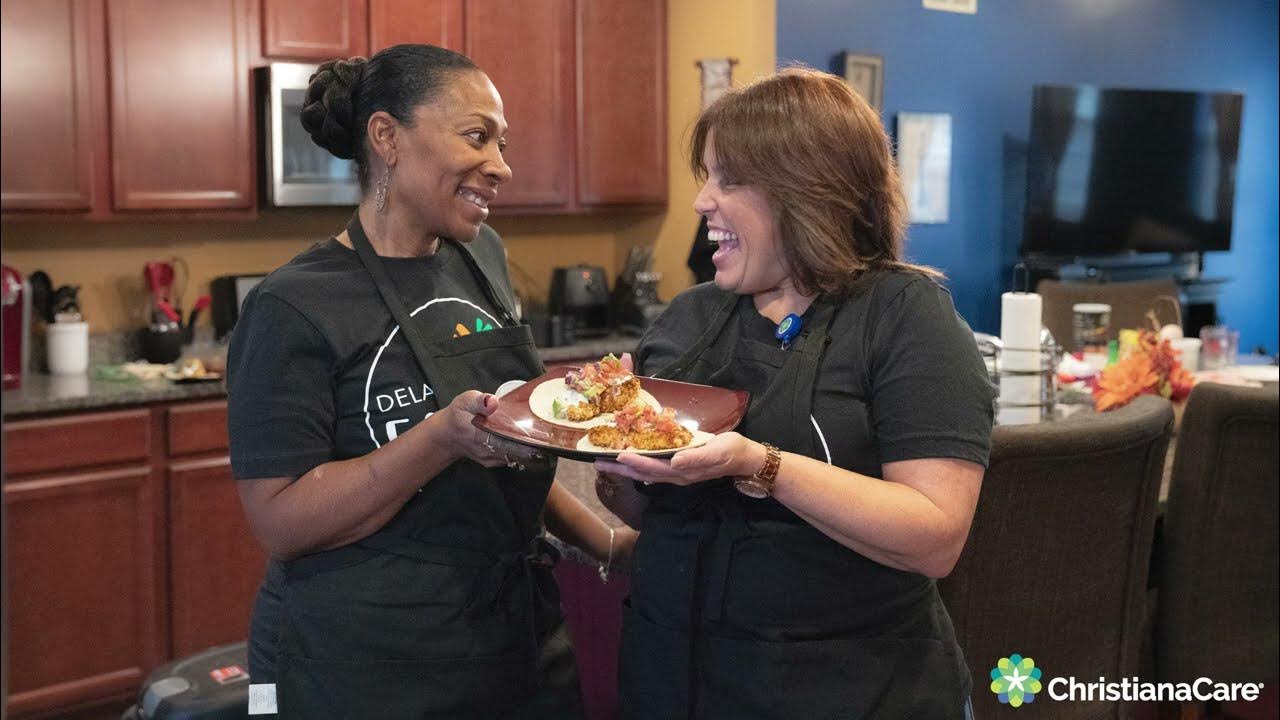
Food is Medicine: ‘It’s Not Just About Food–It’s About Friendship
Kim Solomon’s kitchen showed all the signs of a good lunch in the making – chopped veggies on the counter, a few dirty dishes in the sink and two people laughing as they cooked. “Don’t worry, we’re going to clean all this up,” ChristianaCare community health worker Michelle Torres, BBA-HM, said as she sliced tilapia for the heart-healthy fish tacos she was making with Solomon. “I’m not worried about the mess, especially when it tastes this yummy,” Solomon said as she watched Torres place the raw fish – coated with panko crumbs, spices and an egg wash – into the air fryer. A few years earlier, Solomon’s lunch would have been something quick from the pantry after cooking for her sons or helping a neighbor. But after dealing with the life-threatening effects of high blood pressure, she is learning – with Torres’ help – how to prioritize her own nutrition and health. Solomon is one of more than 225 patients enrolled in the Delaware Food Farmacy, a ChristianaCare partnership with Lutheran Community Services that provides weekly deliveries of locally sourced produce, meat and other foods, along with one-on-one support from a community health worker. Delaware Food Farmacy participants report lower A1C blood glucose levels, healthier blood pressure readings and reduced body mass index. Dishing out good health “It took me getting very sick to finally make my own health a priority in my life, and that’s a humbling experience,” said Solomon, who lives in Bear, Delaware. “This is not just about food – it is about friendship, and Michelle’s support really gives me motivation. It keeps me excited to hear her voice and know that she’s there for me.” Kim Solomon (left) finds prioritizing her own nutrition and health can be delicious, as she prepares panko-crusted tilapia for fish tacos with community health worker Michelle Torres. ChristianaCare is expanding efforts to reduce food insecurity among patients in an ongoing commitment to ending disparities and in recognition that access to nutritious food is critical to overall health. In addition to the Delaware Food Farmacy, over 100 Maryland Primary Care Program (MDPCP) patients are participating in Healthy Food, Healthy Hearts, a 12-week program that delivers fresh groceries to under-resourced Medicare patients with complex health needs. “Our focus is empowering people to maintain their health by giving them the resources they need for whole-person care, including healthy food and education related to meal preparation and living with a chronic health condition,” said Erin Booker, LPC, chief biopsychosocial officer for ChristianaCare. “Through our work with our community partners in the Food Farmacy program in Delaware and our Healthy Food, Healthy Hearts program in Maryland, we are acknowledging the intersection of nutrition and health care and the importance of creating a more equitable food system.” Food is Medicine Both programs operate on the Food Is Medicine model, which recognizes that nutritious foods are essential for good health – and they must be accessible in the community, particularly in under-resourced areas. Studies have shown that evidence-based, tailored food interventions can lead to improved health outcomes and better use of health care services among participants while also reducing food insecurity, said Michelle Axe, MS, CHES, program manager of Food and Social Care Initiatives for ChristianaCare. The Centers for Disease Control and Prevention estimated in 2023 that food insecurity results in nearly $77 billion in excess health care spending. Veggie power: Much of the food in the Food Farmacy is sourced locally through a cooperative agreement with Delaware’s Department of Agriculture and the Farm-to-Community Program, which connects local farms with organizations distributing food to the community. Among Food Farmacy graduates, 26% report a decrease in food insecurity and 18% said they experience less anxiety. “With these programs, we’re offering participants an opportunity to make a change in their life, not only for them as individuals, but for the entire family,” Axe said. “This is about more than food.” From farm to table Getting health care professionals to prescribe healthier food options – and then making it possible for the patients to obtain them – helps close the gap between medical nutrition and financial health, said Rob Gurnee, executive director of Lutheran Community Services. “Providing food – that’s our core competency,” Gurnee said. “What really makes this program different and incredibly valuable is that ChristianaCare can funnel the right people into the program and then maintain these relationships to help patients make changes that are sustainable. Together, we utilize the strengths of our organizations with the goal of improving health outcomes.” Each week, Delaware Food Farmacy participants select from a menu of fresh produce, lean meats and fish, whole grains, low-fat dairy, snacks and other healthy items, all of which fall under the Dietary Approach to Stop Hypertension (DASH) diet. Fresh-picked: With Delaware Food Farmacy, patients are getting local produce that is typically picked within 24 to 48 hours. Much of the food distributed through Delaware Food Farmacy is sourced locally through a cooperative agreement with Delaware’s Department of Agriculture and the Farm-to-Community Program, which connects local farms with organizations distributing food to the community. Solomon’s refrigerator is filled with local produce, eggs and lean meats from the Food Farmacy program, but it’s Torres who keeps Solomon on the path to good health with her encouraging personality and a tasty supply of easy-to-make recipes. A recipe for healthy eating: Air Fryer Fish Tacos. Kim Solomon’s review? “Yummy.” “She’s there to support you and help you understand it’s going to be OK,” Solomon said. “She goes above and beyond every time. We need more Michelles in our world.”
