
Experts Matter. Find Yours.
Connect for media, speaking, professional opportunities & more.
Georgia Southern’s public health center receives $4 million to assist rural hospitals nationwide
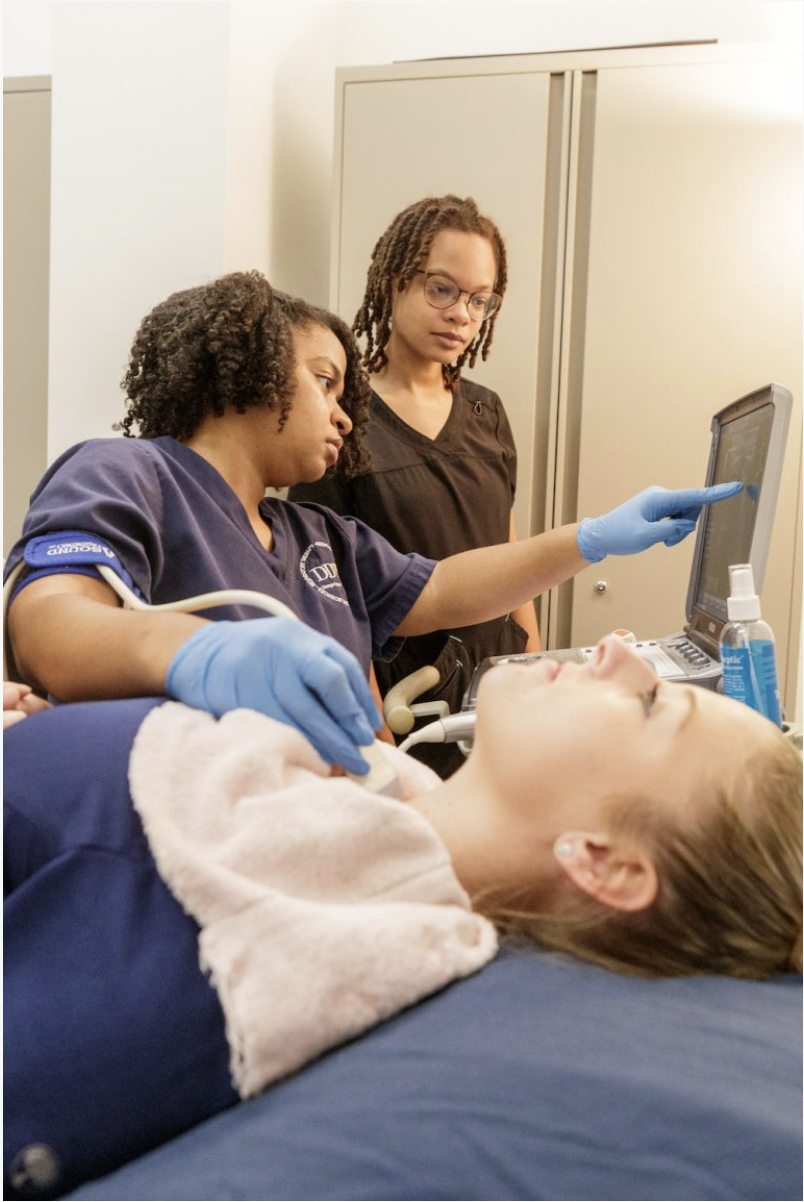
Georgia Southern University’s Center for Public Health Practice and Research at the Jiann-Ping Hsu College of Public Health (JPHCOPH) received a $4 million grant from the Health Resources and Services Administration (HRSA) to provide targeted technical assistance to rural hospitals nationwide. The funding will support the team’s implementation of the Targeted Technical Assistance for Rural Hospitals Program over a five-year period (2023-2028). “Many rural hospitals are struggling financially across the U.S.,” said JPHCOPH Dean Stuart Tedders, Ph.D. “Long-term, the primary program goal of this grant is to ensure that all rural hospitals are financially viable and positioned to serve their communities with the essential health care services that we all need and expect. A viable health care system is essential for assuring that all communities and their residents thrive. I am very proud of the Center for Public Health Practice and Research at the JPHCOPH and the commitment they have made to improving the quality of life of rural and underserved populations across the country.” Bettye Apenteng, Ph.D., and Charles Owens, both professors of health policy and management, serve as the co-principal investigators for the grant. “We are proud to be selected to work cooperatively with rural hospitals across the U.S. to strengthen their viability so they can continue to provide essential health care locally so the residents, the local hospital and the community may thrive,” said Owens. As part of this cooperative agreement, the team will work in partnership with HRSA and rural health stakeholders to provide in-depth and tailored technical assistance to rural hospitals at risk of financial distress nationwide. Technical assistance delivered as part of this program will help rural hospital communities implement a prioritized strategy for maintaining essential services locally through capacity building in evidence-based decision-making, operational and financial improvement, strategic management, community partnership, project implementation and evaluation. “We are excited to extend the work we have done in Georgia with rural hospitals, for close to a decade, to the rest of the nation,” said Apenteng. “We look forward to building strong collaborative relationships with rural hospital communities nationwide.” The grant activities will be executed by a multidisciplinary team that includes additional JPHCOPH faculty Angie Peden; Andrew Hansen, DrPH; Linda Kimsey, Ph.D.; William Mase, DrPH; Tilicia Mayo-Gamble, Ph.D., and Samuel Opoku, Ph.D.; and Parker College of Business’ Kwabena Boakye, Ph.D.; and the College of Arts and Humanities’ Jason Murdock. Interested in learning more or looking to talk with Bettye Apenteng, Ph.D., and Charles Owens about this grant? Simply click on an expert's icon or contact Georgia Southern's Director of Communications Jennifer Wise at jwise@georgiasouthern.edu to arrange an interview today.


Ask Our Expert: Why it’s important to get a flu vaccination
As cold and flu season approaches, it’s time to take proactive steps to ensure the health and well-being of everyone. Getting a flu vaccination is be the best defense in staying healthy this time of year. Klaus Ley, MD, founding co-director of the Immunology Center of Georgia, part of the Medical College of Georgia at Augusta University, emphasizes the significance of getting vaccinated against the flu. “The flu can have serious consequences and by getting vaccinated, you protect yourself and those around you,” Ley said. “It’s a simple yet effective way to prevent the spread of this contagious virus.” Flu vaccination is not only a responsible choice but also a crucial step in maintaining public health. The World Health Organization records about 1 billion cases of influenza each year. Severe cases often result in hospitalizations, contributing to up to 650,000 respiratory-related deaths globally. Worried about potential side effects from the vaccine? Ley said that’s a minor concern compared to the effects of the full-blown flu. According to the Centers for Disease Control and Prevention, life-threatening allergic reactions to flu shots are very rare. While severe reactions are uncommon, it’s important to let your health care provider know if you have a history of allergy or severe reaction to vaccines before getting a flu shot. “Common side effects from a flu shot could include soreness or swelling at the site of the injection, headache, low-grade fever, nausea, muscle aches or fatigue. Those minor side effects are an indication your immune system is responding as it should to the vaccination. You will experience much more severe fever, aches and other symptoms if you catch the flu without being vaccinated against it,” said Ley. Klaus Ley, MD, is the Georgia Research Alliance Bradley Turner Eminent Scholar in Immunology, founding co-director of the Immunology Center of Georgia, and a professor in the Department of Physiology at the Medical College of Georgia at Augusta University. He's available to speak with media regarding flu season and vaccinations - simply click on his icon now to arrange an interview today.


The National Science Foundation awarded nearly $3 million to Georgia Southern University to launch the Research and Mentoring for Postbaccalaureates (RaMP) program. At each university, RaMP supports approximately 10 students per year in gaining full-time research experience, mentoring for potential career paths and building a network of professional contacts. Georgia Southern’s project, “Mentoring and Research Opportunities for Careers in Coastal Science (MROC2S),” aims to aid those with little to no exposure to research or the resources to do so. Checo Colón-Gaud, Ph.D., associate dean of the Jack N. Averitt College of Graduate Studies and principal investigator for a National Science Foundation grant, totaling almost $3M, that will be used for a research and mentoring program. “The target is to benefit underrepresented minority students to increase diversity in the STEM (science, technology, engineering and mathematics) fields,” said Checo Colón-Gaud, Ph.D., associate dean of the Jack N. Averitt College of Graduate Studies and the project’s principal investigator (PI). Beginning in August 2024, participating students will be given an annual stipend. The postbaccalaureate fellows will have the opportunity to learn regional-specific natural resource science and participate in meaningful training with their peers before entering the field. “It would benefit those who are not yet sure if they want to pursue careers in natural resource science or graduate studies after earning their undergraduate degree,” Colón-Gaud added. Georgia Southern’s awarded fund will extend through 2027, and with 10 participants at a time, Colón-Gaud anticipates that this “significant and transformative” experience should strengthen the workforce. Interested in learning more about the Research and Mentoring for Postbaccalaureates (RaMP) program or looking to talk with Checo Colón-Gaud? Contact Georgia Southern's Director of Communications Jennifer Wise at jwise@georgiasouthern.edu to arrange an interview today.

It's been called the most exciting 30 seconds in college football - and recently Freedom, Georgia Southern University’s live bald eagle mascot that flies before each home game was flying high with some serious media attention on TV, radio and print. Unable to survive on his own because of an injury to his beak as a newborn, Freedom came to Georgia Southern in 2004 and now lives at the University’s Center for Wildlife Education in Statesboro alongside other eagles, raptors, reptiles and waterfowl. He will celebrate his 20th birthday this December. The school recently launched a new line of merchandise - and the news soon went viral putting Freedom and his handler, Wildlife Center Executive Director Steve Hein in the spotlight. The coverage was tremendous and if you're looking to know more about Freedom - let us help. Simply click on Wildlife Center Executive Director Steve Hein's icon now or Contact Georgia Southern's Director of Communications Jennifer Wise at jwise@georgiasouthern.edu to arrange an interview today.


An interdisciplinary team from Georgia Southern University was awarded more than $465,000 from the National Academies of Sciences, Engineering, and Medicine to foster the development of scientific and environmental skills that are critical to solving complex issues in the Gulf of Mexico region now and into the future. The award is part of an initiative with the Gulf Research Program (GRP) that awarded $2 million to eight projects that engage children and youth in place-based educational activities. The funded project, “Suwannee Watershed: Assessment and Monitoring of Place to Gain Understanding of Local Flow (SWAMP to GULF),” is led by principal investigator (PI) Lacey Huffling, Ph.D., associate professor of science education, and co-PIs Heather Scott, Ed.D., and Regina McCurdy, Ph.D., both assistant professors of science education. (l-r) College of Education’s Lacey Huffling, Ph.D., Regina McCurdy, Ph.D., and Heather Scott, Ed.D., are part of an interdisciplinary team awarded $465k to train science teachers in the Gulf of Mexico. “I am honored that we were selected to receive funding from the Gulf Research Board,” said Huffling. “Over the past four years, we have developed a strong network of Georgia middle and high school teachers who are dedicated to developing the science and environmental literacy of their students through watershed citizen science, specifically focused on areas of Georgia that flow into the Gulf of Mexico. We are excited to continue to grow this network of teachers in Florida further to foster scientific and environmental literacy of future generations to monitor and advance scientific and community understanding of the Lower Suwannee Watershed.” The group will train and support teachers in Florida to implement place-based learning through citizen science using communities as classrooms to deepen teachers’ and students’ sense of place and connection to local watersheds; research how teachers and students address local issues and solve problems by using and developing their critical environmental agency; and increase participation of rural populations in science, which have historically been underrepresented. This initiative, along with the seven other GRP projects, will help connect young learners across the Gulf of Mexico region with local environmental issues and work toward the betterment of the region at large. “The goal of these grants is to empower young learners through place-based education, an interdisciplinary, student-centered, inquiry-driven teaching and learning practice situated in the local community and environment,” said Karena Mary Mothershed, senior program manager for the GRP’s Board on Gulf Education and Engagement. “These eight projects have a high potential to create long-lasting impacts on underserved students in grades K-8 across the Gulf of Mexico region, enabling them to consider and address environmental challenges impacting their own communities.” Additional SWAMP to GULF project members include Georgia Southern staff and faculty: Mary Thaler, senior administrative assistant for the Center for STEM Education; J. Checo Colón-Gaud, Ph.D., professor of biology and associate dean of the Jack N. Averitt College of Graduate Studies; Shainaz Landge, Ph.D., assistant professor of chemistry, Luke Roberson, coordinator of Community Engagement and Outreach for the Institute of Water and Health; and Asli Aslan, Ph.D., director of the Institute of Water and Health. Interested in learning more? Contact Georgia Southern's Director of Communications Jennifer Wise at jwise@georgiasouthern.edu to arrange an interview today.
/cloudfront-us-east-1.images.arcpublishing.com/gray/AYBAAIIRXNAI7DF4F3YUO6E3XM.jpg)
Georgia Southern Libraries celebrates grand opening for Patent and Trademark Resource Center
Patenting an invention and trademarking a product name can be challenging, yet protecting intellectual property is vital. To that end, Georgia Southern University Libraries celebrated the grand opening of its Patent and Trademark Resource Center (PTRC) with ribbon-cutting events at the Armstrong Center in Savannah this past September. The PTRC is part of a nationwide network of 84 public, state and academic libraries designated by the United States Patent and Trademark Office (USPTO) to support the public with trademark and patent assistance. Georgia Southern Libraries is one of two designated PTRCs in Georgia. “With the recent economic development of Hyundai’s Motor Group Metaplant America, associated suppliers and regional commerce, our PTRC cultivates a culture of innovation and entrepreneurship,” stated Georgia Southern’s PTRC librarian representative John Schlipp. “Innovators and creative colleagues utilizing the PTRC service at Georgia Southern University Libraries will be able to determine the potential for their patent applications and federal registration for a trademark on their inventions, products or services.” Georgia Southern’s PTRC partners with the University’s Business Innovation Group (BIG) and other regional, like-minded organizations to foster innovation and creativity. Dignitaries from the USPTO, including Deputy Under Secretary of Commerce for Intellectual Property and Deputy Director Derrick Brent, and Georgia Southern President Kyle Marrero attended the ribbon-cutting in Savannah. Both events acted as workshops for inventors, entrepreneurs and business startups. The PTRC at Georgia Southern can assist patrons in conducting their own free patent and trademark searches on specialized USPTO databases. Additionally, patrons can receive one-on-one instruction on the application process, improve awareness of a product field, determine application feasibility and prepare for consulting with an attorney. Interested in learning more? Contact Georgia Southern's Director of Communications Jennifer Wise at jwise@georgiasouthern.edu to arrange an interview today.

Is too much of a good thing actually a bad thing? That’s what researchers in Georgia Southern’s Biodynamics and Human Performance Center aim to find out through a recent study of 75 ultramarathon runners during the 50th anniversary of the Western States 100-mile Endurance Run (WSER) in California. The study focuses on the benefits of physical activity beyond the typical recommended amount by examining the cardiovascular effects of extreme exercise in the WSER, a 100-mile trail race through the Sierra Nevada mountains that climbs more than 18,000 feet and descends nearly 23,000 feet before runners reach the finish. Drs. Grosicki and Babcock (University of Colorado, Anschutz Medical Campus) work through the night to collect cardiovascular measures on race finishers. “We know that exercise is beneficial for health, and national and international public health agencies, such as The American Heart Association, advise that adults get at least 150 minutes of moderate or 75 minutes of vigorous physical activity per week,” said Gregory Grosicki, Ph.D., associate professor in the Waters College of Health Professions Department of Health Sciences and Kinesiology. “Moreover, there is a dose-response relation between exercise and health, whereby an individual can gain even more health benefits by being active for up to 300 minutes per week,” he continued. “However, it is uncertain whether exercising for greater than 300 minutes will confer any additional health benefits, and importantly, excess exercise may actually detract from cardiovascular health.” It is important to note, Grosiciki said, that this apparent “partial loss of health benefits” from excess exercise is theoretical for the time being. “Studies such as ours will help to determine whether this hypothesis is valid, and if so, what can be done about it,” he said. This is the third year Grosicki and colleagues attended WSER to collect data on some of the world’s most extreme athletes. Previous studies focused on changes in gut health during exercise, which, believe it or not, may actually be linked to changes in cardiovascular health. Associate Professor Gregory Grosicki, Ph.D., and research colleagues stand at the start line of the Western States Endurance Run. Grosicki recruited 10 research faculty and students from Auburn University, Florida State University, San Francisco State University and the University of Colorado Anschutz to assist in the data collection. “We measured blood pressure, arterial stiffness, heart size and function and kidney blood flow, and we collected blood and urine from 75 athletes pre-race, 55 of which completed the race and returned for post-race measures,” stated Grosicki. “This is, without question, the largest and most comprehensive dataset ever to be collected at a single event like this.” WSER begins in Olympic Valley, California, and ends in Auburn, California, and is considered one of the oldest and most competitive ultramarathons in the United States. Participation is highly selective, and if chosen, athletes have only 30 hours to cover the distance. The Western States Endurance Run Research Foundation funded this project. This is exciting research and you are a reporter looking to contact Gregory Grosicki, Ph.D. from the Waters College of Health Professions Department of Health Sciences and Kinesiology - then let us help. Simply contact Georgia Southern's Director of Communications Jennifer Wise at jwise@georgiasouthern.edu to arrange an interview today.
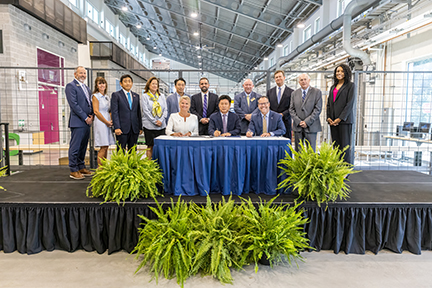
In a milestone collaboration aimed at fostering workforce development, innovation, and community enrichment, Hyundai Motor Group Metaplant America (HMGMA), Georgia Southern University and Ogeechee Technical College are signing a formal agreement to work together in addressing regional workforce needs while advancing academic excellence and technological innovation. Ogeechee Technical College President Lori Durden, HMGMA CEO and President Oscar Kwon, and Georgia Southern University President Kyle Marrero sign transformative agreement surrounded by officials from both institutions and HMGMA. The partnership will encompass a diverse range of initiatives that reflect the shared commitment HMGMA and its local education partners have to catalyze positive change for both the academic community and the broader society. Leveraging their respective strengths, this collaboration aims to address workforce demands, create transformative educational pathways, and drive impactful research endeavors. “Together, we are not just building cars; we are building futures, strengthening the community and driving progress,” said HMGMA CEO Oscar Kwon. “That is part of Hyundai’s mission: progress for humanity. Our partnership with these institutions reflects our shared vision for a brighter, more innovative future.” As part of this partnership, Georgia Southern University has committed to build on the success it has already seen in recruitment services for HMGMA. These services will include on-campus information sessions, dedicated company recruiting events, and on-campus interview days for graduating seniors. By bridging the gap between academia and industry, the University is ensuring that its students are well-prepared for the demands of the professional world. The university also will offer professional development certifications and courses for the company’s employees through its Continuing and Professional Education programs. “This partnership stands as a testament to the value of collaboration between academia and industry in driving holistic growth,” said Georgia Southern President Kyle Marrero. “By uniting forces, HMGMA and Georgia Southern University are forging a path that not only elevates educational opportunities but also cultivates a thriving community equipped to meet the challenges and opportunities of the future.” Georgia Southern also will strengthen its alliance with Ogeechee Technical College to create revised and expanded articulation agreements, pathway programs, and credit transfers. These initiatives will pave the way for the development of collaborative academic programs tailored to meet the specific workforce needs of the region. This includes exploring innovative degree pathways such as Advanced Manufacturing Engineering, as well as fostering additional academic collaborations that align with workforce-driven educational programs. Ogeechee Tech’s commitment includes continuing its record of providing training to local companies to include implementing the Electric Vehicle Professional Technical Certificate of Credit and Hybrid/Electric Vehicle Repair Technician Technical Certificate of Credit programs, and developing Industrial Maintenance Noncredit Training for HMGMA Employees. Additionally, Ogeechee Tech agrees to provide on-campus recruitment events and career fairs to current and past graduates. “Ogeechee Technical College is very excited about entering into this MOU with HMGMA,” said Lori Durden, president of Ogeechee Tech. “This has been several months in the making, and like other institutions and technical colleges in our region, we are going to do all that we can to support the efforts of our Governor to make Georgia the electric mobility capital of America. This is an exciting day for Ogeechee Technical College, and we look forward to supporting the evolving workforce development needs of this region.” With the Memorandum of Understanding, HMGMA will help promote educational opportunities in the region; develop internship, career pathway programs, and other appropriate work-based learning opportunities; and commit to exploring potential research, innovation, and commercialization projects. Interested in learning more or looking to talk with Georgia Southern President Kyle Marrero about this exciting new partnership ? Contact Georgia Southern's Director of Communications Jennifer Wise at jwise@georgiasouthern.edu to arrange an interview today.

Georgia Southern University’s Institute for Health Logistics and Analytics (IHLA) and the Georgia Department of Public Health (DPH) have once again joined forces to reduce the spread of COVID-19 in confinement facilities across the state. DPH has awarded the IHLA a contract worth $10 million to complete a second year of work. “Throughout the pandemic, COVID-19 was a significant cause of illness and death among confinement facility residents and employees,” said Jessica Schwind, Ph.D., director of IHLA. “SARS-CoV-2, the virus that causes COVID-19, is still circulating and we need to continue to support these facilities in reducing viral transmission.” With the funding, the IHLA assists with the purchase and coordination of allowable COVID-19 mitigation items for enrolled facilities across the state of Georgia. The focus in year two of the project is to improve air quality and offer a seamless process for confinement facilities. Recipients do not incur any direct costs and the paperwork and the procurement process is handled entirely by Georgia Southern. “We work with each facility to determine what they need,” said Kathryn Stewart, budget manager at IHLA. “We then handle the ordering, payment and delivery. For facilities that need fairly standard supplies, we have an easy order form process. For those with complex requests, we work with them individually to make sure they receive the best solution for their particular needs.” Facilities in Georgia are eligible to receive $25,000 to $250,000 of COVID-19 mitigation supplies. The amount awarded is determined by the number of detainees each facility is licensed to hold. Eligible items include portable HEPA filter units to improve air quality, personal protective equipment and cleaning and disinfecting supplies. “We are really proud of the work this institute has accomplished,” said Carl Reiber, Ph.D., Georgia Southern’s provost and vice president for academic affairs. “Not only has the IHLA maintained a focus on public impact research, it is a shining example of the significant role Georgia Southern is taking on improving health across the state.” All eligible correctional confinement facilities, which includes adult prisons and jails, youth detention centers and holding cells in the state of Georgia, are encouraged to enroll, even if they received funding in the previous cycle. This project is supported by the Centers for Disease Control and Prevention’s Detection and Mitigation of COVID-19 in Confinement Facilities Epidemiology and Laboratory Capacity Grant Program, which provided a financial assistance award to the Georgia Department of Public Health. For more information and to enroll in the program visit the project's website: The IHLA at Georgia Southern provides comprehensive solutions to improve and advance the health of populations around the world. The institute specializes in planning, evaluation, capacity building and research services to enhance the health infrastructure in organizations and communities. To learn more or to speak with Jessica Schwind, Ph.D., director of IHLA - simply contact Georgia Southern's Director of Communications Jennifer Wise at jwise@georgiasouthern.edu to arrange an interview today.
Georgia Southern University to offer new executive master’s in criminal justice degree
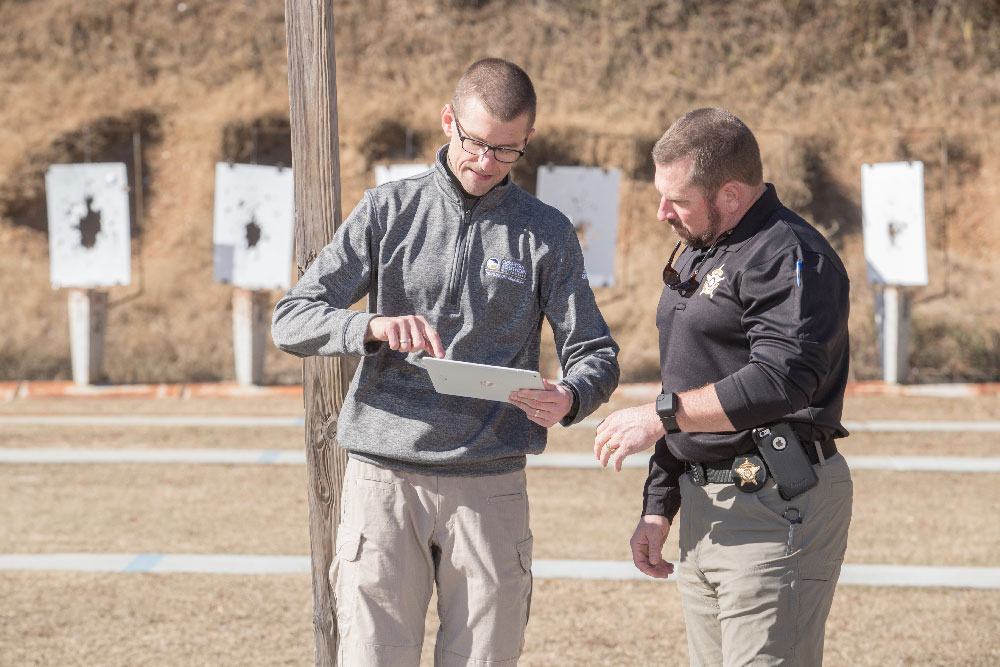
Georgia Southern University is offering members of the law enforcement community a chance to boost their careers with a brand new executive master’s in criminal justice (EMCJ), a program specifically tailored for law enforcement professionals seeking career advancement. This program is certified by the Georgia Peace Officer Standards & Training Council (P.O.S.T.) and offers a comprehensive curriculum designed to accommodate the demanding work schedules of law enforcement agencies. Students in the program follow a unique schedule that features two, three-week modules per semester, requiring only one week of on-site attendance at the Armstrong Campus in Savannah, Georgia. Program participants can complete their degree in just two years. “I am excited about this new and innovative executive-style graduate program designed for law enforcement professionals across Georgia,” said Ryan Schroeder, Ph.D., Dean of the College of Behavioral and Social Sciences. “Students in the program will be exposed to current research in criminology and criminal justice and develop research skills to advance their careers. Graduates are prepared to be leaders in law enforcement organizations across the state.” The EMCJ program is especially beneficial for officers in county and city law enforcement, sheriff’s department personnel, Georgia Bureau of Investigation, Georgia FBI, University System of Georgia law enforcement agencies and more. Through the coursework, students will refine their analytical, research and critical thinking skills, foster a superior understanding of criminal justice and have the chance to network with fellow officers, build relationships and enhance connections nationwide. “We’re excited to offer this executive master’s program to all our law enforcement partners throughout the state,” said Laura Mcullough, director of Public Safety and Chief of Police for Georgia Southern. “This program is designed to work specifically with the agencies and for the upcoming leaders in law enforcement within Georgia. As an agency head, the ability to develop our future leaders while being able to provide for the demands of our communities is invaluable. This program will allow officers to develop into better officers and stronger leaders within their agencies and community without demanding large amounts of time away from work or home.” The program does not require a nomination, but candidates must hold a bachelor’s degree from a regionally accredited institution and be a certified, registered or exempt peace officer currently employed with a Georgia law enforcement agency recognized by the Georgia P.O.S.T. Interested in learning more? Contact Georgia Southern's Director of Communications Jennifer Wise at jwise@georgiasouthern.edu to arrange an interview today.