
Experts Matter. Find Yours.
Connect for media, speaking, professional opportunities & more.

Step aside Walking Dead – There’s another leading TV show being shot in Georgia now
When location scouts for NBC’s new television series “Council of Dads” combed Savannah for a realistic venue to shoot multiple hospital scenes, they knew they had found something special in the Health Professions Academic Building on Georgia Southern University’s Armstrong Campus. “I set up a visit, came and looked at it and I was floored,” said “Council of Dads” location scout and Armstrong Campus alumnus Anthony Paderewski. “I couldn’t believe it. Basically, you have a backlot for a TV show here. It was absolutely perfect for what we were looking for. So that being said, I went and I talked to the producers and I got some pictures. When I showed the pictures everyone was blown away.” “Council of Dads,” which premiered March 24 and now airs on Thursdays, is based on the book by Savannah native Bruce Feiler, and developed by former “Grey’s Anatomy” showrunners Tony Phelan and Joan Rater, who also serve as executive producers on the series. The story follows Scott Perry, a father of five who, after receiving a cancer diagnosis, asks a group of friends to step in as father figures to his children in the event that he isn’t around to see them grow up. “It’s an emotional family drama,” explained “Council of Dads” co-executive producer and producing director Jonathan Brown. “The idea is to try and be as real as possible. And the show is telling the story of a family and what it means to be a family in this day and age. It’s not just blood. The definition of family is growing, broadening with the types of relationships that are now included in a family. This is the story of one of those families that is made up of blood relationships, friendships, adoption and all those different kinds of things.” The show filmed almost entirely on location in the Savannah area for five months. Several of the scenes take place in a hospital, and the set has to be believable, multifaceted and offer the right aesthetic for television. Primarily, the true-to-life setting allows the University to provide exceptional education and training opportunities to help students succeed while addressing the healthcare needs of the region. The Waters College of Health Professions, housed in the Academic Building and Ashmore Hall, is the largest undergraduate health sciences college in the state of Georgia, and the University’s allied healthcare programs represent almost one-fifth of all undergraduate healthcare degrees earned in Georgia. “The use of the Health Professions Academic Building is validation that we are training our students for real-world health care settings,” said Barry Joyner Ph.D., dean of the Waters College of Health Professions. “The goal for the building was to simulate a hospital setting, and we have accomplished that.” Are you a journalist looking to cover this topic or learn how Georgia and Universities like Georgia Southern are working with film and television industries – the let us help with your stories. Barry Joyner is the dean of the Waters College of Health Professions at Georgia Southern University and is available to talk about this latest project on campus – simply click on his icon to arrange an interview today.


Voice teachers and singers are facing an avalanche of questions while planning how to return to “normal operations” as restrictions ease from the COVID-19 pandemic. Singers generally expel more breath and saliva than normal talkers, so are their social distancing requirements different than most? If public health officials require six feet of separation at all times, how does a choir practice and perform? If voice lessons have to be done remotely, how can tone and pitch be properly evaluated via an internet connection? These are just some of the dilemmas facing voice teachers and music professors. “We are highly concerned in the arts related to how we deal with teaching when we return to campuses, classrooms and studios, particularly with singing,” said Allen Henderson, executive director of National Association of Teachers of Singing (NATS) and professor of voice at Georgia Southern University. “Singers are what we might call super-emitters — in terms of what is expelled in a breath. What kind of precautions do we need to take?” To help start answering such questions, Henderson and NATS organized a webinar called “A Conversation: What Do Science and Data Say About the Near-Term Future of Singing?” It is scheduled for Tuesday, May 5, at 5 p.m. He said within 24 hours of the webinar’s announcement, more than 2,000 people had signed up. “I was able to secure one of the major researchers on aerosolization of viruses,” Henderson said. “I suspect there will be a lot of higher education arts administrators in attendance and the information shared will be used widely in formulating responses to the unique problems of teaching music when reopening occurs.” Henderson noted that when the country shut down, the process was fairly quick and uniform. As organizations such as universities make plans to return to ‘normal’ operations, leaders will likely have to develop their own plans unique to their settings. “It will be complicated, and it’s about what protocols institutions and individuals have in place in regard to testing and contact tracing so that there’s a sense that we are creating as safe an environment as possible,” Henderson said. “Our job is to arm our colleagues with the best possible science-based information we can.” To learn more about the upcoming webinar, simply visit the story attached:
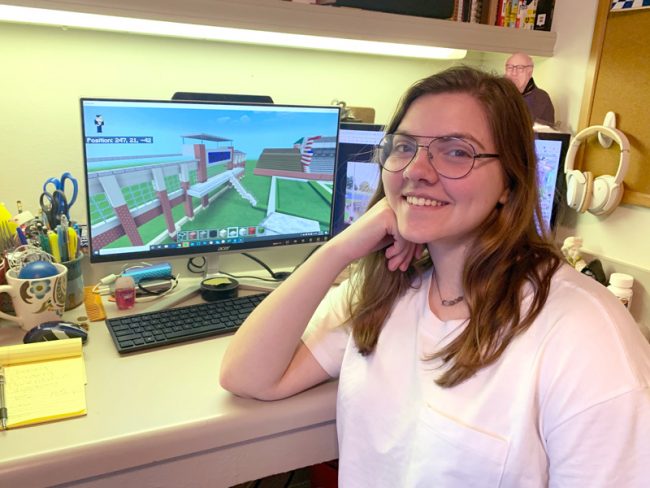
No graduation – no problem. See how one Georgia Southern senior took care of her ceremony online
For many, this spring was to be a milestone commemorating many years of hard work and dedication. Graduating from university is the official step into adulthood and the achievement of academic excellence. But this year is different. COVID-19 is either restricting celebrations or cancelling them outright. For some students, it is a disappointing moment. Others, like Rebecca Hooper, a senior marketing major at Georgia Southern University, saw an opportunity to innovate. On Tuesday, March 17, during spring break, Georgia Southern announced the cancellation of its in-person Spring 2020 Commencement ceremonies for Statesboro and Savannah. Since that time, the University has announced an online ceremony for graduates on May 8 and 9 and hopes to be able to hold a rescheduled in-person ceremony on or before commencement in December. As the news broke, Hooper and her friend were playing Minecraft, a sandbox video game which allows users to create digital worlds where they can build as many landscapes and structures as they like. As they played the game and chatted online, Hooper had what seemed like a crazy idea. “I was like, ‘Wouldn’t it be cool if we built the stadium?’ I just said it as a joke at first, but then the next day rolled around and I started on it. And then it kept on going and going and I couldn’t stop,” she said. Two days later (and more than eight hours of digital construction), Hooper had created Glenn Bryant Field and the home side of the stadium. She also built a commencement stage complete with a jumbotron that said, “Hail Southern! One More Time!” Knowing that no ceremony would be complete without Freedom’s Flight, Hooper added “Freedom” on the stage. However, the closest thing she could find to the University’s bald eagle mascot was a green parrot, who let out a little squawk and bobbed up and down. Hooper posted a flythrough of the stadium on Twitter, with a comment that said, “GSU said no graduation in Paulson. I said Minecraft graduation in Paulson #HailSouthern.” The response was immediate and overwhelming. Hooper has big plans for her virtual stadium. She’s planning on doing some online tours through Twitch, a video game playthrough app. She’s also invited her friends to help her finish building the stadium, complete with Bishop Fieldhouse, press boxes, sky boxes, and the large parking lot where she hopes to invite people to build their own virtual tailgating structures. If you are journalist and would like to know more about this story - simply reach out to Georgia Southern Director of Communications Jennifer Wise at jwise@georgiasouthern.edu to arrange an interview.

Does gender matter when it comes to COVID-19?
As America begins to adapt and adjust to the COVID-19 pandemic, details are emerging about who is more susceptible to the virus and why. The latest is gender. In fact, as some are observing, it seems men are more likely to fall victim to COVID-19 than women. A report published by the New England Journal of Medicine showed men not only made up 60% of the first 393 COVID-19 patients admitted in two New York City hospitals, but they were the highest group placed on ventilators. Another study of people hospitalized in the United States for COVID-19 in March similarly found that “males may be disproportionately affected by COVID-19 compared with females.” “The higher risk of COVID-19 among men we are seeing in New York City may be consistent in other US regions, including the southwestern Georgia area that has been disproportionately affected by COVID-19,” says Dr. Justin Moore, an assistant professor in the Department of Population Health Sciences in the Medical College of Georgia at Augusta University. “Researchers are still looking into why men, specifically African American men, are seemingly more susceptible to the virus. However, we know this may be due to underlying health issues, including hypertension, obesity and diabetes.” It’s a startling detail and one that needs to be communicated. If you are a journalist covering COVID-19 and how men may be more vulnerable than women during this crisis – then let our experts help. Dr. Justin Moore is an expert in spatial epidemiology and an associate professor at the Institute of Public and Preventive Health at Augusta University. He is available to speak with media regarding this topic – simply click on his icon to arrange an interview.


As the global pandemic touches almost all parts of the United States – it is essential that the public receives only accurate and definitive information from credible and expert sources as news, media and information reaches million of people across the country. An invisible enemy is killing thousands and forcing people worldwide to cower behind closed doors. Unfounded conspiracy theories and miracle “cures” abound on social media. Politicians and pundits send mixed messages about how to protect yourself. Who you gonna call? - Bedford Gazette, April 14 As the coronavirus rampages, the public increasingly is turning to experts in academia and government -- the educated, experienced “elites” that many Americans had tuned out. The Coronavirus 2019 (COVID-19) situation is certainly new to all of us. As guidance from the CDC changes and instructional methods transition, there are experts at Georgia Southern who can help to answer questions such as: How should we best address this pandemic as a nation? How should we best address this pandemic individually? What does it mean to “flatten the curve?" What is the economic impact of COVID-19? How do you best manage employees virtually? Why are grocery stores having trouble keeping inventory on their shelves? Should we prepare for a lapse in groceries and goods? What contributes to the fear and panic in disasters and pandemics? What do educators, parents and students need to know to prepare for online learning in the K-12 and college settings? If you are a reporter covering COVID-19, let the team of experts from Georgia Southern help with your coverage. Public Health: Atin Adhikari, Ph.D. Associate Professor of Environmental Health Sciences, Department of Biostatistics, Epidemiology and Environmental Health Sciences, Jiann-Ping Hsu College of Public Health Dr. Adhikari brings over 15 years of extensive research experience on aerosols, airborne microorganisms, other air pollutants, and related respiratory disorders. His current research areas include environmental air quality, exposure assessment, occupational health and safety, environmental microbiology, and respiratory health. Before joining JPHCOPH, Dr. Adhikari was also involved (Co-I) with two DoD-DTRA and U.S. Office of Naval Research funded projects on inactivation of hazardous microorganisms. Chun Hai (Isaac) Fung, Ph.D. Associate Professor, Department of Biostatistics, Epidemiology and Environmental Health Sciences, Jiann-Ping Hsu College of Public Health Dr. Isaac Chun-Hai Fung is a digital health expert and an infectious disease epidemiologist. He analyses social media data for public health surveillance and health communication and uses digital technologies for public health interventions. He investigates the transmission of communicable diseases with a focus on respiratory infections and environmentally transmitted infections. He applied a variety of methods, from classical statistical methods to machine learning and mathematical modeling, to address public health problems and to provide solutions to policy-makers. He is especially interested in assisting public health agencies in their responses to public health emergencies. He is currently a guest researcher with the Health Economics and Modeling Unit, Division of Preparedness and Emerging Infections, National Center for Emerging and Zoonotic Infectious Diseases, Centers for Disease Control and Prevention (CDC). Examples of his recent projects include: Surveillance of unplanned school closures through social media platforms, Analysis of social media posts pertinent to public health emergencies, such as Ebola, MERS and Zika. Jessica Schwind, Ph.D. Assistant Professor, Department of Biostatistics, Epidemiology, and Environmental Health Sciences, Jiann-Ping Hsu College of Public Health Dr. Jessica Smith Schwind is an epidemiologist and program evaluator. She joined the Department of Biostatistics, Epidemiology and Environmental Health Sciences at JPHCOPH in August 2017. Her current research interests include disease surveillance, capacity building and risk communication for the prevention and/or early recognition of outbreaks with a focus on: best practices for operationalizing the ‘One Health’ approach, understanding and improving capacity building efforts and priorities for increasing health surveillance, and improving early warning systems for disease detection and response by bridging the gap between global digital databases and local health information. Schwind also conducts SoTL research on innovative online/onsite teaching and evaluation with a focus on immersive and service-learning practices. Pandemics, panic and the public: Amy Ballagh, Ed.D. Associate Vice President of Enrollment Management Featured in the Washington Post : Jessica Schwind, Ph.D. Assistant Professor, Department of Biostatistics, Epidemiology, and Environmental Health Sciences, Jiann-Ping Hsu College of Public Health Dr. Jessica Smith Schwind is an epidemiologist and program evaluator. She joined the Department of Biostatistics, Epidemiology and Environmental Health Sciences at JPHCOPH in August 2017. Her current research interests include disease surveillance, capacity building and risk communication for the prevention and/or early recognition of outbreaks with a focus on: best practices for operationalizing the ‘One Health’ approach, understanding and improving capacity building efforts and priorities for increasing health surveillance, and improving early warning systems for disease detection and response by bridging the gap between global digital databases and local health information. Schwind also conducts SoTL research on innovative online/onsite teaching and evaluation with a focus on immersive and service-learning practices. Jodi Caldwell, Ph.D. Executive Director of the Georgia Southern University Counseling Center On a national level, Dr. Caldwell is currently serving her second elected term to the Directorate Board of the Commission for Counseling and Psychological Services of the American College Personnel Association and is a certified Red Cross Disaster Mental Health Responder. COVID-19 and logistics, the economy and the workforce: Alan Mackelprang, Ph.D. Associate Professor, Department of Logistics & Supply Chain Management Currently the director of the Ph.D. in Logistics and Supply Chain Management program, his research interests include examining interdependencies among supply chain partners, JIT/Lean production, manufacturing flexibility as well as supply chain integration. Scott Ellis, Ph.D. Associate Professor, Department of Logistics & Supply Chain Management Scott Ellis’ research interests center on the study of purchasing and supply management processes and functions. He has published in Journal of Operations Management and Journal of Supply Chain Management, among others. Richard McGrath, Ph.D. Professor, Parker College of Business Richard McGrath researches immigration, consumer survey methodology, and applied microeconomics. He is a long time expert on the economy in Savannah and the Coastal Empire. Michael Toma, Ph.D. Fuller E. Callaway Professor of Economics Michael Toma is a professor and lead analyst for the Center for Business Analytics and Economic Research, a student- and faculty-staffed applied research group focused on the Savannah-area economy that works with many local partners on special initiatives, customized applied business research and impact studies. Based on Toma's analytics, the Center publishes the quarterly Coastal Empire Economic Monitor, a closely watched economic report. Toma's community ties are also strong in the area. He serves on the Board of Directors for United Way of the Coastal Empire and on the organization's Executive Committee as chair of the Community Investments Committee. David Sikora, Ph.D. Assistant professor of management David Sikora’s research interests include strategic human resource management and the business impact of employee management practices. He has published his research in such journals as the Journal of Applied Psychology, Leadership Quarterly, Human Resources Management Review, International Journal of Selection and Assessment, and International Journal of Human Resources Development and Management. Prior to his academic career, David had extensive corporate experience in human resources and marketing including serving as human resources vice president at Cigna Corporation and director of human resources product management at Gevity HR, Incorporated. Steven Charlier, Ph.D. Associate Professor, Department of Management Charlier’s research interests are focused on the modern work environment, and include virtual teams, e-learning, leadership in a virtual world, and management education. His work has been published in several leading international academic journals, including The Leadership Quarterly, Human Resource Management, Journal of Organizational Behavior, Academy of Management Learning & Education, and Human Resource Management Review. Online teaching and learning: Charles Hodges, Ph.D. Professor, Department of Leadership, Technology and Human Development Hodges is a tenured professor of instructional technology at Georgia Southern with over 20 years of online teaching experience. As an active researcher in online teaching and learning, Hodges presents regularly at the national and international levels. He currently serves as the editor-in-chief of the journal and he is a long-time member of the Association for Educational Communications and Technologies, a professional organization for Educational Technology scholars and practitioners. Featured in the Inside Higher Ed article (published 3/11/20): Jeffrey Tysinger, Ph.D. and Dawn Tysinger, Ph.D. Professors, Department of Leadership, Technology and Human Development The Tysingers are one of very few individuals who are actively researching in the area of crisis preparedness in K-12 online learning Professors, Department of Leadership, Technology and Human Development The Tysingers are one of very few individuals who are actively researching in the area of crisis preparedness in K-12 online learning: o https://digitalcommons.georgiasouthern.edu/nyar/vol2/iss1/4/ o https://dl.acm.org/doi/10.5555/2811036.2811057 o https://eric.ed.gov/?q=Tysinger&id=EJ1147626 o https://eric.ed.gov/?q=Tysinger&id=ED595756 Dawn Tysinger, NCSP, serves as professor and program director for the nationally-recognized, National Association of School Psychologists-Approved Education Specialist program in school psychology at Georgia Southern University. Tysinger has contributed to her field through active participation in NASP, publications in school psychology journals, and presentations at the local, state, regional, national, and international levels. She currently serves on the NASP program review board for school psychology programs and as a member of the editorial boards of Journal of School Psychology, Psychology in the Schools, Trainers’ Forum: Journal of the Trainers of School Psychologists, National Youth-At-Risk Journal and Journal of Online Learning Research. Jeff Tysinger, NCSP, is a professor of school psychology at Georgia Southern University. He has been the president of the Kansas Association of School Psychologists (KASP), editor of the KASP Newsletter, KASP Futures committee member, KASP NCSP committee member, member of National Association of School Psychologists (NASP) since 1997, Nationally Certified School Psychologist since 1997, NASP Program Reviewer, NCSP Portfolio Reviewer, member of NCATE Board of Examiners, member of Georgia Association of School For parents at home with (k-12) children now distance learning: Chelda Smith Associate Professor, Department of Elementary and Special Education Smith’s master's thesis focused on parents as the first teachers of children and can speak to how parents can be empowered in that role. Her research agenda continues to focus on home and community assets, of which parents/caregivers are the primary influence and factor for positive outcomes. Lastly, as a parent of both a middle schooler and a toddler, Smith is navigating the process of being a primary educator in the home in real-time. Each expert is available to speak with media – simply contact Melanie Simon at 912.313.3245 to arrange an interview today.

Find out how Georgia Southern is helping America’s Second Harvest during COVID-19
Sustainability is at the forefront of the FORAM Sustainable Aquaponics Research Center (SARC) on the Georgia Southern University Armstrong Campus, even during a pandemic. SARC recently donated produce grown at the aquaponics farm on campus to America’s Second Harvest of Coastal Georgia. Donations like this, as well as other community service projects, are a large part of SARC’s mission. “SARC’s mission has always included community outreach and education, which means knowing how we can support the community when it’s in need,” SARC curator Brigette Brinton said. “Right now we’re just supplying food instead of information.” Brinton said it’s also important to make sure the food grown at the aquaponics farm isn’t wasted in order to be as sustainable as possible. “We are donating produce that would otherwise be in excess or go bad before being consumed,” she said. “We had a lot of lettuce ready to plant just after spring break that would normally have gone to the Southern Cafe, but they don’t need it, and the heat is causing it to bolt and wilt quickly. So far, we’ve donated lettuce and kale, and soon it will be lettuce and chard.” Brinton, two student workers and SARC senior scientist Heather Joesting, Ph.D., have been working at the aquaponics farm during the period of social distancing to make sure the produce growing in the greenhouse remains usable. In addition to donating produce to Second Harvest, the research center partners with the Nine Line Foundation to help show homeless veterans how to grow their own food. Also, they partner with Savannah State University to help integrate aquaponics into K-12 curriculum. “In addition to conducting fundamental research on aquaponics, we value the importance of education and outreach to the community,” SARC director Brent Feske, Ph.D., said. If you are a journalist and you are looking to cover or learn more about how Georgia Southern University is using its knowledge and resources to support those in need during COVID-19 – then let us help. SARC’s director, Brent Feske is available to speak with media – simply click on his icon to arrange an interview today.


The forgotten crisis – are opioids and overdoses being overlooked during the COVID-19 outbreak?
As one crisis overcomes another in the spectrum of news coverage and public health messaging, there’s a serious concern that drug users are particularly vulnerable and potentially being forgotten in the wake of COVID-19. With millions of Americans forced into weeks of extended isolation, several communities have reported a spike in drug overdose deaths, prompting health officials to raise concerns about the safety of those suffering from substance use disorders amid the COVID-19 pandemic. In Jacksonville, Florida, the fire and rescue department reported a 20% increase in overdose emergency calls in March. In Columbus, Ohio, the county coroner’s office saw a surge in overdose deaths, including 12 in a 24-hour period the first week of April. And in New York State, at least four counties have acknowledged an increase in reported overdoses, including Erie County, where officials saw at least 110 drug overdoses, including 36 deaths, reported since the beginning of March. “The opposite of addiction is not sobriety but connectedness,” said Dr. Joseph Hernandez, an associate professor in the Department of Psychiatry and Health Behavior at the Medical College of Georgia at Augusta University. “As we practice social distancing to control the spread of COVID-19, many addicts have lost their traditional in-person meetups, which may explain the jump in overdose deaths.” Despite these challenges, Hernandez says the addiction recovery community is working to maintain connections by switching to online or virtual formats. Additionally, most rehabilitation centers for substance abuse have remained open and are screening their residents to prevent the spread of COVID-19. It’s unclear whether the reports from local officials reflects a broader trend nationwide. The Centers for Disease Control was unable to provide national data on overdose deaths during the coronavirus crisis, but a spokesperson says its officials are “aware of the concerns involving COVID-19 and drug overdoses and that it could affect some populations with substance use disorders.” If you are a journalist covering topics like overdoses and how drug abusers are being cared for or potentially forgotten during this crisis, then let our experts help. Hernandez is a leading expert in addiction medicine and is available to speak with media regarding this topic — simply click on his name to arrange an interview. Also, check out the Augusta University Expert Center to view a complete list of our experts and get the latest on COVID-19 on our dedicated resource page.
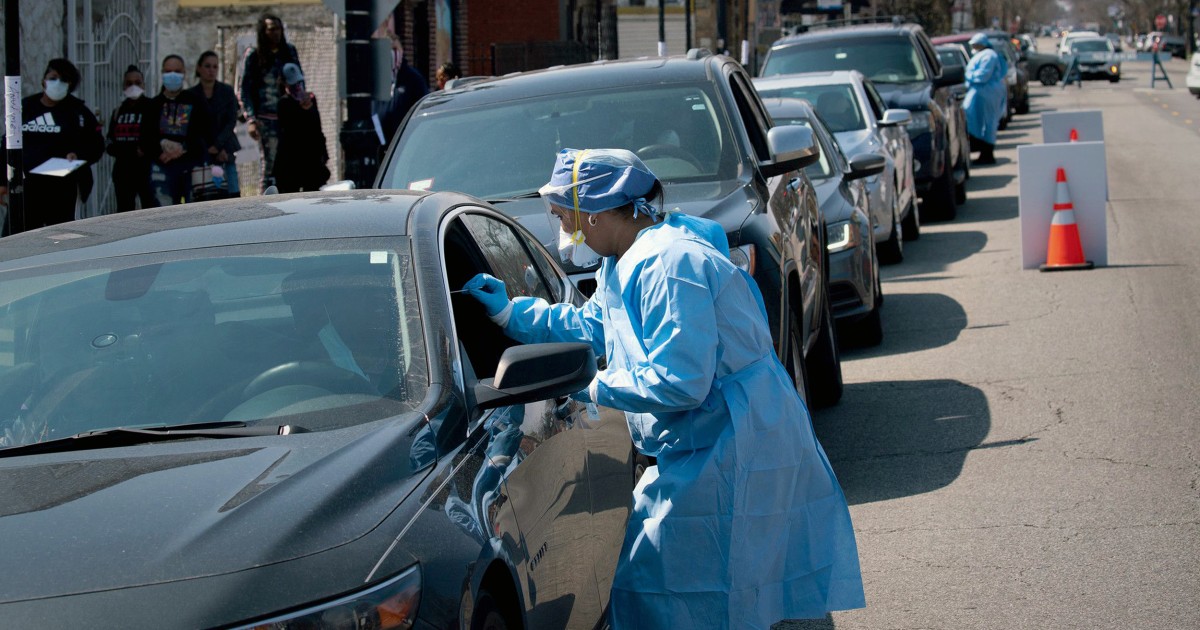
Are African Americans more at risk from COVID-19 than other Americans? Let our experts explain.
It’s a startling piece of evidence, but it appears that a disproportionate number of African Americans are dying due to the COVID-19 outbreak. On Tuesday, President Donald Trump called the impact of the coronavirus on African Americans a "real problem" that was showing up "strongly" in the data. Dr. Anthony Fauci, director of the National Institute of Allergy and Infectious Diseases, added that pre-existing conditions that are more prevalent among African Americans, including asthma and diabetes, are a factor. “We’re very concerned about that,” he said. Low-income people of color are also more likely to have jobs that can't be done remotely, meaning they're more likely to be exposed to the virus while more affluent professionals are able to stay at home. And they're less likely to have access to high-quality private testing or medical care. "I'm concerned this will be yet another case where there's a huge difference between people who are more wealthy and people who are poor, and there's going to be a difference between people of color and how much they suffer," Dr. Marcus Plescia, the chief medical officer for the Association of State and Territorial Health Officials, said. “We have a longstanding legacy of bias and racism in our country and we’re not going to get beyond that quickly.” NBC News – April 07 But as health officials and experts further examine the data – there are a lot of questions to be asked? What can African Americans do to further prevent the risk of infection? Do government officials need to allocate more resources to areas with a higher population of African Americans? Are African Americans being tested or have access to tests in the same manner as the rest of America? When we African Americans informed of this unique vulnerability and was anything put in place to inform to properly inform them? If you are a journalist covering this topic – then let our experts help. Dr. Tiffany G. Townsend is a widely recognized leader in diversity and psychology. She is an expert in the areas of health equity and serves as the chief diversity officer for Augusta University. Dr. Joseph Hobbs is an award-winning physician and a notable leader in the research of racial disparities in health care. He also serves as the chairman of the Department of Family Medicine at the Medical College of Georgia at Augusta University. Dr. Joseph Hobbs is an award-winning physician and a notable leader in the research of racial disparities in health care. He also serves as the chairman of the Department of Family Medicine at the Medical College of Georgia at Augusta University. Townsend and Hobbs are both available to speak with media regarding this topic– simply call 706-522-3023 to arrange an interview or simply click on Dr. Townsend's icon to book a time.

Think that call or online meeting is secure? You might want to ask an expert first?
As most of North America is now working from home, those trying to work are now finding board rooms and those always required meeting are now taking place online. Whether it is Webex, Zoom, Join.Me, Skype or even FaceTime – the convenience is ideal. But just how secure those calls are and whether or not someone is collecting, eavesdropping or recording might be altogether completely different. From Zoom’s CEO Eric Yuan: During normal operations, Zoom clients attempt to connect to a series of primary datacenters in or near a user’s region, and if those multiple connection attempts fail due to network congestion or other issues, clients will reach out to two secondary datacenters off of a list of several secondary datacenters as a potential backup bridge to the Zoom platform. In all instances, Zoom clients are provided with a list of datacenters appropriate to their region. This system is critical to Zoom’s trademark reliability, particularly during times of massive internet stress.” In other words, North American calls are supposed to stay in North America, just as European calls are supposed to stay in Europe. This is what Zoom calls its data center “geofencing.” But when traffic spikes, the network shifts traffic to the nearest data center with the most available capacity. China, however, is supposed to be an exception, largely due to privacy concerns among Western companies. But China’s own laws and regulations mandate that companies operating on the mainland must keep citizens’ data within its borders. April 03 - TechCrunch If you’re a journalist covering this topic, there’s still quite a few questions to be asked? What do users need to know about these platforms for meetings? Is there any information that shouldn’t be shared? Are there ways to guarantee enhanced security? And in these extraordinary times, does the risk outweigh the reward for businesses looking to carry on and stay afloat? If you’re asking – we’re here to help. Yoris A. Au is chair of the Department of Information Systems at Georgia Southern University. He is an expert in the areas of cyber security and telecommunications. Yoris is available to speak with media regarding this topic – simply click on his icon to arrange an interview.


Will schools reopen before semester ends? Georgia Southern pandemic expert can give perspective
While education has moved into homes across the country because of the COVID-19 pandemic, people are wondering if the shutdowns will actually help stop the spread of the disease. Isaac Chun-Hai Fung, Ph.D., a digital health expert and infectious disease epidemiologist at Georgia Southern University, said school closures can delay the peak of the outbreak, reduce the amount of cases and decelerate the spread of the virus. Fung was a part of a study in 2015 that modeled a potential flu pandemic. The study showed that delaying the spread of a virus can give health care professionals more time to come up with vaccines and other treatments, as well as giving the system time to brace itself for the onslaught of patients. “The key message of my paper is not necessarily how quickly we shut down schools,” Fung told Rolling Stone. “It is the duration of school closure that matters. Whenever we relax social distancing measures, we will see a bounce-back of the cases, unless we are able to completely block all transmission chains and have driven the case number to zero — i.e., extinction of the virus, as in the case of SARS in 2003.” While some think opening schools and other public places would benefit the economy, Fung said doing so could leave the country vulnerable. “To save the U.S. economy, we must control this disease first,” Hung said to Rolling Stone. “That is what China is going to achieve — even if they have already suffered a great deal economically due to COVID-19. That is why (Narendra) Modi asks the whole of India to stay home for three weeks. That is also what Boris Johnson asks the British people to do now. The Americans should take heed.” Fung analyses social media data for public health surveillance and health communication and uses digital technologies for public health interventions. He investigates the transmission of communicable diseases with a focus on respiratory infections and environmentally transmitted infections. He applied a variety of methods, from classical statistical methods to machine learning and mathematical modeling, to address public health problems and to provide solutions to policymakers. He is especially interested in assisting public health agencies in their responses to public health emergencies. Fung is available to speak with media regarding this topic — simply reach out to Georgia Southern Director of Communications Jennifer Wise at jwise@georgiasouthern.edu to arrange an interview.
