
Experts Matter. Find Yours.
Connect for media, speaking, professional opportunities & more.

Historical Significance of the Papal Name
In the wake of the historic election of Pope Leo XIV, the first American to ascend to the papacy, scholars and observers alike are reflecting on the global, historical and theological implications of his early statements and symbolic choices. His decision to take the name Leo – a name not used for over a century – immediately evokes comparisons to both Leo XIII and Leo I (Leo the Great), popes known for their firm leadership and dynamic engagement with the world. Baylor University’s Elisabeth Rain Kincaid, J.D., Ph.D., director of the Institute for Faith and Learning and an expert on early modern theology and Catholic Social Thought, said choosing the name Leo is significant, especially in today’s world. Through his choice of name, rhetorical style and theological references, the new pope is signaling a clear vision for a Church that is simultaneously grounded in tradition and open to global dialogue, Kincaid said. Kincaid is currently at work on a monograph – “Business Ethics for a Flourishing Life: Catholic Social Thought in the Modern Workplace” – in which she argues for the continued importance of Leo XIII’s thought for modern life. If you're covering the news about Pope Leo XIV and are looking to know why Cardinal Robert Prevost chose that name - we can help. Elisabeth Rain Kincaid is an author, speaker, teacher, and theologian. She has published broadly in peer-reviewed journals and popular publications. She is a frequent speaker at conferences, churches, and professional events on topics including business ethics, virtue and character, Christian engagement with law and politics, and work and vocation. She is currently the Director for the Institute for Faith and Learning at Baylor University. In her teaching, she draws upon her years of experience as a white-collar criminal defense attorney and a private equity professional, along with her ministry experience. Elisabeth is available to speak with media about this topic - simply contact Shelby Cefaratti-Bertin, M.A., Assistant Director of Media and Public Relations at Baylor University, Shelby_Cefaratti@baylor.edu or 254-327-8012 to arrange an interview today.


Name: Adrian Peter Title: Associate professor of mathematics and systems engineering and electrical engineering and computer science (joint appointment); director, Center for Advanced Data Analytics and Systems (CADAS) Department/College: Department of Mathematics and Systems Engineering and Department of Electrical Engineering and Computer Science/College of Engineering and Science Current research funding: $2.19 million General research focus: Our Multi-domain, Multi-sensor, Cyber-physical Tactical Exploitation (M2CTE) project addresses a critical need for a robust analytic processing framework capable of supporting autonomous sensing and analytics on the edge – where devices and sensors collect data – with the ability to reach back to the cloud for more improvement. Adrian Peter's research interests are in applying advanced analytics (e.g. machine learning, statistical modeling, optimization and visualization) to solve large-scale computing problems across a variety of domain areas (signal processing, geospatial, environmental, sensor fusion and enterprise intelligence). Q: What has you excited about your current research? We have built our entire infrastructure with the immensely talented graduate and undergraduate students at Florida Tech. Their tireless efforts have led to us delivering practical and operational real-world, machine-learning solutions that make us among the global leaders in machine learning at the edge. Q: Why is it important to conduct research? The objective of all research is to advance the frontiers of knowledge in a specific discipline. In my research, we are continually pushing state-of-the-art distributed sensing and edge analytics. Our results have helped transition conceptual ideas and customer requirements into operational solutions that improve situational awareness at tactical edge. Adrian Peter is available to speak with media. Contact Adam Lowenstein, Director of Media Communications at Florida Institute of Technology, at adam@fit.edu to arrange an interview today.


Media Alert: Experts on the Papacy & Conclave
With the Conclave now underway to select the next pope, the world turns its attention to one of the most sacred and consequential rituals in the Catholic tradition. Rooted in centuries of ceremony and held within the hallowed walls of the Sistine Chapel, this moment carries deep historical, theological, and cultural weight. But it is also a defining juncture for the Church itself. The election of a new pope is not only a matter of tradition—it will shape the direction of the Catholic Church as it navigates urgent issues in an increasingly modern and secular world. From social justice and interfaith dialogue to the role of women and the Church’s stance on global challenges, the decisions of the next pontiff will ripple far beyond Vatican walls. Explore our network of leading experts in Catholicism, the papacy, and ecclesiastical governance—and connect with them for timely commentary, interviews, and deeper insight into this pivotal moment for Catholics worldwide. Featured Experts


#ExpertSpotlight: India-Pakistan Conflict: Historical Roots and Ongoing Tensions
The India-Pakistan conflict remains one of the most enduring and complex geopolitical disputes in modern history. Rooted in the partition of British India in 1947, the conflict has evolved over decades to include territorial disputes, religious and cultural divisions, and nuclear rivalry. With both countries possessing significant military power and global influence, tensions between India and Pakistan have far-reaching consequences for regional stability, international diplomacy, and global security. As new developments continue to emerge, understanding the conflict’s origins and timeline is critical for comprehensive reporting. Key story angles include: The Partition of 1947 and Its Aftermath: Examining the division of British India, the creation of Pakistan, and the resulting violence and mass displacement. Kashmir: A Disputed Territory: Analyzing the root of territorial disputes over Kashmir, including the wars of 1947, 1965, and 1999, and ongoing claims from both nations. Nuclear Deterrence and Military Escalation: Exploring the impact of both nations becoming nuclear powers and how this has shaped diplomatic and military strategy. Cross-Border Terrorism and Insurgency: Investigating allegations of state-sponsored terrorism, militant activity, and their role in inflaming tensions. Peace Initiatives and Diplomatic Breakdowns: Highlighting past attempts at peace talks, confidence-building measures, and why many efforts have faltered. Global Implications and International Mediation: Assessing how global powers like the U.S., China, and the U.N. view the conflict and what role they play in de-escalation efforts. As tensions between India and Pakistan continue to affect regional and international relations, revisiting the historical context and current stakes provides crucial insights for journalists covering conflict, diplomacy, and security. Connect with an expert about India and Pakistan: To search our full list of experts visit www.expertfile.com

The roots of scuba diving lie in exploration. But in an age when advanced instruments can drive research, too, why not stay dry on land? Researchers have used scuba diving as a tool for decades, but as technology evolves, remotely operated vehicles (ROVs) can aid, and sometimes replace, divers in the research process. Still, argues Stephen Wood, no existing tools have the full capability of a human. The professor of ocean engineering says the ability to grab items or quickly turn one’s head is difficult to replicate in an ROV. He also argues that although robots can collect and send data, the ability to assess and interpret an environment through a human lens is essential. “The human cannot leave” the research, Wood says. The American Academy of Underwater Sciences (AAUS) defines scientific diving as “diving performed solely as a necessary part of a scientific, research, or educational activity by employees whose sole purpose for diving is to perform scientific research tasks.” With more than 140 organizational members, AAUS supports diving as a research tool and protects scientific divers’ health and safety. Researchers and students must obtain an AAUS certification, which Florida Tech offers, before undertaking a scientific dive. At Florida Tech, any diver who plans to use compressed air or air blends for activity involving teaching or research must comply with AAUS. Robert van Woesik, professor of marine sciences, studies the dynamics of coral reefs worldwide. He and his students scuba dive to examine and photograph coral assemblages, then return with information they can use to predict the impact of local and global disturbances, recovery from disturbances and future growth. The ability to personally identify different species underwater is crucial to understanding coral reef dynamics. He says that without scuba, the necessary training to develop that skill falls away. “I think it’s still worthwhile knowing the species composition of a reef underwater instead of just saying, ‘Okay, we don’t need scuba divers anymore. We just need photographs and ROVs,’” van Woesik says. He learns the most when he can descend to a reef and see the seascape himself. “I think there’s something to be said to just go in the water and ask some questions,” van Woesik says. “That’s the valuable part of being able to scuba dive, getting amongst it to experience the reef, in tandem with analyzing photographs from around the world on the computer.” Assistant professor of marine sciences Austin Fox says in his research in the Indian River Lagoon, diving is essential for operating—and sometimes finding—instruments. “We spend a lot of time trying to figure out ways to do this stuff without diving…but there’s just no replacement for it.” Austin fox, Assistant professor of marine sciences Scientific diving has taken Florida Tech researchers across the globe, from the murky floor of the Indian River Lagoon to the depths of Antarctica’s McMurdo Sound. Rich Aronson, department head and professor of ocean engineering and marine sciences, studies coral reefs in the tropics and subtidal communities in Antarctica. In 1997, he had the opportunity to visit the McMurdo Station to study invertebrate ecology—specifically, who eats what and whether they leave traces of their predatory activity on the shells of their prey. There, he completed 27 dives of up to 130 feet deep. Some were done through ice-cracks in remote areas, he recalls, whereas others were from holes drilled through 10 feet of sea-ice. He noted that the time to prepare for these dives was extensive—two 30-minute dives took eight hours—and they weren’t without risk. “That was the first and only time I’ve dived under the ice. It’s dangerous because there’s a ceiling above you,” Aronson says. “You jump in the hole and try not to screw it up because if you screw it up, you’re dead.” Though risky, Aronson says scuba diving was crucial to the research. He argues that neither ROVs nor oceanographic sensors could have collected or sampled organisms at fine scales, run transects and made behavioral observations like a human could. Additionally, he says his observations at depth, such as the “sting of subzero water” on his face and “the slowness of reaction of the animals living down there,” are what later inspired a project of his combining deep-sea oceanography and paleontology to project the future of Antarctic seafloor communities in a rapidly warming world. “Science is a lot more subjective than you might think, and feeling the environment helps you understand it.” Richard Aronson, department head and professor of marine sciences The risky nature of scuba diving is why programs like AAUS exist: to standardize safe and responsible diving practices for conducting scientific research. Divers are at risk for a number of pressure-related injuries, such as decompression sickness: a condition in which residual nitrogen can create bubbles in the blood and body tissue upon ascent if the diver rises to the surface too fast. To reduce their risk, divers must plan and track how deep they are going, the time at which they are that depth (and subsequent depths) and how long they need to wait before changing depth. Technology has also evolved since the beginning of scuba to support divers’ safety further. Digital dive computers, developed in the 1980s, help divers estimate how long they can stay at their current depth while underwater (among other things). Additionally, Enriched Air Nitrox (Nitrox) is a gas mixture that contains a higher percentage of oxygen than standard air. Divers who use Nitrox can extend their time at depth and reduce their risk of decompression sickness because of its reduced nitrogen pressure. Van Woesik predicts that dive technology will keep evolving. He imagines there could soon be a system that allows divers to upload data at depth, and a system that aids in species identification without having to decipher an image at the surface. He also believes that innovators will keep working to reduce hazards and prioritize safety, because despite the risks, divers will always get in the water. “Hopefully that technology will get better so we can go deeper, safer, and so we can stay down a bit longer to explore and further understand the natural wonders of the oceans,” van Woesik says. If you're interested in connecting with Stephen Wood, Austin Fox, Richard Aronson or Robert van Woesik - simply contact Adam Lowenstein, Director of Media Communications at Florida Institute of Technology at adam@fit.edu to arrange an interview today.
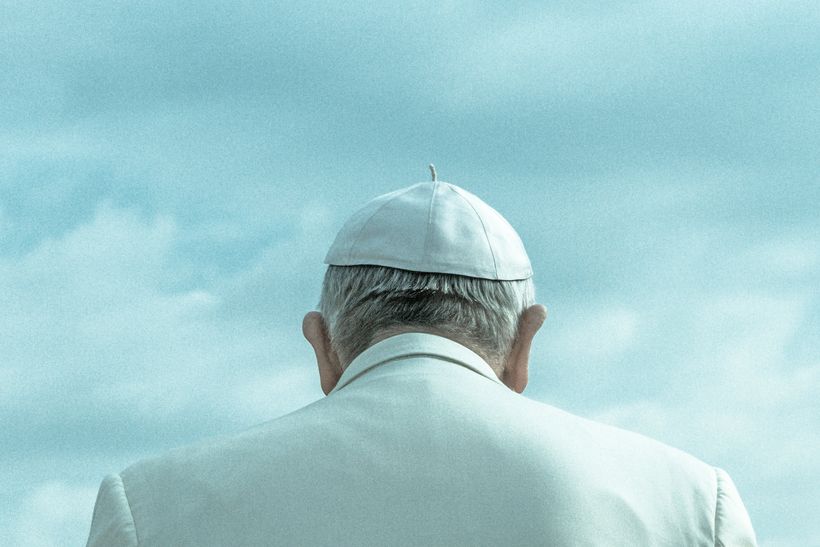
An Expert Guide to the Papacy and Pope Francis
The death of Pope Francis marks a pivotal moment for the Catholic Church, ending a papacy that redefined the Church's relationship with the modern world. As the College of Cardinals prepares to gather in conclave, Catholics across the globe are closely watching to see whether the next pontiff will build upon Francis' legacy or chart a new course. The following experts are available to provide insight into a range of related topics, including Pope Francis' enduring impact and what lies ahead for the world's 1.4 billion Catholics: Massimo Faggioli, PhD Professor, Theology and Religious Studies Dr. Massimo Faggioli is a world-renowned expert on the history and administrative inner workings of the Catholic Church, with specific expertise in the papacy, Vatican II, the Roman Curia, liturgical reform, new Catholic movements and Catholicism and global politics. As quoted on NPR: "Historically, we see in different conclaves a certain swinging of the pendulum. What the conclave and the next pope cannot do is to ignore and deny the changing features of global Catholicism, which is much less European, much less white, less North American and more Global South..." Kevin Hughes, PhD Chair, Theology and Religious Studies Dr. Kevin Hughes is a leading historical theologian, offering insights into the life, legacy and impact of Pope Francis. He can also speak to the significance of the Pope in Catholicism and the influence of his teachings on the global Catholic Church. As quoted on Scripps News: "[Pope Francis' selection] was really the Church extending beyond the limits of its European imagination. His Latin American identity was really crucial to embracing a new moment within the Church and opening the door in so many ways, and I think he bore witness to that throughout his papacy." Jaisy Joseph, PhD Assistant Professor, Systematic and Constructive Theology Dr. Jaisy Joseph is a trained ecclesiologist, able to address a wide range of topics relating to the papacy, conclave process and Catholic Church. Previously, she has commented on the Church's presence in Asia and the Global South, offering expert commentary on its growth, challenges and shifting influence. As quoted by ABC News Digital: "[The election of someone from the Global South would be] a move in that direction of how to be a global church. That move from a Eurocentric church to a truly global church—I think that's what Francis really inaugurated." Patrick Brennan, JD Professor of Law; John F. Scarpa Chair in Catholic Legal Studies Professor Patrick Brennan is an expert on the conclave process and the main rules that govern it. He can also speak to topics such as the contemporary and historical importance of secrecy in the conclave, what the cardinals may be looking for in the next Pope and the factors that cause similarities and differences from one conclave to the next. As quoted on Fox 29's Good Day Philadelphia: "The purpose of the general congregation is for the cardinals, who don't know each other in some cases, to get to know each other better as they learn about the current state of the Church and together decide on the needs of the Church and priorities for the new pontificate." Brett Grainger, ThD Associate Professor, Study of Spirituality and American Religious History Dr. Brett Grainger is a go-to source for discussions of the changing face and role of modern spirituality in America. He serves as an expert on contemporary religious trends and can also speak to the broader public reaction to Pope Francis' passing, especially outside of the Catholic faith. As quoted by Courthouse News Service: "People are disaffiliating from a tradition—that doesn't necessarily mean in fact that they don't believe in God anymore...What's more important is 'Is this giving me life? Is this making my life more meaningful? Is this giving me the kind of energy and purpose that I'm looking for?' That's where religion is going." Michael Moreland, JD, PhD Professor of Law and Religion; Director, Eleanor H. McCullen Center for Law, Religion and Public Policy Dr. Michael Moreland is a renowned scholar of constitutional law, religious freedom, public policy and ethics. He can provide expert commentary on items related to the Catholic right and the state of religious politics in the United States. As featured on NBC News Digital: Michael Moreland said the mass appeal of "Conclave" captured how, even in a secular modern age, there is still pervasive intrigue around "the ancient rituals of the Catholic Church." "The significance of the theological and spiritual aspects of Catholicism and this process of electing a pope was kind of reduced into partisan politics," he said. Ilia Delio, OSF, PhD Josephine C. Connelly Endowed Chair in Christian Theology Sister Ilia Delio addresses topics in her work such as theology and evolution, technology and human becoming and understandings of Catholicity in a world of complexity. She can provide expert insight into Laudato si', Pope Francis' position on the environment, the relationship between science and religion and integral ecology. As featured in the National Catholic Reporter: "We are clearly an Earth in crisis," with a reversal necessary to secure a sustainable future, said Ilia Delio... Delio posed a series of questions: about the relationship between religion and science; what Laudato si', and Christianity more broadly, can offer ecological movements; and whether the concept of kinship or creation as family might better reflect humanity's place within nature than "care for creation." To speak with any of these faculty experts, please contact mediaexperts@villanova.edu.




The History of Conclave and How Do They Pick a New Pope?
The papal conclave—the centuries-old process by which the Roman Catholic Church selects a new pope—is one of the most secretive and spiritually symbolic events in the world. Rooted in rich ritual and guided by strict protocols, the conclave represents a moment of global significance, not only for the 1.3 billion Catholics worldwide but for all who follow the influence of religion on world affairs. This topic matters to the public as it blends ancient tradition with contemporary global leadership questions, shedding light on how faith, power, and governance intersect. The election of a pope impacts international diplomacy, interfaith relations, and moral discourse on modern issues. Key story angles that may interest a broad audience include: Origins of the papal conclave: Tracing its development from medieval times to its formalization by Pope Gregory X in 1274. The voting process: Exploring the steps from the Sistine Chapel seclusion to the smoke signals that announce a new pontiff. The role of the College of Cardinals: Examining who the electors are, how they are chosen, and the geopolitical makeup of the voting body. Influence of modern issues on papal selection: Understanding how social, environmental, and political concerns may shape cardinal deliberations. Global reaction to papal succession: Looking at how nations, religious groups, and the public respond to the announcement of a new pope. Symbolism and tradition: Analyzing the vestments, rituals, and centuries-old customs that surround the conclave and papal inauguration. Connect with an expert about the Papal Conclave: To search our full list of experts visit www.expertfile.com

For three decades, Frederik Meijer Gardens & Sculpture Park has grown from a visionary idea into one of America’s most beloved cultural destinations, a place where art, nature, community, and imagination intersect. At the heart of this evolution is Charles Burke, the President and CEO guiding the institution through its 30th anniversary year and helping shape its legacy as a transformative cultural force. Charles Burke is President & CEO of Frederik Meijer Gardens & Sculpture Park. Under his direction, the organization has been recognized as Best Sculpture Park in the United States by USA Today’s 10Best Readers’ Choice Awards in 2023, 2024, and 2025, and consecutively named one of the Best Places to Work in West Michigan, solidifying its reputation as a cultural landmark of international acclaim. View his profile “As a place where art, culture and nature come together, Meijer Gardens offers something truly special for everyone. We look forward to welcoming guests of all ages to discover the joy, beauty and inspiration that await around every corner.” — Charles Burke, President & CEO, Frederik Meijer Gardens & Sculpture Park. The park's legacy and cultural impact was highlighted in a full feature in the Grand Rapids Press and MLive. In the article, journalists conveyed that Meijer Gardens is not just a museum, not just a botanical garden, and not just a sculpture park — it is all of these at once. Since opening in 1995, it has grown into an internationally recognized cultural institution celebrated for its world-class art, immersive natural environments, dynamic programming, and vibrant community engagement. Its influence extends far beyond regional boundaries, attracting millions of visitors, inspiring artists and gardeners, and elevating public appreciation for the arts and environment. The piece underscores how Meijer Gardens has become a cultural home for diverse audiences, blending artistic expression, horticultural beauty, and community connection into a holistic experience that resonates across generations. Celebrating a Cultural Legacy Under Burke’s leadership, Meijer Gardens has: Achieved record attendance and global recognition as a destination for art and nature. Hosted nationally significant sculpture exhibitions alongside beloved botanical showcases. Fostered public access to artistic and environmental education for students, families, and lifelong learners. Created immersive experiences that bring people together — from summer music series to seasonal exhibitions — forging emotional connections to art and landscape. Charles Burke leads Frederik Meijer Gardens & Sculpture Park with a vision that combines artistic ambition and community purpose. Under his direction, the institution has expanded its cultural reach while strengthening educational mission, accessibility, and artistic excellence. His perspective helps journalists cover not just the milestone itself, but the broader significance of what a cultural institution can mean to a region, a generation, and the public imagination. Expert Insight - What Charles Burke Brings to Your News Story or Speaking Roster How the intersection of art, culture and nature builds healthy communities How Meijer Gardens has shaped community identity and regional tourism The role of art institutions in fostering lifelong learning and inclusive engagement The vision and meaning behind three decades of creative stewardship As cultural institutions navigate questions of relevance, community value, and public engagement in the 21st century, Meijer Gardens stands as a compelling example of success. Its 30-year journey, and Burke’s leadership, offers rich context for stories about how art and nature can inspire civic pride, foster cross-generational connection, and elevate the cultural fabric of a community.

Easter and different ways it is celebrated around the world
Easter, one of the most widely observed holidays around the world, carries deep religious, cultural, and seasonal significance. While rooted in Christian beliefs about resurrection and renewal, Easter’s origins also intersect with ancient springtime rituals and diverse regional customs. Its observance today varies greatly—from solemn liturgies to vibrant festivals and public holidays—offering rich opportunities to explore faith, tradition, and identity across cultures. As interest in global connectivity and interfaith understanding grows, Easter serves as a lens through which to examine broader questions of cultural expression and shared human experience. Journalists may find compelling story angles in topics such as: The religious roots of Easter and how they connect to ancient pagan spring festivals Diverse Easter traditions around the world—from egg rolling in the U.S. to Semana Santa processions in Spain The commercialization of Easter and its impact on modern observance How Easter is celebrated across different Christian denominations and interfaith communities The symbolism of rebirth and renewal across cultures and its relevance in today’s world The role of Easter in shaping seasonal food, fashion, and family rituals This holiday invites storytelling that spans continents and centuries, illuminating the ways tradition evolves while preserving meaning. Connect with an expert about Easter: To search our full list of experts visit www.expertfile.com

A Brief History of Stock Market Crashes
Stock market crashes have punctuated economic history with sudden downturns that reshape public confidence, policy decisions, and financial systems. From the Great Depression to the 2008 financial crisis, these events have not only disrupted global economies but also exposed systemic vulnerabilities and sparked reforms. As markets face ongoing volatility and new risks, understanding the history of stock market crashes—and the factors behind them—is vital for investors, policymakers, and the general public. This topic offers journalists compelling opportunities to explore financial history, economic psychology, and risk management. Key story angles include: The Great Depression (1929): Analyzing the causes of the most infamous crash in history and its lasting impact on global economic policy. Black Monday (1987): Investigating the role of computerized trading and investor panic in one of the largest one-day percentage drops in stock market history. Dot-Com Bubble (2000): Exploring how tech speculation and investor overconfidence led to the collapse of early internet startups. The 2008 Global Financial Crisis: Examining the role of housing market speculation, subprime lending, and financial deregulation in triggering a global recession. Behavioral Economics and Market Psychology: Understanding how fear, speculation, and herd behavior contribute to market volatility. Are We Due for Another Crash? Looking at current economic indicators, tech valuations, interest rates, and global tensions that could signal future instability. With markets continuing to respond to global events and economic shifts, revisiting the history of crashes offers valuable insights into how financial systems react under pressure—and how societies can better prepare for what comes next. Connect with an expert about the History of Stock Market Crashes: To search our full list of experts visit www.expertfile.com