Experts Matter. Find Yours.
Connect for media, speaking, professional opportunities & more.

Boxing Day Explained: From Acts of Charity to a Global Cultural Tradition
Boxing Day may be best known today for shopping deals, leftover turkey sandwiches, and the collective decision to stay in pyjamas as long as possible. But its origins are far richer — rooted in charity, social responsibility, and long-standing cultural tradition. Observed on December 26, Boxing Day has evolved over centuries from a day of giving into a uniquely modern mix of generosity, sport, family, and commerce. Where Boxing Day Began The origins of Boxing Day trace back to medieval Britain. Traditionally, it was the day when: Churches opened alms boxes to distribute donations to the poor Employers gave servants and tradespeople “Christmas boxes” containing money, food, or gifts Workers who served households on Christmas Day were finally given time off to celebrate with their own families At its core, Boxing Day recognized service, labour, and the idea that generosity should extend beyond Christmas Day itself. A Day for Workers, Not Just Celebrations Historically, Boxing Day acknowledged the contributions of workers — from domestic staff to tradespeople — reinforcing values of gratitude, fairness, and shared prosperity. Long before modern labour standards, it created a structured moment for appreciation and rest. How Boxing Day Is Celebrated Around the World Today While its charitable roots remain, Boxing Day traditions vary by region: United Kingdom A public holiday Known for major football matches, horse racing, and community events A blend of tradition, sport, and post-Christmas relaxation Canada A statutory holiday in several provinces Widely associated with retail sales, winter recreation, and family gatherings Increasingly viewed as a day to unwind, travel, or spend time outdoors Australia & New Zealand Celebrated during summer Defined by outdoor events, including cricket and sailing A festive, recreational extension of Christmas rather than a recovery day United States Not an official holiday, but culturally familiar December 26 is widely marked by after-Christmas sales, professional sports viewing, and end-of-year charitable giving Many American traditions - holiday bonuses, tipping service workers, and year-end donations - closely mirror Boxing Day’s original emphasis on gratitude and generosity Beyond the Commonwealth In several European countries, December 26 is observed as St. Stephen’s Day, carrying its own religious and cultural significance From Charity to Commerce: A Modern Shift Over time, Boxing Day became synonymous with retail — driven by post-holiday inventory cycles and consumer demand. While some argue this shift has overshadowed its charitable origins, others see it as an evolution rather than a replacement. Notably, many volunteer initiatives and charitable campaigns continue to peak on or around December 26, reconnecting the day with its philanthropic foundation. Story Angles for Journalists How Boxing Day evolved differently across cultures Why Boxing Day is a holiday in some countries but not others The economic impact of December 26 retail activity Boxing Day and labour history How sport became a defining Boxing Day tradition Why generosity peaks at year’s end Why Boxing Day Still Matters Boxing Day sits between celebration and renewal — a moment to acknowledge service, extend generosity, and reset before the new year. Its global staying power lies in its adaptability, reflecting the values and rhythms of the societies that observe it Find your expert here: www.expertfile.com


J.S. Held Releases the Lending Climate in America Survey Results
Global consulting firm J.S. Held reveals the “Lending Climate in America” survey results from Phoenix Management, a part of J.S. Held. The fourth quarter survey results highlight the persisting lender views on policy decisions and their national/global impacts. The “Lending Climate in America” survey is administered quarterly to lenders from various commercial banks, finance companies, and factors across the country. We collect, tabulate, and analyze the results to create a complete evaluation of national attitudes and trends. Phoenix’s Q4 2025 “Lending Climate in America” survey asked lenders which factors could have the strongest potential to impact the economy in the upcoming six months. Forty-six percent of lenders think political uncertainty will have the strongest impact on the economy, while 41% of lenders believe geopolitical risk (war) has the strongest potential to impact the economy. Lenders continue to believe that the possibility of a U.S. recession and upcoming FOMC interest rate decisions will impact the economy. Lenders revealed what actions their customers may take in the next six months. Almost two-thirds of the surveyed lenders believe their customers will raise additional capital, while 30%+ of the surveyed lenders believe their customers will introduce new products and make acquisitions. Forty-three percent of respondents identified the retail trade industry as the most likely to experience volatility in the next six months, followed by the healthcare (social assistance) industry at 38% of respondents. Additionally, Phoenix’s “Lending Climate in America” survey asked lenders if their respective institutions plan to tighten, maintain, or relax their loan structures for various sized loans. For larger loan structures (greater than $25M), the plan to maintain loan structures remained relatively constant from Q3 to Q4, increasing by 9%. As loan sizes decrease, lenders plan to maintain their loan structures. Loans in the range of $15-25M and $5-15M saw very similar structure changes from Q3 to Q4. Loans under $5M had no change in structure. Lender optimism in the U.S. economy decreased for the near term, moving from 2.58 in Q3 2025 to 2.38. In this current quarter, there is heavy expectation of a B level performance (49%), with a majority of the remainder (41%) sitting at a C level. Lender expectations for the U.S. economy’s performance in the longer term also decreased from 2.71 to 2.46. Of the lenders surveyed, 54% believe the U.S. economy will perform at a B level during the next twelve months, virtually no change from the prior quarter. Performance expectations at the D level increased by 5%, matching the increase at a C level. To see the full results of Phoenix’s “Lending Climate in America” Survey, please visit: “Lenders are signaling heightened caution as political uncertainty and geopolitical risks dominate near-term economic concerns,” says Michael Jacoby, Senior Managing Director and Strategic Advisory Practice Lead at J.S. Held. “Confidence in the U.S. economy continues to erode, with short-term grades slipping from a weighted average of 2.58 in Q3 to 2.38 in Q4, and long-term expectations following the same downward trend. While most lenders plan to maintain current loan structures, a notable 21% anticipate tightening terms, even as 77% expect further Fed rate cuts in the coming months. Industry volatility is projected to rise sharply in healthcare, consumer products, and finance, underscoring a challenging environment for borrowers and investors alike.” To learn more about how our experts can add value to your stories in development, simply connect with Michael through his icon below.


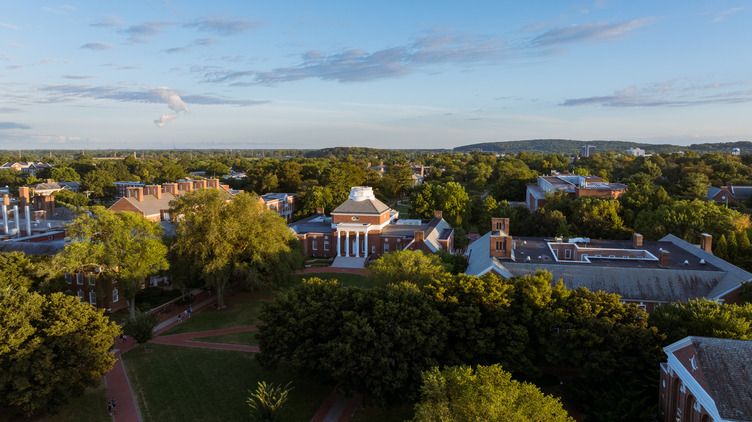
A year in the spotlight: University of Delaware’s most notable media mentions of 2025
In 2025, the University of Delaware had many exceptional media mentions. Here are some of the most notable. Science coverage dominated Where will the next big hurricane hit? Ask the sharks. (The Washington Post) – Aaron Carlisle, a marine ecologist, was featured for his revolutionary work using sharks to predict major weather events. Scientists could soon lose a key tool for studying Antarctica's melting ice sheets as climate risks grow (NBC News) – Carlos Moffat, an associate professor and oceanographer, spoke about the national budget and how it's impacting climate research. These Katrina Survivors Feel Overlooked. Now, They’re Using TikTok to Tell Their Stories (Rolling Stone) – Jennifer Trivedi, a disaster researcher, spoke about why Hurricane Katrina was such a major story. Malala Yousafzai, Migration and Sustainability (Forbes) – Saleem Ali, a professor of energy and environment, contributed regularly to Forbes on environmental topics. Scientists went hunting for freshwater deep beneath the Atlantic Ocean. What they found could have global implications (CNN) – Holly Michael, a professor of Earth sciences and civil and environmental engineering, spoke about the history of freshwater. Engineering Professor Answers Electric Car Questions (WIRED) – Willett Kempton, a professor of engineering, joined WIRED to answer the internet's most interesting questions about electric cars. Plastic shopping bag policies are actually working, a new study suggests (CNN) – Kimberly Oremus, associate professor of marine science and policy, was featured in several major outlets on the effectiveness of plastic bag bans. Insects are dying: here are 25 easy and effective ways you can help protect them (The Guardian) – Douglas Tallamy, an entomologist, was featured in dozens of outlets for his expertise. Political news coverage was front and center U.S. Chamber of Commerce sues Trump administration over $100,000 H-1B visa fees (NPR) – Daniel Kinderman, a political science professor, was interviewed for his expertise on a lawsuit involving changes in work visas. The government shutdown is over, but expect more fights and higher insurance prices to come (Delaware Public Media) – David Redlawsk, a political psychologist, discussed the recent government shutdown and what an end to it signals. Wrestling Over Charlie Kirk’s Legacy and the Divide in America (The New York Times) – Dannagal Young, a communications professor, commented on how media reacted to the death of Charlie Kirk. Consequences for colleges whose students carry mountains of debt? Republicans say yes (NPR) – Dominique Baker, associate professor of education, was quoted in multiple national outlets for her education expertise. General expertise came in clutch Why the U.S. struggles with passenger service despite having the most rail lines (NPR) – Allan Zarembski, a professor of railroad engineering, was featured in dozens of national publications for his expertise. From folklore to your front porch: The history of the jack-o'-lantern (NPR) – Cindy Ott, an associate professor of history, detailed the history of this autumn staple in multiple outlets. Nexstar Media Group buying Tegna in deal worth $6.2 billion (AP) – Danilo Yanich, professor of public policy, noted the ways the media giant duplicates work across networks. Warren Buffett hired Todd Combs to take over Berkshire's portfolio one day. Here's what close watchers say about his surprise exit. (Business Insider) – Lawrence Cunningham, director of UD's Weinberg Center, was featured throughout the year for his business and economic expertise. Enlighten Me: How to make your holidays truly happy (Delaware Public Media) – Amit Kumar, a professor of marketing, discussed strategies for finding happiness during the holidays throughout the winter season. Students and their stories shined throughout the year Networking: Is it what you know or who you know? (The Chronicle of Higher Education) – UD's career-development office, which assists students on their job journeys, was featured. U of Delaware Creates Yearlong Co-Ops for Business Students (Inside Higher Ed) – A new partnership with the state of Delaware connects business students to local employers, with the goal of reducing brain drain in the region was featured. Wilmington’s 'STEM Queen' earns national Obama–Chesky honor (The News Journal/Delaware Online) – Jacqueline Means, a management information systems major, was featured for earning a national recognition. Vita Nova Restaurant Gives Culinary Students Hands-on Training (Delaware Today) – The student-staffed restaurant, Vita Nova, was featured. Delaware professor transforms writing class by teaching students to use AI as the technology reshapes the workforce (WHYY) – Matt Kinservik, a professor of English, was featured for teaching students to use AI responsibly, exploring its capabilities and fact-checking tools. Pop culture experts weighed in 'Stranger Things' expert at UD chats about Netflix show's appeal (The News Journal/Delaware Online) – Siobhan Carroll, an associate English professor, sat down with a reporter to discuss the latest season and how the horror genre is often a mirror of our real world. “Horrendous And Insulting”: Backlash Erupts Over “Misrepresentation” In 2026 Wuthering Heights (Bored Panda) – Thomas Leitch, an English professor, said that “literal adaptations of classic novels are exceedingly rare, maybe impossible.” Major changes at UD highlighted University of Delaware appoints interim president to the permanent post (The Philadelphia Inquirer) – News of UD's new president, Laura A. Carlson, was covered throughout the region. Retiree learning center gets boost with $1M gift for downstate OLLI classes (Spotlight Delaware) – a large donation to the southern Delaware chapter of the Osher Lifelong Learning Institute, was featured. To speak with any of these experts in 2026 on these stories or others, please reach out to MediaRelations@udel.edu. Happy holidays and cheers for a bright and healthy new year!





From Saint to Superstar: The Remarkable History of Santa — and His Many Global Identities
Santa Claus may look familiar — red suit, white beard, infectious laugh — but behind the modern icon is a centuries-long story shaped by religion, folklore, migration, marketing, and local tradition. Far from being a single character, “Santa” is a global collection of gift-givers, each reflecting the culture that shaped them. The Historical Roots: A Saint Becomes a Symbol The story of Santa Claus begins with St. Nicholas, a 4th-century Greek bishop known for generosity, compassion, and secret gift-giving. Stories of Nicholas helping the poor — often anonymously — spread across Europe, establishing a lasting connection between generosity and winter celebrations. Over time, St. Nicholas evolved from a religious figure into a folkloric one as traditions blended with local customs, seasonal festivals, and storytelling. The idea of a benevolent winter gift-giver became firmly embedded in European culture long before Santa ever boarded a sleigh. Santa in North America: Reinvention and Red Suits In North America, Santa Claus emerged as a cultural hybrid: Dutch settlers brought traditions of Sinterklaas 19th-century poems and illustrations reshaped Santa into a jovial, approachable figure 20th-century popular culture and advertising standardized the modern image: red suit, round belly, flying reindeer, North Pole address What began as a saintly figure became a universal symbol of generosity, childhood wonder, and seasonal joy — largely detached from religious roots but deeply tied to cultural celebration. Santa Around the World: Same Spirit, Different Stories Santa’s core traits — kindness, generosity, winter magic — remain consistent, but his appearance and habits vary widely: Europe Sinterklaas (Netherlands & Belgium): Arrives by boat, wears bishop’s robes, celebrated earlier in December Father Christmas (UK): Rooted in feasting and goodwill, later merged with Santa traditions Père Noël (France): Delivers gifts with a quiet, gentle presence La Befana (Italy): A broom-riding grandmother figure tied to Epiphany traditions Nordic Countries Joulupukki (Finland): Lives in Lapland, wears practical winter clothing, and feels distinctly grounded in nature Julenisse (Norway & Denmark): A blend of Santa and household folklore spirits Asia Hoteiosho (Japan): A cheerful monk associated with happiness and abundance Christmas gift-givers in many Asian countries are largely secular, tied to pop culture rather than religion Latin America Papá Noel: Often coexists with religious gift-bringers tied to Epiphany Emphasis may be placed more on community and family than individual gift-giving Why Santa Still Matters Santa’s endurance lies in his adaptability. He absorbs cultural values — generosity, kindness, joy — and reflects them back in familiar, comforting ways. Whether religious, secular, or purely symbolic, Santa represents shared traditions that bring people together during the darkest days of the year. Story Angles for Journalists How St. Nicholas became a global icon The commercialization of Santa — myth vs. modern marketing Cultural identity through holiday folklore Why children worldwide believe in gift-givers How immigrant communities blend Santa traditions Santa as a mirror of societal values across cultures Why This Matters Today In an increasingly globalized world, Santa Claus is a rare figure who crosses borders with ease — adapting, evolving, and uniting cultures through shared storytelling. His many forms remind us that traditions aren’t static; they grow with the people who keep them alive. Journalists covering culture, history, religion, folklore, or holiday traditions can connect with historians, anthropologists, religious scholars, and cultural experts through ExpertFile to explore how Santa continues to shape — and reflect — societies around the world. Find your expert here: www.expertfile.com

Australia’s Under-16 Social Media Ban Isn’t a Finish Line - It’s a Reality Check
Australia’s move to restrict social media accounts for kids under 16 has become a global lightning rod - and it’s forcing the right conversation: what do we do when a technology is too powerful for a developing brain? But here’s what I think journalists should focus on next: “A ban is a speed bump, not a seatbelt. It might slow kids down - but it won’t teach them how to drive their attention.” That’s the part that gets lost in the headlines. Because even if you can reduce access, you still have to deal with the why behind the behavior: boredom, social pressure, loneliness, stress, sleep debt. “The headlines make it sound like the problem is solved. But the real question is: what happens in the living room on day three?” Offline.now’s early data shows something important: most people genuinely want to change their screen habits, but many feel overwhelmed and don’t know where to start. That’s why we begin with a quick self-assessment and map people into four Types - Overwhelmed, Ready, Stuck, Unconcerned - so the advice matches the person. “We keep treating social media like a self-control test. It’s not. It’s a confidence problem - people don’t know where to start, so they start with shame.” What I’d tell policymakers considering similar bans 1. Pair friction with skills. “If the only plan is ‘block the app,’ you’re betting against the internet. Workarounds aren’t a bug - they’re the default.” 2. Don’t outsource responsibility entirely to families. “If policy turns parents into full-time bouncers and kids into part-time hackers, we’ve built a system that’s guaranteed to fail.” 3. Ask what gets protected, not just what gets restricted. “The real target isn’t ‘screen time.’ It’s the moments screens replace.” What parents need to know that headlines aren't telling them This is a process, not a switch. The best “first phone / first social” plans are adjustable. Modeling beats monitoring. The rules collapse if adults don’t follow them too. Have a handoff plan. If a child’s mood, sleep, school performance, or withdrawal is deteriorating, it may be bigger than habits. Why this is a late December / January story “The holidays are the perfect storm: more free time, more family friction, more devices, less sleep. January is when the bill comes due.” Journalist angles Bans vs. behavior change: what policy can’t solve The workarounds economy: age gates, bypass culture, privacy tension The four Types: why one-size fits all screen-time advice fails families New Year resets for families: simple, shame-free agreements that stick Available for interviews Eli Singer - CEO of Offline.now; author of Offline.now: A Practical Guide to Healthy Digital Balance. I speak about practical behavior change, non-judgmental family agreements, and confidence-based starting points - and I can direct people to licensed professionals via the Offline.now Directory when needs go beyond coaching.



Global Honors Highlight J.S. Held’s Unmatched Technical and Advisory Expertise
J.S. Held proudly celebrates the numerous industry and expert recognitions earned throughout 2025. As a global consulting firm, J.S. Held continues to be acknowledged for its deep financial, technical, and scientific expertise, with leading outlets highlighting the firm’s capabilities across investigations, risk advisory, forensics, turnaround and restructuring, business intelligence, and litigation support. The firm’s curated team of entrepreneurs — each with an unrivaled understanding of both tangible and intangible assets — reflects a collective strength that is recognized worldwide. Beyond organizational achievements, J.S. Held’s experts received individual distinctions that further demonstrate their standing as leaders within their respective fields. Industry publications and ranking bodies honoured these specialists for excellence in arbitration, construction and engineering, environmental consulting, forensic accounting, investigations, litigation support, intellectual property, specialty finance, and a wide range of other highly specialized domains. Together, these recognitions underscore J.S. Held’s commitment to delivering trusted insight and unparalleled expertise as clients navigate increasingly complex challenges. In a rapidly evolving business landscape, the firm remains dedicated to providing informed, innovative, and practical solutions that enable organizations to move forward with confidence. Click on the link below to learn more about our recognition and respective areas of expertise: Expert recognition by notable organizations serves as a further testament to J.S. Held's agile, collaborative, creative, and client-centric team, reflecting the trusted advisor role the firm has earned over the last 50 years. For any media inquiries, contact: Kristi L. Stathis, J.S. Held +1 786 833 4864 Kristi.Stathis@JSHeld.com

UF team develops AI tool to make genetic research more comprehensive
University of Florida researchers are addressing a critical gap in medical genetic research — ensuring it better represents and benefits people of all backgrounds. Their work, led by Kiley Graim, Ph.D., an assistant professor in the Department of Computer & Information Science & Engineering, focuses on improving human health by addressing "ancestral bias" in genetic data, a problem that arises when most research is based on data from a single ancestral group. This bias limits advancements in precision medicine, Graim said, and leaves large portions of the global population underserved when it comes to disease treatment and prevention. To solve this, the team developed PhyloFrame, a machine-learning tool that uses artificial intelligence to account for ancestral diversity in genetic data. With funding support from the National Institutes of Health, the goal is to improve how diseases are predicted, diagnosed, and treated for everyone, regardless of their ancestry. A paper describing the PhyloFrame method and how it showed marked improvements in precision medicine outcomes was published Monday in Nature Communications. Graim, a member of the UF Health Cancer Center, said her inspiration to focus on ancestral bias in genomic data evolved from a conversation with a doctor who was frustrated by a study's limited relevance to his diverse patient population. This encounter led her to explore how AI could help bridge the gap in genetic research. “If our training data doesn’t match our real-world data, we have ways to deal with that using machine learning. They’re not perfect, but they can do a lot to address the issue.” —Kiley Graim, Ph.D., an assistant professor in the Department of Computer & Information Science & Engineering and a member of the UF Health Cancer Center “I thought to myself, ‘I can fix that problem,’” said Graim, whose research centers around machine learning and precision medicine and who is trained in population genomics. “If our training data doesn’t match our real-world data, we have ways to deal with that using machine learning. They’re not perfect, but they can do a lot to address the issue.” By leveraging data from population genomics database gnomAD, PhyloFrame integrates massive databases of healthy human genomes with the smaller datasets specific to diseases used to train precision medicine models. The models it creates are better equipped to handle diverse genetic backgrounds. For example, it can predict the differences between subtypes of diseases like breast cancer and suggest the best treatment for each patient, regardless of patient ancestry. Processing such massive amounts of data is no small feat. The team uses UF’s HiPerGator, one of the most powerful supercomputers in the country, to analyze genomic information from millions of people. For each person, that means processing 3 billion base pairs of DNA. “I didn’t think it would work as well as it did,” said Graim, noting that her doctoral student, Leslie Smith, contributed significantly to the study. “What started as a small project using a simple model to demonstrate the impact of incorporating population genomics data has evolved into securing funds to develop more sophisticated models and to refine how populations are defined.” What sets PhyloFrame apart is its ability to ensure predictions remain accurate across populations by considering genetic differences linked to ancestry. This is crucial because most current models are built using data that does not fully represent the world’s population. Much of the existing data comes from research hospitals and patients who trust the health care system. This means populations in small towns or those who distrust medical systems are often left out, making it harder to develop treatments that work well for everyone. She also estimated 97% of the sequenced samples are from people of European ancestry, due, largely, to national and state level funding and priorities, but also due to socioeconomic factors that snowball at different levels – insurance impacts whether people get treated, for example, which impacts how likely they are to be sequenced. “Some other countries, notably China and Japan, have recently been trying to close this gap, and so there is more data from these countries than there had been previously but still nothing like the European data," she said. “Poorer populations are generally excluded entirely.” Thus, diversity in training data is essential, Graim said. "We want these models to work for any patient, not just the ones in our studies," she said. “Having diverse training data makes models better for Europeans, too. Having the population genomics data helps prevent models from overfitting, which means that they'll work better for everyone, including Europeans.” Graim believes tools like PhyloFrame will eventually be used in the clinical setting, replacing traditional models to develop treatment plans tailored to individuals based on their genetic makeup. The team’s next steps include refining PhyloFrame and expanding its applications to more diseases. “My dream is to help advance precision medicine through this kind of machine learning method, so people can get diagnosed early and are treated with what works specifically for them and with the fewest side effects,” she said. “Getting the right treatment to the right person at the right time is what we’re striving for.” Graim’s project received funding from the UF College of Medicine Office of Research’s AI2 Datathon grant award, which is designed to help researchers and clinicians harness AI tools to improve human health.



The Light That Lasts: Exploring the Meaning and Magic of Hanukkah
Hanukkah may not be the biggest holiday in Judaism, but culturally it’s one of the most recognizable — a celebration of resilience, identity, family, and (let’s be honest) some of the world’s finest fried foods. Behind the candles and the dreidels is a deeper story that continues to resonate across generations, especially in a time when conversations about cultural identity, belonging, and freedom are front and centre. Where It All Begins: A Miracle of Light in a Time of Darkness Historically, Hanukkah commemorates the rededication of the Second Temple in Jerusalem around 164 BCE after the Jewish people, led by the Maccabees, revolted against oppressive rule. When they reclaimed the Temple, tradition says only one day’s worth of purified oil remained — yet it burned for eight days. This “miracle of the oil” inspired the festival: eight nights of light triumphing over darkness, both literally and symbolically. Cultural Significance: A Celebration of Identity and Resilience Hanukkah stands as a powerful reminder of: Religious freedom — the right to practice one’s traditions openly Perseverance in the face of adversity The strength of cultural identity and community While it is not one of Judaism’s major holy days, its timing in the winter — often alongside Christmas — has made it a cornerstone of Jewish visibility in North America and worldwide. For many families, the holiday carries a warm mix of pride, heritage, and continuity: a chance to tell stories, honour ancestors, and reinforce cultural roots in a rapidly changing world. The Festive Side: Food, Family, Flame… and Spinning Tops Hanukkah traditions vary around the globe, but common themes include: Lighting the Menorah Each night, families add one more candle, filling homes with increasing brightness — a powerful metaphor for hope and persistence. Fried Foods Potato latkes, sufganiyot (jelly-filled doughnuts), fritters — all fried to commemorate the oil of the miracle. Dieticians everywhere look the other way. Dreidel Games The spinning top (nun, gimel, hey, shin) is tied to historical stories of Jewish children studying Torah in secret. Today it’s mostly about bragging rights and chocolate coins. Gifts and Gatherings Gift-giving is a more modern tradition in some regions, influenced by cultural exchange with North American holiday norms. Looking for an angle or Story? Hanukkah in a multicultural society — how Jewish visibility shapes community identity The Maccabees and modern conversations about resistance and resilience Evolving Hanukkah traditions across the global Jewish diaspora Food as cultural storytelling — the symbolism of oil in holiday cuisine The rise of public menorah lightings and interfaith holiday events How Hanukkah has been portrayed in pop culture — and why representation matters Why Hanukkah Still Resonates Today Hanukkah is more than a ritual of candles — it’s a celebration of survival, spirit, and cultural pride. In a world where communities continue to navigate questions of identity, inclusion, and tradition, the Festival of Lights offers a meaningful lens on perseverance and the enduring human drive toward hope. Connect with an expert today! Journalists exploring religion, culture, family traditions, or seasonal celebrations can connect with Hanukkah scholars, Jewish studies experts, cultural historians, and community leaders on ExpertFile for interviews and deeper insights. Find your expert here: www.expertfile.com
Gates Foundation to Fund RPI Research to Develop Low-Cost Monoclonal Antibody Treatments
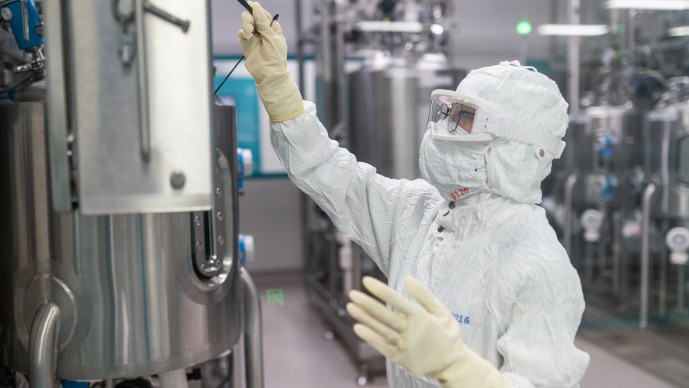
Professor Todd Przybycien, Ph.D., head of RPI’s Department of Chemical and Biological Engineering, has been awarded a $3.1 million share of a Gates Foundation Global Grand Challenge grant to advance exceptionally low-cost monoclonal antibody (mAb) manufacturing. Monoclonal antibodies have proven effective at treating a wide range of conditions, including infectious diseases like COVID-19, autoimmune disorders, and certain types of cancer. But they are expensive to produce, and current market prices of $50 to $100 per gram put them effectively out-of-reach for millions of people around the world. The goal of the Gates Grand Challenge is to reduce the price of mAbs to just $10 per gram. Last month, the Gates Foundation announced $10.5 million in funding to a team led by the National Institute for Innovation in Manufacturing Biopharmaceuticals (NIIMBL) in order to achieve that goal. Professor Przybycien’s group is part of that team and will focus on improving the process of purifying monoclonal antibodies after they have been produced by engineered cells. “Optimization and intensification of the downstream purification process offer the exciting possibility of breaking through to the $10/g overall target,” Przybycien said. “We are excited to advance the precipitation-based process we have developed with our collaborator at Penn State as part of the manufacturing solution to sustainably meet the global need for monoclonal antibodies.” Przybycien is an internationally recognized researcher in biomanufacturing and applied biophysics, focusing on developing processes to manufacture recombinant proteins, mRNA, and viral vectors. He has won numerous awards including the NSF CAREER Award and the Camille Dreyfus Teacher-Scholar Award. He is also a fellow of the American Chemical Society, AIChE, and AIMBE. “This grant is a testament to the years of work Todd Przybycien and his team have done to optimize and improve biopharmaceutical manufacturing processes,” said Shekhar Garde, Ph.D., the Thomas R. Farino, Jr. ’67 and Patricia E. Farino Dean of the School of Engineering. “It will pave the way for affordable access to lifesaving medications for millions of people who desperately need them.” “We are excited by the opportunity to demonstrate that there are existing solutions developed by industry and academic partners that can significantly reduce cost of goods and accelerate timelines,” said Kelvin Lee, NIIMBL Institute Director. “We are honored to receive this grant from the Gates Foundation, which will enable this exceptional team to deliver meaningful advances to antibody production efficiency.” This Gates Grand Challenge was established in honor of Dr. Steve Hadley, who championed the reduction of mAbs costs to make them affordable in low- and middle-income countries. The team’s first target will be a monoclonal antibody to treat malaria, an infectious disease which kills more than half a million people each year, primarily in Africa.


Dinosaurs in New Mexico Thrived Until the Very End, Study Shows
For decades, many scientists believed dinosaurs were already dwindling in number and variety long before an asteroid strike sealed their fate 66 million years ago. But new research in the journal Science from Baylor University, New Mexico State University, the Smithsonian Institution and an international team is rewriting that story. The dinosaurs, it turns out, were not fading away. They were flourishing. A final flourish in the San Juan Basin In northwestern New Mexico, layers of rock preserve a hidden chapter of Earth’s history. In the Naashoibito Member of the Kirtland Formation, researchers uncovered evidence of vibrant dinosaur ecosystems that thrived until just before the asteroid impact. High-precision dating techniques revealed that fossils from these rocks are between 66.4 and 66 million years old – placing them in the catastrophic Cretaceous-Paleogene boundary. “The Naashoibito dinosaurs lived at the same time as the famous Hell Creek species in Montana and the Dakotas... They were not in decline – these were vibrant, diverse communities.” – Daniel Peppe, Ph.D. “The Naashoibito dinosaurs lived at the same time as the famous Hell Creek species in Montana and the Dakotas,” said Daniel Peppe, Ph.D., associate professor of geosciences at Baylor University. “They were not in decline – these were vibrant, diverse communities.” Dinosaurs in their prime The New Mexico fossils tell a different story than originally thought. Far from being uniform and weakened, dinosaur communities across North America were regionally distinct and thriving. Using ecological and biogeographic analyses, the researchers discovered that dinosaurs in western North America lived in separate “bioprovinces,” divided not by mountains or rivers, but by temperature differences across regions. “What our new research shows is that dinosaurs are not on their way out going into the mass extinction,” said first author Andrew Flynn, Ph.D., ‘20, assistant professor of geological sciences at New Mexico State University. “They're doing great, they're thriving and that the asteroid impact seems to knock them out. This counters a long-held idea that there was this long-term decline in dinosaur diversity leading up to the mass extinction making them more prone to extinction.” Life after impact The asteroid impact ended the age of dinosaurs in an instant – but the ecosystems they left behind set the stage for what came next, the researchers said. Within 300,000 years of their extinction, mammals began to diversify rapidly, exploring new diets, body sizes and ecological roles. The same temperature-driven patterns that shaped dinosaur communities continued into the Paleocene, showing how climate guided life’s rebound after catastrophe. “The surviving mammals still retain the same north and south bio provinces,” Flynn said. “Mammals in the north and the south are very different from each other, which is different than other mass extinctions where it seems to be much more uniform.” Why the discovery matters today The discovery is more than a window into the past – it’s a reminder of the resilience and vulnerability of life on Earth. Conducted on public lands managed by the U.S. Bureau of Land Management, the research highlights how carefully protected landscapes can yield profound insights into how ecosystems respond to sudden global change. With a clearer understanding of the timeline of the dinosaurs’ final days, the study reveals not a slow fade into extinction but a dramatic ending to a story of flourishing diversity cut short by cosmic chance.