
Experts Matter. Find Yours.
Connect for media, speaking, professional opportunities & more.
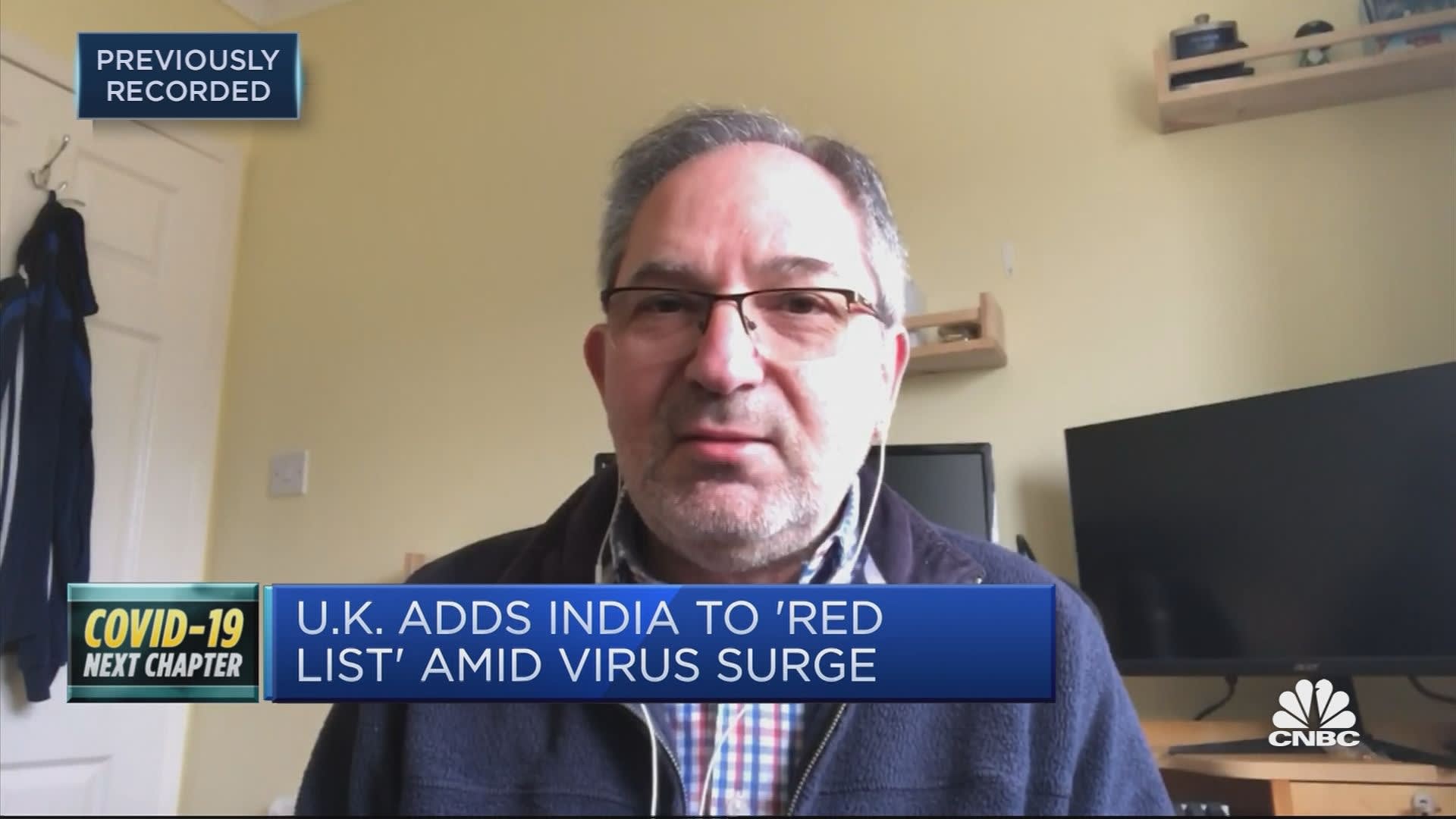
COVID expert: Prof Lawrence Young, UK
Professor Lawrence Young of the University of Warwick is one of the go-to experts in the UK on COVID-19. A Professor of Molecular Oncology at Warwick Medical School, he can comment on many aspects of the pandemic -- from the nature of the virus itself and its effects in patients, to its impacts on hospitals and wider society. He regularly features on TV, radio, and newspapers in the UK and worldwide, including: If you would like to book an interview with Prof. Young, contact press@warwick.ac.uk or L.Walton.1@warwick.ac.uk


Spring 2021 begins a season of resiliency. After a long and particularly snowy winter in New York, I look forward to welcoming my favorite cherry blossoms. It’s been a year now since the COVID shutdowns took hold and the pandemic pause has required enormous energy from all of us at Japan Society, from remote work with constant online meetings, to safeguarding our 50-year-old building, to pivoting to online programming and finding new ways to bring in revenue. It’s not really been a “pause” in the traditional sense, it’s been a race for organizational transformation, adaptation to new ways of communicating with our colleagues and our members, and now — a reopening! This spring, we are delighted to celebrate our reopening with When Practice Becomes Form: Carpentry Tools from Japan, a special exhibition that explores the extraordinary, centuries-long tradition of Japanese architecture and woodworking artistry, and features a range of hand tools and models that reflect techniques used for hundreds of years to build and restore Japan’s wooden architectural masterpieces — temples, shrines, and bridges. Philosophy of Japanese woodworking The philosophy that undergirds Japanese woodworking is deeply engrained in Japan Society’s own history. As master woodworker George Nakashima wrote in his book, The Soul of a Tree, “We can walk in step with a tree to release the joy in her grains, to join with her to realize her potentials, to enhance the environments of man.” Fifty years ago, Junzo Yoshimura, the architect of Japan Society’s now-landmarked building, asked that Japanese hinoki cedar be used for the coffered ceilings in the Society’s lobby and selected with his own hands stones to be shipped from Japan for the foyer garden. He also specified furniture to be crafted by Nakashima in his New Hope, Pennsylvania workshop, furniture that has stood the test of time and is still in use today. Precision is a hallmark of the Japanese experience. One of the many ways to view this is through the concept of kodawari — a unique Japanese notion that is difficult to translate — referring to the uncompromising, relentless devotion to one’s art, pursuit, profession, or activity. In a world turned upside down by a pandemic, there has never been a more welcome time to explore this relentless pursuit of precision and quality in one’s work at all levels of kodawari — in the form of Japanese woodworking. Tools of leadership, alliance & innovation The resilient spirit of Japanese craftsmanship resonates, especially in these unusual times. The presence of tools in our galleries and an exploration of their longstanding heritage for a broad audience highlights the persistent strength of U.S.-Japan relations and human ingenuity. As a leader, I take my own inspiration from Nakashima, using the strength of the oak tree in the West and flexibility of bamboo in the East to bring out the strength, resiliency, and innovation of the U.S.-Japan alliance through my own set of tools. These are the tools of leadership, which require the knowledge and precision of a master carpenter, building for the present while planning for the future. As Nakashima writes, “Each cut requires judgments and decisions on what the log should become.” In kigumi — traditional Japanese wooden joinery — each part plays a crucial role since the joints are fitted together without any nails or fasteners. To have structural integrity, the work — whether furniture or architecture — needs to be weight bearing, and with its direct connections, the whole will ultimately be stronger than its separate elements. In an ongoing cycle of repair and renewal, old joints are replaced by new ones, allowing traditional Japanese buildings to stand for hundreds of years. I find a parallel in the U.S.-Japan alliance, where our direct connection is the strength of our relationship — a collective strength where each nation can accomplish more together. Fifty years ago, as Japan Society’s new building was preparing to open to the public, Deputy Executive Director Daniel J. Meloy wrote to George Nakashima: “Your first shipment to us arrived safely today with all pieces in good shape. We have unwrapped them, dusted them, carried them to their respective rooms, and we love them.” This spring, I invite you to visit When Practice Becomes Form, and help us celebrate our reopening. Let’s work together, using the tools of tradition and innovation, to build the next 50 years of our alliance. Given the challenges the world has faced this past year, the U.S.-Japan alliance has never been more necessary — as acknowledged by the fact that the first world leader to visit President Biden’s White House will be Japanese Prime Minister Yoshihide Suga. The personification of the importance of this relationship through this visit, along with the elevation of the “Quad” meeting between the leaders of Australia, India, Japan, and the United States, indicates a new emphasis in American foreign policy. In addition to the geopolitical challenges confronting our nations, Americans have been struggling domestically with the rise in anti-Asian hate crimes and harassment — a powerful reminder of critical battles still to be fought at home. The Japanese American experience, including forced relocation to internment camps during World War II and the 1980s discrimination triggered by economic tensions with Japan, are only two examples of the long history of anti-Asian racism we continue to confront as a country and community. Now, more than ever, we must bring our collective strength to bear to fight hate and bigotry — and build a stronger and more resilient society. Joshua Walker (@drjwalk) is president and CEO of Japan Society. Follow @japansociety. The views expressed in this article are the writer’s own.


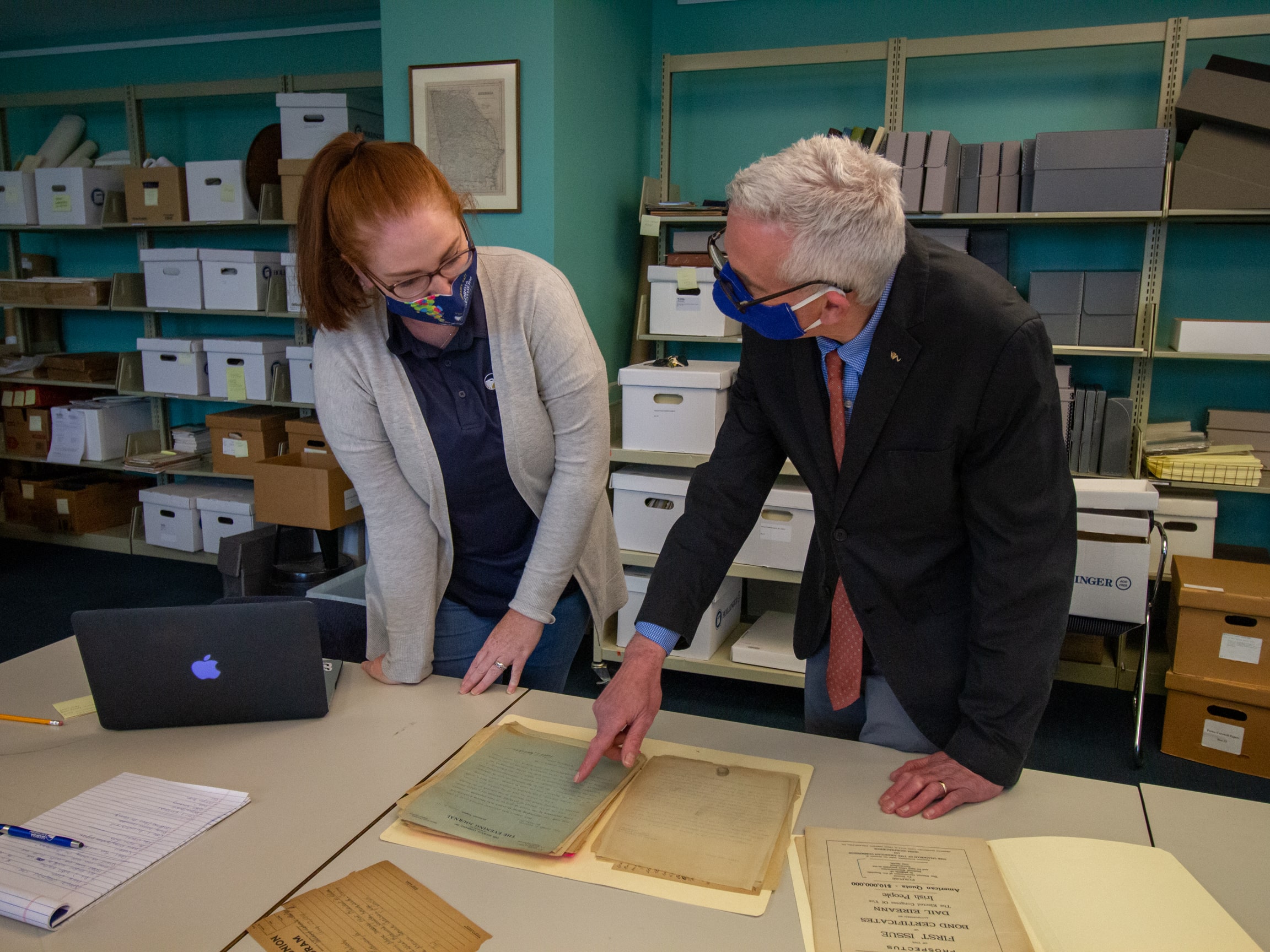
This year marks 100 years since the signing of the Anglo-Irish Treaty, which eventually would establish Ireland as a republic, and Georgia Southern University undergraduate student Caitlyn Hudson is getting a first-hand look at some historical documents that chronicle U.S. efforts to help establish Ireland’s freedom from British rule. Hudson is researching a collection of documents called the Lawless papers, which follow Virginia-native and Irish descendant Joseph Thomas Lawless’ involvement in the southern leg of an extensive U.S. tour by Éamon de Valera, a prominent political leader in Ireland’s history. “My favorite part of working on the project has to be the physical work with the documents,” Hudson said. “It is fascinating to see primary documents in hand rather than online. It provides a unique form of analysis.” The collection, which was gifted in Fall 2020 to the Center for Irish Research and Teaching (CIRT) at Georgia Southern, includes letters, advertisements and more that document an important narrative in modern Irish-American history, according to Howard Keeley, Ph.D., director of CIRT. “These documents shed significant new light on how Ireland perceived Savannah and our region at a critical time in Irish history: that nation’s War of Independence from 1919 to 1921,” Keeley said. “The collection helps us understand the network that Éamonn de Valera and other future leaders of an independent Ireland sought to build in the American South, using as one anchor the sizable and active Irish-American community in Savannah.” All of the Lawless papers were either written or received by Lawless, the son of immigrants from County Galway, Ireland. Lawless was involved in arranging southern stops on de Valera’s tour, which included a stop at the Chatham Artillery Armory in April 1920, in an effort to raise funds for the self-proclaimed Republic of Ireland. Lawless, who would go on to become a lawyer and prominent political figure in Virginia, was also very devoted to Ireland and involved in several prominent Irish-American organizations, including the Friends of Irish Freedom (FOIF), which advocated for political independence for Ireland. “De Valera’s fundraising tour of the U.S. is among the most important episodes in modern Irish-American history,” said Keeley. “The collection sheds significant light on how FOIF used the tour to advance a southern strategy. Clearly, Judge Lawless was key to those efforts.” Keeley also pointed out that in time, de Valera would become prime minister, and then president, of an independent Ireland, dominating the country’s politics for decades. The collection was gifted to CIRT by direct descendants of Lawless and is now housed in the special collections section of the Zach S. Henderson Library. “We are honored to be granted stewardship of these documents,” said Autumn Johnson, special collections librarian at Zach S. Henderson Library. “Having increased opportunities for Georgia Southern students to examine rare, one-of-a-kind collections, such as the Lawless papers, enriches the learning experience, particularly for our undergraduates.” Hudson said her work on the project has allowed her to fully understand the various aspects of potential careers she can pursue, as well as narrow down specific goals for her graduate school journey and beyond. “This type of work is generally done by graduate students, and it is amazing to know that I am able to gain experience in a field while an undergraduate,” said Hudson. “It has allowed me to learn career-relevant material earlier on and in turn has allowed me to better prepare for graduate school and my overall future goals.” Keeley added a collection like the Lawless papers allows students and faculty to conduct research on high-value primary source documents. The collection will also help further CIRT’s ongoing mission to increase research productivity, particularly with respect to the history of the Irish in Savannah and the state of Georgia. “The Irish experience in the south is open to much more study than has thus far been attempted,” Keeley said. “The generous gift of the Lawless papers to the Center for Irish Research and Teaching significantly enhances our drive to conduct meaningful research. For undergraduate students, such as Caitlyn, the opportunity to uncover knowledge by analyzing primary-source documents brings new levels of rigor and satisfaction to the college experience. And for our program, this collaboration with the Special Collections unit of University Libraries is a powerful way to honor our donors’ trust in us and, in addition, celebrate Irish heritage, especially around St. Patrick’s Day.” If you're a journalist looking to learn more about his project of the historical significance the Irish had on Georgia - then let us help. Dr. Howard Keeley is available for interviews — simply reach out to Georgia Southern Director of Communications Jennifer Wise at jwise@georgiasouthern.edu to set and time and date.


What Can A Forgotten Piece of Our Opioid Addiction and Treatment History Teach Us?
As the nation struggles with the third wave of a continuing opioid epidemic, a newly republished book co-authored by Nancy Campbell, the head of the Department of Science and Technology Studies at Rensselaer Polytechnic Institute, offers insight into present-day drug addiction and treatment by exploring a complex chapter from the nation’s past. Written with JP Olsen and Luke Walden, The Narcotic Farm: The Rise and Fall of America’s First Prison for Drug Addicts details the history of the United States Narcotic Farm, a federal institution that opened in 1935 outside of Lexington, Kentucky. Jointly operated from 1935 to 1975 by the U.S. Public Health Service and the Federal Bureau of Prisons, the Narcotic Farm was a combination prison, hospital, working farm, rehabilitation center, and research laboratory. “All of our scientific knowledge about human opioid addiction comes from that time, comes from that place,” said Campbell, a leading figure in the social history of drugs, drug policy, and harm reduction, on an episode of the Landmark Recovery Radio podcast. The facility, which was also the subject of a 2009 documentary featuring Campbell, has a complicated legacy. It revolutionized treatment methods commonly accepted today, such as using methadone to medically manage heroin detox and the development of drugs like naloxone and buprenorphine. But it fell under a cloud of suspicion in 1975, when Congress learned that researchers had recruited patients as test subjects for CIA-funded LSD experiments as part of the notorious MK-Ultra project. “With the ongoing opioid epidemic worsening this past year in the midst of the COVID-19 pandemic, the lessons learned in this book continue to be relevant today,” Campbell said. Campbell is also the author of Using Women: Gender, Drug Policy, and Social Justice and Discovering Addiction: The Science and Politics of Substance Abuse Research, as well as the co-author of Gendering Addiction: The Politics of Drug Treatment in a Neurochemical World. Her most recent book, OD: Naloxone and the Politics of Overdose, was published in 2020. “Nobody should die of overdose. A high overdose death rate signals that we have not cared for the people who have been hurt most by the war on drugs, first pursued by President Dwight D. Eisenhower in 1954,” Campbell said in a recent “Academic Minute” segment. Campbell is available to discuss a wide range of topics relating to drug policy and history, including the Narcotic Farm.


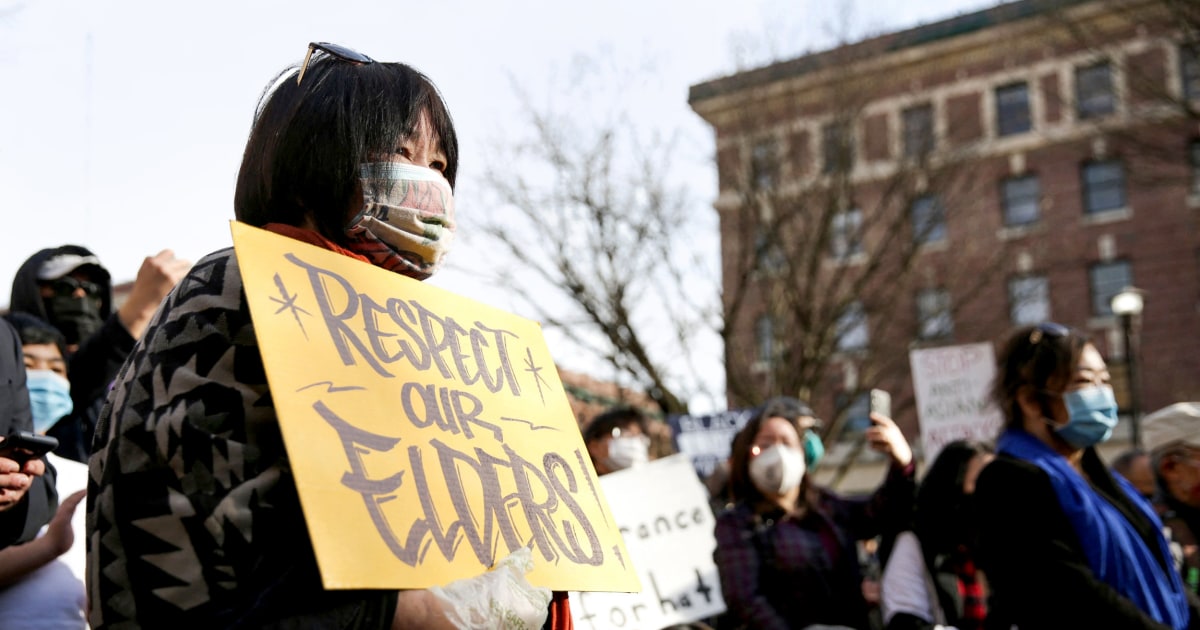
Immigration history expert can provide insight on anti-Asian racism in the U.S.
Anti-Asian hate crimes are on the rise in America, and new data has revealed over the past year that the number of these incidents — which can include shunning, verbal harassment and physical attacks — is greater than previously reported. And a disproportionate number have been directed at Asian women, such as the recent Atlanta spa shootings and the assault on an elderly woman in San Francisco. The research released by reporting forum Stop AAPI Hate on Tuesday revealed nearly 3,800 incidents were reported over the course of roughly a year during the pandemic. It’s a significantly higher number than last year's count of about 2,800 hate incidents nationwide over the span of five months. Women made up a far higher share of the reports, at 68 percent, compared to men, who made up 29 percent of respondents. The non-profit does not report incidents to police. The data, which includes incidents that occurred between March 19 of last year and Feb. 28 of this year, shows that roughly 503 incidents took place in 2021 alone. Verbal harassment and shunning were the most common types of discrimination, making up 68.1 percent and 20.5 percent of the reports respectively. The third most common category, physical assault, made up 11.1 percent of the total incidents. More than a third of incidents occurred at businesses, the primary site of discrimination, while a quarter took place in public streets. According to the data, Asian women report hate incidents 2.3 times more than men. A further examination of the submitted reports showed that in many cases, the verbal harassment that women received reflected the very intersection of racism and sexism. March 16 – NBC News If you’re a journalist covering this news story, then let us help. Dr. Krystyn Moon is an expert in U.S. immigration history, popular culture, race and ethnic studies – and is available to speak with media regarding the recent study and the history of the anti-Asian racism and violence in the United States. If you are looking to arrange an interview, simply click on her icon now to book a time today.



What We Can Learn From Celebrating Irish-American Heritage Month
About two weeks ago, President Joseph Biden declared March 2021 Irish-American Heritage Month. In an official statement, the president said, "We owe a debt of gratitude to the Irish-American inventors and entrepreneurs who helped define America as the land of opportunity... The fabric of modern America is woven through with the green of the Emerald Isle." As the director of the Center for Irish Studies at Villanova University, an institution founded by Irish Augustinians to educate the children of Irish immigrants, Joseph Lennon, PhD, agrees. He hopes to use this presidential declaration as an opportunity to expand the conversation around what it means to be of Irish descent beyond wearing green and watching the annual St. Patrick's Day parade. The way Dr. Lennon sees it, "there is much more to Irish America than a parade and parties." With such a rich history of Irish immigrants and their descendants living in and contributing to the development of the United States, Dr. Lennon sees March 2021 as an important time to reflect on the "contributions and travails of this ethnicity" in a way that reaches beyond "silly slogans and marketing schemes." He reminds us, "there are over 30 million Irish Americans. The Irish contributed massively to the infrastructure of industrial America and later to the civil, education and business worlds—not to mention the Catholic Church." Dr. Lennon also hopes this month will help redefine the larger notion of what it looks like to be Irish and American. He notes that "38% of African Americans have Irish ancestry," but acknowledges that "this is a complicated issue," since in some cases this may stem from abuses suffered during the American practice of slavery. It is important conversations like these that Dr. Lennon wants to bring to light during Irish-American Heritage Month, and he stresses that "more research is needed into understanding this history—as well as the unions between Irish immigrants and northern-bound African Americans during the late nineteenth century." Per Dr. Lennon, these historical events are tied to our present day. He sees a need for "the level of recent racist attachments to Irishness... to be confronted with historical knowledge and anti-racist understandings." With such important issues in mind, Dr. Lennon wants to impart that "the Irish diaspora is global and diverse and Irish culture runs much more deeply and broadly in America than we might guess by just attending the St. Patrick's Day celebrations." He adds, "I'm curious to see if the conversation continues past St. Patrick's Day this year." Despite most St. Patrick’s Day events and programs being virtual in 2021, there are many opportunities to celebrate Irish-American heritage this year. At Villanova, the Center for Irish Studies is hosting a virtual St. Patrick's Day Celebration called "Links Across the Atlantic" on Wednesday, March 17, from 10:00 a.m. to 9:00 p.m. This free celebration will include live entertainment segments, from an Irish breakfast tutorial with study abroad director Mary Madec to lunchtime laughs with actor Johnny Murphy, and will culminate with a streamed Irish music fèis (or festival) in partnership with Tune Supply, featuring We Banjo 3, the Friel Sisters and One for the Foxes! For more information or to register for this event, please click here.


Telecommuting Expert Predicts Permanent Changes to Work After the Pandemic
With the sudden shift to remote work brought about by the COVID-19 pandemic, many corporations have had to quickly assemble a patchwork of policies, procedures, and technologies. Timothy Golden, a professor in the Lally School of Management at Rensselaer Polytechnic Institute, foresees that many companies will adopt remote work on a permanent basis, and need to devote considerable attention and focus to systematically assessing the lessons they have learned. Golden is a leading expert in the field of telecommuting, telework, and the relationship between technology and managerial behavior. With more than 20 years of experience studying the impact of remote work on corporations and individuals, Golden’s insights about the future are rooted in a deep understanding of the history of remote work. In the wake of the pandemic, Golden envisions companies adding a Chief Remote Work Officer, who is responsible for maintaining the effectiveness of the company’s remote work program, to their C-Suite. This person will likely be a boundary spanner who garners resources and support from across silos in the company to ensure remote work remains effective in its long-term implementation. With the continuing importance of remote work, the Chief Remote Work Officer will need a seat at the executive table to ensure it receives the attention it needs. With remote work becoming even more firmly engrained in corporate cultures, Golden expects changes in the ways employees interact. With large numbers of employees continuing to work remotely, employees will expect support for this work mode in many forms — from promotion opportunities and performance metrics, to mentoring and technology support. Another implication of remote work going forward is that the demand for real estate will change, and companies will see real estate as platforms for collaborative work, rather than simply for work. With a significant permanent portion of the workforce likely to remain as remote workers, companies will be able to scale back their real estate yet also reallocate existing spaces to ones that are used for more collaborative interactions, rather than simply offices for individualized working. Golden is available to speak about these and other aspects of the future of remote work, as well as specific lessons he has learned through decades of studying this topic.


What’s next for Myanmar? Our expert can help if you are covering.
The troubled and fledgling democracy that existed in Myanmar has been overtaken by a military coup. The tiny South-Asian country is no stranger to military dictatorships and the uprisings occurring are the third time in recent history that the country has been in disarray. The reason for the interventions, as it’s being spun by the military, is to preserve the concepts of democracy with the promise of new elections on the horizon. “The Burmese military has long considered itself as the principle protector of the Myanmar nation, and they have treated internal critics and democratic reformers as enemies of the nation,” said Dr. Andrew Goss,” chair of the Department of History, Anthropology and Philosophy at Augusta University. “While the partial democratic reforms instigated by the military a decade ago gave many hope that Myanmar was changing, the election last year did not produce the results the military expected.” In his first televised address since the takeover, Min Aung Hlaing, a career military officer who is commander in chief of Myanmar's armed forces, repeated claims of fraud in November's election, and said the military will hold new elections and transfer power to the winner. He did not specify when those elections would take place, though the military had previously declared a year-long state of emergency. The military has imposed numerous restrictions on gatherings and activities in the country's largest cities of Yangon and Mandalay, effective Monday until further notice. Restrictions include an 8 p.m. to 4 a.m. curfew, as well as a ban on motorized processions and gatherings of more than five people. They are effective on a township-by-township basis. In his address, Min Aung Hlaing said an electoral commission did not properly investigate irregularities over voter lists or allow fair campaigning, according to the BBC, which notes that the commission did not find evidence to support claims of widespread fraud. He also promised that a reformed commission would oversee another election, and spoke of achieving a "true and disciplined democracy." But when those elections will happen and who will be able to seek office have yet to be explained. The situation has garnered international attention and condemnation – and if you are a journalist covering these ongoing developments in Myanmar, then let our experts help with your coverage. Dr. Andrew Goss is a renowned expert in Asian history and can speak to reporters covering the events taking place now. To arrange an interview with Dr. Goss, simply click on his name.


Comfort Women – UConn expert weighs in as a dark piece of history returns to light
A recent article in an academic journal claiming that Korean comfort women -- imprisoned, raped, and subjected to brutal atrocities during World War II -- were "prostitutes" who had willingly entered indentured contracts set off a firestorm of controversy and a chorus from historians and academics calling for the paper's retraction. It's a topic garnering international attention as survivors continue to seek resolution, compensation, and acknowledgement of the past. UConn's Alexis Dudden is a professor of history specializing in Japan and Korea who has heard stories from survivors first-hand and is among those scholars calling out the erroneous claims: A recent academic journal article by the professor — in which he described as “prostitutes” the Korean and other women forced to serve Japan’s troops — prompted an outcry in South Korea and among scholars in the United States. It also offered a chance, on the Zoom call last week, for the aging survivor of the Japanese Imperial Army’s brothels to tell her story to a group of Harvard students, including her case for why Japan should issue a full apology and face international prosecution. “The recent remarks by the professor at Harvard are something that you should all ignore,” Lee Yong-soo, a 92-year-old in South Korea and one of just a handful of so-called comfort women still living, told the students. But the remarks were a “blessing in disguise” because they created a huge controversy, added Ms. Lee, who was kidnapped by Japanese soldiers during World War II and raped repeatedly. “So this is kind of a wake up call.” The dispute over the academic paper has echoes of the early 1990s, a time when the world was first beginning to hear the voices of survivors of Japan’s wartime sexual slavery in Asia — traumas that the region’s conservative patriarchal cultures had long downplayed. Now, survivors’ testimony drives much of the academic narrative on the topic. Yet many scholars say that conservative forces are once again trying to marginalize the survivors. “This is so startling, 30 years later, to be dragged back, because in the meantime survivors from a wide range of countries found a voice,” Alexis Dudden, a historian of Japan and Korea at the University of Connecticut who has interviewed the women. In dual articles from The New Yorker and The New York Times, Dr. Dudden weighed in on the controversial journal article and offered her findings on the atrocities committed against the women: Alexis Dudden, the historian of Japan and Korea, was one of the scholars invited to publish a reply to Ramseyer in the journal. In her comment, she observes that a reason for studying past atrocities is to try to prevent similar occurrences in the future, “not to abuse history by weaponizing it for present purposes.” She told me of meeting Korean comfort women in Tokyo, in 2000, at the Women’s International War Crimes Tribunal on Japan’s Military Sexual Slavery. “One of them had her tongue cut out,” she said. “Another woman literally lifted up her hanbok to show me where one of her breasts had been lopped off.” Dudden said that the tribunal was “a big watershed in terms of understanding how oral testimony really was necessary, to shift the legal approach but also in terms of doing historical evidence gathering” in the study of crimes against humanity. In some sense, such testimony of atrocities is seemingly irrefutable. But historians such as Dudden continually seek to verify it, producing knowledge of unspeakable horrors, through cycles of historical denial, political conflict, and diplomatic irresolution. If you are a journalist covering this topic, Dr. Dudden is available to speak with media about how history is playing a role in the current controversy. Click on her icon to arrange an interview today.


March is Women’s History Month – Let the expert from Georgia Southern help if you are covering
March is Women’s History Month – a full month dedicated to the efforts, rights and advancement of women in America. Felicity Turner, Ph.D., associate professor of history at Georgia Southern University, specializing in women’s issues and is regularly featured in media speaking to the subject. "This year, the pandemic has clearly demonstrated that, despite the great strides that all women have made toward achieving equality, much remains to be done," said Turner. "In many households, ever more women have taken on the multiple roles of principal caretaker and schoolteacher, while holding down full-time jobs. "Looking to the past helps us understand why the burden of this labor has fallen disproportionately on the shoulders of women. Importantly, however, history also helps us appreciate how women today can continue to work toward equality in the future." If you are a journalist looking to cover this angle, or any other aspect of Women’s History Month – then let us help with your coverage. Felicity Turner is available for interviews — simply reach out to Georgia Southern Director of Communications Jennifer Wise at jwise@georgiasouthern.edu to set and time and date.