
Experts Matter. Find Yours.
Connect for media, speaking, professional opportunities & more.

Impact of Masks on Social Interaction
In the midst of the current pandemic, wearing masks in public has become the norm. However, masks present challenges for in-person social interaction. The deaf community, in particular, has had to adapt to losing the ability to lipread and cues from facial expressions. According to Heidi Rose, PhD, professor and chair of Villanova University's Communication Department, "Most people take communication for granted." Simple things, such as seeing facial expressions, are crucial to fully understanding each other. "We get a lot of cues from voice (tone) [and] inflection, but the face communicates so much," said Dr. Rose. For instance, new relationships through face coverings may become difficult to develop. "If you don't know them, you miss a lot; in a classroom or work situation, until you know them well, it creates a big barrier." Not being able to see the face is a major barrier in understanding speech in the deaf community. Dr. Rose, who has written and researched communication in the deaf community, sees clear masks as a solution. "Now there's a market for them; they help facilitate facial expression; it helps you feel closer to someone," Dr. Rose said. These masks, which have clear plastic windows, allow for more understanding. The key, Dr. Rose emphasizes, is to positively adapt to new communication challenges. Clear masks could be a step toward shaping the future of communication. "Instead of lamenting the losses, focus more on adaptability—what we recognize as essential to good communication and how we overcome these barriers," she added. As history has proven, the way we communicate is constantly changing. "We always evolve in interesting ways," said Dr. Rose. "The invention of the telephone didn't stop neighbors from talking to each other."

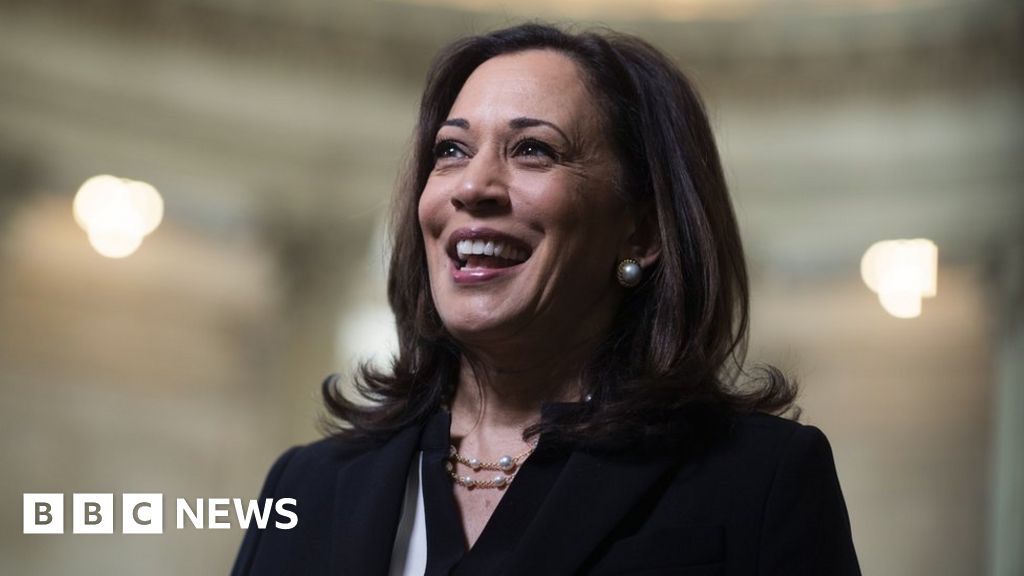
It's on - Are Biden and Harris a dream ticket for voters?
For some it is a dream come true. For Donald Trump – there appears to be a nightmare on the horizon. When Joe Biden chose Senator Kamala Harris as his running mate, it seemed like the ultimate trump card was played on the president himself. The announcement dominated newscasts across the globe. Harris is a strong candidate with a political resume that few can rival. Her young age off-sets that of Biden and the fact that she is a woman of color – and the chance for America to make history once again – makes the path to the White House seem unstoppable. However – no campaign is perfect, nor easy in America these days. And voters should expect lots of political punches and mudslinging in the party conventions and debates, all the way up to Election Day. What can Americans expect as the campaigns kick off? Will Harris’s past policies and record as Attorney General dull her shine? She clashed last summer with Biden over issues of race – has all been forgiven and forgotten? And is America finally ready to elect a woman of color into the highest halls of government? It is going to be a long and winding road until the November election – and if you are a journalist covering this topic, the University of Mary Washington has one of the foremost political experts in the country who can help with your stories. Dr. Stephen Farnsworth is a sought-after political commentator on presidential politics. He has been widely featured in national media, including The Washington Post, Reuters, The Chicago Tribune, and MSNBC.



What does Kamala Harris' candidacy for vice president mean for women of color in America?
It wasn’t necessarily a surprise to insiders, but Joe Biden’s announcement that Sen. Kamala Harris will be his running mate in the 2020 presidential election took America by storm. News outlets, pundits and posters to social media all took to different mediums to discuss the historical significance of a female woman of color being on the ballot and what this means for America. Harris has obviously broken through the glass ceiling that still existed for those seeking the office of the vice president in Washington, but she is refreshingly just one of several strong females from minority communities who are starting to make a difference and have an impact on the makeup of modern American politics. In many recent elections, black women voters have voted overwhelmingly for Democrats, and had the highest turnout rate among all racial, ethnic and gender groups between 2008 and 2012, according to The New York Times. Women of color are an emerging force in politics, but is America ready to elect a woman of color to vice presidency? It will be an interesting campaign. With Biden and Harris in fact facing President Donald Trump and amid a global pandemic, this will be one of the most hotly followed and unconventional quests for the White House in history. If you are a journalist covering this topic – then let an expert from Augusta University help with your story. Dr. Mary-Kate Lizotte is an expert in political behavior and the implications of gender differences in public opinion, including society’s views of female candidates of color. She is available to talk about the upcoming election and all aspects surrounding each campaign. Click on her name to schedule an interview.


It has been the talk of the political town for months now – just who will Joe Biden pick to be his running mate and potentially the vice president of America after this November’s election? Biden’s victory over President Donald Trump is far from guaranteed, and odds are Democrats are a little wiser from 2016, when the polls showed Hillary Clinton had the race all but sewed up in October only to be shocked once all the votes were counted. But the polls are favorable for Biden and who he chooses to join him on the ballot could help drive his victory a lot closer to home. Biden has signaled his running mate will be female, which narrows the fields, but there are other factors to consider. Here are just a few: Race: Black voters represent almost one of four members of the Democratic base and getting those voters to show up like they did for former President Barack Obama will be essential. Appeal: Biden did well with older voters in the primaries but had dismal support of younger voters. Age: At 77, Biden will be the oldest candidate in history. He may need a substantially younger partner to balance the ticket. A lot of names are being thrown around and time is ticking. If you are a journalist covering the election, that is where our media-ready experts can help. Dr. Mary-Kate Lizotte is an expert in political behavior and the implications of gender differences in public opinion, including society’s views of female candidates of color. She is available to talk about the upcoming election and all aspects surrounding each campaign. Click on her name to schedule an interview.

This presidential election will undoubtedly be the most contentious, controversial, and probably extraordinary in American history. If you thought 2016 was a spectacle, now Joe Biden and Donald Trump are facing off during a global pandemic, which will inevitably force the traditional styles of campaigning like whistle stops and rallies to pivot toward digital town halls and online chats. Despite polling, both parties know they cannot take anything for granted. And there are a lot of factors at play: Has anyone done an almost exclusively online campaign before? What will a lack of massive rallies mean for Donald Trump? What can Joe Biden learn from the Clinton campaign? What are the key states at play and why do they matter so much? Can either candidate bridge the divide between a very divisive America? The next 99 days will be a long and drawn out marathon of drama, policies, and political punches. And if you are covering, let Dr. Stephen Farnsworth be your go-to for everything you need to know during this election. Dr. Stephen Farnsworth is a sought-after political commentator on presidential politics. He has been widely featured in national media, including The Washington Post, Reuters, The Chicago Tribune, and MSNBC. He is author or co-author of six books on presidential communication. Dr. Farnsworth is available to speak with media and help with your coverage – simply click on his icon to arrange an interview today.

Is there a path to a successful and productive life after imprisonment?
On July 8, Savannah Mayor Van Johnson announced the formation of a new task force focused on helping those formerly incarcerated or with a criminal history seek productive futures when they return to society. The Advocates for Restorative Communities in Savannah (ARCS) will bring together experts, including formerly incarcerated people, who currently work with those in the justice system. The goal is pooling their collective experiences to best serve those returning to Savannah from prison and help them toward a path of success. Georgia Southern University's Maxine Bryant, Ph.D., senior lecturer, Department of Criminal Justice and Criminology, is playing a lead role in the task force. According to Bryant, about 4% of all those in Georgia’s prisons call Chatham County home. Bryant says last year Georgia’s Department of Corrections reported there were around 53,000 people inside their prisons. “Four percent, that’s about 2,000 people, people who are currently incarcerated are probably going to be returning back to Chatham County,” said Bryant. “You add that year after year after year, and then it becomes clear that if we don’t do something, we are a part of the problem, and not the solution.” Bryant added two out of every three people who are released are rearrested within three years. “Not all of those arrests are new crimes,” she said. “Some of them are technical difficulties, technical violations. They couldn’t pay a fine because they didn’t have a job.” June 08 - WTOC TV If you are a journalist and would like to learn more about this program or this topic – then let our experts help. Maxine Bryant’s research interest specifically focuses on factors contributing to the successful community reintegration of released prisons. Specifically, she has written and presented on transitional jobs for newly released prisoners, the role of the Black church in successful offender reintegration, the impact of unaddressed childhood trauma and barriers to successful offender reintegration. She is available to speak with media any time – simply click on her icon to arrange an interview today.


Protests and politics – let our expert explain how one influences the other
The protests that have been occurring across most of America have seen politically charged language, action, and reaction. Calls for change have been made, and promises have followed by those seeking to attain office or remain in office once the dust has settled and America goes to the polls in the fall. In a recent essay, former President Barack Obama touched on how those protesting can translate emotions into action. “Throughout American history, it’s often only been in response to protests and civil disobedience that the political system has even paid attention to marginalized communities,” said Obama. ”Eventually, aspirations have to be translated into specific laws and institutional practices — and in a democracy, that only happens when we elect government officials who are responsive to our demands.” Social movement expert and Augusta University Sociology Professor Dr. Todd Powell-Williams says protest movements have a significant impact on politics. His research shows societal change not only happens as a result of the crowd but also because the protests get people politically activated. “From the Boston Tea Party to the protests of the Civil Rights Movement, protests have had some degree of success in changing the course of history,” said Powell-Williams. “The recent protests against racial injustice are no different and I’m sure it will influence the outcomes of upcoming elections.” If you are a journalist looking to cover this topic, then let our expert help with your questions and coverage today. Dr. Todd Powell-Williams is an expert in social movements, social control, religion, police science and symbolic interactionism. He is available to speak with media regarding this topic — simply click on his name to arrange an interview. Also, check out the Augusta University Expert Center to view a complete list of our experts.


As the COVID-19 pandemic unfolded and healthcare organizations began experiencing shortages of personal protective equipment (PPE), faculty, staff and students at Georgia Southern University stepped up to fulfill a need. Making use of the 3D printers on the Statesboro and Armstrong campuses, as well as at the FabLab at the Business Innovation Group’s (BIG) downtown Statesboro location, the campus communities quickly began production of protective face shields and respirators. “We can’t afford to sit back and wait for things to happen,” said Dominique Halaby, DPA, director of the BIG. “We have to make them happen. We have this responsibility to make a difference, to be a part of that front line, whether it’s immediately in our community, our state or our respective area.” To date, the Department of Manufacturing Engineering has sent 200 3D-printed protective face shields with headbands to Augusta, Georgia, for healthcare workers at Augusta Medical Center, while the BIG has sent 100 face shields and 10 “Montana Masks,” a 3D-printable respirator filtration mask that can be fitted to a healthcare provider’s face and sanitized between uses, to Atlanta-area hospitals. The Department of Mechanical Engineering on the Armstrong Campus has also printed Montana Masks that will be delivered to workers in the St. Joseph’s/Candler Hospital System (SJCHS) in Savannah, Georgia, while the Respiratory Therapy Program in the Waters College of Health Professions donated 10 ventilators to the Georgia Emergency Management Agency. “I am unbelievably proud of our faculty, staff and students who have their own families to take care of, but are putting themselves on the line to help our medical professionals in this time of critical need,” said Mohammad Davoud, Ph.D., dean of the Allen E. Paulson College of Engineering and Computing. Wayne Johnson, Ph.D., professor of mechanical engineering, believes providing these materials to the Savannah community during a time of critical need is reinforcing a longtime commitment to the region. “The Armstrong Campus of Georgia Southern has a long history of working within the Savannah community, and during this pandemic, it was especially important for mechanical engineering faculty and students at the Armstrong Campus to step up during a time of great need,” said Johnson. “ Our work with SJCHS to develop, test and donate 3D-printed respirators may also lead to other research and development collaborations in the post-COVID-19 future.” In addition to benefiting area healthcare workers, Johnson believes this project is a great way for students to put their classroom skills into practice. If you would like to learn more about how the students, staff and faculty at Georgia Southern University are helping out during the COVID-19 crisis – the let our experts help. Wayne Johnson is an expert in additive manufacturing, mechatronics, biomechanics and engineering education. He is available to speak with media about this great initiative, simply click on his icon to arrange an interview today.

Scapegoating During Pandemics Has Always "Plagued" Humanity
Though it was widely known that the first known cases of coronavirus could be traced back to Wuhan in China, many Americans were shocked and saddened to hear President Donald Trump repeatedly calling the illness the "Chinese virus" during a news conference in March. Though President Trump has insisted it's "not racist at all," Asian-Americans have reported incidents of slurs and physical abuse over the perception that China caused COVID-19. Rev. Joseph Ryan, OSA, PhD, teaches a course on the history of disease, with a focus on the bubonic plague, and notes that this type of xenophobic hysteria is not new when it comes to pandemics. “A theme that we can see with these epidemics is hysteria and the scapegoating of people who are liminal and have no defenders,” says Fr. Ryan. “We also see nativism and xenophobia evident in people's response to epidemic illness. Pandemics test the humanity of human populations and sometimes we are inhumane in the face of the fear of death from such diseases.” Here are a few examples from history of how humanity shifts blame during times of great pandemic-related stress: 1348: The Bubonic Plague A third of Europe's population was eliminated by this epidemic, which spread along trade routes. The event caused different expressions of hysteria among Europeans, including the persecution of the Jewish community. 1832: Cholera Like the bubonic plague, cholera traveled along trade routes. In the United States, Irish immigrants were scapegoated. 1918: Spanish Influenza It gained its name because the first journalists to talk about the disease were from Spain. Influenza came from Kansas and spread through the transport of American soldiers to Europe to fight in the First World War. Later, it traveled to British colonies in India and Africa via the transport of British troops, and the result was the rise of independence movements in these countries. 1980s: HIV/AIDS The HIV/AIDS crisis caused hysteria surrounding gay men. 2014: Ebola Another event that sparked hysteria was the recent outbreak of Ebola in West Africa. The governors of New York and New Jersey threatened to close their airports, though there was little chance of the virus breaking out in the United States. (To the best of Fr. Ryan's knowledge, only two Americans developed the disease.)

Baylor Cultural Critic and Author of “Living with the Living Dead” Talks Books and Pop Culture During COVID-19 Time at home is increasing as shelter in place orders and working from home become the norm for many people during the COVID-19 pandemic. During this season of uncertainty, many turn to books, movies and other pieces of pop culture pass the time. Greg Garrett, Ph.D., professor of English at Baylor University and expert cultural critic, supports pop culture and literature as important to meaningfully escaping current fears as well as contextualizing experience and emotions. “A great novel, movie or memoir is a gift when we need distraction, but it can also offer us the dramatic reminder that these are the things that make us truly human: love, community, compassion and faith,” Garrett said. “The world may be shifting beneath our feet, but we’re going to be fine as long as we keep the important things in view.” In a Q&A with Garrett, he gave insight on what can be learned from zombie pandemic pop culture, touched on how literature has fit culturally into pandemic history and offered advice on books to pick up during extra free time at home. Q: You’re the author of “Living with the Living Dead: The Wisdom of the Zombie Apocalypse.” What can we learn from zombie pandemic pop culture? A: Our most pervasive form of pandemic literature in recent years is the story of the Zombie Apocalypse, which has been told in novels, movies, games and comics. It’s been the inciting conflict of “The Walking Dead,” and the underlying threat in “Game of Thrones,” two of the most popular television series in history. One of the attractions of zombie literature is that zombies can serve as a metaphor for lots of things at once: for pandemic, sure, but also for economic unrest, political chaos, terrorism and other things that keep us up at night. But as Max Brooks, author of the seminal zombie novel “World War Z: An Oral History of the Zombie War” (2006), notes: however difficult our lives might be at this moment, at least the dead are not wandering the earth and trying to eat us! We can, Brooks says, close the book, turn off the TV, and at least be secure in that. A book like “World War Z” or a movie like “Sean of the Dead” (2004) or “Zombieland” (2009) can soothe some of our tension since this story of a world coming off the rails is our story, yet clearly not our story. Q: How does literature fit into cultural history events like pandemics? A: One of the most important gifts that great stories can give us is the realization that we’re not alone in our experience, and that, in fact, our experience is not unprecedented. Anyone wanting to understand that this dark time is not in fact the darkest time should read historian Barbara Tuchman’s masterful “A Distant Mirror: The Calamitous 14th Century” (1978), which explores the Black Death of 1348-50, a pandemic so awful it killed a third of the populations of Europe and the Middle East. Daniel Defoe’s “A Journal of the Plague Year” (1722) is a novel recalling the horror of the Black Death in London some 60 years prior to its writing. In that book, Defoe’s narrator says he writes about his choices in such detail because he believes that they might be “of moment to those who come after me.” That is, he hopes his story might be of use to future sufferers like ourselves, and it is. Q: Literature can also provide escape from tough times. What other books should we be reading right now? A: In the zombie spirit, you could read “Pride and Prejudice and Zombies,” a 2009 parody by Seth Grahame-Smith of the Jane Austen novel. But if you’re simply seeking meaningful escape from our current story, you couldn’t do much better than reading (or re-reading) the actual “Pride and Prejudice” (1813), one of my favorite novels. I can’t wait to fall back into the world of the Bennets and worry about something besides viral curves and travel bans. During the weeks we expect to be largely confined to the house, my family and I are making reading lists. Mine includes Ernest Hemingway’s “The Sun Also Rises” (1926) and James Baldwin’s “The Fire Next Time” (1963), both of which I plan to teach in my American lit class at Baylor this fall, and Toni Morrison’s “Beloved” (1987), which will scare me and break my heart in ways that have nothing to do with this pandemic. ABOUT GREG GARRETT, PH.D. Greg Garrett, Ph.D., professor of English at Baylor University, is a popular theologian and cultural critic as well as the author of two dozen novels, memoir and nonfiction books including “Living with the Living Dead: The Wisdom of the Zombie Apocalypse” (Oxford University Press, 2017). ABOUT BAYLOR UNIVERSITY Baylor University is a private Christian University and a nationally ranked research institution. The University provides a vibrant campus community for more than 18,000 students by blending interdisciplinary research with an international reputation for educational excellence and a faculty commitment to teaching and scholarship. Chartered in 1845 by the Republic of Texas through the efforts of Baptist pioneers, Baylor is the oldest continually operating University in Texas. Located in Waco, Baylor welcomes students from all 50 states and more than 90 countries to study a broad range of degrees among its 12 nationally recognized academic divisions. THE COLLEGE OF ARTS & SCIENCES AT BAYLOR UNIVERSITY The College of Arts & Sciences is Baylor University’s oldest and largest academic division, consisting of 25 academic departments and seven academic centers and institutes. The more than 5,000 courses taught in the College span topics from art and theatre to religion, philosophy, sociology and the natural sciences. Faculty conduct research around the world, and research on the undergraduate and graduate level is prevalent throughout all disciplines. Visit www.baylor.edu/artsandsciences.

