
Experts Matter. Find Yours.
Connect for media, speaking, professional opportunities & more.
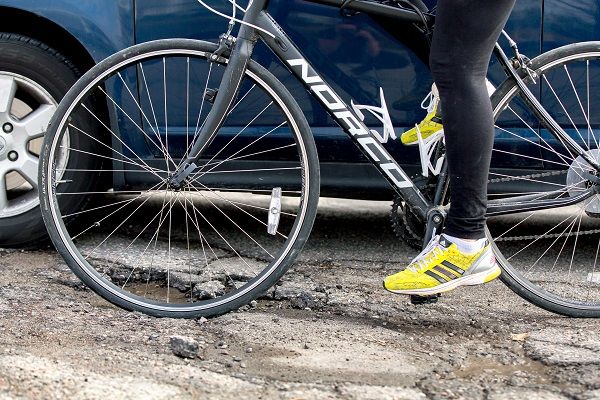
MEDIA RELEASE: Victoria Road in Prince Edward County voted Ontario’s Worst Road.
The votes are in and the CAA Worst Road for 2021 is Victoria Road in Prince Edward County. Making its debut on the Ontario top 10 list, voters cited potholes and crumbling pavement as the main concerns for the Prince Edward County road. Taking the second and third place spots are Carling Avenue in Ottawa and Barton Street East in Hamilton, respectively. “The quality of our roadways affect everyone,” says Tina Wong, government relations specialist for CAA South Central Ontario. “Our roads are the arteries used every day to keep essential workers, goods and services flowing. They should be maintained now more than ever.” Two notable changes in this year’s list include Riverdale Drive in Washago coming off the provincial top 10 list and Toronto’s Eglinton Ave East dropping from first to fifth place. “As people continue working from home and traveling locally during the pandemic, we are seeing different roads appear on the list. We should continue taking advantage of these lighter traffic patterns as an opportunity for necessary road repairs,” adds Wong. In Ontario, 117 municipalities saw roads in their communities nominated. Drivers accounted for a majority of the votes being cast, with cyclists and pedestrians accounting for about a quarter of the votes. Voters shared their primary reasons for selecting a road, with 81 per cent citing potholes or crumbling pavement, followed by traffic congestion (11 per cent) and no or poor walking infrastructure (7 per cent). Ontario’s top 10 list is verified by the Ontario Road Builders’ Association (ORBA). “We are very pleased to partner with CAA on the 2021 Worst Roads Campaign. ORBA provides analysis on the nominated roads, sheds light on why they were chosen and what issues are impacting them. Increased investment in our transportation infrastructure is vital in order to effectively maintain existing assets and plan for the future.” - Doubra Ambaiowei, Technical Director, Ontario Road Builders’ Association. Ontario’s Top 10 Worst Roads for 2021 Victoria Road, Prince Edward County Carling Avenue, Ottawa Barton Street East, Hamilton County Road 49, Prince Edward County Eglinton Avenue East, Toronto Hunt Club Road, Ottawa Eglinton Avenue West, Toronto Innes Road, Ottawa Algonquin Boulevard West, Timmins Queen Street, Kingston Worst Roads by Region Central— Bell Farm Road, Barrie Eastern— Victoria Road, Prince Edward County Halton-Peel-York-Durham— Speers Roads, Oakville Niagara— Whirlpool Road, Niagara Falls North— Algonquin Boulevard West, Timmins South West— Plank Road, Sarnia Western— York Road, Guelph The CAA Worst Roads campaign is a platform for Ontarians to make roads safer by helping municipal and provincial governments understand what roadway improvements are important to citizens and where they need to be made. Votes submitted to the CAA Worst Roads campaign are compiled and released as an annual provincial top 10 list along with a series on regional lists, all designed to spark a dialogue with governments and to help pave the way for safer roads across Ontario. For the full list of the 2021 Worst Roads, please visit www.caasco.com/worstroads


Does the road ahead for successful cities mean removing highways?
If hindsight is 20/20, there might be a lot of urban planners from 50s and 60s looking back and regretting how the layout of America’s cities went wrong. A recent New York Times piece featuring UConn’s Dr. Norman Garrick looked at 30 cities across America and how they’re trying to undo the damage from more than a half-century ago. As midcentury highways reach the end of their life spans, cities across the country are having to choose whether to rebuild or reconsider them. And a growing number, like Rochester, are choosing to take them down. In order to accommodate cars and commuters, many cities “basically destroyed themselves,” said Norman Garrick, a professor at the University of Connecticut who studies how transportation projects have reshaped American cities. “Rochester has shown what can be done in terms of reconnecting the city and restoring a sense of place,” he said. “That’s really the underlying goal of highway removal.” The project’s successes and stumbling blocks provide lessons for other cities looking to retire some of their own aging highways. Nearly 30 cities nationwide are currently discussing some form of removal. May 27 - New York Times The concept of urban renewal is front and center and is getting a lot of attention as the government looks to invest in infrastructure and new modern cities. And if you’re a reporter looking to know more about this topic, let us help. Dr. Norman Garrick is professor in the Department of Civil Engineering and co-director of the Sustainable Cities Research Group at the University of Connecticut. He is an expert in the areas of transportation behaviors, parking, public transit, and bicycle lanes. Dr. Garrick is available to speak with media – simply click on his icon now to arrange an interview today.


Rensselaer Experts Available To Discuss Federal Infrastructure Proposal
Federal lawmakers are discussing sweeping infrastructure improvements to transportation, manufacturing, and digital infrastructure, among other projects. Researchers at Rensselaer Polytechnic Institute, the country’s first technological research university, are leaders in improving the sustainability, safety, and performance of transportation systems, energy systems, and wireless networks, among other areas. Experts in civil and environmental engineering, electrical engineering, and mechanical engineering are available to discuss what impact large-scale infrastructure projects could have on a multitude of systems that impact people across the country. Improving Transportation and Freight Systems: José Holguín-Veras, the director of the Center for Infrastructure, Transportation, and the Environment at Rensselaer, and Cara Wang, an associate professor of civil and environmental engineering at Rensselaer, are leading experts on the role of infrastructure on freight systems and transportation, and the environmental impacts of both. Their research focuses on improving transportation and freight systems in order to increase efficiency, reduce traffic congestion and, in turn, reduce vehicle emissions. Professors Holguín-Veras and Wang are available to discuss the ways in which improved roads, bridges, railways, and ports could affect shipping and delivery of goods, congestion in cities, and emissions in the environment. They can also discuss what their research has uncovered that could guide policymakers as new projects are planned. Expanding Broadband: Alhussein Abouzeid, a professor of electrical, computer, and systems engineering, is an expert in networked systems, the smart grid, and the Internet of Things. Some of his research focuses on modeling wireless networks, as well as wireless spectrum and policies to optimize its use. Koushik Kar, also a professor of electrical, computer, and systems engineering, researches communication networks, particularly modeling, analysis, and optimization of the internet and wireless networks. Both researchers are available to discuss the ways in which digital infrastructure can meet future needs. Next-Generation Manufacturing: Part of the President’s infrastructure plan would allocate $300 billion to manufacturing. Next-generation manufacturing is a central area of expertise at Rensselaer, with the Institute’s Manufacturing Innovation Center and the Rensselaer Manufacturing Innovation Learning Lab. Faculty and staff from both state-of-the-art centers, including John Wen, the head of the Department of Electrical, Computer, and Systems Engineering, who is an expert in robotics, are available to discuss the role that Rensselaer research plays in preparing the manufacturing sector for the nation’s current and future needs. Upgrading Electric Grid, Investing in Clean Energy: Joe Chow, Jian Sun, and Luigi Vanfretti, all professors in the Department of Electrical, Computer, and Systems Engineering, hold extensive expertise in modeling, monitoring, and optimizing the electric power grid. Their work will be integral to the development of a cleaner, more resilient power grid, especially as clean energy sources are increasingly integrated. Christopher Letchford, the head of the Department of Civil and Environmental Engineering, is a global expert in wind engineering. His expertise includes wind power modeling, wind climatology, and the impacts of climate change on infrastructure, transportation, and energy production. Each of these experts is available to discuss the importance of upgrading the nation’s electric grid, and the move toward clean and renewable energy. Boosting Electric Vehicle Numbers: Part of President Biden’s plan focuses on increasing the number of electric vehicles on the road. A key component of improved and more cost-efficient electric vehicles is greener, cheaper, more efficient, and longer-lasting batteries. Nikhil Koratkar, an endowed chair professor of mechanical engineering, is a leading expert in energy storage technologies. He has dedicated his research to improving the batteries that society already uses, while also developing batteries of the future. He can discuss current battery technology and how advancements in energy storage research could help put more electric vehicles on United States roads. Upgrading Water, Wastewater, and Stormwater Systems: Chip Kilduff, an associate professor of civil and environmental engineering, is an expert in managing water quality and water treatment. He has a particular focus on water treatment approaches like membrane and adsorption-separation processes. Kilduff is available to discuss the importance of upgrading water and wastewater systems and what his research has uncovered about the best methods for managing water quality.


New York and Tokyo: Global Cities as Essential Hubs for Our Collective Future
Throughout, cities have faced repeated pronouncements of their demise. Yet, as centers of soft power, cities adapt, persevere, and ultimately, reinvent themselves to thrive. Photo: Orbon Alija / Getty Images On August 24, 2020, in the dog days of the New York summer and at the peak of the COVID-19 pandemic, comedian Jerry Seinfeld wrote an op-ed for The New York Times titled "So You Think New York Is 'Dead' (It's not.)" The king is dead, long live the king! "Real, live, inspiring human energy exists when we coagulate together in crazy places like New York City," wrote Seinfeld. Cities change, "They mutate. They re-form. Because greatness is rare. And the true greatness that is New York City is beyond rare." In fact, megacities around the world have been experiencing similar trends related not just to the novel coronavirus--climate change, natural disasters, population shifts, and transformations in business, infrastructure, and transportation will all shape the contours of the 21st century. New York City's own history--when and why it has been pronounced "dead" during the last century--is instructive in and of itself. Other megacities of consequence should take note and take heart, especially Tokyo, which will be under the microscope in a new way as it prepares to host the Olympic Games in today's unprecedented environment. History repeats itself In the tensions of living in the present time, it's easy to forget New York City's long history of disaster, recovery, growth, and innovation--the 1918-19 influenza epidemic, the seasonal threat of polio, the scourge of HIV-AIDS, and the current pandemic, all define the city's history. In October 1975, New York City, America's largest and wealthiest city, narrowly averted bankruptcy. Refused rescue by the federal government and President Gerald Ford, the city was saved only through the beneficence of the city's own Teacher's Retirement System pension fund, which made up a $150 million shortfall. The next day, the Daily News headline shouted "Ford to City: Drop Dead." We survived, and we thrived! Then there was 9/11, 20 years ago this September, when the U.S. rallied around the city. New Yorkers cheered as heavy equipment driven from across America arrived to help clear the devastation, and were joined by the entire nation in mourning those who were lost. Along came the 2008 financial crisis, sounding another death knell for New York. Today, we know from past history that what has closed will reopen, or be reborn in a different form. And we'll be here to celebrate. Global cities generate soft power Like Tokyo, London, or Paris, New York is a global center for arts and culture, a place where diverse creative arts flourish and inspire people in close proximity, where there is always space for tradition and innovation, and a place, too, for those who come for entertainment. But whether in Japan, Europe, or America, whether in the arts, innovation, or civil society, the soft power of a global city is so much more than the sum of its parts. It is a treasure trove of history, a platform for the future, a home for diversity, and an incubator for social change. What is soft power and why do we need it? The term "soft power" was crafted by Harvard political scientist Joseph Nye in the 1980s, and is now widely used in a foreign policy context. As a 2004 Foreign Affairs review of Nye's book, Soft Power; The Means to Success in World Politics noted: "Nye argues that successful states need both hard and soft power--the ability to coerce others as well as the ability to shape their long-term attitudes and preferences... But overall, Nye's message is that U.S. security hinges as much on winning hearts and minds as it does on winning wars." Almost two decades later, soft power--the cultural, intellectual, and social bonds that bring diverse countries and societies together for mutual understanding--has become a critical component of American foreign policy. This is especially important for the U.S.-Japan alliance, as most recently evidenced by Hideki Matsuyama's thrilling Masters Tournament win and President Biden hosting Prime Minister Yoshihide Suga as the first head of state to visit the White House during his tenure. As I've written before, based on my experience from the State Department, "innovative and entrepreneurial partnerships based on shared objectives--economic growth, stability, and more--will be the engine for increased security and prosperity." In other words, the future of diplomacy will not only be national, but subnational, where megacities like Tokyo and New York will shape their own destinies based on the partnerships that their leaders--political, business, and civil--can forge together in the best interests of their constituents. Japan Society and New York As the President and CEO of Japan Society, my work is to take the Society's mission into its second century, to be the deep connection, or kizuna, that brings the United States and Japan together through its peoples, cultures, businesses, and societies. From our New York headquarters, which opened to the public 50 years ago, we are looking toward the next half century knowing that we will be defined not so much by our now-landmarked building but by our digital and ideational impact. Our future can only be enhanced by continuing to exchange with our friends in Tokyo and beyond. Long before soft power was defined, in the radical days of 1960s New York, Japan Society supported international exchange in the arts between Japan and the U.S. through fellowships and grants to Japanese artists and students, among them Yayoi Kusama, Yutaka Matsuzawa (Radicalism in the Wilderness: Japanese Artists in the Global 1960s), Shiko Munakata (Improvisation in Wood: Kawamata x Munakata, fall/winter 2021), and many others who made history in the arts in both the U.S. and Japan. Now, performing arts commissions and gallery exhibitions at Japan Society build on and evolve U.S.-Japan cultural exchange even as Japanese traditional and contemporary artists have been mainstreamed into New York's major cultural institutions. Our work continues--in arts and culture, education, business, and civil society. Even as the COVID pandemic recedes through continued social distancing practices and increasing vaccinations, the changes it has wrought on the ways we work and communicate are here to stay. Remote work, flexible schedules, and collaboration and connectivity across time zones all predate the pandemic but were scaled up at a rate that was previously unimaginable. While physical borders closed to travelers, virtual ones opened --and technology has allowed us to engage and convene with those near and far like never before. We at Japan Society are committed to finding new connections and building new bridges outside of New York City, starting with Tokyo and then the rest of the world. Our 37 other Japan-America sister societies across the United States have much to offer even as New York remains an essential global stage and financial platform. Partnerships will ultimately define the future of which global hubs thrive and where populations gravitate post-COVID. As we continue our mission for the future of the world, and for the U.S.-Japan alliance, I'm incredibly optimistic for Japan Society and for New York City's long-term evolution. This article was originally published in the Tokyo Metropolitan Government.


Assessing Biden's "Green Infrastructure" Plan From a Climate Perspective
In a virtual climate summit attended by leaders from all over the globe, President Joseph Biden announced plans for the United States to cut carbon emissions by as much as 52% by the year 2030. This commitment was outlined in what the Biden administration is calling a "green infrastructure" bill, one that has echoes of the Obama-era Green New Deal. Samantha Chapman, PhD, a biology professor at Villanova University and co-director of the Center for Biodiversity and Ecosystem Stewardship, recently broke down the pros and cons of the bill with KYW Newsradio's Matt Leon. According to Dr. Chapman, the bill addresses what she identifies as the two major strategies for mitigating the negative effects of our warming planet: "preventing more climate change and adapting to climate change." Dr. Chapman considers that the strength of the bill lies in what she and Matt Leon refer to as "base hits" rather than the "home run" structure of the Green New Deal, meaning that Biden's plan relies on smaller, easily achievable goals—like incentivizing a switch to a more sustainable type of cement for building bridges—rather than sweeping reform in an effort to get the bill passed. Dr. Chapman calls the improvement of the power grid, which would support the manufacturing of electric cars and ease our nation's reliance on fossil fuels, "one of the biggest things in the bill." The professor also notes that she is hopeful about the installation of broadband in remote areas allowing for wider internet access and investment in energy-efficient affordable housing and job training to support communities that rely on the fossil fuel industries. "You can't just shut these people's livelihoods down and say 'okay, good luck' or just give them a payout. People want to have jobs that fulfill them," says Dr. Chapman. This direction, focusing on infrastructure with climate and equity at the center of the conversation, is in line with the Biden campaign's slogan to "build back better." Dr. Chapman points out that this bill creates an opportunity to focus on the word "better" by reevaluating the definition of infrastructure itself. "What is infrastructure?" she asks. "Is clean air infrastructure? Is clean water infrastructure? We know that natural infrastructures [feedback systems like our waterways and forests]—and we still have a lot of them in the U.S., thankfully—give us a buffer against climate change." As a climate scientist specializing in coastal ecosystems, Dr. Chapman told Leon she hopes to see an emphasis on these types of natural infrastructures. "I think that salt marshes and mangroves are really important in buffering our coast against big storms, so I want to see explicitly that we are going restore these places. It would be good for biodiversity; it would be good for people hanging out and kayaking; and it would help us protect against these big storms that are coming whether or not we cap our emissions. I think I would like to see more of these green barriers along our coast rather than big seawalls, and I haven't seen that exactly yet, but again the fine print's not there," she points out. "The bill's not done." Finally, Dr. Chapman spoke to how this infrastructure bill could have an impact on the future of the country if it is passed and observed. "I think there's still work to do on things like forests and biodiversity; there's always more work to do. I think it would be a massive step in the right direction. And then we'd have to go to the rest of the world and start doing some work there."


Much like the cherry blossoms that are reaching peak in DC and are just starting to bloom here in NYC, U.S.-Japan relations seem set to hit their peak with Prime Minister Yoshihide Suga set to become the first world leader to meet with President Biden at the White House this week. This marks the first time a Japanese leader—or any Asian leader—is the first to meet with a U.S. president, since traditionally this honor has been reserved for a neighboring country like Canada or Mexico, or a European ally such as the UK. What does this mean for geopolitics? How does this shift our relationship with Japan and other allies? What does this mean for the balance of global power in a world of ever-shifting alliances? According to Joshua Walker, President & CEO of Japan Society, this historic visit indicates the following: This visit highlights the shift from a Western Transatlantic to an Eastern Transpacific Asian century, where Japan plays a critical role as a frontline security ally of the United States against China as this competition dominates geopolitics. It emphasizes the importance of democratic allies like Japan, specifically the Quad formation of Australia, India, Japan, and the U.S. as a new multilateral framing of America’s engagement in Asia. Japanese leadership inaugurated this concept in the last decade, which has now been embraced by the Biden administration. Brings into focus the 70 years of security treaty alliance between the United States and Japan, where Biden and Suga have been key players for the last half century—since the opening to China that changed the character of U.S.-Japan relations. Represents a key bilateral opportunity for both new administrations to get to know each other on the world stage in advance of the G7 summit in England this summer, and a time to coordinate strategies between the first and third largest economies, from domestic COVID responses and infrastructure investment to global responses to climate change and authoritarian regimes from North Korea and Myanmar to Iran. As host of the Summer Olympics in Tokyo, Japan elevates global aspirations and hopes for a successful, albeit different, competition of the human spirit that, through its resiliency, can overcome COVID. America represents the largest Olympic delegation and TV market, while Japan is the only Asian country to host two Summer Olympics even as China plans for its own Winter Games in 2022.

As President Biden Lays Out Infrastructure Plan, Experts Available to Discuss Proposals
As President Joe Biden lays out his plan for improving the nation's infrastructure, experts from Rensselaer Polytechnic Institute are available to discuss the ways in which proposed projects could affect shipping and delivery of goods, congestion in cities, and emissions in the environment, among other topics. José Holguín-Veras, the director of the Center for Infrastructure, Transportation, and the Environment at Rensselaer, and Cara Wang, an associate professor of civil and environmental engineering at Rensselaer, are leading experts in the role of infrastructure on freight and transportation systems, and the environmental impacts of both. Their research focuses on improving transportation and freight systems in order to increase efficiency, reduce traffic congestion and, in turn, reduce vehicle emissions. Holguín-Veras and Wang can also discuss what their research has uncovered that could guide policy makers as new projects are planned.
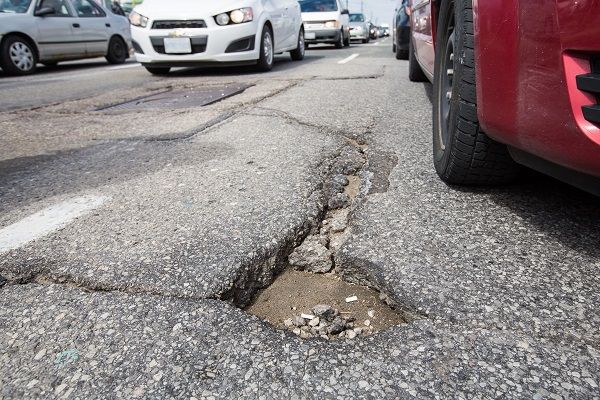
MEDIA RELEASE: After a one-year hiatus, the annual CAA Worst Roads campaign returns
With a renewed focus on education and safety, CAA South Central Ontario (CAA SCO) is proud to announce that following a one-year hiatus due to COVID-19, the annual CAA Worst Roads Campaign is back, and voting is now open. “The campaign is a platform for all road users to highlight which roadway improvements should be prioritized by our different levels of government,” says Raymond Chan, government relations manager CAA SCO. “The campaign gives decision-makers a snapshot of what roads the public perceives are not meeting their expectations.” Over the course of the last year people have changed their transportation habits. More people are cycling or driving their vehicles instead of carpooling and using public transit. CAA believes funding for roadway improvements needs to be consistent to ensure that quality and safety is maintained. “Our roads are essential, they are the arteries used every day to keep workers, goods and services flowing and should be maintained more than ever,” adds Chan. “As people are encouraged to stay home and telework during the pandemic, governments should continue to take advantage of lighter traffic patterns as an opportunity for road repair. These efforts can also be refocused on increasingly popular modes of transportation, such as cycling and walking.” Investing in infrastructure improvements, including the proper maintenance of roads and bridges, is important to the vitality and economic recovery of local communities. CAA continues to advocate for longer-term dedicated infrastructure funding to help municipalities prepare, plan, budget and execute on repair backlogs and capital projects. The success stories over the last 17 years are a result of governments prioritizing infrastructure through multi-year capital investments. Some examples include: 1. Riverdale Drive, Washago Despite appearing on the CAA Worst Roads list for the first time in 2019, the poor road conditions of Riverdale Drive was not new to residents of Severn. After 20 years since the street’s last resurfacing, Council approved $50,000 of prep work for Riverdale Drive led by Ward 5 Councillor Sarah Valiquette. 2. Dufferin Street, Toronto Appearing on the provincial top 10 list annually since 2015, Dufferin Street between Bloor Street and Dundas Street underwent resurfacing from September to November 2018. An estimated 35,000 vehicles travel Dufferin Street daily and the number of commuters is increasing. In response to community concerns, Toronto City Council adopted a motion to expedite studies relating to pedestrian and cyclist safety along Dufferin Street, among other improvements in December 2020. 3. College Road, Windsor The intersection of Campbell and College Avenue underwent sewer, road and water main rehabilitation in May 2019. College Avenue between South Street and Brock Street was repaired in November 2019. CAA is calling on all Ontarians to vote for their Worst Roads today and join the community of drivers, cyclists, transit riders and pedestrians committed to improving Ontario’s roads. Nominations for CAA’s Worst Roads can be cast at caaworstroads.com until April 18. To encourage participants to act on their concerns, they will be entered into a grand prize draw to win free gas for a year, or one of 5 secondary prizes. Once voting closes, CAA will compile a list of the 10 Worst Roads in Ontario, along with the Worst Roads in regions across the province. The regional top five lists will help shine further light on the state of local roads in municipalities across Ontario. CAA will present the list of 2021 Worst Roads to local and provincial officials to help inform future funding and planning decisions. Here is a roundup of Ontario's Top 10 Worst Roads in 2019: 1. Eglinton Avenue East, Toronto 2. Riverdale Drive, Washago 3. Dufferin Street, Toronto 4. County Road 49, Prince Edward 5. Barton Street East, Hamilton 6. Burlington Street East, Hamilton 7. Avondale Road, Belleville 8. Sheppard Avenue East, Toronto 9. Carnegie Beach Road, Scugog 10. Bathurst Street, Toronto

What We Can Learn From Celebrating Irish-American Heritage Month
About two weeks ago, President Joseph Biden declared March 2021 Irish-American Heritage Month. In an official statement, the president said, "We owe a debt of gratitude to the Irish-American inventors and entrepreneurs who helped define America as the land of opportunity... The fabric of modern America is woven through with the green of the Emerald Isle." As the director of the Center for Irish Studies at Villanova University, an institution founded by Irish Augustinians to educate the children of Irish immigrants, Joseph Lennon, PhD, agrees. He hopes to use this presidential declaration as an opportunity to expand the conversation around what it means to be of Irish descent beyond wearing green and watching the annual St. Patrick's Day parade. The way Dr. Lennon sees it, "there is much more to Irish America than a parade and parties." With such a rich history of Irish immigrants and their descendants living in and contributing to the development of the United States, Dr. Lennon sees March 2021 as an important time to reflect on the "contributions and travails of this ethnicity" in a way that reaches beyond "silly slogans and marketing schemes." He reminds us, "there are over 30 million Irish Americans. The Irish contributed massively to the infrastructure of industrial America and later to the civil, education and business worlds—not to mention the Catholic Church." Dr. Lennon also hopes this month will help redefine the larger notion of what it looks like to be Irish and American. He notes that "38% of African Americans have Irish ancestry," but acknowledges that "this is a complicated issue," since in some cases this may stem from abuses suffered during the American practice of slavery. It is important conversations like these that Dr. Lennon wants to bring to light during Irish-American Heritage Month, and he stresses that "more research is needed into understanding this history—as well as the unions between Irish immigrants and northern-bound African Americans during the late nineteenth century." Per Dr. Lennon, these historical events are tied to our present day. He sees a need for "the level of recent racist attachments to Irishness... to be confronted with historical knowledge and anti-racist understandings." With such important issues in mind, Dr. Lennon wants to impart that "the Irish diaspora is global and diverse and Irish culture runs much more deeply and broadly in America than we might guess by just attending the St. Patrick's Day celebrations." He adds, "I'm curious to see if the conversation continues past St. Patrick's Day this year." Despite most St. Patrick’s Day events and programs being virtual in 2021, there are many opportunities to celebrate Irish-American heritage this year. At Villanova, the Center for Irish Studies is hosting a virtual St. Patrick's Day Celebration called "Links Across the Atlantic" on Wednesday, March 17, from 10:00 a.m. to 9:00 p.m. This free celebration will include live entertainment segments, from an Irish breakfast tutorial with study abroad director Mary Madec to lunchtime laughs with actor Johnny Murphy, and will culminate with a streamed Irish music fèis (or festival) in partnership with Tune Supply, featuring We Banjo 3, the Friel Sisters and One for the Foxes! For more information or to register for this event, please click here.


Consumer Behavior Has Shifted Significantly During Pandemic, Survey Reveals
The COVID-19 pandemic has brought about significant shifts in people’s behaviors, from a sharp increase in telework and online commerce, to a significant decrease in the number of personal trips people make. Understanding the effects of these rapid changes on the economy, supply chains, and the environment is essential, as some of these behaviors will continue even after the pandemic has ended. José Holguín-Veras, the director of the Center for Infrastructure, Transportation, and the Environment at Rensselaer Polytechnic Institute, is part of a research team conducting a series of surveys in an effort to quantify and understand these unprecedented shifts. For instance, according to the team’s surveys, the number of monthly work trips people made during the start of the pandemic decreased by 60%. Post-pandemic, respondents believe they will still be making fewer work trips than before, down by 8.2%. Monthly grocery store trips decreased by 41.6% when the pandemic happened, with some people shopping less frequently and others shifting to grocery purchases online. Post-pandemic, survey respondents expect to return to the grocery store more often, but still less than before the pandemic began, by about 8.2%. In contrast, monthly delivery of groceries increased by 132.2% during the pandemic, a trend that may not disappear once the pandemic is over. Respondents expect that post-pandemic, their monthly grocery deliveries will still be 63.8% higher than before COVID-19. While all package deliveries increased during this pandemic period, the grocery delivery increase was the largest. The researchers hope their findings help policymakers develop future policies to offset not just the effects of COVID-19, but also the lasting changes that may result even after the pandemic has ended. Holguín-Veras is available to talk about the research team’s findings, and the importance of understanding these significant shifts.