
Experts Matter. Find Yours.
Connect for media, speaking, professional opportunities & more.

Expert on Virginia Constitution available to comment on gubernatorial removal, succession issues
John Dinan, a Wake Forest University politics and international affairs professor who specializes in the study of state constitutions and is the author of the book The Virginia State Constitution, can answer questions about the process in Virginia for removing a governor from office and what happens if a governor is removed or resigns. Removing a governor from office The Virginia Constitution provides two pathways for removing a governor from office. First, the Virginia Constitution allows for impeachment in cases of "malfeasance in office, corruption, neglect of duty, or other high crime or misdemeanor." Similar to the process in place at the national level, it takes a majority vote in the house to impeach an official and a two-thirds vote in the senate for conviction and removal from office. Second, in a provision that roughly tracks the 25th Amendment to the U.S. Constitution and was intended to apply to cases of physical or mental disability, a governor can be deemed "unable to discharge the powers and duties of his office,” as determined either by the attorney general, senate president pro tem, and house speaker acting together or by a majority vote of all members of the legislature. Such a determination triggers a process that ultimately requires a three-fourths vote in the house and senate to remove a governor on the ground of inability to discharge the powers and duties of the office. Succession to the office of governor When a governor leaves office before the end of the term, he is succeeded by the lieutenant governor. In case the lieutenant governor’s office is vacant, the attorney general would become governor. In case the office of attorney general is vacant, the house speaker would become governor. In any of these situations, someone assuming the office of governor mid-term would not be prohibited from running for and serving another full term in office, despite Virginia’s prohibition on a governor serving consecutive terms. Succession to the office of lieutenant governor In the event the lieutenant governor succeeds the governor and therefore the lieutenant governor’s office becomes vacant, the senate president pro tem would discharge the duties of the lieutenant governor, while continuing to serve in the senate. The governor is then permitted to appoint someone to fill the vacancy in the lieutenant governor’s office, with this appointee serving until the next scheduled general election (November 2019), when an election would be held to fill out the remainder of the original term. Succession to the office of attorney general In the event of a vacancy in the office of attorney general, the position would be filled by a person selected by a majority vote of all members of the legislature, as long as the legislature is in session, and that person would then serve the remainder of the original term. If the legislature is in recess, then the position would be filled temporarily by an appointee of the governor and that person would serve until the legislature is next in session and would select someone to fill out the term. Broadcast Television and Radio Studio Information Wake Forest operates a fully-equipped, professional television and radio studio to connect experts with global news media. Video interviews can be coordinated through LTN Global Communications’ Smartcloud IP video transport service that provides regular high-quality video transport connections to most major broadcast networks. Audio interviews are coordinated through ipDTL, an IP codec used for remote radio broadcasts as well as voice-overs. ipDTL replaces classic ISDN audio codecs and has backward compatibility. Details available here.


Preaching to choirs, playing it safe and not saying much at the State of the Union
One Tuesday evening – pretty much everything seemed to go to plan. President Trump stuck to script, Republicans stood and clapped on cue, Democrats scoffed and scowled when required and we all listened closely for a total of one hour and twenty minutes – the second longest SOTU ever given. President Trump called for unity, touted the economy, acknowledged the white-wave of females on Congress and how there are now more women employed in America. He played to his base on topics like immigration and abortion and then oddly let everyone know that the only thing holding America back were expensive wars and pointless investigations. He also thanked veterans for defeating the Nazis. Left out was any mention of climate change or Russia. Of course, afterwards the Democrats responded, politicians flocked to reporters and pundits weighed in. President Trump played it safe and kept to the prompter, and according to CBS Evening News an overwhelming 76 percent of Americans liked what they heard. But the day after … there are still a few questions to be asked: Did President Trump deliver the speech e needed to deliver? Outside of the beltway, how was this received by voters? Does this point out a pathway for either Democrats or Republicans for 2020? And by not saying much, did Trump say everything he needed to? If you are covering, let an expert from the University of Mary Washington help. Dr. Stephen Farnsworth is professor of political science and international affairs at the University of Mary Washington. A published author and a media ‘go-to’ on U.S. politics, he is available to speak with media regarding this issue. Simply click on his icon to arrange an interview.



There were only two things happening this past weekend: The Super Bowl and what appears to be the downward spiral of the once prominent and popular Virginia Governor Ralph Northam. It was news that had pundits, journalists and political junkies glued to their televisions and smart phones as the story progressed and played out. As the Governor fought to hold on to his office and career by a string, media from across the country were contacting the University of Mary Washington’s Dr. Stephen Farnsworth to find out what was going on and what would happen next. Here are a few samples and snippets from some of the media that Dr. Farnsworth spoke to over the weekend. “Northam's appeal to the voters was that he wasn't an ordinary politician. But if he had been more of an ordinary politician, that press conference probably wouldn't have gone as badly as it did," said University of Mary Washington political science professor Stephen Farnsworth. Chicago Daily Herald and the San Francisco Chronicle Stephen J. Farnsworth, a political scientist at the University of Mary Washington, said the Northam controversy may trigger more revelations of racial misconduct, the same way that the #MeToo movement emboldened women to come forward after years of silence. “Other politicians who have similar controversies in their past have to be prepared for them to be disclosed,” Farnsworth said. “And there may be additional pressure on Virginia government to deal with legacies of the Confederacy and Jim Crow in terms of statues and renaming of public parks.” Washington Post “Ralph Northam’s time as governor is hanging by a thread,” University of Mary Washington political science professor Stephen Farnsworth said earlier in the day. “The forward movement of any agenda items that the governor has, has stopped.” ABC News, Washington When news was breaking – media knew who to call and how to reach them. When you have breaking news any day of the week, let an expert from the University of Mary Washington help. Dr. Stephen Farnsworth is professor of political science and international affairs at the University of Mary Washington. A published author and a media ‘go-to’ on U.S. politics, he is available to speak with media regarding this issue. Simply click on his icon to arrange an interview.

Valentines Day thoughtfulness has intrinsic rewards, says University of Rochester professor
We’ve all heard that it’s better to give than to receive. When it comes to Valentines Day, there’s empirical evidence to show that being thoughtful to a spouse is rewarding in and of itself. A 2017 study by University of Rochester Psychology Professor Harry Reis shows that when we show compassion toward our partner—when we put aside personal wishes in order to meet the partner’s needs—it makes us feel better, even if—and this was a surprise—those acts of compassion go unrecognized by the recipient. Over the course of 14 days, husbands and wives reported giving and receiving an average of .65 and .59 compassionate acts each day—with husbands perceiving more such acts than did their partners. The acts included such things as changing personal plans for the partner’s sake, doing something that showed the partner was valued, and expressing tenderness for the spouse. For Reis, the results suggest that acting compassionately may be its own reward, or in this case, its own Valentines gift. Professor Reis’s research interests involve social interaction and close relationships. He studies the factors that influence the quantity and closeness of social interaction, and the consequences of different patterns of socializing for health and psychological well-being.


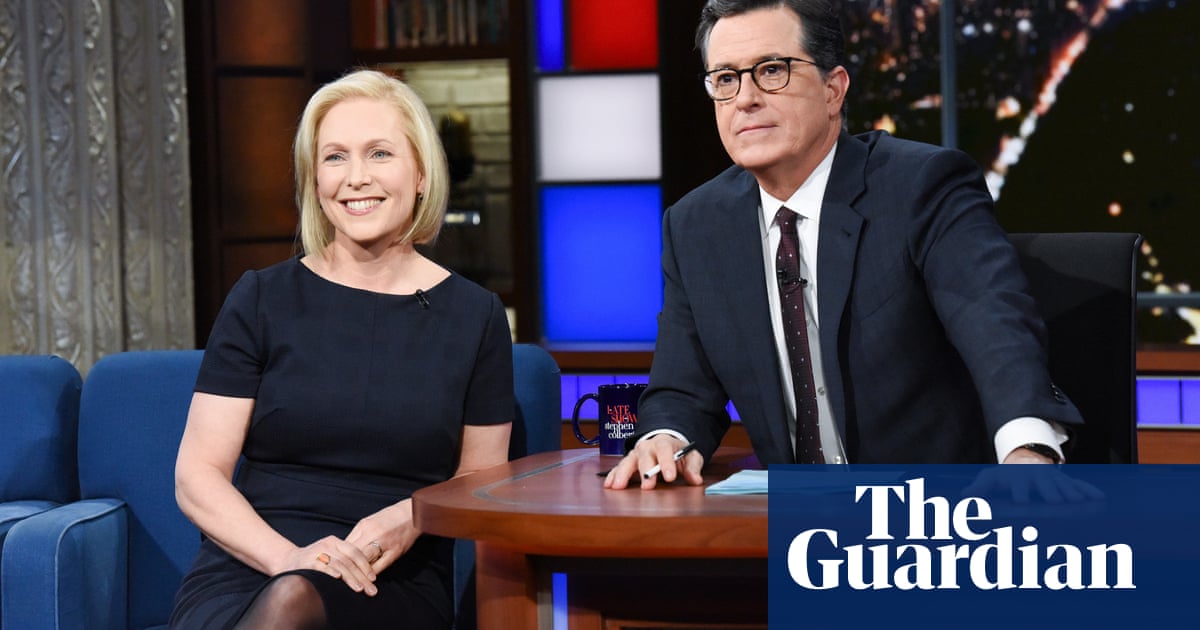
Is Late Night – the Place to Be on TV for Those Running in 2020
It used to be that stopping by a late-night talk show for any political candidate was a just an added bonus of exposure and safe coverage for a campaign. Think of Bill Clinton answering softballs and playing the saxophone on The Arsenio Hall Show a quarter century ago. Now there’s no qualitative proof – but most political scientists will tell you that night helped introduce the then Governor Bill Clinton to a new audience and helped shape his image as that of a cool and relatable candidate. It may have been one of the many factors that saw him win the Whitehouse in 1992. Fast forward to today, and now securing a spot on the sofa beside any of the late-night hosts is a must for any presidential candidate who wants to be taken seriously. What Oprah was once for books and authors, hosts like Stephen Colbert have become for candidates – he’s the perennial gatekeeper for politicians. “Any Democratic candidate who thinks they can ignore Stephen Colbert might as well not run for president,” said Stephen Farnsworth, director of the Center for Leadership and Media Studies at the University of Mary Washington in Fredericksburg, Virginia. “Colbert once joked that the road to the White House runs through his show but it’s no joke; it is exactly so.” - Washington Post, November 2018 In this new era of social media, 24-hour news and even fake news – why is late night suddenly the place to be for politicians? Is it because it is safe? Has comedy suddenly become the only credible and objective place for politicians? Is it because that’s where undecided audiences tune in and can be reached? Or is it because late night is now segmented and postable on YouTube? Is the internet audience after the show just as valuable as the viewers who tune in? There are a lot of questions about what it will take and what we can expect along the long road to the 2020 election – and that’s where the experts from the University of Mary Washington can help. Dr. Stephen Farnsworth is professor of political science and international affairs at the University of Mary Washington. A published author and a media ‘go-to’ on U.S. politics, he is available to speak with media regarding this issue. Simply click on his icon to arrange an interview.

MEDIA RELEASE: Road safety in the cannabis era
At CAA South Central Ontario, what we're focused on, day in and day out, is how to keep our roads and road users safe. One of our objectives is dispelling common myths about cannabis. This includes the claim that driving under the influence of cannabis is safer than driving after consuming alcohol or the belief that cannabis can sharpen one's ability behind the wheel. The potential for a collision increases in direct proportion to THC levels (the main intoxicant in cannabis) in our body. This means that cannabis significantly impacts the driver's cognitive and motor functions, which in turn affects decision-making and judgment. We must remember that driving is a privilege, not a right. The legal response to impairment is strict and swift. But we must also keep in mind that, much like our education around seatbelts and alcohol, it will take time to change habits. It's important to be smart with our choices and to tap into the lessons we've already learned. This includes appointing a designated driver if you're planning on using cannabis, finding an alternative to get to your destination and ensuring we have conversations around the dangers of cannabis with new drivers in our families. Communities across Ontario are working hard to keep our roads safe. Today we face tremendous opportunity to ensure we continue on that path, but our goal is only possible if we make public education key to our efforts. We hope you join us.




A new year with new changes for how small businesses are taxed.
The only thing surer than death and taxes, might be the annual changes and adjustments to the way small businesses are taxed in Canada. New restrictions, and rates can have positive and negative impact on business owners and their companies. This coming year, changes to Employment Insurance and the Canada Pension Plan could make the bottom line of some small businesses tighter. However, the overall corporate tax rate applicable to many small businesses in Ontario has fallen to 12.5%. We may see more money going back in the pocket of owners or their growing companies. “We know that the average small business owner doesn’t know a lot about these changes.” Bill Moreau, Minister of Finance There are a lot of changes to the current system this year; as small business owners prepare to file, it is in their best interest to contact an expert. The government itself has even admitted that some businesses might not be fully up to speed, that’s where our team can help! Cleo Melanson, Tax Partner at Freelandt Caldwell Reilly LLP practices in the areas of tax and owner-managed businesses. To contact Cleo, simply click here to arrange an appointment regarding this topic. Article: https://globalnews.ca/news/4804039/tax-changes-canada-cpp-ei-small-business/


Empowered Storytelling Geared Toward Women Is a Winning Combo for Super Bowl Ads, Baylor Expert Says
Television advertisers who have chosen to appeal to women fans and viewers during this weekend’s Super Bowl have committed their millions of dollars to a wise strategy, according to a Baylor University marketing and advertising expert. Tyrha Lindsey-Warren, Ph.D., clinical assistant professor of marketing in Baylor’s Hankamer School of Business, studies consumer behavior and attitudes, multicultural media and advertising, and movies and entertainment. Each year, she and her students analyze the Super Bowl ads. And each year, she said, she sees more ads geared toward women. In fact, AdAge reports that brands like Bumble, Toyota and Procter & Gamble's Olay are featuring women in lead roles in their Super Bowl commercials this year. “That’s smart,” Lindsey-Warren said. “The current and future market power of women – as a whole and by segments – is undeniable and truly cannot be ignored by marketers.” To make her point, she cited research showing that women influence more than 80 percent of all consumer spending; 89 percent of the financial decisions are made by women; and globally, women control more than $20 trillion in world-wide spending. In addition, nearly 24.3 million African American women are brand loyalists and cultural trendsetters who have influence over the $1.2 trillion dollars in black spending power. Forbes reported in 2018 that “women constituted about 49 percent of the 108 million-plus people who watched” that year’s Super Bowl – and paid closer attention to the ads. “Nowadays, whatever brands plan to do during the Super Bowl must be extremely strategic and well planned when commercials go for over $5 million dollars,” Lindsey-Warren said. “With the #metoo and #times up movements as well as the diversity and gender issues in advertising industry and more, I think brands struggle as to how they approach targeting women on such a global stage.” She said brands that use “empowered storytelling” – storytelling that exudes the emotion of empowerment – make a difference. Good examples, she said, are Always’ “Like a Girl” commercial in 2015 and Audi’s “Daughter” commercial in 2017. “In my research, especially among Millennials and Gen Z, this approach is a powerful combination for brands who want to increase purchase intentions for their products or services,” Lindsey-Warren said. “The emotion of empowerment is multidimensional and promotes encouragement and can be extremely motivational,” she said. “When one is empowered, it can be an ‘aha’ moment and very transformational in a positive manner. In addition, empowered storytelling is a proactive approach to storytelling that demands you keep the receiver of the story in mind at every stage of the process because, at the end of the day, you want the receiver of the story to be better in some way for having received the empowered narrative they just viewed or experienced.” And when consumers are empowered, they tend to tell others. In the digital space, this looks like sharing videos, posts, quotes and more on social media channels. “Essentially, empowered storytelling gives brands the opportunity to achieve the right balance of entertaining and encouraging and, ultimately, healing by showing that they care for their consumers through the motivational messages and narratives they are producing,” Lindsey-Warren said. ABOUT TYRHA LINDSEY-WARREN, Ph.D. Tyrha Lindsey-Warren, Ph.D., is a marketing scholar, business executive, artist and entrepreneur. As a consumer behavior scholar, her research is rooted in narrative transportation theory (i.e., storytelling) that exudes the emotion of empowerment and its impact on consumer attitudes, behaviors, purchase intention and message recall. She also studies health edutainment, multicultural media and advertising, as well as movies and entertainment. Lindsey-Warren is an expert in effective communications strategies for leaders, multicultural communications and marketing. Her latest research, “An Examination of Television Consumption By Racial and Ethnic Audiences in the U.S.,” was published in the Journal of Advertising Research. She will be discussing this study during panel discussions in New York City and Los Angeles for the Geena Davis Institute on Gender in Media. ABOUT BAYLOR UNIVERSITY Baylor University is a private Christian University and a nationally ranked research institution. The University provides a vibrant campus community for more than 17,000 students by blending interdisciplinary research with an international reputation for educational excellence and a faculty commitment to teaching and scholarship. Chartered in 1845 by the Republic of Texas through the efforts of Baptist pioneers, Baylor is the oldest continually operating University in Texas. Located in Waco, Baylor welcomes students from all 50 states and more than 80 countries to study a broad range of degrees among its 12 nationally recognized academic divisions. ABOUT HANKAMER SCHOOL OF BUSINESS AT BAYLOR UNIVERSITY Baylor University’s Hankamer School of Business provides a rigorous academic experience, consisting of classroom and hands-on learning, guided by Christian commitment and a global perspective. Recognized nationally for several programs, including Entrepreneurship and Accounting, the school offers 24 undergraduate and 13 graduate areas of study. Visit www.baylor.edu/business and follow on Twitter at twitter.com/Baylor_Business.


The hidden treasure of digital piracy? It can boost bottom line for manufacturers, retailers
HBO's popular television series "Game of Thrones" returns in April, but millions of fans continue to illegally download the program, giving it the dubious distinction of being the most pirated program. Many may wonder why the TV network hasn't taken a more aggressive approach to combating illegal streaming services and downloaders. Perhaps it is because the benefits to the company outweigh the consequences. Research analysis by faculty in Indiana University's Kelley School of Business and two other schools found that a moderate level of piracy can have a positive impact on the bottom line for both the manufacturer and the retailer -- and not at the expense of consumers. "When information goods are sold to consumers via a retailer, in certain situations, a moderate level of piracy seems to have a surprisingly positive impact on the profits of the manufacturer and the retailer while, at the same time, enhancing consumer welfare," wrote Antino Kim, assistant professor of operations and decision technologies at Kelley, and his co-authors. "Such a win-win-win situation is not only good for the supply chain but is also beneficial for the overall economy." While not condoning piracy, Kim and his colleagues were surprised to find that it can actually reduce, or completely eliminate at times, the adverse effect of double marginalization, an economic concept where both manufacturers and retailers in the same supply chain add to the price of a product, passing these markups along to consumers. The professors found that, because piracy can affect the pricing power of both the manufacturer and the retailer, it injects "shadow" competition into an otherwise monopolistic market. "From the manufacturer's point of view, the retailer getting squeezed is a good thing," Kim said. "It can't mark up the product as before, and the issue of double marginalization diminishes. Vice versa, if the manufacturer gets squeezed, the retailer is better off. "What we found is, by both of them being squeezed together -- both at the upstream and the downstream levels -- they are able to get closer to the optimal retail price that a single, vertically integrated entity would charge." In the example of "Game of Thrones," HBO is the upstream "manufacturer" in the supply chain, and cable and satellite TV operators are the downstream "retailers." Kim and his co-authors -- Atanu Lahiri, associate professor of information systems at the University of Texas-Dallas, and Debabrata Dey, professor of information systems at the University of Washington -- presented their findings in the article, "The 'Invisible Hand' of Piracy: An Economic Analysis of the Information-Goods Supply Chain," published in the latest issue of MIS Quarterly. They suggest that businesses, government and consumers rethink the value of anti-piracy enforcement, which can be quite costly, and consider taking a moderate approach. Australia, for instance, due to prohibitive costs, scrapped its three-strikes scheme to track down illegal downloaders and send them warning notices. Though the Australian Parliament passed a new anti-piracy law last year, its effectiveness remains unclear until after it is reviewed in two years. As with other studies, Kim and his colleagues found that when enforcement is low and piracy is rampant, both manufacturers and retailers suffer. But they caution against becoming overzealous in prosecuting illegal downloaders or in lobbying for more enforcement. "Our results do not imply that the legal channel should, all of a sudden, start actively encouraging piracy," they said. "The implication is simply that, situated in a real-world context, our manufacturer and retailer should recognize that a certain level of piracy or its threat might actually be beneficial and should, therefore, exercise some moderation in their anti-piracy efforts. "This could manifest itself in them tolerating piracy to a certain level, perhaps by turning a blind eye to it," they add. "Such a strategy would indeed be consistent with how others have described HBO's attitude toward piracy of its products."


The Fed Should Consider Lowering Rates say the Experts from University of Rochester
On Wednesday, the Chairman of the Federal Reserve will be delivering another interest rate decision that could direct or at least prompt a punch to the arm the country’s economy. In fact, according to Narayana Kocherlakota who is currently a Professor of Economics at the University of Rochester, and who also served as the President and CEO of the Federal Reserve Bank of Minneapolis from 2009-2015 – the Fed should be dropping rates to increase stimulus t an economy in very much in need of help. In a column (see attached) published this week in Bloomberg Opinion, Kocherlakota offered this perspective, So, the Fed has been falling short — arguably well short — of both its inflation and employment mandates for a long time. How can it do better? It should take two steps. First, as I’ve argued before, the Fed shouldn’t be reducing the vast holdings of bonds that it amassed in its efforts to stimulate the economy after the last recession. Instead, it should commit to increasing its asset holdings by about 4 percent per year. That way, as the economy grows over time, its balance sheet will remain sufficiently large to help combat any recessionary risks. Second, the Fed often says that it sets monetary policy based on the incoming economic data. Such claims ring hollow when we look at the record. Recently released transcripts from its June 2013 policy-making meeting show that more than half the participants thought inflation would be below 2 percent for the next 30 months. All thought unemployment would stay above 5.5 percent. Yet it was precisely at that meeting that they agreed to begin tightening by announcing their intention to ease off on bond purchases in the near future.” So, what can we expect from Wednesday’s decision by the Fed? Will we see a drop in rates? What will a higher interest rate look like and what would that mean for America’s economy? Or … if nothing changes and the Fed holds steady, what will that mean for the economy in the short term? There are a lot of questions and that’s where the experts from the University of Rochester are available. Dr. Narayana Kocherlakota was the President and CEO of the Federal Reserve Bank of Minneapolis from 2009-2015. As part of his responsibilities in that position, he served on the Federal Open Market Committee (FOMC), the monetary policymaking arm of the Federal Reserve System. He is currently a Lionel W. McKenzie Professor of Economics and is an expert in financial economics, interest rates and monetary policy. Narayana is available to speak with media regarding the economic effects of the shutdown – simply click on his icon to arrange an interview.
