
Experts Matter. Find Yours.
Connect for media, speaking, professional opportunities & more.
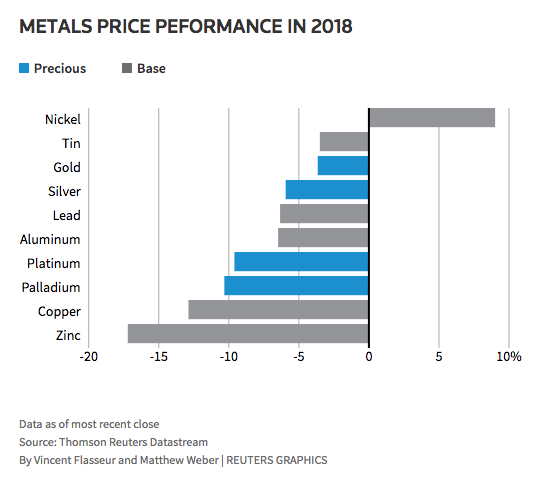
With the shine coming back on nickel – what will it mean for Ontario’s local and wider economies.
It’s boom or bust in the nickel business. From cycles, to slumps to super-cycles and even the most recent decade-long crash, it appears the time for nickel to rebound is near. The last big boom at the turn of the 21st Century saw nickel soar above 20 dollars per pound. It led to multi-billion dollar takeovers of smaller mining companies by industry giants and saw local economies flourish as bonuses skyrocketed, overtime was uncapped and investments in service, supply, innovation and industry support were elevated almost exponentially. Today, with analysts projecting the price of nickel to at least double over the next four years, what can local and provincial economies expect? After a 10-year slump can we expect the same rush to invest and spend? Will companies be more cautious and what will it mean for investors, the markets and businesses. There are a lot of questions and speculation out there about just how big of a splash there will be if nickel finally makes its comeback. And that’s where the experts from Freelandt Caldwell Reilly LLP can help. Ian Fitzpatrick is a Chartered Professional Accountant and a Chartered Business Valuator. He is an expert in advising business owners and entrepreneurs on all aspects of corporate sales, mergers, acquisitions, litigation, succession and ownership issues. To contact Ian directly, simply click on his icon to arrange an appointment regarding this topic. Source:

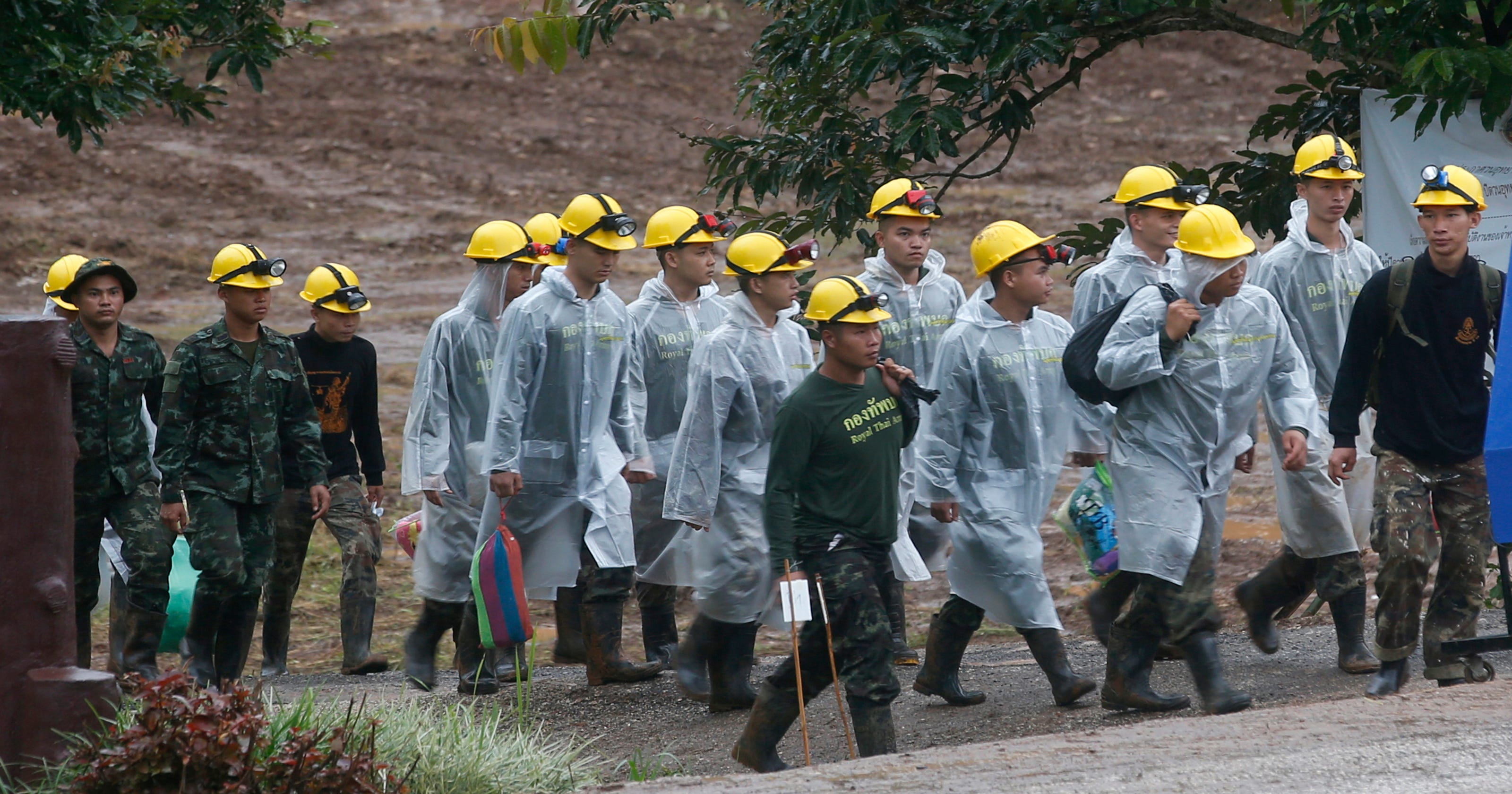
Disaster Psychologist Available to Discuss Thai Boys' Recovery from Trauma
The world watched with relief as 12 soccer players and their coach were rescued from a flooded cave in northern Thailand after an 18-day ordeal. Amid the relief at the players' safe rescue, Dr. Jamie Aten, a Wheaton College psychologist, says it’s important that they receive care for mental health needs in addition to the physical care they are receiving. Aten, the founder and Executive Director of the Humanitarian Disaster Institute at Wheaton College, is an internationally known expert who helps others navigate mass, humanitarian, and personal disasters with scientific and spiritual insights. Aten recommends the boys’ mental health be monitored closely following their rescue. “They may show extremes in behaviors ... they [may] sleep too much, or have difficulty sleeping,” he says. “They may develop triggers that weren’t there previously.” “Some may withdraw, while others need more attention. Over time these symptoms may lessen, but for some it could be a lifelong struggle.” To request an interview with Dr. Aten, contact Wheaton College Director of Media Relations LaTonya Taylor, latonya.taylor@wheaton.edu. Source:


This is not honoring military service -- it is disgracing it.
“The dismissal of service members from the Armed Forces because of their immigration status is an insult to everyone who has worn the uniform. Those who have worn the uniform know the sacrifices that serving in the military involves. To callously dismiss those very few who have chosen to serve is an act of moral cowardice. Every veteran and service member should be outraged. This is not honoring service, it is disgracing it.” Source:

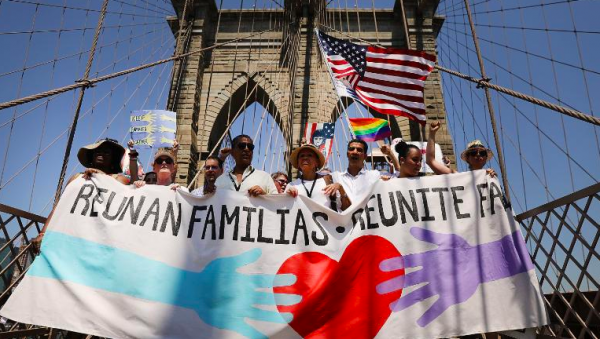
6 Facts We Learned Working with Migrants and Refugees Around the World - Facts 3 and 4 Working with migrants and refugees is our business at Catholic Relief Services. CRS was founded in 1943 to assist refugees during World War II. Seventy-five years later, we are still coming to the aid of people escaping conflict, violence and natural disasters. While CRS doesn’t resettle refugees in the United States (these programs are run by the Catholic Church’s Migration and Refugee Service and Catholic Charities), our rich history has taught us valuable lessons on how to best help families fleeing crisis. 3. Support the Family. The family unit provides the primary support for children during the traumatic refugee experience -- whether it is witnessing violence or crossing a desert on foot. CRS focuses on keeping families together. This means housing a family together and using any services provided – from trauma counseling to income generation – to boost family cohesion. Shannon Senefeld is a global development expert at CRS. She has published and presented extensively on international children’s issues and the importance of strengthened family care for children’s development. See her contact information at the bottom. 4. Kids Need School and Play. CRS is dedicated to keeping up children’s education, to provide stability and normality and give them hope for the future so they can be productive citizens wherever they end up. Kids need to be kids, too. Whether they are in a camp or any sort of migrant or refugee holding center they need a space to play. Caroline Brennan is the Emergency Communications Director for Catholic Relief Services. In her role, she travels to and/or works in areas facing natural or man-made emergencies. See her contact information at the bottom. The experts at Catholic Relief Services are available to help with any media coverage or insight that is required regarding this ongoing news story and issue that is continuing in America. Simply click on any of their icons to arrange a time for an interview. Source:

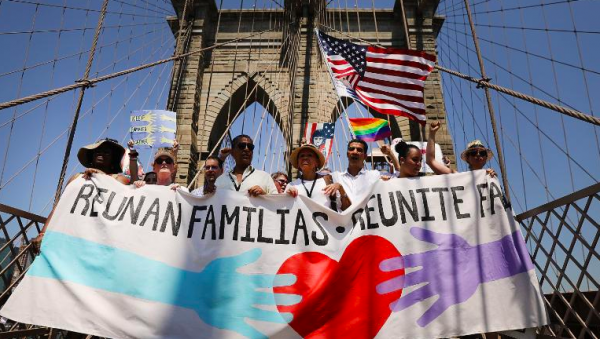
6 Facts We Learned Working with Migrants and Refugees Around the World: Facts 1 and 2 Working with migrants and refugees is our business at Catholic Relief Services. CRS was founded in 1943 to assist refugees during World War II. Seventy-five years later, we are still coming to the aid of people escaping conflict, violence and natural disasters. While CRS doesn’t resettle refugees in the United States (these programs are run by the Catholic Church’s Migration and Refugee Service and Catholic Charities), our rich history has taught us valuable lessons on how to best help families fleeing crisis. 1. People Do Not Want to Leave Their Homes. An astonishing 1 in 110 people have been forced to flee their home (UNHCR). They only do that when they feel they have no other choice. Most people the world over give the same reason for starting their perilous journey across borders -- violence. That’s true for millions fleeing conflict in South Sudan and for tens of thousands fleeing gang violence in Central America. Most often, people flee to other parts within their country first. Only when they see no other option do people leave their country. Rick Jones is the agency's Youth and Migration Advisor in Latin America and the Caribbean. He also specializes in issues affecting Central American migration, including gang violence, poverty, and internal displacement. See his contact information at the bottom. 2. Don’t Separate Families. Based on extensive experience with refugees and migrants, CRS agrees with the criticism of the former U.S. policy of separating children from their parents. Decades of research shows that this is so traumatic for children it can lead to long-term psychological, and even physical damage. Shannon Senefeld is a global development expert at CRS. She has published and presented extensively on international children’s issues and the importance of strengthened family care for children’s development. See her contact information at the bottom. The experts at Catholic Relief Services are available to help with any media coverage or insight that is required regarding this ongoing news story and issue that is continuing in America. Simply click on any of their icons to arrange a time for an interview. Source:

Independence Day: Baylor’s Benjamin Franklin Scholars Bring Light to Complex Figure
Founding Father Benjamin Franklin was a complex man. Among his many roles, he was a businessman, entrepreneur, inventor, journalist, author, printer, editor, politician, postmaster, statesman, ambassador and signer of the Declaration of Independence. And even with a treasure trove of accomplishments, sometimes the Franklin legends are bigger than Franklin the man – and it’s taken an army of historians and scholars throughout the centuries to sort it out. As July 4 Independence Day approaches, Baylor University's two Franklin scholars share different perspectives of Franklin, his faith and his business acumen: • Thomas Kidd, Ph.D., Distinguished Professor of History and associate director of Baylor’s Institute for Studies of Religion • Blaine McCormick, Ph.D., associate professor and chair of the management department in Baylor’s Hankamer School of Business Both have penned Franklin books and both have been featured nationally for their research on the Founding Father. Kidd’s 2017 book, “Benjamin Franklin: The Religious Life of a Founding Father,” has received high marks for its analysis of Franklin’s beliefs. From his Puritan upbringing to deism, skepticism and more, the book explores the influences and evolution of faith throughout Franklin’s life. “In today’s polarized political and religious environment, some pundits seek to remake the Founding Fathers in their own image. Benjamin Franklin’s example reveals that the historical truth is often more complicated,” Kidd wrote in a column for The Wall Street Journal. McCormick, who wrote “Ben Franklin: America’s Original Entrepreneur,” discovered a passion to study the Founding Father after listening to an audiobook of Franklin’s autobiography. “Franklin could do things as a statesman, and understand things, and achieve things as a statesman, because he had achieved things in the marketplace first,” he said. “I’ve yet to find a better book for businesspeople to learn about how to run a business in the American Experiment. He wrote the autobiography to help train people in the life of business. Many of the principles are still very robust.” And the way he shared those principles (many of which have been misquoted and made into memes through the decades) is important, McCormick said. “Franklin used sentences no longer than a Tweet to train generations of colonial businesspeople,” he said. “They were short. They were memorable. They were high-impact.” Source:


Professor David Iglesias, a former U.S. Attorney in New Mexico who also served as chair of the border and immigration subcommittee under John Ashcroft, is available for interviews about President Trump's executive order ending family separations at the border. Iglesias, now a professor of politics and international relations at Wheaton College (Ill.) and director of the Wheaton Center for Faith, Politics & Economics (wheaton.edu/fpe) had called the policy "a moral outrage" in a recent comments (http://bit.ly/2MIIxtA), and, along with a bipartisan group of former U.S. Attorneys, called on Attorney General Jeff Sessions to end the policy. "The president did the right thing to rescind this policy," he says. "It's to the administration's credit that they pulled back." However, he says, the zero tolerance policy, which still remains in place, is "a terrible idea." Iglesias says it is likely to overload the courts with misdemeanors by first-time offenders. "Federal courts along the border will be overwhelmed with nothing but immigration cases, and serious crimes will languish under the weight of minor offenses," he says. "Federal courts on the southwest border will be reduced exclusively to handling immigration offenses and will essentially become federal traffic court." "Zero tolerance may make a catchy bumper sticker, but it is the very definition of bad public policy," Iglesias says. To request an interview with Professor Iglesias, e-mail media.relations@wheaton.edu. Source:

Former U.S. Attorney: Family Separation Is "A Moral Outrage"
Professor David Iglesias, a former U.S. Attorney in New Mexico who also served as chair of the border and immigration subcommittee under John Ashcroft, is available for interviews about the zero tolerance and family separation immigration policies. "The president's zero tolerance for people crossing the border is more than just a moral outrage--it rejects decades of administrations deferring to prosecutors in the region know how best to deal with immigration cases," he says. Iglesias, who is an associate professor of politics and law and director of the Wheaton Center for Faith, Politics, and Economics, is among a bipartisan group of former U.S. Attorneys who have called on Attorney General Jeff Sessions to end family separation. "Zero tolerance may make a catchy bumper sticker, but it is the very definition of bad public policy," Iglesias says. To request an interview with Professor Iglesias, e-mail media.relations@wheaton.edu. Source:

Baylor Gerontology Expert: It's Important for People to Know the Signs of Elder Abuse
Gerontology expert James Ellor, Ph.D., M.Div., professor in Baylor University’s Diana R. Garland School of Social Work, said it's important to remind people what elder abuse looks like and how they can respond if they see the signs. Reports of abuse are most often submitted by family members, hospital staff and law enforcement. But churches and other organizations should also be diligent, Ellor said, adding that clergy are considered mandatory reporters in many states. “No one group of caring persons can solve this problem alone; it takes a community of caring lay and professional leaders to even try to start to make a difference,” Ellor said. Elder abuse – intentional or negligent acts by a caregiver or trusted individual – comes in many forms: * neglect or isolation * physical abuse, sexual abuse * exploitation or financial abuse * emotional and psychological abuse * verbal abuse and threats “If signs are noticeable, the next steps will depend on the type of abuse. In most cases, counseling support is critical, but often the need for medical help or legal help is also very important,” Ellor said. Read the linked article to learn more. ... Dr. Ellor works with older adults around issues of mental and spiritual health. He has served on the executive committee of the Midwestern Geriatric Education Center and provided education, counseling and planning for individuals and groups who work with seniors. His research includes work in entrostomal therapy, hunger, the church as service provider, spiritual assessment and intervention techniques with cognitively impaired older adults. Source:

In his letter to Kim Jong Un and related statements, President Trump made not-so-veiled threats regarding U.S. military capabilities. Thus, many are asking: Is the Trump Administration, staffed with former military officers in prominent cabinet positions, chomping at the bit to unleash America’s military might? International security scholar Peter Campbell, Ph.D., is watching the situation. “Trump's cancellation gives both sides opportunity to claim that they pursued all diplomatic means. The conflict now enters a more dangerous phase because an opportunity to step back from the brink has been lost and diplomatic efforts have been somewhat discredited,” he said. “Trump’s comments regarding superior U.S. nuclear capability might be interpreted as a precursor to escalation, although the letter's tone was much less inflammatory than his earlier rhetoric.” Campbell said history – and, ironically, Trump’s staff of former U.S. military leaders in key positions – sides with those who prefer diplomacy over force. “The prominent role of former military officers has caused some to worry that the Administration is anxious to go to battle. This idea is problematic because it does not take into account that U.S. military leaders have often been more hesitant than their civilian superiors to use force,” he said. “As former Secretary of Defense Robert Gates wrote of his Cold War experiences under Presidents Reagan and George H. W. Bush: ‘In more than 20 years of attending meetings in the Situation Room, my experience was that the biggest doves in Washington wear uniforms.’ This makes sense because military officers often have an intimate understanding of how the decision to use force leads to major uncertainty and is plagued with often insurmountable friction and the fog of war. Gates observed: ‘Our military leaders have seen too many half-baked ideas for the use of military force advanced in the Situation Room by hairy-chested civilians who have never seen combat or fired a gun in anger.’ Thus, the fact that Trump has former military officers in his inner circle should decrease, rather than increase, fears of an ill-conceived use of military force to resolve this crisis. Secretary of Defense James Mattis made explicit mention of the key role diplomats are playing in the unfolding crisis. Numerous commentators have pointed out the immense influence that Mattis has in the current administration. This should calm rather than incite fears of a military solution." Source:
