
Experts Matter. Find Yours.
Connect for media, speaking, professional opportunities & more.
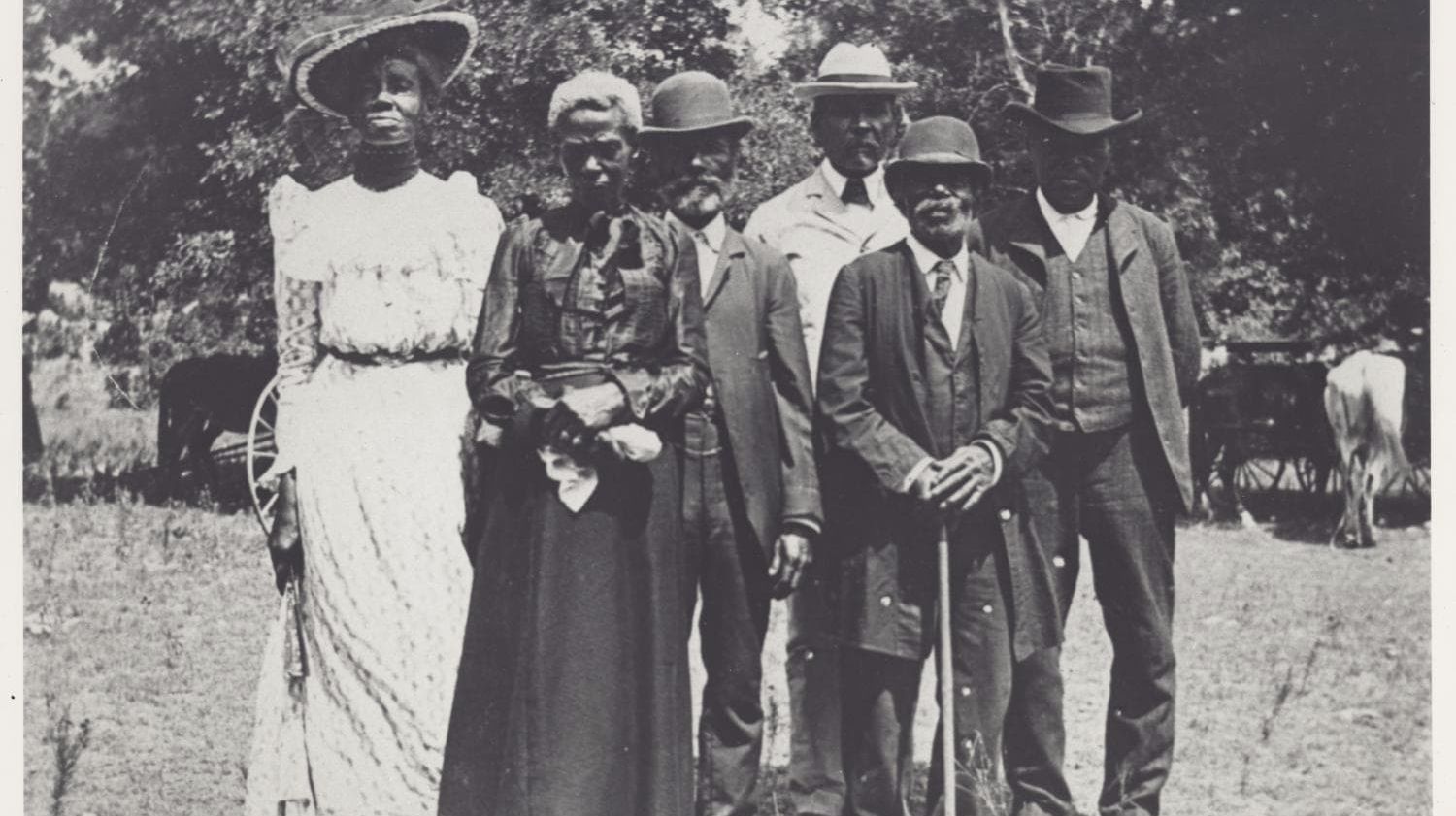
Juneteenth: Our experts can explain the history, meaning and truth behind this historic moment
Most will know that Abraham Lincoln issued the Emancipation Proclamation on Jan. 1, 1863. It’s taught in schools and is even part of the Disney experience. But fewer know or are even taught that it took more than two and a half years before a large number of enslaved people even knew they were free. It’s an astounding and sad part of our collective history that is finally being told on a broader platform. It wasn’t until June 19, 1865, that many enslaved people were finally told they were free. What followed was by no means a celebration or easy life for those slaves who were finally broken from the bonds of their owners. They faced lynching, murder, violence and what would be more than 100 years of segregation and discrimination. Across the country, the day will be recognized with various forms of reflection and celebration. Though Texas was the first state to recognize Juneteenth as a state holiday, it meant only partial staffing was required and most government offices and agencies stayed open. Across the country, more than 40 states operate in similar fashion. As America reconciles with its past – is it time Juneteenth was given more attention? Are children taught about the hard and painful journey most African Americans had to take between now and when they were set free? Does it need to be recognized as a national holiday? What do our educators and legislators need to do to make sure Juneteenth is known on a wider scale? There are a lot of questions to be answered – and that’s where the experts from Augusta University can help. Professor Seretha Williams is an expert in Africa and African Diaspora, Digital Humanities, and Digital Publication. She is available to speak with media regarding Juneteenth – simply click on her icon to arrange an interview.


Man up…and get screened for cancer – June is Men’s Health Month.
June is Men’s Health Month and doctors are urging men, especially those over the age of 40, to get screened for cancers such as testicular, prostate and colorectal cancer. “The purpose of Men’s Health Month is to heighten the awareness of preventable health problems and encourage early detection and treatment of disease among men and boys. This month gives health care providers, public policy makers, the media, and individuals an opportunity to encourage men and boys to seek regular medical advice and early treatment for disease and injury. The response has been overwhelming with thousands of awareness activities in the USA and around the globe.” Men’sHealthMonth.org These cancers and other diseases are treatable if detected early; however, a lot of men still seem reluctant to book that visit and get checked. So why are men so slow to get checked? Do people realize early prevention can save lives? Do men know how devastating these diseases, if not caught early, can be on their life, sexuality and well-being? There are a lot of questions and answers that need to be addressed this June during Men’s Health Month and that’s where the experts from Augusta University can help. Dr. Jigarkumar Parikh is co-leader of AU Health’s Genito-Urinary Oncology Program and a medical oncologist specializing in kidney cancer, prostate cancer, bladder cancer and melanoma. Dr. Martha Terris is AU Health’s Witherington Distinguished Chair, Urology, and specializes in urologic cancers, including prostate cancer, bladder cancer and testicular cancer. Both experts are available to speak with media regarding Men’s Health Month – simply click on either profile to arrange an interview.

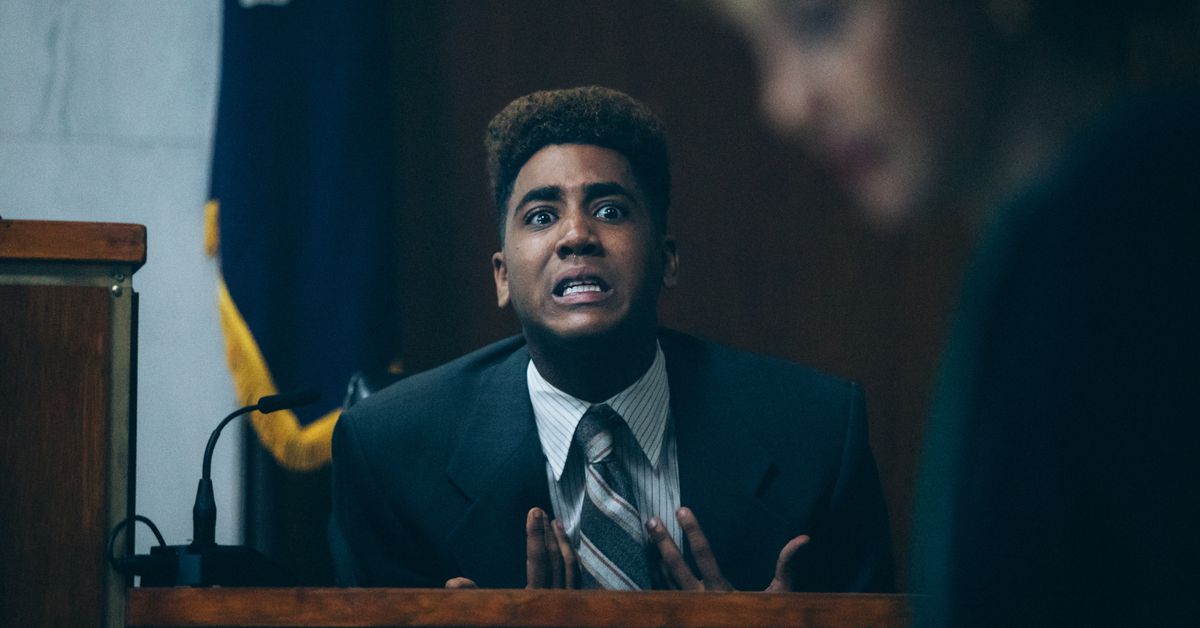
The recent release of the Netflix series “When They See Us” about the Central Park Five raises questions about the power of the media in the public’s perception of news stories. The narrative is different with this production than it was in the media when the trials were going on, and still today, the media has the power to shape – or sensationalize – a news story. In this version, the four-part series attempts to portray what happened and just how this tragic event impacted so many lives for so long. “Over the course of the series, the audience watches the boys, who are all between 14 and 16, get coerced into confessing to a crime they didn’t commit. … While other dramas of this kind often focus on victims and investigators, the focus here is on the accused. It’s a haunting story that shares a space with the innumerable podcasts, films and limited-run docuseries that try to rationalize and memorialize true crime incidents of years past.” – VICE.com Films – and the way they are made – are changing, and some are attempting to change the public’s perception of how actual historic events in America happened. This comes with benefits and no doubt, risks. What challenges do writers and directors take on when trying to tell a true story from our past? How has this been done correctly – and what happens if it fails? And is it up to the entertainment industry to educate audiences about the truth in our collective past? There are a lot of questions, and that’s where the experts from Augusta University can help. Dr. Matthew Buzzell is an award-winning, Emmy-nominated filmmaker whose films have screened at festivals the world over and been broadcast nationally on PBS, Turner Classic Movies and Netflix. Matthew is available to speak with media at any time – simply click on his icon to arrange an interview.


A vacation free of emails, obligations and answering to the boss – let our expert columnist explain!
UMW’s resident writer for the Lynne Richardson is back with another great piece in The Free Lance-Star – just in time for summer. It’s a call to action for bosses and employers to let their people be free when they’re relaxing away from work on that cherished summer vacation. It’s about taking a time out when they’ve booked that time off. “So, you leave for the big trip. It’s a long flight and when you take your smartphone off of airplane mode, you realize you’re getting emails from your office. A co-worker needs information. Somebody wants to know where you left the file he needs for a meeting tomorrow. Your boss needs you to call him as soon as possible as he’s meeting with his boss tomorrow and needs a refresher on a project you are working on. So, you take a deep breath and respond to each of the requests. After all, you haven’t really disengaged yet from work. But the next day is the same. You continue to receive "emergency" emails. It’s like you cannot leave the office, because folks are tethered to you in some way. So, this is a cautionary tale for supervisors. Your folks need time away. They need to be away in every sense of the word. Please give them permission to not respond to emails while on vacation. There are very few emergencies that would require you to reach out to them. If it means that you, Mr. Supervisor, must wait a few days for some information, so be it.” If you like this – read the rest of the article attached below. So, do you have a plan in place to ‘un-plug’ while off? Should workplaces have mandatory policies about contacting people when they are away? Worry not – our experts can help. Dr. Lynne Richardson is a columnist, mentor and her expertise focuses on leadership management and higher education administration. She is available to speak with media about leadership…and even bad bosses. Simply click on her icon to talk with her and arrange an interview.


They are incidents that are now more common than a lot of people want to admit – and research is showing that mass shootings are taking a serious psychological toll on our country’s population. UMW’s Laura Wilson’s research was recently cited in media throughout the country for her work analyzing PTSD and its affects on witnesses to these events. “PTSD estimates 28 percent of people who have witnessed a mass shooting develop post-traumatic stress disorder (PTSD) and about a third develop acute stress disorder. Laura Wilson, an assistant professor of psychology at the University of Mary Washington in Virginia conducted a meta-analysis — an examination of data from 11 studies of PTSD symptoms among more than 8,000 participants who ranged from those who'd witnessed shootings to those who just lived in the communities in a 20-year period. She found the greater the exposure — someone who was at the scene or who lost a friend or family — the greater risk of developing PTSD. But, in her work, Wilson has found other factors, too, including previous psychological symptoms and a lack of social support, also played a role in increasing the likelihood. "Mass shootings are a different type of trauma," Wilson says. "People are confronted with the idea that bad things can happen to good people. ... Most people have a hard time reconciling the idea that a young, innocent person made the good decision to go to school, was sitting there, learning and was murdered. That does not make sense to us. ... It just rattles us to our core." And yet, some people don't fully appreciate the lasting psychological wounds of those who escaped physical harm.” June 02, Associated Press Are you covering this topic, or would you like to know more? That’s where UMW can help. Laura C. Wilson is a clinical psychologist whose expertise focuses on post-trauma functioning, particularly in survivors of sexual violence or mass trauma (e.g., terrorism, mass shootings, combat). Dr. Wilson is available to discuss this topic with media – simply click on her icon to arrange an interview.


MEDIA RELEASE: Eglinton Avenue East voted Ontario’s Worst Road
The votes are in and the CAA Worst Road for 2019 is Eglinton Avenue East in Toronto. Taking the second and third place spots are Riverdale Drive, in the community of Washago (north of Orillia) and Dufferin Street in Toronto. Toronto’s Eglinton Avenue East is currently undergoing one of the largest transit expansions in North America, which has significantly impacted road conditions during construction. Voters cited crumbling pavement, potholes, traffic congestion and poor road signage as the main reasons for concern. With Eglinton Avenue West appearing on the Top 10 list last year, the entirety of this road appears to be of concern. “While the condition of Eglinton Avenue is of concern to the public, many of the challenges for all road users will hopefully be resolved with the completion of the Eglinton Crosstown project,” says Raymond Chan, government relations, CAA South Central Ontario. “The gridlock and congestion that many motorists are currently experiencing should ease as construction winds down, repairs to the road are made and as more people choose new transit options.” Two notable changes in the list over the past year are; Duckworth Street in Barrie dropping off the Ontario Top 10 list and Hamilton’s Burlington Street East dropping from first to sixth place. “Those campaign success stories are because governments are prioritizing infrastructure through multi-year capital investments,” added Chan. “CAA will continue to advocate for longer-term dedicated infrastructure funding to help municipalities prepare, plan, budget and execute on repair backlogs and capital projects.” In Ontario, 53 per cent of municipalities saw roads in their community nominated. Drivers accounted for over three-quarters of the votes cast, while roughly 12 per cent of votes were from cyclists and a further 12 per cent from pedestrians. The primary reason for selecting their road: 85 per cent cited potholes or crumbling pavement, and 6 per cent chose congestion as their biggest concern. Ontario’s Top 10 list is verified by the Ontario Road Builders’ Association (ORBA). “ORBA is pleased to partner with CAA on the 2019 Worst Roads Campaign. Using a technical checklist, ORBA members inspected and verified the condition of the identified roads across Ontario. This effort enabled ORBA and CAA to collect information as to why the road was chosen and to validate the issues raised," said Andrew Hurd, ORBA. Ontario’s Top 10 Worst Roads for 2019 Eglinton Avenue East, Toronto Riverdale Drive, Washago Dufferin Street, Toronto County Road 49, Prince Edward Barton Street East, Hamilton Burlington Street East, Hamilton Avondale Road, Belleville Sheppard Avenue East, Toronto Carnegie Beach Road, Scugog Bathurst Street, Toronto Worst Roads by Region Central – Riverdale Drive (Washago) Eastern – County Road 49 (Prince Edward) Halton-Peel-York-Durham – Carnegie Beach Road (Scugog) Niagara – McLeod Road (Niagara Falls) North - Regent Street (Greater Sudbury) South West – Plank Road (Sarnia) Western – Wharncliffe Road South (London) The CAA Worst Roads campaign is a platform for Ontarians to make roads safer by helping municipal and provincial governments understand what roadway improvements are important to citizens, and where they need to be made. For the full list of 2019 Worst Roads, please visit caaworstroads.com


The ‘Heaven 11’: Gospel Music Expert Lists 11 Most Influential Black Gospel Songs
June is African American Music Appreciation Month Photo by Robert Rogers, Baylor Marketing & Communications Baylor Professor Robert Darden attends Baylor University's 2019 Pruit Symposium, "Lord, Make Me An Instrument: Black Sacred Music at the Intersection of Gospel and Jazz." WACO, Texas (May 31, 2019) – Robert F. Darden, professor of journalism, public relations and new media at Baylor University and a former gospel music editor for Billboard Magazine, is leading a national movement to preserve the fast-disappearing legacy of African American sacred music on vinyl. To celebrate African American Music Appreciation Month in June, Darden, who is founder and director of Baylor’s Black Gospel Music Restoration Project, compiled the “Heaven 11” – a list of the 11 most influential black gospel songs. “There is no way to quantify the ‘greatest’ gospel song of all time, but certain songs have been more influential than others through the years,” said Darden, who selected songs from the 1940s through the 1980s. (Listen to the “Heaven 11” on this Spotify playlist, created by Baylor Proud.) The list includes Darden’s comments about each selection: 1. “Move on Up (A Little Higher)” “The Queen of Gospel Mahalia Jackson’s first big hit, and one of the best-selling gospel songs of all time. It was also understood to be an early ‘Freedom Song’ in the African-American community.” 2. “Take My Hand, Precious Lord” “Perhaps the best-known, most beloved of all gospel songs. Written by Thomas Dorsey after the loss of his wife and infant child, it is still sung today at virtually every African-American funeral service in the country.” 3. “Oh Happy Day” “This song by Edwin Hawkins was the first gospel song to be a hit single in the 1960s, and had a revolutionary combination of gospel choir, stirring chorus and a thoroughly modern beat.” 4. “The Reason Why We Sing” “Kirk Franklin did to the ‘80s and ‘90s what Hawkins did to the ‘60s and Andrae Crouch did to the ‘70s, combined straight-ahead gospel with the beat of the day, while paying tribute to the old gospel classic, ‘His Eye is on the Sparrow.’” 5. “People Get Ready” “This tune by Curtis Mayfield is not really a gospel song, but it was so compelling that it was adopted by both the Civil Rights Movement and the African-American church. There are a number of great versions, including the Chambers Brothers, the Blind Boys of Alabama and even Rod Stewart.” 6. “We Shall Overcome” “This is the ‘signature’ song of the Civil Rights Movement, an adaptation of an old gospel tune that has been honed by the fire and blood of a thousand movement events and is still sung by oppressed people around the world.” 7. “Peace Be Still” “This song by the Rev. James Cleveland and the Angelic Choir of the First Baptist Church of Nutley, New Jersey, is the song and the arrangement that made young black people want to join mass choirs and sing. After the assassination of President John F. Kennedy, ‘Peace Be Still’ was the gospel anthem that the black church turned to.” 8. “Through It All” “Andrae Crouch and the Disciples forever changed gospel music, opening it up lyrically and musically. He was also a brilliant composer – you could just as easily substitute “My Tribute,” “The Blood,” “Soon and Very Soon” and any one of several other enduring classics here.” 9. “Touch the Hem of His Garment” “This song by the Soul Stirrers, featuring Sam Cooke, helped invent the hard-charging gospel quartet sound. The popularity of this song helped convince Cooke, the writer and featured singer, to launch a mainstream performing career.” 10. “Mary, Don’t You Weep” “The great old spirituals often make great gospel songs. This is one by the Caravans, featuring Inez Andrews, and is one of my personal favorites.” 11. The next great gospel song “We haven't heard it yet. Few people still alive even know of its existence. But it could be in the next batch of long-lost gospel classics by a hitherto unknown gospel artist donated to the Black Gospel Music Restoration Project.” Search-and-rescue mission to preserve black gospel music Darden founded Baylor’s Black Gospel Music Restoration Project (BGMRP) more than a decade ago in a search-and-rescue effort to identify, acquire, preserve, digitize and catalog recordings from the black gospel music tradition. This music, from the Golden Age of Gospel from 1945 to 1975, was quickly vanishing as albums made the transition to CDs. “Thousands of at-risk songs have been saved for future generations,” Darden said. “These recordings are priceless, irreplaceable and historic in a way that scholars are only now realizing.” Through the work of the Baylor Libraries’ Digital Projects Group, recordings from the BGMRP are available online in the Baylor Libraries Digital Collection, and in some cases includes other materials, such as taped interviews, photographs, press packets, tour books and programs, newspaper and magazine clippings and sheet music. Music from the BGMRP also has been included in a permanent exhibit featuring African-American musical history at the Smithsonian Institution’s National Museum of African American History and Culture, which opened in 2016 in Washington, D.C. The interactive exhibit, “Musical Crossroads,” has featured these key recordings from the BGMRP: · “The Old Ship of Zion” by The Mighty Wonders of Aquasco, Maryland (1972) · “Amen” by Wings over Jordan (1953) · “I Won’t Be Back” by The Caravans (1962) · “Over My Head” by Wings Over Jordan (1953) · “There’s a Tree on Each Side of the River” by The Davis Sisters (1957) Visit Baylor’s Black Gospel Music Restoration Project website to learn more and to listen to the collection of digitized recordings. ABOUT BAYLOR UNIVERSITY Baylor University is a private Christian University and a nationally ranked research institution. The University provides a vibrant campus community for more than 17,000 students by blending interdisciplinary research with an international reputation for educational excellence and a faculty commitment to teaching and scholarship. Chartered in 1845 by the Republic of Texas through the efforts of Baptist pioneers, Baylor is the oldest continually operating University in Texas. Located in Waco, Baylor welcomes students from all 50 states and more than 90 countries to study a broad range of degrees among its 12 nationally recognized academic divisions.


Sawfish and hammerheads – we’ve got shark sightings and here’s what you need to know!
It was a rare occurrence, and for Florida Atlantic University’s resident shark expert Stephen Kajiura, Ph.D. – it happened twice. Kajiura has photographed millions of sharks – but this sighting was no regular day on the water. “The first sawfish was near Boca Raton and was seen swimming southbound in shallow water. He estimated it to be about 9 feet long. The second one was near MacArthur State Park on Singer Island and a little larger. Sawfish can grow as large as 17 feet in length. Kajiura's sawfish encounters are the latest in a regular string of encounters reported by anglers, divers and researchers. In recent years, sawfish have been caught and released by Florida anglers fishing from beaches for sharks, or in inlets for tarpon. Sawfish have become regular catches for anglers fishing the waters of the Indian River Lagoon, Everglades National Park or the waters of Charlotte Harbor. “ - TC Palm – USA Network That was last month, however, just recently, a large hammerhead shark was coming dangerously close to shore, raising some cause for concern about swimmer safety. Lifeguards closed the Nokomis Public Beach for close to an hour until the enormous fish had departed for deeper waters. The encounter left some scared and some curious – looking to catch a glimpse or picture of the gigantic shark. So, what do you do when a shark comes close to shore? How dangerous is it? How can experts or event he public tell when a shark is aggressive or just passing by? Sharks do call the ocean home – what do we all need to do to exist in harmony? Are you covering? Do you need to know more about sharks, the dangers they pose and what we really need to be concerned about and even break down some of the myths and legends about just how concerned humans need to be about these predators? Let our experts help. Stephen Kajiura, Ph.D., is a professor and researcher at Florida Atlantic University. He’s also an expert in sharks and shark behavior. Stephen is available to speak with media – simply click on his icon to arrange an interview.


Monitoring the migration of blackfin sharks – Florida Atlantic’s experts are in the news
Seeking the warmer waters of the south coast – it is that time again for the annual migration of the black fin shark. These majestic sharks can grow up to 8 feet and weigh in at more than 200 pounds when fully grown. They’re also listed by the International Union for Conservation of Nature (IUCN) as near threatened, mostly due to the fact it is a targeted for its meat and its fins, which are used to make shark fin soup. Recently, one of our experts was featured in the media for his efforts in ongoing research and his studies are benefiting those who live both on water and on land. “Dr. Stephen Kajiura, a researcher at Florida Atlantic University, has been tracking the migration patterns of these apex predators by air and sea. Now Kajiura's latest tool is providing thorough details about their every move. He is capturing their movements and gathering detailed information through a $5,000 reusable radio and satellite sensor attached to their dorsal fins for two to four days. Data from these "shark diaries" records information, including how often they swish their tails, at what depth they prefer to swim, and at what time of day they swim close to the beach — proving beneficial to lifeguards responsible for beach safety.” Tampa Bay Times Are you covering? Do you need to know more about sharks, the dangers they face and what researchers are learning about these amazing species of fish? Let our experts help. Stephen Kajiura, Ph.D., is a professor and researcher at Florida Atlantic University. He’s also an expert in sharks and shark behavior. Stephen is available to speak with media – simply click on his icon to arrange an interview.

Covering World No Tobacco Day – Let our experts help!
May 31 is the WHO’s World No Tobacco Day. And despite all the awareness campaigns, education and advice – people are still lighting up. In fact, according to the CDC: More than 16 million Americans are living with a disease caused by smoking. Cigarette smoking is responsible for more than 480,000 deaths per year in the United States, including more than 41,000 deaths resulting from second-hand smoke exposure. This is about one in five deaths annually, or 1,300 deaths every day. On average, smokers die 10 years earlier than non-smokers. If smoking continues at the current rate among U.S. youth, 5.6 million of today’s Americans younger than 18 years of age are expected to die prematurely from a smoking-related illness. This represents about one in every 13 Americans aged 17 years or younger who are alive today. With marketing toward youth increasing and e-cigarettes and vaping now a part of the mainstream – is the fight against big tobacco becoming even harder? There’s a lot there to cover and that’s where our experts can help. Dr. Martha Tingen is a behavioral nurse scientist targeting prevention of tobacco use in children. She is available to speak with media any time – simply click on her icon to arrange an interview.