
Experts Matter. Find Yours.
Connect for media, speaking, professional opportunities & more.
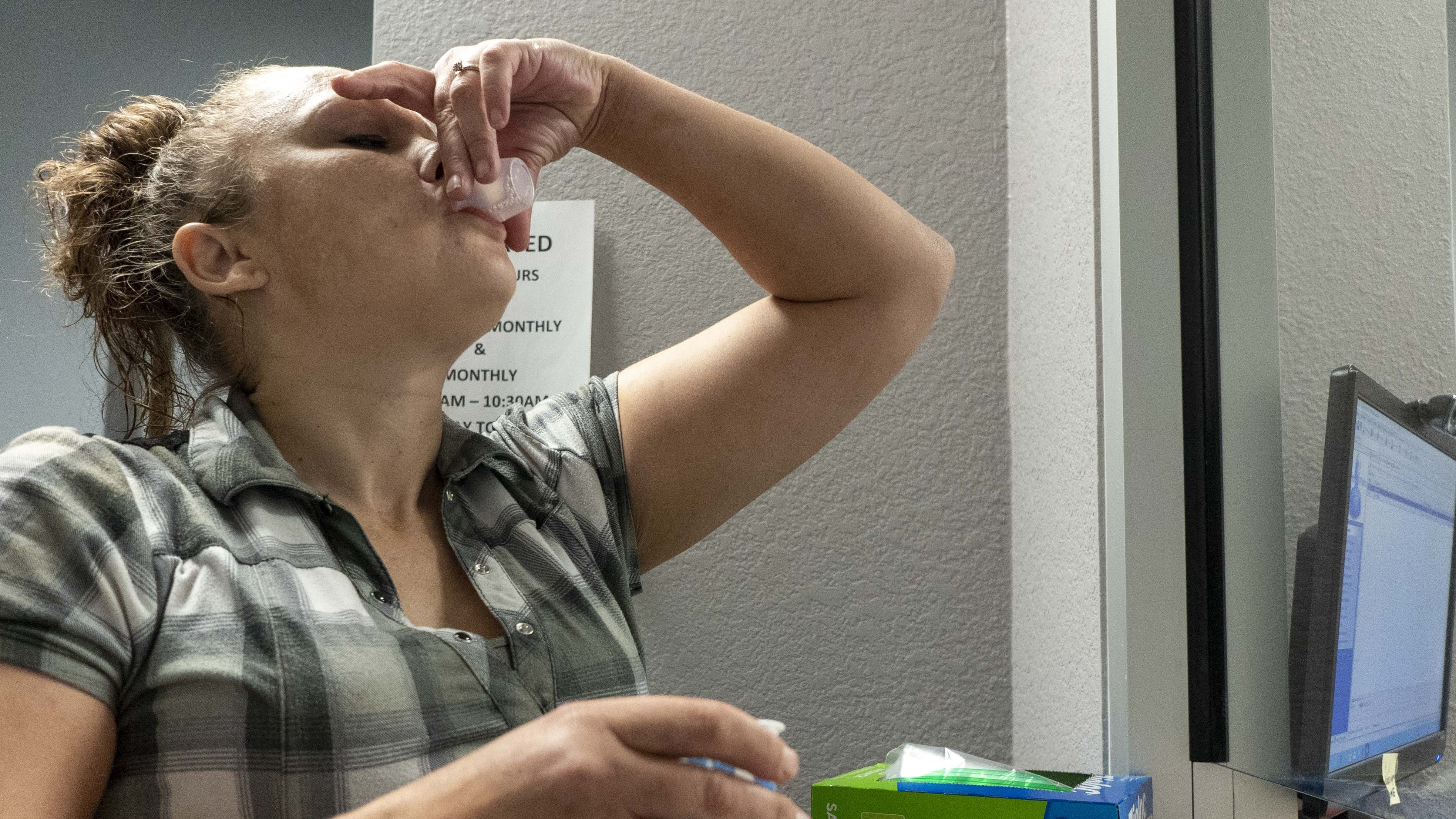
Opioid addiction is gripping America. It’s destroying lives, tearing apart families and devouring resources in policing and healthcare. As medical, mental health and addictions professionals look for solutions, often times accessible and public Opioid Treatment Programs, often known as a Methadone Clinic will open in communities. These clinics bring relief, treatment and support – but they also bring crowds, increased traffic and concern from local residents and the community. These concerns usually find their way to the media, where the attention can quickly turn negative. The solution to avoiding this scrutiny and making sure residents, business owners and community leaders are fully informed about the process, operation and security measures at these clinics are key to their success and integration. Questions such as: How was the site selected? How do you plan to control traffic flow and overcrowding? How will you manage parking and wait times? What are your measures to prevent diversion? Who can I speak to if I have questions or concerns about operations? CARF can speak to best practices, expectations, and requirements for when an opioid treatment program opens. Debbi Witham, Managing Director of Public Policy and is an expert in opioid treatment programs. Debbi is available to speak with media regarding this issue – simply click on her icon to arrange an interview.

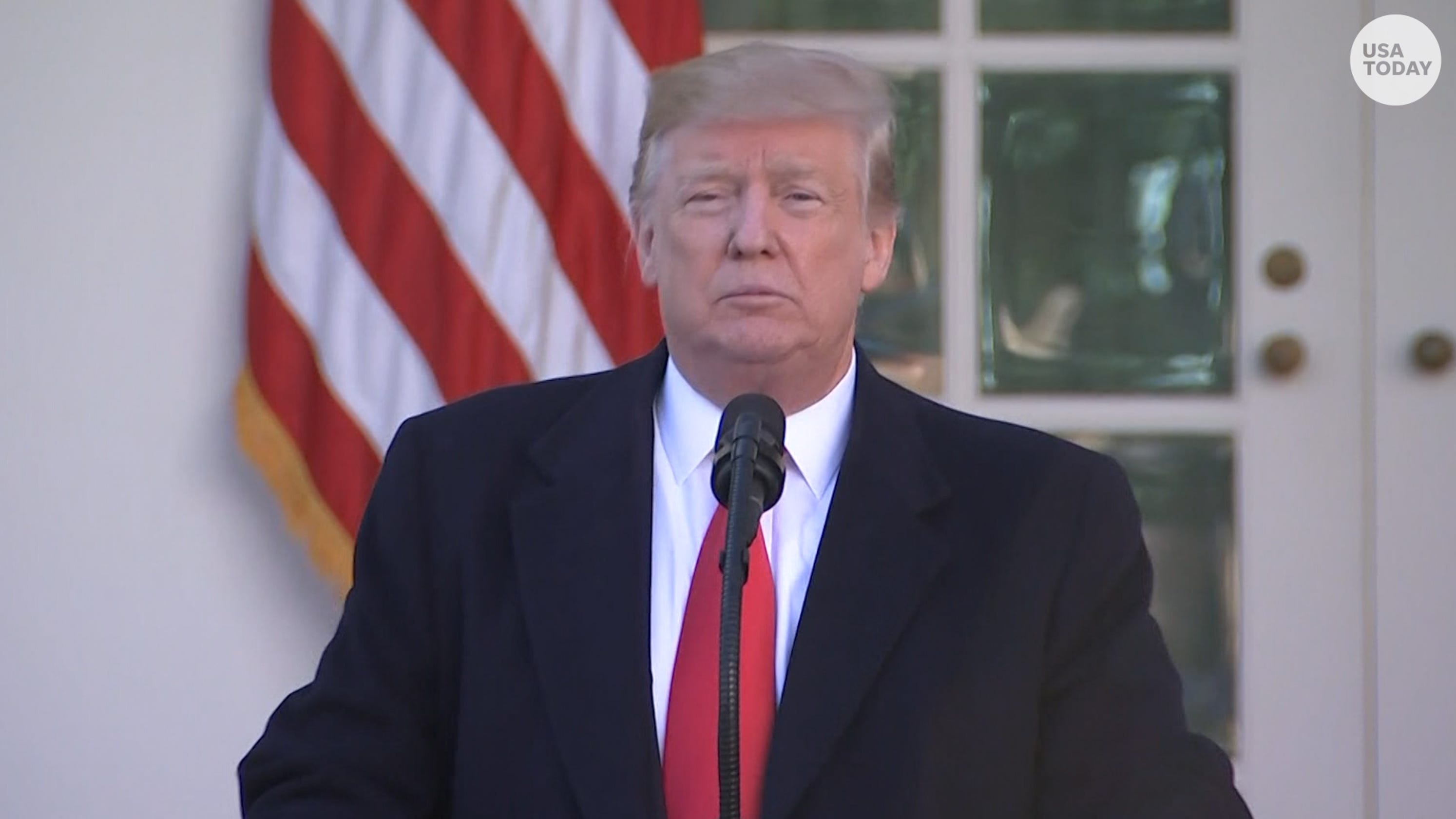
Another shutdown? Let our experts explain if there's a reason to worry about the economy
It lasted longer than a month, and for now we’re on a three-week reprieve – but the federal government shutdown that saw Democrats and Republican dueling at a safe 20 paces while 800,000 federal employees were watching unpaid from the sidelines is over. But from the financial side, the big picture for America was hardly touched. Will that still be true this time around? But with the shutdown over and employees back to work, for three weeks while politicians negotiate a final deal – there are still a lot of questions outstanding? What industries are most vulnerable to another government stoppage? Is there anything that can be done politically to stop federal government employees from being used as pawns in future negotiations? Despite the economy carrying on – are investors dissuaded by these shutdowns? David M. Primo is the Ani and Mark Gabrellian Professor and an associate professor of political science and business administration at the University of Rochester. He is the author of three books and is a go-to for media in New York and nationally for his expertise on topics like this. David is available to speak with media regarding the economic effects of the shutdown – simply click on his icon to arrange an interview.



It is time for national standards for addiction treatment in America?
America is in the midst of an epidemic, and it is losing. Opioid use often gets the headlines, but substance abuse and addiction is a wider issue with many levels of care and populations The discussion around the country often focuses on causes and criminal justice with less attention paid to the quality and standardization of treatment options and practices. Currently there is no standardized treatment plan in America and it is leaving serious doubts, unfairly, about the effectiveness of treating substance use disorder. “While there are nationally recognized standards for evidence-based care, treatment programs are not required to follow them, and many lack the resources to do so – leaving patients and loved ones with little assurance that a particular program is equipped to deliver high-quality addiction treatment.” Paul H. Earley, MD, DFASAM, MedPageToday.com But what would a standardized addiction treatment system look like? How would it increase transparency and consumer confidence? How would it ensure consistent expectations across the country? What are the costs; can America afford not to implement these strategies? There are a lot of questions and that’s where CARF International can help. Michael Johnson is Managing Director of Behavioral Health at CARF and is an expert in treatment strategies for mental health and substance use disorder. Michael is available to speak with media regarding this topic – simply click on his expert icon to arrange an interview.


This Valentine’s Day, give the gift of great conversation
When is the last time you and your partner made time to talk? Or, more important, made time to really listen to one another. The newness of getting to know our partner – that interest we had in the beginning of a relationship – begins to take a back seat to the everyday busyness of life. And while the days, months and years pass by, it is easy to assume that the one we love is essentially the same person with the same needs, interests, values and goals. "People think that ‘change is the only constant’ doesn’t apply to our relationships. We forget that we are always growing and learning new things about ourselves and so is our partner,” says Wake Forest University communication professor Jennifer Priem. “As we and our partners grow, we need to learn how to best make adjustments in our relationship so that our relationships grow with us. That happens when we listen.” Priem studies relationships and conducts research that explores the connection between supportive conversations and physiological signs of stress reduction. She recently launched a blog on Psychology Today, Stressing Communication, and is sharing a series of posts called, “Conversations That Will Save Your Relationship.” Priem offers these tips to help set the stage for meaningful conversation. Ask your partner if it’s a good time talk. “After work or when your partner is tired is usually not the best time to talk,” says Priem. “If your partner says ‘no’ it doesn’t mean forever. Rather than force a conversation because you’re ready, wait for a time that will be good for you both to engage.” When it is time to talk, listen first. Be a supportive listener. Don’t allow yourself to be distracted by your cell phone, other things happening around the conversation, or tangential thoughts that pop into your mind. Listen to understand, rather than to respond. Try not to interrupt your partner. Wait to respond until your partner has completed his or her thought. It may be that by waiting to respond, you will learn something new that will change how you respond. Conversations don’t require “work,” says Priem, but they do require that we recognize how we maintain our relationships, assess if it is in line with what is best for us and our partner, and adjust our strategies to create the best possible relationship over time. Priem is available for phone, email and broadcast interviews. Broadcast Television and Radio Studio Information Wake Forest operates a fully-equipped, professional television and radio studio to connect experts with global news media. Video interviews can be coordinated through LTN Global Communications’ Smartcloud IP video transport service that provides regular high-quality video transport connections to most major broadcast networks. Audio interviews are coordinated through ipDTL, an IP codec used for remote radio broadcasts as well as voice-overs. ipDTL replaces classic ISDN audio codecs and has backward compatibility. Details available here.


Expert on Virginia Constitution available to comment on gubernatorial removal, succession issues
John Dinan, a Wake Forest University politics and international affairs professor who specializes in the study of state constitutions and is the author of the book The Virginia State Constitution, can answer questions about the process in Virginia for removing a governor from office and what happens if a governor is removed or resigns. Removing a governor from office The Virginia Constitution provides two pathways for removing a governor from office. First, the Virginia Constitution allows for impeachment in cases of "malfeasance in office, corruption, neglect of duty, or other high crime or misdemeanor." Similar to the process in place at the national level, it takes a majority vote in the house to impeach an official and a two-thirds vote in the senate for conviction and removal from office. Second, in a provision that roughly tracks the 25th Amendment to the U.S. Constitution and was intended to apply to cases of physical or mental disability, a governor can be deemed "unable to discharge the powers and duties of his office,” as determined either by the attorney general, senate president pro tem, and house speaker acting together or by a majority vote of all members of the legislature. Such a determination triggers a process that ultimately requires a three-fourths vote in the house and senate to remove a governor on the ground of inability to discharge the powers and duties of the office. Succession to the office of governor When a governor leaves office before the end of the term, he is succeeded by the lieutenant governor. In case the lieutenant governor’s office is vacant, the attorney general would become governor. In case the office of attorney general is vacant, the house speaker would become governor. In any of these situations, someone assuming the office of governor mid-term would not be prohibited from running for and serving another full term in office, despite Virginia’s prohibition on a governor serving consecutive terms. Succession to the office of lieutenant governor In the event the lieutenant governor succeeds the governor and therefore the lieutenant governor’s office becomes vacant, the senate president pro tem would discharge the duties of the lieutenant governor, while continuing to serve in the senate. The governor is then permitted to appoint someone to fill the vacancy in the lieutenant governor’s office, with this appointee serving until the next scheduled general election (November 2019), when an election would be held to fill out the remainder of the original term. Succession to the office of attorney general In the event of a vacancy in the office of attorney general, the position would be filled by a person selected by a majority vote of all members of the legislature, as long as the legislature is in session, and that person would then serve the remainder of the original term. If the legislature is in recess, then the position would be filled temporarily by an appointee of the governor and that person would serve until the legislature is next in session and would select someone to fill out the term. Broadcast Television and Radio Studio Information Wake Forest operates a fully-equipped, professional television and radio studio to connect experts with global news media. Video interviews can be coordinated through LTN Global Communications’ Smartcloud IP video transport service that provides regular high-quality video transport connections to most major broadcast networks. Audio interviews are coordinated through ipDTL, an IP codec used for remote radio broadcasts as well as voice-overs. ipDTL replaces classic ISDN audio codecs and has backward compatibility. Details available here.

Preaching to choirs, playing it safe and not saying much at the State of the Union
One Tuesday evening – pretty much everything seemed to go to plan. President Trump stuck to script, Republicans stood and clapped on cue, Democrats scoffed and scowled when required and we all listened closely for a total of one hour and twenty minutes – the second longest SOTU ever given. President Trump called for unity, touted the economy, acknowledged the white-wave of females on Congress and how there are now more women employed in America. He played to his base on topics like immigration and abortion and then oddly let everyone know that the only thing holding America back were expensive wars and pointless investigations. He also thanked veterans for defeating the Nazis. Left out was any mention of climate change or Russia. Of course, afterwards the Democrats responded, politicians flocked to reporters and pundits weighed in. President Trump played it safe and kept to the prompter, and according to CBS Evening News an overwhelming 76 percent of Americans liked what they heard. But the day after … there are still a few questions to be asked: Did President Trump deliver the speech e needed to deliver? Outside of the beltway, how was this received by voters? Does this point out a pathway for either Democrats or Republicans for 2020? And by not saying much, did Trump say everything he needed to? If you are covering, let an expert from the University of Mary Washington help. Dr. Stephen Farnsworth is professor of political science and international affairs at the University of Mary Washington. A published author and a media ‘go-to’ on U.S. politics, he is available to speak with media regarding this issue. Simply click on his icon to arrange an interview.



There were only two things happening this past weekend: The Super Bowl and what appears to be the downward spiral of the once prominent and popular Virginia Governor Ralph Northam. It was news that had pundits, journalists and political junkies glued to their televisions and smart phones as the story progressed and played out. As the Governor fought to hold on to his office and career by a string, media from across the country were contacting the University of Mary Washington’s Dr. Stephen Farnsworth to find out what was going on and what would happen next. Here are a few samples and snippets from some of the media that Dr. Farnsworth spoke to over the weekend. “Northam's appeal to the voters was that he wasn't an ordinary politician. But if he had been more of an ordinary politician, that press conference probably wouldn't have gone as badly as it did," said University of Mary Washington political science professor Stephen Farnsworth. Chicago Daily Herald and the San Francisco Chronicle Stephen J. Farnsworth, a political scientist at the University of Mary Washington, said the Northam controversy may trigger more revelations of racial misconduct, the same way that the #MeToo movement emboldened women to come forward after years of silence. “Other politicians who have similar controversies in their past have to be prepared for them to be disclosed,” Farnsworth said. “And there may be additional pressure on Virginia government to deal with legacies of the Confederacy and Jim Crow in terms of statues and renaming of public parks.” Washington Post “Ralph Northam’s time as governor is hanging by a thread,” University of Mary Washington political science professor Stephen Farnsworth said earlier in the day. “The forward movement of any agenda items that the governor has, has stopped.” ABC News, Washington When news was breaking – media knew who to call and how to reach them. When you have breaking news any day of the week, let an expert from the University of Mary Washington help. Dr. Stephen Farnsworth is professor of political science and international affairs at the University of Mary Washington. A published author and a media ‘go-to’ on U.S. politics, he is available to speak with media regarding this issue. Simply click on his icon to arrange an interview.

Is Late Night – the Place to Be on TV for Those Running in 2020
It used to be that stopping by a late-night talk show for any political candidate was a just an added bonus of exposure and safe coverage for a campaign. Think of Bill Clinton answering softballs and playing the saxophone on The Arsenio Hall Show a quarter century ago. Now there’s no qualitative proof – but most political scientists will tell you that night helped introduce the then Governor Bill Clinton to a new audience and helped shape his image as that of a cool and relatable candidate. It may have been one of the many factors that saw him win the Whitehouse in 1992. Fast forward to today, and now securing a spot on the sofa beside any of the late-night hosts is a must for any presidential candidate who wants to be taken seriously. What Oprah was once for books and authors, hosts like Stephen Colbert have become for candidates – he’s the perennial gatekeeper for politicians. “Any Democratic candidate who thinks they can ignore Stephen Colbert might as well not run for president,” said Stephen Farnsworth, director of the Center for Leadership and Media Studies at the University of Mary Washington in Fredericksburg, Virginia. “Colbert once joked that the road to the White House runs through his show but it’s no joke; it is exactly so.” - Washington Post, November 2018 In this new era of social media, 24-hour news and even fake news – why is late night suddenly the place to be for politicians? Is it because it is safe? Has comedy suddenly become the only credible and objective place for politicians? Is it because that’s where undecided audiences tune in and can be reached? Or is it because late night is now segmented and postable on YouTube? Is the internet audience after the show just as valuable as the viewers who tune in? There are a lot of questions about what it will take and what we can expect along the long road to the 2020 election – and that’s where the experts from the University of Mary Washington can help. Dr. Stephen Farnsworth is professor of political science and international affairs at the University of Mary Washington. A published author and a media ‘go-to’ on U.S. politics, he is available to speak with media regarding this issue. Simply click on his icon to arrange an interview.

MEDIA RELEASE: Road safety in the cannabis era
At CAA South Central Ontario, what we're focused on, day in and day out, is how to keep our roads and road users safe. One of our objectives is dispelling common myths about cannabis. This includes the claim that driving under the influence of cannabis is safer than driving after consuming alcohol or the belief that cannabis can sharpen one's ability behind the wheel. The potential for a collision increases in direct proportion to THC levels (the main intoxicant in cannabis) in our body. This means that cannabis significantly impacts the driver's cognitive and motor functions, which in turn affects decision-making and judgment. We must remember that driving is a privilege, not a right. The legal response to impairment is strict and swift. But we must also keep in mind that, much like our education around seatbelts and alcohol, it will take time to change habits. It's important to be smart with our choices and to tap into the lessons we've already learned. This includes appointing a designated driver if you're planning on using cannabis, finding an alternative to get to your destination and ensuring we have conversations around the dangers of cannabis with new drivers in our families. Communities across Ontario are working hard to keep our roads safe. Today we face tremendous opportunity to ensure we continue on that path, but our goal is only possible if we make public education key to our efforts. We hope you join us.




Record freezing temperatures and global warming – let our experts explain
This week has seen temperatures drop to record lows. Across the mid-west, a polar vortex coupled with biting winds saw temperatures plunge below minus 50 degrees Fahrenheit. As the word has been focusing on climate change, its causes and effects – this week stands as a stellar example of the impacts of global warming. Despite the tweets and trolls of prominent politicians somehow aligning a deep freeze as a counter argument for climate change the evidence is becoming more clear - with global warming, comes warnings far more worrisome. Dr. Pamela Grothe, an Assistant Professor in the Department of Earth and Environmental Sciences at the University of Mary Washington, was recently quoted in the Guardian about how global warming is forecasting a grim future at the rate we are going. “Warmer temperatures and associated lower oxygen levels in the ocean are sufficient to explain the observed extinctions we see in the fossil record”, she says. “We are already seeing warming ocean temperatures and lower oxygen in many regions, currently affecting marine ecosystems. If we continue in the trajectory, we are on with current emission rates, this study highlights the potential that we may see similar rates of extinction in marine species as in the end of the Permian.” And is this just the beginning? What other extremes can we expect to see in our weather? Can that trajectory Dr. Grothe reference be turned around or slowed down? And what species are the most vulnerable and what ripple effect will that have on our oceans? There are a lot of questions to be asked – and that’s where the experts from the University of Mary Washington can help. Dr. Pamela Grothe is an assistant professor in the Department of Earth and Environmental Sciences as the University of Mary Washington. She recently completed a Ph.D. in the Paleoclimatology Lab at the Earth and Atmospheric Sciences department at Georgia Institute of Technology. Her current research involves a study of the central Pacific climate and El Niño Southern Oscillation (ENSO) variability over the past 6000 years through the analysis of coral fossil records. She’s an #expert in climate change and is available to speak with media – simply click on her icon to arrange an interview.
