
Experts Matter. Find Yours.
Connect for media, speaking, professional opportunities & more.

MEDIA RELEASE: CAA Manitoba celebrates School Safety Patrols at first-ever virtual event!
Winnipeg, MB, June 18, 2020 – The CAA School Safety Patrol (SSP) Team hosted its first-ever virtual ‘Patroller Jam’ on Wednesday, June 17, 2020 via Event Stream. This year-end celebration honoured the commitment of all Manitoba and Ontario Patrollers in a safe and innovative way. CAA Manitoba is proud to recognize the efforts and achievements of School Safety Patrollers across the province for their dedication to keeping children safe on their way to and from school and in school zones. “These students go above and beyond to keep their community safe and we wanted to ensure we still recognized them despite the pandemic. This event was an amazing way to celebrate these dedicated kids and all that they’ve done this school year,” says Heather Mack, manager of government and community relations, CAA Manitoba. The event was a great success with co-hosts DJ, Sarah Barrable-Tishauer and choreographer, Boneless, entertaining the 1300 patrollers who tuned in! The event also included a live chat, interactive games and an award ceremony. Click here for a highlight reel of the CAA ‘Patroller Jam’ for your coverage. For 84 years the CAA Manitoba SSP program has been keeping students safe. Approximately 300 schools and over 8,000 students participate in the CAA School Safety Patrol program in Manitoba each year. The program is a colloboration between CAA, the police, school boards, teachers, program partners, parents and students. Those involved give their time to ensure students and peers are safe at road crossings throughout Manitoba. During the ‘Patroller Jam’, CAA Manitoba, in partnership with the Winnipeg Police Service - School Engagement Section, Manitoba Public Insurance (MPI) and the Manitoba Moose Hockey Club, announced the recipients of three Patroller awards: City Wide Placing-- Clifton School Most Improved School-- École Précieux-Sang Louise Staples Award Recipient—Remington L. from Stevenson-Britannia School For more information, visit www.schoolpatrolmanitoba.com.

MEDIA RELEASE: CAA urges drivers to protect lives on first national Slow Down Move Over Day
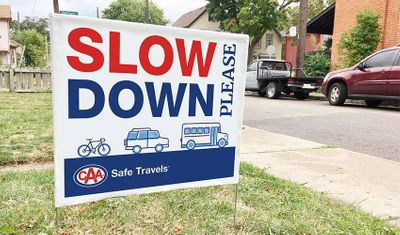
WINNIPEG, May 14, 2019 – CAA is urging motorists to make space for tow trucks providing service on the side of the road on Canada’s first national Slow Down Move Over day. The day promotes a safe working environment for tow truck operators across the country. CAA has long advocated for the protection of roadside assistance workers through Slow Down, Move Over legislation. CAA Clubs across Canada have designated May 14 as Slow Down Move Over day to bring attention to this important issue. “Lack of driver awareness is one of the largest threats to tow-truck operator safety on this day and all others,” said Raymond Chan, government relations, CAA. “Everyone should slow down and move over when they see a tow truck operator on the side of the road.” CAA’s eight Clubs across Canada will be launching public education campaigns and events today to draw attention to the safety risks tow truck operators face. There are approximately 24 million motorists and 15,000 tow truck operators on the road annually in Canada. This leads to thousands of near misses experienced by emergency roadside operators annually and, across North America, nearly 100 tow truck drivers are killed every year after being struck by oncoming traffic while helping stranded motorists with flat tires, breakdowns and collisions. Every tow truck driver knows the number of close calls they've experienced while pulled over on busy roadways. "I figured that was going to be the end, that I was going to be done," said one CAA tow-truck operator after a near-miss during a roadside assistance call. In 2011, the Slow Down Move Over law became part of Manitoba’s Highway Traffic Act. Most provinces and territories have Slow Down Move Over legislation that mandates motorists must slow down and change lanes, if it is safe to do so, to ensure the safety of emergency workers on the roadside, but it is often not observed. Learn more about the Slow Down Move Over Day here: caamanitoba.com/slowdown

MEDIA RELEASE: Empress Street tops list for second year running
WINNIPEG, May 8, 2019 – The votes are in, and Manitoba’s Worst Road for 2019 is Empress Street in Winnipeg for the second consecutive year. “Manitoba’s Worst Roads campaign is about uniting the public in sharing their views,” says Tim Scott, president of CAA Manitoba. “Even with construction taking place on Empress Street at this moment, voters identified it as the Worst Road once again. Empress is a major arterial road that many Winnipeggers rely on to get where they are going. Properly maintained roads lead to safer travels and a healthy economy, but the public understands that further delay leads to a direct financial impact on them. We’re proud to give a voice to Manitobans who want to pave the way for better roads in the province.” Over 2,700 votes were cast for more than 400 roads. Road users of all types voted for the streets they wanted to focus on. Potholes and crumbling pavement continue to be the most critical issue identified by motorists, followed by traffic congestion. Cyclists pointed to potholes and poor cycling infrastructure as their top gripes, while pedestrians cited inadequate walking infrastructure as their biggest problem. Seven of the top ten Worst Roads are in Winnipeg, while three are rural roads. In second place is Provincial Trunk Highway 34 found in western Manitoba near Austin. Eighth place is Provincial Trunk Highway 23, which passes through numerous communities in southern Manitoba, and tenth is Provincial Trunk Highway 32 by Winkler. Some of the Winnipeg roads that have appeared on the Worst Roads list in previous years include Saskatchewan Avenue, Sherwin Road and St. James Street. Earlier this year, both the federal and provincial governments announced that a combined total of approximately $300 million will be spent to improve 350 kilometers of the highway network across Manitoba, and the City of Winnipeg recently announced that one-time federal gas tax funding will be spent on road repairs, road safety initiatives and the promotion of active transportation. “We know that CAA’s ongoing advocacy efforts are working and that governments are listening,” says Scott. “CAA will continue to bring the voice of Worst Roads voters to government and work with stakeholders on how to create infrastructure and transportation that we can all be proud of.”

MEDIA RELEASE: Manitobans can vote on Worst Roads in province
WINNIPEG, March 20, 2019 – Manitobans from across the Province rely on the existing road network to travel each and every day. Whether you are driving, cycling, walking or taking public transit, many of these roads are in a state of disrepair. Today, representatives from Bike Winnipeg join CAA Manitoba in encouraging all road users to focus on safety and infrastructure challenges when they vote on their Worst Roads for 2019. “Everyone has a role to play in making our roads safer, and that’s why we want to hear from all Manitobans about their concerns,” says CAA Manitoba president Tim Scott. “Our annual CAA Worst Roads campaign has influenced change for over seven years by taking input and bridging the public’s interest in the state of good repair of our roads and bridges. In fact, a recent survey of CAA Manitoba members showed that 90 per cent of respondents were concerned about the state of Manitoba’s roads. Moreover, nearly 75 per cent of CAA Members believe that not enough is being done to maintain roads, and that repairs are not occurring in a timely fashion.” Best in class asset management includes prioritizing connectivity for commuters, fixing infrastructure, focusing on safer roads, and includes cycling lanes and increasing transit options. A well-balanced road user program will reduce the wear and tear on Manitoba’s infrastructure and taxpayers’ pocketbooks. “Properly maintained roads and a healthy transportation system translates into safer travels, a healthier economy, and efficient delivery of goods and services,” says Raymond Chan, Government Relations, CCG Club Group. “From our analysis, further delay in road repairs leads to greater costs for governments and has a direct financial impact to the public.” Worst Roads are classified as having potholes, crumbling pavement, poor road signage, limited or nonexistent cycling or walking infrastructure, traffic congestion, or limited crossing opportunities. Mark Cohoe, Executive Director of Bike Winnipeg, sees a variety of issues that need attention. “When people vote in the CAA Worst Roads campaign, they should think of how the roads affect people walking and cycling along our streets as well as those driving along them. Potholes are very dangerous for someone on a bike, and new bike facilities provide a tremendous improvement in safety, comfort, and connectivity. That’s where CAA’s Worst Roads campaign comes in – people on bikes can have their voice heard on infrastructure safety by nominating roads,” says Cohoe. Voting runs until midnight on April 16, 2019. Manitobans can nominate their Worst Road online at caaworstroads.com or through the CAA app. Voters can identify themselves as motorists, cyclists, pedestrians or transit riders and pinpoint a particular stretch of the road for crumbling infrastructure, safety and congestion.

Planet 9 Doesn’t Exist, So Why Does It Matter How We Get There? Let Our Expert Explain.
Planet 9 is an oft-discussed hypothetical planet in the outer region of the solar system. A new study involving Florida Tech astrobiologist Manasvi Lingam helps illustrate how we could possibly get there. The study, “Can We Fly to Planet 9?” is from Lingam and researchers Adam Hibberd and Andreas Hein. The team discovered that using current, unmanned transportation methods, it would take 45 to 75 years to get to Planet 9, which is about 42 billion miles away from Earth. By comparison, Pluto, which is the ninth object from the Sun, is roughly three billion miles from Earth. The research and work of Lingam, Hibberd and Hein is also getting a lot of attention from websites like UniverseToday.com. The team also studied near-future transportation methods nuclear thermal propulsion and laser sails. Using nuclear thermal propulsion, it would take approximately 40 years to reach Planet 9. It would take merely six to seven years to reach Planet 9 using laser sail propulsion, which involves using light from lasers to propel the vehicle. In its research, the team used the principles of orbital mechanics, sometimes called spaceflight mechanics. They inputted the complex and nonlinear mathematical equations into a computer, and then solved those equations with some optimization constraints. “What I mean by the latter is that ideally you want to maximize or minimize some quantity as much as possible,” Lingam said. “You might say, ‘Well, I want to minimize the flight time of the spacecraft as much as possible.’ So, what we did is that we put in an optimization constraint. In this case, it happens to be minimizing the time of journey. You solve the mathematical equations for a spacecraft with this condition, and then you end up with the results.” Lingam is inspired by the trendsetting Voyager spacecraft missions of the late 1970s, and one of his goals is to gain additional information about other worlds in our solar system, in addition to Planet 9 Voyager still provides valuable information regarding the outer solar system, though by 2025 it is expected that there may no longer be sufficient power to operate its science instruments. “Any mission to Planet Nine would likewise not just provide valuable information about that hypothetical planet, but it would also yield vital information about Jupiter, because what we do in some of the trajectories is a slingshot or powered flyby around Jupiter,” Lingam said. “It could also provide valuable information about the Sun because we also do a maneuver around the Sun, so you would still be getting lots of interesting data along the journey. And the length of the journey is comparable to that of the functioning time of the Voyager spacecraft today.” If you're a reporter looking to know more - then let us help get you connected to an expert. Manasvi Lingam is an Assistant Professor in the Department of Aerospace, Physics and Space Sciences at the Florida Institute of Technology. He is an author and go-to expert for media when it comes to anything in outer space or out of this world - just recently he was featured in Astronomy.com where he was asked to answer the illusive question - Are we alone? Manasvi is available to speak with media - simply click on his icon now to arrange an interview today.


How will debates affect upcoming elections? Expert examines Walker-Warnock Senate matchup
Mid-term elections are nearly here and it is debate season for candidates. In Georgia, Sen. Raphael Warnock is set to debate Herschel Walker in Savannah on Oct. 14. This may be the only time the two candidates face off in a debate. But can these events sway a voter one way or another? Augusta University’s Mary-Kate Lizotte is an expert in political and voter behavior and said research shows debates do not have a substantial influence on election outcomes. “Most individuals who watch debates are well informed and therefore very likely to already have a party identification,” Lizotte said. “Sometimes debates do lead to a bump in the polls for a candidate if various news outlets agree that the candidate won. Most of the times, such bumps do not last that long.” But when it comes to a particular issue, she said there is some research that shows if it’s a newer topic, then it can influence public opinion. There has been a lot of attention on this particular debate since Warnock has unsuccessfully tried to engage Walker in other debates. Walker has said he’s not the polished speaker Warnock is and has downplayed the debate during recent speeches. “Walker is probably doing what others have done against a candidate with established oratory skills," adds Lizotte. "George H.W. Bush, George W. Bush, Sarah Palin and Mitt Romney, or their people, worked to lower expectations by conceding that their opponent was a fantastic debater/speaker; then the news media positively covered their debate performance when they performed moderately well or when their opponent does not trounce them.” “This could work in Walker’s favor if they only have one debate. If he gets positive coverage for doing better than expected, then he likely won’t agree to another debate.” With the mid-term elections inching closer and each Senate race crucial to determining the balance of power in Washington, these campaigns will get attention from state and national media. And if you're a reporter looking to cover the race in Georgia, then let us help. Dr. Mary-Kate Lizotte is an expert in political and voter behavior. She is available to talk about the upcoming midterm and gubernatorial elections in Georgia. Click on her name to schedule an interview.


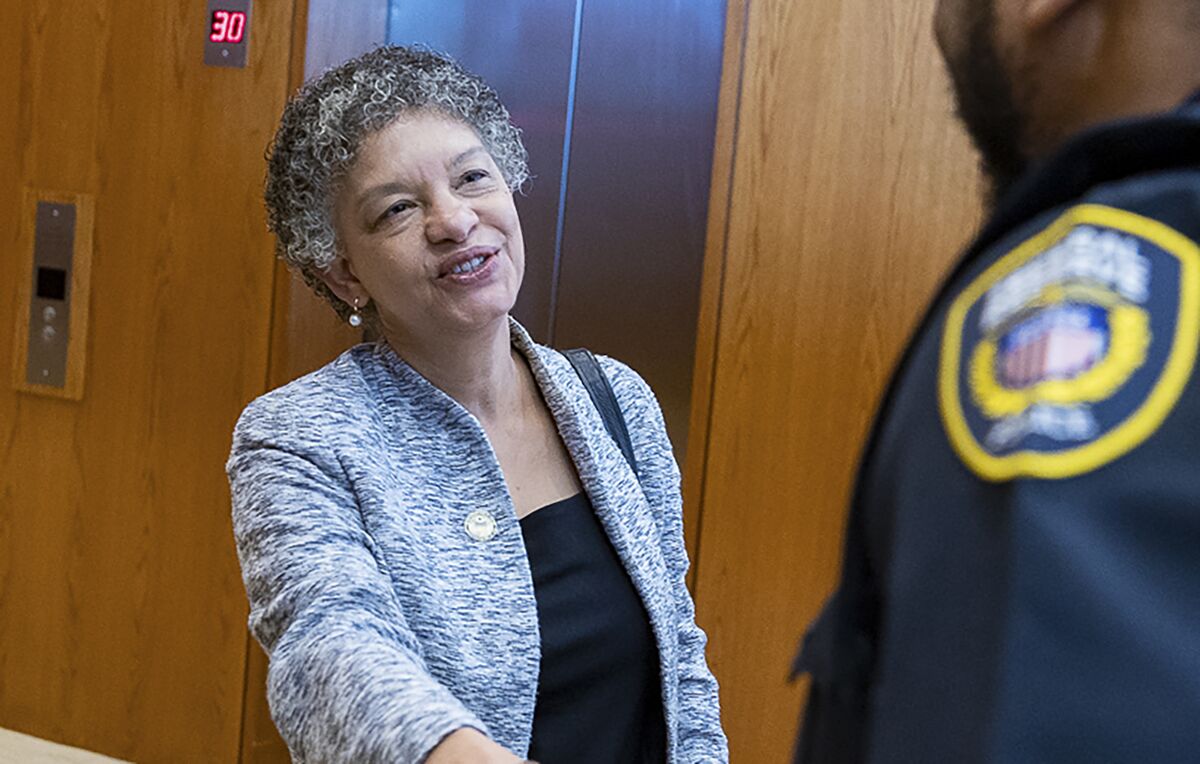
With inflation rampant, everyone is concerned about money and the economy -- not just the prices on everyday goods and services, but their investments as well. The situation has people on edge. Rick Franza, dean of Hull College of Business at Augusta University, said there are differences between the economy and the markets. “Part of that is in the economy, we worry about now and the stock market is more forward-looking, so there’s always some disconnect between the financial markets and the economic reality," Franza said. "The disconnect seems to be worse than ever. There’s less correlation between the economic news and where the stock market goes.” “We used to think that a good jobs report would make a good economy, and typically it does, but in the last couple of months when the jobs report was good, the market has tanked. People are reading it as the strong job market means inflation is not under control." Franza indicated there is a fear factor when it comes to the stock market and its steady decline over the last nine months. Younger investors in the market haven’t seen many bad times, so they are fearful. He also said people nearing retirement are fleeing the market as well. When it comes to the drop in the stock market, it affects anyone who has investments. “Most of us have some kind of investments, especially in retirement accounts,” Franza added. Inflation though, has been the dominating factor in the market right now. "The impact of inflation will be more on small businesses. The large businesses will find a way to weather the storm. If inflation continues and companies can’t be profitable, they’ll start laying off people. Then we’ll have a recession, which will reduce inflation.” It could also have a rippling affect on consumer choices and ultimately costs. “If more companies go out of business, it’ll give us fewer choices, which means the supply chain will be restricted. Then, you’ll pay higher prices because of fewer options. In the long run, if the Fed sticks to its plan to keep raising rates, it will reduce inflation.” If you're looking to know more about this important topic, then let us help. Franza is available to speak with media about trending issues like inflation, small business and the economy – simply click on his icon now to arrange an interview today.


Advantage Ukraine? A surprising surge has Russia in retreat
The war in Ukraine has taken a surprising turn. A hard surge in the northeast of the country has seen Ukraine soldiers reclaiming lost ground and in some cases, even pushing Russian troops back to the border. It's a David and Goliath scenario, and at the moment, Ukraine finally seems to have the upper hand over the larger and more equipped Russian forces that have been clawing away at the country since February. There's been an enormous amount of media attention and reporters are looking to experts for perspective, opinion and explanation. “It seems to be a complete failure of logistics and strategy tactics on the Russian side," said Dr. Craig Albert, director of the Master of Arts in Intelligence and Security Studies at Augusta University. "Everything is just falling apart; their lines are collapsing. Troops are running and leaving behind all their ammunition, leaving vehicles, leaving weapons. That’s just astonishing to me that it is such a disorganized kind of retreat. Russia can use all their propaganda and say they are retrenching elsewhere and trying to solidify their forces further east and further south, but it’s a disorganized retreat and they’re losing lots of numbers but leaving all their equipment to the Ukrainians." Albert can explain what could happen next in Ukraine, as there are several possible scenarios and outcomes in the long and short term of this war. And if you’re a journalist looking to know more about what lies ahead as the war between Ukraine and Russia continues and how it may impact the United States, then let us help with your questions and coverage. Albert is director of the Master of Arts in Intelligence and Security Studies at Augusta University. He is a leading expert on war, terrorism and American politics. This is an important national and international issue. Albert is available to speak with media – simply click on his name to arrange an interview today.


Bivalent Boosters are Here: Our Expert Explains What You Need to Know
Updated COVID-10 booster shots are rolling out across the United States, and these new bivalent formulations target the omicron BA.4 and BA.5 subvariants that have become the dominant circulating strains as well as the original form of the coronavirus. UConn Health's Dr. David Banach, an infectious diseases physician and hospital epidemiologist, spoke with UConn Today about the latest CDC vaccination guidelines and the significance of these updated boosters: What’s the difference between the monovalent and bivalent vaccines? The monovalent vaccines are the ones that have been available thus far. They contain a small piece of the mRNA component of the virus based on the original SARS-CoV-2 virus, sometimes termed as the “ancestral strain,” and are designed to generate an immune response to that original virus. We’ve seen with the omicron variant — and specifically with the BA.4 and BA.5 subvariants, which have appeared most recently — the virus has changed. The bivalent vaccine contains both the portion of the original ancestral virus mRNA as well as a portion of mRNA that is specific for the BA.4 and BA.5 subvariants that have been circulating most recently. The hope is, by more specifically targeting the most recent subvariants, the bivalent boosters will reduce the impact of COVID both on individuals who received them as well as the population. Conceptually it’s analogous to what has been done with the influenza vaccine. The technology’s a little different but it’s based on the same idea. It’s targeted against both the original strain and the BA.4 and BA.5 subvariants of omicron. What becomes of the monovalent vaccine? At this time the vaccination program will be a primary vaccine series with the original monovalent vaccine and booster doses using the bivalent vaccine. Why wouldn’t we just start people with the bivalent vaccine? Data showed the monovalent vaccine upfront provides that high level of protection. The bivalent vaccine has not been evaluated as a primary vaccine candidate, so we don’t have the data to support its use in that context. That’s how it was originally designed, to be a booster. Dr. Banach is a leading voice on the fight against the COVID-19 virus, and he's available to speak with the media. Click on his icon to arrange an interview today.


/cloudfront-us-east-1.images.arcpublishing.com/gray/GEHAY7MEYRD4NHFWOELCD7EWLM.jpg)
FBI data shows murders are up, and our experts are ready to help with your coverage
FBI data shows murder rates are up, with the latest figures showing a staggering 21,570 murders happening nationwide in 2020. Dr. Kim Davies teaches a sociology of murder course at Augusta University and was recently interviewed on the topic by a local CBS affiliate. Davies has developed the course to help educate students and get them thinking about ways they can bring awareness to the violent crime problem. Students put a tick on the sidewalk in chalk to represent every murder to offer a better understanding of the number of families affected. “If I put that number on the board, it looks like a big number," said Davies. "But nobody really knows what that is. If we tick every mark and we say, ‘Look, that’s a victim,’ it means more to the students.” Davies also reiterates that even though this current number is probably the highest it’s ever been since she's been offering this class, it's not at an all-time high. "Murder was higher in the '90s when I was in grad school, but it’s been going down, down, down. Hopefully it’s not a trend where we continue up, but we’re back up.” If you’re a journalist covering true crime or any other aspect of this topic, then let us help with your stories. Davies is a sociologically trained criminologist with academic focus is on homicide and violence. Her most recent book, The Murder Book: Understanding Homicide Today, explores topics such as the increase in mass murders, the change in Stand Your Ground laws across the country and police shootings as it relates to the Black Lives Matter movement. Davies is available to speak with media about this subject – simply click on her icon now to arrange an interview today.
