
Experts Matter. Find Yours.
Connect for media, speaking, professional opportunities & more.

Will schools reopen before semester ends? Georgia Southern pandemic expert can give perspective
While education has moved into homes across the country because of the COVID-19 pandemic, people are wondering if the shutdowns will actually help stop the spread of the disease. Isaac Chun-Hai Fung, Ph.D., a digital health expert and infectious disease epidemiologist at Georgia Southern University, said school closures can delay the peak of the outbreak, reduce the amount of cases and decelerate the spread of the virus. Fung was a part of a study in 2015 that modeled a potential flu pandemic. The study showed that delaying the spread of a virus can give health care professionals more time to come up with vaccines and other treatments, as well as giving the system time to brace itself for the onslaught of patients. “The key message of my paper is not necessarily how quickly we shut down schools,” Fung told Rolling Stone. “It is the duration of school closure that matters. Whenever we relax social distancing measures, we will see a bounce-back of the cases, unless we are able to completely block all transmission chains and have driven the case number to zero — i.e., extinction of the virus, as in the case of SARS in 2003.” While some think opening schools and other public places would benefit the economy, Fung said doing so could leave the country vulnerable. “To save the U.S. economy, we must control this disease first,” Hung said to Rolling Stone. “That is what China is going to achieve — even if they have already suffered a great deal economically due to COVID-19. That is why (Narendra) Modi asks the whole of India to stay home for three weeks. That is also what Boris Johnson asks the British people to do now. The Americans should take heed.” Fung analyses social media data for public health surveillance and health communication and uses digital technologies for public health interventions. He investigates the transmission of communicable diseases with a focus on respiratory infections and environmentally transmitted infections. He applied a variety of methods, from classical statistical methods to machine learning and mathematical modeling, to address public health problems and to provide solutions to policymakers. He is especially interested in assisting public health agencies in their responses to public health emergencies. Fung is available to speak with media regarding this topic — simply reach out to Georgia Southern Director of Communications Jennifer Wise at jwise@georgiasouthern.edu to arrange an interview.


Leading Game Designer Lists Top Ten Board Game Suggestions While Stuck at Home
Maurice Suckling is more qualified than just about anyone to recommend the best board games for families, couples, and others stuck at home during the COVID-19 pandemic. A professor of practice in the Games and Simulation Arts and Sciences program at Rensselaer Polytechnic Institute, he teaches about game writing, board games as storytelling, and games as historical simulations. He has credits on over 50 published video games and is also a published board game designer. His most recent board game, Chancellorsville: 1863, is in production with Worthington Publishing and will be released later in 2020. Instead of relying on old standbys like Monopoly and Risk, the choices on Suckling’s list range from cooperative games such as the aptly-named Pandemic Legacy: Season 1, where you rip up cards and put stickers on the board that continue to affect subsequent rounds, to role-playing games you can play together or solo like Legacy of Dragonholt, to games for families with children of all ages. Suckling’s picks reflect the transformation of the board game industry into a dynamic sector valued at over $12 billion. Suckling’s bio: https://news.rpi.edu/expert?expert=maurice.suckling Suckling can speak about the game industry as a whole and about how board games bring people together.


How To Use Light To Reduce Anxiety — and Sleep Better — During This Pandemic
Mariana Figueiro, a professor and the director at the Lighting Research Center (LRC) at Rensselaer Polytechnic Institute, is among the world’s leading experts in the area of light and health. According to Figueiro, the key to avoiding depression, anxiety, and insomnia is a “light fitness routine.” Exposure to a robust 24-hour light–dark cycle promotes circadian entrainment, which has many health benefits such as increased alertness and feelings of vitality during the day, improved mood, and better sleep at night. Healthy, regular sleep patterns are even thought to have a protective effect against coronavirus. Here are a few tips from Figueiro about how to use the power of light to feel better every day. “If the sky is clear and the sun is shining, go for a walk during the day. Try to go outside in the morning, every day, at the same time, for a period of 30 minutes or so,” Figueiro said. If you must quarantine indoors, Figueiro suggests increasing the amount of light by a factor of four (x4) during the daytime. Morning light provides the most benefit in terms of avoiding circadian disruption that can lead to depression, anxiety, and insomnia. If you have one table lamp in your home office or kitchen (or wherever you spend the most time during the morning and early afternoon), add three more lamps for a total of four. Don’t forget to turn the extra lights off in the evening, mimicking sunset. On cloudy days, supplemental electric lighting is even more important for entraining the circadian clock, and to avoid circadian disruption. Light also proves an immediate alerting effect akin to coffee or tea. In the evening, consider using warm, low-level (dim) lighting. Avoid screen time late in the evening, before bedtime. The intense glow from an electronic screen can significantly delay sleep, which translates to fewer hours of sleep per night. “A robust pattern of light during the day and darkness at night is important for our health and well-being,” Figueiro advised. “Open the window curtains or shades. Seek light during the day, especially during the morning. Go out for a walk during lunchtime. Dim the lights in the evening, mimicking sunset.”

Are Home Prices in Peril? FAU Expert Says Coronavirus Stimulus May Hold the Key
The United States housing market faces its biggest threat in more than a decade, and whether home prices can withstand the new coronavirus pandemic largely depends on an effective stimulus package, said Ken H. Johnson, Ph.D., a real estate economist in Florida Atlantic University’s College of Business. U.S. President Donald Trump recently signed a historic $2 trillion stimulus to boost a battered U.S. economy, and getting the aid exactly right is the key to avoiding the first sustained setback to home prices since the end of the housing boom in 2006, according to Johnson. “If the stimulus package ends up being more than we need, this will almost certainly trigger a non-trivial amount of inflation in the economy, which will increase mortgage rates, which, in turn, will place downward pressure on housing prices,” Johnson said. “If the stimulus is not sufficient enough to hold down unemployment and it increases the likelihood of mortgage default, mortgage rates will rise and put downward pressure on housing prices. Only if the stimulus is just right will increasing inflation and higher unemployment be held in check.” Fixed rates for 30-year mortgages rose from 3.29 percent on March 5 to 3.65 percent on March 19, before moving down to 3.5 percent last week as the stimulus gained momentum. The higher rates are an indication that investors are factoring in inflation and the higher likelihood of default, though the recent downward trend suggests that it was the threat of rising default probabilities that was having the bigger impact on mortgage rates, according to Johnson. Since bottoming in March 2012, U.S. home prices rose 61 percent over the next seven and a half years, according to the S&P/Case-Shiller 20-City Composite Home Price Index. The nation’s housing market rebounded from a devastating downturn when investors started renovating and reselling properties after buying them at deep discounts. The market has been robust ever since, but Zillow Group recently suspended its home-buying program as a result of the pandemic and how it may affect the housing market. The move means Zillow is worried that housing prices are at risk, according to Johnson. If mortgage rates were to climb from 3.5 percent to 5 percent, it would result in a 43 percent increase in the interest portion of a housing payment, dramatically reducing the purchasing power for consumers. “Only time will tell here,” Johnson said. “We are in uncharted waters, making it difficult to tell when and if we got the stimulus package right.” If you are a journalist covering how real estate and property values are being impacted by the COVID-19 pandemic – then let our experts help. Ken Johnson is the associate dean and Investments Limited professor in the College of Business at Florida Atlantic University. Ken is available to speak to media about this topic – simply click on his icon to arrange an interview and time.

Op Ed: In coronavirus crisis, Don't prioritize economics over public health
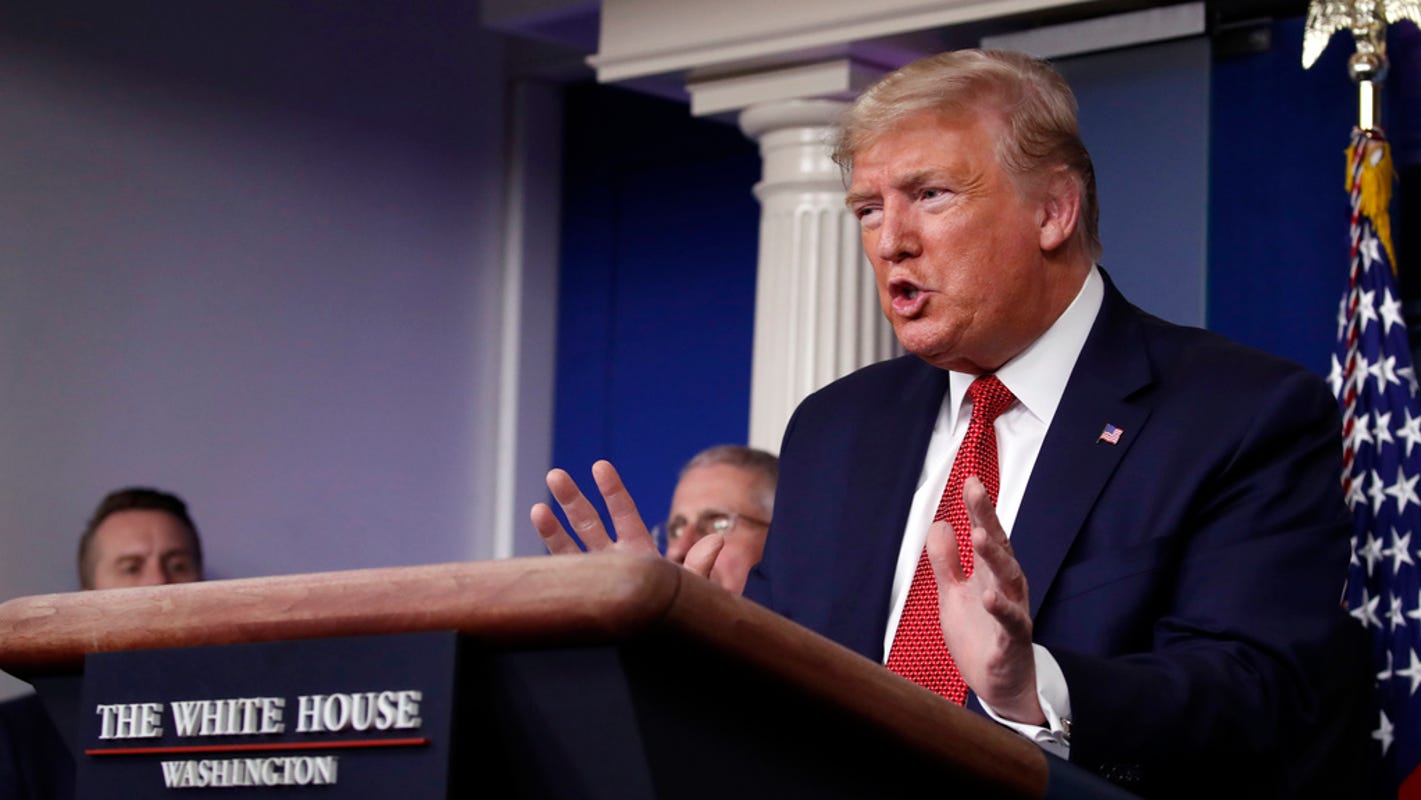
The following is an excerpt from Op Ed that ran in the Detroit Free Press late last week. Th full piece is attached below for your reading pleasure. President Donald Trump said this week that he hopes to see economic activity ramped up and social distancing practices and other public health measures reduced by Easter, which is April 12. This is a recipe for disaster and it again vividly illustrates his dismissal of medical and scientific expertise for his own political goals. The rhetoric he uses suggests that the financial pain the nation will experience over the next year or longer is not worth the lives that will be lost as a result of dialing back public health restrictions. I am an ethicist. To me, Trump is forcing Sophie’s Choice decisions by people who have taken an oath to “first do no harm.” Trump and his advisers ignore the ethical pain that health professionals will have to endure who must decide who lives and who dies because we have too few ventilators or too few ICU beds to treat all the patients who need those beds for survival. Those harsh choices are very real right now. They would become even more tragic if public health measures now in place were loosened in order to improve economic activity. March 27 - Detroit Free Press There are many angles to explore and cover as the COVID-19 pandemic impacts just about every segment of American life. If you're a journalist covering the ethics involved and the leadership decisions taking place at each level of government, then let our experts help. Leonard M. Fleck is the Director of the Center for Ethics at Michigan State University. He is an expert in the areas of health care justice and served as a member of the Clinton Administration’s Health Care Reform Task Force in 1993 and as a state ethicist for Michigan regarding access to health care. Dr. Fleck is available to speak with media – simply click on his icon to arrange an interview.


Baylor Cultural Critic and Author of “Living with the Living Dead” Talks Books and Pop Culture During COVID-19 Time at home is increasing as shelter in place orders and working from home become the norm for many people during the COVID-19 pandemic. During this season of uncertainty, many turn to books, movies and other pieces of pop culture pass the time. Greg Garrett, Ph.D., professor of English at Baylor University and expert cultural critic, supports pop culture and literature as important to meaningfully escaping current fears as well as contextualizing experience and emotions. “A great novel, movie or memoir is a gift when we need distraction, but it can also offer us the dramatic reminder that these are the things that make us truly human: love, community, compassion and faith,” Garrett said. “The world may be shifting beneath our feet, but we’re going to be fine as long as we keep the important things in view.” In a Q&A with Garrett, he gave insight on what can be learned from zombie pandemic pop culture, touched on how literature has fit culturally into pandemic history and offered advice on books to pick up during extra free time at home. Q: You’re the author of “Living with the Living Dead: The Wisdom of the Zombie Apocalypse.” What can we learn from zombie pandemic pop culture? A: Our most pervasive form of pandemic literature in recent years is the story of the Zombie Apocalypse, which has been told in novels, movies, games and comics. It’s been the inciting conflict of “The Walking Dead,” and the underlying threat in “Game of Thrones,” two of the most popular television series in history. One of the attractions of zombie literature is that zombies can serve as a metaphor for lots of things at once: for pandemic, sure, but also for economic unrest, political chaos, terrorism and other things that keep us up at night. But as Max Brooks, author of the seminal zombie novel “World War Z: An Oral History of the Zombie War” (2006), notes: however difficult our lives might be at this moment, at least the dead are not wandering the earth and trying to eat us! We can, Brooks says, close the book, turn off the TV, and at least be secure in that. A book like “World War Z” or a movie like “Sean of the Dead” (2004) or “Zombieland” (2009) can soothe some of our tension since this story of a world coming off the rails is our story, yet clearly not our story. Q: How does literature fit into cultural history events like pandemics? A: One of the most important gifts that great stories can give us is the realization that we’re not alone in our experience, and that, in fact, our experience is not unprecedented. Anyone wanting to understand that this dark time is not in fact the darkest time should read historian Barbara Tuchman’s masterful “A Distant Mirror: The Calamitous 14th Century” (1978), which explores the Black Death of 1348-50, a pandemic so awful it killed a third of the populations of Europe and the Middle East. Daniel Defoe’s “A Journal of the Plague Year” (1722) is a novel recalling the horror of the Black Death in London some 60 years prior to its writing. In that book, Defoe’s narrator says he writes about his choices in such detail because he believes that they might be “of moment to those who come after me.” That is, he hopes his story might be of use to future sufferers like ourselves, and it is. Q: Literature can also provide escape from tough times. What other books should we be reading right now? A: In the zombie spirit, you could read “Pride and Prejudice and Zombies,” a 2009 parody by Seth Grahame-Smith of the Jane Austen novel. But if you’re simply seeking meaningful escape from our current story, you couldn’t do much better than reading (or re-reading) the actual “Pride and Prejudice” (1813), one of my favorite novels. I can’t wait to fall back into the world of the Bennets and worry about something besides viral curves and travel bans. During the weeks we expect to be largely confined to the house, my family and I are making reading lists. Mine includes Ernest Hemingway’s “The Sun Also Rises” (1926) and James Baldwin’s “The Fire Next Time” (1963), both of which I plan to teach in my American lit class at Baylor this fall, and Toni Morrison’s “Beloved” (1987), which will scare me and break my heart in ways that have nothing to do with this pandemic. ABOUT GREG GARRETT, PH.D. Greg Garrett, Ph.D., professor of English at Baylor University, is a popular theologian and cultural critic as well as the author of two dozen novels, memoir and nonfiction books including “Living with the Living Dead: The Wisdom of the Zombie Apocalypse” (Oxford University Press, 2017). ABOUT BAYLOR UNIVERSITY Baylor University is a private Christian University and a nationally ranked research institution. The University provides a vibrant campus community for more than 18,000 students by blending interdisciplinary research with an international reputation for educational excellence and a faculty commitment to teaching and scholarship. Chartered in 1845 by the Republic of Texas through the efforts of Baptist pioneers, Baylor is the oldest continually operating University in Texas. Located in Waco, Baylor welcomes students from all 50 states and more than 90 countries to study a broad range of degrees among its 12 nationally recognized academic divisions. THE COLLEGE OF ARTS & SCIENCES AT BAYLOR UNIVERSITY The College of Arts & Sciences is Baylor University’s oldest and largest academic division, consisting of 25 academic departments and seven academic centers and institutes. The more than 5,000 courses taught in the College span topics from art and theatre to religion, philosophy, sociology and the natural sciences. Faculty conduct research around the world, and research on the undergraduate and graduate level is prevalent throughout all disciplines. Visit www.baylor.edu/artsandsciences.


Stay-at-Home Parenting During the Pandemic
With the coronavirus-related death toll rising in the state of Pennsylvania, Governor Tom Wolf added two more counties to the growing list of those with a "stay at home" order, and thousands of parents and caregivers find themselves at home with their children indefinitely. Villanova philosophy professor Heather Coletti, PhD, spoke about the way the division of "caring labor" in traditional two-parent, male-female households might become a source of tension. Dr. Coletti points out that "[in] heteronormative households, women do the overwhelming bulk of caring labor for both children and adults—the statistics for this are consistent and slow to change. Today, most of these women have full-time jobs as well. When these heads-of-household are both working from home, very consciously trying to prove their value to their employer while working remotely, I think families are going to face very intensely the frustrations of the sexual division of labor over the next few weeks, i.e., that both heads of household are acting 'like men.'" "Are men prepared to be 'more like women' while working at home with children for a greater length of time?" Dr. Coletti asks. Unfortunately, much of the literature on the sexual division of labor suggests that this is quite unlikely. "Our society, including the women within it, do not seem to expect men to readily adopt the 'caring skills' traditionally and historically associated with women, even though women have proven that they are quite adept at adopting the 'work skills' that permeate career paths in the public sphere. But when children are present during these working hours (in the home) for these heads-of-household for several weeks... who will be interrupted to help with this or that? Break up that argument over that toy? Supervise homework that needs to get done? Who will find themselves negotiating 'five more minutes' to finish a conference call even though lunches need to be made for the 6- and 8-year-olds because it's already past noon?" According to Dr. Coletti, this task will likely still fall to mom. One of the hallmarks of the "masculine care model" (MCM) that American society is built around is the illusion that workers all have wives at home. The family becomes invisible—disappears—when we all go to work. Per Dr. Coletti, "People who 'visibilize' their families at work risk being characterized as distracted, sloppy or uncommitted to their work. This illusion has always been dangerous because we are and have always been connected to others. Denying this is, frankly, absurd." She continues, "Women are most tightly connected to their families through the patterns of the sexual division of labor and must work harder to 'invisibilize' their connections on a normal workday. Now that 'normal workdays' have been temporarily suspended... we are no longer in a position to ignore the overlap of (gendered) work in homes. I predict the coming weeks and months will challenge the illusions of both the MCM and sexual division of labor in unprecedented ways."


Precautionary Buying During a Disaster Can Create Other Challenges
After many stores sold out of necessities like toilet paper, paper towels, masks, cleaning products, and hand sanitizer, retailers across the United States are implementing purchasing limits on certain items as governmental leaders urge citizens to pace their buying habits during the COVID-19 pandemic. José Holguín-Veras, an endowed professor of civil and environmental engineering at Rensselaer Polytechnic Institute and director of the Center for Infrastructure, Transportation, and the Environment, has studied this type of precautionary buying that happens before and after a disaster. These purchases are a natural human reaction to concern over potential shortages, but Holguín-Veras says they can also be problematic. After the Tohoku earthquake and tsunami disasters in Japan in 2011, Holguín-Veras found that demand for goods doubled. Following Superstorm Sandy, he learned that this type of demand removed critical supplies from the local area, delaying response as products had to come from further away. Holguín-Veras is available to speak about how this logistical stress can affect the overall disaster response, as well as initiatives that could lessen that impact including: agreements with key private-sector vendors to ensure critical supplies, campaigns to educate the public, and rationing and demand-management policies.


Rensselaer Team Seeks Alternative Approach to Controlling Viruses
As researchers worldwide scramble to formulate a vaccine to combat COVID-19, a team at Rensselaer Polytechnic Institute is pursuing a potentially powerful solution to pandemic control: a viral trap that is easily adapted to different classes of viruses, enabling a “plug-and-play” approach to virus detection and antiviral activity. Jonathan Dordick, an endowed professor of chemical and biological engineering at Rensselaer, and Robert Linhardt, an endowed professor of chemistry and chemical biology, said the team is exploring how their work — in the areas of viral detection, therapy, and inhibition — could be used against COVID-19 and other viruses in the future. Their team views such innovative approaches as a vital hedge against the growing threat of global pandemics. The viral trap works by mimicking the latch points on a human cell that a virus must bind to before infecting a person by disgorging its genetic instructions into the cell. In research on the Dengue virus with Xing Wang, now a professor of chemistry at the University of Illinois, recently published in Nature Chemistry, the team folded a snippet of DNA into a five-pointed star, and attached decoy latch points that align perfectly with the virus’ own molecular grappling hooks. The result was the world’s most sensitive test for Dengue, and a novel means of capturing and ultimately killing the virus. In previous research, the team demonstrated the same approach for Influenza A, and it can likely be expanded to other viruses like COVID-19. In another approach, Dordick demonstrated how enzymes incorporated into paint, can form a catalytic coating capable of killing the Influenza A Virus. The research, published in Applied Microbiology and Biotechnology, suggests enzyme systems could further be incorporated into swabs, wipes, or coatings, to target and kill various viruses, including COVID-19.


While a huge focus is on health and mortality during the coronavirus outbreak, not to be forgotten are those who are grappling with death from natural causes, diseases, accidents and crime. Funerals and visitations are the customary means of support friends and loved ones — but restricted travel and social distancing poses challenges. Here are suggestions about grieving from Candi Cann, Ph.D., associate professor in the Baylor Interdisciplinary Core of the Honors College and author of “Virtual Afterlives: Grieving the Dead in the Twenty-first Century”; and Bill Hoy, clinical professor of medical humanities and author of “Do Funerals Matter: The Purposes and Practices of Death Rituals in Global Perspective.” Q: Funerals and visitations are such a time of hugs, hand-holding, prayers, closeness — simply being there. How might travel restrictions, social distancing and concerns for personal health interfere — and how can family and friends be supportive? CANN: I think live-streaming of funerals is a great option and allows people to be present from a distance. Most companies also offer virtual guestbooks where one can leave a teddy bear or flowers, light candles, etc., online in honor of the person. Many cemeteries are also moving online so that each gravestone will have a corresponding virtual memorial, filled with the deceased person's playlist, videos, pictures and memories. Of course, as with all technology, the capability of funeral homes varies from business to business, but my guess is that from an industry perspective, we are going to see a jump in virtual and online offerings as the funeral industry tries to stay relevant and contemporaneous. Also, if presence is important, one can choose disposal options that allow for the return of the deceased into the home, such as being cremated into cremains, or made into a diamond that one wears, or a record that one plays. You can insert cremains into the vinyl and make a record, or a glass sculpture with the cremains mixed into the glass. So, you don't have to be separated from the dead. HOY: I agree that live-streaming may have to suffice, but our experience shows it is a poor second choice. From time immemorial, we have seen that physical presence is vital, and I think that is what is so alarming to me about some of the current discussion in our culture. I was taking care of AIDS patients in Los Angeles in the 1980s when we saw some of the same disenfranchisement of grief, requiring direct cremation of the body and in some cases, forbidding the gathering of people in funeral rituals. It did not turn out to be a psychosocially sound practice and is creating a high level of concern on the part of my clinical colleagues. Q: Have there been times in history when this has been an issue as well when it comes to contagious disease? Have people taken safeguards before? HOY: Two notable examples were the 1918-19 Influenza Epidemic — unfortunately misnamed Spanish Flu — and the 2014-15 Ebola crisis in West Africa. In both cases, high numbers of dead coupled with high levels of contagion caused health authorities to create quarantines and eliminate gatherings such as funerals. Recent research out of the Ebola epidemic indicates that at least in some cases, these measures were counterproductive in that “secret” burials took place and those who had money were able to bribe officials to look the other way. I think we want to be especially vigilant to make sure we are being economically and socially just in the policies we put in place. Fortunately, we do have media to help bridge those gaps now that were not available in those other events, so that will almost certainly help. I am going to stop far short, however, of suggesting that media even approaches a point of providing the same psycho-social-spiritual benefit that sharing a space, rubbing shoulders and sharing tears do. CANN: The most recent epidemic in the United States was the AIDS epidemic in the 1980s and 1990s. By October of 1995, there were over half a million cases of people with AIDS, and many people did not know how to treat or interact with those who were infected. And just this month, a second person was cured of HIV with a stem cell transplant. I have lots of faith in our scientists and that they will be able to create an effective vaccination or cure for COVID-19. Q: Besides finding new or different ways to express support and love to others, what about oneself? We hear about self-isolation – what about self-comfort and self-care in other ways? HOY: This is a great time for self-reflection. What I am doing for myself are the things I recommend to others. Besides being vigilant about what I eat and getting out in the fresh air, I am taking care of myself by limiting my exposure to media. I have not been a big user of social media anyway, but I recommend to folks to be very careful about that because the COVID-19 misinformation is rampant. Instead, I check the National Institutes of Health website once each day for scientific updates, and I have taken all the news update alerts off my phone. Instead, I am trying to give more time to talking with family and friends by phone and video conferencing, journaling and reading. Of course, like other professors, I am spending time talking with students and getting ready to take my classes online next week. In my personal Bible study time, I decided I would spend some time looking at Scripture passages that address fear and have particularly enjoyed hearing God’s perspective on this. CANN: I think one of the hardest things about death is that life goes on without the dead. The birds keep chirping, the flowers keep blooming, people keep being worried about the most mundane matters — and that's difficult when a part of our world has stopped. But this is also what is beautiful about death. It forces us to see life all around us — its fragility, its constancy and its beauty. So, for me, self-care in grief is talking about death, talking with others about the one we lost and living again — in honor of the person who died who doesn't get to be here living anymore. As we embrace life, I strongly recommend that people reach out to friends and family. Social distancing does not need to mean social isolation. I'm also going on regular walks and spending time outside. We need to stay healthy and in shape during this time. Some people are finding it fun to do group-gaming and discovering new ways to spend time with family and friends either virtually in games or via video. Catholic churches are offering drive-through Eucharist and confession, Protestant churches are live-streaming their services and youth groups, Islamic mosques are live-streaming prayers and Buddhist temples are live-streaming meditation sessions. ABOUT BAYLOR UNIVERSITY Baylor University is a private Christian University and a nationally ranked research institution. The University provides a vibrant campus community for more than 17,000 students by blending interdisciplinary research with an international reputation for educational excellence and a faculty commitment to teaching and scholarship. Chartered in 1845 by the Republic of Texas through efforts of Baptist pioneers, Baylor is the oldest continually operating University in Texas. Located in Waco, Baylor welcomes students from all 50 states and more than 90 countries to study a broad range of degrees among its 12 nationally recognized academic divisions.
