Experts Matter. Find Yours.
Connect for media, speaking, professional opportunities & more.

Record freezing temperatures and global warming – let our experts explain
This week has seen temperatures drop to record lows. Across the mid-west, a polar vortex coupled with biting winds saw temperatures plunge below minus 50 degrees Fahrenheit. As the word has been focusing on climate change, its causes and effects – this week stands as a stellar example of the impacts of global warming. Despite the tweets and trolls of prominent politicians somehow aligning a deep freeze as a counter argument for climate change the evidence is becoming more clear - with global warming, comes warnings far more worrisome. Dr. Pamela Grothe, an Assistant Professor in the Department of Earth and Environmental Sciences at the University of Mary Washington, was recently quoted in the Guardian about how global warming is forecasting a grim future at the rate we are going. “Warmer temperatures and associated lower oxygen levels in the ocean are sufficient to explain the observed extinctions we see in the fossil record”, she says. “We are already seeing warming ocean temperatures and lower oxygen in many regions, currently affecting marine ecosystems. If we continue in the trajectory, we are on with current emission rates, this study highlights the potential that we may see similar rates of extinction in marine species as in the end of the Permian.” And is this just the beginning? What other extremes can we expect to see in our weather? Can that trajectory Dr. Grothe reference be turned around or slowed down? And what species are the most vulnerable and what ripple effect will that have on our oceans? There are a lot of questions to be asked – and that’s where the experts from the University of Mary Washington can help. Dr. Pamela Grothe is an assistant professor in the Department of Earth and Environmental Sciences as the University of Mary Washington. She recently completed a Ph.D. in the Paleoclimatology Lab at the Earth and Atmospheric Sciences department at Georgia Institute of Technology. Her current research involves a study of the central Pacific climate and El Niño Southern Oscillation (ENSO) variability over the past 6000 years through the analysis of coral fossil records. She’s an #expert in climate change and is available to speak with media – simply click on her icon to arrange an interview.



Empowered Storytelling Geared Toward Women Is a Winning Combo for Super Bowl Ads, Baylor Expert Says
Television advertisers who have chosen to appeal to women fans and viewers during this weekend’s Super Bowl have committed their millions of dollars to a wise strategy, according to a Baylor University marketing and advertising expert. Tyrha Lindsey-Warren, Ph.D., clinical assistant professor of marketing in Baylor’s Hankamer School of Business, studies consumer behavior and attitudes, multicultural media and advertising, and movies and entertainment. Each year, she and her students analyze the Super Bowl ads. And each year, she said, she sees more ads geared toward women. In fact, AdAge reports that brands like Bumble, Toyota and Procter & Gamble's Olay are featuring women in lead roles in their Super Bowl commercials this year. “That’s smart,” Lindsey-Warren said. “The current and future market power of women – as a whole and by segments – is undeniable and truly cannot be ignored by marketers.” To make her point, she cited research showing that women influence more than 80 percent of all consumer spending; 89 percent of the financial decisions are made by women; and globally, women control more than $20 trillion in world-wide spending. In addition, nearly 24.3 million African American women are brand loyalists and cultural trendsetters who have influence over the $1.2 trillion dollars in black spending power. Forbes reported in 2018 that “women constituted about 49 percent of the 108 million-plus people who watched” that year’s Super Bowl – and paid closer attention to the ads. “Nowadays, whatever brands plan to do during the Super Bowl must be extremely strategic and well planned when commercials go for over $5 million dollars,” Lindsey-Warren said. “With the #metoo and #times up movements as well as the diversity and gender issues in advertising industry and more, I think brands struggle as to how they approach targeting women on such a global stage.” She said brands that use “empowered storytelling” – storytelling that exudes the emotion of empowerment – make a difference. Good examples, she said, are Always’ “Like a Girl” commercial in 2015 and Audi’s “Daughter” commercial in 2017. “In my research, especially among Millennials and Gen Z, this approach is a powerful combination for brands who want to increase purchase intentions for their products or services,” Lindsey-Warren said. “The emotion of empowerment is multidimensional and promotes encouragement and can be extremely motivational,” she said. “When one is empowered, it can be an ‘aha’ moment and very transformational in a positive manner. In addition, empowered storytelling is a proactive approach to storytelling that demands you keep the receiver of the story in mind at every stage of the process because, at the end of the day, you want the receiver of the story to be better in some way for having received the empowered narrative they just viewed or experienced.” And when consumers are empowered, they tend to tell others. In the digital space, this looks like sharing videos, posts, quotes and more on social media channels. “Essentially, empowered storytelling gives brands the opportunity to achieve the right balance of entertaining and encouraging and, ultimately, healing by showing that they care for their consumers through the motivational messages and narratives they are producing,” Lindsey-Warren said. ABOUT TYRHA LINDSEY-WARREN, Ph.D. Tyrha Lindsey-Warren, Ph.D., is a marketing scholar, business executive, artist and entrepreneur. As a consumer behavior scholar, her research is rooted in narrative transportation theory (i.e., storytelling) that exudes the emotion of empowerment and its impact on consumer attitudes, behaviors, purchase intention and message recall. She also studies health edutainment, multicultural media and advertising, as well as movies and entertainment. Lindsey-Warren is an expert in effective communications strategies for leaders, multicultural communications and marketing. Her latest research, “An Examination of Television Consumption By Racial and Ethnic Audiences in the U.S.,” was published in the Journal of Advertising Research. She will be discussing this study during panel discussions in New York City and Los Angeles for the Geena Davis Institute on Gender in Media. ABOUT BAYLOR UNIVERSITY Baylor University is a private Christian University and a nationally ranked research institution. The University provides a vibrant campus community for more than 17,000 students by blending interdisciplinary research with an international reputation for educational excellence and a faculty commitment to teaching and scholarship. Chartered in 1845 by the Republic of Texas through the efforts of Baptist pioneers, Baylor is the oldest continually operating University in Texas. Located in Waco, Baylor welcomes students from all 50 states and more than 80 countries to study a broad range of degrees among its 12 nationally recognized academic divisions. ABOUT HANKAMER SCHOOL OF BUSINESS AT BAYLOR UNIVERSITY Baylor University’s Hankamer School of Business provides a rigorous academic experience, consisting of classroom and hands-on learning, guided by Christian commitment and a global perspective. Recognized nationally for several programs, including Entrepreneurship and Accounting, the school offers 24 undergraduate and 13 graduate areas of study. Visit www.baylor.edu/business and follow on Twitter at twitter.com/Baylor_Business.


The hidden treasure of digital piracy? It can boost bottom line for manufacturers, retailers
HBO's popular television series "Game of Thrones" returns in April, but millions of fans continue to illegally download the program, giving it the dubious distinction of being the most pirated program. Many may wonder why the TV network hasn't taken a more aggressive approach to combating illegal streaming services and downloaders. Perhaps it is because the benefits to the company outweigh the consequences. Research analysis by faculty in Indiana University's Kelley School of Business and two other schools found that a moderate level of piracy can have a positive impact on the bottom line for both the manufacturer and the retailer -- and not at the expense of consumers. "When information goods are sold to consumers via a retailer, in certain situations, a moderate level of piracy seems to have a surprisingly positive impact on the profits of the manufacturer and the retailer while, at the same time, enhancing consumer welfare," wrote Antino Kim, assistant professor of operations and decision technologies at Kelley, and his co-authors. "Such a win-win-win situation is not only good for the supply chain but is also beneficial for the overall economy." While not condoning piracy, Kim and his colleagues were surprised to find that it can actually reduce, or completely eliminate at times, the adverse effect of double marginalization, an economic concept where both manufacturers and retailers in the same supply chain add to the price of a product, passing these markups along to consumers. The professors found that, because piracy can affect the pricing power of both the manufacturer and the retailer, it injects "shadow" competition into an otherwise monopolistic market. "From the manufacturer's point of view, the retailer getting squeezed is a good thing," Kim said. "It can't mark up the product as before, and the issue of double marginalization diminishes. Vice versa, if the manufacturer gets squeezed, the retailer is better off. "What we found is, by both of them being squeezed together -- both at the upstream and the downstream levels -- they are able to get closer to the optimal retail price that a single, vertically integrated entity would charge." In the example of "Game of Thrones," HBO is the upstream "manufacturer" in the supply chain, and cable and satellite TV operators are the downstream "retailers." Kim and his co-authors -- Atanu Lahiri, associate professor of information systems at the University of Texas-Dallas, and Debabrata Dey, professor of information systems at the University of Washington -- presented their findings in the article, "The 'Invisible Hand' of Piracy: An Economic Analysis of the Information-Goods Supply Chain," published in the latest issue of MIS Quarterly. They suggest that businesses, government and consumers rethink the value of anti-piracy enforcement, which can be quite costly, and consider taking a moderate approach. Australia, for instance, due to prohibitive costs, scrapped its three-strikes scheme to track down illegal downloaders and send them warning notices. Though the Australian Parliament passed a new anti-piracy law last year, its effectiveness remains unclear until after it is reviewed in two years. As with other studies, Kim and his colleagues found that when enforcement is low and piracy is rampant, both manufacturers and retailers suffer. But they caution against becoming overzealous in prosecuting illegal downloaders or in lobbying for more enforcement. "Our results do not imply that the legal channel should, all of a sudden, start actively encouraging piracy," they said. "The implication is simply that, situated in a real-world context, our manufacturer and retailer should recognize that a certain level of piracy or its threat might actually be beneficial and should, therefore, exercise some moderation in their anti-piracy efforts. "This could manifest itself in them tolerating piracy to a certain level, perhaps by turning a blind eye to it," they add. "Such a strategy would indeed be consistent with how others have described HBO's attitude toward piracy of its products."


Battling Election Fatigue? Balance It Out with Other Important Things in Life, Baylor Expert Says
It’s happening. Again. Another U.S. presidential campaign. The contentious 2018 midterm elections are barely in the mud-encrusted rear-view mirror, and the next general election is nearly two years away, but telltale campaigning has already begun as presidential hopefuls emerge to take on each other and Donald Trump, who consistently talks and tweets about Election Day 2020. Does this ubiquitous campaigning make you weary? If so, you’re not alone, said expert Patrick Flavin, Ph.D., associate professor of political science in Baylor University’s College of Arts & Sciences. “Election fatigue is real in the United States,” said Flavin, who researches the impact of politics and policies on citizens’ quality of life. “The U.S. holds more elections than just about any other country in the world: primary elections, school board elections, city council elections and more. So, it’s not unreasonable for someone to say, ‘I’m tired of voting because it seems like I’m voting all the time.’” But it’s not just the number of elections that takes a toll. The presidential election cycles are longer now than in years past. Much of that is due to the race for resources, Flavin said. Over the past few weeks, potential Democratic candidates like former Vice President Joe Biden, former San Antonio Mayor Julian Castro, U.S. Sens. Elizabeth Warren, Kamala Harris, Bernie Sanders, Kirsten Gillibrand and Amy Klobuchar have been making moves – either announcing candidacies or testing the political waters. “Right now, we’re at the start of the ‘invisible primary’ for Democratic candidates whereby they compete for staff, endorsements from other politicians and party leaders, name recognition and fundraising sources,” Flavin said. “For relatively unknown candidates, in particular, it is important to get into the race early to give yourself a head start in trying to compete for those scarce resources. In contrast, a more well-known candidate like Joe Biden can afford to wait for a while before starting his campaign – if he does decide to run.” Flavin said it’s important for citizens to know what’s happening on the national political scene, but he advises people to take a break when it becomes overwhelming. “Being an informed citizen is good and to be admired, but I don’t think it’s healthy to obsess over every single day-to-day political development – especially in the era of 24/7 news,” he said. “Balance it out with other important things in life.” And if you’re in a position (a political science professor, for example) that doesn’t often afford the time to break away, Flavin advises taking the time to approach politics as an observer. “Just like anyone else, political science professors would go crazy if they focused on politics 24/7. So, balance is important. In addition, it is healthier, I think, to approach campaigns and elections as an observer who is interested in better understanding why the candidates take the positions they do, why voters support this candidate over that candidate, etc.” Flavin also said that focusing too much on the national landscape pulls people away from critical state and local issues. “There are important decisions being made at the state and local levels that we need to be aware of,” he said. Flavin’s newest research shows that Americans are happier in states where governments spend more on public goods, such as libraries, parks, highways, natural resources and police protection. ABOUT BAYLOR UNIVERSITY Baylor University is a private Christian University and a nationally ranked research institution. The University provides a vibrant campus community for more than 17,000 students by blending interdisciplinary research with an international reputation for educational excellence and a faculty commitment to teaching and scholarship. Chartered in 1845 by the Republic of Texas through the efforts of Baptist pioneers, Baylor is the oldest continually operating University in Texas. Located in Waco, Baylor welcomes students from all 50 states and more than 80 countries to study a broad range of degrees among its 12 nationally recognized academic divisions. ABOUT BAYLOR COLLEGE OF ARTS & SCIENCES The College of Arts & Sciences is Baylor University’s oldest and largest academic division, consisting of 25 academic departments and seven academic centers and institutes. The more than 5,000 courses taught in the College span topics from art and theatre to religion, philosophy, sociology and the natural sciences. Faculty conduct research around the world, and research on the undergraduate and graduate level is prevalent throughout all disciplines. Visit www.baylor.edu/artsandsciences.


Americans Are Happier in States That Spend More on Libraries, Parks and Highways
Such ‘public goods’ also are less likely to spark political conflict, Baylor researcher says Americans are happier in states where governments spend more on public goods, such as libraries, parks, highways, natural resources and police protection, a Baylor University study has found. “Public goods are things you can’t exclude people from using — and one person using them doesn’t stop another from doing so,” said researcher Patrick Flavin, Ph.D., associate professor of political science in Baylor’s College of Arts & Sciences. “They’re typically not profitable to produce in the private market, so if the government doesn’t provide them, they will either be under-provided or not at all.” Public goods spending makes communities “more livable, with more amenities,” Flavin said. “If roads are completed and kept up, so that people aren’t stuck in traffic, they have more time to do things they enjoy doing. Large parks are social spaces — and one clear finding of happiness studies is that people who are more socially connected tend to be happier.” Another benefit of spending money on public goods is that such amenities generally boost home values — and “while higher property taxes generally accompany higher home values, it seems that the good outweighs the unfortunate part about having to pay higher taxes,” Flavin said. In his study, published in the journal Social Science Research, Flavin analyzed data on respondents’ self-reported levels of happiness for 1976-2006 from the General Social Survey, a representative sample of Americans that monitors social characteristics and attitudes of Americans and is a project of the independent research organization NORC at the University of Chicago. Flavin also analyzed detailed government spending data for states from the U.S. Census Bureau for 1976-2006. Revenues to fund state public goods are raised from a combination of state taxes and transfers from the federal government to states, averaging 22.5 percent of total state revenues for that 30-year period. “We can look at the city where people live, their neighborhoods, and see how public goods spending predicts happiness after taking other important factors, such as marital status, health, education and income, into account,” Flavin said. He also found that public goods spending has broad benefits across income, education, gender and race/ethnicity lines. “Compared to a lot of the other government spending, public goods tend to be less controversial between liberals and conservatives, Democrats and Republicans, compared to poverty assistance or unemployment benefits, where there is definite disagreement between political parties,” Flavin said. “I think there is less political conflict over public goods spending simply because if they government doesn’t provide them, they won’t be provided at all.” Flavin cautioned that there is not necessarily a cause-and-effect relationship between public goods and happiness. “It could be that happier citizens self-select by moving to states that spend comparatively more on public goods,” he said. “It also is possible that happier citizens support higher spending on public goods and elect state officials to deliver on that policy.” Because some spending for public goods comes from local government, Flavin hopes to do a study linking citizens to their local city instead of only to the state. And because living a happy and satisfying life is a nearly universal human goal, he predicts that better understanding of how policies concretely impact quality of life will receive increasing attention from researchers in the years to come. ABOUT BAYLOR UNIVERSITY Baylor University is a private Christian University and a nationally ranked research institution. The University provides a vibrant campus community for more than 17,000 students by blending interdisciplinary research with an international reputation for educational excellence and a faculty commitment to teaching and scholarship. Chartered in 1845 by the Republic of Texas through the efforts of Baptist pioneers, Baylor is the oldest continually operating University in Texas. Located in Waco, Baylor welcomes students from all 50 states and more than 80 countries to study a broad range of degrees among its 12 nationally recognized academic divisions. ABOUT BAYLOR COLLEGE OF ARTS & SCIENCES The College of Arts & Sciences is Baylor University’s oldest and largest academic division, consisting of 25 academic departments and seven academic centers and institutes. The more than 5,000 courses taught in the College span topics from art and theatre to religion, philosophy, sociology and the natural sciences. Faculty conduct research around the world, and research on the undergraduate and graduate level is prevalent throughout all disciplines.

How Technology is Changing Work as We Know It? Let Industry Experts Answer that Question
Are you interested in what the Future of Work is and how technology will impact your business and industry? Hear how the future of work will impact organizations’ culture, required skills, the way talent will be sourced and how the workspace and makeup of the workforce itself will change. Join IDC Canada and ITAC on January 30th for our annual Tech Trends Breakfast Series event to learn how technology is and will continue changing work as we know it. At this Tech Trends Breakfast event, IDC analysts, partners and industry experts from Tata Consultancy Services, Zoom.AI and ServiceNow will examine how enterprises can adapt to rapidly changing technologies and workforce ecosystems to build a competitive edge. The interactive panel will be moderated by Tony Olvet, Group Vice President of the research analyst team at IDC Canada. While there will be opportunities throughout the panel discussion to ask questions, attendees will have the opportunity to submit questions in advance to help us shape the discussion. Attendees will also have access to presentation materials following the event. The Future of Work Tech Trend Breakfast event will be on January 30th at Twenty Street, Toronto. To see full event details or to register click here. If you have any questions about this event, please contact Cristina Santander at csantander@idc.com.

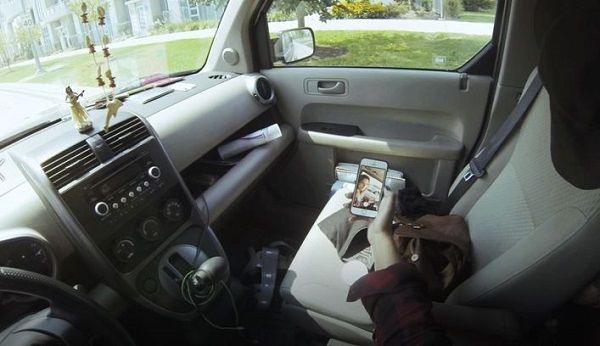
Starting January 2019, the stakes will be even higher when it comes to distracted driving in Ontario. CAA South Central Ontario (CAA SCO) is reminding Ontario drivers that strengthened distracted driving laws will take effect January 1, 2019. New additions include licence suspensions, increased demerit points and an increase to the minimum financial penalty that can be charged to those guilty of distracted driving. "CAA fully supports the increased fines and penalties that will be in place for distracted driving starting tomorrow,” said Elliott Silverstein, manager, government relations, CAA SCO. “Hopefully these new rules will encourage motorists to remain focused on the road and keep devices far from reach when operating their vehicle." Distracted driving continues to be a challenge on Ontario's roads, nearly a decade after the initial legislation banning handheld devices was passed. This new legislation is the first increase since September 2015 when demerit points were added to distracted driving convictions. Recent CAA research shows that one in three Ontario drivers claim to engage in distracted driving as a result of using a mobile device. According to the Ontario Ministry of Transportation, one person is injured in a distracted driving collision every half an hour. “The new fines and penalties are some of the strongest in the country, and they will further aid law enforcement in their continued effort to make road conditions safer for everyone,” continued Silverstein. Starting January 1, 2019, Ontario drivers can expect the following fines and penalties if caught driving distracted: The minimum financial penalty will increase from $490 to $615. A first conviction for distracted driving will now result in a three-day licence suspension, three demerit points and a minimum financial penalty of $615. A second conviction will result in a financial penalty of up to $2000 (previously up to $1000), six demerit points and a seven-day licence suspension. For third (or more) convictions, drivers will face a financial penalty of up to $3000 (previously up to $1000), six demerit points and a 30-day licence suspension. CAA recommends the following tips to reduce distractions behind the wheel: Turn off mobile devices Stow and secure loose objects Avoid eating, drinking or smoking Prepare children with everything they need Pre-set the climate control and radio Pre-program your route on GPS Allow phone calls to go to voicemail Don't text, surf the web or read emails CAA is dedicated to helping change certain rules and regulations for Ontario’s roads that will improve safety for everyone who uses them. Through its road safety efforts, CAA has been helping to educate and bring awareness about distracted driving, Slow Down, Move Over rules and cycling safety laws.



MEDIA RELEASE: CAA launches cannabis education campaign, geared towards a younger demographic
This holiday season will be the first time Ontarians will consume cannabis legally. Many of those experimenting will be young adults, who according to our research, are more likely to mix alcohol and cannabis together. In response to the new laws and research, CAA has launched a cannabis education campaign called #DontDriveHigh. The campaign is geared towards novice drivers to remind them that even though cannabis is legal, it’s not harmless, especially in situations where reaction time, motor skills and judgment are critical. Driving high is driving impaired. “Just because you think you may be able to drive while high, doesn’t mean you should,” said Teresa Di Felice, assistant vice president, government relations, CAA SCO. “It’s important to remember that if you are going to consume alcohol or cannabis, find an alternative to driving so you can arrive where you’re going safely.” CAA’s research shows that there is a gap in awareness of the effects of using cannabis, specifically, in young men. Men aged 25 to 34 are the most likely to drive under the influence of cannabis. Many are novice drivers who live in busy, urban areas. “Our research shows that many Ontario drivers believe that there is a strong need for public education around cannabis legislation,” said Teresa Di Felice. “Our campaign aims to educate young drivers with fun yet thought-provoking videos.” CAA SCO worked with The Turn Lab, to create a series of videos demonstrating the impact cannabis has on concentration, coordination, reaction time, and decision making. CAA believes that education is one of the most critical elements to help Ontarians understand the issues surrounding cannabis legislations and safety. If you are writing about cannabis and road safety – we can help. Teresa Di Felice is the Assistant Vice President of Government & Community Relations at CAA South Central Ontario (CAA SCO), Canada's largest CAA Club. She has been with CAA since 2005. She is responsible for the overall direction and execution of the organization’s advocacy strategies and programs, representing and raising awareness on relevant issues to CAA’s over 2 million Members and with policymakers in Ontario.


Declaring a New Year's Resolution for 2019? Baylor Experts Can Help
WACO, Texas (Dec. 17, 2018) – As 2019 approaches, many Americans are considering ways to improve themselves via New Year’s resolutions. Whether it’s personal, like losing weight or clearing clutter, or it’s professional, such as being a better manager or breaking away from smartphones, the options are wide-ranging. Here is a listing of Baylor University research that might help advise those seeking positive change in the coming year. First and Foremost, Resolve not to Over-resolve Only 10 to 20 percent of people keep their resolutions, says Sara Dolan, Ph.D., associate professor and graduate program director of clinical psychology. She advises setting “bite-sized goals instead of a massive behavior change.” Rather than giving up sugar completely or going all out at the gym, she advises achieving small successes before moving on. Ask Yourself: “Do I really want to work from home?” Many U.S. employees believe working from home – or at least away from the office – can bring freedom and stress-free job satisfaction. A 2018 Baylor University study says, “Not so fast.” The research, led by Sara Perry, Ph.D., assistant professor of management in Baylor University’s Hankamer School of Business, found that: Autonomy is critical to protecting remote employees’ well-being and helping them avoid strain. Employees reporting high levels of autonomy and emotional stability appear to be the most able to thrive in remote-work positions. Employees reporting high levels of job autonomy with lower levels of emotional stability appear to be more susceptible to strain. “Any organization, regardless of the extent to which people work remotely, needs to consider well-being of their employees as they implement more flexible working practices,” the researchers wrote. Read more here. Save Money by being a Better Negotiator In today’s retail climate, where stores struggle to keep up with online competition and customers can compare prices with the ease of their smartphones, the price tag is just a starting point for negotiations, said negotiation expert Emily Hunter, Ph.D., associate professor of management in Baylor’s Hankamer School of Business. “No longer do you need to pay sticker price for everything you buy. The customer is now empowered to have a say in pricing, and even hourly retail workers are often empowered to give price discounts when requested,” Hunter said. Hunter said negotiations – whether in a retail setting or in the workplace – require confidence. “Many people are hesitant to negotiate because they don’t know how or they are worried about the other person’s reaction (Will they think I’m greedy?),” she said. “But practice can increase your confidence in your ability to negotiate. Rejection is less common than you fear, and retail stores especially are often willing to work with you.” She offered the following tips to increase the chances of greater deals at the check-out counter. Resolving to Be More Generous in the New Year Many Americans already have enough “stuff,” and the gift-giving season sometimes adds to that collection of things we really don’t need. Instead of always receiving, how can we resolve to be more generous in the New Year? “Whatever our station, however much money or resources we have, we all have something to share and something to give,” says Andy Hogue, Ph.D., senior lecturer in Baylor’s Honors College who teaches a course on philanthropy and the public good. “I like the idea of thinking in terms of a New Year’s resolution, sort of resolving to be more generous and helping people to think in those ways.” Hogue offers individuals and families four ways to develop a spirit of generosity in the New Year. Home Cooking Saves Money, Encourages Better Diet The more home-prepared foods used, the less risk there is of eating too many calories and fat calories, says Baylor University nutrition expert Janelle Walter, Ph.D., professor of family and consumer sciences and Nutrition Sciences Program coordinator. Home cooking also saves money and allows for more fruits, vegetables and dairy products — which often are missing when pre-prepared products are used — as well as less fat, sugar and salt. Some tips for prepping at home are making a precise list, lining up recipes and lists of ingredients, shopping when you aren’t hungry and preparing five main dishes at a time to see you through a few days. Involve your family in choosing foods, shopping and preparing foods, Walter says. Many simple and quick recipes are on online sites, she said, referencing these from Southern Living. Consider a New Approach to Dieting Meredith David, Ph.D., assistant professor of marketing in Baylor’s Hankamer School of Business, researched successful dieters and how they were different from others. Her research results have received national attention. “Our research shows that instead of creating rules to avoid one’s favorite treats, dieters should focus on eating healthy foods that they enjoy,” David said. “Dieters who restrict themselves from consuming the foods they love most may be setting themselves up for failure. Instead, they may be better off by allowing occasional ‘treats’ and focusing attention on healthy foods that they enjoy and making it a point to include those tasty but healthy foods in their diet.” Read the full article. Be Humble and Helpful In hard times, you know how much a helping hand means — and how humbling those times can be. So it might be good to resolve to look for opportunities to assist in 2019, while remembering not to pat yourself on the back for doing so. A decision to help someone else is influenced by time pressure, number of bystanders, empathy or a person's own distress — but that’s not all, says Baylor researcher Wade Rowatt, Ph.D., professor of psychology and neuroscience. “While several factors influence whether people will volunteer to help, it appears that humble people, on average, are more helpful than individuals who are egotistical or conceited.” Cultivate Patience — and Better Mental Health People who are more patient toward others also tend to be more hopeful, grateful and satisfied with life, says Sara Schnitker, Ph.D., associate professor of psychology and neuroscience. And there is more than one type of patience, including interpersonal patience — dealing with annoying people without losing your cool; handling life hardships — such as illness or unemployment — without frustration or despair; and coping with such daily hassles as traffic jams, computer woes and long lines. In her research, Schnitker invited undergraduates to two weeks of patience training, where they learned to identify feelings and their triggers, regulate their emotions, empathize and meditate. If you want to build your own patience, she recommends following three steps: identify, imagine and sync. First, take a moment to slow down an identify how you are feeling and why you might be feeling that way. Second, try to imagine or reappraise the situation from a different perspective or in a new way that helps you to be calm. Finally, sync with your purpose. Try to connect how what you are doing or enduring helps you pursue larger goals or your life purpose. When Ailing, Talk to A Doctor Instead of Searching the Internet for Answers Rather than heading to the doctor — or even the medicine cabinet — some people turn first to the Internet when they are ailing , according to a Baylor University researcher. Especially for folks who have trouble handling uncertainty, "cyberchondria" — the online counterpart to hypochondria — worsens as they seek answers, says Thomas Fergus, Ph.D., an associate professor of psychology and neuroscience in Baylor's College of Arts & Sciences. “They may become more anxious. And the more they search, the more they consider the possibilities,” he says. Doubts about health also can trigger worries about medical bills, disability and job loss, he said. And that can lead to a Catch-22 of more Googling (sometimes of questionable sources). Rather than giving in to cyberchondria, resolve to call your doctor — and take what you read with a grain of salt. In Conflicts with your Significant Other, Relinquish Power During spats with your spouse or significant other, the most common thing people want is not an apology, but a willingness to relinquish power, says Keith Sanford, Ph.D., professor of psychology and neuroscience in Baylor University's College of Arts & Sciences. That comes in many forms, among them giving a partner more independence, admitting faults, showing respect and being willing to compromise. Following closely behind the desire for shared control was the wish for the partner to show more of an investment in the relationship by such ways as sharing intimate thoughts or feelings, listening and sharing chores and activities, Sanford said. Sleep Better in the New Year Writing a “to-do” list at bedtime may aid in falling asleep, according to a Baylor University study by Michael K. Scullin, Ph.D., director of Baylor’s Sleep Neuroscience and Cognition Laboratory and assistant professor of psychology and neuroscience. Scullin's 2018 research compared sleep patterns of participants who took five minutes to write down upcoming duties versus participants who chronicled completed activities. Scullin suggests that writing a list may allow the brain to “offload” them instead of cycling through them repeatedly. Other hints: Use the bed for sleep rather than studying or entertainment; keep a regular sleep schedule; avoid electronics near bedtime; don’t take long day naps; and stay away from stimulants at least six hours before bedtime. Clear Out Clutter Without Getting Frazzled “Don’t try to organize the entire house in one weekend,” said Elise King, assistant professor in the department of family and consumer sciences. “You are much more likely to complete a task, especially one that you’ve probably been avoiding, if you break it into small goals. Don’t try to clean out an entire room over a weekend; instead, focus on the desk one week, the closet the next, and so forth.” Finally, involve your family, strive to make organization a routine — and reward yourself for your efforts. Break Away from the Smartphone Baylor marketing researchers James Roberts and Meredith David, Ph.D. have conducted numerous studies on the effects of smartphone technology on relationships. Their studies on “phubbing” – phone snubbing – have garnered national and international interest, given the pervasiveness of smartphone technology and its impact on relationships. Their studies have found: Bosses Who “Phone Snub” Their Employees Risk Losing Trust and Engagement “Phubbing” can damage romantic relationships and lead to higher levels of depression People who are phone snubbed by others are, themselves, often turning to their smartphones and social media to find acceptance “Although the stated purpose of technology like smartphones is to help us connect with others, in this particular instance, it does not,” David said. “Ironically, the very technology that was designed to bring humans closer together has isolated us from these very same people.”


Better Sleep - Not 'All-Nighters' - Helps Students on Final Exams
Students given extra points if they met “The 8-hour Challenge” — averaging eight hours of sleep for five nights during final exams week — did better than those who snubbed (or flubbed) the incentive, according to Baylor University research. “Better sleep helped rather than harmed final exam performance, which is contrary to most college students’ perceptions that they have to sacrifice either studying or sleeping. And you don’t have to be an ‘A’ student or have detailed education on sleep for this to work,” said Michael Scullin, Ph.D., , director of Baylor’s Sleep Neuroscience and Cognition Laboratory and assistant professor of psychology and neuroscience in Baylor’s College of Arts & Sciences. While students who successfully met the sleep challenge received extra points for the “mini-incentive,” the additional credit was not included in the analysis of how well they performed on the finals, emphasized Elise King, assistant professor of interior design in Baylor’s Robbins College of Health and Human Sciences. “They didn’t just perform well because they received extra points,” she said. “Students know that sacrificing sleep to complete school work is not a healthy choice, but they assume they don't have a choice, often remarking that there aren't enough hours in the day for coursework, extracurriculars, jobs, etc. “This removes that excuse.” Research participants included undergraduate interior design students and students in upper-level psychology and neuroscience classes. While the psychology classes emphasized education about sleep, the interior design students did not receive any formal training in sleep. Those who opted to take the challenge wore wristband sleep-monitoring devices for five days to ensure accurate study results. “The students didn’t need the extra credit to perform better, and they weren’t really better students from the get-go,” Scullin said. “If you statistically correct for whether a student was an A, B, C, or D student before their final exam, sleeping 8 hours was associated with a four-point grade boost — even prior to applying extra credit.” The collaborative interior design study — “The 8-Hour Challenge: Incentivizing Sleep During End-of-Term Assessments” — was published in the Journal of Interior Design. Scullin’s study of psychology students — “The 8-Hour Sleep Challenge During Final Exams Week” — was published in Teaching of Psychology. Poor sleep is common during finals as students cut back on sleep, deal with more stress, use more caffeine and are exposed to more bright light, all of which may disrupt sleep. Fewer than 10 percent of undergraduates maintain the recommended average of 8 hours a night or even the recommended minimum of 7 hours, previous research shows. But with incentives, “we can potentially completely reverse the proportion of students meeting minimum sleep recommendations — 7 hours a night — from fewer than 15 percent up to 90 percent,” Scullin said. “Half of students can even meet optimal sleep recommendations of 8 to 9 hours.” Here are the findings of the two studies: PSYCHOLOGY STUDENTS In the study of psychology students, 34 students in two undergraduate courses could earn extra credit if they averaged 8 hours of sleep during final exams week or at least improved upon their sleep from earlier in the semester. The 24 who opted to take the challenge averaged 8.5 hours of sleep, with 17 meeting the goal. On the final exam, students who slept more than 8 hours nightly performed better than those who opted out or slept less than 7.9 hours. The incentive was 8 points — the equivalent of 1 percent on a student’s overall class grade. “It’s worth noting that one student who had a D-plus grade before the final but slept more than 8 hours a week during finals week, remarked that it was the ‘first time my brain worked while taking an exam,’” Scullin said. INTERIOR DESIGN STUDENTS In the interior design study challenge, students earned credit if they averaged 8 or more hours a night but received no grade change if they averaged 7 to 7.9 hours a night. Of the 27 students enrolled in the program, 22 attempted the challenge. Compared with a group of 22 students who did not try for the extra points, very few (9 percent) averaged 8 hours or even 7 hours (14 percent). The 8‐hour challenge increased the percentage of 8‐ and 7‐hour sleepers to 59 percent and 86 percent respectively. Students who took part in the challenge slept an average of 98 minutes more per night compared to students who were not offered the incentive but were monitored. “Critically, the additional sleep did not come at a cost to project performance,” King said. “Students who showed more consistent sleep performed better than those who had less consistent sleep. And students who achieved the challenge performed as well as or better than those who did not take the challenge." In a study of sleep and creativity done in 2017, King and Scullin found that interior design students with highly variable sleep habits — cycling between “all-nighters” and “catch-up” nights — had decreased cognition in attention and creativity, especially with major projects. Design students customarily complete finals projects rather than final exams. “Whether or not they ‘pull an all-nighter,’ when students cut their sleep, the effects are obvious,” King said. “They have trouble paying attention during class, and they aren't as productive during studio time.” She noted that there is a cultural acceptability — at least in design professions — related to sleep deprivation, in part because of the notion of the "tortured artist" who finds inspiration in the wee hours. “Some fields might find it unprofessional, but for many years, in design, sacrificing sleep was viewed as a rite of passage. That's something we're trying to change,” King said. “Even during stressful deadline weeks, students can maintain healthy sleep habits.” “To be successful at the challenge, students need to manage their time better during the day. Getting more sleep at night then allows them to be more efficient the next day,” Scullin said. “By training students in their first year of college, if not earlier, that they can sleep well during finals week without sacrificing performance, we may help to resolve the ‘global sleep epidemic’ that plagues students in America and abroad.” *Co-researcher on the interior design sleep study was Christine Mobley, Ph.D., lecturer at the University of Kentucky.