
Experts Matter. Find Yours.
Connect for media, speaking, professional opportunities & more.

Nicholas Petrelli, M.D., Receives Lifetime Achievement Award
Nicholas Petrelli, M.D., Bank of America Endowed Medical Director of ChristianaCare’s Helen F. Graham Cancer Center & Research Institute, has received the Lifetime Achievement Award from Tulane University School of Medicine in New Orleans, Louisiana. Petrelli is a 1973 graduate of the school. Dr. Petrelli, center, receives the Lifetime Achievement Award from Julius L. Levy, Jr., M.D., past president, Tulane Medical Alumni Association, left, and Lee Hamm, M.D., senior vice president & dean of the School of Medicine, and the James R. Doty Distinguished Professor and Chair, Tulane University School of Medicine, New Orleans, Louisiana. The award recognizes an alumnus of the school who has made significant contributions to the field of medicine and has offered outstanding leadership in the community. Under Petrelli’s leadership at ChristianaCare since 2001, the Helen F. Graham Cancer Center & Research Institute has become a national model for multidisciplinary cancer care and a top enroller in U.S. clinical research trials. The Graham Cancer Center is a National Cancer Institute Community Oncology Research Program and one of only five hybrid academic community cancer centers in the nation. Through the work of the Graham Cancer Center and partnerships with health care providers, community organizations and the state to improve the prevention, diagnosis and treatment of cancer, Delaware’s cancer mortality rate has dropped twice as fast as the national rate. In addition, the state is outpacing the nation in reducing deaths from a number of cancers. Delaware has gone from number one in cancer mortality 22 years ago to number 17 today. Petrelli has numerous achievements in cancer care and research. He has established several firsts for Delaware, including a multidisciplinary disease center site, the Cawley Center for Translational Cancer Research, a tissue procurement center, an adult genetic counseling program, a statewide high-risk family cancer registry consisting of more than 500,000 individuals and an innovative oncology express unit to provide patients with cancer a way to address urgent care needs without having to go to the emergency department. Among his accomplishments on the national level are the first primary care practice established at a cancer center and the first gene editing research program integrated into a community cancer center. Through a unique research partnership with the Ellen and Ronald Caplan Cancer Center of The Wistar Institute, he has brought cutting-edge cancer treatments and diagnostics to Delawareans. And in a ground-breaking collaboration among the government, community organizations and the Graham Cancer Center nearly 10 years ago, Delaware ended the disparity between Black and white people for colorectal cancer screenings and mortality, which continues to this day. Petrelli has received numerous awards and has authored 360 peer-reviewed manuscripts and 31 book chapters. He has served on advisory panels of the National Cancer Institute, the American Society of Clinical Oncology, the American Cancer Society and the Society of Surgical Oncology. He was president of the Society of Surgical Oncology from 2007 to 2008. In 2013 he received the Order of the First State Award, the highest honor in the state, from Delaware Gov. Jack Markell. In 2019 he received the James Tilton award (named for the first U.S. Army Surgeon General) from the Medical Society of Delaware.


#Expert Research: Biodegradable ultrasound implant could improve brain tumour treatments
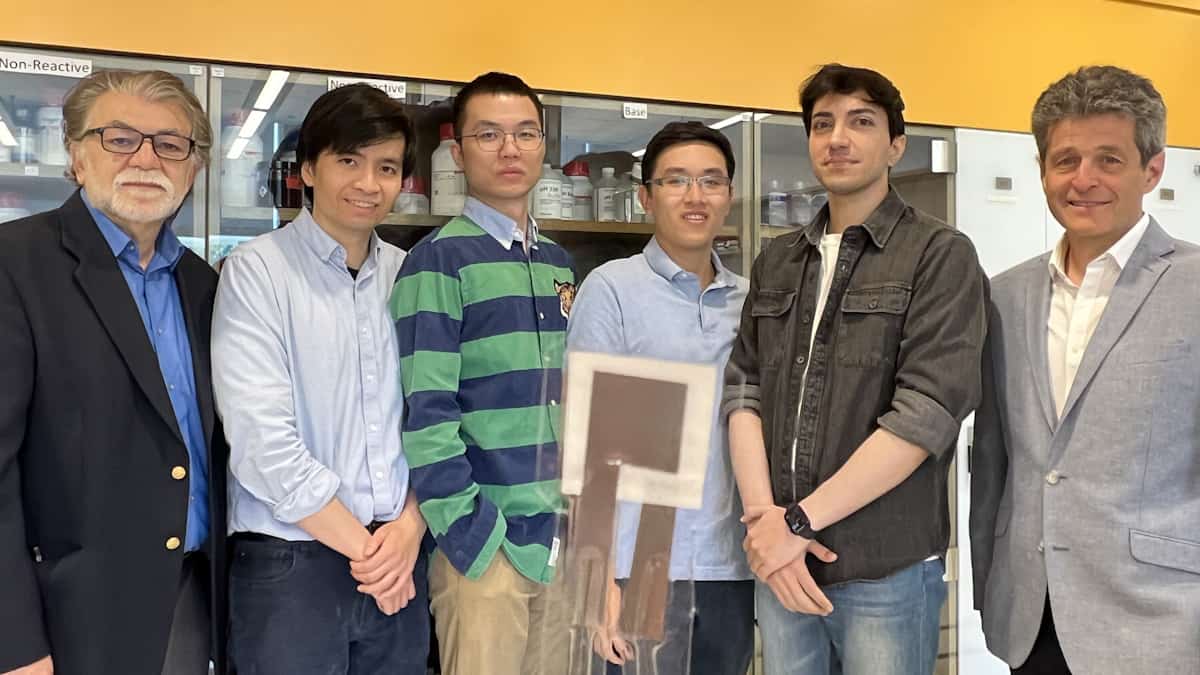
One of the challenges in treating certain types of brain cancer is the way that the blood-brain barrier prevents chemotherapy drugs from reaching the tumors they're meant to target. UConn's Thanh Nguyen, a biomedical and mechanical engineer, is developing new technology that could improve how we are able to treat brain tumors. He recently spoke with Physics World about this groundbreaking research: A new type of biodegradable ultrasound implant based on piezoelectric nanofibres could improve outcomes for patients with brain cancer. Researchers led by Thanh Nguyen from the the University of Connecticut’s department of mechanical engineering fabricated the devices from crystals of glycine, an amino acid found in the human body. Glycine is not only non-toxic and biodegradable, it is also highly piezoelectric, enabling the creation of a powerful ultrasound transducer that could help treat brain tumours. Brain tumours are particularly difficult to treat because the chemotherapy drugs that would be effective in tackling them are blocked from entering the brain by the blood–brain barrier (BBB). This barrier is a very tight junction of cells lining the blood vessel walls that prevents particles and large molecules from making their way through and damaging the brain. However, ultrasound can be safely used to temporarily alter the shape of the barrier cells such that chemotherapy drugs circulating in the bloodstream can pass through to the brain tissues. Currently, to achieve such BBB opening requires the use of multiple ultrasound transducers located outside the body, together with very high intensity ultrasound to enable penetration through the thick human skull bone. “That strong ultrasound can easily damage brain tissues and is not practical for multiple-time applications which are required to repeatedly deliver chemotherapeutics,” Nguyen tells Physics World. By contrast, the team’s new device would be implanted during the tumour removal surgery, and “can generate a powerful acoustic wave deep inside the brain tissues under a small supplied voltage to open the BBB”. The ultrasound would be triggered repeatedly as required to deliver the chemotherapy that kills off the residual cancer cells at tumour sites. After a set period of time following treatment the implant biodegrades, thereby eliminating the need for surgery to remove it. The research, reported in Science Advances, demonstrated that the team’s device used in conjunction with the chemotherapy drug paclitaxel significantly extended the lifetime of mice with glioblastomas (the most aggressive form of brain tumour) compared with mice receiving the drugs but no ultrasound treatment. This is fascinating research and if you are interesting in covering this topic, then let us help. Professor Nguyen focuses on biointegrated materials and devices at nano- and micro-scales for applications in biomedicine, and he's available to speak to media about his research. Simply click on his icon now to arrange an interview today.



New Policy on BMI Use Will Change How Physicians Approach Diagnoses and Care
The Body Mass Index – or BMI – table was created in the mid-1800s, and for the last several decades has been viewed as the choice tool to diagnose obesity. However, the American Medical Association (AMA) recently issued a policy clarifying the role of BMI after taking a comprehensive look at both its benefits and limitations as a diagnostic tool. In short, the new policy urges physicians to use BMI only in conjunction with other measures of risk and recognizes the historical shortcomings of the oft-used formula. Lisa Diewald, MS, RDN, LDN, is the program manager of the MacDonald Center for Nutrition Education and Research with Villanova’s M. Louise Fitzpatrick College of Nursing. She applauds the AMA for embracing a more holistic approach to weight and health in individuals. “This is a huge step forward and I think it will ultimately lead to better health care and an improved practitioner-patient relationship,” Diewald said. To understand why, one must first understand the history of BMI’s use. The formula that spits out the number we have all come to understand as our BMI considers a person’s height and weight. It was developed in the mid-19th century by a Belgian sociologist to measure the socially ideal person. The modern term and application came about in the 1972 and has been a routine measurement ever since because it is easy, fast, costs nothing and in some cases, said Diewald, does correlate with body fat. But in recent years, large scale studies have exposed some of the limitations of the measure, building to the point where they needed to be weighed against the overt benefits. For starters, BMI does not measure body fat – or adiposity – directly. Adiposity, per Diewald, is more closely associated with health risk than BMI. “For this reason, health risk for some individuals with normal BMI but high body fat has been underestimated, and some with high BMI but normal body fat levels have been overestimated,” she said. Nor does it “differentiate between muscle, bone and body fat, or distribution of fat on the body,” Diewald said. “We know that all these factors can influence health and chronic disease risk.” Other comorbidities or chronic conditions that wouldn’t show up on a BMI chart alongside a number in the “normal” range can also impact health. Conversely, there are health conditions that might be incorrectly assumed just because a BMI is high. “Not every person with a high BMI experiences these chronic conditions, so developing a more holistic approach can lead to better assessment, treatment and outcomes,” Diewald said. Another shortfall she pointed out was its failure to factor in gender, race, body composition, ethnicity or physical activity level. Think back to the origins of the chart, intended to be a social standard created in Europe nearly two hundred years ago. “BMI tables were originally designed in the 1800’s using a population of white men,” Diewald said. “Understandably, at one point in time it was all we had to evaluate weight status, but it may not be accurate to use this standard alone with all groups of people.” These societal, gender and racial/ethnic factors led the AMA to explicitly cite “historical harm, use for racist exclusion and because BMI is based primarily on data collected from previous generations of non-Hispanic white populations” in the new policy on its clinical use. Additionally, the policy addressed the differences in body composition across genders, races and ages that were not being considered. There is also an ignored mental component in its use to diagnose obesity, which can lead to avoidance of doctor visits and, in turn, further physical issues. “Obesity is a multifactorial, complex condition and addressing it with individuals needs to be done with empathy and sensitivity, beginning with how it is measured,” Diewald said. “There are numerous factors influencing weight well beyond simply food intake, physical activity level and BMI, so it is important for practitioners to recognize that and communicate this to patients. “It is extremely difficult for people with higher weight to be told that they have a high BMI and simply need to eat less and move more. When BMI is used as the sole indicator of weight status, this can be psychologically damaging. We know that many who have been told to lose weight simply based on a high BMI may avoid going to the doctors for routine medical visits and skip necessary preventive care.” It will not be easy, she said, to move away from a method used for so long that has been ingrained as a part of a routine medical visit, but Diewald thinks utilization of the tool in conjunction with other assessments is the best way put this new policy to practice. She advocates for measures such as “Using BMI as only one of several indicators of chronic disease risk, asking permission to discuss weight and health risk, [and] using shared decision-making between practitioners and patient to determine course of treatment.” Education is also paramount to proper assessment of weight-related health risks. “Education cannot stop with physicians, however,” she said. “I think this provides an excellent launching pad for enhanced collaboration among health professionals such as dietitians, nurses, nurse practitioners, physician’s assistants and others involved in providing care, nutrition counseling and lifestyle modification support to patients… Doing this can better fine tune recommendations for treatment, leading to improved outcomes.”


Georgia Southern University biology professor and researcher Christine Bedore, Ph.D., is helping National Geographic explore the mysteries of shark attacks by sharing her expertise and years of fieldwork as part of the six-part series, “When Sharks Attack 360,” this month. The series, which kicked off July 3, is part of National Geographic’s SharkFest, which will run all month on National Geographic TV, Disney+ and Nat Geo WILD, with new episodes each night through July 11. All episodes are currently available for streaming on Hulu. In episodes 3 and 6, Bedore, an assistant professor in the College of Science and Mathematics who conducts research on sensory systems in sharks, discusses how shark senses may lead to bites by sharks on humans. While filming, she marveled at the channel’s cutting-edge VFX lab and their approach to educating viewers. “Working with National Geographic and the production team on this series was exciting because of the level of experience and creativity of the production team,” said Bedore. “It’s one of the most unique experiences I’ve had filming a documentary so far since it was done in a studio with a green screen, rather than in the field like we typically do. Using the virtual graphics in this series allows us to see these animals from a completely different angle. Although it was challenging to point at a shark that I couldn’t see at the time, we wouldn’t be able to see the detail of the animal at this level filming in the field.” Sharks have long captured the attention of both scientists and the public, and are fascinating animals for many reasons, according to Bedore, who has offered her expertise for previous episodes on Nat Geo WILD, The History Channel and BBC. They’re a species of immense size and diversity, and offer unique behaviors and interactions with other creatures, she noted. Understanding the behavior and physiology of sharks is critical to their survival, as they experience population declines due to overfishing and habitat changes. “In order to combat these changes and ensure the persistence of sharks in our oceans across the world, we first need to understand why they behave the way that they do,” Bedore said. “This series helps us do exactly that. For example, in episode 3 we discuss whether or not sharks can see in color. As a scientist that studies shark color vision, I’m often approached with the question, ‘who cares if sharks can see color?’ As you’ll see, the ability to see color could help sharks identify prey, predators or other objects.” In episode 6, Bedore helps viewers understand that visual acuity, or how clear an image is, may be more important than color when we think about why sharks sometimes have negative interactions with humans. “Being able to discuss my work in these areas through National Geographic’s shark month has been a rewarding experience in helping people understand why these events sometimes happen,” she said. “It’s exciting to study such charismatic animals and have the chance to share your enthusiasm for your research and the sharks with people across the world.” For more information on National Geographic’s “When Sharks Attack 360” visit here. The series can be seen on Hulu, Disney+ and Nat Geo WILD throughout July. To connect with Georgia Southern University biology professor and researcher Christine Bedore to learn more about this fascinating topic - simply contact Georgia Southern's Director of Communications Jennifer Wise at jwise@georgiasouthern.edu to arrange an interview today.


Florida Tech Shark Biologist Stars in National Geographic Program on Shark Attacks
Toby Daly-Engel, the distinguished shark biologist and director of Florida Tech’s Shark Conservation Lab, is a featured expert on “When Sharks Attack…and Why,” an eight-episode program debuting this week as part of National Geographic’s SharkFest 2023. The series debuts July 6 at 9 p.m. Eastern on National Geographic with new episodes airing nightly through July 12. It is also now streaming on Disney+, Hulu and the National Geographic website. The series will air on Nat Geo Wild starting July 26 at 8 p.m. Eastern. As its name suggests, “When Sharks Attack…and Why” investigates shark encounters in America and around the world. “Many attacks are appearing in new and surprising places,” the network notes. Episodes explore incidents in New York, California, Hawaii, Indonesia, Australia and elsewhere. At Florida Tech, Daly-Engel conducts research using a combination of genomics, field ecology and modeling to study shark mating systems and habitat use, and the impacts of climate change on shark populations. On the program, she is our expert guide to anatomical and physiological aspects of sharks, many of which are unique to this species. We first meet Daly-Engel in Episode 1, New York Nightmare. Filmed in her lab, she talks viewers through key parts of a shark’s body using a small dogfish shark. She tells viewers that while a shark’s sense of smell is often touted, these apex predators also have powerful hearing, far better than humans. (In a later episode, she notes a shark’s vision in murky waters is about 10 times stronger than human vision in those conditions.) “I really enjoyed delving into the science behind shark-human interactions,” Daly-Engel said, “and busting the myths that make people afraid of the water.” Daly-Engel is no stranger to SharkFest. Last year she was featured in another SharkFest series, “Shark Attack File,” and she has been on SharkFest and Discovery’s Shark Week programing multiple times, including 2021 when she appeared on three programs across both networks. Looking to know more about shark encounters and attacks? Then let us help with your coverage and questions. Toby Daly-Engel is an assistant professor in the Department of Ocean Engineering and Marine Sciences department at Florida Tech. He's available to speak with media about this topic - simply click on his icon now to arrange an interview today.


Predicting the post-pandemic desires for the Latin music industry
Coachella, identified as a mega-festival universe, decided on a diverse 2023 roster with artists like Becky G, Kali Uchis, and Rosalía. Bad Bunny, last year’s most-streamed global artist, made history as the festival’s first Spanish-language headliner. It also marked the first year since Coachella’s founding in 1999 that none of the headliners were white. José Valentino Ruiz-Resto, an assistant professor in the School of Music at the University of Florida, co-authored a paper for the Journal of Arts Entrepreneurship Education, which focused on how the music industry would evolutionarily change after the pandemic and ultimately predicted the 2023 Coachella trend. “The rise of Latin artists/headliners at festivals like Coachella is really a reflection of what has been happening in the music industry for the past two decades,” said José Valentino Ruiz-Resto who is also the program coordinator of Music Business & Entrepreneurship at UF. Ruiz-Resto’s research showed that the post-Covid era music industry would encourage more people to stay home and listen to music digitally, but the traditional Latin music experience is an outlier to this. The world-renowned multi-instrumentalist explains, "In order for concerts and festivals to maintain success, they needed to branch out to other markets to bring in those people who were still very much passionate about experiencing music in a live context.” Although this shift was initiated by the pandemic, it has been patiently anticipated by Ruiz-Resto for over 23 years, starting with the founding of the Latin Grammys in 2000. “Because the amount of production within the Latin recording academy is almost equivocal to that of all of the other genres in the American market combined. Latin music is the No. 1 meta genre in the music industry in terms of sales and fan support,” Ruiz-Resto, now a four-time Latin Grammy Award winner, said. Ruiz-Resto's data predicted the need for a stronger focus on the Latin music enthusiasts who still actively go to concerts like Coachella, “In order for Coachella to ultimately succeed in the post-Covid era and attract people, they needed to bring in artists like Bad Bunny.” This historic Coachella moment followed an announcement from the Recording Industry Association of America, stating that Latin music revenues in the United States were at an all-time high, exceeding over $1 billion in 2022. All of this was no surprise to Ruiz-Resto, who observes, researches and directly participates in the Latin music industry. “Now bigger shows are catching up to what has been the largest-selling music market for years. It’s a testament to how positively Latin American cultures are inspiring listeners across the U.S.” By Halle Burton


The World Cup proved to be big for sports and Qatar's business future
The 2022 FIFA World Cup was one of the world’s most-watched sporting events, but it also provided an opportunity for exponential growth for business development in the Middle East. Qatar was selected as the first country from the Middle East to host the worldwide tournament over 12 years ago, allowing plenty of time to prepare for the competition and create everlasting business relationships. Kyriaki Kaplanidou, a UF professor and researcher, published a study in 2016 for the Journal of Business Research, working alongside her fellow colleagues. The study followed the industrial progress made in Qatar after its 2010 selection and demonstrated how their networking efforts improved the Persian Gulf region business infrastructure. “The country has invested a great deal of time and money to expand its physical and human resources. They’ve had to understand how business is done in other countries, learn innovative construction techniques and develop their human capital in areas of knowledge, skill and awareness of other cultures and business practices,” Kaplanidou said. Kaplanidou and her team interviewed 24 Qatar sports organizations stakeholders, both indirectly and directly involved with the 2022 World Cup. Her research found that almost all the interviewees highlighted Qatar’s characteristics that either impede or improve their current development status. The most highlighted criteria pertained to labor cases pertaining to hazardous working conditions and displayed racial discrimination, as the United Nations put Qatar on blast for their treatment of infrastructure workers. The government decided to implement changes and with the introduction of new, stricter labor laws, Qatar is now considered one of the most worker-friendly places in the Gulf Region. Despite all the controversy surrounding the FIFA World Cup host country, fans were still excited to cheer on their team of choice, and the tournament provided Middle East countries with something to be proud of. “It will be interesting to see if the country can reposition itself in the business world and establish its presence in other industries now that it has gained new experience and knowledge through the process of preparing for this mega event,” Kaplanidou said. By Halle Burton


Smartphones push consumers to prefer a customizable purchasing experience
In a world where purchasing is only a click away, studies have shown that smartphones complicate the most preferred items. Aner Sela, a professor in UF’s Warrington College of Business conducted a new study that discovered consumers who are captivated by their phones gravitate towards specialized, custom products. Compared to large computers or borrowing someone’s phone, an individual’s phone sparks privatized feelings that allow stronger self-expression and strengthens our unconscious preference for a customized consumer journey. Working alongside Camilla Song, an assistant professor at City University of Hong Kong, Sela published their findings in the Journal of Marketing Research in early August. “When you use your phone, your authentic self is being expressed to a greater extent. That affects the options you seek and the attitudes you express,” said Sela, one of the authors of the study. The researchers suspected that smartphones encourage people to reflect on their inner identity, calling on the psychological state of private self-focus that affects all kinds of behaviors. “People with high levels of private self-focus tend to be more independent in the attitudes that they express. They conform less,” the UF professor said. “When they make choices, they tend to choose based on privately or deeply held beliefs, preferences or tastes, and they’re less influenced by social contexts.” Sela and Song chose to test if smartphones have the capability to promote enough private self-focus that it changes behavioral patterns, so they performed five experiments with undergraduates and online respondents. The study found that smartphone users were more likely to choose unique, tailored products rather than large ones than if the user hopped on a large computer. These results vanished if the user was given another phone from the same brand, suggesting that companies should alter their consumer suggestions based on the device they are using. The professor and her former doctoral student found the self-expression mindset likely to cause behavioral changes can be activated by the use of a smartphone. “With a borrowed phone, it doesn’t feel like you’re in your own little bubble. What we find is the use of smartphones and its activation of private self-focus is really unique to a personal device,” Sela said. By Halle Burton


In this day and age, people of all ages are often on social media. While most of the platforms can be engaging for the good, there are always bad actors out there passing along misinformation. That’s the type of content younger students need to be aware of, according to an Augusta University faculty expert. Stacie Pettit, PhD, program director of the Master of Education in Instruction in the College of Education and Human Development, suggests there needs to be more media literacy and awareness of social media taught to students. With so many videos and posts claiming to be informative, how is one supposed to discern what is factual and what is not? Pettit feels people need to be more aware of how to tell when something is legit as opposed to something that is inaccurate. “Knowing what legitimate research is and what’s not, especially in this political climate, it can be tough to tell,” said Pettit. “More can be done in them understanding how deep it goes and what you search for, you’re going to get things that are skewing your mind to what you already want to believe. I feel like that component can be deeper.” Pettit realizes younger students know how to use social media, but using it in a responsible way can be just as important. People may post videos claiming one thing, but without fact checking, it may be inaccurate and can be a dangerous tool to mold a younger person’s mind. “If you already have your mind made up about something, you’re going to find things. It’s like the old phrase, ‘If you’re looking for a yellow cab, you’re going to find a yellow cab.’ This may be your context, your culture that you’re coming from, but put yourself in this place, how might they feel? Knowing there isn’t just one way to think about something, it’s not just a black and white answer to all these critical issues is important,” Pettit added. She knows it’s of the utmost importance for students to realize that every talking head they see in a video on social media isn’t always speaking the truth. Fact checking, finding another source to support a view and paying attention to the source in the first place can be key pieces of the puzzle students can use to find out the legitimacy of a post from the start. Amid all the misinformation, there are still plenty of legitimate uses for social media platforms. “There’s definitely educational and helpful things on YouTube. I encourage my kids a lot to go there because I’m trying to teach them to be more independent. She’s often like, ‘I don’t know how to do that’ but I tell her to find a video; this is what you’re going to have to do in college,” she said. If you're a journalist covering education and the impacts social media has on students, then let us help. Stacie Pettit, PhD, is a respected leader in middle level teacher education and meeting the needs of marginalized young adolescents. She's available to speak with media; simply click on her icon now to arrange an interview today.


Post-pandemic, can America's kids catch up on lackluster literacy rates?
When COVID-19 hit, the education system nearly came to a halt. It went from in-person education in classrooms to virtual learning. Everyone knew there would be learning losses across the board. The question was how severe would they be and could those losses be mitigated? Literacy rates took a big hit, especially in younger students. Without in-classroom instruction, children started to fall further behind. According to the New York Times, about a third of children in the youngest grades are missing reading benchmarks, which is up significantly from before the pandemic. While every demographic has been affected, Black and Hispanic children and those from low-income families have fallen the furthest behind. Can anything be done to help students catch up? Betsy VanDeusen, PhD, director of the Augusta University Literacy Center, said a lot of research is coming out now and what’s being called “high dosage tutoring” is the way kids can catch up. “That just means you have to be able to see students more and more intensive,” said VanDeusen. “So we request for the kids that are at the lowest that we see them three times a week; one time a week won’t do it.” While that works on an individual basis, VanDeusen said there’s no magic bullet. While some schools here and there, and even a few states, may have found a way to help with literacy rates, the field continues to search for ways to implement needed changes across the entire educational system to support all students. She also added the decline in literacy actually started before the pandemic. “We’ve lost a tremendous amount. We lost 20 years of growth on the one national test that’s given. The achievement gap has been documented for decades and it has just been made worse.” This is an important topic and if you're a journalist covering education or how the impacts of COVID-19 are still being felt across the country, then let us help with your coverage. Betsy VanDeusen, PhD, director of Augusta University’s Literacy Center, is available to speak with reporters, simply click on her icon now to arrange an interview today.
