
Experts Matter. Find Yours.
Connect for media, speaking, professional opportunities & more.
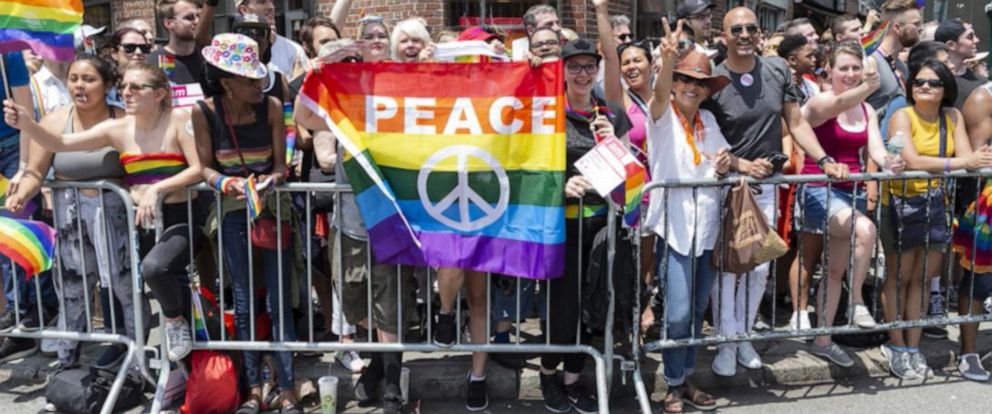
It’s been 50 years since Stonewall…but has America really accepted gay rights?
It’s been a half-century since the Stonewall Uprising and the emergence of the gay pride movement. As cities across the world celebrate this month, it might also be time to look at where America stands today when it comes to gay rights. “From the perspective of veteran activists, the progress has been astounding. In 1969, every state but Illinois outlawed gay sex, psychiatric experts classified homosexuality as a mental disorder, and most gays stayed in the closet for fear of losing jobs and friends. “Today, same-sex marriage is the law of the land in the U.S. and at least 25 other countries. LGBT Americans serve as governors, big-city mayors and members of Congress, and one — Pete Buttigieg — is waging a spirited campaign for president.” June 17, ABC News But there is still a lot of work to do. LGBTQ people not only face discrimination in the workplace, in health care settings and even public restrooms, but can also suffer threats of violence. Just last month, the nation was shocked to learn of the chilling attack of an American woman and her partner overseas in London. The lesbian couple was violently assaulted by teens on a double-decker bus, leaving one of the women with a broken jaw, after they refused to publicly kiss one another in front of the group of young men who were harassing them. Are you covering this topic? There are a lot of questions about what needs to be done and that’s where our experts can help. Todd Powell-Williams, associate professor of Sociology at Augusta University, is an expert in social movements, social control, religion, police science and symbolic interactionism. Dr. Powell-Williams is available to speak with media about gay rights and where America stands 50 years after Stonewall. Simply click on her icon to arrange an interview.


Belief in the ‘Prosperity Gospel’ Does Not Turn People into Successful Entrepreneurs
But the belief that God financially rewards the faithful can fuel values linked to entrepreneurial thinking, Baylor University study finds Belief in the “Prosperity Gospel” — that God financially blesses faithful followers — does not turn individuals into successful entrepreneurs. But prosperity beliefs can fuel values linked to entrepreneurial thinking, such as power and achievement, according to a Baylor University study. However, researchers found no direct relationship between prosperity beliefs and willingness to take risks, and little connection to recognizing opportunities. Risk-taking and identifying opportunities are typical traits of entrepreneurs, according to the national study. “As revealed in our findings, a belief that God will provide financial benefit to the faithful is not enough to push someone to launch a business,” said lead author Kevin D. Dougherty, Ph.D., associate professor of sociology in Baylor’s College of Arts & Sciences. “The relationship between prosperity beliefs and starting a business is indirect and inconsistent.” The study — Prosperity Beliefs and Value Orientations: Fueling or Suppressing Entrepreneurial Activity” — is published in the Journal for the Scientific Study of Religion. For the study, researchers analyzed data from a nationally representative survey of 1,066 working adults. Their goal was to connect prosperity beliefs, human values, entrepreneurial attitudes and entrepreneurial action. They found that values — both by themselves and in conjunction with religious beliefs — are important predictors of how and whether individuals might launch a business. Participants responded to a three-item scale to measure beliefs that faith and faithful behavior lead to success at work and in business. The items included: “God promises that those who live out their faith will receive financial success;” “Believers who succeed in business are evidence of God’s promised blessing;” and “I believe faithful believers in God receive real financial benefits in this life.” Participants also responded to questions relating to The Theory of Basic Human Values, which recognizes such universal values as openness to change, achievement, security, power and benevolence. In general, “entrepreneurs tend to think differently than non-entrepreneurs, prizing achievement and self-direction while downplaying tradition and conformity,” said co-author Mitchell J. Neubert, Ph.D., professor of management in Baylor’s Hankamer School of Business. Value orientations of self-enhancement and openness to change are associated with recognizing opportunities and taking risks — entrepreneurial behaviors that correlate with creating new businesses. While prosperity beliefs by themselves show little direct impact on entrepreneurship, they do influence the impact of values and attitudes related to creating a business. Prosperity beliefs can strengthen the relationship between self-enhancement values and opportunity recognition, but they seem to reduce the relationship between openness to change and willingness to take risks. Another significant finding pertains to gender. Men and women who accept prosperity beliefs are no different in their willingness to take risks or start businesses, said co-author Jerry Z. Park, Ph.D., associate professor of sociology in Baylor’s College of Arts & Sciences. In general, risk-taking and business startups are more common among men. The study also shows that education and experience are key predictors of entrepreneurship, but those resources may be difficult to acquire for some prosperity believers because of social and economic circumstances. While individuals in that group have hope, it seems contingent on divine action rather than human action, Neubert said. “Can prosperity preachers Joel Osteen and T.D. Jakes save the U.S. economy? Probably not. But nor are they damning it,” Dougherty said. “The type of positive, self-help gospel they preach can enhance specific value orientations that are related to entrepreneurial thinking and entrepreneurial behavior.” *The research was supported by a National Science Foundation grant. ABOUT BAYLOR UNIVERSITY Baylor University is a private Christian University and a nationally ranked research institution. The University provides a vibrant campus community for more than 17,000 students by blending interdisciplinary research with an international reputation for educational excellence and a faculty commitment to teaching and scholarship. Chartered in 1845 by the Republic of Texas through the efforts of Baptist pioneers, Baylor is the oldest continually operating University in Texas. Located in Waco, Baylor welcomes students from all 50 states and more than 90 countries to study a broad range of degrees among its 12 nationally recognized academic divisions. ABOUT THE COLLEGE OF ARTS & SCIENCES AT BAYLOR UNIVERSITY The College of Arts & Sciences is Baylor University’s oldest and largest academic division, consisting of 25 academic departments and seven academic centers and institutes. The more than 5,000 courses taught in the College span topics from art and theatre to religion, philosophy, sociology and the natural sciences. Faculty conduct research around the world, and research on the undergraduate and graduate level is prevalent throughout all disciplines. Visit www.baylor.edu/artsandsciences.





What Is Black Twitter and How Is it Changing the National Conversation? Baylor Expert Explains.
“Black Twitter” is a social media phenomenon that is changing the national conversation, but many people – including professional and strategic communicators – do not understand what it is or how it works, says Baylor University’s Mia Moody-Ramirez, Ph.D., professor of journalism, public relations and new media. Moody-Ramirez is a nationally recognized expert on mass media representations of minorities, women and other underrepresented groups. She coauthored the 2018 book From Blackface to Black Twitter: Reflections on Black Humor, Race, Politics, & Gender with Janette L. Dates, Ph.D., educator and critical commentator on the images of African-Americans in media. First things first, Moody-Ramirez said, Black Twitter is not a separate entity from Twitter. Black Twitter is a grassroots movement within Twitter that has provided a virtual community of mostly African-American Twitter users a collective voice on a variety of issues, including Black Lives Matter. Black Twitter users often identify themselves using the #blacktwitter hashtag or by focusing on issues related to the black experience. “We conclude [in our book] that alternative spaces, such as Twitter, offer a platform for ideas and concerns from a black perspective about social inequalities, politics and social justice, that were historically prohibited from taking root in other communication venues,” Moody-Ramirez said. In the following Q&A, Moody-Ramirez further explains Black Twitter. Q: When do you see the most Black Twitter activity? A: Much of the content on Black Twitter surfaces during a crisis that impacts black people such as race-related incidents that had less than favorable outcomes for the black community. As the saying goes, if society doesn’t handle it, then Black Twitter will step in to handle it. On a lighter note, Black Twitter users also collectively discuss media content such as TV shows, movies and award ceremonies from the black perspective. Q: How can people monitor what’s happening via Black Twitter? A: "Black Twitter" users often identify themselves using the #blacktwitter hashtag or other hashtags such as #BlackGirlJoy, #blackboyjoy, #blacklivesmatter, or any other hashtag focuses on issues related to the black experience. You can also monitor Black Twitter by following individuals who are known for sharing content about the black experience. Q: If someone outside the African-American community feels passionate about an issue or supports an issue raised by the Black Twitter community, how can they engage? Should they? A: As with any other platform, they should be considerate and proceed with caution. Anyone who is not a regular should make sure what they are sharing is appropriate. Q: Do you see Black Twitter or similar movements emerging on other social media platforms? A: Not to the same extent because Black Twitter is driven by hashtags and certain Twitter users who are trendsetters. Q: Is Black Twitter a reflection or an extension of other historical, social African-American grassroots movements? A: African Americans have used Twitter to share narratives on issues of interest to the black community, particularly in the United States. In her 2015 dissertation, Dr. Meredith Clark writes that African-American Twitter users have emerged as a subset of interest for two reasons – (1) their representation on Twitter has eclipsed that of White U.S. users; (2) because of their representation, they possess a unique ability to dramatically influence Twitter trends. Q: How do you feel Black Twitter will evolve? Will it? A: Scholars such as Feminista Jones and Dr. Meredith Clark have traced the history and content of Black Twitter, noting that the platform is used to share content on timely topics such as racial inequalities, politics, police brutality and women’s rights. In 2013, Feminista Jones described “Black Twitter” as a “collective of active, primarily African-American Twitter users who have created a virtual community that participates in continuous real-time conversations.” ABOUT BAYLOR UNIVERSITY Baylor University is a private Christian University and a nationally ranked research institution. The University provides a vibrant campus community for more than 17,000 students by blending interdisciplinary research with an international reputation for educational excellence and a faculty commitment to teaching and scholarship. Chartered in 1845 by the Republic of Texas through the efforts of Baptist pioneers, Baylor is the oldest continually operating University in Texas. Located in Waco, Baylor welcomes students from all 50 states and more than 80 countries to study a broad range of degrees among its 12 nationally recognized academic divisions. ABOUT THE COLLEGE OF ARTS & SCIENCES AT BAYLOR UNIVERSITY The College of Arts & Sciences is Baylor University’s oldest and largest academic division, consisting of 25 academic departments and seven academic centers and institutes. The more than 5,000 courses taught in the College span topics from art and theatre to religion, philosophy, sociology and the natural sciences. Faculty conduct research around the world, and research on the undergraduate and graduate level is prevalent throughout all disciplines. Visit www.baylor.edu/artsandsciences.


Battling Election Fatigue? Balance It Out with Other Important Things in Life, Baylor Expert Says
It’s happening. Again. Another U.S. presidential campaign. The contentious 2018 midterm elections are barely in the mud-encrusted rear-view mirror, and the next general election is nearly two years away, but telltale campaigning has already begun as presidential hopefuls emerge to take on each other and Donald Trump, who consistently talks and tweets about Election Day 2020. Does this ubiquitous campaigning make you weary? If so, you’re not alone, said expert Patrick Flavin, Ph.D., associate professor of political science in Baylor University’s College of Arts & Sciences. “Election fatigue is real in the United States,” said Flavin, who researches the impact of politics and policies on citizens’ quality of life. “The U.S. holds more elections than just about any other country in the world: primary elections, school board elections, city council elections and more. So, it’s not unreasonable for someone to say, ‘I’m tired of voting because it seems like I’m voting all the time.’” But it’s not just the number of elections that takes a toll. The presidential election cycles are longer now than in years past. Much of that is due to the race for resources, Flavin said. Over the past few weeks, potential Democratic candidates like former Vice President Joe Biden, former San Antonio Mayor Julian Castro, U.S. Sens. Elizabeth Warren, Kamala Harris, Bernie Sanders, Kirsten Gillibrand and Amy Klobuchar have been making moves – either announcing candidacies or testing the political waters. “Right now, we’re at the start of the ‘invisible primary’ for Democratic candidates whereby they compete for staff, endorsements from other politicians and party leaders, name recognition and fundraising sources,” Flavin said. “For relatively unknown candidates, in particular, it is important to get into the race early to give yourself a head start in trying to compete for those scarce resources. In contrast, a more well-known candidate like Joe Biden can afford to wait for a while before starting his campaign – if he does decide to run.” Flavin said it’s important for citizens to know what’s happening on the national political scene, but he advises people to take a break when it becomes overwhelming. “Being an informed citizen is good and to be admired, but I don’t think it’s healthy to obsess over every single day-to-day political development – especially in the era of 24/7 news,” he said. “Balance it out with other important things in life.” And if you’re in a position (a political science professor, for example) that doesn’t often afford the time to break away, Flavin advises taking the time to approach politics as an observer. “Just like anyone else, political science professors would go crazy if they focused on politics 24/7. So, balance is important. In addition, it is healthier, I think, to approach campaigns and elections as an observer who is interested in better understanding why the candidates take the positions they do, why voters support this candidate over that candidate, etc.” Flavin also said that focusing too much on the national landscape pulls people away from critical state and local issues. “There are important decisions being made at the state and local levels that we need to be aware of,” he said. Flavin’s newest research shows that Americans are happier in states where governments spend more on public goods, such as libraries, parks, highways, natural resources and police protection. ABOUT BAYLOR UNIVERSITY Baylor University is a private Christian University and a nationally ranked research institution. The University provides a vibrant campus community for more than 17,000 students by blending interdisciplinary research with an international reputation for educational excellence and a faculty commitment to teaching and scholarship. Chartered in 1845 by the Republic of Texas through the efforts of Baptist pioneers, Baylor is the oldest continually operating University in Texas. Located in Waco, Baylor welcomes students from all 50 states and more than 80 countries to study a broad range of degrees among its 12 nationally recognized academic divisions. ABOUT BAYLOR COLLEGE OF ARTS & SCIENCES The College of Arts & Sciences is Baylor University’s oldest and largest academic division, consisting of 25 academic departments and seven academic centers and institutes. The more than 5,000 courses taught in the College span topics from art and theatre to religion, philosophy, sociology and the natural sciences. Faculty conduct research around the world, and research on the undergraduate and graduate level is prevalent throughout all disciplines. Visit www.baylor.edu/artsandsciences.


Americans Are Happier in States That Spend More on Libraries, Parks and Highways
Such ‘public goods’ also are less likely to spark political conflict, Baylor researcher says Americans are happier in states where governments spend more on public goods, such as libraries, parks, highways, natural resources and police protection, a Baylor University study has found. “Public goods are things you can’t exclude people from using — and one person using them doesn’t stop another from doing so,” said researcher Patrick Flavin, Ph.D., associate professor of political science in Baylor’s College of Arts & Sciences. “They’re typically not profitable to produce in the private market, so if the government doesn’t provide them, they will either be under-provided or not at all.” Public goods spending makes communities “more livable, with more amenities,” Flavin said. “If roads are completed and kept up, so that people aren’t stuck in traffic, they have more time to do things they enjoy doing. Large parks are social spaces — and one clear finding of happiness studies is that people who are more socially connected tend to be happier.” Another benefit of spending money on public goods is that such amenities generally boost home values — and “while higher property taxes generally accompany higher home values, it seems that the good outweighs the unfortunate part about having to pay higher taxes,” Flavin said. In his study, published in the journal Social Science Research, Flavin analyzed data on respondents’ self-reported levels of happiness for 1976-2006 from the General Social Survey, a representative sample of Americans that monitors social characteristics and attitudes of Americans and is a project of the independent research organization NORC at the University of Chicago. Flavin also analyzed detailed government spending data for states from the U.S. Census Bureau for 1976-2006. Revenues to fund state public goods are raised from a combination of state taxes and transfers from the federal government to states, averaging 22.5 percent of total state revenues for that 30-year period. “We can look at the city where people live, their neighborhoods, and see how public goods spending predicts happiness after taking other important factors, such as marital status, health, education and income, into account,” Flavin said. He also found that public goods spending has broad benefits across income, education, gender and race/ethnicity lines. “Compared to a lot of the other government spending, public goods tend to be less controversial between liberals and conservatives, Democrats and Republicans, compared to poverty assistance or unemployment benefits, where there is definite disagreement between political parties,” Flavin said. “I think there is less political conflict over public goods spending simply because if they government doesn’t provide them, they won’t be provided at all.” Flavin cautioned that there is not necessarily a cause-and-effect relationship between public goods and happiness. “It could be that happier citizens self-select by moving to states that spend comparatively more on public goods,” he said. “It also is possible that happier citizens support higher spending on public goods and elect state officials to deliver on that policy.” Because some spending for public goods comes from local government, Flavin hopes to do a study linking citizens to their local city instead of only to the state. And because living a happy and satisfying life is a nearly universal human goal, he predicts that better understanding of how policies concretely impact quality of life will receive increasing attention from researchers in the years to come. ABOUT BAYLOR UNIVERSITY Baylor University is a private Christian University and a nationally ranked research institution. The University provides a vibrant campus community for more than 17,000 students by blending interdisciplinary research with an international reputation for educational excellence and a faculty commitment to teaching and scholarship. Chartered in 1845 by the Republic of Texas through the efforts of Baptist pioneers, Baylor is the oldest continually operating University in Texas. Located in Waco, Baylor welcomes students from all 50 states and more than 80 countries to study a broad range of degrees among its 12 nationally recognized academic divisions. ABOUT BAYLOR COLLEGE OF ARTS & SCIENCES The College of Arts & Sciences is Baylor University’s oldest and largest academic division, consisting of 25 academic departments and seven academic centers and institutes. The more than 5,000 courses taught in the College span topics from art and theatre to religion, philosophy, sociology and the natural sciences. Faculty conduct research around the world, and research on the undergraduate and graduate level is prevalent throughout all disciplines.

Baylor Professors Use Whale Earwax to Reconstruct Whale Stress Levels Spanning More Than a Century
In a follow-up to their groundbreaking study, Baylor researchers were able to reconstruct baleen whales’ lifetime stress response to whaling and other manmade and environmental factors spanning nearly 150 years. Using a technique they pioneered six years ago, Stephen J. Trumble, Ph.D., associate professor of biology, and Sascha Usenko, Ph.D., associate professor of environmental science, both in Baylor University’s College of Arts & Sciences, analyzed earplug laminae, a growth layer representing six months found in whale earwax, as part of their recent study published in Nature Communications this month. Using earplugs taken from fin, humpback and blue whales originating in the Pacific and Atlantic Oceans from 1870 to 2016, Trumble and Usenko were able to determine the whales’ cortisol levels, a stress-response hormone, to industrial whaling, World War II wartime activities and sea-surface temperature. “This is the first-ever study to quantify temporal stress patterns in baleen whales,” Trumble said. “While the generated stress profile spans nearly 150 years, we show that these whales experienced survivor stress, meaning the exposure to the indirect effects of whaling, including ship noise, ship proximity and constant harassment, results in elevated stress hormones in whales spanning vast distances.” Whaling had a significant impact on whales’ cortisol levels. During the 1960s when whaling was at its peak with 150,000 whales harvested, cortisol peaked to a maximum and was the highest average in whales in the 20th century, according to the study’s findings. Second in a three-part exclusive online look at content from the Natural History Museum's Whales: Beneath the surface exhibition featuring Dr. Stephen J. Trumble and Dr. Sascha Usenko. During World War II when whaling declined, whales still showed an increase in cortisol levels. Trumble and Usenko suggest the impact of the theater of war. “The stressors associated with activities specific to WWII may supplant the stressors associated with industrial whaling for baleen whales,” Usenko said. “We surmised that wartime activities such as under water detonation, naval battles including ships, planes and submarines, as well as increased vessel numbers, contributed to increase cortisol concentrations during this period of reduced whaling.” When whaling moratoriums were introduced in the mid-1970s, whaling decreased as well as cortisol levels—reaching their lowest concentrations. “From the 1970s through the 2010s whaling counts were reportedly zero in the Northern Hemisphere, but mean cortisol levels steadily increased, with recent peaks reaching near the maximum levels observed before whaling moratoriums,” Usenko said. The impact of stress on whales could have larger implications for baleen whales, which are “considered sentinels of their environment and indicators of anthropogenic or manmade stressors,” Usenko said. “This study shows that anthropogenic stressors results in a physiological response in large whales. These chronic stressors may impact life history events such as reproductive parameters,” Trumble said. “Lastly, human-based stressors such as warming sea surface temperatures may also result in elevated stress in these whales.” The research pair has expanded the number of museums they partner with and currently have more than 100 additional earplugs to process. Earplugs were provided through a collaboration between the investigators and the Smithsonian Museum of Natural History and the Museum of Natural History London. ABOUT BAYLOR UNIVERSITY Baylor University is a private Christian University and a nationally ranked research institution, characterized as having “high research activity” by the Carnegie Foundation for the Advancement of Teaching. The University provides a vibrant campus community for approximately 15,000 students by blending interdisciplinary research with an international reputation for educational excellence and a faculty commitment to teaching and scholarship. Chartered in 1845 by the Republic of Texas through the efforts of Baptist pioneers, Baylor is the oldest continually operating University in Texas. Located in Waco, Baylor welcomes students from all 50 states and more than 80 countries to study a broad range of degrees among its 11 nationally recognized academic divisions. Baylor sponsors 19 varsity athletic teams and is a founding member of the Big 12 Conference. ABOUT BAYLOR COLLEGE OF ARTS & SCIENCES The College of Arts & Sciences is Baylor University's oldest and largest academic division, consisting of 26 academic departments and 13 academic centers and institutes. The more than 5,000 courses taught in the College span topics from art and theatre to religion, philosophy, sociology and the natural sciences. Faculty conduct research around the world, and research on the undergraduate and graduate level is prevalent throughout all disciplines.


Election 2018: Wake Forest University experts
From state constitutional amendments to immigration, Wake Forest faculty experts can comment on a variety of 2018 midterm election-related topics. ___________________________________________________________________________________________ John Dinan, professor of political science and international affairs North Carolina Politics State Constitutional Amendments Congressional Redistricting Author of the book, “State Constitutional Politics: Governing by Amendment in the American States,” Dinan is available to comment on amendments appearing on the 2018 ballot in North Carolina and in 28 other states. From voter ID to judicial vacancies, he can place particular amendments in nationwide and historical perspective. Based on his research, he can also address the arguments and issues that routinely surface in campaigns supporting and opposing various amendments. Dinan closely follows North Carolina political races and teaches courses on campaigns and elections, state politics and Congress and policymaking. ___________________________________________________________________________________________ Allan Louden, professor of communication Political Campaigns and Advertising Political Debates Social Media and Politics From presidential debates to political advertising, Louden has provided expert commentary and analysis for a wide range of national and regional media outlets. He follows political advertising and candidates’ debates in presidential, Senate, gubernatorial and high-profile House races. Under Louden’s leadership, Wake Forest University’s debate team won the national debate tournament. He can comment on political advertising strategies and how social media, including viral videos, impacts races. ___________________________________________________________________________________________ John Llewellyn, associate professor of communication Political Speeches Political Scandals Public Apologies Llewellyn focuses on political speeches and rhetoric. He is a scholar of rhetoric whose work includes analyzing persuasive language from the nation’s most prominent politicians, coaches and civil rights leaders. A former speechwriter and public information officer, Llewellyn also specializes in crisis communication, having studied the intersection of politics and public relations for nearly 30 years. He can also comment on political scandals and public apologies. ___________________________________________________________________________________________ Betina Wilkinson, associate professor of political science and international affairs Latina/o/x Voters Wilkinson can offer insights and commentary on Latino voters for the midterm elections. She is an expert on Latino political behavior in the U.S., studies Latinos in U.S. politics, national and local immigration policy, and racial attitudes among Latinos and other ethnic groups. She can discuss the demographics and election-related priorities of Latinos. Wilkinson authored a chapter “North Carolina Latinos: And Emerging Influential Electorate in the South” in the book “The Pivotal Role of the Latino Electorate in the 2012 Election.” She is also the author of “Partners or Rivals? Power and Latino, Black and White Relations in the 21st Century.” ___________________________________________________________________________________________ Katy Harriger, professor of politics and international affairs Young Voters Federal Special Prosecutor/Robert Mueller U.S. Supreme Court A leading national expert on the federal special prosecutor, Harriger can address the influence the Mueller investigation may have on the 2018 elections. She is the author of The Special Prosecutor in American Politics and is regularly interviewed by national media outlets on the use of federal special prosecutors in American government. Harriger also studies political participation and voting among young people (including college students) and is the co-author of “Speaking of Politics: Preparing College Students for Democratic Citizenship through Deliberative Dialogue.” She can provide expert commentary on the latest Supreme Court developments and how they will likely impact midterm elections. She co-authored the book “American Constitutional Law” published in 2017. ___________________________________________________________________________________________ Michael Pisapia, assistant professor of politics and international affairs Gender and Politics Teacher Protests Political Parties and Education Reform Women Running for Congress Gender Equality and Constitutional Law Kavanaugh Hearings Pisapia studies American political development with a focus on women, gender and politics and can comment on tensions between liberal and conservative social groups and the unprecedented number of women who are engaged in political movements, and who are seeking elective office this year. He can also address partisan polarization around education policy, religious freedom and, sex and gender equality in constitutional law, including the significance of the Kavanaugh hearings in the context of the #metoo Movement. Pisapia is working on a book titled, “Educating a Nation: Women’s Empowerment and the Shape of American Federalism. He won the 2013 Carrie Chapman Catt Prize for scholarship on women and politics. He teaches courses on American politics and political thought. ___________________________________________________________________________________________ Hana Brown, associate professor of sociology and Gale Faculty Fellow Immigration Brown studies the effects of immigration and racial divisions on policy outcomes and the micro-level effects of state actions on the lives of racial minorities and immigrants. Her research also focuses on the political origins and political consequences of social inequalities. She teaches courses on political sociology, social inequality, and race and ethnicity in politics. ___________________________________________________________________________________________


“When in doubt, choose a different costume,” Baylor expert says Megyn Kelly, host of NBC’s “Megyn Kelly Today,” is facing national criticism for her suggestion during a roundtable discussion this week that it was OK for white people to dress in blackface for Halloween. After two days of backlash, media accounts reveal that the future of her career is in question. But the questions she raised regarding blackface and cultural appropriation should be addressed, especially as Halloween approaches, said Mia Moody-Ramirez, Ph.D., professor of journalism, public relations and new media in Baylor University’s College of Arts & Sciences. She is a nationally known expert on mass media representations of minorities, women and other underrepresented groups and coauthored the new book "From Blackface to Black Twitter: Reflections on Black Humor, Race, Politics, & Gender." Moody-Ramirez said people need to understand the historical significance of blackface to grasp its negative reception today. “When you know better, you do better,” she said. At its base form, she said, blackface is the use of makeup by a nonblack person to appear black. She added that many people do not understand why the seemingly simple act of a white person darkening his skin like a black person at Halloween – even if it’s an act to honor a favorite entertainer or sports figure – can be offensive. “Dressing in blackface during Halloween is inappropriate because the blackface tradition is founded upon the enactment of demeaning stereotypes of black people,” Moody-Ramirez explained. “Blackface has been frowned upon since the blackface minstrel shows of 18th and 19th centuries when various aspects of African/African American culture were appropriated and used for profit. Dressing up in blackface invokes representations of unflattering images of blacks as lazy, unintelligent and criminal in nature.” Yet the issue is bigger than blackface. Any cultural appropriation – defined as the adoption of elements of a minority culture by members of the dominant culture – can be deemed inappropriate and offensive. “Cultural appropriation is distinct from equal cultural exchange because of the presence of power inequities that are a consequence of oppression,” Moody-Ramirez said. “Cultural appropriation is important to consider during Halloween because this is the time of year when we are most likely to dress up in a costume that is representative of another culture.” Common cultural appropriation missteps include darkening one’s face, wearing ethnic garb and/or dressing up to provoke laughter rather than show respect for a group/person, she said. “When considering a costume, think of whether it would show honor or disrespect for a group/person,” Moody-Ramirez advised. “If you don’t know the meaning of the ethnic attire you are considering for Halloween, you shouldn’t wear it. For instance, tribal markings, headdresses and turbans would not be appropriate costume attire because they are tied to a specific ceremony or religious meaning.” Showing respect for other cultures should include honoring their traditions. “Some cultures have laws that ban or restrict individuals from wearing religious attire in public places. Other cultures save certain attire for special ceremonies and honors,” Moody-Ramirez said. Moody-Ramirez offered the following tips to consider when choosing a Halloween costume this year. Avoid dressing in a costume that will reflect another ethnicity or culture. Choose something that is fun and tasteful – animals, movie characters (without darkening your skin), ghosts, ghouls, etc. If you dress like someone of a different ethnicity/culture, don’t darken your face or emphasize features like eyes, teeth or noses. Think about whether the costume will be perceived as tasteful or tasteless. Use the grandmother test. If you post it on social media, would your grandmother be proud or disappointed? “When in doubt,” she said, “choose a different costume.” ABOUT MIA MOODY-RAMIREZ, Ph.D. Mia Moody-Ramirez, Ph.D., is the director of graduate studies, director of American studies and professor of journalism, public relations and new media in the Baylor University College of Arts & Sciences. Her research emphasizes mass media representations of women, minorities and other underrepresented groups. She recently coauthored the book "From Blackface to Black Twitter: Reflections on Black Humor, Race, Politics, & Gender." Other books include: “The Obamas and Mass Media: Race, Gender, Religion, and Politics (Palgrave Macmillan) with Dr. Jannette Dates, and “Black and Mainstream Press’ Framing of Racial Profiling: A Historical Perspective” (University Press of America). Ramirez is head of the Minorities and Communication division of the Association for Education in Journalism and Mass Communication (AEJMC), which is committed to advancing research, teaching and professional freedom and responsibility scholarship and initiatives that explore the relationship between racial and ethnic minorities and mass communication. In August, she was presented with AEJMC’s Lionel Barrow Jr. Award for Distinguished Achievement in Diversity Research and Education and also was recognized as one of nine Institute for Diverse Leadership in Journalism and Communication Fellows. ABOUT BAYLOR UNIVERSITY Baylor University is a private Christian University and a nationally ranked research institution. The University provides a vibrant campus community for more than 17,000 students by blending interdisciplinary research with an international reputation for educational excellence and a faculty commitment to teaching and scholarship. Chartered in 1845 by the Republic of Texas through the efforts of Baptist pioneers, Baylor is the oldest continually operating University in Texas. Located in Waco, Baylor welcomes students from all 50 states and more than 80 countries to study a broad range of degrees among its 12 nationally recognized academic divisions. ABOUT BAYLOR’S COLLEGE OF ARTS & SCIENCES The College of Arts & Sciences is Baylor University’s oldest and largest academic division, consisting of 25 academic departments and seven academic centers and institutes. The more than 5,000 coursestaught in the College span topics from art and theatre to religion, philosophy, sociology and the natural sciences. Faculty conduct research around the world, and research on the undergraduate and graduate level is prevalent throughout all disciplines. Visit www.baylor.edu/artsandsciences.

On average, you will spend about a third of your life sleeping or attempting to sleep. For many, this means more than 25 years of your life will be spent in bed. Given this startling proportion, wouldn’t you like to know more about what helps, hinders and happens while you are asleep? Michael K. Scullin, Ph.D., director of the Sleep Neuroscience and Cognition Laboratory at Baylor University, spends the majority of his time researching and teaching about such topics. “One reason I am passionate about studying sleep is because you can't really introspect too much about it, as with nearly everything else in psychology,” Scullin said. “With sleep, you're unconscious at the time you are doing it. Sure, you can wake up and say ‘Oh, how did I sleep last night?’ but when you're actually engaging in the sleeping process, you can't do that. As a result, sleeping becomes an enigma. When you have the right equipment, you can begin to design experiments to figure out what exactly the brain is doing when we sleep and why is it important.” Below, Scullin addresses several common beliefs about sleep and the science that proves or disproves them. MYTH: If you die in a dream, then you die in real life. For a time, a rumor circled around that one’s brain cannot handle the mental strain of dying in a dream, and if you die in a dream, you will die. “That's just not substantiated because people report dying in their dreams, and they report it while they're still alive,” Scullin said. “Your brain can actually handle a lot, and there’s one theory that says nightmares are a functional adaptation to help us survive. It is potentially really functional for your brain to have those stressors in its offline state to help prepare you for situations. A lot of people think that nightmares are bad, and yes, they can be a clinical problem. But when they aren’t to that level, they can help us prepare for stressful situations.” FACT: Snoring is a sign of disease. Sleep apnea and snoring are linked, although not with a 1:1 ratio; some people snore without sleep apnea, but snoring is the biggest risk-factor of sleep apnea, Scullin said. Snoring is caused by an obstruction to one’s breathing pathways. In many cases, individuals who snore wake up gasping for air. That’s an observed sleep apnea, said Scullin. If someone is observing those things, he recommends visiting a clinical sleep physician. “What if you stopped breathing every few minutes while you were awake during the day?” asked Scullin. “Would you be okay with that? Not only are you not getting enough oxygen to regions of your body, but it puts a lot of stress on your heart. Untreated sleep apnea traumatically increases your risk for heart problems and heart disease. The great thing is, however, if you get treatment, those risk factors all drop down to normal.” FACT: If you cannot fall asleep in 20 minutes, you should get out of bed. Seems contradictory, right? In fact, research shows that getting out of bed can improve your ability to fall asleep. Why? “If you’re lying in bed and can’t fall asleep, you are forming a negative association between your bed and sleep,” Scullin said. “The solution is getting out of bed and going to do something boring without the lights on. Then when you feel sleepy, go back to bed. This way, you only associate your bed with the feeling of sleepiness.” MYTH: After a night of great “recovery sleep,” you fully restore damage from pulling an all-nighter. “A really interesting neuroimaging study has been able to show that that sleep deprivation significantly impairs the frontal lobes ability to function,” Scullin said. “Your frontal lobe is responsible for memory, decision-making, paying attention and more. The study took individuals who had pulled an all-nighter and then allowed them to get a full night of recovery sleep. When they put them back into the scanner, scientists found that the frontal lobe only partly recovered.” Most people skip on sleep during weekday nights and then oversleep on the weekend, but this throws off your circadian rhythms, your body’s natural sleeping patterns, said Scullin. This means that when Sunday night comes around, you may have “Sunday night insomnia” – trouble falling asleep because you've trained your body to go to bed later. MYTH: During a full moon, people have twice as many sleep problems. A few years ago, there was a big media ‘boom’ claiming that there were more sleep disturbances during a full moon. According to Scullin, the scientific community was skeptical, and labs across the world pooled their data to discover the truth. They found no association between full moons and sleep quality. Why, then, did this myth surface? “Those who claim they don’t sleep well during full moons probably don't sleep very well on other nights as well, but they only realize it or think about it happening when it is a full moon,” Scullin said. “There is something called the confirmation bias where an individual holds a hypothesis about how the world works, and then he or she will look for instances that confirm the hypothesis. Oftentimes they forget every other instance that contradicts their claim. We think that is what caused the moon-sleep phenomenon.” FACT: You can fall asleep while driving without realizing it. People swerve on the road for many reasons – texting, drinking, eating – but not many realize that some individuals swerve because of ‘micro-sleeps.’ According to Scullin, people often operate under the impression that this would never happen to them, but what they don’t realize is that this a frequent occurrence that one has no control over. “We have a similar biological need for sleep as we do hunger and thirst,” Scullin said. “For thirst, we have to have access to water; for hunger we have to have access to food. But for sleep our body can shut down whenever it needs to. If this happens, our brain will occasionally do this for 3 to 5 seconds if you're really tired – and especially if you're involved in some long monotonous task such as driving down a long highway.” FACT: Some people’s bodies are paralyzed for minutes whenever they wake up. Imagine waking up, seeing your biggest fear and being unable to move. Unfortunately, this is a reality for some individuals. Sleep paralysis occurs when brain functions get mixed-up, said Scullin. In rapid eye movement (REM) sleep the brain paralyzes the rest of the body so one doesn't act out his or her dreams, and this is very important. “The problem is that in some cases, your brain isn't fully coordinating with the other parts of it,” Scullin said. The part that controls consciousness wakes up, but the other part that controls your body paralysis is hitting the snooze button. So, while you can be fully awake, your body is paralyzed.” Some people experience this for a few seconds, others for a couple of minutes. Some people also hallucinate when the part of your brain that is dreaming “crosses over” into your consciousness. These hallucinations are triggered when one is so sleep deprived that the brain is trying to get deep sleep, but it cannot fully wake up immediately afterwards. According to Scullin, there does not seem to be any big clinical issue with sleep paralysis or hallucinations, and they seem to go away over time and in development. MYTH: Smartphone apps can reliably measure your sleep. Despite their popularity, sleep apps cannot effectively track sleep quality or quantity, Scullin said. The only way to reliably measure your sleep is to have electrodes attached to your scalp, measuring your brain waves in a sleep clinic. But sleep evaluations are expensive and usually only worth the cost for individuals with sleep apnea or other ongoing sleep problems. The good news? Baylor’s sleep lab pays volunteers to get their sleep analyzed, and scientists like Scullin are always looking for participants. FACT: The latest you should consume caffeine is six hours before bed. In a placebo-controlled study, scientists manipulated whether participants had caffeine one, two, four or six hours before bed, and for each of those conditions they had a placebo control. When the subject’s sleep was measured, they found that in every group, it was harder to fall asleep and sleep quality wasn’t as good as those without caffeine. “Even if you have caffeine six hours before bed, you not only have more difficulty falling asleep, but your sleep was also less deep,” Scullin said. “We actually don’t know if the results would extend to seven or eight hours before bed, but we know that six hours before bed is a ‘no-go.’ What I recommend is having your caffeine in the morning.” For those who think caffeine has no effect on the body, Scullin points out a bigger problem. “If you can sleep right after drinking a cappuccino, it probably means that you are so terribly sleep-deprived that even with drugs in your system that are intended to keep you awake, your brain is saying ‘I don’t care; I’m putting you to sleep.’” For more about Scullin and his research, visit the Baylor Psychology and Neuroscience website. by Brooke Battersby , student newswriter, (254) 710-6805 ABOUT BAYLOR UNIVERSITY Baylor University is a private Christian University and a nationally ranked research institution. The University provides a vibrant campus community for more than 17,000 students by blending interdisciplinary research with an international reputation for educational excellence and a faculty commitment to teaching and scholarship. Chartered in 1845 by the Republic of Texas through the efforts of Baptist pioneers, Baylor is the oldest continually operating University in Texas. Located in Waco, Baylor welcomes students from all 50 states and more than 80 countries to study a broad range of degrees among its 12 nationally recognized academic divisions. ABOUT BAYLOR COLLEGE OF ARTS & SCIENCES The College of Arts & Sciences is Baylor University’s oldest and largest academic division, consisting of 25 academic departments and seven academic centers and institutes. The more than 5,000 courses taught in the College span topics from art and theatre to religion, philosophy, sociology and the natural sciences. Faculty conduct research around the world, and research on the undergraduate and graduate level is prevalent throughout all disciplines. Visit www.baylor.edu/artsandsciences.


Multiracial Congregations Have Nearly Doubled, But They Still Lag Behind the Makeup of Neighborhoods
About one in five American congregants attends a racially mixed place of worship, Baylor University study find The percentage of multiracial congregations in the United States nearly doubled from 1998 to 2012, with about one in five American congregants attending a place of worship that is racially mixed, according to a Baylor University study. While Catholic churches remain more likely to be multiracial — about one in four — a growing number of Protestant churches are multiracial, the study found. The percentage of Protestant churches that are multiracial tripled, from 4 percent in 1998 to 12 percent in 2012, the most recent year for which data are available. In addition, more African-Americans are in the pulpits and pews of U.S. multiracial churches than in the past, according to the study. Multiracial congregations are places of worship in which less than 80 percent of participants are of the same race or ethnicity. “Congregations are looking more like their neighborhoods racially and ethnically, but they still lag behind,” said lead author Kevin D. Dougherty, Ph.D., associate professor of sociology in Baylor’s College of Arts & Sciences. “The average congregation was eight times less diverse racially than its neighborhood in 1998 and four times less diverse in 2012.” “More congregations seem to be growing more attentive to the changing demographics outside their doors, and as U.S. society continues to diversify by race and ethnicity, congregations’ ability to adapt to those changes will grow in importance,” said co-author Michael O. Emerson, Ph.D., provost of North Park University in Chicago. For the study, Dougherty and Emerson analyzed data from the National Congregations Study, a nationally representative survey conducted in 1998, 2006-2007 and 2012, with a cumulative sample of 4,071 congregations. The study by Dougherty and Emerson — “The Changing Complexion of American Congregations” — is published in the Journal for the Scientific Study of Religion. The study found that: One-third of U.S. congregations were composed entirely of one race in 2012, down from nearly half of U.S. congregations in 1998. Multiracial congregations constituted 12 percent of all U.S. congregations in 2012, up from 6 percent in 1998. The percentage of Americans worshipping in multiracial congregations climbed to 18 percent in 2012, up from 13 percent in 1998. Mainline Protestant and Evangelical Protestant churches have become more common in the count of multiracial congregations, but Catholic churches continue to show higher percentages of multiracial congregations. One in four Catholic churches was multiracial in 2012. While whites are the head ministers in more than two-thirds (70 percent) of multiracial congregations, the percentage of those led by black clergy has risen to 17 percent, up from fewer than 5 percent in 1998. Blacks have replaced Latinos as the most likely group to worship with whites. In the typical multiracial congregation, the percentage of black members rose to nearly a quarter in 2012, up from 16 percent in 1998. Meanwhile, Latinos in multiracial congregations dropped from 22 percent in 1998 to 13 percent in 2012. The percentage of immigrants in multiracial congregations decreased from over 5 percent in 1998 to under 3 percent in 2012. Previous research shows that congregations have adopted varying ways to encourage racial diversity, among them integrating music genres, using more participatory worship, hosting small groups to foster interracial networks and creating programs to address racial or ethnic issues. Churches with shorter histories are more likely to have diversity, and change is harder to bring about in long-established congregations. The new study by Dougherty and Emerson concluded that the complexion of American congregations is indeed changing — and the authors see benefits for American society. “During a several-year period of heightened racial tensions, the growth of multiracial congregations is a dramatic development,” Emerson said. “Such congregations are places of significantly increased cross-racial friendships and cross-racial common experiences.” ABOUT BAYLOR UNIVERSITY Baylor University is a private Christian University and a nationally ranked research institution. The University provides a vibrant campus community for more than 17,000 students by blending interdisciplinary research with an international reputation for educational excellence and a faculty commitment to teaching and scholarship. Chartered in 1845 by the Republic of Texas through the efforts of Baptist pioneers, Baylor is the oldest continually operating University in Texas. Located in Waco, Baylor welcomes students from all 50 states and more than 80 countries to study a broad range of degrees among its 12 nationally recognized academic divisions. ABOUT BAYLOR COLLEGE OF ARTS & SCIENCES The College of Arts & Sciences is Baylor University’s oldest and largest academic division, consisting of 25 academic departments and seven academic centers and institutes. The more than 5,000 courses taught in the College span topics from art and theatre to religion, philosophy, sociology and the natural sciences. Faculty conduct research around the world, and research on the undergraduate and graduate level is prevalent throughout all disciplines.