
Experts Matter. Find Yours.
Connect for media, speaking, professional opportunities & more.
What "Super Agers" Are Teaching Us About Growing Older
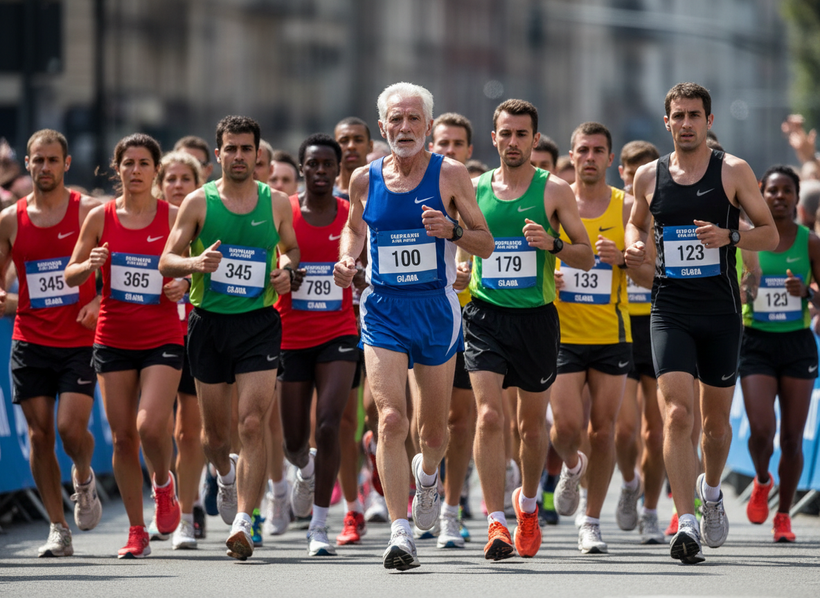
When I think about aging well, I don't see a number on a birthday cake. I see capacity. The ability to think clearly. To move with confidence. To stay curious. To laugh easily. To remember where I put my keys. (Okay, that last one is still aspirational.) That's why I teach 4 fitness classes a week and pay close attention to how I fuel my body. Not because I'm chasing youth, but because I've learned, both personally and professionally, that the way we move, eat, sleep, and cope influences how we feel... and how we show up for the people we care about. I don't want to live forever. I just want to live well while I'm here. Like many Boomers, I've been interested in the growing research on longevity. And let's be honest: Boomers have never been good at accepting "no" for an answer. Why would we start now, just because it's mortality asking? We're the generation that refused to compromise. Retirement? Optional. Slowing down? Negotiable. Death? We'd like to speak to the manager. This leads us to a fascinating group of scientists known as "Super Agers." Who Are Super Agers, Really? In research terms, Super Agers are adults over 80 whose cognitive abilities, especially memory, perform at levels expected of people in their 50s or 60s (Rogalski et al., 2013). But here's what I love most: they aren't superhuman. They're not top athletes. They're not biohackers living on kale foam and cold plunges at dawn. (Though if that's your thing, carry on.). They're everyday people who never disconnected from life. A striking Canadian example is Morry Kernerman, a Toronto violinist who kept on learning, hiking, and performing well into the ripe age of 101. His story embodies the spirit of Super Aging: it's not about dodging age, it's about refusing to stop living. In a CBC interview, Maury Kernerman doesn't sound like someone "trying to live longer." He talks like someone who's still interested in living, fascinated by the world, hungry for learning, and unwilling to stand still just because he might do something imperfectly. He also admits something that matters to a lot of readers: he wasn't always an exercise person. He started taking it seriously later in life and describes it as a "rear guard action" that hasn't stopped aging, but has helped him keep his capacity. One of the most poignant lessons: when we're afraid of doing the wrong thing, afraid of failing or being embarrassed, we stop. And standing still is what really costs us. Haven't you heard? Sitting is the new Smoking!! What the Science Is Showing Us Canadian and U.S. researchers, at Western University and Northwestern University, are discovering something significant. Not a pill. Not a quick fix. A system. Angela Roberts (Western University) explained that the Canadian arm of the research isn't relying only on lab snapshots. Participants are sent home with wearable devices so researchers can monitor real-world activity patterns continuously (24 hours a day) over multi-week periods (CBC News, 2024 - https://www.cbc.ca/news/health/superager-centenarians-brain-second-opinion-9.7049411). That design matters because it turns "healthy aging" from a vague concept into measurable behaviours: how much movement you get, how intense it is, how consistent it is, and how it fits into the rhythm of normal life. Super Agers typically stay active, remain mentally sharp, maintain close relationships, handle stress effectively, sleep well, and keep a generally positive attitude (Rogalski et al., 2013 - https://doi.org/10.1162/jocn_a_00300; Sun et al., 2016 - https://doi.org/10.1523/JNEUROSCI.1492-16.2016) Their brains display thicker cortical areas linked to attention and memory, experience slower atrophy rates, have fewer Alzheimer's markers, and show stronger neuronal connections (Gefen et al., 2015 - https://doi.org/10.1523/JNEUROSCI.2998-14.2015; Harrison et al., 2012 - https://doi.org/10.1017/S1355617712000847) A Data Point Worth Remembering When It Comes to Longevity From the wearables, the research study observed that many 80-year-olds in the study, both "super agers" and the control group, were averaging about 25 to 30 minutes of exercise a day (roughly aligned with Canadian movement guidelines). The difference wasn't that super agers moved a little more. The study showed that they got about 30% more of the kind of movement that raises heart rate, what researchers call moderate-to-vigorous physical activity In plain language: it's not just steps. It's getting your engine up into that slightly breathy zone on purpose, most days. There's no single longevity switch. It's a belt-and-suspenders approach: multiple protective habits working together over decades. Let's Talk About Weight (Without Losing Our Minds) People often ask: Should Super Agers be skinny? Or a little plump? The research answer is surprisingly dull (and comforting): Neither. Super Agers come in all sizes. There is no evidence that they share a specific body weight or BMI. What matters much more than the scale is stability, strength, and body composition (Stenholm et al., 2008). Obesity Shows Up Consistently in the Research Midlife obesity is associated with an increased risk of dementia later in life. Several large studies indicate that obesity (BMI ≥30) during midlife raises dementia risk by 33 to 91% compared to individuals of normal weight (Kivipelto et al., 2005; Qizilbash et al., 2015) However, in older age, unintentional weight loss often signals frailty or illness. Weight loss in later life is linked to faster cognitive decline and higher risk of death (Diehr et al., 2008) Being underweight increases the risk of death. Studies consistently indicate that underweight older adults (BMI <20) have 2 to 3 times the all-cause mortality risk compared to those with a normal weight, with one study reporting a 34% higher risk of dementia (Diehr et al., 2008). A slightly higher BMI in later life may actually be protective, especially if muscle mass is maintained. The "obesity paradox" demonstrates that overweight and mild obesity in older adults (ages 65+) are often linked to a lower risk of mortality, particularly from non-cardiovascular diseases (Natale et al., 2023). So, the prescription is clear: avoid extremes. Not so skinny you could use a Cheerio as a hula hoop, and not so plump that tying your shoes feels like a full-contact sport. Here's What Truly Matters: Muscle Mass Strength defends the brain, maintains balance, boosts metabolism, and offers resilience during illness or stress (Peterson & Gordon, 2011) "Skinny-fat", low muscle, higher fat, is actually worse for aging than carrying a bit more weight with muscle beneath (Prado et al., 2012). Super Aging isn't about shrinking yourself. It's about supporting the structure you live in. Sleep: The Quiet Superpower If movement is the main act, sleep is the stage crew ensuring the entire show runs smoothly. Sleep isn't just one thing. It's a cycle (Walker, 2017). The Stages of Sleep (a quick, non-boring tour) Light sleep: The warm-up. Easy to wake from. Necessary, but not enough by itself. Deep sleep: The body's main repair mode. This is where physical repair occurs: muscle recovery, immune support, hormone regulation (Scullin & Bliwise, 2015) (Walker, 2017). REM sleep: The brain's spa. Memory consolidation, emotional regulation, creativity, and learning all occur here (Scullin & Bliwise, 2015) (Walker, 2017). Missing deep sleep leaves your body feeling exhausted. Missing REM causes your brain to become fragile and foggy (Mander et al., 2017). Super Agers tend to guard their sleep, though not perfectly, deliberately (Mander et al., 2016). Consistent bedtimes, morning sunlight, daily activity, and relaxing evenings appear repeatedly. For some people, slow-release melatonin or magnesium can help improve sleep maintenance (Ferracioli-Oda et al., 2013). However, the greatest benefits often come from simple routines: consistency, darkness, cooler rooms, and avoiding phone use at 10 p.m. Sleep isn't a luxury. It's essential brain maintenance (Mander et al., 2017). Stress: The Real Villain Chronic stress is like kryptonite for cognitive health (McEwen & Sapolsky, 1995). The main source of stress is not accepting what is. We argue with reality, and we lose every time. We revisit conversations. We resist change. We attempt to control others. Super Agers appear more accepting, not resignation, but realism (Sun et al., 2016) Here are some practical strategies to consider: Let them. (Thank you, Mel Robbins.) People will be people. You don't need to manage them. Save your energy for what truly matters. And remember: what people think of you... is none of your business. Calm isn't passive. Calm is protective. Gratitude also plays a role. Many Super Agers exhibit a distinct emotional tone: more grateful, less gripeful (Hill & Allemand, 2011) Life wasn't simpler; they simply didn't let bitterness steer the way. Relationships and Quality of Life: The Real Gold Standard Super Agers don't have more friends; they have deeper ones. Strong relationships are linked to better emotional regulation and preserved brain regions. (Cacioppo & Cacioppo, 2014) (Holt-Lunstad et al., 2010) And this isn't about extending life. It's about quality of life: cognitive, physical, and emotional well-being. Because no one wants a farewell-to-life party where nobody shows up because you've been miserable, bitter, or exhausting to be around (thank you, BR). Strong body. Clear mind. Warm relationships. A sense of humour that endures gravity. That's the win. 3 Practical Takeaways to Steal this Week If you want the super-ager approach without turning your life into a science experiment, here are three low-drama moves: Add intensity, not just activity. Keep your regular walk, but pick one segment to walk faster, take a hill, or add short brisk bursts. Your heart rate is the clue. Keep a learning thread running. Music, audiobooks, a class, a museum habit, a book club, anything that keeps your mind taxed in a good way and makes you feel curious again. Make "don't stand still" a rule. If you're avoiding something because you might look silly (a dance class, a new hobby, a new friend group), that's exactly the place to lean in, gently, but on purpose. Super Agers aren't chasing youth. (No one needs to see me in low-rise jeans again.) They're cultivating engagement. (Do you want to dance?) They move. They learn. They sleep well. They stay positive. They accept what is. They remain connected. They rely on the belt and suspenders. And most importantly, they don't wait for permission to live life to the fullest at any age. Yes, biology will win eventually. None of us gets out of this alive. But the real victory isn't in defeating what we can't control. It's in mastering what we can, for as long as we can, and living fully right up until biology takes its final bow. Don't Retire...ReWire! Sue Want more of this? Subscribe for weekly doses of retirement reality—no golf-cart clichés, no sunset stock photos, just straight talk about staying Hip, Fit & Financially Free.


STORY: CCG Raises Over $300,000 in Support of Hope
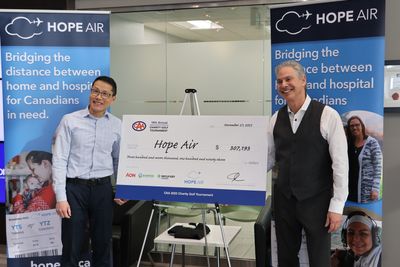
Pictured above, from left to right: Jay Woo, President and CEO of CAA Club Group of Companies & Mark Rubinstein, Chief Hope Officer of Hope Air. CAA Club Group of Companies President and CEO Jay Woo made a cheque presentation of over $300,000 to Hope Air on Thursday, November 27, 2025. The cheque presentation, which included funds raised from two golf events, the first-ever Jaunt for Hope Air and a handful of other initiatives, took place at the CAA offices in Thornhill with volunteers, board members, and several senior leaders from CCG, as well as representatives from Hope Air. "The success of these events highlights the power of collaboration,” says Jay Woo, President and CEO of CAA Club Group of Companies. "Thanks to the unwavering support of our associates and sponsors, we’re able to raise substantial funds that go directly to Hope Air, helping provide vital travel assistance to Canadians in need of medical care. This is what happens when a community unites for a common cause: we create hope, foster change, and build a legacy of compassion." CCG's support for Hope Air began when Jay started volunteering his personal time to fly patients from northern Ontario into Toronto for medical treatment. Since then, CCG has rallied behind Hope Air's lifesaving work by raising over $2.2 million, which provides direct support to over 22,000 patient families.


Ready or not, winter weather has decided to make an early cameo! So, the question is: are you actually ready for winter driving? CAA South Central Ontario (CAA SCO), Ministry of Transportation of Ontario (MTO), Ontario Provincial Police (OPP), and Toronto Police Service (TPS) have joined forces to encourage Ontario drivers to get ready now for the cold and snowy weather, before the next unexpected snow event hits. “Now is the ideal time for motorists to install winter tires, check their car battery, and ensure they have an emergency car kit packed,” says Nadia Matos, manager of external communications, CAA SCO. “These simple steps can help motorists confidently navigate winter roads. Ontario weather can be unpredictable, and snowstorms can hit without much notice, so it’s always best to ensure your vehicle is prepared beforehand.” Besides vehicle preparedness, driver behaviour is just as critical in ensuring safe driving operations in winter weather. “Road safety is everyone’s responsibility,” says Sergeant Murray Campbell of the Toronto Police Service. “As daylight hours shorten and visibility decreases, we encourage all road users to stay alert, watch out for one another, adjust their driving to match weather conditions, keep their vehicle lights on, and plan ahead to accommodate longer travel times.” This year, the organizations are focused on protecting motorists who may be caught in unexpected winter weather. “We always encourage motorists to drive according to the road and weather conditions,” says Sergeant Kerry Schmidt of the Ontario Provincial Police. “Drivers should also slow down and move over when approaching stopped emergency vehicles and tow trucks with their emergency lights flashing while they are assisting vehicles and motorists in need of help. It is also unsafe and illegal to try to pass a full echelon of snowplows that are clearing all lanes of a highway during winter events.” Before heading out on the road this winter, MTO encourages motorists to download and use the 511 app to check the weather and road conditions before they leave home. The 511 app can be found at 511on.ca or in the app store on their mobile devices. For a safer trip this winter, motorists can also follow these additional safety tips: • Install winter tires for better traction. On cold and snowy roads, winter tires can help reduce your braking distance by up to 25 per cent. Members can call CAA before Dec. 20 to have our mobile tire service change them at home for a fee. • Test your car battery. If necessary, replace it before it fails. CAA SCO will test Members’ batteries free of cost during a service call. • Pack a fully stocked emergency car kit. The kit should include a flashlight, extra batteries, warning devices (e.g., flares, reflective vests/strips), a first aid kit, blankets, jumper cables, non-perishable food and water, and a phone charger. Be sure to always keep an ice scraper, small shovel, and snow brush handy in your car. • Service your vehicle. Have your brakes checked, oil changed, and top up your windshield washer fluid and any other fluids that are getting low. • Always keep your gas tank at least half full. Cold weather causes condensation in the system, which can lead to a fuel line freeze-up and prevent the car from starting. • Check your lighting system. Ensuring you have full lighting is very important in the winter months. Check your headlights and signal lights to ensure they work correctly.


Do the math: We’re awake roughly 16 hours a day. We spend 10 of those hours staring at screens – phones, tablets, computers, TV, gaming devices. That’s 63% of our waking life. The first platform dedicated entirely to digital balance launching today reveals something even more startling: It's not that we lack willpower to change our behavior. It's that we lack confidence. New proprietary research from Offline.now shows that 8 in 10 people are ready to change their relationship with technology, but more than half are so overwhelmed with their digital habits, they don’t know where to start. “If you don’t learn how to manage the screens in your life, they will manage you,” says Eli Singer, Founder of Offline.now and author of Offline.now: A Practical Guide to Healthy Digital Balance. “When people tell us they feel overwhelmed, it’s not laziness. It’s a crisis of confidence. And confidence is something that can be built.” Digital Wellness Experts Address the Struggles No One Else Will These insights come from digital wellness experts in the Offline.now Digital Wellness Directory – a growing community of licensed professionals across North America specializing in ADHD, relationships, family dynamics, high-achievers, and sustainable behavior change. They’re not offering generic advice. They’re addressing specific digital struggles that define contemporary life. Psychotherapist Harshi Sritharan, who specializes in modern anxiety and ADHD, explains: “The biggest mistake people make is reaching for their phone or turning on their computer first thing in the morning. It injects your dopamine full of uncertainty. You’ve essentially told your brain the most important thing you have to do today is put out fires. I tell clients to delay that first scroll as long as possible and never hit ‘snooze’. You’re fragmenting your REM sleep and making yourself more exhausted. These aren’t willpower issues; they’re about understanding how blue light disrupts your circadian rhythm, especially for those with ADHD who already struggle with sleep regulation.” According to Sritharan, the breakthrough happens when people understand the dopamine cycles driving their dependence and “reframe how they connect with all their screens, whether it’s their phone, gaming console, or streaming TV.” High Achievers Can’t Unplug. The ‘Always-On’ Trap is Killing Productivity, Not Boosting It “A lot of high performers think they need better time management,” says Executive Function Coach, Craig Selinger. “But what they actually need are boundaries. They’ve built empires by being available 24/7, and their phones have become permission slips to say yes to everything.” The difference between old and new technology matters,” he explains. “Back in the day with TV, there was a clear demarcation of beginning and end, right? The episode ends and you move on. Now it’s like Minecraft or TikTok – there’s no ending. And mobility makes it sticky, because you’re physically carrying the drug with you, versus a TV that stayed in one room.” The breakthrough happens when they realize being unavailable on purpose isn’t a weakness. “Things like turning off notifications during deep work, or setting ‘do not disturb’ windows? Those aren’t luxuries. They’re the competitive advantages they’ve been missing.” Digital Dependency as a Third Party in a Relationship Licensed Marriage and Family Therapist Gaea Woods says digital devices are killing interpersonal relationships, not because tech is evil, but because “we use it unconsciously at the moments when connection matters most. When you’re scrolling at dinner, you’re telling your partner ‘my phone is more interesting and important than you’.” The breakthrough happens when couples set explicit agreements: response times, when devices go off-limits – and even what’s it’s OK with AI companions. “We’ve exited the era of meaningful communication without realizing it, and now we must deliberately rebuild it. Nature isn’t ‘Nice to Have’. It’s the Antidote to Screen Fatigue No One is Talking About After running a tech-free camp for 25 years, Personal Development Coach Mark Diamond says he’s seen what happens when kids get genuine face-to-face time interaction outdoors. “Their brains reset. The beauty and physical activity provide perspective that screens can never replicate. Digital dependency has eroded our ability to develop real human connections across all ages, not just teenagers. Screens should not replace the moments that define our wellbeing.” Why This Matters Now The stakes extend beyond personal frustration. Unchecked screen dependency is linked to rising rates of anxiety, deteriorating sleep quality, relationship breakdown, and what mental health experts call “continuous partial attention”, a state where we’re always connected, but never fully present. The Data Reveals When Change is Possible Beyond the confidence divide, Offline.now’s research uncovers the precise moments when users are most open to shifting their digital habits: Evenings from 6 pm-11:59 pm emerge as the “Go Time” window. 40% of self-assessment responders peak readiness to act. Sunday is “Reset Day, when 43% want to set boundaries for the week ahead. Saturdays offer natural opportunities for self-compassion and rest. Afternoons become the “Overwhelm Window”, with 57% feeling consumed by their screens. Critically, Fridays – despite having the highest overwhelm factor – are the worst time for interventions. Users are depleted and change rarely sticks. The Framework That Powers the Platform At the platform’s core is the Offline.now Matrix, a behavioral framework that maps the confidence and motivation levels of users to reveal their starting point: Overwhelmed, Ready, Stuck, or Unconcerned. Based on Singer’s book, Offline.now: A Practical Guide to Healthy Digital Balance, the approach replaces willpower-based advice with microlearning strategies – each taking 20 minutes or less – that track emotional triggers rather than just screen time totals. It offers 100 real-world alternatives to scrolling, from reorganizing a drawer to visiting a thrift shop, and reframes slip-ups as data, not disasters. “The books shows that lasting change doesn’t require deleting Instagram or TikTok tomorrow,” says Singer. “You need to win one personal victory today, and then another tomorrow. That’s how confidence rebuilds.” Propelled by University of Toronto’s Innovation Ecosystem Offline.now is a University of Toronto-affiliated startup, leveraging one of the world’s most powerful innovation networks. U of T is ranked among the top five university-managed business incubators globally and has helped create more than 1,500 venture-backed companies and secured more than CAD$14 billion in investment over the past decade. How Offline.now Works For individuals and families: Take the free self-assessment quiz using the Offline.now Matrix to map your motivation and confidence levels in under three minutes. Receive instant access to practical strategies, curated resources, and a searchable directory of digital wellness experts organized by specialty, location, and insurance coverage. For digital wellness professionals: Join a growing community of licensed mental health practitioners, certified behaviorial coaches, and registered social workers by creating your profile at Offline.now. The platform provides new client leads, professional development opportunities, and visibility in a rapidly expanding market. About Offline.now Offline.now is the first global platform dedicated entirely to achieving digital balance. Founder and author Eli Singer built one of North America’s first social media agencies before seeing technology shift from community-building to attention-harvesting. As a parent, he experienced firsthand the struggle to maintain digital balance. The platform combines proprietary behavioral research, expert guidance and counselling from licensed professionals, and science-backed strategies to help individuals and families build healthier relationships with their screens. Visit Offline.now at https://offline.now Expert Interview Availability Offline.now can arrange interviews with: Eli Singer, Founder – Vision for digital wellness; behavioral data insights Harshi Sritharan, Psychotherapist – Dopamine cycles, ADHD, anxiety and intentional tech use Craig Selinger, Executive Function Coach – Digital distraction in high achievers, family dynamics, ADHD Mark Diamond, Personal Development Coach – Outdoor wellness, sustainable behavior change, happiness, connection Gaea Woods, Licensed Marriage and Family Therapist – Communication, digital third-party relationships, phubbing Additional Resources Free self-assessment quiz - The Offline.now Matrix: https://offline.now/quiz Expert directory and booking: https://offline.now/experts/ Join the directory: https://offline.now/join/ Order Offline.now: A Practical Guide to Healthy Digital Balance: https://offline.now/book/






Seniors Pay the Highest Price When Politicians Dismiss Healthcare Evidence
Disclaimer: This is an opinion piece. It reflects the author's perspective and should not be considered medical advice. Please consult with your physician or healthcare provider to discuss your individual health and vaccination needs. If you’re experiencing health issues, don’t rely on blogs (even snappy ones)—rely on a qualified medical professional. Fall is here. Kids are back in class, pumpkin spice is back in mugs, and—like clockwork—news headlines are back stirring fear and doubt. This season, RFK Jr. is making noise about vaccines, throwing science under the school bus, and leaving some older Canadians wondering: Who should I trust—politics or science? Spoiler: if you’re betting on politics to keep you healthy, you might as well ask your neighbour’s cat for medical advice. So, let’s get back to basics: what shots you really need, why the science is solid, why politics muddies the waters, and how you can be your own best health advocate. Oh, and because you know me—I’ll sprinkle in a few “if only” vaccines we all wish existed. Science vs. Politics: Who Wins? Science: Vaccines work. They reduce severe illness, save millions of lives, and prevent outbreaks of diseases we thought we’d left in history books. COVID-19 vaccines alone are credited with saving over 1.4 million lives in Europe since 2020. Vaccines aren’t some modern fad cooked up in a lab—they’ve been saving lives since 1796, when English doctor Edward Jenner made a discovery that led to the first smallpox vaccines, which at the time was one of the deadliest diseases on earth. Fast forward to today, and the results speak for themselves. Data from the CDC shows that vaccines have slashed major diseases in the U.S. and Canada to the point where polio and smallpox haven’t been seen in decades—down from tens of thousands of cases every year in the 20th century. Even measles, which has made a resurgence due to rising vaccine skepticism, is still nowhere near the half-million infections Americans used to see annually. Thanks to vaccines, measles, pertussis, mumps, and rubella are now more likely to show up in a history book—or on a pub trivia night—than in your family doctor’s office. Over a century of data shows that vaccines don’t just work—they’ve rewritten medical history. A landmark CDC study published in JAMA by researchers Sandra W. Roush (MT, MPH) and Trudy V. Murphy, MD, with Centers for Disease Control and Prevention, Atlanta, Georgia did a major study comparing disease rates before and after vaccines became widespread. The results were jaw-dropping: Cases of diphtheria, mumps, pertussis, and tetanus dropped by more than 92%, and deaths by more than 99%. Endemic polio, measles, and rubella have been eliminated in the U.S and Canada. Smallpox is gone from the globe. Even newer vaccines introduced since 1980—like those for hepatitis A, hepatitis B, Hib, and chickenpox—cut cases and deaths by 80% or more. The evidence found by the CDC study was so overwhelming that the authors called vaccines “among the greatest achievements of biomedical science and public health” (Source: JAMA, 2007) The number of cases of most vaccine-preventable diseases is at an all-time low; hospitalizations and deaths have also shown striking decreases. Think about it. When was the last time someone at your dinner table worried about catching smallpox? Enter RFK Jr., stage left. He has wasted no time since his appointment as US Secretary of Health & Human Services to undermine confidence in the public health system. His recent moves—firing the CDC director, cutting mRNA funding (even for cancer vaccines!), and gutting expert panels—are sowing doubt faster than a Toronto raccoon opening a green bin. Even Dr. Martin Makary, Commissioner of Food and Drugs for the U.S. Food and Drug Administration (FDA), recently chimed in with an opinion piece published last week in The Wall Street Journal. His take? Vaccines should mostly be reserved for high-risk groups, healthy people don’t really need them, and maybe we should start running more placebo trials “just to be sure.” That sounds reasonable until you realize it’s the same playbook RFK Jr. uses: shrink access, shift the burden of proof endlessly, and treat vaccines like optional extras. When Politics Drowns Out Science, Seniors Pay the Highest Price When politics drowns out science, we pay the highest price. Because the truth is: our immune systems age just like our knees do—creaky and slower to respond. Vaccines aren’t optional; they’re essential. Demanding new placebo trials for vaccines we already know work is like asking a baker to prove yeast makes bread rise every single year. And framing vaccines as “only for the sick” ignores the basic truth: when coverage falls, outbreaks rise. Period. Vaccines for Canadian Adults & Seniors (Source: Health Canada) Vaccines aren’t just for kids—they’re part of healthy aging, too. Health Canada has issued clear guidelines on which shots adults and seniors should have on their radar, from flu and pneumonia to shingles and RSV. Think of it as a maintenance schedule for your immune system. That said, every person’s health history is unique, so always check with your doctor or healthcare provider before rolling up your sleeve. Flu shot (Seasonal Influenza Vaccine) – Protects against flu strains that mutate yearly (PHAC – Influenza Vaccine). Everyone should receive it annually; seniors may be eligible for a high-dose version. Pneumococcal (Pneu-C-20) – Shields you from pneumonia, bloodstream infections, and meningitis (PHAC – Pneumococcal Vaccine). One dose at 65+. Shingles (Recombinant Zoster Vaccine – RZV) – Stops the chickenpox virus (that never left your body) from staging a painful comeback tour (PHAC – Shingles Vaccine Guidance)—two doses, starting at age 50. Tdap (Tetanus, Diphtheria, Pertussis Vaccine) – Protects against lockjaw, a throat infection, and whooping cough (PHAC – Tdap Vaccine). One-time booster, then Tdap every 10 years. Polio (Inactivated Poliovirus Vaccine – IPV) – Keeps polio from making a comeback (PHAC – Polio Vaccine). Needed if you missed doses or travel to outbreak zones. RSV (Respiratory Syncytial Virus Vaccine) – Prevents serious lung infections in older adults (Health Canada – RSV Vaccine Information). Recommended for ages 75+ or in long-term care. MMR (Measles, Mumps, Rubella Vaccine) – Blocks childhood triple threats (PHAC – MMR Vaccine). One dose if born after 1970 and not immune. Varicella (Chickenpox Vaccine) – For those who have never had chickenpox (PHAC – Varicella Vaccine). Two doses under age 50; For those over 50, the shingles vaccine is recommended. The Vaccines We Wish Existed Because let’s face it: medicine has cured smallpox, but not small talk. RV – Rectitious Vision Correction: For correcting poor attitudes and selective hearing in spouses. FOMOVAX: Stops the green-eyed monster when your friends are on a Caribbean cruise and you’re at Costco. TechTonic: For when Zoom won’t unmute and your iPad keeps asking for your “Apple ID you made in 2009.” EarPeace: Selective hearing—blocks whining, amplifies compliments. WineNot: The Thanksgiving booster that helps you tolerate in-laws, politics talk, and Uncle Bob’s gravy complaints. MemoryMap: Protects against the “where did I put my glasses?” epidemic. Spoiler: they’re on your head. If only. Until then, we’ll have to stick with flu and shingles shots. Screening Schedule: The Other Half of the Health Checklist Keeping your health on track sometimes feels like managing a full-time maintenance schedule. After all, the human body has more moving parts than a Canadian Tire catalogue—so of course things need regular tune-ups. If vaccines are like scheduled oil changes for your immune system, screenings are more like the regular safety inspections—checking the brakes, the lights, and making sure nothing rattles when it shouldn’t. Our bodies have a knack for keeping secrets until it’s too late, which is why Health Canada and national guidelines recommend routine checks for cancer, heart health, bone strength, and more. Here’s the recommended Health Canada guidelines—your doctor may adjust based on your risk.: Cervical (Pap test): Every 3 years, ages 25–69 (CTFPHC – Cervical Cancer Guideline). Breast (Mammogram): Every 2–3 years, ages 50–74 (CTFPHC – Breast Cancer Screening). Colorectal (Colonoscopy or FIT test): Every 2 years (FIT) or 10 years (colonoscopy), ages 50–74 (CTFPHC – Colorectal Cancer Screening). Prostate (PSA test): Discuss with your doctor around age 50 (CTFPHC – Prostate Cancer Guideline). Lung Cancer Screening: For current/former heavy smokers, typically ages 55–74 (Canadian Partnership Against Cancer – Lung Cancer Screening). Bone Density (DXA scan): At 65+ or earlier if at risk (Osteoporosis Canada – BMD Testing). Blood Pressure & Cholesterol: Annual or as needed (Hypertension Canada Guidelines). Diabetes (A1C test): Every 3 years starting at 40 (Diabetes Canada – Clinical Guidelines). Your Fall Holistic Health Checklist Still with me? Here's a checklist that I personally follow as a seasonal tune-up—part vaccines, part screenings, part lifestyle hacks. It’s not about chasing perfection; it’s about making sure you’ve got the energy to keep doing what you love (and maybe even outpace the grandkids). Whether you’re just easing into retirement, solidly in the groove, or rocking your seventies with style, these age-by-age tips will help you stay sharp, strong, and one step ahead of sneaky health surprises. Pre-Retirees (55–64) • Annual flu shot • Covid-19 shot • Start shingles series (50+) • Tdap booster if due • Immunization catch-up (MMR, polio, varicella) • Screenings: Pap, mammogram, colon, bloodwork • Exercise, hydrate, and learn to say no—yes, that’s preventive care too. Post-Retirees (65+) • Annual flu shot (high-dose if offered) • Covid-19 shot • Pneumococcal vaccine • RSV vaccine (75+ or communal living) • Shingles vaccine if not done • Screenings: colon, prostate, bone density, cholesterol, diabetes • Keep bones strong: vitamin D, weight training, and occasionally lifting grandkids count. Active Retirees (70+) • All of the above • Review meds and fall-prevention strategies • Stay social—book clubs, golf leagues, dance classes. Loneliness is a silent epidemic. • Advocate for friends, spouses, and grandkids—because being the family health quarterback matters. Your Best Shot: Be Your Own (and Your Community’s) Advocate Vaccines and screenings are only half the story—the other half is using your voice. Seniors have enormous influence, and when you speak up, policymakers listen. Here are a few ways to make sure your concerns don’t get lost in the shuffle: Start local. Write a short letter or email to your Member of Parliament, MPP, or Mayor. Personal stories are more powerful than statistics—tell them why vaccines, screenings, and health services matter to you and your community. Pick up the phone. Constituency offices actually log every call, so even a five-minute conversation with a staffer goes on record. Think of it as Yelp for public policy. Go public. A letter to the editor in your local paper or a well-placed comment at a town hall gets noticed by decision-makers. Be persistent (but polite). Politics moves slowly, but steady nudges add up. You don’t need to storm Parliament—just keep knocking on the door. You’ve spent a lifetime paying taxes, raising families, and building communities—you’ve earned the right to be heard. And let’s be real: nobody wants to mess with a senior who’s got a phone, an email list, and time to follow up. This fall, don’t let politics steal your peace of mind. Don’t let headlines plant seeds of doubt. Vaccines and screenings aren’t about fear—they’re about freedom: freedom to keep moving, keep laughing, keep living the “Hip, Fit & Financially Free” life you deserve. And until they invent the "WineNot" booster or the "MemoryMap" shot, your best defence is still the good old-fashioned flu, shingles, and pneumonia vaccines—plus the screening tests that catch sneaky stuff early. So roll up your sleeve. Book that screening. Be your own health advocate. And while you’re at it, sign your spouse up for the RV shot—because an attitude adjustment should absolutely be a household vaccine. Stay healthy. Don't Retire - Rewire! Sue Resources Want to dig deeper? Here are links to a few of my other health and wellness posts where I share practical tips, a little humour, and more ways to keep your retirement years strong, savvy, and stress-free. > The Retirement Games: From Sprint to Marathon, The New Retirement Reality > Life Hacks in Retirement: Strategies for Aging Well Also for each vaccine mentioned, here are some links to trusted sources of information. Please consult with your physician or healthcare provider before commencing with any treatment. COVID-19 Public Health Agency of Canada (PHAC) - COVID-19: Spread, prevention and risks - https://www.canada.ca/en/public-health/services/diseases/2019-novel-coronavirus-infection/prevention-risks.html Flu Shot (Seasonal Influenza) Public Health Agency of Canada (PHAC) – Canadian Immunization Guide, Influenza Chapter: https://www.canada.ca/en/public-health/services/publications/healthy-living/canadian-immunization-guide-part-4-active-vaccines/page-10-influenza-vaccine.html Pneumococcal (Pneu-C-20) PHAC – Canadian Immunization Guide, Pneumococcal Chapter: https://www.canada.ca/en/public-health/services/publications/healthy-living/canadian-immunization-guide-part-4-active-vaccines/page-16-pneumococcal-vaccine.html Shingles (Recombinant Zoster Vaccine – RZV) PHAC – Shingles Vaccine Guidance: https://www.canada.ca/en/public-health/services/publications/vaccines-immunization/shingles-vaccine.html Tdap (Tetanus, Diphtheria, Pertussis) PHAC – Tdap Vaccine - https://www.canada.ca/en/public-health/services/publications/healthy-living/canadian-immunization-guide-part-4-active-vaccines/page-21-tetanus-diphtheria-pertussis-vaccine.html Polio (IPV) PHAC – Polio Vaccine Guidance - https://www.canada.ca/en/public-health/services/publications/healthy-living/canadian-immunization-guide-part-4-active-vaccines/polio-vaccine.html RSV (Respiratory Syncytial Virus) - Health Canada – RSV Vaccine Information - https://www.canada.ca/en/health-canada/services/drugs-health-products/vaccines/respiratory-syncytial-virus.html MMR & Varicella - PHAC – Measles, Mumps, Rubella, Varicella Chapters: https://www.canada.ca/en/public-health/services/publications/healthy-living/canadian-immunization-guide-part-4-active-vaccines.html

The Canadian Housing Market is a Mess
The Social Contract is Broken—And We Forgot to Tell Our Kids There was a time in Canada when the rules seemed straightforward: work hard, stick to the plan, and your kids would have an even better future than you did. That was the unspoken social contract—not legally binding, but deeply believed. A handshake between generations, sealed with maple syrup and mutual optimism. You purchased a modest home, stayed with one employer for 30 years, and retired with a gold watch, a pension, and a house you owned outright. Life wasn’t flashy, but it was fair. And your kids? They would climb even higher. Well… about that! The Housing Market: From Stepping Stone to Stumbling Block Homeownership used to be a rite of passage. Now it feels more like winning The Amazing Race: Toronto Edition. According to Statistics Canada housing data, in 1990, the average Canadian home sold for approximately $215,000. Fast-forward to late 2023–early 2024, and that number has ballooned to around $670,000–$700,000 on average —a more than 200–225% increase in just over three decades. Meanwhile, wages didn’t get the memo. Since 1990, they’ve only doubled. So, while home prices soared, incomes shifted to the kitchen for more instant noodles. It's not just a gap—it’s a canyon. Sure, there was a housing correction in the early ’90s. But if you’re under 40, you’ve never seen a price drop—only stable prices (on a good day). Meanwhile, boomers and older Gen Xers bought homes when down payments didn’t require a GoFundMe page. Boomers Rode the Rocket—Then Pulled Up the Ladder Let’s be honest: we did quite well. If you purchased property in the ’70s, ’80s, or ’90s, you benefited from a wave of equity that transformed retirement into a cruise ship brochure. For many, the house became the largest—and only—source of real wealth. We got used to it. Then we got protective. Then... well, a bit smug. • NIMBYism? Guilty. • Zoning restrictions? Voted yes. • Capital gains reform? Over my arthritic body. • Preferred Pronouns – Me, Myself and I We feared anything that could lower our property values. A 25% correction? Not in my golden years! But that might be what it takes to give our kids a fair shot. We told them to "work hard," then quietly reinforced a game they couldn’t win. We Told Them to Hustle—Then Rigged the Game Today’s young Canadians aren’t lazy; they’re exhausted. They’ve done everything we asked—degrees, careers, even side hustles—and still can’t afford a 500-square-foot shoebox in Toronto without cashing in their RRSPs or moving back into our basements. By the way, they’re doing this—not because they missed us, but because rent is eating up half their paycheque and still asking for dessert. Even worse? Many are looking abroad, not for a gap year, but for an economy in which they can participate—one where they might be able to afford a home and groceries in the same month. If the best and brightest are quietly packing their bags, it’s not wanderlust; it’s a policy failure. There’s now a whole ecosystem catalyzed by everything from consultants to cloud-based software and payment platforms that has aided a global movement of “creative-class” digital nomads. For those who want a more affordable cost of living and have the skills necessary to work remotely, this generation has options to move. In "Intelligent Money," author Chris Skinner envisions a future where AI-powered financial systems won’t just advise against homeownership—they’ll actively discourage it. Why commit to mortgage debt when you can rent flexibly, invest digitally, and maintain liquidity in your life? Not a dream, but a necessity. We told them to pull up their socks. They’re wondering if we sold their shoes. What Happened to Profit Sharing? Remember when companies used to share their success? Microsoft, Google, and yes, still Costco, offered profit-sharing or stock options that turned employees into unexpected millionaires. It wasn’t charity; it was a fair deal. Then gig work emerged, HR departments disappeared, and the only thing we shared was burnout. We need to restore fairness—perhaps even incentivize companies that value loyalty. Renter Equity Accounts: A Radical Concept—Equity You're not building wealth if rent is more than 30% of your income. You’re funding someone else’s retirement. So, here’s a thought: when rent exceeds 30%, why don’t we match the excess—25% to 50%—and deposit it into a locked “Renter Equity Account”? It grows tax-free and can be used for: • A down payment • Retirement savings • Student debt relief • Emergency funds Employers could contribute to REA plans. Governments could provide incentives, and renters could finally receive more than just a rent receipt and a pat on the back. It's Time for Bold, Practical Ideas We can’t rewind to 1990. (Although the fashion world is trying.) But we can fix what’s broken: Let Canadians earn their first $250,000 tax-free, provided it is used for a down payment or to eliminate student loans. That’s helping reduce overall debt. Ensure zoning reform is effective by linking federal infrastructure funding to genuine housing development. Establish public wealth tools - TFSA-style accounts for low-wealth, high-effort Canadians. Forgive student loans for public service, specifically for individuals filling positions such as nurses, teachers, early childhood educators, and tradespeople, with added incentives for those relocating to underserved areas. Invest in them, and they will reinvest in us. What Families Can Do—Right Now No, you can’t rewrite national policy from the kitchen table. (Unless you’re Chrystia Freeland.) But here’s what you can do: Start a down payment fund—consider using a TFSA or an investment account to help your kids build capital. Create an ADU—laneway homes, granny suites, legal basement rentals. Housing and support combined. Access your home equity—HELOCs or reverse mortgages can be lifelines, not luxury options. Create a rent-to-own family plan—turn monthly rent into future equity. Discuss finances—share your successes, warn against mistakes, and share the financial knowledge you’ve gained from hard lessons. An Apology—from the Heart To our kids and to the next generation, we should say we’re sorry. We didn’t plan for this outcome. We assumed the paths we walked would still be open for you, that the same rules would still apply, and that equity would be available to all. We forgot that a contract—even an unspoken one—still needs to be honoured. But it’s not too late. We can speak out. We can share our thoughts. We can change the policies, shift the mindsets, and reopen the doors that have been closed, because the future of this country shouldn’t be something you have to leave to find. Let’s fix this. So, you can stay. And thrive. And lead. Let’s rebuild the contract together. Deal? Don’t Retire … Re-Wire! Sue

School will soon be out for the summer, and many young families are opting to explore the beauty of their own country, travelling to top destinations like Toronto, Vancouver, and Halifax rather than heading south. While many travellers prioritize insurance for international trips, a recent CAA survey found that many people overlook the necessity of travel insurance for domestic travel, often assuming provincial healthcare will have them covered. "Exploring Canada’s breathtaking landscapes is an adventure worth taking, but unexpected travel hiccups don’t stop at the border,” says Susan Postma, regional manager, CAA Manitoba. “Whether it’s a sudden medical emergency or trip disruptions, having the right travel insurance ensures you can focus on making memories." A new national travel survey conducted for CAA reveals that nearly four in ten Canadians (39 per cent) travelled outside their home province without any form of travel insurance during their last trip. Some believed it was unnecessary (45 per cent), others worried about the cost (22 per cent), and 19 per cent took their chances, hoping nothing would go wrong. The reality? Provincial health insurance programs typically cover only basic emergency medical services when travelling in another province. “Many Canadians assume they’re fully protected when travelling within the country, but that’s simply not the case,” says Postma “A minor mishap can become a major expense, whether a broken ankle on a hike or a last-minute interruption.” Here are two unexpected ways travel insurance can help: You break your ankle while hiking on one of Canada’s beautiful nature trails and now need an ambulance or an airlift, crutches, and medication. You’re on vacation but must return unexpectedly because someone at home gets seriously ill. In stressful situations, like when a family member falls ill, it helps to have support when you need it. Trip Cancellation Insurance would cover the flight change fee and help get you back home. According to Orion Travel Insurance, part of the CAA family, the average medical claim cost has risen by 15 per cent annually since 2019, with everything from ear infections to air ambulance services becoming significantly more expensive. Here are ten additional tips to help your trip go smoothly, no matter where you travel. Know the cancellation policies and check limits or restrictions for everything you booked. Make sure you understand any key dates related to cancellations or changes. This includes accommodation, flights, car rentals, tours, and cruises. Check limits or restrictions on credit cards, employee benefits, and pensions to determine if you need additional travel insurance coverage. Make sure all your documentation is in order before you book. It is recommended that passport renewals be completed six months before your planned trip. Your passport should still be valid six months after your travel date, as this is required in several countries. There are varying documentation requirements, so make sure you fully understand what information you need to have ready and in what format. Read up on Government of Canada travel advisories for your destination. Understand the risk level associated with travel to a particular destination by checking the Government of Canada Travel Advice and Advisories website. Individual travel advisories remain on a country-by-country basis. It is important that Ontarians/Manitobans understand the ongoing uncertainty associated with international travel. Speak with your physician to discuss your travel plans. It is important that you speak to your physician to ensure you are up to date with needed travel vaccines and have them prescribe enough medication for the length of your trip. Ensure all the medication you take is packed in your carry-on and in its original bottles with labels intact. Consider purchasing travel insurance at the time of booking your trip. To lock in the best protection, book your travel insurance at the same time you book your trip. Booking Trip Cancellation or Interruption insurance will give you peace of mind that you and your investment are protected. Insurance must be in place before things go wrong for you to benefit from coverage. Get to the airport early. The old standby of being at the airport one hour before takeoff for domestic flights and two hours before international flights no longer apply. CAA recommends arriving at the airport at least two hours before domestic flight departures and at least three for international flights. Stay connected. It is important to have access to trusted, up-to-date information while travelling so you can monitor changing conditions and requirements and adapt accordingly. Bookmark the Global Affairs Canada website before departure and check it regularly while abroad. It is also a good idea to sign up for Registration of Canadians Abroad and stay in touch with a family or friend who knows your travel plans. Find these and more information at caamanitoba.com/travelwise Note emergency contact numbers. Provide your travel agent with contact details while travelling abroad and keep all important phone numbers handy; this includes how to call for help and your travel insurance assistance phone number. It is also a good idea to keep a physical copy of all their reservation information and leave those details with a friend or family member. Protect your ID. Ensure you have a digital and paper version of your Travel insurance wallet card, tickets to various events and attractions, and even your passport. You may also want to leave a copy of the necessary paperwork with family members or friends. Pack your carry-on wisely. Include the most important items, such as your passport/ID, boarding pass, travel itinerary, wallet, phone, charger, medications, toiletries, glasses/contacts, noise-canceling headphones, book/e-reader, snacks, empty water bottle, travel pillow, change of clothes, sweater, socks, pen, and reusable bags, in your carry-on bag. For more information on travel insurance and how to stay protected, visit caamanitoba.com/travelwise Based on the sample size of n=2,005 and with a confidence level of 95%, the margin of error for this research is +/- 2%.)


Ontarians have spoken, and the results are in. For a second consecutive year, the 2025 CAA Worst Road in Ontario is Aberdeen Avenue in Hamilton. Frustrations with potholes and poor road maintenance have kept this road in the number one spot. It first debuted on the top regional list for Hamilton in 2021 and moved onto the provincial list in 2023. In second and third place are Barton Street East in Hamilton and County Road 49 in Prince Edward County, two roads that have previously appeared on the CAA Worst Roads top 10 list six and seven times, respectively. Both roads are expected to receive significant upgrades and are in the planning stages. "Timely repairs, better communication, quick fixes, pothole funds, and using recycled aggregates are just some solutions to fix unsafe roads," says Teresa Di Felice, assistant vice president of government and community relations, CAA South Central Ontario. "CAA continues to urge all levels of government to prioritize road safety with stable funding to do so." This year, participants nominated over 2,400 different roads from 208 municipalities, up respectively from 2,000 roads from 145 municipalities in 2024 – a 20 per cent increase in roads nominated and a 42 per cent increase in the number of municipalities with roads nominated. Municipalities are responsible for approximately 140,000 kilometres of roads across the province. "For over two decades, the CAA Worst Roads campaign has given Ontarians a voice to spotlight unsafe roads in their communities and push for much-needed repairs,” says Di Felice. "This list provides a powerful snapshot to governments on where to prioritize budgets and move up road repairs, and we know that the public supports these efforts." CAA research shows that 26 per cent of survey respondents expressed dissatisfaction with road work projects, stating that they take multiple seasons to complete. However, 85 per cent are willing to put up with the inconvenience of construction in exchange for long-term improvements. Ontarians shared their primary reasons for selecting a road, with 84 per cent citing potholes, followed by poor road maintenance (77 per cent) and traffic congestion (15 per cent). Ontario's Top 10 Worst Roads for 2025 1. Aberdeen Avenue, Hamilton 2. Barton Street East, Hamilton 3. County Road 49, Prince Edward County 4. Eglinton Avenue West, Toronto 5. Hurontario Street, Mississauga 6. Leveque Road, South Frontenac 7. Highway 50, Caledon 8. Sider Road, Fort Erie 9. Gardiner Expressway, Toronto 10. Sheppard Avenue West, Toronto Worst Roads by Region Toronto – Eglinton Avenue West Hamilton – Aberdeen Avenue Halton-Peel-York-Durham— Hurontario Street, Mississauga Central—7th Line, Innisfil Eastern— County Road 49, Prince Edward County Niagara— Sider Road, Fort Erie North— Panache Lake Road, Greater Sudbury Southwest— Banwell Road, Windsor Western— Dundas Street, London Ottawa— Carling Avenue For the complete list of the 2025 Worst Roads, please visit www.caasco.com/worstroads The Residential and Civil Construction Alliance of Ontario (RCCAO) has verified Ontario's top 10 list. CAA is proud to have RCCAO as a technical partner in the CAA Worst Roads advocacy campaign.


Have you ever dreamed of being an Olympic athlete? Perhaps you have wondered what it would feel like to stand on that podium in front of the world as your national anthem plays. For most Olympic athletes, the journey begins very early in life. But imagine what it would be like if you started training for this event in your 60s? Read on if you want an edge to discover how to win the Retirement Games and still pass the drug test (let’s face it, peeing is not an issue for many at that age)! Here is your chance to get on the podium at the most crucial game of your life. On Your Marks, Get Set, Ready, Go! Retirement was more like a coffee break five decades ago—brief, predictable, and over before your muffin cooled. In 1975, the average Canadian could expect to live about 73.53 years. Fast forward to 2025; we're clocking in at nearly 83.26 years. Even juicier? The lastest research shows half of today's 20-year-olds in Canada are expected to live past 90. That’s why we need to think of retirement these days, not as a sprint; instead, it’s an ultramarathon with hills, potholes, and the occasional pulled hamstring. Most of us never expected to be training for it in our sixties, but here we are—so pull up your compression socks and move. The starter's pistol is about to fire, whether you're ready or not! Surprise! You're Retired While you may dream of selecting your retirement date like a fine wine, many face the reality of a boxed kind instead. Approximately 6 in 10 Americans retire earlier than they planned. Research from the Transamerica Center for Retirement Studies shows that many individuals experience unexpected early retirement due to personal health issues, employer discretion, or family-related circumstances. https://www.cbsnews.com/news/retirement-age-in-america-62-claiming-social-security-early/ Sometimes, it's a health scare, a loved one’s illness, or a harsh employer downsizing. Nobody whispers the term "ageism," but when companies replace senior employees with younger, more affordable talent (or AI bots), it’s not subtle—it’s math.As Morgan Housel reminds us in his bestseller, The Psychology of Money, "The most important part of every plan is planning for your plan, not going according to plan." Expect the unexpected. Train as if retirement could sneak up on you—because it just might. Get Fit, Stay Sharp: Health is the First Leg of the Race Physical and mental health are the fuel for your retirement. The rest doesn’t matter without them; we’re not just talking about lifting weights. (Though, yes, lift some weights.) Regular physical activity provides numerous benefits for older adults, including a reduced risk of dementia and enhanced cognitive function. Exercise can help maintain brain health, reduce mental decline, and even reverse some age-related brain shrinkage. Additionally, physical activity can improve mood, reduce anxiety, and enhance balance and coordination, leading to a better quality of life. • Strength training enhances bone density, metabolism, and mental health. (Source: Mayo Clinic) • Flexibility and balance? Try yoga or tai chi. Harvard Health says they reduce pain and stiffness. • Mental fitness? Cue up Wordle, Canuckle (the Canadian cousin), or Sudoku. • Dancing? It's beneficial for your brain and your swagger • Listening to music or playing an instrument can reduce stress and boost memory. Gold Medal Tip: Motivation is overrated; action is everything. Don’t be a couch potato. A new study conducted at the University of Pittsburgh School of Medicine shows that older adults who spend more time sedentary — such as sitting or lying down — may be at a higher risk for lower cognition and in areas linked to the development of Alzheimer’s disease, no matter how much they exercise! So make sure you show up, move, and the motivation will catch up. Wealth Training: Stop Hoping, Start Budgeting Here's a shocker: Retirement doesn't mean your expenses magically disappear. According to Steve Willems' podcast “10 Retirement Myths You May Not Want to Believe,” most retirees don’t spend less. Aside from the mortgage, spending remains surprisingly consistent, especially during the Go-Go years (ages 55-75)”. We like what we like: groceries, entertainment, travel, and stylish or comfortable clothes are still on our shopping lists. That’s why many of us in retirement will need to pay more attention to spending and budgeting. Check Obligation Spending Retirement is the perfect time to reevaluate expenses from obligation rather than genuine need or joy. Here's a thoughtful way to frame that idea: Retirement is the season of freedom, so why are you still paying for things that feel like a burden? Now that you’re no longer earning a regular paycheck, every dollar matters more than ever. This means it’s time to take a closer look at obligatory expenses. These might include: • Helping adult children financially (even when it stretches your budget) • Donating to every fundraiser or cause just because someone asked • Hosting large family gatherings that leave you exhausted and over budget • Maintaining memberships, subscriptions, or traditions that no longer bring you joy. (We talk a lot more about this in a previous post What’s your Retirement Plan B While generosity is admirable, it shouldn’t jeopardize your financial security or peace of mind. Retirement should focus on investing in what truly matters to you now, rather than keeping up appearances or adhering to outdated expectations. Here’s a gentle mantra to adopt: “I’ve earned the right to say no with love and confidence.” Freeing yourself from obligation spending doesn’t mean becoming stingy; it means becoming intentional. Give where your heart feels full, not where your guilt feels heavy. After all, you didn’t work all those years to keep writing checks out of habit. Balance Beam- Budget What’s your plan when overtime isn’t an option and the budget doesn’t balance? Start with a good old-fashioned reality check: • Write down ALL expenses. • Tally up your income. • Look for a surplus (yay, trip!) or a shortfall (boo, time to pivot). Look at Canadian Government Pensions • Here's the math. Old Age Security (OAS): Max is about $713/month or $8,556/year. And don’t forget the dreaded government clawback (formally known as the Old Age Security Pension Recovery Tax which starts at ~$90,997. • Canada Pension Plan (CPP): The average monthly payment is $758, while the maximum is $1,364 per month or $16,368 per year. So with these two programs combined, provided you meet requirements, as a senior, you're looking at somewhere between $17,000–$25,000/year before tax. If your lifestyle needs a bit more jazz hands, here’s how to bridge the gap: DIY Income Builders: • Slash debt. Every dollar you don't spend is one you keep. • Downsize and bank the equity. • Buy or build an ADU and rent it. I have written more about ADU's here. • HELOC or Reverse mortgage (borrow strategically). • Withdraw from investments (4% rule). • Monetize your skills: consulting, tutoring, or writing that novel you started in 1993. Gold Medal Tip: Track your joy per dollar. If you’re going to spend, make it worth it. Rewire, Don’t Retire: Finding Purpose The biggest myth of retirement? That doing nothing feels good forever. (Spoiler alert: it doesn’t.) Passion is your GPS. It guides you towards what fills your heart. Whether you write poetry, walk dogs, or paint birds wearing tiny hats, your joy matters. And legacy? That’s just purpose with staying power. There’s science to support the benefits of this lesson. A study in JAMA Psychiatry found that people with a sense of purpose had a lower risk of mortality and disability Purpose-Driven Paths: • Volunteer: Look for a cause that fires you up. • Get a part-time job: Perhaps you can fill in at a local bookstore, garden center or be a barista? • Hobbies: Take up painting, pottery, or poetry. • Go Back to School: Many Universities such as The University of Toronto offer free, non-credit courses through programs as part of their community outreach. Seniors (over 60) enrolled at York University may have all or part of their academic fees waived at the domestic fee rate for York University degree credit courses as part of their mature student program. • Spend real time with people you love, maybe your grandkids or elderly parents. • Reconnect with old friends – not just on Facebook, but in person • Get out of your backyard and see the world Gold Medal Tip: You're never too young (or too old) to chase what lights you up. Start a business, get that degree you always wanted, and write that book. Go. For. It. Support: No One Trains Alone Retirement can be lonely. As we age, friends pass, routines fade, and isolation creeps in. That’s why your squad matters more than ever. Find Your Pod: • Family & Friends: Set expectations. Ask for help. Host Sunday dinners. Stay connected. • Fitness & Social Clubs: Join a walking group or participate in a gym class, followed by regular post-sweat coffee. • Faith Communities: Spirituality and structure in one. Sing in the choir. Serve at events. • Third Places: As sociologist Ray Oldenburg says, these are neutral hangouts like libraries, community centers, or your local café. They’re tied to lower loneliness and better mental health. Think of Cheers: “Where everyone knows your name!” Gold Medal Tip: Your local pickleball court or knitting circle might just be your new training ground. Attitude Training: Stop Acting Your Age Here’s a radical thought: Maybe we feel old because we act old. Want to stay young? Stay curious, try new things. Try line dancing, pickleball, bird watching, improv, or learning to code. Yes, code. What was the worst advice our mothers gave us? “Act your age.” Nonsense! Whoever said, “You’re only as old as you feel” was on to something – but let’s take it up a notch: How about you’re only as old as your playlist! The Power of a Youthful Attitude in Retirement A successful retirement isn’t just about savings accounts and spreadsheets — it’s about mindset. A positive, youthful attitude is one of the most powerful (and overlooked) assets you can carry into retirement. Even if you don’t feel youthful or optimistic, “fake it ‘til you make it” is more than just a catchy phrase—it’s a strategy. The goal isn't to accurately describe your aches, fears, or fatigue but to set yourself up for success! Science backs it up: a positive outlook boosts health, sharpens cognition, and increases longevity. From a practical perspective, optimism makes it easier to try new things, adapt to change, and enjoy the present—all essential in retirement. So, if the voice in your head says, “I’m too old for that,” try responding with, “This is my time.” You begin to build because what you tell yourself matters, as does what you believe. Retirement is your reward. Approach it like the vibrant, capable, unstoppable human you are because attitude, not age, sets the tone. Gold Medal Tip: You’re only as old as the last thing you tried for the first time. Try something ridiculous, I double dare you! Final Stretch The Retirement Games are here, and let me be crystal clear: this isn’t amateur hour. This is your Olympic moment, with medals awarded for stamina, strategy, and a solid sense of humour. Whether you're rounding the first turn at 45 or doing your victory lap at 75, now is the time to train. You’ve built strength, stretched your budget, flexed your purpose muscle, assembled your dream team, and rebooted your mindset. Now it’s time to lace up, lean in, and live life to the fullest. This isn’t about perfection; it’s about preparation. You won’t achieve a podium finish through wishful thinking; you’ll attain it through action, adaptation, and a great deal of repetition. So, put on your metaphorical tracksuit (or actual tracksuit if it's laundry day) and begin training with determination. The gold medal retirement isn’t just possible—it’s within reach. Cue the confetti cannon. You’re not just aging—you’re advancing. And champions, as we know, don’t retire… they rewire, recharge, and rewrite the playbook. On Your Marks, Get Set, THRIVE! Don’t Retire … Re-Wire! Sue

Rural health documentary earns Peabody Award for Georgia Southern professor
Georgia Southern University Professor Matthew Hashiguchi has won a Peabody Award for his documentary, “The Only Doctor,” which focuses on rural health and the services provided by a single doctor in southwest Georgia. The Peabody Awards are prestigious accolades in storytelling across television, radio, streaming and other digital mediums. Categories for winning a Peabody include journalism, social video, interactive documentary, gaming and more. The nearly hour-long feature received the award in the Public Service category, which recognizes projects that address or respond to public health concerns, enhance public engagement or educate the public. For Hashiguchi, the award represents a personal and career accolade. “This award isn’t just a professional achievement, but also represents a moment in my life where I became a father,” said Hashiguchi. “I started filming right before my first daughter was born, and finished right after the second. While this award is an incredible acknowledgment of my work, it means even more to me as a priceless moment from their childhood.” The documentary focuses on Karen Kinsell, M.D., the sole physician serving 3,000 citizens in Clay County, Georgia, near the Georgia-Alabama border. The film spotlights the plight of a community in need of medical assistance and the dedicated doctor fighting to keep her clinic’s doors open. Hashiguchi delves into Kinsell’s sacrifices for her clinic’s operations, revealing her commitment to her patients. “Dr. Kinsell gets calls at home at all hours of the day and night,” Hashiguchi said. “She, at times, has had to pay the bills from her own bank account. But I’d say the biggest sacrifice is that she’s a doctor who does not have breaks.” The final cut of “The Only Doctor” is a bit different from the angle Hashiguchi took when he began work on it several years ago. He initially started the project to better understand the risks associated with maternal health care and childbirth when he and his wife were expecting their first child. Through his work, he learned of a more complex issue of health care access in rural communities. The documentary first premiered on the PBS program Reel South and is now available internationally on Al Jazeera’s documentary series “Witness.” Hashigchi’s work earned him a 2019 Gucci Tribeca Documentary Fund award and a 2021 American Stories Documentary Fund award from Points North Institute. The film’s world premiere took place at the 2023 Hot Docs International Documentary Film Festival in Toronto, Canada, and was awarded Best Documentary Feature at the 2024 South Georgia Film Festival, Best Feature at the 2023 Newburyport Documentary Film Festival and Award of Merit at the 2023 University Film and Video Association Conference. His rise to media prominence wasn’t on his radar early in his academic career. He described himself as a “C student,” and still sees himself as that young boy struggling with math and science courses. With one of the nation’s highest media honors, he can show his students new paths to success as well as the skills it takes to win a Peabody. “I want my students to know how I failed and know that I struggled,” he said. “I tell them that if they want to excel, they really have to put in hard work. That’s very much who I am now as I devote myself to these films.” If you're interested in learning more and want to book time to talk or interview with Matthew Hashiguchi then let us help - simply contact Georgia Southern's Director of Communications Jennifer Wise at jwise@georgiasouthern.edu to arrange an interview today.
