Experts Matter. Find Yours.
Connect for media, speaking, professional opportunities & more.

Presidential plantations – are they leaving out slavery when telling the story of America’s history?
The presidential plantations once belonging to George Washington, Thomas Jefferson, James Madison and James Monroe are picturesque destinations for tourists who want to learn more about these Founding Fathers from Virginia. But these museums often fail to adequately tell the stories of the enslaved people who lived and toiled there. UMW Professor of Geography Stephen Hanna's research on the topic was recently highlighted in Northern Virginia Magazine. Do plantation museums do justice to the memory of the enslaved? Local professor Stephen Hanna wanted to find out, so in 2014 he joined a team of researchers associated with TourismRESET, a world-wide network of scholars who study and challenge social inequity in tourism. Hanna, who teaches geography at the University of Mary Washington in Fredericksburg, received a grant from the National Science Foundation, enabling him to lead undergraduate students through multi-year research on how narratives and exhibits about enslaved populations and slavery were presented or absent at 15 different plantation sites. The goal was to present their findings to museum managers and thus facilitate more historically accurate and meaningful tours. His team is in the final stages of publishing a book summarizing their data and findings, to be released in March 2022. The full article is attached below and is well worth the complete read. If you are a journalist covering this critical topic about American history, then let us help with your questions and stories. Dr. Hanna is available to speak with media regarding this topic. Simply click on his icon to arrange an interview.


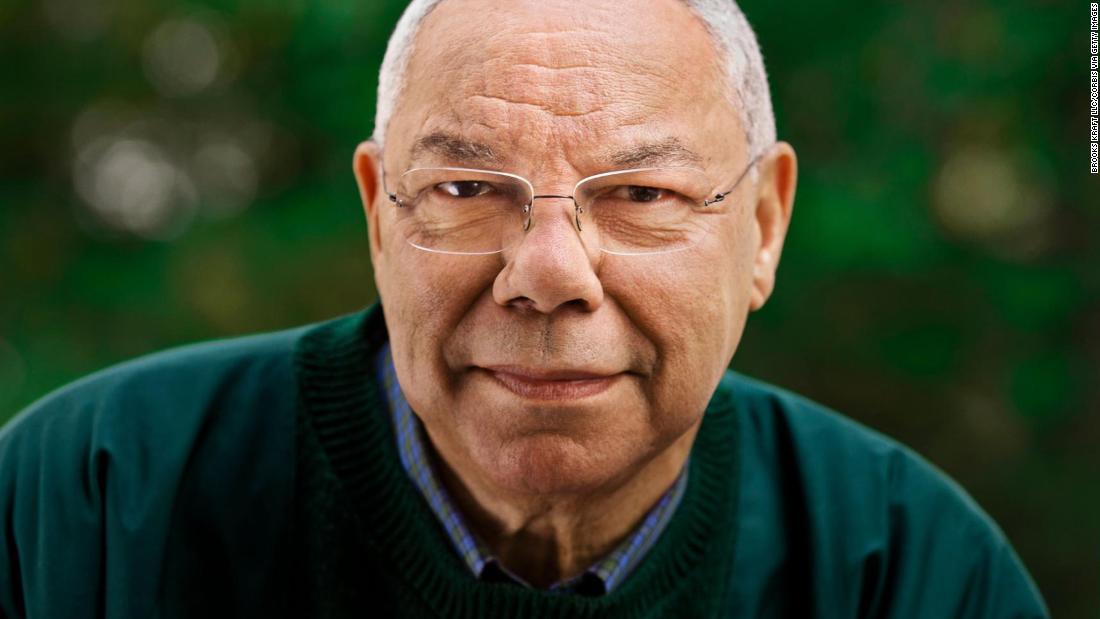
Covering the death of Colin Powell? UMW's foreign policy expert can help
Colin Powell, the first Black US secretary of state whose leadership in several Republican administrations helped shape American foreign policy in the last years of the 20th century and the early years of the 21st, has died from complications from Covid-19, his family said on Facebook. He was 84. "General Colin L. Powell, former U.S. Secretary of State and Chairman of the Joint Chiefs of Staff, passed away this morning due to complications from Covid 19," the Powell family wrote on Facebook, noting he was fully vaccinated. A source familiar with the matter said Powell had multiple myeloma, a cancer of plasma cells that suppresses the body's immune response. Even if fully vaccinated against Covid-19, those who are immunocompromised are at greater risk from the virus. "We have lost a remarkable and loving husband, father, grandfather and a great American," the family said. October 18 - CNN If you are covering the life and legacy of Colin Powell - then let our experts help with your questions and coverage. University of Mary Washington Political Science and International Affairs Professor Jason Davidson is an expert in American foreign and security policy, and international security. He is also the author of the commissioned study, "The Costs of War to United States Allies Since 9/11," which focuses extensively on the human and monetary sacrifices made by America's allies in these conflicts. Davidson, and the document, made waves this spring, landing in the likes of Forbes, The Guardian and The Daily Mail. If you’re looking to arrange an interview with Dr. Davidson, simply click on his icon.


All eyes on Virginia – What’s at stake as the race for Governor goes into overdrive
Virginians are already voting to elect a new governor – and as political junkies, pundits and media across America know, this race could paint a picture of what’s to come in next year’s midterm elections and even as far away as 2024. Stephen Farnsworth, a political science professor at University of Mary Washington, said Mr. Biden's ability to sell his agenda will be "significantly deteriorated" if Republicans win the governor's mansion in Virginia. "If a Biden-like message offered by McAuliffe doesn't succeed in purple Virginia, a lot of Democrats around the country will wonder if it makes more sense to chart a more independent course," he said. CBS News – October 07 Dr. Stephen Farnsworth is a sought-after political commentator on presidential politics. He has been widely featured in national media, including The Washington Post, Reuters, The Chicago Tribune and MSNBC. If you are a reporter covering Virginia's gubernatorial race, simple click on his icon to arrange an interview today.


It’s the bug that been in the news all summer long. The spotted lanternfly is an invasive species that was first spotted on American soil seven years ago and is now moving at a fever pitch across the country. The petulant pest has the potential to devastate crops and agriculture – and there were hopes that steps to eradicate or at least minimize the insect’s spread would work. That’s why media are looking to experts like Josephine Antwi from the University of Mary Washington for answers. "The key right now, is to keep them from spreading and to keep their numbers down in areas where they currently occur," said Josephine Antwi, an entomologist at the University of Mary Washington in Virginia. "By destroying egg masses in the winter, we keep the number of the following generation down." September 30 - NorthJersey.com If you're writing about the Spotted Lanternfly, Dr. Antwi is available to speak with media; simply click on her icon to arrange an interview today.

Friends or enemies? Is there any solving the ancient secret that is Chinese diplomacy?
When it comes to trade, investment and trillions of dollars of opportunity for American companies – it would appear that China and the United States should be close-knit allies. However when it comes to military escalation, an emerging global bull and national security – China is also a country that the U.S. government is very concerned about. NPR recently got in touch with UMW Professor of Political Science and International Affairs Elizabeth Larus to lend her expertise when it comes to the politics of China. Elizabeth Larus, who teaches Chinese studies at the University of Mary Washington in Virginia, says any economic "de-coupling" between the U.S. and China will be very difficult. "You can't just say you're going to pick up your factory and move all your resources and have a consistent, reliable energy source and the shipping port to get your stuff out at a decent price, and the logistics. China has nailed that down," said Larus, the author of Politics and Society in Contemporary China. China's President Xi Jinping uses this as leverage, she noted. "One of the goals of this Xi Jinping regime is to make the world really reliant on China for its supply chain, but not to have China reliant on the rest of the world," she added. "So that makes it difficult for the businesses." Is there a way out of this downward spiral? "I do not see a de-escalation anytime soon," she said. October 08 - NPR There will be no easy or immediate solution to the hot-and-cold relationship between the United States and China. But if you are covering this ongoing story – then let our experts help with your questions and coverage. Dr. Elizabeth Larus is an expert in the politics of China. She is available to speak to media, simply click on her icon to arrange an interview today.


Could Vitamin-A bring back your sense of smell after Covid?
Researchers at the University of East Anglia and James Paget University Hospital are launching a new project to see whether Vitamin A could help people regain their sense of smell after viral infections including Covid-19. Smell loss is a common symptom of Covid-19, but even before Covid, many viruses had been causing smell loss and distortion and while most people naturally regain their sense of smell within a couple of weeks, many have been left with on-going smell disorders. Previous research from Germany has shown the potential benefit of Vitamin-A, and the UEA team will explore how this treatment works to help repair tissues in the nose damaged by viruses. They hope that the study, which has been funded by the National Institute for Health Research (NIHR), could one-day help improve the lives of millions around the world who suffer from smell loss, by returning their fifth sense. Smell loss expert Prof Carl Philpott from UEA’s Norwich Medical School and James Paget University Hospitals NHS Trust, said: “The huge rise in smell loss caused by Covid-19 has created an unprecedented worldwide demand for treatment. “Even before the Covid-19 pandemic hit, smell loss was thought to affect an estimated five per cent of people, with viruses accounting for 1 in 10 of those. “And around one in ten people who experience smell loss as a result of Covid-19 report that their sense of smell has not returned to normal four weeks after falling ill. “It’s a big problem, and our previous research has shown the impact of smell loss – including depression, anxiety and isolation, as well as risk of danger from hazards such as gas and spoiled food, and changes in weight due to reduced appetite. “A key problem for patients and their clinicians is the lack of proven effective treatments. “A recent study from Germany showed that people treated with vitamin A nasal drops improved twice as much as those in the untreated group. “We want to find out whether there is an increase in the size and activity of damaged smell pathways in patients’ brains when they are treated with vitamin A nasal drops. “This would show recovery of the damage caused by common viral infections, including Covid-19, in the nose.” The research team will work with patients who have lost their sense of smell due to a viral infection. They will either receive a 12-week course of nasal vitamin A drops or inactive equivalent drops, and have their brains scanned before and after the treatment. The scans will be compared to those of a control group who have not been treated with vitamin A drops. Prof Philpott said: “The patients will be smelling distinctive odours - roses and rotten eggs - while special MRI brain scans are taken. “We will look for changes in the size of the olfactory bulb - an area above the nose where the smell nerves join together and connect to the brain. “We will also look at activity in areas of the brain linked to recognising smells,” he added. Duncan Boak, Founder and Chair of Fifth Sense, said: “At Fifth Sense we have engaged with thousands of people who have experienced changes in their ability to smell or taste as a result of the Covid 19 virus. They join an already large community of people with a smell disorder that pre-dates the pandemic. “The question we are most often asked is about available treatments to support recovery. Not being able to smell is not only physically distressing but can affect the enjoyment of social occasions and present hazards and risks that might never have been previously considered such as not being able to detect gas leaks or spoiled food. “Research into potentially successful interventions is vital to help people feeling the impact of smell disorders that affects the quality and enjoyment of their life.” To take part in this trial, patients need to be referred to The Smell and Taste Clinic at the James Paget University Hospital by their GP. Recruitment is expected to begin in December 2021. To find out more visit https://rhinology-group.uea.ac.uk/apollo-trial or contact apollo.trial@uea.ac.uk. The NIHR is the largest funder of research in the country, and is the research partner of the NHS and social care. To find out more about other NIHR research happening near you, visit www.bepartofresearch.uk.


A missed opportunity - hospital doctors must stop 'risky' medicines
Hospital doctors and pharmacists should stop ‘risky’ medicines before patients leave hospital - according to researchers at the University of East Anglia. One in two older people are prescribed a medicine which over time has become inappropriate or unnecessary. In a recent National Overprescribing Review titled ‘Good for you, good for us, good for everybody’, the government called on doctors and pharmacists working in GP surgeries to tackle the problem of overprescribing. But research from UEA’s School of Pharmacy has found that nine out of 10 older hospital patients and their family believe that inappropriate or unnecessary medicines should also be spotted and stopped whilst they are in hospital. And the team say that by the time people are back under their GP care, a major opportunity has been missed. Prof Debi Bhattacharya, from UEA’s School of Pharmacy, said: “We know that half of older people admitted to hospital arrive having been prescribed a medicine that over time has become inappropriate for them. These medicines will have more risks than benefits. “And their side effects cause problems, like making them feel drowsy, nauseous or have trouble getting to sleep. These problems impact a person’s quality of life to the extent that they can cause re-hospitalisation. “Our research has shown that very few patients have one of these ‘risky’ medicines stopped whilst in hospital. “Continuing medicines when they are not needed unnecessarily harms people and wastes NHS money. “The time is right to undertake research into ways of safely increasing the number of inappropriate and unnecessary medicines that are stopped,” she added. To tackle the problem, Prof Bhattacharya is leading a £2.4 million trial to stop risky medicines in hospital - in collaboration with researchers at the Universities of York, Newcastle, Leeds and Leicester, the Norfolk and Norwich University Hospital and Addenbrooke’s Hospital in Cambridge. Patient and Public Engagement lead for CHARMER, Katherine Murphy, said: “We are working with hospitals and GP organisations across England to see whether the new strategy works, helps people, causes no harm, and is good value for the NHS. “And for this trial to be meaningful to people, we need to make sure that we look at the things that matter to them when testing whether stopping a medicine has had a positive outcome.” The research team recently surveyed 200 people including patients, informal carers, doctors, nurses, pharmacists, physiotherapists and researchers to find out what they should look at in the trial. On reviewing the results Katherine Murphy said: “It was good to see that what people really want us to look at is whether patients can do the things that they want to do, not how much patients can do. “Being able to walk up a flight of stairs, for example, may be important to some patients but not to others. We need to make sure that medicines are prescribed that support people to get the best quality of life. In the trial, we also need to make sure that the way that we stop risky medicines causes no harm and is good value for the NHS.” For more information about the CHARMER study visit https://www.uea.ac.uk/web/groups-and-centres/charmer/about-the-research The research has been funded by the National Institute of Health and Social Care research.

How rabbits help restore unique habitats for rare species
European wild rabbits are a ‘keystone species’ that hold together entire ecosystems – according to researchers at the University of East Anglia. Our campus is home to hundreds of rabbits and Prof Diana Bell, from our School of Biological Sciences, has been researching them for more than 30 years. Now, she is one of the lead researchers on a new report which aims to restore and protect at-risk wildlife habitats which are rabbit dependent. The report shows how their grazing and digging activity keeps the ground in a condition that is perfect for sustaining other species that would otherwise move on – or die out. But their numbers are declining regionally, nationally and globally. And they are even being classed as endangered in their native region, the Iberian Peninsula. The findings come as efforts to save England’s most threatened species from extinction are turning the tide for wildlife in Norfolk and Suffolk thanks to the Shifting Sands project. Shifting Sands is one of 19 projects across England that make up the national Back from the Brink initiative. Together, these projects aim to save 20 species from extinction and benefit over 200 more. Lead partner of the rabbit work-stream and rabbit expert Prof Diana Bell, from UEA’ School of Biology, said: “The Breckland-based Shifting Sands project was set up to save some of the region’s rarest wildlife. “After several years of hard work by this multi-partner project, the fortunes of species classed as declining, rare, near-threatened or endangered are now improving in the Brecks. “The project has seen species recover in record numbers – including endangered beetle and plants, one of which is found nowhere else in the world. “Rabbits are incredibly important because their grazing and digging activity keeps the ground in a condition that is perfect for sustaining other species. “Sadly, rabbit populations have declined dramatically in the UK and across Europe, and the European wild rabbit is now listed as endangered in its ancestral Iberian Peninsula range. Their decline is largely due to a spill-over of new viruses from commercially bred rabbits. “The Shifting Sands project has shown us how important rabbits are to entire ecosystems, and it is vital that these habitats are conserved and protected. “We encouraged a rabbit revolution in the Brecks and we have produced a toolkit in partnership with Natural England to help landowners of similar rabbit-dependent habitats to do the same.” “Simple cost-effective ways of encouraging rabbits include creating piles of felled branches, known as brush piles, and banks of soil.” Monitoring over the past three years has shown the interventions are working, with evidence of significantly higher amounts of rabbit activity. Prof Bell said: “Our work resulted in evidence of rabbit activity in significantly higher numbers. 91 per cent of brush piles showed paw scrapes and 41 per cent contained burrows. Even when burrows did not form, the brush piles helped expand the range of rabbit activity.” The UEA research team worked in collaboration with Natural England, Forestry England, Plantlife, Breckland Flora Group, Norfolk Wildlife Trust, Suffolk Wildlife Trust, Butterfly Conservation, Buglife, the Elveden Estate and the RSPB to deliver this ambitious partnership project. It has seen five kilometres of ‘wildlife highways’ created, more than 100 specimens of rare plants re-introduced, habitat created and restored across 12 sites, species encouraged, and landscape-management practices improved. As a result, seven species of plant, bird and insect are increasing in number and many more are benefiting in turn. Among those species recovering are rare plants such as the prostrate perennial knawel that is unique to the Brecks, basil thyme and field wormwood. The endangered wormwood moonshiner beetle, lunar yellow underwing moth and five-banded digger tailed wasp are also increasing. All these species are identified in the UK’s Biodiversity Action Plan as being priorities for conservation. The open habitat maintained by rabbits supports two rare plants: the prostrate perennial knawel – found nowhere else in the world – and field wormwood. Pip Mountjoy, Shifting Sands project manager at Natural England, said: “The Brecks were described by Charles Dickens as “barren”. They are anything but. Their 370 square miles of sandy heathland, open grassland and forest support almost 13,000 species, making it one of the UK’s most important areas for wildlife. “That wildlife is under threat. Felling trees and encouraging a species that is often considered a pest may seem a strange solution. But in this instance, carefully managed ‘disturbance’ is exactly what this landscape and its biodiversity needs.” “The project’s interventions have provided a lifeline for this unique landscape, and shown how biodiversity can be promoted by ‘disturbing’ places – not just by leaving them alone. “ “These rare habitats are becoming overgrown and species are declining as a result of changing land management practices and human impacts. It’s our responsibility to restore and maintain these spaces for nature. Some of these species exist only here and, if lost, will be lost forever.” Established in 2017 with £4.7m from the Heritage Lottery Fund and £2.1m from other bodies, Back from the Brink was the first nationwide co-ordinated effort to bring together charities, conservation organisations and government bodies to save threatened species. More information about the Brecks, Shifting Sands, Back from the Brink and a toolkit to help rabbit conservation is available via www.naturebftb.co.uk.
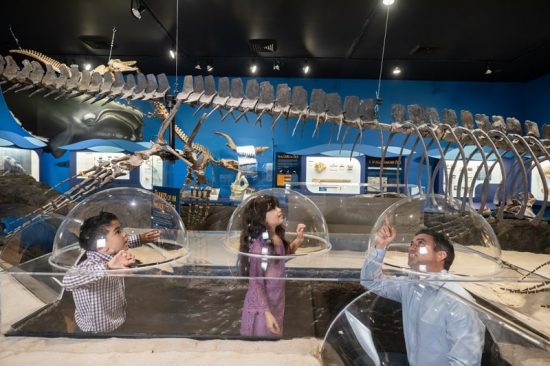
Georgia Southern University Museum reopens just in time to celebrate Earth Sciences Week
After nearly three years and following extensive architectural renovations, the Georgia Southern Museum, one of the longest-standing educational centers on the University's Statesboro Campus, has reopened. "It has been a long project, but well worth the journey," said Georgia Southern Museum Director Brent Tharp, Ph.D. "The upgraded facility and newly designed galleries represent a new era for the museum. Visitors will still find old friends, like the mosasaur, but exhibited in new more exciting ways, and will make new discoveries with never before exhibited artifacts in expanded permanent exhibits preserving the area's culture. We are really excited to be back open to the public." The Georgia Southern Museum serves as the premier institution interpreting the natural and cultural history of Georgia's coastal plain. The museum displays permanent exhibits and changing exhibits curated by the University's faculty and students, and provides a place where researchers can explore its collections and students of all ages can learn. As part of its reopening celebration, the Museum will recognize Earth Sciences Week with events featuring social media videos and interactive displays by Georgia Southern students, faculty and alumni. Highlighted events for Earth Sciences Week include: Oct. 12 - Earth Observation Day Oct. 13 - National Fossil Day Oct, 14 - Geoscience for Everyone Day Oct. 15 - Geologic Map Day Oct. 16 - International Archaeology Day Admission to the museum is $4 per person; however, for a limited time the museum also will accept donations for admission. Children 3 years of age and younger, museum members, and Georgia Southern students receive free admission. If you’re a journalist looking to cover Earth Sciences Week or talk to any of the many experts at the museum – then let us help. The researchers behind this study are available, simply reach out to Georgia Southern Director of Communications Jennifer Wise at jwise@georgiasouthern.edu to arrange an interview today.


Cyber-attacks are rising to the top of American concerns
With the rising occurrence of cyber-attacks across America, institutions, banks, government agencies and top-tier companies are now either falling victim or feeling vulnerable to attack from online enemies abroad. It’s a topic that is now front and center that has most leaders regardless of poltical party in agreement - and media across the country are starting to cover with more depth and seriousness. Most Americans across party lines have serious concerns about cyberattacks on U.S. computer systems and view China and Russia as major threats, according to a new poll. The poll by The Pearson Institute and The Associated Press-NORC Center for Public Affairs Research shows that about 9 in 10 Americans are at least somewhat concerned about hacking that involves their personal information, financial institutions, government agencies or certain utilities. About two-thirds say they are very or extremely concerned. Roughly three-quarters say the Chinese and Russian governments are major threats to the cybersecurity of the U.S. government, and at least half also see the Iranian government and non-government bodies as threatening. October 11 – Associated Press "I am really interested in the security of our critical infrastructure systems," said Dr. Michael Nowatkowski. " If an attacker were able to shut those systems down, great harm would result. This is a national security issue." If you’re a journalist look to know more or have been assigned to cover any aspect of cyber-security in the country, then let our experts help with your coverage. Dr. Michael Nowatkowski is an Associate Professor with the School of Computer and Cyber Sciences at Augusta University. He also serves as the Head of the Cyber Program of Study. Nowatkowski is available to speak with media regarding the emerging threat of cyber-security in America, simply click on his icon now to arrange an interview today.