
Experts Matter. Find Yours.
Connect for media, speaking, professional opportunities & more.
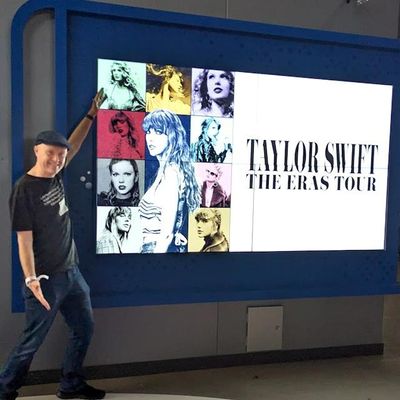
At Texas Christian University, Dr. Andrew Ledbetter, Chair of the Communication Studies Department, is turning his scholarly attention to one of pop culture’s biggest phenomena: Taylor Swift. His research uses data-driven analysis to reveal how Swift’s albums and songs build an interconnected narrative universe — what he calls her “Taylorverse.” Ledbetter ran lyrics across ten albums through semantic-network software to show how certain songs act as linchpins connecting themes of fame, womanhood, love and storytelling. “I was interested in interconnections among the song lyrics,” says Ledbetter. “The songs that are most central have a lot of overlap with other songs, might tend to be songs that are the most popular.” November 03 0 NBC News The work stands out not just for its pop-culture relevance, but for its academic innovation: combining computational text-analysis with narrative theory to unlock why certain tracks resonate more deeply than others. For journalists, cultural commentators or anyone covering the evolving intersection of music, identity and media, Dr. Ledbetter is a go-to expert. He can speak to how storytelling in music shapes audience engagement, how media fandom becomes scholarship, and why Swift’s songwriting continues to spark new research just as much as chart-topping hits. Andrew Ledbetter is available for interviews - Simply click on his icon now to arrange an interview today.


The holiday season is a whirlwind of joy, lights, and laughter, but sometimes it can also sneak in some added stress. Experts from the University of Delaware are here to remind us that our mental wellness shouldn’t take a backseat during these festive times. By weaving mindfulness into our holiday plans, we can maximize the joy and peace we experience. Prioritizing presence over presents Let's face it: the holiday rush often translates to an avalanche of consumerism. But Amit Kumar, a marketing professor who focuses on the scientific study of happiness, suggests focusing on being present rather than the presents. Carving out mindful time The holidays can stir up complex emotions as families come together. Psychology professors Franssy Zablah and Zachary Meehan offer strategies to support mental well-being this season. Valerie Earnshaw and Raphael Travis, professors who study health and wellbeing, can share guidance for supporting family members with substance use disorders this holiday season. Gifting intentionally this year Education professors Myae Han and Roberta Golinkoff can talk about gifts for children that promote reading or positive play. Keeping the spirts bright year after year Debra Hess Norris offers tips on how to preserve decorations and make them look brand new every year. To contact any of these experts, click on their expert profiles or email MediaRelations@udel.edu.




Reviving the Christmas Spirit: Forgotten Christmas Traditions to Reclaim the Christmas Season
Christmas is just around the corner and many families have already decorated their homes and started celebrating their Christmas traditions – but many stores have had their Christmas products out for months. This early bombardment of holiday advertisements and adornments often takes away from the excitement. So how do you recapture the true spirit of Christmas? Baylor University Honors College professor Michael Foley, Ph.D., who teaches in the Great Texts Program, has researched the history of common Christmas traditions and uncovered forgotten customs. “Christmas is indeed the most wonderful time of year, and that wonder is increased when we understand why we do the things we do,” Foley said. “Our delight in the season becomes greater when we appreciate the history and symbolism of the Christmas tree or why we kiss under the mistletoe.” Foley shares three practices to recapture the essence of Christmas and bring more joy to the season for your family. Enjoy the 12 Days of Christmas Historically, the season of Advent during the weeks leading up to Christmas was a period of joyful restraint and preparation. During the Twelve Days of Christmas, from Christmas Day on Dec. 25 to the Feast of the Epiphany on Jan. 6, people would celebrate a release with a continuous period of leisure and merriment. “Today, the Christmas season seems to start earlier and earlier each year. In the 20th century, the commercial season began the day after Thanksgiving, but now stores inundate the market with Christmas decorations much earlier,” Foley said. “The problem with this arrangement is that by the time Christmas finally comes, you’re tired of it. The older model has an organic build-up to the big day and then a great, 12-day release.” Returning to a slower-paced season full of cheerful spirits in the 12 days following Christmas is a way to recenter, refocus and reignite your Christmas spirit, Foley said. Capture the Joy of Incarnation It’s easy to get caught up in the festivities and pressure of the holiday, but it is also important to return to the reason behind Christmas, Foley said, and take time to understand the meaning behind what seem like meaningless customs. “The best traditions capture the fact that God became man in order to redeem us from our sins out of sheer love for us,” he said. Practices like caroling and gathering with family for food and drink are all acts of gratitude and joy that can remind us of God’s love. What may seem like typical holiday decorations, the holly wreath and the Christmas tree, are actually symbols of Christ bringing new life, Foley said. Embrace the Bizarre Today, Christmas is surrounded by a light, cheery feeling. But history tells us that there has always been a certain “dark side” of Christmas. “There is a reason why Ebenezer Scrooge was visited by three ghosts on Christmas Eve,” Foley said. “All of winter was the season of fiends, and they were not happy that the winter solstice around Christmas Day marked the beginning of the end of the long dark nights and that Jesus Christ was born and triumphed over evil.” Other traditions involve swapping places with someone such as a parent and child, abbots and novices, or men and women. “At one time, this custom of inverted social roles played an important role in gaining clarity and releasing tension in a hierarchical society,” Foley said. While this might seem useless, impractical, or even pointless today, it can still offer value to the Christmas joy. “These inversion customs are a giddy imitation of the ultimate inversion in all of history,” Foley said. “That Almighty God chose to become a little baby in a measly manger.” Although some forgotten customs might seem odd to us today, there can be a certain kind of wisdom behind them – a wisdom that leads us back to the true spirit of Christmas, Foley said. After all, even Ebenezer Scrooge was able to find joy in Christmas again. Michael Foley is a Professor of Patristics in the Honors College at Baylor University and the author of 17 books, including Why We Kiss under the Mistletoe: Christmas Traditions Explained. Looking to know more or arrange an interview? Simply contact: Shelby Cefaratti-Bertin today.


Study: Lessons learned from 20 years of snakebites
The best way to avoid getting bitten by a venomous snake is to not go looking for one in the first place. Like eating well and exercising to feel better, the avoidance approach is fully backed by science. A new study from University of Florida Health researchers analyzed 20 years of snakebites cases seen at UF Health Shands Hospital in Gainesville. “This is the first time we’ve evaluated two decades of venomous snakebites here,” said senior author and assistant professor of medicine Norman L. Beatty, M.D., FACP. Researchers analyzed 546 de-identified patient records from 2002 to 2022 and highlighted notable conclusions — for instance, that a third of the snakebites analyzed were preventable and caused by people intentionally engaging with wild snakes. “Typically, people’s experiences with getting bitten are due to an interaction that was inadvertent — they stumble upon a snake or reach for something without seeing one camouflaged,” Beatty said. “In this case, people were seeking them out. There were a few individuals who were bitten on more than one occasion.” Most (77.8%) of the snakebites occurred in adult men while they were handling wild snakes, and most of the bites were perpetrated by the diminutive pygmy rattlesnake and the cottonmouth. The latter is named for the white lining of its mouth, which it displays when threatened. “I was less surprised to see those species emerge as some of the most common ones people were bitten by, but the robust presence of other, less common species in the data — like the eastern coral snake, southern copperhead, timber rattlesnake and the eastern diamondback rattlesnake, was interesting,” Beatty said. The eastern diamondback rattlesnake is one of the most venomous snakes in North America. Most patients were bitten on their hands and fingers and around 10% of them attempted outdated self-treatments no longer recommended by doctors — like sucking out the venom. Initially, the study began as a medical student research project, thanks to a handful of medical students who worked with Beatty to review the cases. The intention was to dive deep into the circumstances of each encounter and learn more about the treatment given, as well as the outcomes. Fourth-year medical student River Grace, the paper’s first author, said the work struck a personal note. “My dad is a reptile biologist, so I’ve grown up around snakes my whole life,” Grace said. “He was bitten by a venomous snake many years ago and ended up hospitalized for multiple weeks, so it was interesting to keep that experience in mind while going over the data.” Grace noted that it typically took those bitten over an hour on average to travel from where the bite occurred to the hospital. “It seems like the reason for that was people not knowing exactly what to do once they’d been bitten, or underestimating the severity of the bite,” he said. “Some would just sit at home for hours.” Floridians share their home with a variety of scaly neighbors who don’t always welcome visitors — accidental or not. Ultimately, thanks to the timely care of providers, only three snake bites were fatal. However, antivenom is no panacea. Those who are lucky enough to receive it in time can still incur complications from the original snake bites, like tissue damage, or even a fatal allergic reaction to the antivenom itself. Consequently, researchers look toward improving the processes used to triage snake bites in the emergency room, ensuring that providers are equipped with the knowledge and the know-how to shorten time to treatment. “In the future, we think we’d love to get involved in enhancing provider education so everyone in the health care setting is confident in being able to identify and administer antivenom as quickly and safely as possible,” Grace said.



UF team develops AI tool to make genetic research more comprehensive
University of Florida researchers are addressing a critical gap in medical genetic research — ensuring it better represents and benefits people of all backgrounds. Their work, led by Kiley Graim, Ph.D., an assistant professor in the Department of Computer & Information Science & Engineering, focuses on improving human health by addressing "ancestral bias" in genetic data, a problem that arises when most research is based on data from a single ancestral group. This bias limits advancements in precision medicine, Graim said, and leaves large portions of the global population underserved when it comes to disease treatment and prevention. To solve this, the team developed PhyloFrame, a machine-learning tool that uses artificial intelligence to account for ancestral diversity in genetic data. With funding support from the National Institutes of Health, the goal is to improve how diseases are predicted, diagnosed, and treated for everyone, regardless of their ancestry. A paper describing the PhyloFrame method and how it showed marked improvements in precision medicine outcomes was published Monday in Nature Communications. Graim, a member of the UF Health Cancer Center, said her inspiration to focus on ancestral bias in genomic data evolved from a conversation with a doctor who was frustrated by a study's limited relevance to his diverse patient population. This encounter led her to explore how AI could help bridge the gap in genetic research. “If our training data doesn’t match our real-world data, we have ways to deal with that using machine learning. They’re not perfect, but they can do a lot to address the issue.” —Kiley Graim, Ph.D., an assistant professor in the Department of Computer & Information Science & Engineering and a member of the UF Health Cancer Center “I thought to myself, ‘I can fix that problem,’” said Graim, whose research centers around machine learning and precision medicine and who is trained in population genomics. “If our training data doesn’t match our real-world data, we have ways to deal with that using machine learning. They’re not perfect, but they can do a lot to address the issue.” By leveraging data from population genomics database gnomAD, PhyloFrame integrates massive databases of healthy human genomes with the smaller datasets specific to diseases used to train precision medicine models. The models it creates are better equipped to handle diverse genetic backgrounds. For example, it can predict the differences between subtypes of diseases like breast cancer and suggest the best treatment for each patient, regardless of patient ancestry. Processing such massive amounts of data is no small feat. The team uses UF’s HiPerGator, one of the most powerful supercomputers in the country, to analyze genomic information from millions of people. For each person, that means processing 3 billion base pairs of DNA. “I didn’t think it would work as well as it did,” said Graim, noting that her doctoral student, Leslie Smith, contributed significantly to the study. “What started as a small project using a simple model to demonstrate the impact of incorporating population genomics data has evolved into securing funds to develop more sophisticated models and to refine how populations are defined.” What sets PhyloFrame apart is its ability to ensure predictions remain accurate across populations by considering genetic differences linked to ancestry. This is crucial because most current models are built using data that does not fully represent the world’s population. Much of the existing data comes from research hospitals and patients who trust the health care system. This means populations in small towns or those who distrust medical systems are often left out, making it harder to develop treatments that work well for everyone. She also estimated 97% of the sequenced samples are from people of European ancestry, due, largely, to national and state level funding and priorities, but also due to socioeconomic factors that snowball at different levels – insurance impacts whether people get treated, for example, which impacts how likely they are to be sequenced. “Some other countries, notably China and Japan, have recently been trying to close this gap, and so there is more data from these countries than there had been previously but still nothing like the European data," she said. “Poorer populations are generally excluded entirely.” Thus, diversity in training data is essential, Graim said. "We want these models to work for any patient, not just the ones in our studies," she said. “Having diverse training data makes models better for Europeans, too. Having the population genomics data helps prevent models from overfitting, which means that they'll work better for everyone, including Europeans.” Graim believes tools like PhyloFrame will eventually be used in the clinical setting, replacing traditional models to develop treatment plans tailored to individuals based on their genetic makeup. The team’s next steps include refining PhyloFrame and expanding its applications to more diseases. “My dream is to help advance precision medicine through this kind of machine learning method, so people can get diagnosed early and are treated with what works specifically for them and with the fewest side effects,” she said. “Getting the right treatment to the right person at the right time is what we’re striving for.” Graim’s project received funding from the UF College of Medicine Office of Research’s AI2 Datathon grant award, which is designed to help researchers and clinicians harness AI tools to improve human health.

Staying Sober and on the Path to Recovery During the Holidays
The holidays can be a joyous time full of celebrations and they also can be a time of intense stress. Individuals with substance and alcohol use disorders can experience additional stress during the holidays, which can interfere with their recovery, and they may need additional support to abstain from substance use. What can people in recovery do to both abstain and enjoy the holidays? And what can loved ones do to support them? “Holidays can be difficult for anyone, but those with substance use and mental health disorders may have a more difficult time coping with those difficulties,” said Baylor University substance use disorder treatment expert Sara Dolan, Ph.D., professor of psychology and neuroscience. “The holidays can be – on one hand – a time rife with loneliness, and on the other hand, a time where family conflict might be more present,” Dolan said. “Both of these situations are hard for many of us to cope with, but we may want to be more sensitive to those who struggle more with these situations.” Dolan is a nationally known researcher on how neuropsychological dysfunction, including problems with memory and executive functions, affects how people cope with alcohol and substance use disorders and how these issues affect the treatment process and outcome. Dolan offers the following suggestions for individuals in recovery to help them get through the holidays and how family and friends can offer support. Stay active in recovery If the individual already has a recovery plan in place such as a 12-step program or Celebrate Recovery, make sure to continue attending meetings and appointments during the holiday season. “There are numerous virtual and in-person resources for people who are struggling, including mutual aid support groups like Alcoholics Anonymous, Narcotics Anonymous and Smart Recovery,” Dolan said. “People can also call the SAMHSA national helpline at 1-800-662-HELP.” Even when traveling, it is a good idea to know local meeting schedules, use virtual resources and consider attending extra meetings to stay on top of your recovery. Have a coping plan “It is important for people to have a solid coping plan before they go into potentially distressing situations,” Dolan said. Are there places or events to just stay away from? Dolan said it is “okay to keep yourself safe by leaving or even avoiding places that may be unsafe.” By having a plan to handle stressors ahead of time, you can manage it better in the moment. Preparation is key to feeling safe and enjoying the holidays. Avoid triggers and stressors Understanding personal triggers, which can be different for different people, can help us avoid them ahead of time. “For some people, it’s family conflict, for some, it’s loneliness, and for some it’s feelings of anxiety or depression,” Dolan said. “It’s important to know your own stress points before you go into situations that may trigger them.” Once you know what leads to urges to use alcohol or other substances, you can determine how to counteract those circumstances or avoid them if necessary. Reach out for support Reach out to family and friends who will most likely offer positive support. Letting your loved one know what you need – and how to support you in your recovery – can help you abstain from substance use during stressful situations. In fact, Dolan said you may even want to let them know ahead of time that you may need extra support. How to support someone with a substance use disorder Be as open, direct and caring as you can be. Dolan suggests talking to your loved one directly about what may – or may not be helpful – during the holidays. “Some people in recovery may feel more comfortable in alcohol-free environments,” she said, “but some may not want their loved ones altering their behavior. “Ask – don’t assume – and let your loved one tell you what might work best for them,” Dolan added. Using these suggestions can help both individuals with substance and alcohol use disorders and their families have a healthy and happy holiday season.

As interest in cryptocurrencies move from the fringes to mainstream conversation and public policy debate, Derek Mohr, clinical associate professor of finance at the Simon Business School at the University of Rochester, offers a clear-eyed voice on the subject. Mohr specializes in financial innovation and digital assets, and he’s been in demand with reporters looking to understand the economics behind everything from “Bitcoin-powered” home heaters to gas stations offering discounts for crypto purchases. His message? Not everything that markets itself as a breakthrough actually adds up. For instance, some companies have pitched devices that promise to heat a home using excess energy generated from bitcoin mining. Mohr recently told CNBC the idea might sound clever, but that its practicality collapses under basic financial and engineering realities. “The bitcoin heat devices I have seen appear to be simple space heaters that use your own electricity to heat the room . . . which is not an efficient way to heat a house,” Mohr said. “Yes, bitcoin mining generates a lot of heat, but the only way to get that to your house is to use your own electricity.” Bitcoin mining, he explained, has become so specialized that home computers have virtually zero chance of earning a mining reward. Industrial mining farms operate on custom-built chips far more powerful than any consumer device. In other words, consumers who think they’re heating their homes and earning crypto are, in reality, just paying for electricity and getting no real mining benefit. A pragmatic voice in a volatile space Mohr’s research and commentary help explain not just what is happening in the crypto world, but why it matters for consumers, businesses, and regulators. Whether evaluating the economics of mining or the viability of crypto payments, he brings a steady, analytical perspective to a domain dominated by hype and fast-moving news cycles. For journalists covering cryptocurrency, fintech, and the future of financial transactions, Mohr is available for interviews on digital payments, bitcoin mining economics, crypto regulation, and emerging trends in financial technologies. Top contact him, reach out to University of Rochester media relations liaison David Andreatta at david.andreatta@rochester.edu.


Christmas Magic on Screen: A Curated List of Must-Watch Holiday Classics
Christmas movies and TV specials hold a special place in the hearts of many, offering a blend of nostalgia, joy and fun that captures the magic of the holiday season, creating a sense of togetherness, drawing families and friends around the glow of the television. James Kendrick, Ph.D., a film historian and professor of film and digital media at Baylor University, has curated a list of his Top 5 Christmas movies and specials, sharing the history of how they became holiday classics sure to fill you with holiday cheer. View his profile 1. It’s a Wonderful Life Frank Capra’s classic is the perennial Christmas movie, which is only fitting given that it began with writer Philip Van Doren Stern penning a short story called “The Greatest Gift” and printing it on 200 holiday cards that he sent to friends and family. Although initially a box office dud, it later fell into the public domain and was used by PBS stations during the 1970s as December counterprogramming, turning it into the holiday classic it always deserved to be. Along with stockings hung by the fireplace, decorated trees and blinking lights on the house, the viewing of “It’s a Wonderful Life” has become indelibly interwoven into contemporary Christmas tradition. Capra weaves a rich tapestry of American life filling the screen, including memorable details and wonderful performances from James Stewart in his first role after returning from duty in World War II, and Donna Reed, then a largely unknown contract player. It is a truly classic, timeless film, one of the few that quite simply never grows old. 2. Die Hard It is a long-settled matter that Die Hard is not just a Christmas movie, but one of the very best. Christmas movies, after all, know no genre, so there is no reason why a violent action film can’t fit the bill for the holidays. The decision to set John McTiernan’s wry action extravaganza against a Christmas-season backdrop only adds to the film’s myriad pleasures, as it makes Bruce Willis’s one-man mission to eradicate a crack team of terrorist-robbers all the more imperative after they take a Los Angeles high-rise hostage along with a party of business executives that include his estranged wife. “The fact that the soundtrack includes as many jingle bells as gunshots (well, maybe not quite as many, but still more than a few) only adds to the seasonal feels,” Kendrick said. 3. A Christmas Story Somewhere inside we are all young, round-faced Ralphie, pining away for our own “official Red Ryder carbine action, 200-shot Range model air rifle with a compass in the stock and this thing which tells time.” The film’s stroke of brilliance in how it ladles halcyon American nostalgia – so many images from the film could have been painted by Norman Rockwell – with a biting sense of cold, but often hilarious, reality. Humorist Jean Shepherd, parts of whose 1966 semi-autobiographical short story collection, In God We Trust: All Others Pay Cash, provided the film’s source material, narrates the film with a mix of humor and irony, making each scene work as both an evocation of a specific time and place in American history and a blank slate onto which we can project our own Christmas memories and dreams. The fact that the genuine, child wonderment of waking up on Christmas morning co-exists so easily with sneering bullies, creatively cursing fathers, draconian teachers, tongues frozen to light poles, inappropriate major awards and the always braying Bumpass hounds is testament to the film’s breadth and depth. 4. A Charlie Brown Christmas The first and best of the Peanuts TV specials (sorry, Great Pumpkin), A Charlie Brown Christmas premiered in 1965 and has been in our hearts ever since. While technically not a feature film, it captures in its brisk 22 minutes both the truth of the Christmas spirit and the attendant interpersonal difficulties of the holiday season. The fact that it does so with such good humor and poignancy means that no Christmas viewing list is complete without it. Charlie Brown’s oft-frustrated attempts to fit in and find meaning in the season amid all the crass commercialism is one of pop culture’s greatest evocations of existential struggle, but all the low points are balanced perfectly with Linus’s simple, illuminating recitation of the annunciation to the shepherds from the Gospel of Luke, which remains remarkably powerful in its unadorned directness. From the mouth of babes, indeed. 5. National Lampoon’s Christmas Vacation This is the movie for everyone who has ever tried their absolute hardest to live up to the hype of the Christmas season, only to end in abject failure. Maybe we haven’t all crashed and burned as badly as poor Clark Griswold does here, but we can all relate to how the idea of a “good ol’ fashioned family Christmas” doesn’t always comport with the realities of family, especially when your family includes the inveterate Cousin Eddie, who thinks nothing of emptying his rusting hulk of an RV’s chemical toilet into a storm drain first thing in the morning while wearing a shorty robe and smoking a cigar. John Hughes’s screenplay is a veritable compendium of modern America’s expectations for the season and how they can all go terribly, horribly wrong, which is enough to make anyone feel better about their own Christmas turkey coming out too dry or inability to find which lightbulb is causing the whole strand to go dark.


As holiday shopping season nears, UF experts warn retail theft is growing more sophisticated
With the busiest shopping season of the year approaching, new findings from the National Retail Federation’s Impact of Retail Theft and Violence 2025 report — developed by the University of Florida’s SaferPlaces Lab and the Loss Prevention Research Council — show retailers are facing increasingly complex and technology-driven threats. UF researchers say early preparation, better data and stronger collaboration will be essential as stores brace for heavier foot traffic and heightened safety risks. Despite public reports that retail theft is decreasing, Read Hayes, Ph.D., a UF research scientist and director of the LPRC at UF Innovate, said retailer surveys tell a different story: Incidents of shoplifting, organized retail crime, online fraud and other external theft continue to rise, even as some law enforcement statistics appear flat or declining. The gap, he said, reflects how much crime goes unreported or unrecorded. “Retailers have always had a difficult time reporting much of their crime, and if you look only at police data, like calls for service or arrests, it can look like retail crime is flat or even slightly down,” he said. “But when we survey retailers, who are the actual crime victims, they consistently report year-over-year increases in theft and violence.” Criminal groups are also becoming more sophisticated. Hayes said offenders are increasingly using technology to defeat protective systems, disrupt cameras and identify vulnerable stores. They also rely heavily on social media platforms such as TikTok and Reddit to coordinate attacks and share tactics. “It’s a little disconcerting how much criminals rely on social media now to scout stores, map out easy targets, learn from each other or just plain brag about how they did it,” he said. LPRC scientists monitor social media signals to help retailers and law enforcement understand emerging threats — not in real time, Hayes said, but to help build best practices organizations can use to defend themselves. Criminals continue to focus on high-demand items such as branded apparel and footwear, prompting retailers to rethink how those products are displayed and secured. Hayes said many companies are testing new approaches to better protect vulnerable merchandise without driving customers away. One example is automated self-service systems for locked items, where customers can retrieve a product by having a code sent to their phone without waiting for a store employee. Safety remains retailers’ top concern, Hayes said. LPRC’s latest report, developed in collaboration with the security technology company Verkada, found that frontline retail workers report feeling less safe than ever, a trend that typically intensifies during the holiday rush. Rising incidents of in-store violence, limited law enforcement support in some areas and increased guest-related confrontations are pushing retailers to reassess how they protect both employees and customers. “Nothing is more important than protecting the frontline retail associates who keep this industry running,” Hayes said. “This report helps reinforce what retailers need to do to ensure those workers feel safe.” LPRC teams are also studying ways to improve safety beyond store walls, testing parking lot technologies, including license plate readers and flashing deterrent systems designed to discourage potential offenders and reassure law-abiding shoppers. At the federal level, Hayes said he and partners across the country are urging Congress to pass a bill to address organized retail crime and establish a centralized platform for reporting retail theft threats. As the holiday season approaches, Hayes said the need for evidence-based solutions has never been clearer. “Retailers are under pressure to keep their stores safe, welcoming and competitive,” Hayes said. “The more we can understand offender behavior, customer expectations and emerging technologies, the better we can help retailers, communities and law enforcement reduce harm.” The LPRC, headquartered at UF Innovate, brings together more than 200 major retailers, technology companies and public safety agencies to conduct research that strengthens store safety, reduces loss and enhances the customer experience.

Stress-Free Holiday Gatherings Made Simple
Holiday gatherings often bring a mix of joy and challenges, especially when navigating complex family dynamics. Anticipating potential hurdles, such as sensitive topics or interpersonal tensions, can help family members approach these events with confidence and clarity. Baylor University communication expert Allison M. Alford, Ph.D., researches adult daughtering, invisible labor and family relationships and emphasizes the importance of preparation to ensure a more relaxed and enjoyable experience for everyone over the holidays. She shares five practical tips to help families navigate the holidays with ease: Dr. Allison Alford’s Five Family Tips for a Stress-free Holiday 1.Work out known hurdles before you arrive to the holiday event. Family dynamics often have predictable friction points – whether it’s a difference in political views, sibling rivalries or unresolved conflicts. Identify these hurdles in advance and decide how to approach them. “For instance, if you anticipate a certain topic will come up, plan a calm response or rehearse setting a boundary,” Alford said. “If you’re traveling with a partner or children, discuss how you’ll handle challenging moments as a team. The goal is to minimize surprises and feel equipped to manage potential stressors.” 2.Come prepared with a list of topics you’re ready and willing to talk about (and off-limits subjects, too!). Having a mental (or physical!) list of neutral or positive conversation topics can keep the mood light and engaging, Alford said. “Think about shared hobbies, family memories or recent accomplishments,” she said. “At the same time, identify subjects that are off-limits for you – like contentious debates or sensitive personal matters – and practice polite ways to redirect or deflect those conversations. For example, you could say, ‘I’d rather not get into that today. Tell me about your new garden!’ Preparation is key to feeling in control of the dialogue.” 3.Set a mantra for your intention. Repeat often. Alford suggests anchoring yourself with a phrase or saying that aligns with your values and goals for the event. For example, “I will stay calm and kind,” or “I am here to connect, not to control.” Repeat this mantra to yourself whenever you feel stress creeping in. “It acts as a mental reset and helps you respond intentionally rather than react impulsively. Over time, this practice can shift your mindset and create a buffer against family tension,” Alford said. View her profile 4.Take breaks when you feel things going off the rails. Recognizing when you’re overwhelmed is a vital skill. If emotions are running high, excuse yourself for a breather. A short walk, stepping outside for fresh air, or even taking an extended “bathroom break” can provide the time you need to decompress and regroup. “Use this break to practice deep breathing, text a supportive friend or simply enjoy a few moments of solitude. Returning with a clearer head can prevent escalation and help you maintain your composure,” Alford said. 5.Stand up for your needs. Don’t abandon yourself! While family gatherings often involve compromise, Alford said it’s important not to sacrifice your emotional well-being. If a situation feels uncomfortable or hurtful, express your needs calmly but firmly, she said. For example, “I feel uncomfortable when this is discussed. Let’s talk about something else.” “Prioritize your mental health and remember that it’s okay to say no, step away or leave early if necessary. Standing up for yourself sends a clear message that your feelings matter and reinforces healthy boundaries,” Alford said. By addressing known hurdles in advance, curating conversation topics, setting personal intentions and taking mindful breaks when needed, Alford said family members can create a buffer against tension and foster meaningful connections. “At the same time, standing up for your needs and setting boundaries helps preserve your emotional well-being,” she said. “With these strategies, you’ll be better equipped to approach holiday events with confidence and calm.”
