
Experts Matter. Find Yours.
Connect for media, speaking, professional opportunities & more.

Man up…and get screened for cancer – June is Men’s Health Month.
June is Men’s Health Month and doctors are urging men, especially those over the age of 40, to get screened for cancers such as testicular, prostate and colorectal cancer. “The purpose of Men’s Health Month is to heighten the awareness of preventable health problems and encourage early detection and treatment of disease among men and boys. This month gives health care providers, public policy makers, the media, and individuals an opportunity to encourage men and boys to seek regular medical advice and early treatment for disease and injury. The response has been overwhelming with thousands of awareness activities in the USA and around the globe.” Men’sHealthMonth.org These cancers and other diseases are treatable if detected early; however, a lot of men still seem reluctant to book that visit and get checked. So why are men so slow to get checked? Do people realize early prevention can save lives? Do men know how devastating these diseases, if not caught early, can be on their life, sexuality and well-being? There are a lot of questions and answers that need to be addressed this June during Men’s Health Month and that’s where the experts from Augusta University can help. Dr. Jigarkumar Parikh is co-leader of AU Health’s Genito-Urinary Oncology Program and a medical oncologist specializing in kidney cancer, prostate cancer, bladder cancer and melanoma. Dr. Martha Terris is AU Health’s Witherington Distinguished Chair, Urology, and specializes in urologic cancers, including prostate cancer, bladder cancer and testicular cancer. Both experts are available to speak with media regarding Men’s Health Month – simply click on either profile to arrange an interview.


Belief in the ‘Prosperity Gospel’ Does Not Turn People into Successful Entrepreneurs
But the belief that God financially rewards the faithful can fuel values linked to entrepreneurial thinking, Baylor University study finds Belief in the “Prosperity Gospel” — that God financially blesses faithful followers — does not turn individuals into successful entrepreneurs. But prosperity beliefs can fuel values linked to entrepreneurial thinking, such as power and achievement, according to a Baylor University study. However, researchers found no direct relationship between prosperity beliefs and willingness to take risks, and little connection to recognizing opportunities. Risk-taking and identifying opportunities are typical traits of entrepreneurs, according to the national study. “As revealed in our findings, a belief that God will provide financial benefit to the faithful is not enough to push someone to launch a business,” said lead author Kevin D. Dougherty, Ph.D., associate professor of sociology in Baylor’s College of Arts & Sciences. “The relationship between prosperity beliefs and starting a business is indirect and inconsistent.” The study — Prosperity Beliefs and Value Orientations: Fueling or Suppressing Entrepreneurial Activity” — is published in the Journal for the Scientific Study of Religion. For the study, researchers analyzed data from a nationally representative survey of 1,066 working adults. Their goal was to connect prosperity beliefs, human values, entrepreneurial attitudes and entrepreneurial action. They found that values — both by themselves and in conjunction with religious beliefs — are important predictors of how and whether individuals might launch a business. Participants responded to a three-item scale to measure beliefs that faith and faithful behavior lead to success at work and in business. The items included: “God promises that those who live out their faith will receive financial success;” “Believers who succeed in business are evidence of God’s promised blessing;” and “I believe faithful believers in God receive real financial benefits in this life.” Participants also responded to questions relating to The Theory of Basic Human Values, which recognizes such universal values as openness to change, achievement, security, power and benevolence. In general, “entrepreneurs tend to think differently than non-entrepreneurs, prizing achievement and self-direction while downplaying tradition and conformity,” said co-author Mitchell J. Neubert, Ph.D., professor of management in Baylor’s Hankamer School of Business. Value orientations of self-enhancement and openness to change are associated with recognizing opportunities and taking risks — entrepreneurial behaviors that correlate with creating new businesses. While prosperity beliefs by themselves show little direct impact on entrepreneurship, they do influence the impact of values and attitudes related to creating a business. Prosperity beliefs can strengthen the relationship between self-enhancement values and opportunity recognition, but they seem to reduce the relationship between openness to change and willingness to take risks. Another significant finding pertains to gender. Men and women who accept prosperity beliefs are no different in their willingness to take risks or start businesses, said co-author Jerry Z. Park, Ph.D., associate professor of sociology in Baylor’s College of Arts & Sciences. In general, risk-taking and business startups are more common among men. The study also shows that education and experience are key predictors of entrepreneurship, but those resources may be difficult to acquire for some prosperity believers because of social and economic circumstances. While individuals in that group have hope, it seems contingent on divine action rather than human action, Neubert said. “Can prosperity preachers Joel Osteen and T.D. Jakes save the U.S. economy? Probably not. But nor are they damning it,” Dougherty said. “The type of positive, self-help gospel they preach can enhance specific value orientations that are related to entrepreneurial thinking and entrepreneurial behavior.” *The research was supported by a National Science Foundation grant. ABOUT BAYLOR UNIVERSITY Baylor University is a private Christian University and a nationally ranked research institution. The University provides a vibrant campus community for more than 17,000 students by blending interdisciplinary research with an international reputation for educational excellence and a faculty commitment to teaching and scholarship. Chartered in 1845 by the Republic of Texas through the efforts of Baptist pioneers, Baylor is the oldest continually operating University in Texas. Located in Waco, Baylor welcomes students from all 50 states and more than 90 countries to study a broad range of degrees among its 12 nationally recognized academic divisions. ABOUT THE COLLEGE OF ARTS & SCIENCES AT BAYLOR UNIVERSITY The College of Arts & Sciences is Baylor University’s oldest and largest academic division, consisting of 25 academic departments and seven academic centers and institutes. The more than 5,000 courses taught in the College span topics from art and theatre to religion, philosophy, sociology and the natural sciences. Faculty conduct research around the world, and research on the undergraduate and graduate level is prevalent throughout all disciplines. Visit www.baylor.edu/artsandsciences.




:no_upscale()/cdn.vox-cdn.com/uploads/chorus_image/image/63865958/1145120928.jpg.0.jpg)
Polling is always a big part of any political campaign, debate or election strategy. And as pollsters and market researchers dig down, one thing that’s being revealed is that the often-promoted divide among women and men might not be as dramatic as some think. In fact, when it comes to some key issues, it is usually a lot more about being blue or red than male or female. Just recently, a Vox article revealed that women and men were usually more aligned on topics like abortion not just in America, but also in most parts of the western world. Where they differed was often on matters of the size of government and the military. It’s an interesting finding and one that will certainly play a factor as the race toward 2020 shifts into high gear. Augusta University’s Mary-Kate Lizotte is an expert in public opinion and the origins and implications of gender differences or "gender gaps” and was contacted by Vox to contribute to that article. If you are covering topics about gender and how it may play an influential role in the upcoming elections and would like to speak with Dr. Lizotte, simply click on her icon to arrange an interview.


The return on measles and how this once eradicated disease is making an epic comeback
Once long gone and considered a thing of the past – measles is back in America. The childhood disease that was usually easily contained by a simple shot along with vaccinations for mumps and rubella, used to ensure that our communities and the general population enjoyed herd immunity and remained for the most part safe from these once dangerous and highly-contagious diseases. But things have changed, and this year America has set a record … unfortunately taking public health a few steps back along with it. “Less than two weeks ago, the number of measles cases reported in 2019 broke the previous recent annual record, beating 667 cases reported in 2014. At the time, that was the highest number of cases reported since the disease was eliminated in the U.S.” May 06, 2019 – ABC News It’s a two-pronged problem and not so easy to unravel, first of all: Is it a matter of effective communication? Is public health losing the battle to online fake news? Are parents taking for granted the value of vaccinations? Does government need to intervene with mandatory immunizations? As well, there’s the bigger picture to consider… Who isn’t getting vaccinated and why? What’s the risk to the general population? And who are the compromised people who justifiably can’t be immunized and what threat does this pose to them? There are a lot of questions out there as well as a lot of false information – and that’s where our experts can help. Dr. Jessica Smith Schwind researches emerging infectious diseases in global health settings. She is an expert in the areas of epidemiology and disease detection. Dr. Melissa Carrion is an Assistant Professor in Women, Gender and Sexuality Studies and her current research is focused on maternal vaccine refusal and what are the common messages and experiences that influence these decisions. Both are available to speak with media regarding this issue – simply click on either icon to arrange an interview.


Call to Action for Looming Caregiving Crisis in the U.S.
Experts in the field of unpaid and paid caregiving for chronically ill or disabled adults are warning of a looming caregiving crisis in the United States—and say that innovation and entrepreneurship are desperately needed to avert that crisis. “We are calling for federal and state legislation for greater innovation and technology to avert unnecessary hospital admissions and visits to the emergency room, payment for family care givers, education and training for family caregivers and greater awareness and support among employers for workers who are also family caregivers—estimated to be between 15 percent and 20 percent of any employee population,” says Melissa O'Connor, PhD, MBA, RN, an associate professor at the M. Louise Fitzpatrick College of Nursing at Villanova. Dr. O'Connor specializes in geriatric nursing and home health care. An American Association of Retired Persons study showed that, in 2010, the caregiver support ratio was seven potential family caregivers for every person in the high-risk 80-plus cohort. In contrast, by 2030, the ratio is projected to be four to one. And by 2050, a sharp decline to fewer than three to one. Based on her years of research, Dr. O'Connor says more reimbursement for telehealth and other technologies that are proving to be very effective are needed. As a nurse educator, she also called for more training of clinical staff in caring for older adults. At a recent meeting of the Philadelphia Chapter of Aging 2.0, Dr. O'Connor and fellow panelists shared key points: Men and millennials are overtaking women as family caregivers; employers are often unaware of the economic consequences employee caregivers face and usually underestimate the percentage of employees with caregiving responsibilities; nearly 35 percent of employee caregivers have chosen or been forced by circumstances to leave the workforce because of caregiving responsibilities; and healthcare benefit costs for employees with caregiving responsibilities are eight percent higher than the rest of the employee population.


What Is Black Twitter and How Is it Changing the National Conversation? Baylor Expert Explains.
“Black Twitter” is a social media phenomenon that is changing the national conversation, but many people – including professional and strategic communicators – do not understand what it is or how it works, says Baylor University’s Mia Moody-Ramirez, Ph.D., professor of journalism, public relations and new media. Moody-Ramirez is a nationally recognized expert on mass media representations of minorities, women and other underrepresented groups. She coauthored the 2018 book From Blackface to Black Twitter: Reflections on Black Humor, Race, Politics, & Gender with Janette L. Dates, Ph.D., educator and critical commentator on the images of African-Americans in media. First things first, Moody-Ramirez said, Black Twitter is not a separate entity from Twitter. Black Twitter is a grassroots movement within Twitter that has provided a virtual community of mostly African-American Twitter users a collective voice on a variety of issues, including Black Lives Matter. Black Twitter users often identify themselves using the #blacktwitter hashtag or by focusing on issues related to the black experience. “We conclude [in our book] that alternative spaces, such as Twitter, offer a platform for ideas and concerns from a black perspective about social inequalities, politics and social justice, that were historically prohibited from taking root in other communication venues,” Moody-Ramirez said. In the following Q&A, Moody-Ramirez further explains Black Twitter. Q: When do you see the most Black Twitter activity? A: Much of the content on Black Twitter surfaces during a crisis that impacts black people such as race-related incidents that had less than favorable outcomes for the black community. As the saying goes, if society doesn’t handle it, then Black Twitter will step in to handle it. On a lighter note, Black Twitter users also collectively discuss media content such as TV shows, movies and award ceremonies from the black perspective. Q: How can people monitor what’s happening via Black Twitter? A: "Black Twitter" users often identify themselves using the #blacktwitter hashtag or other hashtags such as #BlackGirlJoy, #blackboyjoy, #blacklivesmatter, or any other hashtag focuses on issues related to the black experience. You can also monitor Black Twitter by following individuals who are known for sharing content about the black experience. Q: If someone outside the African-American community feels passionate about an issue or supports an issue raised by the Black Twitter community, how can they engage? Should they? A: As with any other platform, they should be considerate and proceed with caution. Anyone who is not a regular should make sure what they are sharing is appropriate. Q: Do you see Black Twitter or similar movements emerging on other social media platforms? A: Not to the same extent because Black Twitter is driven by hashtags and certain Twitter users who are trendsetters. Q: Is Black Twitter a reflection or an extension of other historical, social African-American grassroots movements? A: African Americans have used Twitter to share narratives on issues of interest to the black community, particularly in the United States. In her 2015 dissertation, Dr. Meredith Clark writes that African-American Twitter users have emerged as a subset of interest for two reasons – (1) their representation on Twitter has eclipsed that of White U.S. users; (2) because of their representation, they possess a unique ability to dramatically influence Twitter trends. Q: How do you feel Black Twitter will evolve? Will it? A: Scholars such as Feminista Jones and Dr. Meredith Clark have traced the history and content of Black Twitter, noting that the platform is used to share content on timely topics such as racial inequalities, politics, police brutality and women’s rights. In 2013, Feminista Jones described “Black Twitter” as a “collective of active, primarily African-American Twitter users who have created a virtual community that participates in continuous real-time conversations.” ABOUT BAYLOR UNIVERSITY Baylor University is a private Christian University and a nationally ranked research institution. The University provides a vibrant campus community for more than 17,000 students by blending interdisciplinary research with an international reputation for educational excellence and a faculty commitment to teaching and scholarship. Chartered in 1845 by the Republic of Texas through the efforts of Baptist pioneers, Baylor is the oldest continually operating University in Texas. Located in Waco, Baylor welcomes students from all 50 states and more than 80 countries to study a broad range of degrees among its 12 nationally recognized academic divisions. ABOUT THE COLLEGE OF ARTS & SCIENCES AT BAYLOR UNIVERSITY The College of Arts & Sciences is Baylor University’s oldest and largest academic division, consisting of 25 academic departments and seven academic centers and institutes. The more than 5,000 courses taught in the College span topics from art and theatre to religion, philosophy, sociology and the natural sciences. Faculty conduct research around the world, and research on the undergraduate and graduate level is prevalent throughout all disciplines. Visit www.baylor.edu/artsandsciences.
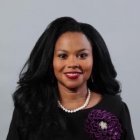

Baylor Expert on Race, Blackface Featured Nationally
Mia Moody-Ramirez, Ph.D., professor of journalism, public relations and new media at Baylor University, is a nationally recognized expert on mass media representations of minorities, women and other underrepresented groups. Over the past few weeks, Moody-Ramirez has been interviewed and quoted extensively by some of the nation's top media outlets for their stories about race -- specifically the history and cultural significance of blackface. She coauthored the 2018 book From Blackface to Black Twitter: Reflections on Black Humor, Race, Politics, & Gender with Janette L. Dates, Ph.D., educator and critical commentator on the images of African-Americans in media. In a Feb. 10 USA TODAY story about Viriginia's governor and blackface, Moody-Ramirez said, "I think we will see some good come out of these latest revelations. People will be more educated. They can no longer argue they didn't know that it is not appropriate to put on makeup to darken their face or change their hair texture to look like their favorite actor or celebrity . . . They will no longer have that excuse." Other stories include: The Washington Post Northam’s ugly yearbook photo and the racist origins of blackface CNN A not-so-funny story about blackface Arizona Republic He objected to a photo of coal miners who appeared to be in blackface. He never imagined the backlash. The Washington Post The lengthy history of white politicians wearing blackface — and getting a pass OZY Governor Wanted: Predators and Racists Need Not Apply PRI The World How blackface — ‘America’s first cultural export’ — reinforces oppression across the world USA TODAY Blackface in Virginia, other incidents show how deeply rooted anti-black racism is in America

Preaching to choirs, playing it safe and not saying much at the State of the Union
One Tuesday evening – pretty much everything seemed to go to plan. President Trump stuck to script, Republicans stood and clapped on cue, Democrats scoffed and scowled when required and we all listened closely for a total of one hour and twenty minutes – the second longest SOTU ever given. President Trump called for unity, touted the economy, acknowledged the white-wave of females on Congress and how there are now more women employed in America. He played to his base on topics like immigration and abortion and then oddly let everyone know that the only thing holding America back were expensive wars and pointless investigations. He also thanked veterans for defeating the Nazis. Left out was any mention of climate change or Russia. Of course, afterwards the Democrats responded, politicians flocked to reporters and pundits weighed in. President Trump played it safe and kept to the prompter, and according to CBS Evening News an overwhelming 76 percent of Americans liked what they heard. But the day after … there are still a few questions to be asked: Did President Trump deliver the speech e needed to deliver? Outside of the beltway, how was this received by voters? Does this point out a pathway for either Democrats or Republicans for 2020? And by not saying much, did Trump say everything he needed to? If you are covering, let an expert from the University of Mary Washington help. Dr. Stephen Farnsworth is professor of political science and international affairs at the University of Mary Washington. A published author and a media ‘go-to’ on U.S. politics, he is available to speak with media regarding this issue. Simply click on his icon to arrange an interview.



There were only two things happening this past weekend: The Super Bowl and what appears to be the downward spiral of the once prominent and popular Virginia Governor Ralph Northam. It was news that had pundits, journalists and political junkies glued to their televisions and smart phones as the story progressed and played out. As the Governor fought to hold on to his office and career by a string, media from across the country were contacting the University of Mary Washington’s Dr. Stephen Farnsworth to find out what was going on and what would happen next. Here are a few samples and snippets from some of the media that Dr. Farnsworth spoke to over the weekend. “Northam's appeal to the voters was that he wasn't an ordinary politician. But if he had been more of an ordinary politician, that press conference probably wouldn't have gone as badly as it did," said University of Mary Washington political science professor Stephen Farnsworth. Chicago Daily Herald and the San Francisco Chronicle Stephen J. Farnsworth, a political scientist at the University of Mary Washington, said the Northam controversy may trigger more revelations of racial misconduct, the same way that the #MeToo movement emboldened women to come forward after years of silence. “Other politicians who have similar controversies in their past have to be prepared for them to be disclosed,” Farnsworth said. “And there may be additional pressure on Virginia government to deal with legacies of the Confederacy and Jim Crow in terms of statues and renaming of public parks.” Washington Post “Ralph Northam’s time as governor is hanging by a thread,” University of Mary Washington political science professor Stephen Farnsworth said earlier in the day. “The forward movement of any agenda items that the governor has, has stopped.” ABC News, Washington When news was breaking – media knew who to call and how to reach them. When you have breaking news any day of the week, let an expert from the University of Mary Washington help. Dr. Stephen Farnsworth is professor of political science and international affairs at the University of Mary Washington. A published author and a media ‘go-to’ on U.S. politics, he is available to speak with media regarding this issue. Simply click on his icon to arrange an interview.

Empowered Storytelling Geared Toward Women Is a Winning Combo for Super Bowl Ads, Baylor Expert Says
Television advertisers who have chosen to appeal to women fans and viewers during this weekend’s Super Bowl have committed their millions of dollars to a wise strategy, according to a Baylor University marketing and advertising expert. Tyrha Lindsey-Warren, Ph.D., clinical assistant professor of marketing in Baylor’s Hankamer School of Business, studies consumer behavior and attitudes, multicultural media and advertising, and movies and entertainment. Each year, she and her students analyze the Super Bowl ads. And each year, she said, she sees more ads geared toward women. In fact, AdAge reports that brands like Bumble, Toyota and Procter & Gamble's Olay are featuring women in lead roles in their Super Bowl commercials this year. “That’s smart,” Lindsey-Warren said. “The current and future market power of women – as a whole and by segments – is undeniable and truly cannot be ignored by marketers.” To make her point, she cited research showing that women influence more than 80 percent of all consumer spending; 89 percent of the financial decisions are made by women; and globally, women control more than $20 trillion in world-wide spending. In addition, nearly 24.3 million African American women are brand loyalists and cultural trendsetters who have influence over the $1.2 trillion dollars in black spending power. Forbes reported in 2018 that “women constituted about 49 percent of the 108 million-plus people who watched” that year’s Super Bowl – and paid closer attention to the ads. “Nowadays, whatever brands plan to do during the Super Bowl must be extremely strategic and well planned when commercials go for over $5 million dollars,” Lindsey-Warren said. “With the #metoo and #times up movements as well as the diversity and gender issues in advertising industry and more, I think brands struggle as to how they approach targeting women on such a global stage.” She said brands that use “empowered storytelling” – storytelling that exudes the emotion of empowerment – make a difference. Good examples, she said, are Always’ “Like a Girl” commercial in 2015 and Audi’s “Daughter” commercial in 2017. “In my research, especially among Millennials and Gen Z, this approach is a powerful combination for brands who want to increase purchase intentions for their products or services,” Lindsey-Warren said. “The emotion of empowerment is multidimensional and promotes encouragement and can be extremely motivational,” she said. “When one is empowered, it can be an ‘aha’ moment and very transformational in a positive manner. In addition, empowered storytelling is a proactive approach to storytelling that demands you keep the receiver of the story in mind at every stage of the process because, at the end of the day, you want the receiver of the story to be better in some way for having received the empowered narrative they just viewed or experienced.” And when consumers are empowered, they tend to tell others. In the digital space, this looks like sharing videos, posts, quotes and more on social media channels. “Essentially, empowered storytelling gives brands the opportunity to achieve the right balance of entertaining and encouraging and, ultimately, healing by showing that they care for their consumers through the motivational messages and narratives they are producing,” Lindsey-Warren said. ABOUT TYRHA LINDSEY-WARREN, Ph.D. Tyrha Lindsey-Warren, Ph.D., is a marketing scholar, business executive, artist and entrepreneur. As a consumer behavior scholar, her research is rooted in narrative transportation theory (i.e., storytelling) that exudes the emotion of empowerment and its impact on consumer attitudes, behaviors, purchase intention and message recall. She also studies health edutainment, multicultural media and advertising, as well as movies and entertainment. Lindsey-Warren is an expert in effective communications strategies for leaders, multicultural communications and marketing. Her latest research, “An Examination of Television Consumption By Racial and Ethnic Audiences in the U.S.,” was published in the Journal of Advertising Research. She will be discussing this study during panel discussions in New York City and Los Angeles for the Geena Davis Institute on Gender in Media. ABOUT BAYLOR UNIVERSITY Baylor University is a private Christian University and a nationally ranked research institution. The University provides a vibrant campus community for more than 17,000 students by blending interdisciplinary research with an international reputation for educational excellence and a faculty commitment to teaching and scholarship. Chartered in 1845 by the Republic of Texas through the efforts of Baptist pioneers, Baylor is the oldest continually operating University in Texas. Located in Waco, Baylor welcomes students from all 50 states and more than 80 countries to study a broad range of degrees among its 12 nationally recognized academic divisions. ABOUT HANKAMER SCHOOL OF BUSINESS AT BAYLOR UNIVERSITY Baylor University’s Hankamer School of Business provides a rigorous academic experience, consisting of classroom and hands-on learning, guided by Christian commitment and a global perspective. Recognized nationally for several programs, including Entrepreneurship and Accounting, the school offers 24 undergraduate and 13 graduate areas of study. Visit www.baylor.edu/business and follow on Twitter at twitter.com/Baylor_Business.
