
Experts Matter. Find Yours.
Connect for media, speaking, professional opportunities & more.

Election 2024: Providing insight during a pivotal campaign season
Voter behavior and emotion, civil discourse, the spread of misinformation, the role of gender and race in politics and conspiracy theories are among the many topics University of Delaware experts can comment on during this final stretch of the 2024 campaign. David Redlawsk Professor of Political Science and International Relations Expertise: Political psychologist who studies voter behavior and emotion, focuses on how voters process political information to make their decisions. He has written several books on politics, worked behind the scenes on campaigns and ran for local office. Dannagal Young Professor of Communication Director of the Center for Political Communication Expertise: The spread of misinformation in politics and the intersection of entertainment and information, with an emphasis on political satire, political media effects, public opinion and the psychology of political humor. Kassra Oskooii Professor of Political Science and International Relations Expertise: Focuses on the interplay between the contextual and psychological determinants of political opinions and behaviors of high and low status group members. Erin Cassese Professor of Political Science and International Relations Expertise: Explores the behavior of women as voters and candidates for political office, and studies political psychology, gender stereotypes, public opinion, elections and the intersection of religion and politics. Yasser Payne Professor of Sociology and Africana Studies Expertise: Research program also focuses on Black racial identity; street identity; economic and educational opportunity or the impact of structural violence. Tim Shaffer SNF Ithaca Director Stavros Niarchos Foundation (SNF) Chair of Civil Discourse Expertise: Civil discourse in politics; can talk about partisanship, polarization and their impact on media outlets. advancement of democratic practices by focusing on the role of civic professionals in institutional settings. Alice Ba Professor and acting chair, Political Science and International Relations. Expertise: Her work on the international relations of East and Southeast Asia examines the structures, processes, and systemic effects of regionalism and cooperative regime building, as well as relations between smaller and major powers. Joanne Miller Professor of American Politics, Research Methods and Political Psychology Expertise: Studies political psychology, with an emphasis on political propaganda, misinformation and conspiracy theories. Muqtedar Khan Professor of Comparative Politics, International Relations and Political Theory Expertise: Issues surrounding U.S. foreign policy in the Muslim World as well as national security and counter-terrorism. To speak with any of these experts, simply visit their profle and click on the "contact" button, which will send a message directly to them (while also copying UD's media relations team).


#ExpertSpotlight: The History of DNC Conventions in America
As one of the most significant political events in American history, the Democratic National Convention (DNC) has shaped the political landscape and influenced presidential elections for over a century. Understanding the history of DNC conventions offers a window into the evolution of American politics, party ideologies, and electoral strategies. This topic is newsworthy not only because of its historical significance but also due to its ongoing impact on contemporary political discourse, party unity, and voter mobilization. Furthermore, the DNC conventions reflect broader societal changes, such as shifts in public opinion, the role of media in politics, and the influence of grassroots movements, which include: The evolution of the DNC’s role in shaping party platforms and political agendas Key historical moments from past DNC conventions that defined U.S. politics The impact of DNC conventions on voter engagement and turnout The role of media coverage in shaping public perceptions of the DNC How grassroots movements and protests have influenced DNC outcomes The significance of keynote speeches and how they have launched political careers By covering these angles, journalists can provide their audiences with a comprehensive look at the history of these important conventions and topics readers, listeners and viewers want to know more about. Connect with a political expert about the History of DNC Conventions: To search our full list of experts visit www.expertfile.com Photo Credit: Kelly Sikkema


Covering the race for the White House? Georgia Southern's presidency expert can help
It has been far from a quiet summer on the American political scene. Each day seems to bring a different twist of turn for both parties seeking to claim power in the upcoming November elections. And if you're covering - Georgia Southern University political science professor Joshua Kennedy, Ph.D., is here to help with any question you may have, angle you're looking to explore or simply be a reliable, informed and objective source for your stories. Kennedy's principal area of study and teaching is in American politics, with a more particular focus on the presidency and the federal bureaucracy. His research has appeared in such outlets as American Politics Research, Research and Politics and Presidential Studies Quarterly, and he is a renowned expert for local, regional and national media when it comes to the American presidency. So if you have a story to file between now and November 05 - simply click on Joshua Kennedy's icon now to arrange an interview today.


In the ever-evolving landscape of American politics, the concept of an open convention stands as a pivotal event that can reshape the trajectory of a presidential election. This topic is particularly newsworthy because it signifies a departure from the traditional, predetermined nominating processes, opening up a dynamic and potentially unpredictable political battleground. Understanding an open convention is crucial for the public as it underscores the democratic principles of debate, decision-making, and party unity, or lack thereof. The implications of an open convention extend to voter engagement, party strategies, and the broader political discourse. Key story angles for journalists could include: Historical Context and Precedents: Exploring past instances of open conventions in American history, their outcomes, and how they have influenced subsequent elections. Mechanics and Process: Detailing how an open convention operates, the rules and procedures involved, and the roles of delegates and party officials. Political Strategy and Maneuvering: Analyzing the strategies employed by candidates and their campaigns during an open convention, including coalition-building, negotiations, and power plays. Impact on Voter Perception: Investigating how an open convention affects public opinion, voter trust, and engagement with the political process. Potential Outcomes and Scenarios: Examining the possible scenarios that can emerge from an open convention, including contested nominations, brokered deals, and unexpected candidacies. Expert Insights and Analysis: Featuring commentary and analysis from political scientists, historians, and party insiders on the significance and implications of an open convention. By focusing on the intricacies and potential ramifications of an open convention, journalists can provide the public with a comprehensive understanding of this critical aspect of the American political system, offering diverse and compelling angles for coverage. Connect with an expert if you need to know more about Open Conventions: To search our full list of experts visit www.expertfile.com Photo credit: PBS Learning Media

How Do Political Conventions Work?
Political conventions in America are a fundamental aspect of the democratic process, serving as pivotal events where major political parties select their presidential candidates, solidify party platforms, and galvanize their bases ahead of the general election. These conventions are not only newsworthy because of their immediate political significance but also due to their historical, cultural, and strategic importance. They provide a stage for showcasing party unity, leadership vision, and policy priorities, making them crucial for understanding the direction of American politics. Key story angles for journalists could include: Convention History and Evolution: Exploring the origins and historical changes in political conventions, including how their roles and significance have evolved over time. Nomination Process: Examining the mechanics of how delegates are selected, how they vote, and the strategies candidates use to secure their party's nomination. Party Platforms: Analyzing the process of developing and ratifying party platforms, highlighting key policy positions and their implications for voters. Role of Delegates and Superdelegates: Investigating the influence of delegates and superdelegates in the nomination process and their impact on the democratic process within parties. Media and Public Perception: Assessing how conventions are covered by the media, the role of speeches and presentations, and their effect on public opinion and voter behavior. Security and Logistics: Providing insights into the extensive planning and security measures required to host these large-scale events, especially in light of recent public health and safety concerns. By focusing on how political conventions work in America, journalists can provide the public with a comprehensive understanding of these complex and significant events, shedding light on their impact on the democratic process and the broader political landscape. Connect with an expert about the role, purpose and history of political conventions in America: To search our full list of experts visit www.expertfile.com Photo credit: Isai Ramos

One week to go - Let's look at the role debates play in US Elections
US Presidential debates are a cornerstone of American democratic tradition, playing a critical role in shaping public perception and voter decision-making during election cycles. This topic is not only newsworthy because of its historical significance but also due to its influence on political discourse, media coverage, and the democratic process. The evolution of these debates reflects broader societal changes, technological advancements, and shifts in political strategy. Furthermore, presidential debates provide a platform for candidates to present their policies and personalities, thereby directly impacting election outcomes. Key story angles include: Historical Evolution of Presidential Debates: Exploring the origins, key moments, and changes in format and style of presidential debates from the Kennedy-Nixon debate in 1960 to the present day. Impact on Voter Perception and Behavior: Analyzing how debates influence public opinion, voter turnout, and the overall electoral process. Media's Role in Shaping Debates: Investigating the role of media in organizing, broadcasting, and moderating debates, including the influence of television, social media, and real-time fact-checking. Debate Strategies and Candidate Performance: Examining how candidates prepare for debates, notable performances, gaffes, and their impact on campaign momentum. Civic Engagement and Public Discourse: Discussing the role of debates in promoting civic engagement, political education, and public discourse on key issues facing the nation. Technological Advancements and Future Trends: Exploring how technology has transformed debates, from live streaming and interactive features to virtual debates and the use of AI in analysis. These angles offer journalists a comprehensive framework to explore the historical significance and ongoing impact of US Presidential debates on American politics and society. Connect with an Expert about the history of Presidential Debates: Jingsi Christina Wu Associate Professor of Journalism, Media Studies, and Public Relations · Hofstra University John Koch Senior Lecturer and Director of Debate · Vanderbilt University Kevin Wagner, Ph.D. Professor and Department Chair · Florida Atlantic University Juliana Fernandes Assistant Professor · University of Florida Sandra Pavelka, Ph.D. Expert in political science and justice · Florida Gulf Coast University To search our full list of experts visit www.expertfile.com Photo credit: Library of Congress

The anniversary of the Watergate arrests marks a pivotal moment in American political history, symbolizing the enduring importance of accountability, transparency, and the role of the media in a democratic society. This event matters to the public because it highlights the critical function of investigative journalism and its impact on government oversight. The Watergate scandal fundamentally transformed American politics and media, providing numerous compelling story angles for journalists to explore: The role of investigative journalism in uncovering the Watergate scandal The impact of Watergate on American political culture and public trust in government Personal accounts from journalists, political figures, and historians who lived through the era The evolution of political scandals and their handling in the media since Watergate The influence of Watergate on contemporary issues of government transparency and accountability Educational initiatives and resources for teaching the significance of Watergate to new generations As we commemorate the anniversary of the Watergate arrests, journalists have an opportunity to delve into these multifaceted narratives, shedding light on the historical significance and lasting impact of this monumental event in American history. Connect with an Expert about the history of Watergate: Stephen Griffin W.R. Irby Chair and Rutledge C. Clement Jr. Professor in Constitutional Law · Tulane University Thomas Schwartz Distinguished Professor of History · Vanderbilt University Michael A. Genovese Professor of Political Science and International Relations · Loyola Marymount University Jim Riddlesperger Professor · Texas Christian University Walter Isaacson University Professor · Tulane University To search our full list of experts visit www.expertfile.com Photo credit: Library of Congress
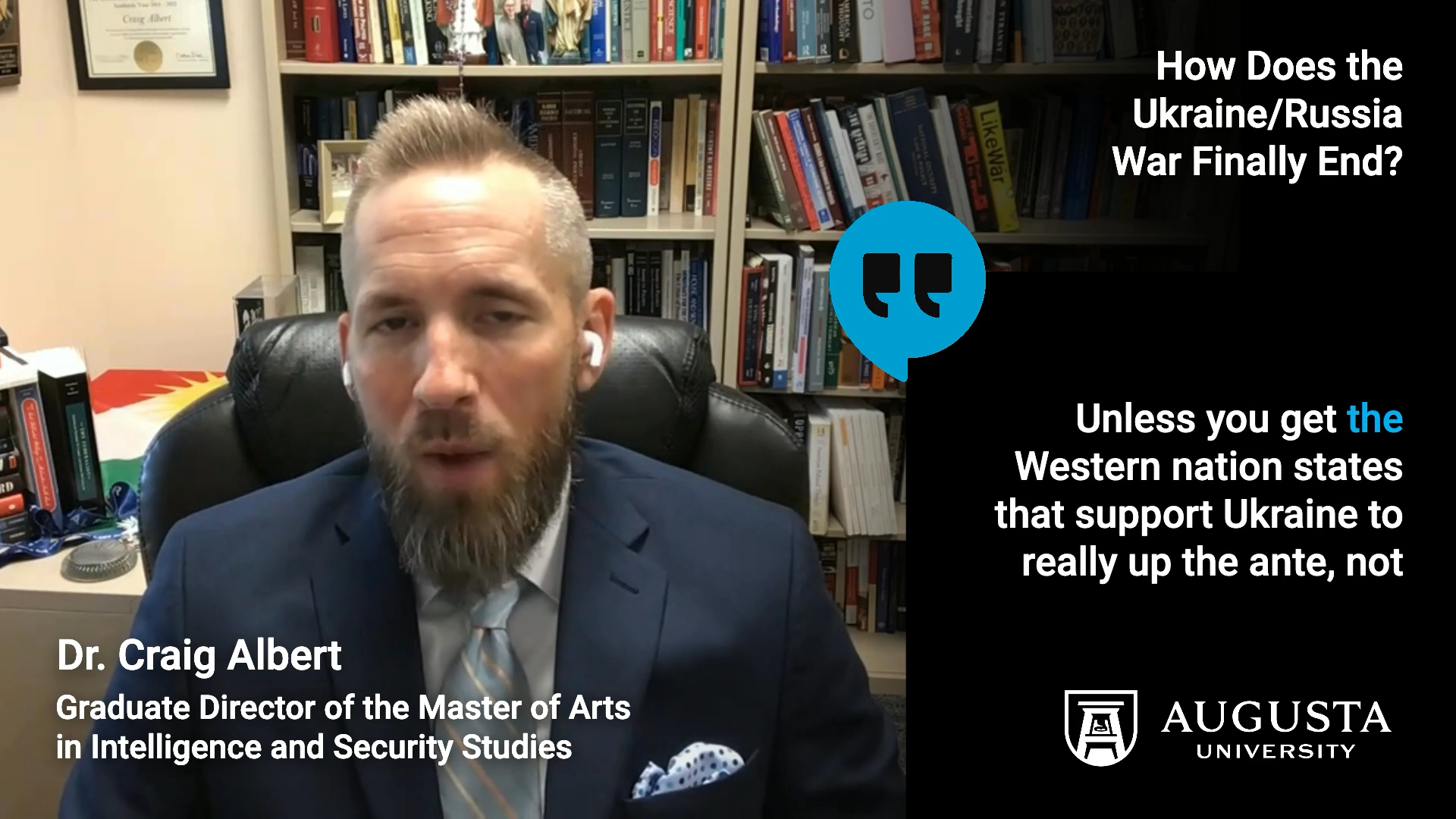
#ExpertSpot: How Does the Ukraine/Russia War Finally End?
With the war between Russia and Ukraine now approaching two and a half years - there's no end in sight. How does it end? Check out this ExpertSpot from Augusta's Dr. Craig Albert for some insight and perspective. Craig Albert, PhD, is director of the Master of Arts in Intelligence and Security Studies at Augusta University. He is a leading expert on war, terrorism and American politics. AI and the upcoming election is a serious topic. Albert is available to speak with media – simply click on his name to arrange an interview today.


Trump now a convicted felon.... let our experts explain this unprecedented situation.
Just six months before the upcoming election, former President Donald Trump has become the first U.S. president to be convicted of a felony, following his involvement in the hush money scandal. A Manhattan jury delivered a guilty verdict on 34 counts, raising profound questions about the implications for Trump's political future, the Republican Party, and the broader landscape of American politics. This unprecedented situation marks a historic moment in American politics, as no former president has ever faced such legal repercussions so close to an election. From constitutional debates to shifts in public opinion, and from international reactions to financial impacts, the scope of the story is immense. Here are several journalistic angles to explore this multifaceted issue: Constitutional implications of a felon running for presidency. Republican Party's internal conflicts after Trump's felony conviction. Public opinion on Trump's candidacy post-conviction. Trump's legal appeals and their impact on his campaign. Media's role in shaping perception of Trump's conviction. International reactions to Trump's felony and candidacy. Trump's campaign strategy adjustments after the conviction. Financial implications for Trump's businesses and fundraising. Historical instances of political candidates facing legal troubles. Impact of Trump's legal issues on down-ballot races. The ramifications of Trump's conviction are vast and unpredictable, potentially reshaping the political landscape in ways that are still unfolding. Let our experts assist with your understanding of this complex and evolving situation. Connect with an Expert about the Trump conviction: John Clinton | Vanderbilt University Abby and Jon Winkelried Professor of Political Science Brian Kalt | Michigan State University Professor of Law & Harold Norris Faculty Scholar Mean Bose | Hofstra University Professor of Political Science, Executive Dean for Public Policy & Public Service Programs Michael Genovese | Loyola Marymount University Professor of Political Science and International Relations, President of Global Policy Institute David RedHawks | University of Delaware Professor and Chair, Political Science Political Science and International Relations Tony Smith | UC Irvine Professor of Political Science James Sample | Hofstra University Professor of Law Todd Collins | WCU Steed Distinguished Professor Mark Caleb Smith | Cedarville University Professor of Political Science Stephen Farnsworth | University of Mary Washington Professor of Political Science and International Affairs To search our full list of experts visit www.expertfile.com
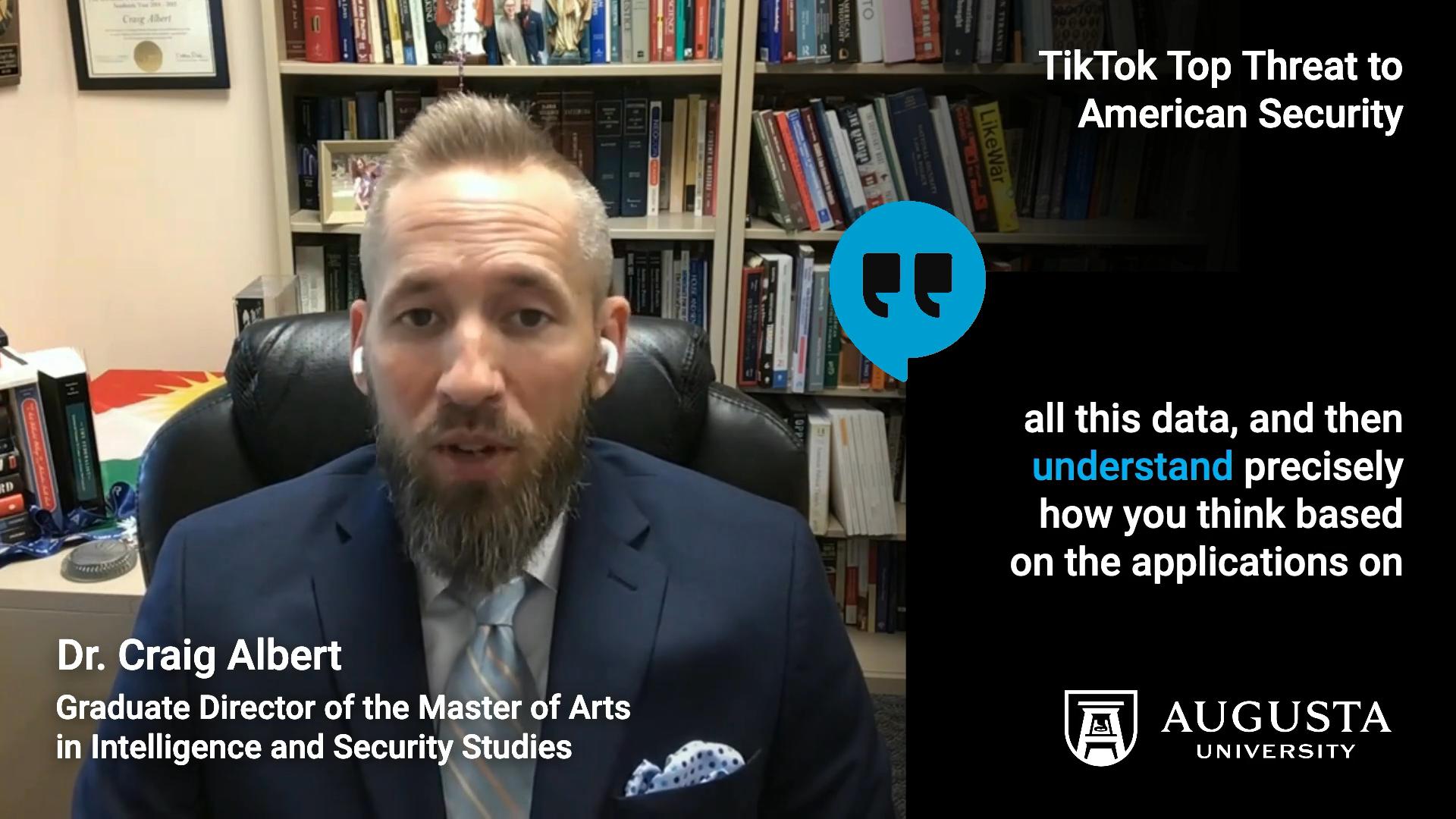
Time to talk about Tik Tok? Dr. Craig Albert explains the reasons we need to know more about the app
Earlier this week, TikTok said they were suing the U.S. government to stop a bill passed last month seeking to force ByteDance, TikTok’s Chinese to sell the app or have it banned. The lawsuit, filed in the U.S. Circuit Court of Appeals for Washington, D.C., argues that the bill violates constitutional protections of free speech. The suit calls the law an “unprecedented violation” of the First Amendment. Lawsuits and rhetoric aside - there are serious concerns about TikTok and Dr. Craig Albert is lending his expertise to explain what is going on behind the screens of the popular app. Read more about the dangers of TikTok here Read more from Albert about Informational Warfare here Read more from Albert about deepfakes here Craig Albert, PhD, is director of the Master of Arts in Intelligence and Security Studies at Augusta University. He is a leading expert on war, terrorism and American politics. AI and the upcoming election is a serious topic. Albert is available to speak with media – simply click on his name to arrange an interview today.