
Experts Matter. Find Yours.
Connect for media, speaking, professional opportunities & more.

A lasting legacy - A gift that will touch the lives of generations
$1.48 million estate gift to Georgia Southern University Foundation funds College of Education student scholarships An extraordinary estate gift from a daughter and her husband to honor her parents will touch the lives of generations of students to come through scholarships for Georgia Southern University students working to become public school educators. The $1.48 million gift from the late Janice Sapp Castles and her late husband Charles, named for her late parents, Margaret Elizabeth and Cullen Bernice Sapp, is the second largest estate gift received to date by the Georgia Southern University Foundation. “It is inspiring when alumni, whose lives were transformed through education, give back so generously so that future students can realize the same opportunities,” said Georgia Southern President Kyle Marrero. “The Castles’ gift honors the Sapps’ legacy and their desire to help others succeed.” An alumna of then-Armstrong Junior College, Janice Castles earned an Associate of Arts degree with the financial assistance of a scholarship. That scholarship, coupled with her parents’ determination to live sacrificially to provide for educational opportunities for their children that they themselves had not experienced, allowed Sapp to begin her post-secondary academic ambitions and inspired her to give to others. Sapp continued her education at the University of Georgia earning a master’s and specialist degree in counseling as well as a doctorate in school psychology. Her longstanding education career included serving as a middle and high school teacher, guidance counselor, school counselor and adjunct professor. She also formed her own psychology practice that provided therapy and psychological assessment and diagnosis in the Atlanta area. “The generous support by the Castles family will assist in removing financial barriers for many students pursuing initial teacher preparation degrees at both the undergraduate and graduate levels at Georgia Southern for many years to come,” said College of Education Interim Dean Amy Heaston, Ed.D.. “Initial teacher preparation degrees provide students with the first step to becoming certified to teach. For many students, the Margaret Elizabeth and Cullen Bernice Sapp Memorial Scholarship will provide a needed opportunity to achieve their aspirations of teaching in their own classrooms.” If you are a journalist looking to know more about the Georgia Southern University Foundation or the College of Education -- simply reach out to Georgia Southern Director of Communications Jennifer Wise at jwise@georgiasouthern.edu to set and time and date.

Hitting all the right notes - Georgia Southern music industry degree ready to launch
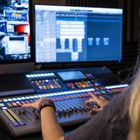
Georgia Southern University’s Department of Music earned national accreditation for a new music industry degree, the final step for an innovative program that combines music, technology and entrepreneurship. Launching in the fall of 2021, the new music industry program will prepare musicians for evolving careers in music. The program curriculum combines a traditional degree with 21st-century technology and performance opportunities. Accreditation from the National Association of Schools of Music (NASM) allows the new program, Bachelor of Arts in Music with a concentration in music industry, to be offered at the Armstrong Campus in Savannah. Students will have the option of declaring an emphasis area in music technology or music business. “We could not be more excited about this program,” said Steven A. Harper, Ph.D., chair of the Department of Music. “For many years, the music program has been itching to expand its reach and regional impact. Savannah is perfectly suited for a degree of this type and we couldn’t be more pleased to have this degree come to fruition.” The music industry program includes courses in music management, live sound, recording studio techniques, digital audio workstations and music entrepreneurship. “The numerous music industries in Savannah include music manufacturers, performing organizations/venues and major music festivals. These industries can provide ample internship possibilities for hands-on experience in a chosen area,” Harper said. “We are able to reach a student body we’ve never been able to serve before. We can prepare students for a whole different set of in-demand careers and we can create ties with the music industry in Savannah in a way that’s never been possible for us until now. It’s going to be a huge boon for the department, the college, the university and the Armstrong Campus.” One professor key to the program will be Stephen Primatic, DMA, who teaches percussion, theory, jazz and music technology. His versatility is evidenced by the books he has written: two on percussion pedagogy and another on instrument maintenance and repair. “This program will be beneficial to our students, the University and the community of Savannah, offering education and training for music careers in the 21st century,” said Primatic. If you are a journalist looking to know more about the Bachelor of Arts in Music with a concentration in music industry or would like to interview Steven A. Harper, Ph.D., chair of the Department of Music or Professor Stephen Primatic -- simply reach out to Georgia Southern Director of Communications Jennifer Wise at jwise@georgiasouthern.edu to set and time and date.

Alternative Data Can Offer Insight into GameStop Action on Wall Street
Thomas Shohfi, an assistant professor in the Lally School of Management at Rensselaer, says that looking at alternative data can offer important insights into the turbocharged trading of GameStop. “Volatility in options on GameStop, Nokia, and AMC is exploding,” says Shohfi. “Short sellers are taking massive losses, covering their positions and pushing the stocks even higher. WallStreetBetters keep looking for soft spots in the hedge fund short portfolios to ‘blow up’ their value again and again. It’s a mob-fund mentality.” Working with a former student, Shohfi has analyzed trends from the WallStreetBets subreddit and other social media platforms. He can provide an astute understanding as to how investors have reached this moment, why this has happened, and what the impact that this event will have in the future. “Practitioners, investors, and analysts are always looking for an advantage,” according to Shohfi. “The biggest advantage that we see today is through alternative data. It’s just a rich environment to observe human behavior, incentives, and gender and disclosure effects that affect capital markets like we have seen with GameStop.”

IU Kelley School finance expert available to discuss GameStop, Robinhood
Charles Trzcinka, the James and Virginia Cozad Chair of Finance at the Indiana University Kelley School of Business and an expert on financial markets and investments, is closely following developments involving individual investors and Game Stop and available to talk with reporters. He can discuss the impact of retail investors using the popular Robinhood brokerage and Reddit’s “Wall Street Bets” page on the stock of low priced companies like Gamestop, AMC and stocks such as BlackBerry, Bed Bath and Beyond and Nokia. Several brokerages halt buying of those and other stocks on Thursday. Trzcinka teaches behavioral finance and is familiar with Robinhood's model is to use game technology to trade stock and how it makes money by selling the right to trade against the orders to hedge funds and high frequency traders. In order to schedule an interview, contact George Vlahakis, associate director of communications and media relations at the Kelley School, at vlahakis@iu.edu or 812-855-0846.


A Free App Can Help School and College Administrators Contain COVID-19
With COVID-19 infection rates rising across the country as students return to school for the spring semester, how will schools and colleges control the spread? COVID Back-to-School can help. It’s a free online tool that predicts the outcome of taking specific measures to curtail the spread of the virus. The algorithm powering the app was developed by Rensselaer Polytechnic Institute computer science professor Malik Magdon-Ismail and builds upon the success of COVID War Room, an algorithm that can predict the spread of COVID-19 in smaller cities and counties across the United States and select international locations. Administrators at Rensselaer consulted COVID Back-to-School when devising a COVID-19 management plan that successfully kept the infection rate on campus well below 0.5% during the fall 2020 semester, even with most students attending in-person classes. Magdon-Ismail, an expert in machine learning, designed the algorithm to allow administrators at schools of all levels, as well as ordinary citizens, to quantitatively analyze various strategies for containing the virus. Users can enter details about their institution — like the zip codes students come from, the size of the school, how often students are tested, the number of expected interactions during a class or meal — and COVID Back-to-School will project outcomes like the proportion of students likely to arrive infected, the proportion of students likely to be infected over time, and the number of likely new infections every 14 days. “This is a publicly available tool that we’re hoping schools can use to quantitatively analyze re-opening strategies,” Magdon-Ismail said. “Schools can use it, at least, to evaluate how their current strategy will play out assuming an infection on campus. Better still, COVID Back-to-School allows schools to try out various strategies before actually implementing them, to see what works and what doesn’t.” Magdon-Ismail is available to discuss how the algorithm works and the utility it may provide to colleges and universities across the country in the spring semester.


How the Biden Administration Can Help Save the Planet
With the inauguration of Joseph R. Biden as the 46th president of the United States came a slew of executive orders—and perhaps most notably America's reentry into the Paris Climate Accord. After the Obama administration joined the largest global cooperative agreement to limit the emission of dangerously climate-altering greenhouse gasses in 2015, the U.S. withdrew in 2017 under former president Donald Trump. Villanova University biology professor Samantha Chapman, PhD, studies how "blue carbon" solutions, like the restoration of wetlands, can contribute to slowing the harmful impact of climate change on the planet. Recently, Dr. Chapman broke down the top three things the Biden administration must do to save the planet, since we are, as she puts it, "close to some scary tipping points." #1: Pressure Brazil’s President Bolsonaro to stop the devastation of the Amazon. "The Amazon Rainforest regulates our global climate. It is imperative that through diplomacy and aid, we incentivize developing countries to preserve their intact lands and biodiversity. We can't do this without helping local communities incentivize the people living in these places to save these lands. Road building in forests is a huge cause of our planet's downward slope." #2: Invest in restoration of natural ecosystems. "We must invest resources into coastal wetlands and forests, here and abroad. USAID could be partially retooled in partnership with the United Stated Geological Survey (USGS), which already does this. These natural ecosystems will serve as natural climate solutions and be harbors for threatened species and nice places for humans to recreate. We must restore the opportunity for nature to re-invoke the necessary feedbacks that make the ecosystems work. Sometimes this involves complicated engineering, sometimes it is simpler and means giving nature space to restore. We're trying both." #3: Find ways to make people feel connected to land and nature—and value it. "This is a vague one and not one that I'm sure any administration can do. The pandemic has given me hope on this—I see so many more people out hiking, fishing, walking, and hanging out in parks. When time comes for voting on taxes, people have to remember that these state parks and preserves and even neighborhood parks cost money to staff and preserve. The U.S. has incredible land and nature and yet, in my experience, Americans value and understand it less than other countries. Some of that has to do with our frontier history. We can learn from Native Americans. Appointing Representative Deb Haaland as the secretary of the interior is one good step the Biden administration has taken in this direction." Dr. Chapman emphasizes that despite the uphill battle ahead, she remains hopeful. "Left to heal and helped to heal, the ecosystem processes that sustain our lives and those of the other amazing organisms on our planet can be restored," she notes. "Good things are happening. They just need to happen at a much larger scale."


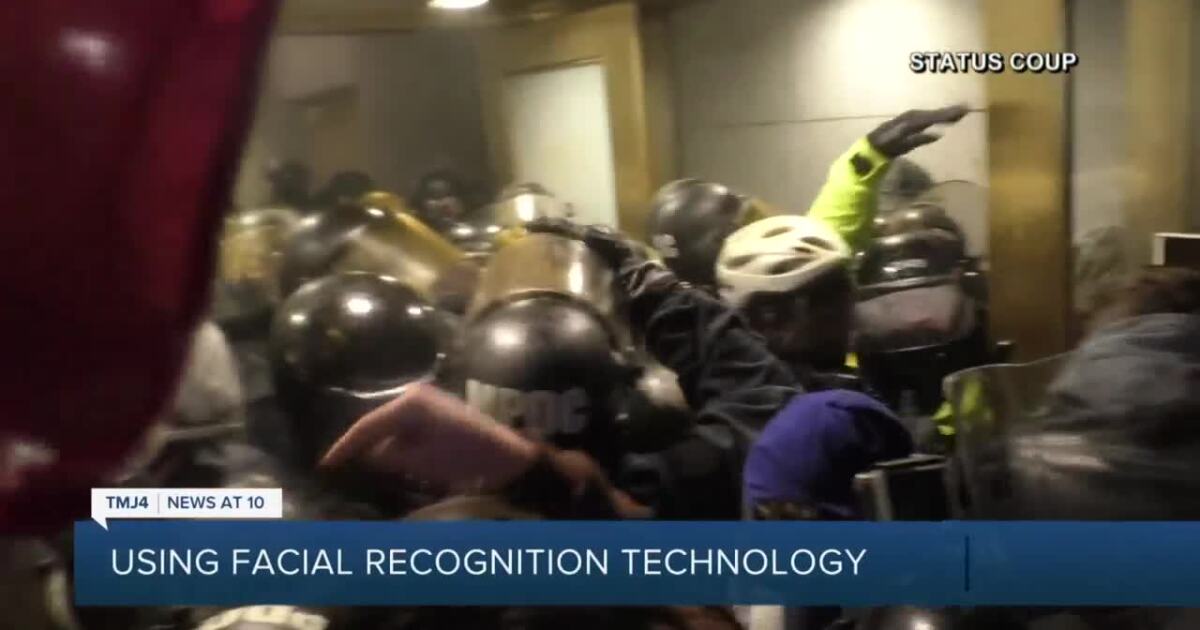
On January 06, America watched with shock as a mob of protesters stormed the gates in Washington, D.C. and invaded the Capitol buildings. For hours, the rioters looted and occupied America’s halls of power and though some were apprehended, many found a way to get out and get back home avoiding arrest. However, media coverage was substantial and some of the protesters were even bold enough to be caught posing for social media. Slowly, authorities are tracking them down, and Dr. Derek Riley, an expert at Milwaukee School of Engineering (MSOE) in the areas of computer science and deep learning, has been explaining how artificial intelligence (AI) technology that’s taught at MSOE is capable of enabling law enforcement's efforts to identify individuals from pictures. "With these AI systems, we’ll show it example photos and we’ll say, 'OK, this is a nose, this is an ear, this is Billy, this is Susie,'" Riley said. "And over lots and lots of examples and a kind of understanding if they guess right or wrong, the algorithm actually tunes itself to get better and better at recognizing certain things." Dr. Riley says this takes huge amounts of data and often needs a supercomputer—like MSOE's "Rosie"— to process it. To get a computer or software to recognize a specific person takes more fine-tuning, Riley says. He says your smartphone may already do this. "If you have a fingerprint scan or facial recognition to open up your phone, that’s exactly what’s happening," Riley said. "So, they’ve already trained a really large model to do all the basic recognition, and then you provide a device with a fingerprint scanning or pictures of your face at the end to be able to fine-tune that model to recognize exactly who you are." Riley says this technology isn't foolproof—he says human intelligence is needed at every step. He added we might be contributing to the data sources some of the technology needs by posting our pictures to social media. "Folks are uploading their own images constantly and that often is the source of the data that is used to train these really, really large systems," Riley said. January 14 – WTMJ, Ch. 4, NBC News The concept of facial recognition and the use of this technology in law enforcement (and several other applications) is an emerging topic – and if you are a reporter looking to cover this topic or speak with an expert, then let us help. Dr. Derek Riley is an expert in big data, artificial intelligence, computer modeling and simulation, and mobile computing/programming. He’s available to speak with media about facial recognition technology and its many uses. Simply click on his icon now to arrange an interview today.



Trump’s reaction to defeat further confirms urgency for school focus on social-emotional skills
Sandra Chafouleas, psychologist and behavioral health expert from the University of Connecticut, weighs in: Imagine what would happen if a preschooler didn’t “use their words” when they got upset about sharing, instead stomping around yelling while adults simply observed in silence. Think about what the school climate would feel like if a student punched another during recess while others watched without seeking help. Now consider the actions – and inactions – by Donald Trump on January 6 as the electoral vote counts occurred at the U.S. Capitol. Those behaviors show a desperate need for social emotional learning. According to the Collaborative for Academic, Social, and Emotional Learning (CASEL), social emotional learning involves five core competencies: self-awareness, self-management, social awareness, relationship skills, and responsible decision-making. Trump did not demonstrate these competencies when the election didn’t go the way he wanted. Connecting these school scenarios and Trump’s behaviors is not intended to contribute to the ever-mounting list of recommended consequences that could result from his fueling the insurrection that our nation has just experienced. It does bear noting, however, that if Trump were a Black teenager, he most certainly would have received exclusionary disciplinary action such as suspension and perhaps even expulsion from school. The purpose in connecting the two scenarios is to draw energies toward actions that propel us forward in bridging a divided nation. The responsibility for forward movement falls to future generations, which means it is critical that we pay attention to what happens in schools right now. We need to demand that policies and practice — and necessary resources — are put in place to strengthen school capacity to support students on their path to holding responsibility for democracy. Many excellent resources have quickly appeared to assist educators in teaching about the insurrection. Discussion guides are available to facilitate defining key terms, contrasting events through a social justice lens, and comparing justifications for action using fact checking. Other resources have been released that help adults talk about violence and support emotional safety of kids. What seems to be less prominent, however, is a direct connection to the social, emotional, and behavioral skills that we have just witnessed are missing. Education systems have begun the work of acknowledging their historic roles in contributing to exclusion, inequity, and intolerance of differences. Educators are working hard to turn the tide toward promising alternative approaches. Prominent among those approaches is a focus on social emotional skills. In either classroom scenario above, educators would be jumping into discussion about what supports are needed to address student needs. Social and emotional well-being fulfills us throughout every stage of life – integrating those skills should be in all that we do as adults to model, teach, and give feedback to our children. Of course schools must teach academic content areas and have high expectations, but there is tremendous potential to increase capacity to embed exploration, active practice, and positive feedback about social and emotional skills within each corner of the day. As one example, history professor Kellie Carter Jackson writes about challenges in teaching violence in political history. The author describes the need to question how political violence should be labeled, which could reveal an expression of unmet need by marginalized people. Learning through this analysis offers social and emotional parallels, such as examining biases, recognizing emotions, and examining integrity. As another, Facing History and Ourselves offers a classroom resource specific to the insurrection. Activities reference principles of social and emotional learning, such as steps for educators to practice self-awareness and relationship skills by examining their own emotions and perspectives. Student self-management and social awareness builds through reflection activity that builds civic agency. All of these examples offer incredible opportunity in social and emotional learning that could be advanced with more explicit connection. Entrenching social and emotional learning within the school day beyond this immediate teachable moment also is needed to enable sustained effort. CASEL identifies adults as key to social emotional strategies that will maintain safe, supportive, and equitable learning environments for this moment in history. To do so requires a strong collection of social, emotional, and behavioral education policies and practices. Responsibility for urgently resourcing this collection rests within each of us, right now, to ensure future generations who can and do take part in a resilient democratic nation. Dr. Chafouleas is licensed psychologist and Distinguished Professor, with expertise in school psychology and school mental health at the University of Connecticut’s Neag School of Education. If you’re a reporter looking to speak with Dr. Chafouleas about this topic – let us help. Simply click on her icon to arrange an interview today.


Why do presidential inaugurations matter? Let our expert explain
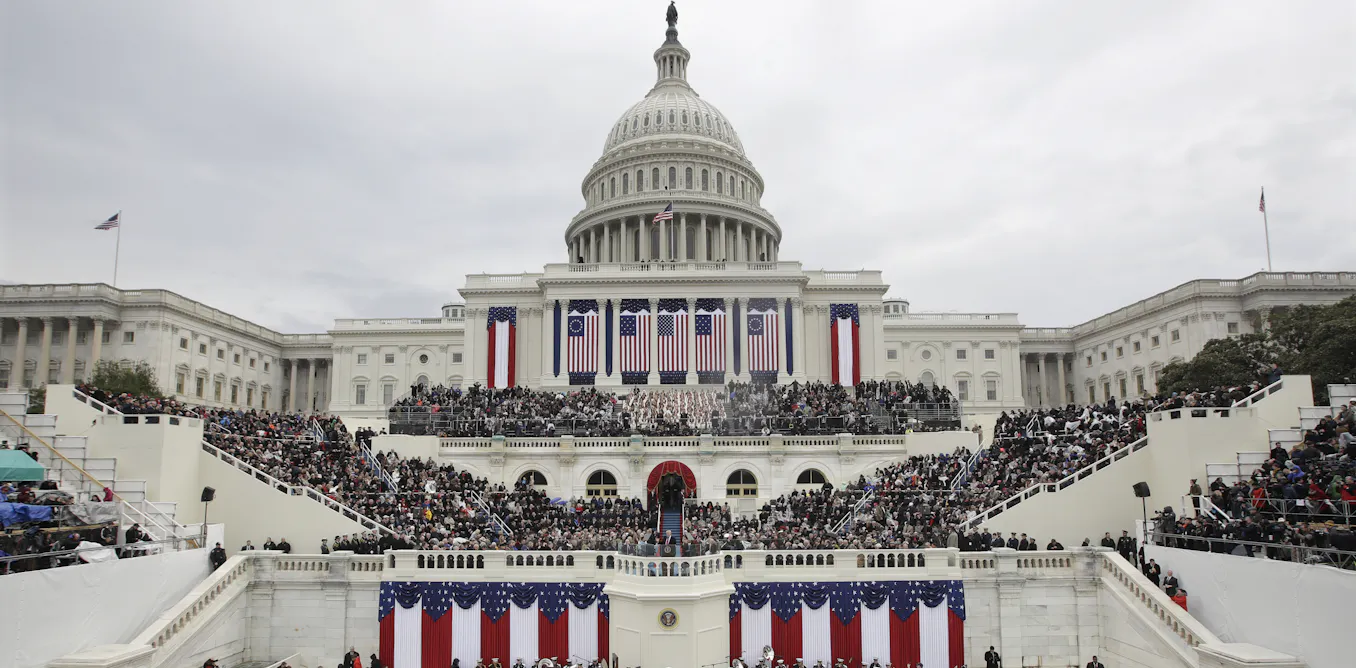
All eyes are on Washington on Wednesday as the country, and the world for that matter, tune in to watch the inauguration ceremony of Joe Biden as President of the United States. It’s a formal occasion, and one that comes with pomp and circumstance – but after the speeches and the parties, is it a day that really has significance? It’s a question that’s being asked, and one that Dimitris Xygalatas, an anthropologist and cognitive scientist at the University of Connecticut, decided to answer in a recent contribution to The Conversation. In the piece, he examines the appeal of such special and momentous occasions on society and why rituals have a great impact on the public’s perception on major events. The piece is attached – and if you are a reporter looking to learn more of speak to Professor Xygalatas about the significance of the inauguration, simply click on his icon to arrange an interview now.


Inauguration day - Trump's legacy, Biden's priorities
Speaking this morning on BBC radio, Dr McCrisken said: "President Trump’s legacy is being written right now. He’s ending his presidency under such dark clouds - he’s been impeached, there’s going to be a trial in the Senate that could convict him and prevent him from becoming a candidate again for the Presidency, so he’s leaving with lots of controversy – which of course is something that he’s always cultivated to a large extent, he wants to make everything about him. "Even today, by not showing up at the inauguration, by having a separate departure address, by issuing pardons including to his close former adviser Steve Bannon, he’s still cultivating that attention. That’s going to be the biggest Trump legacy - the degree to which he has attempted to shake up American politics – but the normality of American politics continues, we’re going to have a handover of power today through this inauguration, in the way that it always happens, every 4 years and the pendulum will swing again politically back to the Democrats. "There’s lots of pomp and circumstance around the Inauguration but the main moment is at noon, when Joe Biden will take the oath of office to become President of the United States – place his hand on a bible and say the sacred words with the Supreme Court Chief Justice presiding, and then Kamala Harris, very significantly, will also be sworn in as Vice President. She’s the first woman to become VP and the first VP of Black and South Asian heritage. It’s a really significant moment for both of them. "After the swearing in the next significant moment is the Inaugural Address, the first time Joe Biden speaks to the country as President. He’ll try and set the tone for his presidency – we can expect him to seek unity and healing but also assert his policy positions and his approach and set himself apart from the last four years under Trump. "Biden wants to hit the ground running, as soon as all the ceremonies are over today he’s going to be heading up to the White House and he’ll start business as President. One of the first things he’ll do, which a lot of Presidents do when they take office, is issue a series of Executive Orders – these are orders that are given directly by the President to the rest of the Executive Branch to implement policy in particular ways, and he’s going to use these to very quickly overturn some of the things that Trump did, like re-joining the Paris Climate Agreement, changing policies around immigration, changing policies around COVID-19 as well. "But he’s also putting forward some really significant legislative proposals to Congress, he’s seeking a very quick economic stimulus, another 1.9 trillion dollars of COVID relief, and a new immigration policy is in the offing. COVID-19 particularly is the thing he really wants to challenge as quickly as possible and try to turn around the situation in the United States where the virus is still ripping though the country – from his position as President, he’s going to try and get 100 million vaccinations in his first 100 days, that’s what he’s promising. "There’s a lot of challenges here and it’s going to be very difficult for him - particularly being overshadowed perhaps by the impeachment trial – so it will be an interesting few weeks and months ahead at the start of his Presidency." 20 January 2021
