
Experts Matter. Find Yours.
Search experts on 50,000+ topics. Or browse by topic category.
- Recent Searches


Featured
Global experts with a broad range of areas of expertise.







Thomas Smith
- Title
- Professor in the Practice of Finance; Academic Director, Master of Finance
- Role
- Emory University, Goizueta Business School
- Expertise

Peter Topping
- Title
- Professor Emeritus in the Practice of Organization & Management
- Role
- Emory University, Goizueta Business School
- Expertise


Marci Lynn Drees, M.D., MS, DTMH, FACP, FIDSA, FSHEA
- Title
- Chief Infection Prevention Officer and Hospital Epidemiologist
- Role
- ChristianaCare
- Expertise


Connecting credible expert sources & academic research
ExpertFile is a trusted resource for journalists, industry, funding agencies and government policymakers looking for fresh perspectives and innovative academic research.


Spotlights
Read expert insights on a wide variety of topics and current events.

All this talk lately about Trump and Carney squaring off has made me reflect on matters closer to home. My living room has never quite reached the level of a televised leaders’ debate, but retirement has a way of turning minor domestic disagreements into full parliamentary sessions. And unlike politicians, you can’t call a recess and fly to Florida. For years, we’ve been sold a lovely picture of retirement. The alarm clock disappears. The kids have finally stopped treating your house like a storage locker. There are leisurely breakfasts, travel, golf, grandchildren, and coffee on the patio on a Tuesday morning simply because you can. And there is your spouse. Every. Single. Day. For many couples, this is wonderful. Even in the happiest relationships, though, somewhere around the third consecutive Tuesday morning together, a thought may quietly surface: Have you always chewed like that? We spend years trying to figure out whether we have enough money to retire. We calculate pensions, RRSPs, CPP, home equity, and how long our savings might last. We consult financial planners and make budgets. Some of us even build colour-coded spreadsheets, which I think is taking things a little far (just saying). Far fewer couples spend time figuring out how they will retire together, and that’s a different calculation altogether. Two Retirement Plans before One During our working years, most couples have something that retirement quietly removes: separation. You go to work. I go to work. You have your colleagues, routines, frustrations, and responsibilities, and I have mine. We leave each other in the morning, collect a day’s worth of stories, and come home with something to talk about. Retirement can fold two fairly independent lives into the same house and the same calendar, usually by the first Monday. Research backs this up. A German study of 2,117 couples, drawing on more than 30 years of national survey data, found that on average both partners grew more satisfied with life around retirement. The changes were also highly correlated within couples, so when one partner’s satisfaction slipped, the other’s tended to slip right along with it (Weber et al., 2021). Your retirement becomes my retirement, whether I applied for the position or not. Then come the expectations. One person has been dreaming of travelling for 20 years. The other would happily never set foot in an airport again. One wants to move, and one wants to stay. One wants to golf four days a week. The other thought retirement meant finally doing things together. One wants to help the kids financially. The other believes the kids are 43 and it may be time they gave adulthood a whirl. Even the timing can cause friction. One of you retires in June, the other has three years left before the pension kicks in, and suddenly someone is home all day reorganizing the spice drawer. Research on how couples make retirement decisions suggests that the way the call gets made, and whether both people feel they had a say, shapes how satisfied they are with retirement afterward (Szinovacz & Davey, 2005). The relationship you bring into retirement also comes along for the ride. Old patterns of closeness and conflict travel with you like carry-on luggage, and retirement simply changes the scenery around them (Davey & Szinovacz, 2004). That makes me wonder whether every couple needs two retirement plans before they have one. What does your retirement look like? What does mine look like? Where do they overlap? Those questions may matter more than whether we can afford the Viking cruise. And Then There’s Money Of course there is. Money has always had an extraordinary ability to walk into a perfectly pleasant conversation and leave with a baseball bat. In retirement it gets even more emotionally charged, because our financial psychology shifts. During our working years, another paycheque is always coming. In retirement, many of us start drawing down assets we spent decades building, which can feel completely sensible to one spouse and mildly terrifying to the other. This is where FORO, Fear of Running Out, can pull up a chair at breakfast. One partner sees $800,000 as security. The other sees the same $800,000 as a number that can only get smaller. Suddenly a $12,000 trip to Italy is carrying a lot of luggage: safety, control, mortality, and whether 93-year-old you might someday need that money. Then health can change the equation again. A spouse gets sick. Mobility changes. One person becomes a caregiver, and independence starts to slip away. Retirement plans that once looked beautifully aligned suddenly don’t, and that is a lot of change for any relationship to absorb. Apparently, Fighting Isn’t Necessarily Bad Three very different thinkers have helped me rethink the whole subject: an ancient Chinese general, a modern conflict facilitator, and a psychologist with a lab full of arguing couples. Sun Tzu’s The Art of War is about military strategy, yet one of its most enduring ideas travels surprisingly well into marriage: understand the situation, understand the other person, and don’t waste resources on battles that don’t need to be fought. Priya Parker comes at conflict from almost the opposite direction in her new book, The Art of Fighting (2026). Her work explores how conflict can strengthen relationships when people engage with it well. She calls this idea “healthy heat.” Some difficult conversations need enough heat to burn through to what actually matters. Then there is psychologist John Gottman, who studied couples over time and found something I love: happy couples don’t all fight the same way (Gottman, 1993). His research identified three stable types. Validators calmly talk their disagreements through. Avoiders would much prefer to change the subject. Volatile couples argue loudly and passionately and keep their marriages intact anyway. The couples headed for trouble were the hostile ones, along with the ones who had quietly checked out. So you and I don’t have to argue like the nice couple down the street. They look exhausted and boring, to be frank. What seems to matter is whether we can disagree and still hold on to respect, affection, and the sense that we are on the same side. That calls for something to sit beside the retirement financial plan. The Retirement Rules of Engagement 1. Figure out what you’re really fighting about. Before digging in your heels, ask why this matters so much to each of you. The argument about selling the house may really be about losing independence. A fight over spending can be tangled up with FORO. Too much golf might be about purpose for one person and loneliness for the other. And the argument about money may have very little to do with the actual numbers. Once the real issue is on the table, at least you’re having the right argument. 2. Choose your battles. Sun Tzu would make an excellent retirement consultant. Some things matter enormously, and others really don’t. If your spouse has loaded the dishwasher incorrectly for 37 years and everyone is still alive, victory may no longer be strategically important. 3. Keep the heat healthy. Disagreement has a place in a strong relationship. Parker’s idea of healthy heat gives us permission to have uncomfortable conversations without treating the discomfort as proof that the relationship is in trouble. Say the difficult thing. Ask the awkward question. Then stay curious about the answer. 4. Remember who is sitting across from you. This is the person you chose to build a life with. Opposing counsel bills by the hour. Gottman’s research is especially useful here, because hostility and emotional disengagement are the real warning signs. Anger passes. Contempt has a nasty habit of moving into the spare room. 5. Build some mine, yours, and ours. Two people don’t need to become one organism to have a good retirement. Separate interests, friendships, and activities give each partner purpose and independence, plus fresh material for dinner conversation. Then build the shared things on purpose too: travel, grandchildren, exercise, volunteering, cottage time, date nights, or whatever makes retirement feel like ours. A little absence can still make the heart grow fonder. 6. Know when you’re stuck. If you keep having the same argument, if conversations regularly turn hostile or contemptuous, or if one of you has simply stopped engaging, outside help may be worth it. A couples therapist can untangle relationship patterns. A financial planner can put real numbers around money fears. A retirement coach can help when identity and purpose are causing friction. Sometimes the most useful person at the kitchen table is the third one. What About Grey Divorce? Grey divorce is worth a few minutes here, because ending a marriage later in life is especially hard to recover from financially, and it ripples through the whole family, right down to the grandchildren who now spend Christmas in two places. The Canadian story, however, is less dramatic than the headlines suggest, partly because so many of those headlines are American. In the United States, adults 50 and older made up 8% of all divorces in 1990 and nearly 40% in the latest figures, and their divorce rate doubled between 1990 and 2010 before levelling off (Westrick-Payne & Brown, 2024). Canada never had that boom. Statistics Canada reports that the divorce rate among Canadians aged 50 and older rose 26% between 1991 and 2006, from 4.2 to 5.3 divorces per 1,000 married people, and has since remained relatively stable (Statistics Canada, 2022). Grey divorce remains considerably less common here than divorce among younger adults, so if you’ve read that it has doubled, you were reading about Americans. Still, divorce at 65 is financially different from divorce at 35. There are fewer working years to rebuild. One household becomes two. Housing, retirement income, pensions, estate plans, and family relationships can all take a hit, and women tend to feel it most. A Statistics Canada study that tracked Canadians from their mid-50s into their 70s found that divorced women kept about 70% of their family income, compared with about 87% for women who stayed married (Mehdi, 2023). The study concluded that divorce lowers living standards in retirement more than the death of a spouse does. Till Death Do Us Part Is Longer Than It Used to Be A couple retiring in their 60s could easily have another 20 or 30 years together. That’s an extraordinary gift. It’s also a very long time to argue over the thermostat. Our health will change, our finances may shift, and our interests will wander off in directions neither of us saw coming. The people we were when we walked away from our careers won’t necessarily be the people we are at 75, 80, or 90, so our relationships need room to grow with us. So pick the battles worth fighting, bring a little healthy heat to the ones that matter, and concede the rest, especially the dishwasher. Thirty years of retirement works out to more than 1,500 Tuesdays together. It would be a shame to spend them arguing about the forks. Don’t retire. ReWire. Sue P.S. Retiring solo? Don’t get too comfortable. Many of the same issues show up with adult children, friends, and family, along with everyone’s sudden assumption that you now have all kinds of free time. I’ll tackle that one in two weeks. My Book is Available for Order: I hope you will consider ordering a copy of Your Retirement Reset for yourself, a friend, or someone you love. Published by ECW Press and is available through Indigo or Amazon and McNally Robinson. If you like supporting Canadian booksellers, check with your local independent bookstore too. Most can order it.



$787 a Month for a New Car? The Growing Cost of Getting Behind the Wheel
Buying a new car is becoming an increasingly expensive proposition for American consumers, with monthly loan payments now averaging a staggering $787. According to a recent DC News Now report, the average new-car loan is approaching $45,000, raising concerns about affordability, household debt and the long-term financial commitments consumers are making just to get behind the wheel. And the monthly loan payment is only part of the equation. Insurance premiums, maintenance, fuel and other ownership expenses can push the actual cost of driving considerably higher. For consumers already managing rising household expenses, the decision to purchase a vehicle has become increasingly complicated. Beyond the Sticker Price: What Consumers Need to Know Dr. Kashef Majid, Associate Professor of Marketing at the University of Mary Washington, has studied how consumers value hybrid and electric vehicles, including the financial and environmental motivations behind purchasing decisions. He was also named one of the 50 Best Undergraduate Business Professors of 2024 by Poets & Quants. View his profile Majid has also shared his expertise with WalletHub, offering first-pen perspective on car insurance costs, pricing fairness and the importance of making informed decisions when shopping for coverage. His insights are particularly relevant as Americans face record-high car payments, with insurance premiums adding another significant expense to the overall cost of vehicle ownership. As consumers grapple with rising costs, Majid can help explain what's driving vehicle affordability challenges, how purchasing decisions are changing and what motorists should consider before taking on substantial financial commitments. If you're interested in speaking with Dr. Kashef Majid about rising car payments, vehicle affordability, insurance costs and consumer behavior, simply click on his profile below to arrange an interview today.


Got Expertise to Share?
ExpertFile works with leading organizations with trusted experts. We help make their expertise more discoverable, structured, and actionable for AI-driven discovery, strategic outreach, and real-world opportunities.
Inflation and Interest Rates Put Household Budgets and Business Plans Under Pressure
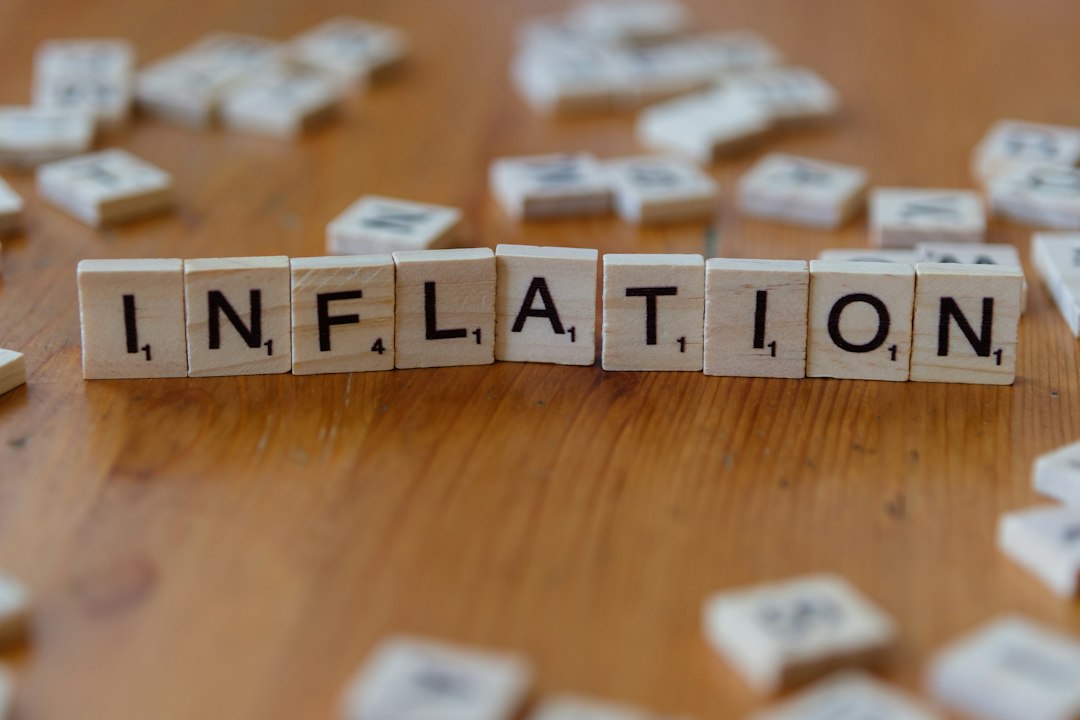
For American families, inflation is felt in everyday decisions: what to buy at the grocery store, how much to spend on gas and whether a major purchase can wait. This week’s Consumer Price Index report will bring those pressures into focus as the Federal Reserve considers its next interest-rate decision. Some officials have signaled that another increase could wait until December, but stronger inflation data could strengthen the case for action at the October 27–28 meeting. The stakes extend beyond the price of everyday necessities. Higher interest rates can make credit card balances and new auto loans more expensive, adding pressure to households already managing rising living costs. Homebuyers also face difficult affordability decisions, with the average 30-year fixed mortgage rate reaching 7.40% last week. Mortgage rates respond to bond markets and inflation expectations as well as monetary policy, meaning uncertainty can affect buyers even before the Fed acts. Businesses face a similar calculation. When financing becomes more expensive, purchasing equipment, expanding operations or hiring additional employees can become harder to justify. Rising operating costs can also force companies to choose between raising prices and accepting smaller profit margins. For policymakers, the challenge is to bring inflation under control while preserving employment and economic growth. This week’s report will offer another signal about that balance—and help shape the financial decisions families and businesses make in the months ahead.


Measles Makes a Dangerous Comeback as Pennsylvania Outbreak Tops 1,000 Cases
Measles was declared eliminated in the United States in 2000. More than 25 years later, the highly contagious disease is making a troubling comeback, with Pennsylvania now confronting an outbreak that has surpassed 1,000 confirmed cases. According to an October 7 update from the Pennsylvania Department of Health, the state has recorded 1,078 confirmed cases across 41 counties, including 207 hospitalizations and five measles-associated deaths. The figures underscore the serious public health consequences of a disease that can largely be prevented through vaccination. The outbreak is also raising important questions about declining vaccination rates, community immunity and whether other states could experience similar outbreaks. Measles spreads through the air when an infected person breathes, coughs or sneezes. The virus can remain infectious in the air for up to two hours after an infected person leaves an area. Early symptoms include fever, coughing, a runny nose and red, watery eyes, followed by a distinctive rash that typically begins on the face and spreads downward. While many people recover, measles can cause serious complications, including pneumonia, brain swelling and, in rare cases, death. Two doses of the measles, mumps and rubella (MMR) vaccine are approximately 97% effective at preventing the disease. Understanding the Outbreak and What Comes Next Dr. Lynn O. Lewis, a Professor of Biological Sciences at the University of Mary Washington, brings extensive expertise in microbiology, virology and infectious diseases. Lewis also directs the university's Irene Piscopo Rodgers School of Science and helped provide scientific guidance during the COVID-19 pandemic. View her profile With measles cases continuing to mount, Lewis can provide valuable perspective on how the virus spreads, why vaccination remains critical and what public health officials can do to contain outbreaks. She is available to help journalists explore several important questions: Why is a disease once eliminated in the United States returning? What makes measles so contagious? How do vaccination gaps contribute to outbreaks? And what lessons from the COVID-19 pandemic can help communities respond more effectively? As Pennsylvania continues its response, the outbreak is a reminder that infectious diseases once considered under control can re-emerge when the conditions that prevented their spread begin to change. If you're interested in speaking with Dr. Lynn Lewis about the Pennsylvania measles outbreak, infectious disease transmission, vaccination and public health preparedness, simply click on her profile below to arrange an interview today.


Slowing Job Growth Raises Questions About the Economy’s Momentum
The U.S. economy added just 29,000 jobs in September, while unemployment edged up to 4.2%, raising concerns about the strength of the labor market. Downward revisions to July and August’s employment figures further weakened the picture, suggesting hiring had been less robust than previously reported. For workers seeking their first job or a new opportunity, the slowdown adds uncertainty to an already challenging economic environment. The report also complicates the Federal Reserve’s next interest-rate decision. Weaker hiring reduced expectations for another rate increase this month, as policymakers weigh inflation concerns against the risk of slowing the economy further. Higher borrowing costs can make business expansion more expensive and discourage spending on homes, vehicles and other major purchases. A softer labor market gives the Fed another reason to consider how much financial pressure households and employers can absorb. September’s figures do not establish that a recession is underway: unemployment has remained between 4.1% and 4.3% since March, and employers are still adding jobs. Nevertheless, the report raises a broader question about whether the economy can sustain growth while hiring remains subdued. The coming months will help reveal whether September represented a temporary slowdown or a more persistent loss of momentum—with consequences for household confidence, business investment and monetary policy.
Why Polls Are a Snapshot, Not a Forecast
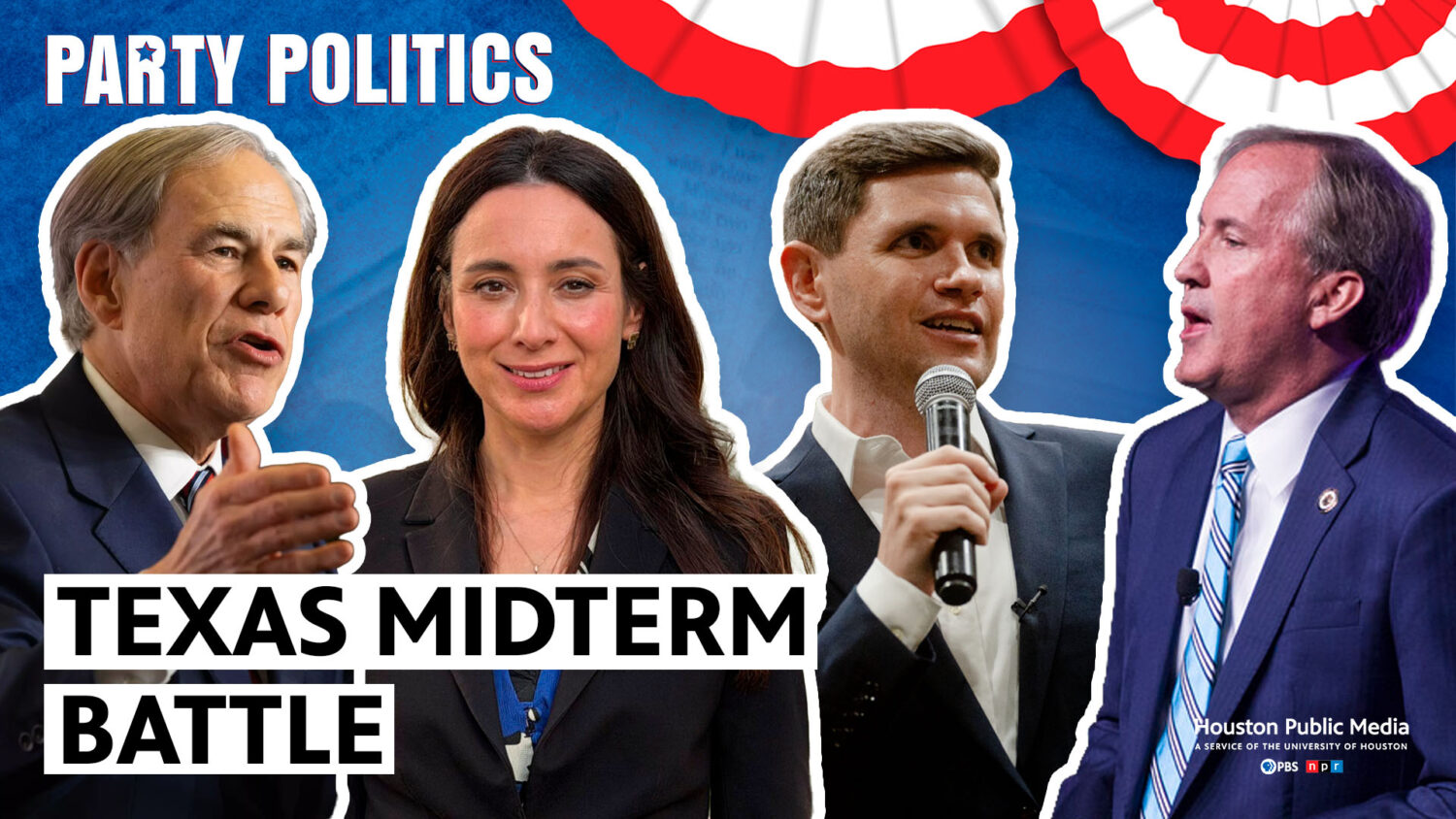
The poll numbers will keep coming between now and Election Day. Keith Gaddie wants you to ask a different question: not who's ahead, but why. Gaddie is the Hoffman Chair of the American Ideal and a professor at Texas Christian University. He says the biggest mistake people make is treating polls like a horse race. A poll is a photo, not a prediction "A poll is just a snapshot of a sample of reality at a particular point in time, and they age out really quickly." The numbers show what one group of people thinks right now. The real work, Gaddie says, is figuring out why they think that way and how it shapes the choices they make. And those opinions are often shallow. Gaddie says that "most of the time, when polling, people haven't thought about a question until you ask them, so their opinions are immediate. It is a knee-jerk reaction to the question." Noise vs. a real trend Poll movement comes from two places. One is the sample itself. Gaddie explains that "any oscillation within 4 or 5 points, if it's happening all the time, that's just from the sample. That's just noise." A real shift looks different: numbers that keep moving in the same direction over time. Don't expect many minds to change. "There are very few true undecideds. Most people are out there actually seeking information to verify prejudice that they have or preference that they have." What does move an election is a true crisis. The 2008 financial meltdown helped lock in Barack Obama's first win, and Gaddie says crises like that tend to work against the party in power. October surprises, on the other hand, are rare. Gaddie says, "They can't be engineered or manufactured." Today's fragmented media makes it harder still. He says, "You can't create a singular story that moves in one direction." Why turnout is the real story Hardcore partisans always vote. The voters in the middle turn out when something gives them a reason, and you can't predict which party they'll back. This year, Gaddie sees a signal in Texas, where more people voted in the Democratic primary than the Republican one. He says, "Primary turnout was at a record level." And in his view, high turnout usually means one thing: "When you get high turnout, you're usually voting for change." The reason, he says, is that "anger and disappointment and desire are much more powerful motives." Presidential years pull more voters because the race is national and the choices feel simple. Midterms are harder because, as Gaddie puts it, "life gets in the way." He adds: "Once you get registered, you have to work really hard to not be able to vote, even in Texas." What to watch instead of the numbers Look at how each candidate presents themselves for the job they're running for. Then compare the reality each candidate describes with the one you see. Gaddie's reminder: "only you know what that is, and we don't all see the same reality." The election isn't over when the votes are counted Gaddie also has a warning about what comes after Election Day. He says, "This election will not be over until the last lawsuit." He believes there are "procedural concerns that everyone ought to have." He points to a line from political scientist V.O. Key that he thinks captures what's at stake: "If a democratic regime is to work successfully, it must be generally agreed that contestants for power will not shoot each other and that ballots will be counted as cast." The takeaway A poll number is where the story starts, not where it ends. Turnout, timing, trust in the process and the candidates themselves will tell you far more about how this midterm plays out. Covering the midterms? Click on Keith's icon below to connect with him. He can speak to: Polling and public opinion Midterm turnout Texas and Southern politics Voting rights and redistricting Democracy and trust in elections



Experts on Hurricane Preparedness, Public Health and Community Recovery
When hurricanes threaten communities already facing social and economic challenges, the need for effective disaster preparedness and response becomes even more critical. University of Delaware disaster research experts can discuss the challenges communities face before, during and after hurricanes, including Hurricane Isaias and its potential impacts across Alabama, Mississippi, the Florida Panhandle and other parts of the northern Gulf Coast. The following experts from UD's Disaster Research Center are available to discuss the public health consequences of hurricanes, disaster preparedness and community recovery. Sarah DeYoung, associate professor of sociology and criminal justice, can discuss the needs of refugee and immigrant communities before, during and after disasters, including challenges accessing information, assistance and essential resources. She worked for several years with refugee and immigrant communities in southern Alabama through a grant-funded project. Jennifer Horney, professor of epidemiology, can discuss the public health consequences of hurricanes and other disasters, including evacuation decisions, the risks posed by inland flooding and the challenges communities face during recovery. She was part of the public health response to Hurricane Harvey and can discuss how communities still recovering from major storms may face additional challenges when another hurricane threatens the region. Jennifer Trivedi, associate professor of anthropology, studies how disasters affect marginalized communities. She can discuss how disasters compound existing challenges for people struggling to meet basic needs, particularly when flooding disrupts housing, transportation, food access and other essential services. Tricia Wachtendorf, co-director of the Disaster Research Center, can discuss the social impacts of hurricanes and inland flooding, including evacuation, preparedness, community response and recovery. She can also discuss how storms that are not the most powerful can nonetheless cause significant damage and disruption. To reach these experts directly, visit their ExpertFile profile and click on the "contact" button. Interested journalists can also contact MediaRelations@udel.edu.




The House passed the Sunshine Protection Act on July 14, 2026, reviving the national debate over whether the U.S. should adopt permanent daylight saving time, return to permanent standard time, or keep the twice-yearly clock change altogether. The bill now heads to the Senate. At the University of Mary Washington, Dr. Hilary Stebbins, Associate Professor of Psychological Science, studies the chronobiology and sleep patterns of college students, research that can help inform exactly this debate: how does shifting the clock affect cognitive performance and behavior, no matter which system we land on? Dr. Hilary Stebbins is an Associate Professor in the Department of Psychological Science at the University of Mary Washington. She is an expert on sleep deprivation, circadian rhythms, and dopamine function, and how each affects cognitive performance and behavior. View her profile Stebbins doesn't take a side in the policy debate. Her focus is chronobiology, how sleep patterns and circadian rhythms affect college students' cognitive performance and behavior. But that science speaks directly to the choice lawmakers are weighing: any shift, whether it's permanent daylight saving time, permanent standard time, or sticking with the current system, creates a temporary mismatch between our internal clock and the outside world, and it takes the body time to catch up. "One of my past teams found that as people report higher levels of sleepiness, they show higher dopamine function and also have more difficulty controlling impulsive actions." — Dr. Hilary Stebbins, Associate Professor of Psychological Science, University of Mary Washington Stebbins leads a year-long undergraduate research team (PSYC 491/492) each year, and in 2018 a team of her students won the Virginia Association for Psychological Science's award for best undergraduate paper for their research on sleep deprivation. Interested in discussing chronobiology, sleep patterns, or the science behind the debate over permanent daylight saving time, permanent standard time, or dopamine and behavior? Click on the icon below and connect with Dr. Hilary Stebbins, Associate Professor of Psychological Science at the University of Mary Washington, for expert insight into sleep research and its real-world stakes.


Supreme Court’s New Term Puts Government Power and Constitutional Rights in Focus
The U.S. Supreme Court began its new term October 5 with major cases involving climate change, gun rights, immigration and religious freedom. Although the disputes address different issues, they share an underlying question: What limits govern the exercise of government power? The answers could affect how communities seek compensation, how states regulate firearms and how religious institutions participate in publicly funded programs. The climate change case centers on Boulder, Colorado’s efforts to hold Suncor Energy and ExxonMobil accountable for alleged local damage associated with greenhouse gas emissions. The companies argue that federal law prevents those claims from proceeding. Beyond the financial stakes, the dispute raises questions about whether state courts can provide remedies for local harm linked to a global problem. The outcome could influence the path available to other communities pursuing similar claims. Gun rights cases will examine restrictions on semiautomatic rifles such as AR-15s. States defend the bans as public safety measures, while challengers argue that they prohibit commonly owned firearms protected by the Second Amendment. The cases could clarify how far states may go in regulating these weapons. Immigration disputes concern detention without bond hearings and deportations to countries where migrants have no ties. These cases place the administration’s enforcement authority alongside questions about migrants’ opportunities to challenge government actions. Their practical consequences could reach people facing prolonged detention or removal to unfamiliar countries. Religious freedom will receive particular attention in a case involving Catholic preschools seeking access to Colorado’s universal preschool funding. The schools argue that their exclusion amounts to religious discrimination, while Colorado maintains that participating schools must meet nondiscrimination requirements. The dispute asks how protections for religious exercise apply when faith-based institutions seek public benefits while retaining policies grounded in their beliefs. For communities, policymakers and religious organizations, the significance of this term extends beyond individual victories or losses. These decisions could establish boundaries that guide future laws and government actions, shaping how Americans exercise their rights and seek accountability through the courts.