
Experts Matter. Find Yours.
Search experts on 50,000+ topics. Or browse by topic category.
- Recent Searches


Featured
Global experts with a broad range of areas of expertise.





Pankaj Karande
- Title
- Associate Professor, Chemical and Biological Engineering
- Role
- Rensselaer Polytechnic Institute
- Expertise

Hiba Baroud
- Title
- Assistant Professor of Civil and Environmental Engineering
- Role
- Vanderbilt University
- Expertise


Connecting credible expert sources & academic research
ExpertFile is a trusted resource for journalists, industry, funding agencies and government policymakers looking for fresh perspectives and innovative academic research.


Spotlights
Read expert insights on a wide variety of topics and current events.

Are Phone Habits Contagious? Why Friends and Couples End Up Scrolling Together
Close friends tend to end up with the same phone habits, and a study published Nov. 2 suggests it is because agreeing with a friend feels rewarding. Eli Singer, founder of Offline.now, says that means one person changing their own habits can change a whole room, including the Thanksgiving table. What the study found Researchers at Tianjin Normal University ran two experiments with pairs of university friends (Yuan and colleagues, Journal of Behavioral Addictions, 2026). When friends disagreed about an activity, people moved toward their friend's choice. Friends with similar phone habits valued agreeing with each other more, and the effect was stronger in longer friendships. The study tested friends in a lab. It did not test couples or families at home. "We pick up habits from the people we spend time with. If the people around you are always on their phones, you probably will be too. The good news is that it works the other way as well." Eli Singer, founder of Offline.now How it spreads in families A 2026 review of 22 studies found that phubbing, ignoring someone for your phone, passes between family members, and that parents' phone use predicts their children's (Jakhar, Gupta and Vyas, Acta Psychologica, 2026). The same pull can help. When one person puts their phone away, it becomes easier for others to do the same. "You don't need everyone to agree. One person putting their phone away and suggesting something to do together is often enough to change the room." Eli Singer How to change the pattern Plan something to do together, like a walk after the meal or a game at the table. In Singer's experience, that works better than a rule about phones. Agree on one shared habit, such as phones on the counter while dinner is on the table. For couples, Offline.now's 15-minute evening reset is designed for two people, and it starts with both phones out of the room. The Doomscrolling Couple, one of Offline.now's most-read posts on this site, described the same problem in couples. "Two phones on the sofa every night is a habit a couple built together. They can change it together, starting with 15 minutes an evening." Eli Singer Where to start Lasting change runs on confidence, not willpower. Two questions find your starting place: Find Your Starting Place. If this feels persistent or overwhelming, a qualified professional can help you tailor support. Story angles for reporters The story: phone habits spread through relationships, so one person can change a group's habits. Thanksgiving week is when many families will see it at the table. The holiday table. Families who agree on one shared phone habit for the meal, and whether it lasts past the weekend. Couples on the sofa. How two people's evening phone habits form together, and how couples have changed them. Parents and kids. The research linking parents' phone use to their children's, and what families do about it. About the expert Eli Singer is the founder of Offline.now, a directory of therapists and coaches who work on screen and phone use. He created the Offline.now Matrix and wrote Offline.now: A Practical Guide to Healthy Digital Balance. He is available to comment through the holidays on phones, couples and family gatherings: eli@offline.now, or the Contact button below. The study: Yuan Y, Elhai JD, Montag C, He Q, Liu D, et al. Similarity of problematic smartphone use within social relationships: The role of social reward. Journal of Behavioral Addictions, Nov. 2, 2026. doi:10.1556/2006.2026.00136


Retirement Literacy: Because You Can't Live on Compound Interest Alone
November is Financial Literacy Month, that festive season when banks remind us to build a budget, pay down debt, top up our RRSPs and stop buying $7 lattes. Apparently, if we'd all made coffee at home for the past 40 years, we'd be sunning ourselves on a yacht off the coast of Sardinia. My own theory is that most of us would simply be drinking mediocre coffee in considerably larger houses. I have nothing against financial literacy. I spent 30 years in banking, so I'd be an odd choice to lead the revolt. But after decades of watching Canadians prepare for retirement, I've come to believe we're teaching people how to save for a life they haven't given much thought to living. We spend 40 years asking whether we'll have enough money to retire and almost no time asking whether we'll have enough life to enjoy it. That's why I prefer to talk about Retirement Literacy, which is much more interesting than calculating what your morning cappuccino will cost in compound interest by 2056. Retirement Literacy rests on three pillars: Health, Wealth and Purpose. Think of a three-legged stool. Lose one leg and things get wobbly. Lose two, and you're on the floor, wondering what happened to the plan. Yet nearly all our attention goes to Wealth. We have enough acronyms to win at Scrabble, yet nobody has built the calculator that tells us whether we'll have enough friends, enough mobility or enough reasons to get out of bed. 1.HEALTH: Your Most Valuable Retirement Asset Isn't in Your Portfolio Imagine saving for 40 years for a trip around the world, only to discover that your knees have decided they're not leaving the driveway. Most of us treat health as a project for later. We'll exercise when we have more time and deal with stress once the boss stops sending emails at 9 p.m. The small problem is that our bodies don't check our retirement dates before they start sending invoices. At 70, I teach 3 fitness classes (Lifting weights, Indoor Cycling and Zumba dancing) every week. What keeps me in the studio is independence. I want to hoist my own suitcase into the overhead bin, get up off the floor without phoning for backup, and keep travelling and golfing for decades. If I happen to outdance a few people half my age, I count that as a dividend. The real payoff of exercise in retirement is freedom: to chase grandchildren, carry groceries up three flights of stairs, climb into a kayak, and, more importantly, climb back out without a rescue team. The World Health Organization's guidelines (Bull et al., 2020) recommend that older adults get 150 to 300 minutes of moderate aerobic activity a week, strength training at least twice a week and balance work on three or more days, because that combination preserves physical function and reduces falls. That's a handsome return on an investment with no management fee. So start with walking, add some resistance training, practise standing on one foot when the kettle is on and dance in your kitchen. Pick something you enjoy enough to keep doing, because the best exercise program in the world is useless if it lives in a drawer beside your abandoned New Year's resolutions. Fitness works a lot like brushing your teeth, and I sincerely hope nobody needs a reminder about that one. Mental health deserves the same attention. Your job gave you far more than a paycheque. It gave you colleagues, deadlines, a reason to shower before noon and someone to complain about over dinner. When it disappears, some people feel liberated, and others feel strangely unmoored, and both reactions are normal. A meta-analysis by La Rue et al. (2022) found that health and social participation had the strongest associations with how well people adjust to retirement, which means your social calendar may matter as much as your investment statements. You can't deposit good health into a TFSA, but you'll love the returns. 2. WEALTH: You've Learned How to Save. Now Learn How to Spend. Here's where I risk being escorted out of the financial services industry. We've done a fine job teaching Canadians to accumulate money and a poor job teaching them to use it. For decades the sermon hasn't changed: save more, spend less, max out your RRSP, never touch the principal and, for heaven's sake, stop buying lattes. Then one Friday we retire, and after 40 years of gold stars for saving, we're suddenly expected to spend. It's like teaching someone to drive with one foot welded to the brake and then wondering why they won't merge onto a highway. I call the result FORO, the Fear of Running Out, which I talked about on CBC Radio this past weekend. It's the worry that our money won't last as long as we do, and unlike a good Bordeaux, it doesn't improve with age. Even comfortable savers fret about inflation, long-term care and the possibility of blowing out 100 candles. Blanchett and Finke (2024) found that retirees with more guaranteed income tend to spend more than people with comparable wealth sitting in investments. We're happier spending money that arrives like a paycheque than money we have to pry out of savings, which doesn't surprise anyone raised on "don't touch the principal." We get so focused on not running out of money that we risk running out of time. I'm no fan of recklessness. No one wants to celebrate their 85th birthday by discovering the grocery money went to a Mediterranean cruise. There is, however, a canyon between responsible spending and being too frightened to enjoy money you spent a lifetime accumulating. Retirement literacy moves the question from "How much can I save?" to "How do I turn my resources into a life I want to live?" For homeowners, the house is often the largest asset they have, yet many treat home equity as if it lived in a different universe from their retirement income. Selling, downsizing, borrowing against equity and staying put all deserve a fair hearing. And have you priced a two-bedroom condo lately? Between commissions, land transfer tax, condo fees and movers, downsizing can look a lot like rearranging the deck chairs on the Titanic, except each deck chair costs $900,000. So begin with the life before the number. What do you want your days to look like, who do you want around you, and what would you regret not doing? Then work backwards to what those choices cost. Separate essential expenses from discretionary ones and create a fund dedicated to experiences. The furnace and the roof have to find their own money. This fund is for the trip, the golf lessons or the family reunion you've been talking about since 2011. If you're unsure what you can afford, ask a retirement income planner to show you what your money can do for you and how long it might last. Money is a tool, and at some point we have to stop polishing it and put it to work. If your plan says you can afford the occasional latte, enjoy it. 3. PURPOSE: Retirement is a Career Change Without a Job Description Purpose may be the most overlooked pillar of all. We talk endlessly about how much money we'll need and rarely ask what we'll do on a Tuesday afternoon. Retire at 65, live to 95, and you get roughly 1,560 Tuesdays, which is a great many afternoons to spend wondering whether the dishwasher has finished. Work supplies identity, structure and company. When it goes, nobody needs your opinion on the quarterly numbers, your calendar is empty, and the dog wants to know why you're home all day. The National Institute on Aging (2019) links social isolation and loneliness to higher risks of depression, cognitive decline and heart disease, so staying connected belongs on the same list as your annual physical. Happily, purpose doesn't have to be grand. Nobody is asking you to solve climate change or become the next Colonel Sanders. It can be mentoring a young person, volunteering at a food bank, joining a choir or becoming the grandparent who always has time. After decades of measuring our worth by output, we may also need to learn that a meaningful life doesn't come with a quarterly performance review. Start experimenting before you retire. Don't wait until your farewell lunch to realize your entire social network still works at your old company. And be willing to fail. You don't have to master pottery, pickleball or Portuguese on the first try. If you spent your career as the expert in the room, there's something liberating about being gloriously incompetent at something new. Here's your homework: list five things you've always wanted to try, five people you'd like to see more often, and five ways you could contribute to your community. Pick one and act on it this month, preferably without building another spreadsheet. The Three Pillars Are More Connected Than You Think Health, Wealth and Purpose pull on each other every day. Poor health limits what your wealth can buy, money worries raise your blood pressure, and a lack of purpose breeds isolation, which has a way of breeding a deep relationship with the couch. Join a walking group and you get exercise, friends, structure and a reason to leave the house, all for the price of a decent pair of shoes. Volunteering and taking a course pay similar dividends, and neither one is listed on the TSX. Your Retirement Literacy Check-Up As we wrap up November, try a different kind of annual review alongside your investment statements. On Health, ask whether you can do the things you want to do and what you're doing to protect your strength, mobility and mental health, then put one realistic improvement in your calendar. On Wealth, ask whether you understand how your income will flow and whether fear is postponing experiences you can comfortably afford, then choose one and give yourself permission to book it. On Purpose, ask what gets you excited about tomorrow, who would notice if you didn't show up and when you last did something for the very first time. Honest answers count for more than perfect ones, and you don't have to reinvent your life by next Tuesday, although, as we've established, you have quite a few Tuesdays left. Don't Just Retire. ReWire! We've spent generations treating retirement as a financial finish line: work hard, save diligently, burn the mortgage and hope the numbers add up. A retirement can last 20, 30 or even 40 years, which is far too much life to leave to chance. So let's broaden the conversation from financial literacy to retirement literacy. Let's teach people to build a life along with a nest egg, talk about strength and mobility in the same breath as stocks and bonds, and stop measuring success by how much money is left when we die. I'd much rather measure it by how well we lived. For Financial Literacy Month, by all means, review your investments and tidy up your budget. Then put down the calculator, call a friend, go for a walk or finally book the trip you've been postponing. As for that $7 latte, buy it if you can afford it, drink it with someone you like and then take them for a nice long walk. Don't Retire... ReWire! Sue My Book is Available for Order: I hope you will consider ordering a copy of Your Retirement Reset for yourself, a friend, or someone you love. Published by ECW Press and is available through Indigo or Amazon and McNally Robinson. If you like supporting Canadian booksellers, check with your local independent bookstore too. Most can order it.



Got Expertise to Share?
ExpertFile works with leading organizations with trusted experts. We help make their expertise more discoverable, structured, and actionable for AI-driven discovery, strategic outreach, and real-world opportunities.
Black Friday 2026: What's Driving Holiday Shopping This Year?
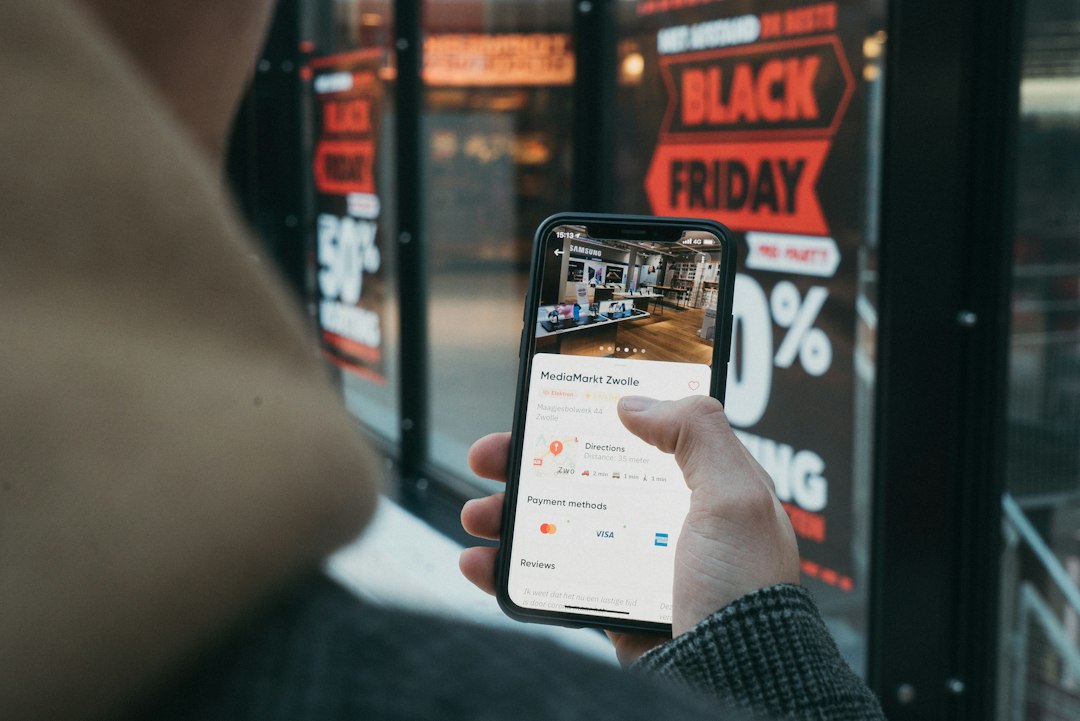
Black Friday is almost here, kicking off one of the busiest shopping periods of the year. But with rising prices, economic uncertainty and changing consumer habits, what can retailers and shoppers expect this holiday season? Andrew Spieler and Andrew Forman of Hofstra University's School of Business are available to provide expert commentary on Black Friday and holiday shopping trends. Topics for discussion include: Black Friday spending: What can retailers expect from shoppers this year? Consumer confidence: How are economic pressures affecting holiday purchases? Rising prices: Are shoppers spending more or simply paying more? Online versus in-store: How are shopping habits evolving? Holiday retail outlook: What could this year's shopping season reveal about consumer spending trends? For journalists seeking expert perspectives on Black Friday, holiday shopping and consumer behavior, Hofstra University can connect you with Andrew Spieler and Andrew Forman. Simply connect via a profile below get in touch with Ginny Greenberg, Senior Director of Communications now to arrange an interview today.



Holiday Spending in 2026: Are Americans Buying More or Just Paying More?
The holiday shopping season is underway, and Americans are preparing to spend billions on gifts, celebrations and family traditions. But with prices remaining a concern for households, an important question is emerging: Are consumers spending more because they're buying more, or simply because everything costs more? The National Retail Federation forecasts holiday retail sales will surpass $1 trillion in 2026, while other industry projections point to consumers becoming increasingly selective about where and how they spend their money. Behind those forecasts are larger questions about inflation, consumer confidence, household debt and the strength of the American economy. Dr. Anoop Rai, Professor of Finance at Hofstra University, is available to help journalists examine the economic forces influencing this year's holiday shopping season and what consumer behaviour could signal heading into 2027. View his profile Rai can provide perspective on several timely issues: Holiday spending forecasts: What do projected increases in retail sales actually tell us about the health of the economy? Inflation and purchasing power: Are Americans buying more, or are higher prices inflating holiday spending totals? Consumer confidence: How are economic uncertainty and household financial pressures influencing purchasing decisions? Credit cards and holiday debt: Are consumers increasingly relying on borrowing to maintain their holiday traditions? Black Friday and Cyber Monday: What can the year's biggest shopping events reveal about consumer demand and retailer performance? Looking ahead to 2027: What might holiday spending patterns tell us about the economic outlook for the coming year? As retailers compete for holiday dollars and families balance tradition with affordability, Rai can help put the latest economic forecasts into perspective, explaining what the numbers mean for consumers, businesses and the broader economy. For journalists covering holiday shopping, inflation, consumer spending or the economic outlook, connect with Dr Anoop Rai by visiting his profile below.


Should Kids Use AI Companions? Three Questions for Parents This Holiday Season
Nearly half of US children aged 9 to 12 have used an AI chatbot or companion, Common Sense Media reported Oct. 27. Eli Singer, founder of Offline.now, says the first question for parents is what the companion will replace in their child's day. He starts with how teens spend their screen time in 2026. Who is using them Common Sense Media's 2026 Census asked 1,211 children aged 9 to 17 about their media use (Common Sense Media, 2026). Among tweens, 49% had used an AI chatbot or companion. Among teens, 77% use AI tools in their free time. Many companion apps set a minimum age of 13 or 18, so younger children are getting past the age limits. "Many kids have already tried an AI companion. The most useful thing a parent can do now is talk with their child about it, and try it together." Eli Singer, founder of Offline.now What the rules and research say Character.AI ended open-ended chat for anyone under 18 on Nov. 25, 2025 (Fortune). Apple said on Nov. 2 that apps with romantic chatbot features will be rated 18+ (The Verge). California's SB 243, in force since Jan. 1, requires companion chatbots to remind minors to take breaks (Perkins Coie). The research is early. A survey of 843 young adults in China who used companion AI found that heavier use went with more loneliness, partly because it took time from friends and family (Xiao, Frontiers in Psychology, 2026). The survey cannot show which came first. A paper in Current Psychiatry Reports warns that chatbots built to agree with the person using them can keep people talking longer (Hopkins and colleagues, 2026). "An AI companion is built to keep a child talking. Friends and family will end a conversation when it's time. That difference matters for kids." Eli Singer Three questions to ask first What is it for? Help with homework is different from a chatbot your child talks to like a friend. Does it end conversations? Sit with your child for one session and see whether it finishes or keeps asking questions. What will it replace? The Census found a typical teen spends about eight hours a day on screens for entertainment. Time with a companion comes out of something else. Singer wrote in February about how much of our phone time is already spent with AI. "The same questions apply to adults. The holidays are when many people, parents included, try an AI companion for the first time." Eli Singer Where to start Lasting change runs on confidence, not willpower. Two questions find your starting place: Find Your Starting Place. Every family is different. Use what fits and consider professional support if conflict or distress feels severe. Story angles for reporters The story: AI companions have reached children faster than the rules or the research. Half of US tweens have already tried one, and new devices and apps arrive over the holidays. The age-limit gap. Why so many 9- to 12-year-olds use apps that set a minimum age of 13 or 18. Tool or friend. How families tell homework help apart from a chatbot a child talks to like a friend. Adults, too. Who tries an AI companion over the holidays, and what they want from it. About the expert Eli Singer is the founder of Offline.now, a directory of therapists and coaches who work on screen and phone use. He created the Offline.now Matrix and wrote Offline.now: A Practical Guide to Healthy Digital Balance. He is available to comment through the holidays on children, phones and AI companions: eli@offline.now, or the Contact button below.

Higher Education Grapples With The Ramifications Of AI
Michelle Trim of UMass Amherst wouldn’t call herself an AI enthusiast, but rather positions herself in the middle of the conversation, acknowledging that AI tools can be useful and even fun, but they take good governance to use appropriately, especially on a university campus. In a recent BusinessWest interview, she said, “Early on, people asked, ‘Use AI or don’t use AI?’ That’s an insufficient question.”



Growing Economy, Squeezed Budgets: Why Americans May Not Feel the Expansion
The U.S. economy is still expanding, but the latest business survey highlights why growth does not necessarily translate into financial relief. S&P Global’s preliminary November survey, released Nov. 23, showed private-sector business activity growing at its slowest pace in four months. Its composite output index fell to 54.6 from 55.9 in October. Readings above 50 indicate expansion, meaning the economy’s businesses continued moving forward even as their momentum weakened. The slowdown affected both manufacturing and services. High prices weighed on new orders, while capacity constraints limited how quickly businesses could complete work. Companies continued adding employees, but shipping disruptions complicated their ability to fulfill orders. Together, those findings illustrate an economy where demand remains substantial while businesses face obstacles to meeting it efficiently. For households, continued expansion does not automatically restore purchasing power. Slower inflation means prices are rising less quickly; it does not mean earlier price increases have disappeared. A family can experience a growing economy through steady employment while still struggling to cover everyday expenses. Businesses face a related challenge: Higher operating costs can squeeze profits, but raising prices further risks discouraging customers who are already watching their budgets. The November findings also complicate the outlook for monetary policy. Persistent price pressures can strengthen the case for keeping borrowing costs elevated, while slowing growth raises questions about how much financial strain consumers and businesses can absorb. The preliminary survey offers an early signal rather than a final verdict on the economy. How long can businesses keep expanding if affordability limits new orders? And which indicators best reveal whether economic growth is improving Americans’ financial well-being?


Measles Cases Near 6,000 as Sustained Outbreaks Test Public Health Response
U.S. measles cases are approaching 6,000, raising questions about why outbreaks continue to spread and how public health officials can communicate the risks effectively. In its Nov. 20 update, the Centers for Disease Control and Prevention reported 5,838 confirmed cases through Nov. 19, compared with 2,289 during all of 2025. With 96% of this year’s cases linked to outbreaks, the figures underscore the challenge of interrupting transmission once the virus reaches susceptible communities. Measles spreads easily through the air, and infected people can transmit it for four days before the characteristic rash appears. The virus can remain infectious in the air for up to two hours after an infected person leaves an area, complicating efforts to identify exposures before additional infections occur. Communities with lower vaccination coverage are particularly vulnerable, even when statewide vaccination rates appear relatively high. The consequences extend beyond a rash and fever. Measles can cause pneumonia, brain inflammation and other serious complications, with young children, pregnant women and people with weakened immune systems among those at greater risk. According to the CDC, two doses of the measles, mumps and rubella vaccine are approximately 97% effective at preventing measles. Containing outbreaks also requires prompt recognition, reporting, isolation and coordination between health care providers and local health departments. The communication challenge is translating national statistics into clear, practical information for individual communities. Families need to understand where exposures have occurred, who may be vulnerable and what steps health officials recommend. How can public health leaders explain a highly contagious disease without creating confusion or unnecessary fear? And how can physicians, nurses, pharmacists and community leaders address questions in ways that strengthen trust and support an effective response?


Talking Turkey: Villanova Economist Unpacks 2026 Thanksgiving Pricing Trends
As Thanksgiving draws closer, shoppers throughout the United States are flocking to stores and markets in search of holiday staples like stuffing, cranberries and pumpkin pie. With nearly 300 million Americans set to celebrate, retailers and producers are expected to receive a welcome, if often overestimated, financial boost. The outlook for shoppers looking to cut costs, however, is a bit more complex, albeit not without its positives. Peter Zaleski, PhD, is a professor of Economics in the Villanova School of Business and a frequent commentator on food prices and consumer issues. In examining this year’s holiday shopping trends, he maintains a gravy boat-half-full perspective. “Aside from overall inflation not taming, the short-run focus has been on gasoline, and maybe beef,” Dr. Zaleski says. “The items in the typical Thanksgiving meal aren’t really making headlines because their prices have been pretty tame. If there’s any cutting back this year, it’s only because budgets are tighter for some.” To Dr. Zaleski’s point, the Wells Fargo Agri-Food Institute contends that the average price of a Thanksgiving meal for 10 will cost 0.4% less than last year. Meanwhile, the American Farm Bureau Federation projects a 6.3% increase, but notes that the inflation-adjusted price remains stable and below the peaks seen in 2022 and 2023. Those looking for lumps in the market’s mashed potatoes may point to reports of higher prices for Thanksgiving’s traditional main course, with Fox Business estimating a 12% rise in wholesale turkey prices nationwide. Dr. Zaleski, however, believes the spike to be less dramatic, with supplies improving, inflationary pressures easing and avian influenza a non-factor. “Higher turkey prices made headlines last year due to avian flu, but the story right now is that there are no major problems in the turkey market,” he says. “Prices are up, but turkey is relatively inexpensive, and there are always deals.” As Dr. Zaleski notes, consumers can consistently achieve significant savings by turning to store-brand products over those associated with national brands, or by capitalizing on targeted discounts and “loss leader-type” offerings. Perhaps most significantly for budget-conscious shoppers, many of the items that make up a traditional Thanksgiving meal remain relatively affordable year in and year out. “Turkey is typically very inexpensive,” says Dr. Zaleski. “For reference, filet mignon is over $30 a pound on average, and turkey around $1. Turkey prices could double, and it’s still a bargain.” So, while consumers may see an uptick at the register when certain products are rung up this year, those willing to compare prices and take advantage of seasonal promotions should still find checkout costs manageable—no wishbone-induced luck necessary.

