Experts Matter. Find Yours.
Connect for media, speaking, professional opportunities & more.
Science Is Changing the Game: How Research Is Transforming Modern Sports
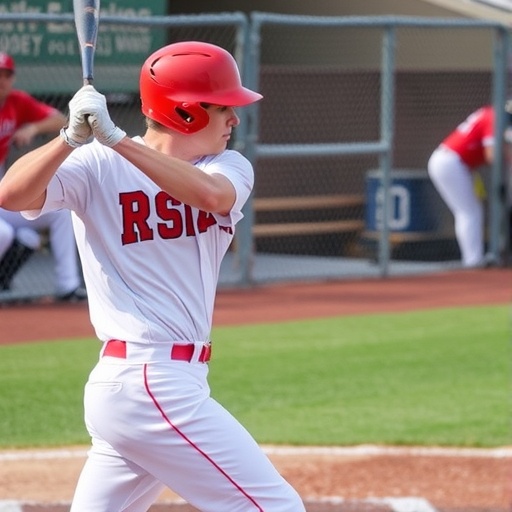
Professional sports have always embraced innovation, but today's competitive advantage increasingly comes from science. Researchers are applying advances in neuroscience, artificial intelligence, biomechanics, data analytics, and human performance to better understand how athletes make decisions, respond under pressure, recover from injury, and maximize performance. What once relied heavily on intuition and experience is now being informed by sophisticated research that can measure, predict, and improve outcomes at every level of competition. Recent studies from Carnegie Mellon University highlight the growing role science is playing across the sports landscape. Whether examining decision-making in high-pressure situations, analyzing performance strategies, or using artificial intelligence to improve health outcomes, researchers are uncovering insights that can help athletes perform at their best while extending careers and reducing injury risk. Ron Yurko is an Assistant Teaching Professor in the Department of Statistics & Data Science at Carnegie Mellon University, and the Director of the Carnegie Mellon Sports Analytics Center (CMSAC). View his profile Scott Powers, an assistant professor at Rice University with vast front-office experience in Major League Baseball—including stints with the Los Angeles Dodgers and the Houston Astros—joined forces with Ron Yurko, a director at the Carnegie Mellon Sports Analytics Center, to analyze this cutting-edge data. Their study, published in The American Statistician in 2026, marks a significant advancement in the quantitative understanding of batting dynamics. It uses high-resolution measurements of bat speed and swing length, metrics that were publicly released for the first time in 2024, to explore how hitters modulate their swings under different pitch counts, particularly when facing two strikes. Eric Yttri is an Associate Professor at Carnegie Mellon University where his research goal is to establish how neural circuits lead to these action selection decisions. View his profile As a neuroscientist, I have been working to uncover how the brain decides when to act and when to wait. Recent research from my team and me helps explain why this split-second pause happens, offering insight not only into elite athletic performance, but also how people make everyday decisions when the potential outcome isn't clear. We found that the key to hesitation is a response to uncertainty. This could be where a dropped hockey puck will land, when a race starts, or placing your order at a new restaurant. Eni Halilaj is an Associate Professor at Carnegie Mellon University where she directs the CMU Musculoskeletal Biomechanics Lab, an interdisciplinary group of engineers seeking to understand and optimize human movement mechanics. View her profile According to Eni Halilaj, an assistant professor in mechanical engineering at Carnegie Mellon University and biomechanist who specializes in orthopedic rehabilitation, 60 percent of those who suffer this common knee injury also develop osteoarthritis early in life. The degenerative joint disease, which affects an estimated 32.5 million individuals in the U.S., is especially problematic for younger patients because of the longer time span during which the chronic condition can cause debilitating pain, stiffness and limited mobility. "How can we make the 60 percent have the same long-term outcome as the 40 percent?" asked Halilaj, who is working to understand the difference between those who do and those who do not develop osteoarthritis following knee trauma. Matthew Walker is a Professor, Astrophysics & Cosmology at Carnegie Mellon University. His research focuses on the astrophysical properties of dark matter, but he is also a former collegiate D1 baseball player and lifelong, passionate fan staying apprised of advancements in the game. View his profile Carnegie Mellon University physics professor Matthew Walker said the system still has limitations, especially on pitches that are extremely close to the edge of the strike zone. "Every measurement device has a margin of error," Walker said. "ABS is, from what I can tell, somewhere around half an inch -- which means if the ABS call says that the pitch was within half an inch of the border between a ball and a strike, whether it says it’s a ball or a strike is really no better than a guess." Walker said that in those situations, the umpire’s original call should remain in place rather than letting the automated system make the final decision. The influence of science in sports extends far beyond professional athletics. Research developed for elite competitors often finds applications in healthcare, rehabilitation, education, workplace performance, and everyday decision-making. As teams continue to invest in analytics, wearable technology, artificial intelligence, and performance science, the relationship between research and sports is expected to grow even stronger. The result is a deeper understanding of how humans learn, adapt, compete, and perform under pressure. If you're covering or looking to know more, we can help! Carnegie Mellon University experts can discuss: • The growing role of science and technology in sports • Performance optimization and decision-making under pressure • Artificial intelligence and data analytics in athletics • Injury prevention, rehabilitation, and athlete health • The future of sports research and innovation



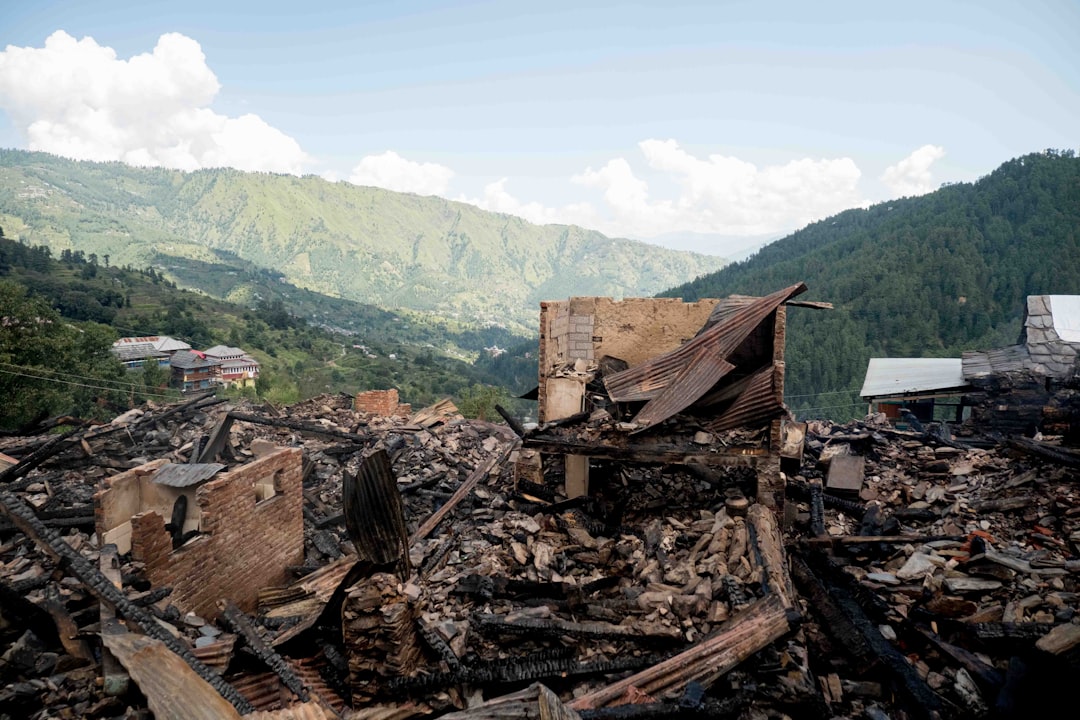
Faculty from the University of Delaware’s renowned Disaster Research Center are available to comment on the back-to-back earthquakes in Venezuela. These experts can discuss critical infrastructure failures, public health threats, emergency logistics and community-led response efforts in the region. Available experts include: From what I’ve seen, it looks like the earthquake occurred on the boundary of the Caribbean and South American plate. A strike-slip fault similar to the San Andreas. There have been a lot of nonductile reinforced concrete frame building collapses. There may be an effect of soil given that a lot of the damage has been near the coast. Jennifer Horney (Professor of Epidemiology) Focus: Public health impacts, post-disaster waterborne/vector-borne disease outbreaks and the breakdown of healthcare delivery due to damaged roads and disrupted communication networks. Tricia Wachtendorf (Co-director, Disaster Research Center) Focus: Disaster response logistics, community improvisation, neighbors as first responders and how to donate effectively to maximize impact. Sarah DeYoung (Associate Professor, Sociology and Criminal Justice) Focus: Maternal and infant health/feeding in emergencies, pet and companion animal evacuations and community-level crisis decision-making. To contact these experts directly and arrange an interview, visit their ExpertFile page and click on the contact button. Interested reporters can also email MediaRelations@udel.edu.



Levy on Home Ownership, Suburban Voters, and the Midterms
A recent media appearance by Lawrence Levy, associate vice president and executive dean of Hofstra University’s National Center for Suburban Studies, include: June 17: Newsday: “Will they ever own a home? Long Island renters fear the ‘American Dream’ is out of reach.” Across Long Island, many renters are finding themselves shut out of a housing market defined by record prices, limited inventory and rising borrowing costs. Still, Newsday reports, people continue to aspire to homeownership, viewing it as a source of financial security and stability. “The lure of suburban homeownership remains as powerful as ever,” said Levy. “How else do you explain the willingness of more and more people to go deeper and deeper in debt to realize their suburban dream?”

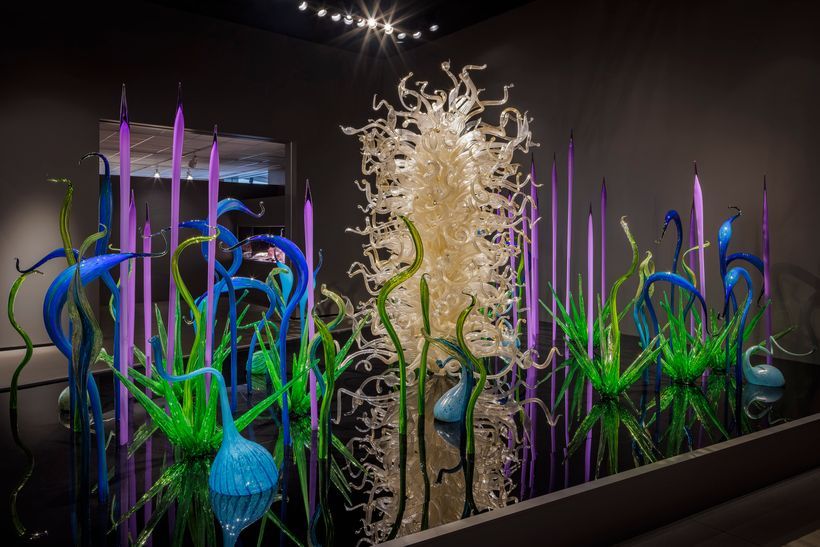
Chihuly’s Glass Abloom at Meijer Gardens
Frederik Meijer Gardens is hosting Chihuly at Meijer Gardens through Nov. 1, 2026 - the only temporary Chihuly exhibit in the country and one of only two in the world this year. Most creative passions have their roots in childhood—and such is the case with Dale Chihuly’s great love of flowers. The artist fondly recalls his mother’s large and exuberant garden in Tacoma, Washington, known as one of the most beautiful in the neighborhood. Memories of his mother’s garden have influenced much of Chihuly’s work, with the bursting colors and blooming forms matching the fecundity of flora. Another inspiration for Chihuly’s flowering glass forms is the famed Blaschka Collection of glass flowers at Harvard University’s Museum of Natural History, which he encountered while studying sculpture on the East Coast. His avowed love of Vincent van Gogh’s vibrant flower paintings provides another source for Chihuly’s expressive floral artworks. Michigan’s largest‑ever Chihuly exhibition marks long-awaited return to Meijer Garden MLive/Grand Rapids Press April 30, 2026 “The exhibition offers an unprecedented opportunity to lose yourself in Chihuly’s career and in individual pieces,” said Suzanne Ramljak. “It’s hard to describe how experiential it is.” Chihuly’s many exhibitions in conservatories and botanical gardens—including repeatedly at Frederik Meijer Gardens & Sculpture Park—further testifies to the ways his art speaks directly to nature. Meijer Gardens’ 2026 presentation of CHIHULY at Meijer Gardens features a number of the artist’s floral-based series, including his Venetians, Ikebana and Fiori. Below are images of a few of the blooming glass pieces visitors encounter inside the Chihuly: Radiant Forms indoor gallery exhibition, while his outdoor installations revel in the company of flowers. VENETIANS Chihuly’s opulent Venetians series, begun in the late 1980s, is both a celebration of the Italian city that fueled his glass art and of nature’s endless bounty. Several of these baroque vessels are adorned with vegetative forms and stylized flowers in colors that rival that of a garden palette. IKEBANA In 1989, Chihuly began his Ikebana series inspired by Japan’s traditional art of flower arranging. Chihuly’s bold variations on this tradition features sculptural vases of every imaginative shape, containing expressive flowers not to be found in any handbook of botanical species. Chihuly continued his exploration of Japanese flower arranging in a number of innovative glass-on-glass paintings, which are also on view in the Radiant Forms exhibition. FIORI AND MILLE FIORI Chihuly’s profusion of floral forms continues in his Fiori (Italian for “flowers”) and Mille Fiori (“a thousand flowers”) series. Whether shown as singular stalks or amassed on a platform as a riotous glass garden, the artist’s Fiori both celebrate the vitality of nature and the endless creative possibilities of glass. Massive, fantastic Chihuly exhibition opens in Grand Rapids Detroit Metro Times May 1, 2026 “It’s a different piece every day, when the sun hits it and flashes out from its tips, or when it’s darker and deeper in color,” Suzanne Ramljak says. “And that, I must say, is really the pleasure and the power of an outdoor sculpture park that we have. It is an outdoor museum, and it’s alive … when you put art outdoors, nature adds a whole other dimension of life and color.” When Chihuly’s ongoing series of Fiori are set outdoors—in the landscape as with Mottled Trumpet Flowers or gathered within a floating Fiori Boat—his opulent floral forms gain dynamism through the interplay with living organisms. CHIHULY at Meijer Gardens Presented by Macatawa Bank runs through Nov. 1. General admission tickets include access to all outdoor Chihuly installations across the campus. The indoor CHIHULY: Radiant Forms requires a separate timed-entry ticket ($9 adults, $5 children ages 3–13 and members receive a 10% discount). For exhibition tickets and a schedule of related events and programs, visit MeijerGardens.org/Chihuly. Suzanne Ramljak is Director of Curatorial Affairs at Frederik Meijer Gardens & Sculpture Park, where she has worked since 2022. Ramljak previously was curator at the American Federation of Arts, New York, overseeing the development of traveling museum exhibitions and scholarly publications. View her profile. If you are looking to cover CHIHULY at Meijer Gardens, connect with Suzanne below.


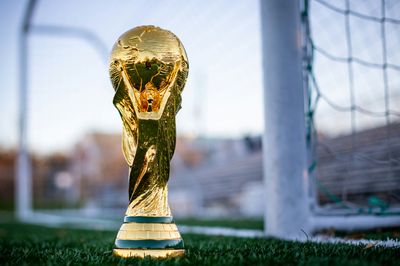
World Cup 2026: Georgia Southern University Experts on the Game Behind the Game
Atlanta is one of the World Cup's biggest host cities. Georgia Southern faculty across economics, health sciences and international studies are ready to speak to the stories behind the tournament. Featured Topic The Atlanta Advantage: Regional Economics of Hosting the World Cup What it means for local businesses, tourism, and the long-term economic legacy of a host city Atlanta's World Cup moment is as much an economic story as a sporting one. Georgia Southern University economics professors Michael Toma, Ph.D., and Anthony Barilla, Ph.D., can speak to tourism revenue, infrastructure investment and what host cities actually gain — and manage —- when the world comes to town. Experts Michael Toma, Ph.D. - Regional Economics and Development Anthony Barilla, Ph.D. - Economics and Public Policy Featured Topic Playing Across a Continent: The Physical Demands of a 48-Team Tournament What elite athletes face competing across climates, time zones and a month-long schedule 48 teams. Multiple cities. Almost no recovery time. Georgia Southern health sciences and kinesiology professor Samuel Wilson, Ph.D., and sports psychologist Brandonn Harris, Ph.D., can explain how a World Cup schedule affects the human body and how elite teams prepare for it. Experts Samuel Wilson, Ph.D. - Health Sciences and Athletic Performance Brandonn Harris, Ph.D. - Kinesiology and Exercise Science Featured Topic More Than a Match: The World Cup as Cultural and Political Exchange How the world's biggest sporting event becomes a stage for diplomacy, identity, and soft power When 48 nations converge on American soil, the game is only part of the story. Political science and international studies expert Christopher M. Brown, Ph.D., can speak to the geopolitical dimensions — national identity, soft power and what it means for the U.S. to host global soccer for the first time in a generation. Experts Christopher M. Brown, Ph.D. - Political Science and International Studies



World Cup 2026: Story Angles Beyond the Pitch
The 2026 FIFA World Cup will be one of the biggest sports stories of the year, with matches underway across Mexico, Canada and the United States. But the story will reach well beyond the field. As the tournament moves from city to city, it will bring host communities, public agencies, local businesses and civic leaders into the spotlight. That creates a wide range of story angles for journalists, from public health and safety, tourism and economic impact to sports technology, fan culture, athlete performance, national identity and the politics of international sport. Institutions using ExpertFile are helping media cover these broader World Cup stories through dedicated Topic Authority Hubs, Spotlight posts and expert profiles featuring trusted sources across health, business, technology, public policy, culture and sport. Featured World Cup Expert Hubs With the World Cup coming to the New York metro area, Hofstra University’s hub brings together experts on athlete health, recovery, injury prevention, mental performance, public health, tourism, local business impact and the cultural history of soccer. Explore Hofstra’s World Cup 2026 Hub. Source: Hofstra University The University of Delaware’s hub focuses on player safety, concussion research, sports analytics, tourism, youth development, fan behavior, shared experiences and the science behind elite competition. Explore the University of Delaware’s World Cup 2026 Hub. Source: University of Delaware Carnegie Mellon University’s hub looks at the tournament through the lenses of geopolitics, diplomacy, sports marketing, fan engagement, AI, robotics, biomechanics, human performance and emerging sports technologies. Explore Carnegie Mellon’s World Cup 2026 hub. Source: Carnegie Mellon University Emory University’s Goizueta Business School hub explores World Cup 2026 through the business of the tournament, including host city economics, ticket pricing, fan engagement, sports marketing, global sponsorship, brand strategy and the rise of the player brand. Explore Goizueta Business School’s World Cup 2026 hub. Story Angles As coverage plans take shape, these are some of the World Cup 2026 story angles journalists may want to explore. The Topic Authority Hubs featured above offer a helpful starting point, with Spotlight posts and expert profiles connected to many of these issues. Journalists can also search directly on expertfile.com to find additional academic experts who can bring depth, context and clarity to their coverage. The politics behind the tournament The World Cup is never just about sport. It can become a global stage for diplomacy, national pride, protest, soft power and political tension, with countries not only competing on the field but also presenting themselves to the world. For journalists, that creates timely story opportunities around national identity, international relations and the political flashpoints that often surface around major global sporting events. The next generation of fans A World Cup can shape how young people connect with sport, family, community and national identity. For many children and teenagers, this may be the first tournament they experience in a big way — at school, at home, in their community or through local soccer programs. The mental pressure of representing a country Few sporting events carry the emotional weight of the World Cup. Players are not just competing for clubs or contracts. They are carrying national expectations in front of a global audience, often under intense media and social media scrutiny. The science of movement under pressure World Cup matches are full of moments that happen almost too quickly to see: a sudden change of direction, a hard landing, a collision, a late tackle, a split-second decision to accelerate or pull back. Experts can help explain the biomechanics behind elite soccer movement, how the body absorbs stress during competition, and why injuries such as ACL tears and concussions remain such important issues at the highest level of the game. How technology is changing the game AI, sports analytics, wearables, robotics, motion tracking and virtual experiences are changing how soccer is played, trained, analyzed and watched. Some of this technology is visible to fans. Much of it is happening behind the scenes. The hidden science behind the tournament Some of the most important parts of the World Cup are easy to overlook. Playing surfaces, stadium preparation, natural grass requirements, turfgrass systems and venue logistics all play a role in the quality of the tournament. What host cities gain — and what they have to manage The World Cup can bring major attention to host cities, along with increased demand on hotels, restaurants, transportation systems, small businesses and public services. The story is not only how many people visit, but who benefits and what remains after the tournament moves on. Sports analytics in action Data is now part of how elite soccer is understood, taught and analyzed. From performance trends to real-time decision-making, analytics can help explain what is happening inside the game and how teams, coaches and analysts evaluate play at the highest level. Soccer as culture and identity For many fans, soccer is tied to family, community, immigration, history and belonging. The World Cup offers a chance to tell stories about fan culture, grassroots soccer, Latin American soccer history, gender and power in the sport, and why watching together can feel so meaningful. Public health and mass gatherings Millions of fans travelling across borders and gathering in stadiums, fan zones and public spaces create important public health questions. Cities need to think about disease surveillance, emergency preparedness, health system readiness and health equity — all while hosting one of the most visible events in the world. About ExpertFile ExpertFile helps organizations become the most trusted and visible source of expertise in an AI-driven world. The platform combines expert profiles, content publishing, inquiry management, analytics and media distribution into a single Visible Authority infrastructure - enabling universities, healthcare organizations, corporations and associations to improve how their expertise is discovered, cited and engaged across search engines, AI assistants and media channels. Built-in workflow orchestration, governance controls and compliance oversight help organizations reduce risk and achieve greater impact with existing resources. Trusted by leading institutions including Carnegie Mellon University, the Massachusetts Institute of Technology (MIT) and ChristianaCare, ExpertFile helps organizations unlock the full value of their expertise at scale. The ExpertFile Mobile App connects journalists, conference organizers, policymakers, researchers and industry partners with authoritative expertise across more than 50,000 topics.



Pause for Water. Stay for the Ads. FIFA's $500 Million Timeout
FIFA's decision to introduce mandatory hydration breaks in every match of the 2026 FIFA World Cup is drawing attention far beyond player welfare circles. The new rule requires a three-minute stoppage in each half of all 104 tournament matches, creating more than 10 hours of additional broadcast inventory that did not exist in previous World Cups. Analysts estimate the added commercial value could approach $500 million, making the breaks one of the most significant business stories of the tournament. While FIFA has emphasized player health and safety amid concerns about summer temperatures across North America, broadcasters and advertisers have quickly recognized the value of guaranteed in-game breaks. Networks are now able to sell premium advertising inventory during some of the most highly watched sporting events on the planet, creating opportunities that resemble the commercial structure of American sports broadcasts. Tim Derdenger is an Associate Professor of Marketing and Strategy at Carnegie Mellon’s Tepper School of Business. An expert in sports markets, his research is centered around celebrity endorsements and how to optimize their impact on product sales. View his profile The move has generated debate among fans and observers, with some questioning whether commercial considerations played a role in expanding hydration breaks to every match regardless of venue or weather conditions. Critics argue the stoppages alter the traditional flow of soccer, while supporters point to growing concerns about extreme heat and player safety. For brands, however, the development represents a rare opportunity. Unlike traditional halftime advertising, hydration breaks occur while viewers remain actively engaged in the match, creating premium moments for sponsors seeking global reach and attention. The breaks also open new possibilities for branded content, integrated sponsorship activations, and enhanced fan engagement strategies during live play. Looking to know more? We can help. Tim Derdenger is an expert in sports marketing, sponsorship strategy, media rights, and the business of major sporting events. He can discuss: • How hydration breaks create new revenue opportunities for broadcasters and sponsors • The growing commercialization of global sports properties • Whether fans will accept more advertising during live sporting events • How brands can maximize engagement during high-profile World Cup broadcasts • What this development signals about the future of sports media rights and sponsorship Looking for expert insight on the business side of the 2026 FIFA World Cup? Connect with Tim Derdenger today to discuss how FIFA's hydration breaks could reshape sports marketing, sponsorship activation, and broadcast economics for years to come.
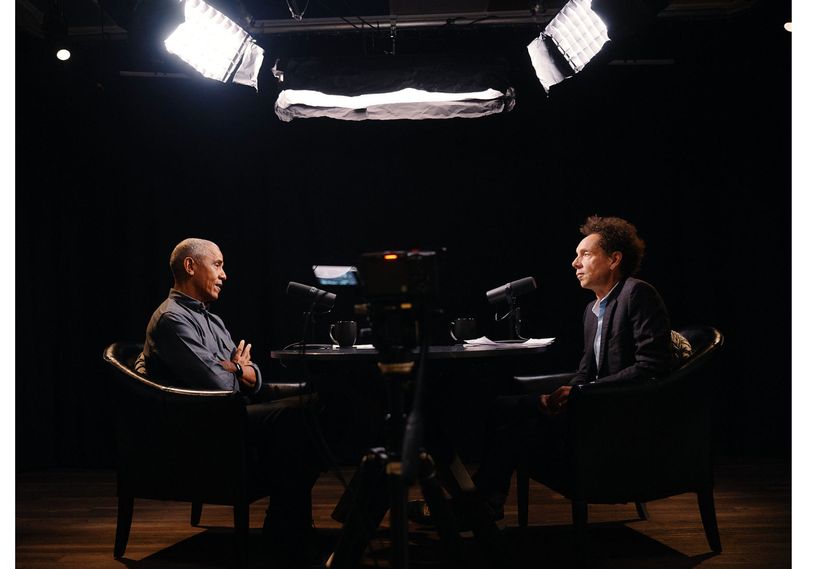
Reconstruction Reconsidered: Manisha Sinha Brings Historical Context to New Obama Podcast Series
As the United States marks its 250th anniversary, a major new podcast series is drawing renewed attention to the Reconstruction era and its lasting impact on American democracy. Reconstruction: The Unfinished Promise, hosted by Malcolm Gladwell and featuring former President Barack Obama, examines the turbulent decades following the Civil War and the ongoing struggle to define citizenship, equality, and political participation in the United States. Among the historians featured in the series is Manisha Sinha, a leading scholar of the Civil War, abolition, and Reconstruction. Her participation brings decades of research and scholarship to a national audience at a time when Americans are revisiting the people, events, and ideas that shaped the nation. Manisha Sinha is the James L. and Shirley A. Draper Chair in American History at UConn and past president of the Society for Historians of the Early American Republic. She is an expert in American political history, the Civil War, and Reconstruction. View her profile Sinha is the author of The Rise and Fall of the Second American Republic: Reconstruction, 1860–1920, a widely acclaimed examination of Reconstruction that challenges conventional timelines and interpretations of the era. Her work argues that Reconstruction was not confined to the years immediately following the Civil War, but instead represented a broader struggle over democracy, citizenship, civil rights, and political inclusion that continued well into the twentieth century. In interviews discussing her research, Sinha has emphasized the transformative nature of Reconstruction and its importance in understanding the development of modern America. Her scholarship explores how debates over voting rights, constitutional protections, racial equality, and citizenship during Reconstruction continue to influence public life today. As interest in Reconstruction grows through America 250 programming and broader public discussions about democracy and civil rights, Sinha's expertise offers valuable historical context for understanding the era's enduring significance. Connect with an Expert Manisha Sinha is available to discuss: The history and legacy of Reconstruction Why Reconstruction remains relevant today The concept of America's "Second Republic" The evolution of citizenship and voting rights in the United States The relationship between Reconstruction, civil rights, and democratic reform Historical perspectives connected to America 250 commemorations How historians are rethinking the traditional timeline of Reconstruction For journalists and audiences seeking deeper insight into one of the most important periods in American history, Sinha offers expert analysis on the debates, achievements, and unresolved questions that continue to shape the nation more than 150 years later.


Inside the Partnership Between Texas Christian University and Taylor Sheridan’s Four Sixes Ranch
A unique partnership between Texas Christian University and the legendary Four Sixes Ranch is giving students hands-on experience helping shape the future of one of the most recognizable brands in the American West. Recently featured at a major national rodeo event, the ranch’s newly designed retail booth, created by TCU faculty and students, blends heritage-inspired design with modern merchandising, reflecting the ranch’s growing national profile under the ownership of Taylor Sheridan and Nicole Sheridan. “We’re now written into the history of the Four Sixes Ranch.” The collaboration spans fashion merchandising, branding and business strategy, allowing students to contribute directly to product development, retail design and digital marketing initiatives. For students involved, the project offered a rare opportunity to see classroom ideas become real-world products tied to an internationally recognized Texas brand. Faculty members say the partnership reflects TCU’s focus on experiential learning while helping preserve and evolve an important piece of Texas cultural identity. Check out the video TCU and Four Sixes Ranch, and you can read more about this project in the full article below: Looking to connect with Chares Freeman, Kevin Smith, Nicole Bettinger or Rima Shrestha about this exciting project? Simply contact Holly Ellman, Associate Director of Communication, at h.ellman@tcu.edu today.


Spielberg's "Disclosure Day" Revives the UFO Debate. But What Would Real 'Disclosure' Mean?
What if the government finally revealed the truth about UFOs and extraterrestrial visitors? That’s the premise of the new Steven Spielberg film “Disclosure Day,” which the director has said was inspired by the U.S. government’s release of previously classified records related to unidentified aerial phenomena (UAPs) that sparked congressional hearings and renewed interest in so-called “disclosure.” But to University of Rochester astrophysicist Adam Frank the real question isn't whether the government is hiding secrets. It's what would count as actual evidence of extraterrestrial interaction. “Over the last several years, we’ve had hearings, testimony, and lots of extraordinary claims,” Frank says. “What we haven’t had is the one thing science requires: hard physical evidence.” Frank, an award-winning science communicator, astrophysicist, and leading expert on the search for extraterrestrial life, says the distinction matters. Stories, rumors, and secondhand accounts may generate headlines, but they don't constitute proof. "What true disclosure would mean is simple," Frank says. "It wouldn’t be stories about alien spaceships, but the actual spaceships. Not stories about alien bodies, but actual physical evidence that independent scientists around the world could examine and verify." As media coverage surrounding UFOs, government transparency, and extraterrestrial life intensifies, Frank offers a grounded scientific perspective on what we know, what we don't know, and how science separates possibility from proof. Frank is available to discuss: • The science behind UFO and UAP investigations • What constitutes evidence of extraterrestrial life • Why government disclosures have so far failed to provide proof • The search for life elsewhere in the universe • How Hollywood portrays alien contact versus scientific reality • Why scientists remain open to — but skeptical of — extraordinary claims "The universe is vast, and the possibility of life elsewhere is real," Frank says. "But if we're going to claim aliens have visited Earth, then we need evidence that meets the same standards we would demand for any other scientific discovery." Frank is a frequent on-air commentator for live interviews and segments in national media outlets and the author of The Little Book of Aliens (Harper Collins, 2023). He also regularly contributes to written publications, including Forbes, The Atlantic, The New York Times, and Scientific American. He is a recipient of the Carl Sagan Medal, which recognizes and honors outstanding communication by an active planetary scientist to the general public. Click on Frank's profile to connect with him.