Experts Matter. Find Yours.
Connect for media, speaking, professional opportunities & more.

Jennifer Oldham of ChristianaCare Champions Life-Saving CPR Care
“Whether you’re a brother or whether you’re a mother/ You’re stayin’ alive, stayin’ alive.” Nearly 50 years since this song’s debut, the faint symphony of the Bees Gees’ “Stayin’ Alive” can be still heard around the world, though not only through an ordinary radio or Bluetooth speaker. Some people, like Jennifer Oldham, MSN, RN, CEN, AACC, play the tune in their thoughts when giving and demonstrating rhythmic CPR compressions. The song’s tempo serves as guidance to match the timing of CPR chest compressions. Oldham, a cardiovascular quality and innovation nurse program manager at ChristianaCare’s Center for Heart & Vascular Health, has dedicated the last three decades to teaching others about harnessing the power of CPR to save patients and loved ones. She knows firsthand the miracles CPR can produce. Knowledge is power Community members, health care professionals and students have the ability to save a life thanks to Oldham. She’s conducted dozens of classes and lectures to give nurses and bystanders the tools and confidence to perform CPR in an emergency. Her profound work recently earned her an honor at the American Heart Association’s Delaware Heart Ball. The Heart Association recognized four individuals representing four key tenets or “chambers” — “discovery, advocacy, equity, and knowledge.” Oldham was chosen as the honoree for the Knowledge Chamber for her dedication to empowering others with life-saving education and tools. “Jen Oldham’s work is the heartbeat of our Knowledge Chamber. Her dedication to CPR education reflects the very mission of the American Heart Association – to ensure more lives are saved through awareness and action,” said Ellen Vild, director of the Delaware Heart Ball. “Jen’s story reminds us that knowledge is power, but more importantly, it’s compassion in action. We are honored to recognize her as someone who lives that mission every single day.” Oldham’s colleague Neil Wimmer, M.D., MS, interventional cardiologist and medical director of the Cardiac Catheterization Laboratory, was delighted to see her recognized. “Jen is an amazing colleague and friend who is driven by compassion and empathy. She makes everyone in our state safer, whether they know it or not,” Wimmer said. The gift of life To Oldham, teaching others about CPR is rewarding. She makes a meaningful impact on patients’ lives every day through care, education, emotional support and community connection. CPR is more than just a technique, she said: It’s a lifechanging bond. “In my opinion, performing CPR is one of the most kind and loving acts one person can do for another. It is incredibly intimate … laying hands on someone’s chest and pushing, circulating their blood to save their life,” Oldham said. “What a beautiful gift to give someone — the gift of life, the gift of more time with their loved one.” Walking to save lives The ChristianaCare team and Oldham support heart health as part of the annual Wilmington Heart Walk. Last year they raised over $42,000 for the American Heart Association to fund research and education to help Americans live longer, healthier lives. Oldham has been a co-chair of the event since 2017 and is a strong advocate of the AHA’s mission. Valerie Dechant, M.D., MBA, FACP, chief medical officer of Christiana Hospital, knows the value of Oldham’s efforts in the community. “Jen’s passion for educating the public about acute cardiac emergencies is unmatched,” she said. “With decades of experience and a remarkable ability to translate clinical expertise into clear actionable knowledge, she empowers others to learn to feel confident and prepared in a crisis.”



New National UMass Amherst Poll Finds President Trump’s Job Approval Gap Slides 6 Points Since April
Topline results and crosstabs for the poll can be found at www.umass.edu/poll Public approval of Donald Trump’s presidency has dropped by 6 percentage points since April and his approval rating is now 20 points underwater, 38-58, according to a new national University of Massachusetts Amherst Poll of 1,000 respondents conducted July 25-30. “Six months into his second term as president, Donald Trump looks to be on the ropes with the American public,” says Tatishe Nteta, provost professor of political science at UMass Amherst and director of the poll. “Trump’s approval ratings, already historically low for a newly elected president, continue to sink with close to 6-in-10 Americans (58%) expressing disapproval of the job that Trump is doing in office. While Trump remains a popular figure among Republicans and conservatives, Trump’s time in office is viewed more negatively across genders, generations, classes and races, with majorities of each of these groups disapproving of Trump’s performance. With over three years left in the Trump administration, there is still time for him to right the ship and fulfil the promises that catapulted him to the presidency, but the president is not off to the start he or his supporters envisioned.” In the previous UMass Poll, conducted as Trump approached the three-month anniversary of his return to the White House, Trump held a 44-51 approval rating, buoyed by a positive overall approval on his handling of immigration. The new poll, however, has found a significant shift in views on this issue. “Immigration has been central Trump’s political campaigns and his strongest issue in his first few months in office, but the percentage of people who say he is handling it well has dropped substantially from 50% four months ago to just 41% today, a 9-point drop,” explains Raymond La Raja, professor of political science at UMass Amherst and co-director of the poll. “Trump came into the presidency promising change, and he’s made significant alterations in many areas of federal policy,” says Jesse Rhodes, professor of political science at UMass Amherst and co-director of the poll. “He came into office believing that he had limited time to make the changes he promised his most ardent supporters, and moved with unparalleled speed to enact these changes, including sometimes by legally questionable means. Now, it seems, he’s reaping the consequences as a large majority of Americans don’t like these changes. Clear majorities say that Trump has handled his key issues – immigration (54%), inflation (63%), jobs (55%) and tariffs (63%) – not very well or not well at all. With so many Americans grading his handling of public policy poorly, it’s no wonder they disapprove of his presidency.” Rhodes also notes that the president is seeing an erosion in support from one of his most reliable groups of supporters: men. “Trump has cultivated a ‘masculine’ reputation and sought to build support among American men but, strikingly, we find that support for Trump has deteriorated most substantially among members of this group,” says Rhodes. “In April, Trump enjoyed approval from 48% of men, compared with 39% of women. Now, only 39% of men express approval of Trump, compared with 35% of women. “In addition to losing support among men, Trump has seen approval for his presidency crumble among political independents, a critical swing constituency,” Rhodes adds. “While 31% of independents approved of his presidency in April, that number is now down 10 percentage points to 21%. This is really bad news for Trump, and for Republicans who depend on support from independents in close elections.” “Polarization has changed the interpretation of presidential approval ratings,” says Alexander Theodoridis, associate professor of political science at UMass Amherst and co-director of the poll. “Partisans just aren’t willing to evaluate presidents from the other side positively and are reluctant to say negative things about presidents from their own party. So, approval numbers fluctuate within a narrower range. Gone are the days when George H. W. Bush and George W. Bush both achieved approval numbers over 90%. This is certainly true for Trump, who is likely the most polarizing figure in modern American politics. Even in this polarized environment, though, Trump’s approval ratings are low by any standard – he is very close to the practical floor. Especially noteworthy is that nearly half of Americans say they strongly disapprove of Trump and the percentage of Americans who say they strongly approve of Trump has decreased substantially. Even among Republican respondents, only half strongly approve of the president. The GOP should be concerned about these numbers heading into the odd-year elections in 2025 and, especially, the midterm elections in 2026. It is very difficult for a party to win when its leader is this unpopular.” Americans’ views on Epstein and Trump Of all issues surveyed in the latest University of Massachusetts Amherst Poll, one appears to be the greatest drag on Trump’s presidency: Jeffrey Epstein and Trump’s handling of the evidence gathered in the federal investigation of the accused sex-trafficker and his long-time friend. “The Epstein scandal remains a serious vulnerability – indeed, quite possibly, the most serious vulnerability – for Trump right now,” Rhodes says. “Fully 70% of Americans believe he has handled this issue ‘not too well’ or ‘not well at all,’ and nearly two-thirds (63%) believe his administration is hiding information about Epstein. The Epstein scandal is also likely undermining public confidence in Trump more broadly. Indeed, we find that nearly two-thirds of Americans believe that Trump is corrupt and nearly 70% believe he is dishonest. Critically, these numbers mean that many Republicans and conservatives are disappointed with Trump’s handling of the Epstein situation. Republican frustration with Trump’s handling of the Epstein case could erode enthusiasm for his presidency and for Republicans in 2026.” “If Trump and those around him have been wishing the Jeffrey Epstein story would disappear, their wishes have not been granted,” Theodoridis says. “Most Americans (77%) tell us they have heard a lot or some about the Epstein case. In addition to believing that the Trump administration is hiding important Epstein case information, the vast majority of respondents say that a special prosecutor should be appointed to investigate the Trump DOJ’s handling of the Epstein case (59%), that Donald Trump was good friends with Epstein (67%), and that a list of Epstein’s clients exists (70%). Even substantial numbers of Trump voters believe these things. And, when it comes to an Epstein ‘cover-up,’ it seems the buck stops with Trump himself. While a lot of Americans blame Attorney General Pam Bondi (59%), FBI Director Kash Patel (49%), and House Speaker Mike Johnson (47%) for hiding information about the Epstein case, a whopping 81% blame President Trump.” “The controversy over the handling of the Epstein files by the Trump administration has – interestingly – brought Americans together,” Nteta adds. “While on most issues, we see clear and persistent generational, class and racial divisions; on Epstein, Americans across these divides speak with one voice. This controversy has even resulted in agreement across partisan lines as majorities of Democrats and Republicans support a special prosecutor and believe a list of clients exists, and disapproval of Trump’s handling of the whole matter is surprisingly seen among members of Trump’s base, as 43% of Republicans and conservatives indicate that Trump has not handled this issue well.” “Where Trump faces his poorest rating in our poll is on perceived corruption and dishonesty,” adds La Raja. “A clear plurality (49%) sees Trump as ‘very dishonest,’ with an additional 20% saying that he is ‘somewhat dishonest.’ And 45% see him as ‘very corrupt,’ with an additional 20% as ‘somewhat corrupt.’ Only about one-third reject those labels entirely. Trump also gets low ratings on transparency – a majority (52%) say Trump is not at all transparent, his weakest score after dishonesty. Only 23% believe that he’s very transparent. For a candidate who brands himself as a truth-teller and disruptor, this appears to be a credibility gap.” “Strength is Trump’s strongest attribute,” La Raja explains. “Fifty-eight percent see him as very or somewhat strong, indicating appeal among his base and possibly swing voters who value ‘toughness.’ However, views on his competence are split evenly, with 52% saying he’s competent to some degree, while 48% say not at all.” Voter Regret? “Since President Trump took office, a number of reports of regretful Trump voters have been covered in the nation’s leading media outlets,” Nteta says. “From voters upset with Trump’s immigration policies to supporters who take issue with the president’s unwillingness to release the files associated with the Epstein case, there seemed to be a wellspring of regret among Trump’s once loyal base. Our results suggest that while there are, in fact, areas where the president is weak, most notably on his handling of the economy and the Epstein controversy. When asked directly, close to 9-in-10 (86%) would vote for Trump again if given the opportunity to revisit their 2024 presidential vote choice. These results indicate that the number of regretful voters covered in the mainstream press may be overblown, as the overwhelming majority of Trump voters remain in the president’s camp.” “Only 1% of Trump voters say they regret their vote and would choose differently, 2% say they ‘might’ choose differently and 3% say they wish they hadn’t voted at all,” Theodoridis says. “When we simply ask voters how they would vote if they could go back and recast their ballot, 6% of Trump voters tell us they would vote for Harris, while only 2% of Harris voters say they would switch to Trump. There is clearly more erosion in support among Trump voters than among Harris voters and, in what is likely small consolation to Harris and her campaign team, significantly more 2024 non-voters who say they wish they had voted indicate they would now cast a vote for the former vice president. In a relatively close election, shifts of these magnitudes might have been decisive, but there are no ‘take-backs’ in electoral politics, so these numbers are best used to inform choices going forward.” “Our results are not wholly positive for President Trump, and there exist areas of concern for his team moving forward,” Nteta warns. “Since April, the number of Trump voters expressing strong confidence in their vote for Trump has declined by 5 percentage points. Additionally, we find small increases in the number of Trump supporters who have mixed feelings about their vote and who indicate that they would ‘rather not have voted.’ Finally, 14% of Trump voters indicate that they would not vote for Trump if given the chance to revisit, while only 8% of Harris voters express a similar sentiment. Time will tell whether the growing number of disaffected Trump voters are the canaries in the coal mine, indicating a larger problem among the Trump coalition and the MAGA movement more generally.” “We do find a meaningful percentage – 31% – of Trump voters unwilling to say they feel very confident they made the right choice,” Theodoridis adds. “Nineteen percent of Trump voters tell us they are still confident but have concerns, and 6% tell us they have mixed feelings about their vote. Given what we know about the psychological predispositions against admitting to having been wrong, these numbers suggest some softening in support for Trump among the very voters who returned him to the White House last November. This should certainly be alarming for Republican politicians. However, for Democrats or journalists looking for a mass mea culpa from Trump voters, our numbers are, perhaps, sobering.” Methodology This University of Massachusetts Amherst Poll of 1,000 respondents nationally was conducted by YouGov July 25-30. YouGov interviewed 1,057 total respondents who were then matched down to a sample of 1,000 to produce the final dataset. The frame was constructed by stratified sampling from the full 2023 American Community Survey (ACS) one-year sample with selection within strata by weighted sampling with replacements (using the person weights on the public use file). The matched cases were weighted to the sampling frame using propensity scores. The matched cases and the frame were combined, and a logistic regression was estimated for inclusion in the frame. The propensity score function included age, gender, race/ethnicity, years of education, region, and home ownership. The propensity scores were grouped into deciles of the estimated propensity score in the frame and post-stratified according to these deciles. The weights were then post-stratified on 2020 and 2024 presidential vote choice as ranked on gender, age (4-categories), race (4-categories) and education (4-categories), to produce the final weight. The demographic marginals and their interlockings were based on the sample frame. The marginal distribution of 2020 presidential vote choice and its demographic interlockings were based on a politically representative “modeled frame” of US adults, using the 2019 American Community Survey (ACS) public use microdata file, public voter file records, the 2020 Current Population Survey (CPS) Voting and Registration supplements, the 2020 National Election Pool (NEP) exit poll, and the 2020 CES surveys, including demographics and 2020 presidential vote. The marginal distribution of 2024 vote choice was based on official ballot counts compiled by the University of Florida Election Labs and CNN. Demographic interlockings for 2024 vote choice were based on CNN’s 2024 Exit Polls. The margin of error of this poll is 3.5%. Topline results and crosstabs for the poll can be found at www.umass.edu/poll





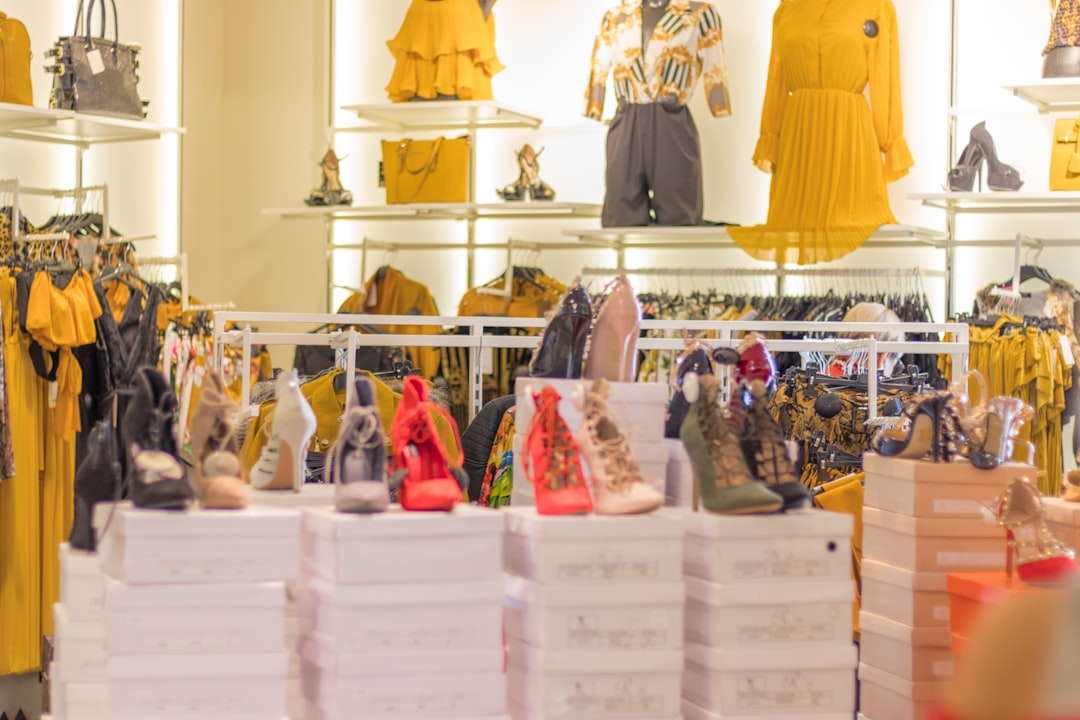
Tariffs fuel global sourcing shakeup for fashion in the U.S.
Be prepared to see more Made in Vietnam or Made in Bangladesh labels on clothing in the coming years. That’s because U.S. fashion companies are rethinking their global sourcing strategies and operations in response to the Trump administration’s trade policies and tariffs, according to new research by the University of Delaware's Sheng Lu. Lu, professor and graduate director in the Department of Fashion and Apparel Studies, partners with the United States Fashion Industry Association (USFIA), on an annual survey of executives at the top 25 U.S. fashion brands, retailers, importers and wholesalers doing business globally. Members include well-known names like Levi’s, Macy’s, Ralph Lauren and Under Armour, among others. The report covers business challenges and outlook, sourcing practices and views on trade policy. “We wear more than just clothes; we wear the global economy, the supply chain and the public policies that jointly make fashion and affordable clothing available to American families,” Lu said. “We want to know where these companies source their products and what factors matter to them the most. It’s a classic question and it evolves each year.” This year’s report, released on July 31, shows tariffs and protectionist policies are the top business challenge for companies, with nearly half reporting declining sales and more than 20% saying they have had to lay off employees. This was followed closely by uncertainty around inflation and the economy, increasing sourcing and production costs, and changes in trade policies from other countries. In response, more than 80% of companies said they will diversify the countries from which they source their products, focusing on vendors in Asian countries such as Vietnam, Bangladesh, Cambodia and Indonesia. Despite the push for “Made in USA” garments, only 17% of respondents plan to increase sourcing from the U.S. Lu shared his findings in the following Q&A: What surprised you about the survey results? Two things surprised me. First, contrary to common perception, the results do not indicate that the tariff policy so far has effectively supported or encouraged more textile and apparel production in the U.S. This actually makes sense. U.S. mills are as uncertain about the tariff rates as our trading partners are. A U.S. company may manufacture the clothes here, but use yarns, fabrics and zippers from other countries. When tariffs drive up the cost of these raw materials, it reduces the price competitiveness of apparel “Made in the USA.” Many domestic factories are in a “wait and see” mode, holding back on making critical investments to expand production due to the lack of a clear policy signal. Second, I was struck by the wide-ranging impact of the tariffs, which has gone far beyond what I originally imagined. Tariffs have not only increased U.S. fashion companies’ sourcing costs but have also affected their product development, shipping and overall supply chain management. Nearly 70% of the survey respondents said they have delayed or canceled some sourcing orders due to tariff hikes. Should consumers be prepared for less variety in clothing or shortages? Later this year, we may see fewer clothing items from our favorite brands on store shelves — especially during the holiday shopping season — and many of those items may come with a higher price tag. That said, fashion companies are doing what they can to avoid passing on tariff costs across the board, as they recognize that consumers are price sensitive. Many surveyed U.S. fashion companies say they intend to strengthen relationships with key vendors as a strategic move, and there is a growing public call for U.S. companies to provide more support and resources to their suppliers in developing countries. Sustainability is a huge issue in the fashion industry, as millions of tons of textiles end up in landfills every year. Companies say they are spending less on sustainability efforts. What would you tell companies about their sustainability efforts? Our survey suggests that sustainability can open up new business opportunities for U.S. fashion companies. Respondents said that when sourcing clothing made from sustainable fibers — like recycled, organic, biodegradable and regenerative materials — they are more likely to rely on a U.S. sourcing base or suppliers in the Western Hemisphere. In other words, even if apparel “Made in the USA” or nearby cannot always compete on price with lower-cost Asian suppliers, there is a better chance to compete on sustainability. Based on what I’ve learned from our Gen Z students — who expect better quality and more sustainable products if they have to pay more, and are critical consumers for many brands and retailers — it is unwise to hold back on investments in sustainability. What do you see as the biggest takeaway from the survey? One key takeaway is that the $4 trillion fashion and apparel business today is truly “made anywhere in the world and sold anywhere in the world.” In such a highly global and interconnected industry, everyone is a stakeholder — meaning there are no real winners in a tariff war. The study is also a powerful reminder that fashion is far more than just creating stylish clothing. Today’s fashion industry is deeply intertwined with sustainability, international relations, trade policy and technology. I hope the findings will be timely, informative and useful to fashion companies, policymakers, suppliers and fellow researchers. I plan to incorporate the insights, as well as the valuable industry connections developed through my long term partnership with USFIA, in my classroom, giving UD students fresh, real-world perspectives on the often “unfashionable” but essential side of the industry. Reporters interested in speaking with Lu can contact him directly by visiting his profile and clicking on the contact button. UD's media relations team can be reached via email.


President’s Discussion of Conspiracy Theories Have “No Parallel in American Politics”
Peter Baker, the chief White House correspondent for The New York Times, interviewed Dr. Meena Bose about conspiracy theories that appear to be consuming the Trump administration. “The president’s repeated discussion of multiple conspiracy theories, most recently about the 2016 election, has no parallel in American politics,” said Dr. Bose. “Presidential allegations that have no factual basis undermine public confidence in the political system and present dangerous challenges to constitutional principles and the rule of law, particularly if they are not subject to checks by other institutions.” Dr. Bose is Hofstra University professor of political science, executive dean of the Public Policy and Public Service program, and director of the Kalikow Center for the Study of the American Presidency.


What Sydney Sweeney’s American Eagle ad reveals about beauty standards and cultural expectations
Sydney Sweeney’s latest American Eagle campaign is doing more than selling denim – it’s stirring up a heated cultural conversation. Jaehee Jung, professor of fashion and apparel studies at the University of Delaware, can discuss the ways in which this reaction says a lot about where we are as a society. A leading expert on fashion, body image and consumer behavior, Jung studies how the fashion industry shapes – and is shaped by – our expectations of beauty, identity and representation. The ad in question features Sweeney in relaxed, casual pieces aligned with American Eagle’s classic aesthetic. But online reaction has been anything but chill. While many fans praised the actress’s style and confidence, others criticized the campaign for promoting unrealistic beauty standards and lacking diverse representation. Some even called it “pro-eugenics” – an extreme accusation that points to just how charged the conversation has become. With a background in both psychological and cultural aspects of fashion, Jung is available to discuss why this campaign struck such a nerve — and what it means for the future of women’s fashion and branding. To speak with Professor Jung, visit her ExpertFile profile or contact mediarelations@udel.edu.

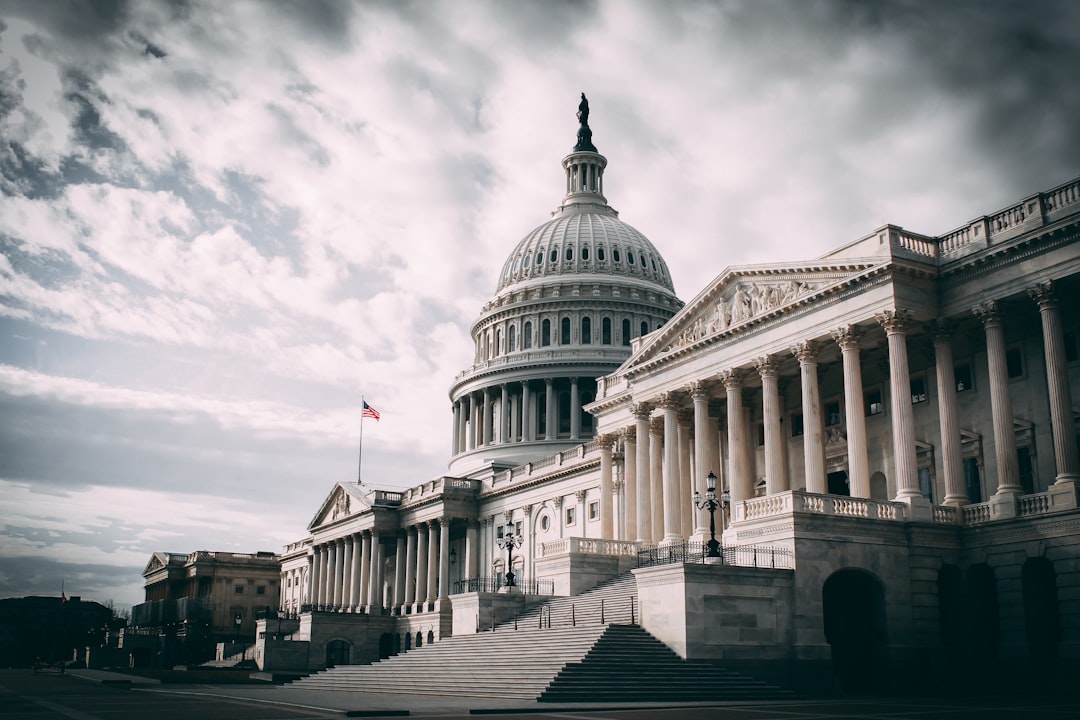
Emil Bove’s appeals court nomination echoes earlier controversies, but with a key difference
This article is republished from The Conversation under a Creative Commons license. Read the original article here. President Donald Trump’s nomination of his former criminal defense attorney, Emil Bove, to be a judge on the United States Court of Appeals for the 3rd Circuit, has been mired in controversy. On June 24, 2025, Erez Reuveni, a former Department of Justice attorney who worked with Bove, released an extensive, 27-page whistleblower report. Reuveni claimed that Bove, as the Trump administration’s acting deputy attorney general, said “that it might become necessary to tell a court ‘fuck you’” and ignore court orders related to the administration’s immigration policies. Bove’s acting role ended on March 6 when he resumed his current position of principal associate deputy attorney general. When asked about this statement at his June 25 Senate confirmation hearing, Bove said, “I don’t recall.” And on July 15, 80 former federal and state judges signed a letter opposing Bove’s nomination. The letter argued that “Mr. Bove’s egregious record of mistreating law enforcement officers, abusing power, and disregarding the law itself disqualifies him for this position.” A day later, more than 900 former Department of Justice attorneys submitted their own letter opposing Bove’s confirmation. The attorneys argued that “Few actions could undermine the rule of law more than a senior executive branch official flouting another branch’s authority. But that is exactly what Mr. Bove allegedly did through his involvement in DOJ’s defiance of court orders.” On July 17, Democrats walked out of the Senate Judiciary Committee vote, in protest of the refusal by Chairman Chuck Grassley, a Republican from Iowa, to allow further investigation and debate on the nomination. Republicans on the committee then unanimously voted to move the nomination forward for a full Senate vote. As a scholar of the courts, I know that most federal court appointments are not as controversial as Bove’s nomination. But highly contentious nominations do arise from time to time. Here’s how three controversial nominations turned out – and how Bove’s nomination is different in a crucial way. Robert Bork Bork is the only federal court nominee whose name became a verb. “Borking” is “to attack or defeat (a nominee or candidate for public office) unfairly through an organized campaign of harsh public criticism or vilification,” according to Merriam-Webster. This refers to Republican President Ronald Reagan’s 1987 appointment of Bork to the Supreme Court. Reagan called Bork “one of the finest judges in America’s history.” Democrats viewed Bork, a federal appeals court judge, as an ideologically extreme conservative, with their opposition based largely on his extensive scholarly work and opinions on the U.S. Court of Appeals for the District of Columbia Circuit. In opposing the Bork nomination, Sen. Ted Kennedy of Massachusetts took the Senate floor and gave a fiery speech: “Robert Bork’s America is a land in which women would be forced into back-alley abortions, blacks would sit at segregated lunch counters, rogue police could break down citizens’ doors in midnight raids, schoolchildren could not be taught about evolution, writers and artists could be censored at the whim of government, and the doors of the federal courts would be shut on the fingers of millions of citizens for whom the judiciary is often the only protector of the individual rights that are the heart of our democracy.” Ultimately, Bork’s nomination failed by a 58-42 vote in the Senate, with 52 Democrats and six Republicans rejecting the nomination. Ronnie White In 1997, Democratic President Bill Clinton nominated White to the United States District Court for the Eastern District of Missouri. White was the first Black judge on the Missouri Supreme Court. Republican Sen. John Ashcroft, from White’s home state of Missouri, led the fight against the nomination. Ashcroft alleged that White’s confirmation would “push the law in a pro-criminal direction.” Ashcroft based this claim on White’s comparatively liberal record in death penalty cases as a judge on the Missouri Supreme Court. However, there was limited evidence to support this assertion. This led some to believe that Ashcroft’s attack on the nomination was motivated by stereotypes that African Americans, like White, are soft on crime. Even Clinton implied that race may be a factor in the attacks on White: “By voting down the first African-American judge to serve on the Missouri Supreme Court, the Republicans have deprived both the judiciary and the people of Missouri of an excellent, fair, and impartial Federal judge.” White’s nomination was defeated in the Senate by a 54-45 party-line vote. In 2014, White was renominated to the same judgeship by President Barack Obama and confirmed by largely party-line 53-44 vote, garnering the support of a single Republican, Susan Collins of Maine. Miguel Estrada Republican President George W. Bush nominated Estrada to the Court of Appeals for the District of Columbia Circuit in 2001. Estrada, who had earned a unanimous “well-qualified” rating from the American Bar Association, faced deep opposition from Senate Democrats, who believed he was a conservative ideologue. They also worried that, if confirmed, he would later be appointed to the Supreme Court. However, unlike Bork – who had an extensive paper trail as an academic and judge – Estrada’s written record was very thin. Democrats sought to use his confirmation hearing to probe his beliefs. But they didn’t get very far, as Estrada dodged many of the senators’ questions, including ones about Supreme Court cases he disagreed with and judges he admired. Democrats were particularly troubled by allegations that Estrada, when he was screening candidates for Justice Anthony Kennedy, disqualified applicants for Supreme Court clerkships based on their ideology. According to one attorney: “Miguel told me his job was to prevent liberal clerks from being hired. He told me he was screening out liberals because a liberal clerk had influenced Justice Kennedy to side with the majority and write a pro-gay-rights decision in a case known as Romer v. Evans, which struck down a Colorado statute that discriminated against gays and lesbians.” When asked about this at his confirmation hearing, Estrada initially denied it but later backpedaled. Estrada said, “There is a set of circumstances in which I would consider ideology if I think that the person has some extreme view that he would not be willing to set aside in service to Justice Kennedy.” Unlike the Bork nomination, Democrats didn’t have the numbers to vote Estrada’s nomination down. Instead, they successfully filibustered the nomination, knowing that Republicans couldn’t muster the required 60 votes to end the filibuster. This marked the first time in Senate history that a court of appeals nomination was filibustered. Estrada would never serve as a judge. Bove stands out As the examples of Bork, Estrada and White make clear, contentious nominations to the federal courts often involve ideological concerns. This is also true for Bove, who is opposed in part because of the perception that he is a conservative ideologue. But the main concerns about Bove are related to a belief that he is a Trump loyalist who shows little respect for the rule of law or the judicial branch. This makes Bove stand out among contentious federal court nominations.


Georgia Southern professor receives national faculty mentor award
The Council on Undergraduate Research (CUR) named Georgia Southern University English Professor Olivia Carr Edenfield, Ph.D., the winner of the 2025 Arts and Humanities Faculty Mentor Award. The award recognizes faculty who go above and beyond to nurture undergraduate research, scholarship and creative work. Edenfield’s record of taking student research to new heights set her apart from a nationwide field of candidates. After joining Eagle Nation as a professor in 1986, Edenfield has helped her students become published researchers and presenters at local and national conferences. She said seeing those hardworking students excel has been her real reward. “Receiving this award is deeply personal,” Edenfield wrote in her CUR nomination statement. “My greatest joy in teaching has come from my students’ successes.” During her time as associate dean for Student Affairs in the former College of Liberal Arts and Social Sciences (CLASS), she launched the college’s undergraduate research symposium, now known as CURIO. She also helped establish a Center for Undergraduate Research for CLASS and set up residential interest groups to encourage students to share their love of different subjects with each other. Edenfield has helped her students achieve access to opportunities on a national level. She has served as director of the American Literature Association (ALA) since 2019, where she started a unique program that places Georgia Southern English majors in high-level administrative roles for ALA conferences. Seven of Edenfield’s students have had their work published in The Richard Macksey Journal at Johns Hopkins University. Many of her students have also presented their research at national and international conferences. Georgia Southern student Maegan Bishop’s presentation at the 2023 American Literature Association Annual Conference, based on research from Edenfield’s undergraduate class, was so impressive that she was invited to present her work at a conference on the short story at the University of Mainz, which covered all of her expenses. “My own experiences with Dr. Edenfield are only a small example of the work she has done to mentor undergraduates at Georgia Southern,” said Bishop. “She is constantly doing everything in her power to assist her students with whatever they need, extending every opportunity to those who express interest in becoming more involved in literary scholarship and campus activities.” David Owen, Ph.D., dean of the College of Arts and Humanities, emphasized how much Edenfield cares for her students, noting that her passion to help them succeed is second to none. “Mentoring is not a side note to Edenfield’s career, it is the throughline,” said Owen. “Her students succeed not just because of her guidance, but because she teaches them how to believe in their own voices.” The Faculty Mentor Award is the latest in a distinguished line of recognition for Edenfield. In 2016, she was named both the CURIO Mentor of the Year and the Wells-Warren Professor of the Year at Georgia Southern. She is a three-time recipient of her college’s Award for Distinction in Teaching, winning in 2016, 2020 and 2024. Edenfield was also a member of the inaugural class of the Governor’s Teaching Fellows program in 1995. ___ If you're interested in learning more about Georgia Southern's College of Arts and Humanities and want to book time to talk or interview, let us help - simply contact Georgia Southern's Director of Communications Jennifer Wise at jwise@georgiasouthern.edu to arrange an interview today.


Vitamin D in pregnancy may boost kids’ brainpower
You don't need a scientist to tell you that milk is good for babies. But a new study led by the University of Delaware's Melissa Melough sheds light on the power of prenatal nutrition — specifically vitamin D— as a key contributor to children’s brain development. The research found that children whose mothers had higher vitamin D levels during pregnancy scored better on tests of memory, attention and problem-solving skills at ages 7 to 12 compared with those whose mothers had lower levels. Melough wrote about the study in a piece for The Conversation. Vitamin D deficiency affects 42% of U.S. adults and about a third of pregnant women, but the average American woman consumes just 168 international units of vitamin D daily (the recommended amount is 600 ID). Many prenatal vitamins contain only 400 IU. One promising finding could result in the solution of a racial disparity in nutrition. The study found a link between prenatal vitamin D levels and childhood cognition was strongest among Black families, who also face higher rates of vitamin D deficiency. Therefore, vitamin D supplementation could be a low-cost strategy to support brain development while reducing racial disparities. Melough is available for interviews about the study, and can also speak to the following topics: • Nutritional and environmental factors influencing human health. • Populations at risk for nutritional inadequacies or harmful environmental exposures. • The roles of endocrine disruptors in the development of obesity. • The influences of maternal nutrition on childhood outcomes • Novel dietary approaches to reduce chemical exposures or their associated health consequences. To arrange an interview with Melough, visit her profile page and click on the "contact" button, or send an email to MediaRelations@udel.edu.


Poll finds bipartisan agreement on a key issue: Regulating AI
This article is republished from The Conversation under a Creative Commons license. Read the original article here. In the run-up to the vote in the U.S. Senate on President Donald Trump’s spending and tax bill, Republicans scrambled to revise the bill to win support of wavering GOP senators. A provision included in the original bill was a 10-year moratorium on any state law that sought to regulate artificial intelligence. The provision denied access to US$500 million in federal funding for broadband internet and AI infrastructure projects for any state that passed any such law. The inclusion of the AI regulation moratorium was widely viewed as a win for AI firms that had expressed fears that states passing regulations on AI would hamper the development of the technology. However, many federal and state officials from both parties, including state attorneys general, state legislators and 17 Republican governors, publicly opposed the measure. In the last hours before the passage of the bill, the Senate struck down the provision by a resounding 99-1 vote. In an era defined by partisan divides on issues such as immigration, health care, social welfare, gender equality, race relations and gun control, why are so many Republican and Democratic political leaders on the same page on the issue of AI regulation? Whatever motivated lawmakers to permit AI regulation, our recent poll shows that they are aligned with the majority of Americans who view AI with trepidation, skepticism and fear, and who want the emerging technology regulated. Bipartisan sentiments We are political scientists who use polls to study partisan polarization in the United States, as well as the areas of agreement that bridge the divide that has come to define U.S. politics. In April 2025, we fielded a nationally representative poll that sought to capture what Americans think about AI, including what they think AI will mean for the economy and society going forward. The public is generally pessimistic. We found that 65% of Americans said they believe AI will increase the spread of false information. Fifty-six percent of Americans worry AI will threaten the future of humanity. Fewer than 3 in 10 Americans told us AI will make them more productive (29%), make people less lonely (21%) or improve the economy (22%). While Americans tend to be deeply divided along partisan lines on most issues, the apprehension regarding AI’s impact on the future appears to be relatively consistent across Republicans and Democrats. For example, only 19% of Republicans and 22% of Democrats said they believe that artificial intelligence will make people less lonely. Respondents across the parties are in lockstep when it comes to their views on whether AI will make them personally more productive, with only 29% − both Republicans and Democrats − agreeing. And 60% of Democrats and 53% Republicans said they believe AI will threaten the future of humanity. On the question of whether artificial intelligence should be strictly regulated by the government, we found that close to 6 in 10 Americans (58%) agree with this sentiment. Given the partisan differences in support for governmental regulation of business, we expected to find evidence of a partisan divide on this question. However, our data finds that Democrats and Republicans are of one mind on AI regulation, with majorities of both Democrats (66%) and Republicans (54%) supporting strict AI regulation. When we take into account demographic and political characteristics such as race, educational attainment, gender identity, income, ideology and age, we again find that partisan identity has no significant impact on opinion regarding the regulation of AI. State of anxiety In the years ahead, the debate over AI and the government’s role in regulating it is likely to intensify, on both the state and federal levels. As each day seems to bring new advances in AI’s capability and reach, the future is shaping up to be one in which human beings coexist – and hopefully flourish – alongside AI. This new reality has made the American public, both Democrats and Republicans, justifiably nervous, and our polling captures this widespread trepidation. Lawmakers and technology leaders alike could address this anxiety by better communicating the pitfalls and potential of AI, and take seriously the concerns of the public. After all, the public is not alone in its trepidation. Many experts in the field also have substantial worries about the future of AI. One of the fundamental political questions moving forward, then, will be to what degree regulators put guardrails on this emerging and transformative technology in order to protect Americans from AI’s negative consequences. Adam Eichen is a doctoral candidate in political science at UMass Amherst. Alexander Theodoridis is associate professor of political science and co-director of the UMass Amherst Poll at UMass Amherst. Sara M. Kirshbaum is a postdoctoral fellow and lecturer of political science at UMass Amherst. Tatishe Nteta is provost professor of political science and director of the UMass Amherst Poll at UMass Amherst.
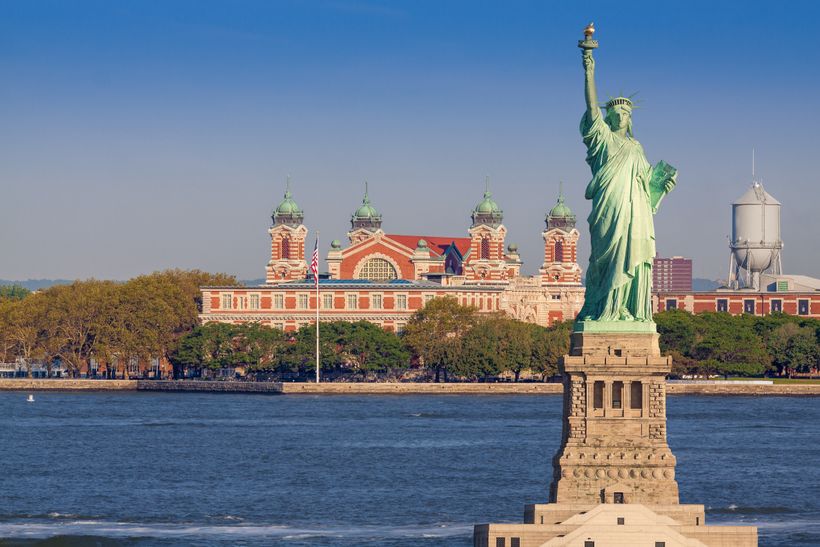
Immigrants in the United States earn 10.6% less than similarly educated U.S.-born workers, largely because they are concentrated in lower-paying industries, occupations and companies, according to a major new study published July 16 in Nature, co-authored by a University of Massachusetts Amherst sociologist who studies equal opportunity in employment. The research—one of the most comprehensive global comparisons of immigrant labor market integration to date—analyzes linked employer-employee data from over 13 million people across nine advanced economies in Europe and North America. The U.S. results, drawn from a unique combination of Census Bureau, earnings and employer data, reveal that only about one-quarter of the wage gap is due to pay inequality within the same job and company. Instead, the majority stems from structural barriers that limit immigrants’ access to better-paying workplaces. “These findings are important because they show that most of the immigrant wage gap isn’t about being paid less for the same work—it’s about not getting into the highest-paying jobs and firms in the first place,” says Donald Tomaskovic-Devey, professor of sociology and founding director of the Center for Employment Equity at UMass Amherst Key U.S. Findings First-generation immigrants with legal status in the U.S. earn 10.6% less than comparable native-born workers. 3.4%, a third of that gap, is attributable to unequal pay for the same job at the same employer. No data was available on second-generation immigrants in the U.S., but other countries showed persistent but smaller gaps into the next generation. The study suggests that efforts to close immigrant wage gaps should focus on increasing immigrants’ access to better jobs and firms. Promising approaches include: Language and skills training Recognition of foreign credentials Access to professional networks Employer anti-bias interventions “Improving job access is essential,” says co-author Andrew Penner, professor of sociology at the University of California, Irvine. “This means addressing the barriers that keep immigrants out of the highest-paying firms and occupations.” As of 2023, immigrants constituted approximately 14% of the U.S. population, totaling over 47 million people. There are approximately 1 million new long-term permanent residents annually. U.S. immigration policy encompasses diverse pathways, including family-based migration, employment-based visas, the Diversity Visa Lottery and humanitarian protection. Immigration has been a defining feature of the U.S. population since its founding, with distinct waves shaped by economic needs, political developments and global conflicts. “For almost 250 years, we have been a nation of immigrants, and this pay gap indicates that we can do more as a country to help people following the paths of our forebears realize the American dream,” Tomaskovic-Devey adds. Global Comparison The study includes 13.5 million individuals in nine immigrant-receiving countries: the U.S., Canada, France, Germany, Denmark, Netherlands, Norway, Spain and Sweden. The U.S. had one of the smallest pay gaps (10.6%) among the nine countries studied. By contrast, Canada showed a 27.5% gap and Spain a 29.3% gap. The most favorable outcomes for immigrants were in Sweden (7% gap) and Denmark (9.2%). The authors identify two main sources of the immigrant-native pay gap: Sorting—Immigrants are more likely to work in lower-paying industries, occupations and firms. Within-job inequality—In all countries immigrants are paid less than natives doing the same job for the same employer, but these gaps are relatively small. Across the nine countries, three-quarters of the 17.9% average wage gap for immigrants was due to sorting; just one-quarter stemmed from unequal pay within jobs. In the U.S., this pattern was consistent: structural job access—not wage discrimination—was the dominant force. The study also exposes persistent disadvantages for immigrants from certain world regions, including Sub-Saharan Africa, Latin America and the Middle East. Across all countries, immigrants from these regions faced larger wage gaps than immigrants from Western or Asian countries. The international research is the latest in a series of high-profile publications from a team spanning over a dozen countries in North America and Europe that has been investigating the dynamics of workplace earnings distributions for the last decade.