Experts Matter. Find Yours.
Connect for media, speaking, professional opportunities & more.

Rural health documentary earns Peabody Award for Georgia Southern professor
Georgia Southern University Professor Matthew Hashiguchi has won a Peabody Award for his documentary, “The Only Doctor,” which focuses on rural health and the services provided by a single doctor in southwest Georgia. The Peabody Awards are prestigious accolades in storytelling across television, radio, streaming and other digital mediums. Categories for winning a Peabody include journalism, social video, interactive documentary, gaming and more. The nearly hour-long feature received the award in the Public Service category, which recognizes projects that address or respond to public health concerns, enhance public engagement or educate the public. For Hashiguchi, the award represents a personal and career accolade. “This award isn’t just a professional achievement, but also represents a moment in my life where I became a father,” said Hashiguchi. “I started filming right before my first daughter was born, and finished right after the second. While this award is an incredible acknowledgment of my work, it means even more to me as a priceless moment from their childhood.” The documentary focuses on Karen Kinsell, M.D., the sole physician serving 3,000 citizens in Clay County, Georgia, near the Georgia-Alabama border. The film spotlights the plight of a community in need of medical assistance and the dedicated doctor fighting to keep her clinic’s doors open. Hashiguchi delves into Kinsell’s sacrifices for her clinic’s operations, revealing her commitment to her patients. “Dr. Kinsell gets calls at home at all hours of the day and night,” Hashiguchi said. “She, at times, has had to pay the bills from her own bank account. But I’d say the biggest sacrifice is that she’s a doctor who does not have breaks.” The final cut of “The Only Doctor” is a bit different from the angle Hashiguchi took when he began work on it several years ago. He initially started the project to better understand the risks associated with maternal health care and childbirth when he and his wife were expecting their first child. Through his work, he learned of a more complex issue of health care access in rural communities. The documentary first premiered on the PBS program Reel South and is now available internationally on Al Jazeera’s documentary series “Witness.” Hashigchi’s work earned him a 2019 Gucci Tribeca Documentary Fund award and a 2021 American Stories Documentary Fund award from Points North Institute. The film’s world premiere took place at the 2023 Hot Docs International Documentary Film Festival in Toronto, Canada, and was awarded Best Documentary Feature at the 2024 South Georgia Film Festival, Best Feature at the 2023 Newburyport Documentary Film Festival and Award of Merit at the 2023 University Film and Video Association Conference. His rise to media prominence wasn’t on his radar early in his academic career. He described himself as a “C student,” and still sees himself as that young boy struggling with math and science courses. With one of the nation’s highest media honors, he can show his students new paths to success as well as the skills it takes to win a Peabody. “I want my students to know how I failed and know that I struggled,” he said. “I tell them that if they want to excel, they really have to put in hard work. That’s very much who I am now as I devote myself to these films.” If you're interested in learning more and want to book time to talk or interview with Matthew Hashiguchi then let us help - simply contact Georgia Southern's Director of Communications Jennifer Wise at jwise@georgiasouthern.edu to arrange an interview today.


Research Matters: Ultra-conductive molecule sets stage for post-silicon computing era
A research team has uncovered what it believes is “the world’s most electrically conductive organic molecule,” a discovery that opens new possibilities for building smaller, more powerful, and more energy-efficient computers. It could also allow computer chip manufacturers to eliminate their reliance on silicon and metal as conductors. “Molecules are nature’s tiniest, mightiest, and most configurable building blocks and can be engineered to build ultra-compact, ultra-efficient technology for everything from computers to quantum devices,” said Ignacio Franco, who was part of the research team that was led by scientists at the University of Miami. Their research was detailed in a paper published in the Journal of the American Chemical Society. The molecule, which is composed of chemical elements found in nature, including carbon, sulfur, and nitrogen, can carry electrical current over record-breaking distances without losing efficiency. Using molecular materials in electronic chips offers several advantages. They consume less power. They can be more easily customized than silicon. They are more environmentally friendly. And, perhaps most importantly to manufacturers, they are potentially cheaper to produce. “This molecular design overcomes many of the big issues that for decades have prevented the use of molecules in electronics,” Franco said. To learn more about this ground-breaking research, read about it at the University of Rochester News Center, and contact Franco at ignacio.franco@rochester.edu.


Historical Significance of the Papal Name
In the wake of the historic election of Pope Leo XIV, the first American to ascend to the papacy, scholars and observers alike are reflecting on the global, historical and theological implications of his early statements and symbolic choices. His decision to take the name Leo – a name not used for over a century – immediately evokes comparisons to both Leo XIII and Leo I (Leo the Great), popes known for their firm leadership and dynamic engagement with the world. Baylor University’s Elisabeth Rain Kincaid, J.D., Ph.D., director of the Institute for Faith and Learning and an expert on early modern theology and Catholic Social Thought, said choosing the name Leo is significant, especially in today’s world. Through his choice of name, rhetorical style and theological references, the new pope is signaling a clear vision for a Church that is simultaneously grounded in tradition and open to global dialogue, Kincaid said. Kincaid is currently at work on a monograph – “Business Ethics for a Flourishing Life: Catholic Social Thought in the Modern Workplace” – in which she argues for the continued importance of Leo XIII’s thought for modern life. If you're covering the news about Pope Leo XIV and are looking to know why Cardinal Robert Prevost chose that name - we can help. Elisabeth Rain Kincaid is an author, speaker, teacher, and theologian. She has published broadly in peer-reviewed journals and popular publications. She is a frequent speaker at conferences, churches, and professional events on topics including business ethics, virtue and character, Christian engagement with law and politics, and work and vocation. She is currently the Director for the Institute for Faith and Learning at Baylor University. In her teaching, she draws upon her years of experience as a white-collar criminal defense attorney and a private equity professional, along with her ministry experience. Elisabeth is available to speak with media about this topic - simply contact Shelby Cefaratti-Bertin, M.A., Assistant Director of Media and Public Relations at Baylor University, Shelby_Cefaratti@baylor.edu or 254-327-8012 to arrange an interview today.


Julian Ku Reviews Book on U.S. Economic Warfare and Separation of Powers
Hofstra Law Professor Julian Ku wrote a book review on Edward Fisherman’s Chokepoints: American Power in the Age of Economic Warfare in the National Review. In his review, he provides legal insight on the United States’ use of economic warfare and how it can interfere with the separation of powers in government.


President Trump Marks 100 Days in Office
Dr. Meena Bose, Hofstra University professor of political science, executive dean of the Public Policy and Public Service program, and director of the Kalikow Center for the Study of the American Presidency, was interviewed by multiple media outlets about President Donald Trump’s first 100 days in office. Dr. Bose spoke to CBS Radio; WNYW-TV Fox 5; and Newsday.


Alcatraz Island, once home to America’s most infamous prison, remains a powerful symbol in the nation’s historical, cultural, and political landscape. Originally a military fortification before becoming a federal penitentiary, Alcatraz gained notoriety for housing high-profile criminals like Al Capone and “Machine Gun” Kelly. Yet its legacy extends far beyond crime and punishment—it was also the site of a landmark Indigenous occupation that helped spark a national conversation about Native rights. Today, Alcatraz continues to fascinate as a tourist destination, a case study in penal reform, and a platform for telling underrepresented stories. Journalists looking to explore the island’s rich past and present may consider: The transformation of Alcatraz from military post to maximum-security prison Daily life behind bars and profiles of the prison’s most infamous inmates The 1969–1971 Indigenous occupation and its impact on Native American activism Alcatraz’s role in shaping modern conversations about incarceration and justice reform The cultural legacy of Alcatraz in film, literature, and popular imagination How the National Park Service is preserving and interpreting the island’s layered history Alcatraz offers more than just a tale of escape—it’s a gateway into deeper stories of resistance, rehabilitation, and remembrance. Connect with an expert about Alcatraz: To search our full list of experts visit www.expertfile.com


The roots of scuba diving lie in exploration. But in an age when advanced instruments can drive research, too, why not stay dry on land? Researchers have used scuba diving as a tool for decades, but as technology evolves, remotely operated vehicles (ROVs) can aid, and sometimes replace, divers in the research process. Still, argues Stephen Wood, no existing tools have the full capability of a human. The professor of ocean engineering says the ability to grab items or quickly turn one’s head is difficult to replicate in an ROV. He also argues that although robots can collect and send data, the ability to assess and interpret an environment through a human lens is essential. “The human cannot leave” the research, Wood says. The American Academy of Underwater Sciences (AAUS) defines scientific diving as “diving performed solely as a necessary part of a scientific, research, or educational activity by employees whose sole purpose for diving is to perform scientific research tasks.” With more than 140 organizational members, AAUS supports diving as a research tool and protects scientific divers’ health and safety. Researchers and students must obtain an AAUS certification, which Florida Tech offers, before undertaking a scientific dive. At Florida Tech, any diver who plans to use compressed air or air blends for activity involving teaching or research must comply with AAUS. Robert van Woesik, professor of marine sciences, studies the dynamics of coral reefs worldwide. He and his students scuba dive to examine and photograph coral assemblages, then return with information they can use to predict the impact of local and global disturbances, recovery from disturbances and future growth. The ability to personally identify different species underwater is crucial to understanding coral reef dynamics. He says that without scuba, the necessary training to develop that skill falls away. “I think it’s still worthwhile knowing the species composition of a reef underwater instead of just saying, ‘Okay, we don’t need scuba divers anymore. We just need photographs and ROVs,’” van Woesik says. He learns the most when he can descend to a reef and see the seascape himself. “I think there’s something to be said to just go in the water and ask some questions,” van Woesik says. “That’s the valuable part of being able to scuba dive, getting amongst it to experience the reef, in tandem with analyzing photographs from around the world on the computer.” Assistant professor of marine sciences Austin Fox says in his research in the Indian River Lagoon, diving is essential for operating—and sometimes finding—instruments. “We spend a lot of time trying to figure out ways to do this stuff without diving…but there’s just no replacement for it.” Austin fox, Assistant professor of marine sciences Scientific diving has taken Florida Tech researchers across the globe, from the murky floor of the Indian River Lagoon to the depths of Antarctica’s McMurdo Sound. Rich Aronson, department head and professor of ocean engineering and marine sciences, studies coral reefs in the tropics and subtidal communities in Antarctica. In 1997, he had the opportunity to visit the McMurdo Station to study invertebrate ecology—specifically, who eats what and whether they leave traces of their predatory activity on the shells of their prey. There, he completed 27 dives of up to 130 feet deep. Some were done through ice-cracks in remote areas, he recalls, whereas others were from holes drilled through 10 feet of sea-ice. He noted that the time to prepare for these dives was extensive—two 30-minute dives took eight hours—and they weren’t without risk. “That was the first and only time I’ve dived under the ice. It’s dangerous because there’s a ceiling above you,” Aronson says. “You jump in the hole and try not to screw it up because if you screw it up, you’re dead.” Though risky, Aronson says scuba diving was crucial to the research. He argues that neither ROVs nor oceanographic sensors could have collected or sampled organisms at fine scales, run transects and made behavioral observations like a human could. Additionally, he says his observations at depth, such as the “sting of subzero water” on his face and “the slowness of reaction of the animals living down there,” are what later inspired a project of his combining deep-sea oceanography and paleontology to project the future of Antarctic seafloor communities in a rapidly warming world. “Science is a lot more subjective than you might think, and feeling the environment helps you understand it.” Richard Aronson, department head and professor of marine sciences The risky nature of scuba diving is why programs like AAUS exist: to standardize safe and responsible diving practices for conducting scientific research. Divers are at risk for a number of pressure-related injuries, such as decompression sickness: a condition in which residual nitrogen can create bubbles in the blood and body tissue upon ascent if the diver rises to the surface too fast. To reduce their risk, divers must plan and track how deep they are going, the time at which they are that depth (and subsequent depths) and how long they need to wait before changing depth. Technology has also evolved since the beginning of scuba to support divers’ safety further. Digital dive computers, developed in the 1980s, help divers estimate how long they can stay at their current depth while underwater (among other things). Additionally, Enriched Air Nitrox (Nitrox) is a gas mixture that contains a higher percentage of oxygen than standard air. Divers who use Nitrox can extend their time at depth and reduce their risk of decompression sickness because of its reduced nitrogen pressure. Van Woesik predicts that dive technology will keep evolving. He imagines there could soon be a system that allows divers to upload data at depth, and a system that aids in species identification without having to decipher an image at the surface. He also believes that innovators will keep working to reduce hazards and prioritize safety, because despite the risks, divers will always get in the water. “Hopefully that technology will get better so we can go deeper, safer, and so we can stay down a bit longer to explore and further understand the natural wonders of the oceans,” van Woesik says. If you're interested in connecting with Stephen Wood, Austin Fox, Richard Aronson or Robert van Woesik - simply contact Adam Lowenstein, Director of Media Communications at Florida Institute of Technology at adam@fit.edu to arrange an interview today.


ChristianaCare Hospitals Earn Top Patient Safety Rating From Leapfrog Group
ChristianaCare’s Christiana Hospital, Union Hospital and Wilmington Hospital have each received an ‘A’ grade in the Spring 2025 Leapfrog Hospital Safety Grade, a national distinction that recognizes ChristianaCare’s achievements in protecting patients from harm and providing safe health care. “At ChristianaCare, patient safety is our highest priority and an essential part of our mission of service to the community,” said Kert Anzilotti, M.D., MBA, system chief medical officer and president of the Medical Group of ChristianaCare. “We are incredibly proud of this achievement. “This ‘A’ grade is not just a letter; it’s a testament to the hard work and passion of our caregivers, who strive every day to ensure our patients receive the highest quality care and feel safe throughout their journey with us.” The Leapfrog Group assigns an ‘A,’ ‘B,’ ‘C,’ ‘D’ or ‘F’ grade to hospitals across the country based on over 30 performance measures reflecting the prevention of errors, accidents, injuries and infections. This Leapfrog recognition comes on the heels of multiple other recent quality and safety awards that ChristianaCare has received, including: • ChristianaCare was recognized as one of the best hospitals in the nation by Money in its 2025 hospital rankings, making it the only hospital in Delaware to achieve this distinction. • ChristianaCare is ranked by Newsweek among the World’s Best Hospitals and rated by U.S. News & World Report as the No. 1 hospital in Delaware. • ChristianaCare earned the Beacon Award for Excellence from the American Association of Critical-Care Nurses (AACN) for three of its intensive care units: the Medical Intensive Care Unit (MICU), the Surgical Critical Care Complex (SCCC), and the Transitional Surgical Unit (TSU) at Christiana Hospital in Newark, Delaware. • ChristianaCare is the only four-time Magnet-designated health care organization in Delaware, recognized for continued dedication to excellence and innovation, high-quality patient care and experience, nurse engagement and work culture.



From Saver to Spender: Navigating the Retirement Mindset Shift
Let’s start with a familiar—and slightly ridiculous—scene: a retired couple with $750,000 safely tucked away in investments, quietly nibbling no-name tuna on toast while muttering, “We just can’t afford steak anymore.” Sound absurd? Sadly, it’s not fiction. Despite having ample savings, many retirees live with perpetual financial anxiety, clinging to their nest egg as if it were their last roll of toilet paper during a pandemic. Meanwhile, they try to survive solely on government pensions, making life unnecessarily stressful and, let’s face it, a bit joyless. I've wrestled with this as someone who entered retirement earlier than expected. Years in finance taught me how to budget, invest, and plan, but transitioning from saving to spending required a whole new mindset. I learned quickly that being financially “prepared” doesn’t mean you’re emotionally or psychologically ready to spend. So, what’s going on here? The Hypothesis: Individuals Prefer Spending Income Rather Than Saving Retirees prefer spending income (pensions or annuities) rather than withdrawing from savings or investment accounts. This isn’t just a quirky behavioural trend—it’s a deeply ingrained bias, and neuroscience supports it. Research by Michael S. Finke, a professor at The American College and noted researcher in retirement economics, revealed that retirees tend to spend most of their guaranteed income but only withdraw about half of their savings. In his words: “Retirees spend lifetime income, not savings.” The implication is clear: it’s not about how much money you have but how it feels to use it. This is partly due to what behavioral economists call “mental accounting.” We categorize our money into imaginary buckets: income is for spending, and savings are for safekeeping. Unfortunately, this can lead to financially irrational and highly risk-averse behaviors, such as eating cat food while having six figures in a TFSA. The Neuroscience of Spending Fear Add a little neuroscience, and the story deepens. As we age, changes in the brain, particularly in the prefrontal cortex, can affect how we assess risk and manage uncertainty. This can lead to: • Increased loss aversion: We more acutely feel the pain of spending or loss. • Decision paralysis: We delay or avoid withdrawals, even when reasonable. • Heightened anxiety about the future: We fear running out more than we enjoy spending in the present. This Fear of Running Out (FORO), which I’ve written about in a previous post, keeps many retirees in a defensive crouch, emotionally hoarding their savings rather than using them to enrich the years they worked so hard to reach. It’s no wonder money stress impacts us so deeply—our brains are wired that way. From an evolutionary perspective, our minds are designed to fear scarcity because running out of resources once posed a real danger. When we perceive that threat today, whether it’s a dip in our investments or rising grocery bills, our brain shifts into fight-or-flight mode and begins releasing cortisol—the stress hormone that heightens our anxiety. Then our amygdala, that little alarm system in our brain designed to protect us from danger, can’t differentiate between a financial crisis and a sabre-toothed tiger. So, it reacts similarly, nudging us toward quick, often irrational decisions. Sometimes that means freezing and doing nothing; other times, it leads to panicking and regretful choices. Understanding how our brains function under financial stress allows us to step back, breathe, and make better, calmer decisions—ones that serve us, not scare us. Retirement can be wonderfully freeing—no more commutes, no more meetings—but let’s be honest: it also comes with a significant shift in financial responsibility. Without that steady paycheck, it’s completely normal to feel uneasy about how you'll manage your money, especially when unexpected expenses arise. Sure, there are mindset tools and mental prep strategies that can help ease that existential “What now?” feeling before retirement. But let’s be specific—here are the real, concrete financial stressors that keep many retirees awake at night: • Not Enough Income: One of the biggest fears? Your savings won’t stretch far enough to support the life you want—or handle surprises. • Healthcare Costs: As we age, medical expenses climb. It’s not just the big stuff, either. Even prescriptions and dental bills can blow a hole in your budget. • Market Ups and Downs: A stock market dip can uniquely affect retirees. Observing your investments fluctuate can cause genuine anxiety regarding your income, especially in today’s “trade war” environment. • Inflation: We all feel it. The gradual rise of higher prices erodes your purchasing power, making that carefully saved nest egg feel less secure. • Living Longer Than Planned: It's both a blessing and a challenge. If you're healthy and living well into your 90s (and many do), the big question becomes: will your money last as long as you do? Here’s the good news: when you acknowledge these risks and build a plan around them, you exchange fear for control. And with power comes clarity, confidence, and significantly less stress. That’s when you can truly enjoy retirement—on your terms. How to Flip the Script: Make Savings Feel Like Income So, how can retirees overcome this psychological hurdle? Here are 3 powerful strategies: 1. Create Artificial Income Streams Turn a portion of your savings into predictable, automatic income. This could mean: • Setting up regular monthly withdrawals from an RRIF • Purchasing an annuity • Utilizing a bucket strategy, in which one portion of savings is maintained in a cash-like account to replicate a paycheck When money shows up like a salary, you’re more likely to feel permission to spend it. 2. Use Home Equity as a Back-Up Income Source A secured line of credit (HELOC) or a reverse mortgage can serve as a “Plan B” or income buffer. Knowing that the funds are available can alleviate anxiety, whether you use them or not. 3. Involve Family in Income Planning Sometimes, the best way to reframe a spending decision is through conversation. Adult children or trusted advisors can help develop a spending strategy that feels both secure and reasonable. Families can be invaluable in helping you design: • Emergency funding plans for unexpected expenses like healthcare • Gifting strategies (Want to help the kids or grandkids? Do it while you’re alive to see the joy!) • Income simulations replacing a regular paycheck Open conversations can also help uncover mismatched expectations. For instance, some older adults worry that spending their savings will leave less of an inheritance for their children, which might cause disappointment. But in many cases, their children would much rather see their parents use that money to care for themselves and enjoy their retirement years. The great irony of retirement? The hardest part isn’t building wealth; it’s allowing yourself to enjoy it. So, let’s retire the notion that frugality is forever. Replace the guilt of spending with the confidence of an income strategy. And if you're facing your savings with trepidation, remember: cat food may be a pantry staple for your pet, but it’s no reward for 40 years of hard work. Retirement isn't merely a financial phase—it’s a shift in mindset. That shift begins when we stop hoarding and start living.

An Expert Guide to the Papacy and Pope Francis
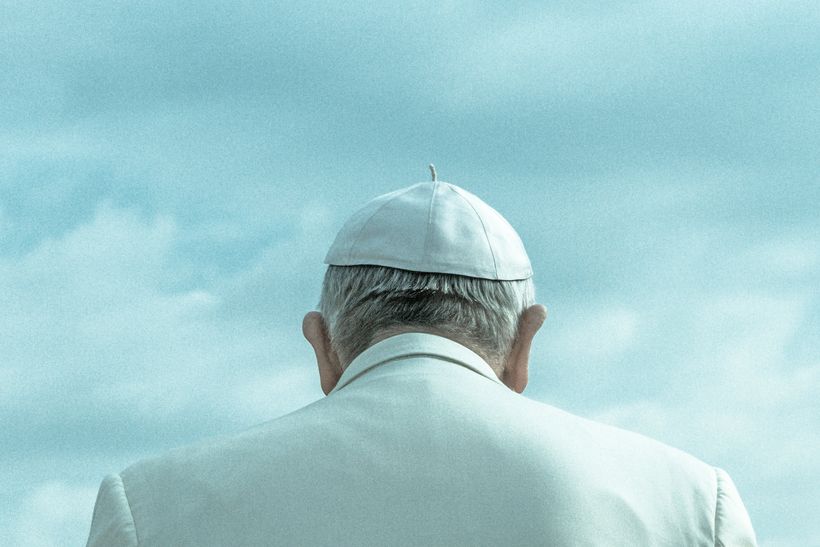
The death of Pope Francis marks a pivotal moment for the Catholic Church, ending a papacy that redefined the Church's relationship with the modern world. As the College of Cardinals prepares to gather in conclave, Catholics across the globe are closely watching to see whether the next pontiff will build upon Francis' legacy or chart a new course. The following experts are available to provide insight into a range of related topics, including Pope Francis' enduring impact and what lies ahead for the world's 1.4 billion Catholics: Massimo Faggioli, PhD Professor, Theology and Religious Studies Dr. Massimo Faggioli is a world-renowned expert on the history and administrative inner workings of the Catholic Church, with specific expertise in the papacy, Vatican II, the Roman Curia, liturgical reform, new Catholic movements and Catholicism and global politics. As quoted on NPR: "Historically, we see in different conclaves a certain swinging of the pendulum. What the conclave and the next pope cannot do is to ignore and deny the changing features of global Catholicism, which is much less European, much less white, less North American and more Global South..." Kevin Hughes, PhD Chair, Theology and Religious Studies Dr. Kevin Hughes is a leading historical theologian, offering insights into the life, legacy and impact of Pope Francis. He can also speak to the significance of the Pope in Catholicism and the influence of his teachings on the global Catholic Church. As quoted on Scripps News: "[Pope Francis' selection] was really the Church extending beyond the limits of its European imagination. His Latin American identity was really crucial to embracing a new moment within the Church and opening the door in so many ways, and I think he bore witness to that throughout his papacy." Jaisy Joseph, PhD Assistant Professor, Systematic and Constructive Theology Dr. Jaisy Joseph is a trained ecclesiologist, able to address a wide range of topics relating to the papacy, conclave process and Catholic Church. Previously, she has commented on the Church's presence in Asia and the Global South, offering expert commentary on its growth, challenges and shifting influence. As quoted by ABC News Digital: "[The election of someone from the Global South would be] a move in that direction of how to be a global church. That move from a Eurocentric church to a truly global church—I think that's what Francis really inaugurated." Patrick Brennan, JD Professor of Law; John F. Scarpa Chair in Catholic Legal Studies Professor Patrick Brennan is an expert on the conclave process and the main rules that govern it. He can also speak to topics such as the contemporary and historical importance of secrecy in the conclave, what the cardinals may be looking for in the next Pope and the factors that cause similarities and differences from one conclave to the next. As quoted on Fox 29's Good Day Philadelphia: "The purpose of the general congregation is for the cardinals, who don't know each other in some cases, to get to know each other better as they learn about the current state of the Church and together decide on the needs of the Church and priorities for the new pontificate." Brett Grainger, ThD Associate Professor, Study of Spirituality and American Religious History Dr. Brett Grainger is a go-to source for discussions of the changing face and role of modern spirituality in America. He serves as an expert on contemporary religious trends and can also speak to the broader public reaction to Pope Francis' passing, especially outside of the Catholic faith. As quoted by Courthouse News Service: "People are disaffiliating from a tradition—that doesn't necessarily mean in fact that they don't believe in God anymore...What's more important is 'Is this giving me life? Is this making my life more meaningful? Is this giving me the kind of energy and purpose that I'm looking for?' That's where religion is going." Michael Moreland, JD, PhD Professor of Law and Religion; Director, Eleanor H. McCullen Center for Law, Religion and Public Policy Dr. Michael Moreland is a renowned scholar of constitutional law, religious freedom, public policy and ethics. He can provide expert commentary on items related to the Catholic right and the state of religious politics in the United States. As featured on NBC News Digital: Michael Moreland said the mass appeal of "Conclave" captured how, even in a secular modern age, there is still pervasive intrigue around "the ancient rituals of the Catholic Church." "The significance of the theological and spiritual aspects of Catholicism and this process of electing a pope was kind of reduced into partisan politics," he said. Ilia Delio, OSF, PhD Josephine C. Connelly Endowed Chair in Christian Theology Sister Ilia Delio addresses topics in her work such as theology and evolution, technology and human becoming and understandings of Catholicity in a world of complexity. She can provide expert insight into Laudato si', Pope Francis' position on the environment, the relationship between science and religion and integral ecology. As featured in the National Catholic Reporter: "We are clearly an Earth in crisis," with a reversal necessary to secure a sustainable future, said Ilia Delio... Delio posed a series of questions: about the relationship between religion and science; what Laudato si', and Christianity more broadly, can offer ecological movements; and whether the concept of kinship or creation as family might better reflect humanity's place within nature than "care for creation." To speak with any of these faculty experts, please contact mediaexperts@villanova.edu.