
Experts Matter. Find Yours.
Connect for media, speaking, professional opportunities & more.
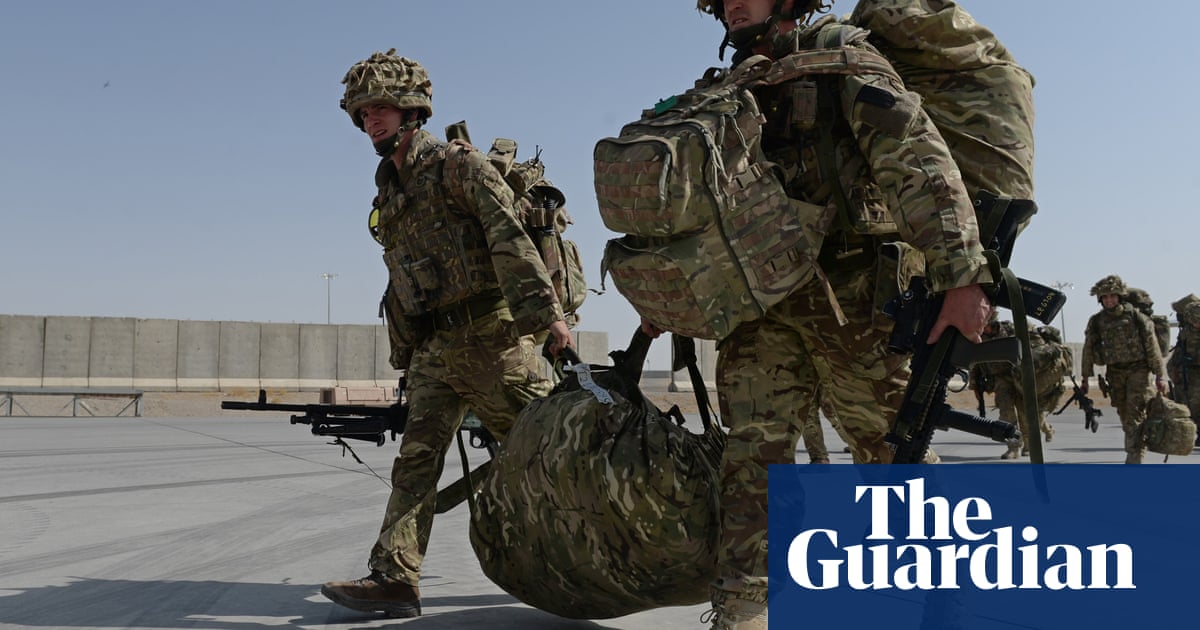
This Saturday marks the 20th anniversary of the September 11 terrorist attack. It was a day that forever changed how the United States viewed terrorism and its approach to foreign policy. The Middle East, especially Iraq and Afghanistan, has seen upheaval in the wake of 9/11. Over the last two decades, America’s approach to how it deals with enemies and how it collaborates with allies has also been drastically altered. University of Mary Washington Political Science and International Affairs Professor Jason Davidson is an expert in American foreign and security policy, and international security. He is also the author of the commissioned study, "The Costs of War to United States Allies Since 9/11," which focuses extensively on the human and monetary sacrifices made by America's allies in these conflicts. Davidson, and the document, made waves this spring, landing in the likes of Forbes, The Guardian and The Daily Mail. If you’re looking to arrange an interview with Dr. Davidson, simply click on his icon.



A severe frost in Brazil has damaged coffee crops, prompting an increase in global coffee prices. According to Reuters, arabica coffee prices have surged to the highest level in almost seven years. "But coffee is grown all over the world, and smart coffee buyers will be able to adapt by finding new sources to replace the lost supply in Brazil," says Daniel Reichman, an associate professor anthropology at the University of Rochester. "Brazil’s losses will benefit coffee growers in places like Colombia and Central America." Reichman explains that the coffee market is segmented between large scale buyers that have sophisticated hedging strategies to deal with risk, and small scale roasters that might have a relationship with single farms. Reichman, who has researched the coffee-growing economies in both Central America and South America, wrote about "big coffee" in Brazil for The Journal of Latin American and Caribbean Anthropology. His upcoming book is titled Progress in the Balance: Mythologies of Development in Santos, Brazil. It's a study of political and economic transformations in the city of Santos, which has been the hub of the world coffee trade for more than a century.



As Afghanistan falls – what comes next?
After 20 years of war, trillions spent and thousands of casualties, the Taliban claimed control over most of Afghanistan this weekend with little resistance, just a few weeks after withdrawal of American and allied forces. And questions are already being raised: How could this have happened so quickly? Did no one see this coming? What revenge and havoc will the ruling Taliban seek on those who assisted coalition forces? What will happen to the Afghan refugees who are attempting to flee the country? And sadly, was this all for nothing? There will be a lot of coverage as the future unfolds for the people of Afghanistan and how the Taliban’s control will reshape the country and the region. And if you are a reporter covering this ongoing topic – then let us help. University of Mary Washington Political Science and International Affairs Professor Jason Davidson is an expert in American foreign and security policy, and international security. He is also the author of the Brown and Boston universities commissioned study, "The Costs of War to United States Allies Since 9/11," which focuses extensively on the contribution of America's allies in Afghanistan. If you’re looking to arrange an interview with Dr. Davidson, simply click on his icon now to arrange an interview today.

Covering World Breastfeeding Week? Our experts are here to help
August 1-7 is World Breastfeeding Week, and the University of Mary Washington has the ideal expert for any journalist looking to learn more or cover this important topic. Did you know that breastfeeding is one of the top maternal priorities for many organizations, including the World Health Organization (WHO), the American Academy of Pediatrics (AAP) and the Centers for Disease Control and Prevention (CDC)? Assistant Professor of Communication Elizabeth Johnson-Young has done extensive research on women’s intentions to breastfeed and how the communication they receive during pregnancy and postpartum from various sources such as doctors, lactation consultants, friends and family, magazines, books and parenting groups can impact the decision to breastfeed. She's also explored the connections between breastfeeding and body satisfaction. Dr. Elizabeth Johnson-Young is a published expert on health communication, especially maternal and family health. She is ready to help if you are looking to cover this topic - simply click on her icon now to arrange an interview today.


What does the latest federal ruling mean for DACA? A UConn expert weighs in.
Deferred Action for Childhood Arrivals, more commonly known as DACA, was introduced in 2012, and ithas enabled roughly 828,000 eligible young adults to work, attend school, and live out their lives in the United States, the only country they know as their home, according to the American Immigration Council. DACA is back in news, though, after a federal judge in Texas ruled that the program was unconstitutional, a decision that attorney, scholar, and expert Jon Bauer from the UConn School of Law says is shaky: The decision in federal court wasn’t a surprise to Jon Bauer, who directs the University of Connecticut Law School’s Asylum and Human Rights Clinic. Because Hanen is known for his conservative judicial philosophy, according to Bauer, the ruling was expected to interfere with DACA in some capacity. But Bauer said the ruling could be overturned. “The reasoning of the decision is very weak, in my opinion. The judge, I think, misconstrued the scope of the Department of Homeland Security's authority to engage in what's called deferred action, which is what the DACA program is,” Bauer said. Connecticut has 3,560 residents who have DACA, as of March 2020, according to the Department of Homeland Security which administers the policy. Current recipients aren’t in immediate danger of losing their status, since the ruling as of now only prevents first time applicants from getting DACA. Bauer said that non-citizens have long been allowed to work with deferred action. While the federal government can conceivably attempt a legislative path to citizenship for DACA recipients, the road ahead to any permanent solution is uncertain due to the divisive nature of the current Congress. July 31, 2021 – Hearst Connecticut Media The fate of DACA is important not just to the individual recipients, but to the immigration system and economy of the United States more broadly. If you are a journalist looking to know more, then let us help. Jon Bauer is a clinical professor of law and is the director of the UConn School of Law’s Asylum and Human Rights Clinic. He is a go-to expert in the areas of asylum and refugee law, immigration law, employment and housing discrimination, and legal ethics. Professor Bauer is available to speak with media regarding this most recent DACA ruling – simply click on his icon now to arrange an interview today.


Canadian finances 101: What you should know as a newcomer
Canada’s financial ecosystem is made up of banks, credit unions, trusts, and other financial and insurance companies and it is considered to be one of the most sound and safest in the world. According to the Global Competitiveness Report 2019, published by the World Economic Forum, Canada ranked 9th globally for its financial system, showcasing stability and reliability. As you plan your move, familiarizing yourself with the Canadian banking and financial landscape can help provide context to key tasks like opening bank accounts, building credit history, borrowing money, and filing taxes. In this article: Types of financial institutions in Canada Getting started with taxes: The Canada Revenue Agency (CRA) Canada: A credit-based economy Banking, investments, and money transfers What are the types of financial institutions in Canada? Financial institutions in Canada can be classified into three main categories: 1. Banking institutions These are places where you can deposit, withdraw and borrow money. Examples of such institutions include banks, online-only banks, credit unions, trust companies, mortgage companies, etc. Banks A bank is licensed to receive deposits and make loans. Most banks are managed by the national government. The five largest banks in Canada are often referred to as the “big five” in banking. They are: Royal Bank of Canada (RBC), Toronto-Dominion Bank (TD), Bank of Nova Scotia (Scotiabank), Bank of Montreal (BMO), and Canadian Imperial Bank of Commerce (CIBC). Sometimes, you may hear the term “big six,” including the National Bank of Canada – although, note that its operations are primarily focused in the provinces of Quebec and New Brunswick. Digital-only banks In addition to these banks, there are a few digital-only banks, such as Tangerine (a subsidiary of Scotiabank), Simplii Financial (a subsidiary of CIBC), and EQ Bank. They provide all services online only and do not have any physical branches. Credit unions A credit union is a smaller financial institution that is owned by its members, who are also typically account holders. They operate under provincial legislation and regulations and provide similar services as banks. The main difference between a credit union and a bank is their structure; credit unions are owned by anyone with money in the credit union. The operations are supervised by a democratically elected board of directors made up of local community members. Due to their scale of operations, note that credit unions may have fewer branches and ATMs than a big bank would. Tip: As a newcomer to Canada, you can choose any financial institution of your choice. However, it is helpful to know that the big five banks (like RBC) have newcomer banking packages that specifically cater to permanent residents and international students and are thus better positioned to assist you in your unique situation. Trust companies Trust companies are legal entities similar to banks that act as an agent (on behalf of a person or business) for the purpose of administration, management and the eventual transfer of assets to a party. Mortgage companies Money lending entities such as mortgage finance companies (MFCs) and mortgage investment corporations (MICs) provide real estate financing. MFCs are non-depository financial institutions that underwrite and administer mortgages sourced through brokers. Their lending is funded mainly through securitization or direct sales to third parties, primarily the big six banks. MICs and other private investors typically deal in uninsured, customized mortgage products that are not available through traditional channels. These products include non-prime loans, second mortgages and very short-term mortgages. Key financial authority: The Bank of Canada The Bank of Canada is the nation’s central bank. Its principal role is to promote the economic and financial welfare of Canada. The Bank influences the supply of money circulating in the economy, using its monetary policy framework to keep inflation low and stable. It promotes safe, sound and efficient financial systems, within Canada and internationally, and conducts transactions in financial markets in support of these objectives. Additionally, the Bank of Canada also designs, issues and distributes Canada’s bank notes and acts as the “fiscal agent” for the government of Canada, managing its public debt programs and foreign exchange reserves. It also sets the interest rates in Canada. 2. Insurance companies These are entities that sell insurance to cover the risk of loss in various situations, caused due to a variety of factors. They include homeowner or renter’s insurance, health insurance, car insurance, life insurance, and more. They compensate you for any loss that’s covered by your insurance policy. Once you purchase a specific type of insurance, you are required to make periodic payments, called premiums, to the insurance company to avail of the agreed-upon coverage. 3. Investment companies These are organizations that focus on investing, administering or managing funds or money on behalf of other persons. Examples of such companies are investment banks, hedge funds, underwriters, and brokerage firms. Note: There might be an overlap in the services provided by financial institutions. For instance, a leading bank like RBC offers banking services, mortgages, a wide variety of insurance options, investment solutions, and more. Tip: Beware of predatory lenders offering payday, instalment, and other types of loans with very high interest rates. These lenders often prey upon people who need cash quickly and who have run out of all other options. They usually have exorbitant interest rates, confusing and misleading representations, and a lack of transparency and documentation. Therefore, always double-check money lending claims that seem too good to be true. Note that payday loans are provincially regulated while instalment loans are unregulated. What this means is – while interest rates cannot exceed 60 per cent, lenders are effectively free to change terms and add fees and other charges almost at will. Getting started with taxes: The Canada Revenue Agency (CRA) The CRA administers tax laws for the Government of Canada and for most provinces and territories. It administers various social and economic benefit and incentive programs delivered through the tax system. The CRA website is the go-to place for everything related to your taxes: filing annual tax returns, checking receipt of Government benefits and subsidies, viewing tax documents, etc. Important: To register for CRA’s “My Account,” you must have filed a tax return for the current or a previous year. Download Arrive’s free tax guide for newcomers for insights on how to file your taxes and to make sure you’re prepared to manage the expectations that come with paying taxes in Canada. Note: Beware of a long-running CRA scam with callers posing as representatives of the CRA. The CRA will never use threatening language nor ask for information about your passport, health card, driver’s license, or demand immediate payment by Interac e-transfer, bitcoin, prepaid credit cards or gift cards from retailers such as iTunes, Amazon. Canada: A credit-based economy North American countries such as the U.S. and Canada are known to be credit-based economies. This essentially means that most people use their credit cards (instead of debit cards or using cash) to make purchases and then repay the entire amount owed either at the end of their credit card billing cycle or in installments. You will need to build your own credit history, since this is essential to many aspects of life in Canada. Once you receive your first credit card, start by making payments for small expenses such as phone bills or groceries, and be sure you pay the balance in full by the end of the billing cycle. Tip: Keep in mind that credit cards have limits and do not offer free money. They can carry very high-interest rates, so your balance should be managed and paid down promptly – this will help you maintain a good credit rating. A credit score is a way for financial institutions to measure your ability to repay loans. Some scenarios where you may be asked for a credit report are while renting accommodation, applying to certain jobs, and obtaining mortgages or other loans from the bank. Additional resources Download Arrive’s free Credit guide to learn more about credit cards, credit scores, and credit ratings in Canada. For tips on staying debt-free and building your credit history in Canada, read How to build a good credit score from scratch as a newcomer. Banking, investments, and money transfers in Canada Banking Like many other countries, in Canada, you can conduct all your banking and money transfer transactions by walking into a branch or online, through internet banking. See How to open a bank account in Canada as a newcomer to know the process of opening a newcomer account. The article will also provide tips and resources to help you learn more about credit and direct deposits. Investments There are many financial products available to save and invest your money in Canada. They can be broadly classified into savings accounts, registered savings plans and investment products. Depending on your goals and your appetite for risk, you can choose one or a combination of several of these. Read Savings and investments for newcomers in Canada for deeper insights into all available investment products. Money transfers For domestic peer-to-peer payments (think: sending money to a friend, relative, co-worker, or acquaintance in Canada), there are a couple of ways to send and receive money online: Interac and Paypal. Interac is a bank-based tool, while Paypal is a non-bank, third party service. Among these, Interac e-transfers are the most popular and widely used form of peer-to-peer payments in Canada. You can send money overseas through online or mobile banking, by telephone, by email, or in-person. Banks like RBC have a simplified, affordable, and convenient process for international money transfer through online banking. If you have the recipient’s banking information handy, all it takes is a few clicks! Some popular options for international remittances are: Banks Credit unions Money transfer operators like Western Union, MoneyGram, WorldRemit, etc. Peer-to-peer transfer providers such as Transferwise (now, Wise), CurrencyFair, Paypal, etc. Currency exchange businesses When sending money overseas, the Canadian federal government tracks large sums (over $10,000 CAD) through Financial Transactions and Reports Analysis Centre of Canada (FINTRAC) to prevent money-laundering, terrorism funding, and related crimes. Understanding financial products and regulatory agencies in Canada can make you feel overwhelmed. Start with the basics so you can build awareness and a strong foundation to manage your finances in Canada. Original article located here, published by Arrive.


The pressures and anxieties for students to perform in post-secondary institutions have always been a factor. Add in the impacts of COVID-19 on the last two years of learning, and the increase of instances of cheating has gone through the roof. Recently, David Rettinger, a professor of psychological science and director of academic integrity programs at the University of Mary Washington sat in on the TechTank Podcast to talk about how American colleges and universities are dealing with cheating. Students are heading back to class soon, and if you are a journalist looking to cover this subject, then let us help with your stories. Dr. David Rettinger is available to speak with media regarding this issue of cheating and academic integrity. Simply click on his icon now to arrange an interview today.

If you thought today’s walk-up and drive-thru clinics to get vaccinated for COVID-19 were a lot of work, imagine how vaccines were safely transported across the Atlantic, without deep freezers or jets? Recently, UMW Professor of History and American Studies Allyson Poska was asked by 'With Good Reason' Radio - and the Centers for Disease Control and Prevention - to lend her expert opinion on the history of vaccines and the challenges the world has had trying to keep the public healthy and inoculated. Over two centuries ago, as the Spanish Empire embarked on the first-ever vaccination campaign against smallpox, "getting shots into arms" had an entirely different meaning. And government authorities back then faced as many challenges with promoting vaccinations as they do today. The First Vaccine Allyson Poska (University of Mary Washington) There’s been a lot of coverage about the challenges of distributing the Covid-19 vaccine. How do we get it to distant areas? How do we use a whole vial before it expires? What about the special refrigerators needed to keep it cold enough? But these problems seem minor compared to the very first vaccine distribution in the early 1800s. Historian Allyson Poska shares the story of 29 orphan boys who crossed the Atlantic Ocean as live incubators for the smallpox vaccine and what lessons we can learn from this early campaign. July 21 - With Good Reason This is a fascinating topic, and if you are a journalist looking to cover this topic, then let us help. Dr. Allyson Poska is available to speak with media regarding this subject - simply click on her icon now to arrange an interview today.

Arguments, debates and protests have been taking place across America with regard to monuments and statues memorializing historical figures from the Confederate army. It’s a topic that has captured the attention of Americans from across the country and especially those from the America’s Southern states. Recently, Georgia Southern University’s Christopher Hendricks, Ph.D., was featured in the news giving his expert perspective on the topic and how America might provide the context behind these moments representing American history. “I think that telling the full story always is a good idea,” said Dr. Christopher Hendricks, a history professor at Georgia Southern University. Hendricks studies early American history and historic preservation. He suggested that we should put the monument into context rather than remove it. “It’s really important to put these things into context,” Hendricks said. “Particularly if you are going to leave them here.” He said that he believes signage explaining the origin and evolution of the memorial would help to establish the monument as a more neutral historical artifact. July 11 – ABC News This is an important topic and if you are a journalist looking to know more about this subject – then let us help. Christopher Hendricks, Ph.D., history professor at Georgia Southern University, is an expert in the areas of early American history and historic preservation. Hendricks is available to speak with media about this topic – simply click on his icon now to arrange an interview today.


Crossing Space and Time at Japan Society's 2021 Annual Dinner
On June 22, Japan Society celebrated its 2021 Annual Dinner, raising over $1.3 million to take us into the next year and beyond. It was—literally and virtually—a star-studded evening at the intersection of science, art, culture, business, and the U.S.-Japan alliance. After a special message from Japanese Prime Minister Yoshihide Suga, the program included a conversation between former JAXA astronaut Naoko Yamazaki, the second Japanese woman to fly in space, and Ambassador Caroline Kennedy—marking the 60th anniversary of President Kennedy's Moonshot Address, followed by a performance from Japan's Ryoma Quartet. The keynote Fireside Chat brought together two titans of industry, our very own Chairman Joseph Perella, Chairman Emeritus, Perella Weinberg Partners and private equity pioneer Henry Kravis, Co-Chairman and Co-CEO of KKR—also the recipient of this year's Japan Society Award. Mr. Kravis underscored the value of investing in long-term relationships throughout his talk with Mr. Perella, noting, "You have to be patient. You have to set your mission. You have to have a focus on ESG (environmental, social, and governance). Any company today that is not focusing on their ESG and on diversity of their workforce is not going to have much of a future. Today, it's not all about making money. That's a part of it. But it's also very important to ask, 'What are you doing for society, what are you doing to help your country?'" In her conversation with astronaut Naoko Yamazaki, Ambassador Caroline Kennedy cited her father's famous Moonshot Address at Rice University in 1962: "We choose to go to the Moon in this decade and do the other things, not because they are easy, but because they are hard, because that goal will serve to organize and measure the best of our energies and skills, because that challenge is one that we are willing to accept, one we are unwilling to postpone, and one which we intend to win, and the others, too." Yamazaki, who is working to inspire the next generation in aerospace, among other initiatives, is "thrilled to be able to witness the Artemis Program, which is sending the first woman and the first person of color to the moon, with international cooperation. Japan is in charge of the cargo transfer to the Lunar Gateway, the station [that will orbit the moon], and also Toyota and JAXA are developing a pressurized lunar rover to explore the surface of the moon." For Japan Society, the next 50 years will be our own Moonshot, as we move forward into a new post-pandemic inflection point—a significant reopening full of energy and excitement this fall that embodies the best of American and Japanese spirit. It's time to reach beyond the physical space of our landmarked building, which opened to the public 50 years ago in September 1971, re-imagining our enduring mission of connecting American and Japanese people, cultures, and societies across time and space for the next half century. Sixty years ago, President John F. Kennedy's Moonshot Address inspired a generation of Americans to look to the moon in the spirit of adventure, patriotism, and freedom. Today, under new leadership in the United States and Japan, Japan Society starts a new chapter in building our kizuna, our forward-facing energy and deeply interwoven connections, between New York and Japan – and beyond. How do we continue to inspire the next generation of leaders in U.S.-Japan relations? As we think about the next 50 years at Japan Society, much has changed, yet many of the foundations remain the same from our starting point 114 years ago. There's a lot to look forward to as we celebrate significant milestones in 2021-22 and beyond. As Mr. Kravis said, in order to grow and to survive, "You have to keep innovating, you have to keep moving." Japan Society is a convener for the future. With your support, we, too, will overcome the tough challenges facing this world and the U.S.-Japan alliance, together. See you at Japan House and on the far side of the moon! If you missed out on our 2020-21 season, below are some of the highlights. Stay tuned for more exciting events coming this summer and fall, in person and online! Published on June 22, 2021 on Japan Society’s new Watch & Read page.

