
Experts Matter. Find Yours.
Connect for media, speaking, professional opportunities & more.

At the age of 88, American political giant and two-time former Secretary of Defense Donald Rumsfeld is dead. Donald Rumsfeld, the two-time defense secretary and one-time presidential candidate whose reputation as a skilled bureaucrat and visionary of a modern U.S. military was unraveled by the long and costly Iraq war, died Tuesday. He was 88. In a statement Wednesday, Rumsfeld’s family said he “was surrounded by family in his beloved Taos, New Mexico.” President George W. Bush, under whom Rumsfeld served as Pentagon chief, hailed his “steady service as a wartime secretary of defense — a duty he carried out with strength, skill, and honor.” Regarded by former colleagues as equally smart and combative, patriotic and politically cunning, Rumsfeld had a storied career in government under four presidents and nearly a quarter century in corporate America. June 30 - Associated Press If you're a journalist looking to know more about Rumsfeld's legacy and impact on American foreign policy, then let our expert help. Professor of Political Science and International Affairs Jason Davidson is an expert in American foreign and security policy, and international security. His study, The Costs of War to United States Allies Since 9/11, recently received an onslaught of media attention, landing in Forbes, The Guardian and Daily Mail. If you’re looking to arrange an interview with Dr. Davidson, simply click on his icon now to arrange an interview today.



Emily Baum: Chilling academic exchanges between China and the U.S. Emily Baum is an associate professor of modern Chinese history and director of the Long U.S.-China Institute, which aims to bridge the gaps between academia, journalism and the public sector. Baum says the pandemic will likely affect study abroad for years to come, in both directions, with negative impacts on both sides. There was already a significant disparity with roughly 370,000 Chinese students studying in the U.S. and only 11,000 Americans studying in China annually. “A drop in Chinese enrollments will have major consequences for the future of higher education in the U.S., where many schools rely on the full tuition paid by international students to stay afloat,” Baum says. But equally worrisome: “The educational decoupling that had already begun before COVID-19 — and will be greatly exacerbated by it — means that there will be far fewer opportunities for each country’s students to gain firsthand knowledge of, and mutual understanding about, the other.” Reach Baum at: emily.baum@uci.edu Wang Feng: China has passed its peak Wang Feng is a professor of sociology and an adjunct professor at Fudan University in Shanghai, China. He is an expert on global social and demographic changes and social inequality. He has served on expert panels for the United Nations and the World Economic Forum, as well as he served as a senior fellow and director at the Brookings Institution Brookings-Tsinghua Center for Public Policy. Wang sees the ascendance of China in the last 40 years as the result of a unique confluence of circumstances: a dynamic leader in Deng Xiaoping, plus a significant rural population that moved to cities and provided a huge labor force. In the last 20 years, China has produced 600 billionaires — and gaping wealth disparities. “When China was poor, people thought it would be poor forever. Now that China is rich, people think it will be rich forever. But China has passed its peak,” he says. “The headwinds of an aging population, the legacy of the one-child policy, and tremendous social inequality will present enormous internal challenges in the years ahead.” Reach Wang at fwang@uci.edu. Jeffrey Wasserstrom: China’s box office changes Hollywood portrayals Jeffrey Wasserstrom is a Chancellor’s professor of history. A specialist in modern Chinese history, he has testified before a Congressional-Executive commission on China, conducted a State Department briefing on contemporary Chinese politics, and worked with the Hong Kong International Literary Festival. His articles have been published by TIME, The Nation, Wall Street Journal, Financial Times, The New York Times and others. Wasserstrom notes that Hollywood films and TV often negatively present whichever East Asian country is most feared at the time. However, the power of China’s box office is changing that. “Due to concern with the massive market for movies in the People’s Republic of China, you do not often see negative portrayals of that country on American screens,” says Wasserstrom. “A telling example of our living in a new era is that when filmmakers were setting out to make a new version of ‘Red Dawn,’ a film that originally portrayed a Russian invasion of the U.S., the plan was to have Chinese soldiers serve as the enemies. Concern about PRC box office receipts led to a change in nationality — the enemies became North Korean soldiers.” Reach Wasserstrom at: jwassers@uci.edu. Yong Chen: Chinese food in the U.S. and China Yong Chen is the author of several books including "Chop Suey, USA: The Story of Chinese Food in America" (Columbia University Press, 2014). He also co-curated “‘Have You Eaten Yet?’: The Chinese Restaurant in America” in Atwater Kent Museum, Philadelphia (2006), and the Museum of Chinese in the Americas, New York City (2004–05). He is professor of history. He points out that the COVID-19 pandemic hastened changes to culinary habits that were already underway in China, including less consumption of wild animals, greater demand for fast food, and a shift away from communal or “family style” meals. Meanwhile, in the U.S., Chinese restaurants have been hit hard by anti-Asian sentiments, while also showing signs of resilience thanks to the popularity of Chinese takeout. “If the seriously strained relationship between China and the US continues to deteriorate, it is possible that more people in America will lose their appetite for Chinese food, to say the least,” Chen says. Reach Chen at: y3chen@uci.edu.


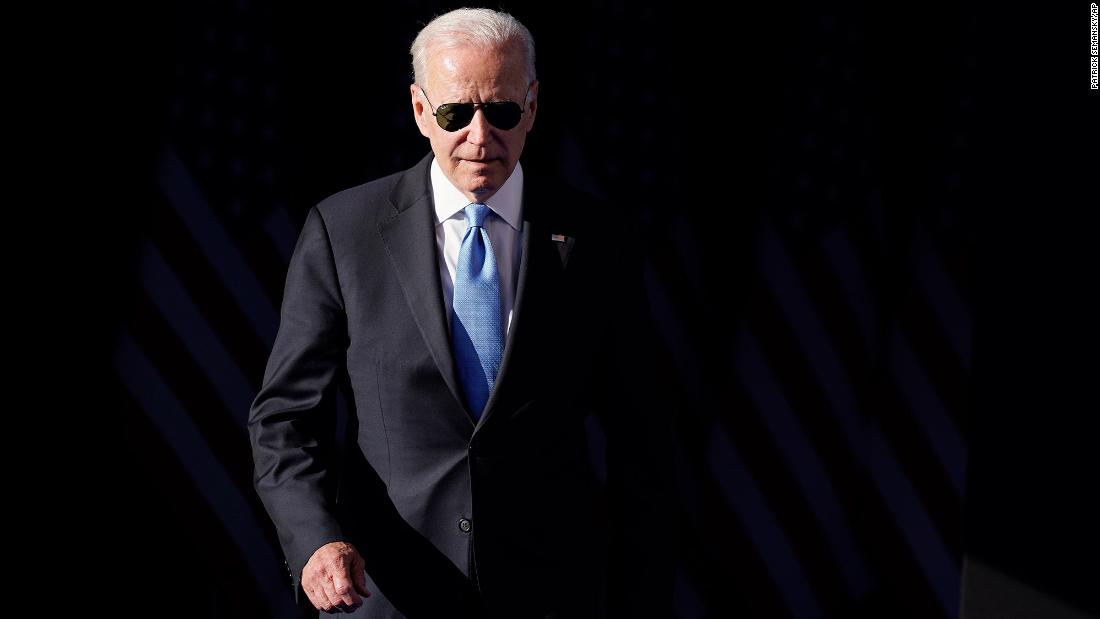
The odd couple – Can Biden and Putin find a way to thaw relations between America and Russia?
It was a meeting of two world powers that came with low expectations but much anticipation. The face-to-face meeting between American President Joe Biden and Russian President Vladimir Putin may not have accomplished much, but it did allow Biden to set a tone on his approach to foreign relations. President Joe Biden's meeting Wednesday with his Russian counterpart came after months of diplomatic wrangling over the details, days of preparation with reams of research and the elaborate construction of two separate lakeside venues for the leaders to appear afterward. But after the summit had concluded, the ornate French style manor home was locked up and the leaders were jetting in opposite directions home, the state of relations between the United States and Russia seemed about the same as before. That is not necessarily a surprise, least of all for Biden, who entered the summit with the vague and modest goal of establishing a "predictable and rational" relationship with Vladimir Putin. Putin's performance afterward was certainly predictable, if not entirely rational. Ultimately, Biden set expectations so low for his first face-to-face encounter with Putin that anything more than someone not showing up at all amounted to breaking even. June 16 - CNN What comes next is up to both leaders – but the world will be watching. Is there a chance to find common ground between the two countries? Will Russia continue to interfere in U.S. elections and hack American agencies - and how will American respond? What happens if Russian opposition leader Alexei Navalny dies in prison? And, did this meeting give Putin the elevated push he needs internationally? If you are a journalist looking to cover this subject – then let us help. Dr. Stephen Farnsworth is a sought-after political commentator on presidential politics. He has been widely featured in national media, including The Washington Post, Reuters, The Chicago Tribune and MSNBC. Dr. Farnsworth is available to speak with media any time. Simply click on his icon to arrange an interview today.


Without Trump – Is Late Night Television Struggling for New Jokes?
For four years, just about every talk show host and comedy show had a fresh supply of almost daily content. The unfiltered comments, gaffes and chaotic ongoings in the White House offered up a steady stream of material for jokes, monologues and coverage. But those days are over. Does Joe Biden's calm presidency and his capable administration mean a deficit of humor for the country’s comedians? UMW’s Dr. Stephen Farnsworth was recently featured in Variety Magazine about his perspective on the current state of late-night political content. Viewers are likely to continue to expect a robust political discussion. “In Washington, the political divisions are as intense as ever, and so it seems that there would be a ready audience for a continuing focus on political humor in late night,” said Stephen Farnsworth, co-author of the 2019 book “Late Night With Trump: Political Humor and the American Presidency” and director of the Center for Leadership and Media Studies at the University of Mary Washington. “The environment may not look all that different post-pandemic.” June 14 - Variety Magazine Dr. Stephen Farnsworth is a sought-after political commentator on presidential politics. He has been widely featured in national media, including The Washington Post, Reuters, The Chicago Tribune and MSNBC. Dr. Farnsworth is available to speak with media any time. Simply click on his icon to arrange an interview today.
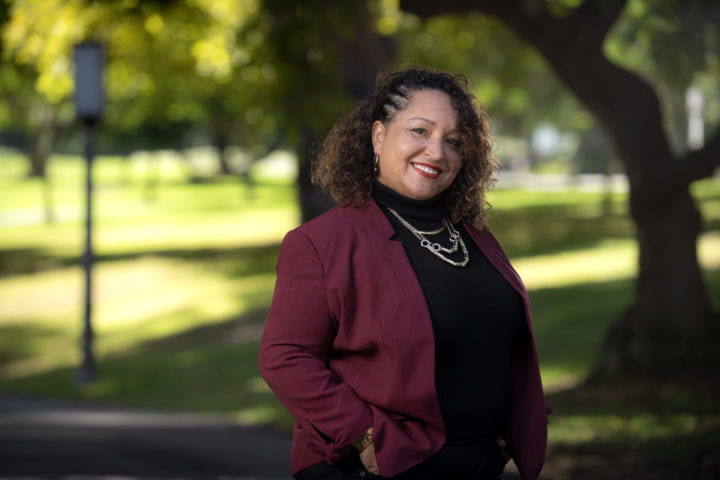
Juneteenth is this Saturday? Our experts can help with your coverage and questions
June 19 — Juneteenth — marks the day in 1865 that the Union Army announced in Texas that the African American slaves were free. Black Americans since then have honored the day, even as it has gone unnoticed by many others. In 2020, Jessica Millward, an associate professor of history at UCI, appeared on the UCI Podcast to discuss the history behind Juneteenth, the decades upon decades of continued struggle, and the hope she feels in this moment. And if you’re a reporter covering this important date in American history – then let our experts help with your stories. Dr. Jessica Millward is an Associate professor in the Department of History at the University of California, Irvine. Her research focuses on comparative slavery and emancipation, African American history, gender and the law. Dr. Millward is available to speak with media about Juneteenth – simply click on her icon now to arrange an interview today.


Did you know in America more than 6 million people are living with Alzheimer’s disease? June is Alzheimer's and Brain Awareness Month and the experts from Georgia Southern University have been busy talking with reporters and media about the importance of brain health and how to monitor your memory for any signs that may require attention. Earlier this month, Georgia Southern’s Adrienne Cohen spoke to NBC News about Dementia and the many types of brain disorders. Alzheimer’s is one of the many types of Dementia, a brain disorder that causes the brain to create gaps, initially effecting the short-term memory. “It can have several stages,” said Adrienne Cohen, Ph.D, associate professor and director, Center for Social Gerontology . “It can effect your memory, it can effect your mood, it can effect the way you interact with other people. It’s a slow progression, initially people might just be confused or can’t remember things and sadly that happens to all of us.” For many, it can be difficult to determine whether a person’s forgetfulness is caused by a number of underlying factors, like vitamin deficiencies or metabolic-related issues, or if it could potentially be something more serious. June 07 – NBC News With nearly six million Americans effected by Alzheimer’s disease, the chance of being effected doubles every five years for every American as they age after 65. This is an important topic and if you are a reporter looking to cover this subject – then let our experts help. Simply reach out to Georgia Southern Director of Communications Jennifer Wise at jwise@georgiasouthern.edu and she’ll assist with connecting you with Dr. Cohen today.


Augusta University experts looking for clues to predict future cyber attacks
The threat of cyber attacks is a reality for every industry. Cybersecurity is top of mind after recent highly skilled and calculated attacks targeting the Colonial Pipeline in May and shutting down the world’s largest meat supplier earlier this month. With America’s energy and food supply chains making vulnerable targets, everyone from executives, lawmakers, security officials and the media are looking for answers. Augusta University’s Dr. Craig Albert and Dr. Lance Hunter explore the questions surrounding cybersecurity in a recently published study in The Cyber Defense Review. This project examines the political, economic and military factors associated with cyber attacks in an effort to understand which countries or groups are most likely to attack. Here’s an abstract of their piece: Factors that Motivate State-Sponsored Cyberattacks The study of the factors involved in the initiation of violent interstate conflicts has been well documented within international relations. However, scholars have yet to analyze the factors associated with the initiation of international state-sponsored cyberattacks due to the lack of available data. This study is a first attempt to address this limitation. This project examines the political, economic, and military factors associated with the initiation of state-sponsored cyberattacks from 2005–2012, using a unique dataset that incorporates author-collected political, economic, and military data, along with cyber data on known state-sponsored cyberattacks extracted from the Council on Foreign Relations (CFR) Cyber Operations Tracker Dataset. With this unique dataset, we seek to better understand those states most likely to cyberattack other states. The Cyber Defense Review, Spring 2021 The study was also referenced in Voice of America in a piece covering President Biden’s trip to the G-7 Summit in Britain. If you are a journalist looking to cover any aspect of cybersecurity and cyber attacks, Augusta University’s experts are world-renowned on the topic. Dr. Craig Albert is director of the Master of Arts in Intelligence and Security Studies at Augusta University. He is a leading expert on war, terrorism and American politics, and he testified before U.S. Congress regarding the threat from Chechnya following the deadly Boston Marathon bombing. Dr. Lance Hunter is an assistant professor of political science with a background in international relations. His research focuses on how terrorist attacks influence politics in democratic countries and how political decisions within countries affect conflicts worldwide. Both experts are available to speak with media about cyber attacks. Simply click on either expert’s icon to arrange an interview today.



Weight stigma is a burden around the world – and has negative consequences everywhere
Rebecca Puhl, Professor of Human Development and Family Sciences and Deputy Director, UConn Rudd Center for Food Policy and Obesity, University of Connecticut was recently featured in The Conversation discussing this very important topic. An excerpt of her article is included with the full piece attached. It's an excellent article and well worth the read. Lazy. Unmotivated. No self-discipline. No willpower. These are just a few of the widespread stereotypes ingrained in American society about people who have a higher body weight or larger body size. Known as weight stigma, these attitudes result in many Americans being blamed, teased, bullied, mistreated and discriminated against. There is nowhere to hide from societal weight stigma. Decades of research confirm the presence of weight stigma in workplaces, schools, health care settings, public accommodations and the mass media, as well as in close interpersonal relationships with friends and families. It’s everywhere. I’m a psychologist and researcher at the Rudd Center for Food Policy & Obesity at the University of Connecticut. For 20 years my team has studied weight stigma. We’ve examined the origins and prevalence of weight stigma, its presence across different societal settings, the harm it causes for people’s health and strategies to tackle this problem. We conducted a recent international study that clearly shows that weight stigma is widespread, damaging and difficult to eradicate. This societal devaluation is a real and legitimate experience for people across different countries, languages and cultures. June 01 – The Conversation The issue of weight stigma and shaming is having a devastating impact on all facets of American society – and if you are a reporting looking to cover this topic or to learn more, then let us help. Dr. Rebecca Puhl is Deputy Director for the Rudd Center for Food Policy & Obesity and Professor in the Department of Human Development and Family Sciences at UConn. She is responsible for identifying and coordinating research and policy efforts aimed at reducing weight bias. Dr. Puhl is available to speak with media regarding this important subject – simply click on her icon now to arrange an interview today.


Does the road ahead for successful cities mean removing highways?
If hindsight is 20/20, there might be a lot of urban planners from 50s and 60s looking back and regretting how the layout of America’s cities went wrong. A recent New York Times piece featuring UConn’s Dr. Norman Garrick looked at 30 cities across America and how they’re trying to undo the damage from more than a half-century ago. As midcentury highways reach the end of their life spans, cities across the country are having to choose whether to rebuild or reconsider them. And a growing number, like Rochester, are choosing to take them down. In order to accommodate cars and commuters, many cities “basically destroyed themselves,” said Norman Garrick, a professor at the University of Connecticut who studies how transportation projects have reshaped American cities. “Rochester has shown what can be done in terms of reconnecting the city and restoring a sense of place,” he said. “That’s really the underlying goal of highway removal.” The project’s successes and stumbling blocks provide lessons for other cities looking to retire some of their own aging highways. Nearly 30 cities nationwide are currently discussing some form of removal. May 27 - New York Times The concept of urban renewal is front and center and is getting a lot of attention as the government looks to invest in infrastructure and new modern cities. And if you’re a reporter looking to know more about this topic, let us help. Dr. Norman Garrick is professor in the Department of Civil Engineering and co-director of the Sustainable Cities Research Group at the University of Connecticut. He is an expert in the areas of transportation behaviors, parking, public transit, and bicycle lanes. Dr. Garrick is available to speak with media – simply click on his icon now to arrange an interview today.


Baylor Consumerism Expert Shares Five Tips to Make the Most of Your Stimulus Check
With President Joe Biden’s $1.9 trillion American Rescue Plan Act, citizens nationwide received a second round of stimulus checks in the form of $1,400 per person and an additional $1,400 per dependent. The Rescue Plan also brought increased child tax credits and unemployment benefits. James Roberts, Ph.D., The Ben H. Williams Professor of Marketing in the Hankamer School of Business, is an internationally recognized expert on consumerism and the author of “Shiny Objects: Why We Spend Money We Don’t Have in Search of Happiness We Can't Buy.” He said the latest round of stimulus funds offer consumers bright opportunities, but he also cautioned against pitfalls in uncertain times. Roberts said that people should first consider building up their emergency savings funds – a step, he said, more Americans seem to be taking during this time of pandemic and economic fluctuation . “Over the last 20 years or so, Americans have not saved much. However, in the first nine months of the pandemic, the U.S. savings rate increased by a whopping 100 percent. By some estimates we are at a national savings rate that hovers around 20 percent – which is incredible,” Roberts said. Roberts shared a few tips on how to get the best value for your stimulus check and prepare for times ahead: 1. Enhance your savings. Save a portion of your stimulus check for the inevitable rainy days ahead. Start with $1,000 to your short-term emergency fund. If possible, every family should have a $2,500 emergency fund. This provides peace of mind and avoids having to borrow from friends or family, or even worse, max out your credit cards or take out a “payday” loan, which I strongly advised against. 2. Invest in experiences. Given that a lot of Americans have significantly increased their savings and lowered their credit card debt, I say people should splurge a little on something for themselves or their families with the remaining $400. Remember, experiences bring more lasting happiness than buying stuff. Good mental health is critical to our well-being. 3. Start early. Don’t forget that the $1,400 stimulus check is only a small part of the money that may come your way. The child tax credits are a great opportunity to save for your children’s college. The earlier you start saving, the better. This is the beauty of compounding interest. 4. Save while unemployed I suggest any extra boost you might get in your unemployment check be saved for the days ahead. Don’t let money burn a hole in your pocket. 5. Plan ahead. Every family’s goal should be to set aside six months in living expenses so if you do lose your job, it doesn’t put you and your family into an immediate financial death spiral. ABOUT DR. JAMES ROBERTS James Roberts, Ph.D., is The Ben H. Williams Professor of Marketing in Baylor University’s Hankamer School of Business. He is a nationally recognized expert on consumer behavior and has been quoted extensively in the media and has appeared on the CBS Early Show, ABC World News Tonight, ABC Good Morning America, NBC The Today Show, Yahoo.com’s “The Daily Ticker,” and has been quoted and/or featured in The New York Times, The Wall Street Journal, National Public Radio, USA TODAY, TIME, FOX News, The Doctors on CBS, US News & World Report, Cosmopolitan, Glamour, and many other media. His books include “Shiny Objects: Why We Spend Money We Don’t Have in Search of Happiness We Can't Buy” and “Too Much of a Good Thing: Are You Addicted to your Smartphone?” ABOUT BAYLOR UNIVERSITY Baylor University is a private Christian University and a nationally ranked research institution. The University provides a vibrant campus community for more than 19,000 students by blending interdisciplinary research with an international reputation for educational excellence and a faculty commitment to teaching and scholarship. Chartered in 1845 by the Republic of Texas through the efforts of Baptist pioneers, Baylor is the oldest continually operating University in Texas. Located in Waco, Baylor welcomes students from all 50 states and more than 90 countries to study a broad range of degrees among its 12 nationally recognized academic divisions. ABOUT HANKAMER SCHOOL OF BUSINESS AT BAYLOR UNIVERSITY At Baylor University’s Hankamer School of Business, top-ranked programs combine rigorous classroom learning, hands-on experience in the real world, a solid foundation in Christian values and a global outlook. Making up approximately 25 percent of the University’s total enrollment, undergraduate students choose from 16 major areas of study. Graduate students choose from full-time, executive or online MBA or other specialized master’s programs, and Ph.D. programs in Information Systems, Entrepreneurship or Health Services Research. The Business School also has campuses located in Austin and Dallas, Texas. Visit baylor.edu/business.

