
Experts Matter. Find Yours.
Connect for media, speaking, professional opportunities & more.

Spring 2021 begins a season of resiliency. After a long and particularly snowy winter in New York, I look forward to welcoming my favorite cherry blossoms. It’s been a year now since the COVID shutdowns took hold and the pandemic pause has required enormous energy from all of us at Japan Society, from remote work with constant online meetings, to safeguarding our 50-year-old building, to pivoting to online programming and finding new ways to bring in revenue. It’s not really been a “pause” in the traditional sense, it’s been a race for organizational transformation, adaptation to new ways of communicating with our colleagues and our members, and now — a reopening! This spring, we are delighted to celebrate our reopening with When Practice Becomes Form: Carpentry Tools from Japan, a special exhibition that explores the extraordinary, centuries-long tradition of Japanese architecture and woodworking artistry, and features a range of hand tools and models that reflect techniques used for hundreds of years to build and restore Japan’s wooden architectural masterpieces — temples, shrines, and bridges. Philosophy of Japanese woodworking The philosophy that undergirds Japanese woodworking is deeply engrained in Japan Society’s own history. As master woodworker George Nakashima wrote in his book, The Soul of a Tree, “We can walk in step with a tree to release the joy in her grains, to join with her to realize her potentials, to enhance the environments of man.” Fifty years ago, Junzo Yoshimura, the architect of Japan Society’s now-landmarked building, asked that Japanese hinoki cedar be used for the coffered ceilings in the Society’s lobby and selected with his own hands stones to be shipped from Japan for the foyer garden. He also specified furniture to be crafted by Nakashima in his New Hope, Pennsylvania workshop, furniture that has stood the test of time and is still in use today. Precision is a hallmark of the Japanese experience. One of the many ways to view this is through the concept of kodawari — a unique Japanese notion that is difficult to translate — referring to the uncompromising, relentless devotion to one’s art, pursuit, profession, or activity. In a world turned upside down by a pandemic, there has never been a more welcome time to explore this relentless pursuit of precision and quality in one’s work at all levels of kodawari — in the form of Japanese woodworking. Tools of leadership, alliance & innovation The resilient spirit of Japanese craftsmanship resonates, especially in these unusual times. The presence of tools in our galleries and an exploration of their longstanding heritage for a broad audience highlights the persistent strength of U.S.-Japan relations and human ingenuity. As a leader, I take my own inspiration from Nakashima, using the strength of the oak tree in the West and flexibility of bamboo in the East to bring out the strength, resiliency, and innovation of the U.S.-Japan alliance through my own set of tools. These are the tools of leadership, which require the knowledge and precision of a master carpenter, building for the present while planning for the future. As Nakashima writes, “Each cut requires judgments and decisions on what the log should become.” In kigumi — traditional Japanese wooden joinery — each part plays a crucial role since the joints are fitted together without any nails or fasteners. To have structural integrity, the work — whether furniture or architecture — needs to be weight bearing, and with its direct connections, the whole will ultimately be stronger than its separate elements. In an ongoing cycle of repair and renewal, old joints are replaced by new ones, allowing traditional Japanese buildings to stand for hundreds of years. I find a parallel in the U.S.-Japan alliance, where our direct connection is the strength of our relationship — a collective strength where each nation can accomplish more together. Fifty years ago, as Japan Society’s new building was preparing to open to the public, Deputy Executive Director Daniel J. Meloy wrote to George Nakashima: “Your first shipment to us arrived safely today with all pieces in good shape. We have unwrapped them, dusted them, carried them to their respective rooms, and we love them.” This spring, I invite you to visit When Practice Becomes Form, and help us celebrate our reopening. Let’s work together, using the tools of tradition and innovation, to build the next 50 years of our alliance. Given the challenges the world has faced this past year, the U.S.-Japan alliance has never been more necessary — as acknowledged by the fact that the first world leader to visit President Biden’s White House will be Japanese Prime Minister Yoshihide Suga. The personification of the importance of this relationship through this visit, along with the elevation of the “Quad” meeting between the leaders of Australia, India, Japan, and the United States, indicates a new emphasis in American foreign policy. In addition to the geopolitical challenges confronting our nations, Americans have been struggling domestically with the rise in anti-Asian hate crimes and harassment — a powerful reminder of critical battles still to be fought at home. The Japanese American experience, including forced relocation to internment camps during World War II and the 1980s discrimination triggered by economic tensions with Japan, are only two examples of the long history of anti-Asian racism we continue to confront as a country and community. Now, more than ever, we must bring our collective strength to bear to fight hate and bigotry — and build a stronger and more resilient society. Joshua Walker (@drjwalk) is president and CEO of Japan Society. Follow @japansociety. The views expressed in this article are the writer’s own.


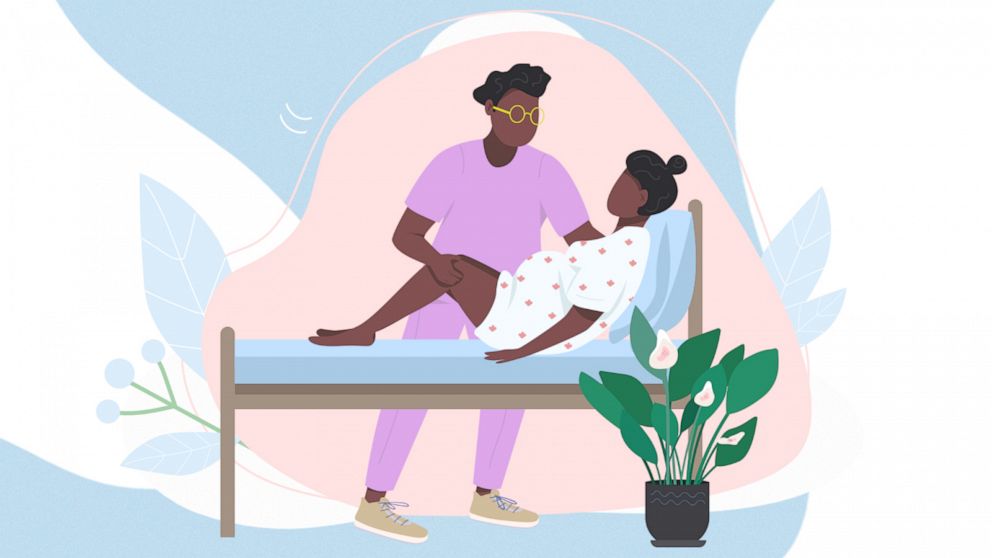
Earlier this week, President Joe Biden proclaimed that April 11 thru 17 would be Black Maternal Health Week in America. In Georgia, the state has consistently been ranked as one of the most dangerous places in this country to be a new mother. Approximately 26 Georgia women die from pregnancy complications for every 100,000 live births, compared to the national average of about 17 women. But even more devastating is the fact that about 60% of the state’s maternal deaths between 2012 and 2016 were found to be preventable, according to the Georgia Department of Public Health. And the mortality rates are much more tragic for Black women in Georgia. African American women are almost three times more likely to die from a pregnancy-related cause than white women in Georgia. Black mothers in rural areas of Georgia are at an even higher risk. “Maternal and infant mortality are really significant indicators of the quality of health in any area, so my colleagues around Georgia really felt challenged to do something that we hadn’t done in a long time in our state, which was to get the data,” says Dr. Chad Ray. “Because you can’t really fix something unless you know who and why. And then you assemble the stakeholders to formulate a plan to make a dent and to move the needle on something that is just so important.” This is an important topic that impacts mothers in Georgia and across the entire United States. And if you are a journalist looking to cover this topic – then let us help. Dr. Chad Ray is the Interim Section Chief of the Department of Obstetrics and Gynecology at the Augusta University Medical Center. He is an expert in the areas of maternal mortality & global women's health initiatives. Dr. Ray is available to speak with media about Black Maternal Health Week - simply click on his icon now to arrange an interview today.


Public health education soars in wake of pandemic
Maybe a silver lining can be found from the COVID-19 pandemic, as interest in public health education is soaring at U.S. colleges and universities, says a nationally prominent public health professor. Public health education has become a logical choice for students when looking at changing public health practice trends and their implications for public health education, explained Gulzar Shah, Ph.D., who authored an invited editorial in the March issue of the American Journal of Public Health (AJPH). Shah is department chair and professor of health policy and community health in Georgia Southern University’s Jiann-Ping Hsu College of Public Health. His editorial is titled “Public Health Education and Changing Public Health Realities in the Public Health 3.0 Era.” “For many of the 19 million college students enrolling annually in public and private colleges in the United States, public health is becoming a logical choice,” he said. “Because of COVID-19, interest in public health careers is soaring, evident from the 20% increase nationwide in Master of Public Health applicants.” The editorial also drew insights from the Association of Schools and Programs of Public Health’s national-level data from schools and programs of public health about the first employment destinations of public health graduates. “The emphasis on aligning public health practice and policy with the Public Health 3.0 framework, in which leaders partner across various sectors to address social, environmental and economic factors that affect population health and health inequity, has attracted the spotlight on generalist, behavioral education and health policy degrees,” Shah noted. “The Public Health 3.0 framework has also underscored the desirability of adopting the Health in All Policies approach and encouraging public health leaders to act as chief health strategists in influencing policies in other sectors affecting population health. Increasing focus on Health in All Policies and higher salary positions in health care may further explain the popularity of health policy and management and health law programs.” If you are a journalist looking to know more about Dr. Shah’s work, and the importance public health education in America of the programs Georgia Southern is offering – then let us help. Dr. Gulzar H. Shah is a Professor and Department Chair, Health Policy and Community Health at the Jiann-Ping Hsu College of Public Health (JPHCOPH), Georgia Southern University. He is available to speak with media regarding this important topic - simply click on his icon now to arrange an interview today.



The Zoom Boom? More and more Americans are getting plastic surgery – let our expert explain why
After almost a year where most American offices went unused, experts are noticing an unexpected side effect from all those online meetings. It appears that prolonged exposure to seeing yourself in that tiny box during video calls is inspiring a sudden uptick in plastic surgery. The plastic surgery industry is booming during the coronavirus pandemic, largely due to the increase in the number of virtual meetings offered through Zoom and other video web services. Call it the “Zoom boom.” The interest in cosmetic surgery is boosting appointments for Botox, lip fillers and other plastic surgery procedures that help people feel more attractive on computer screens, according to Dr. Maria Helena Lima, an assistant professor of Surgery for the Section of Plastic and Reconstructive Surgery in the Medical College of Georgia at Augusta University. “In the last few months, there has been a jump in the number of patients wanting plastic surgery procedures,” said Lima. “We have discovered that when people are in Zoom meetings, they should be listening to the content and paying attention to what’s going on, but they’re not.” Lima says participants are oftentimes looking at themselves on the screen and wondering what could be done to alter their image. It is a trend that offers up some interesting questions: • Along with the Zoom boom, are there other reasons people are opting to go under the knife for an elective procedure? • Are there long-term consequences to these decisions? • What do patients need to know first to avoid any safety or health issues? There’s a lot to know about this topic, and if you are a journalist looking to learn more, then let us help with your coverage. Dr. Maria Helena Lima is one of the nation’s leading plastic surgeons with 12 years of experience specializing in aesthetic plastic surgery, facial reconstruction and craniofacial pediatric plastic surgery. She is available to speak with media about this emerging trend. Simply click on her name now to arrange an interview today.
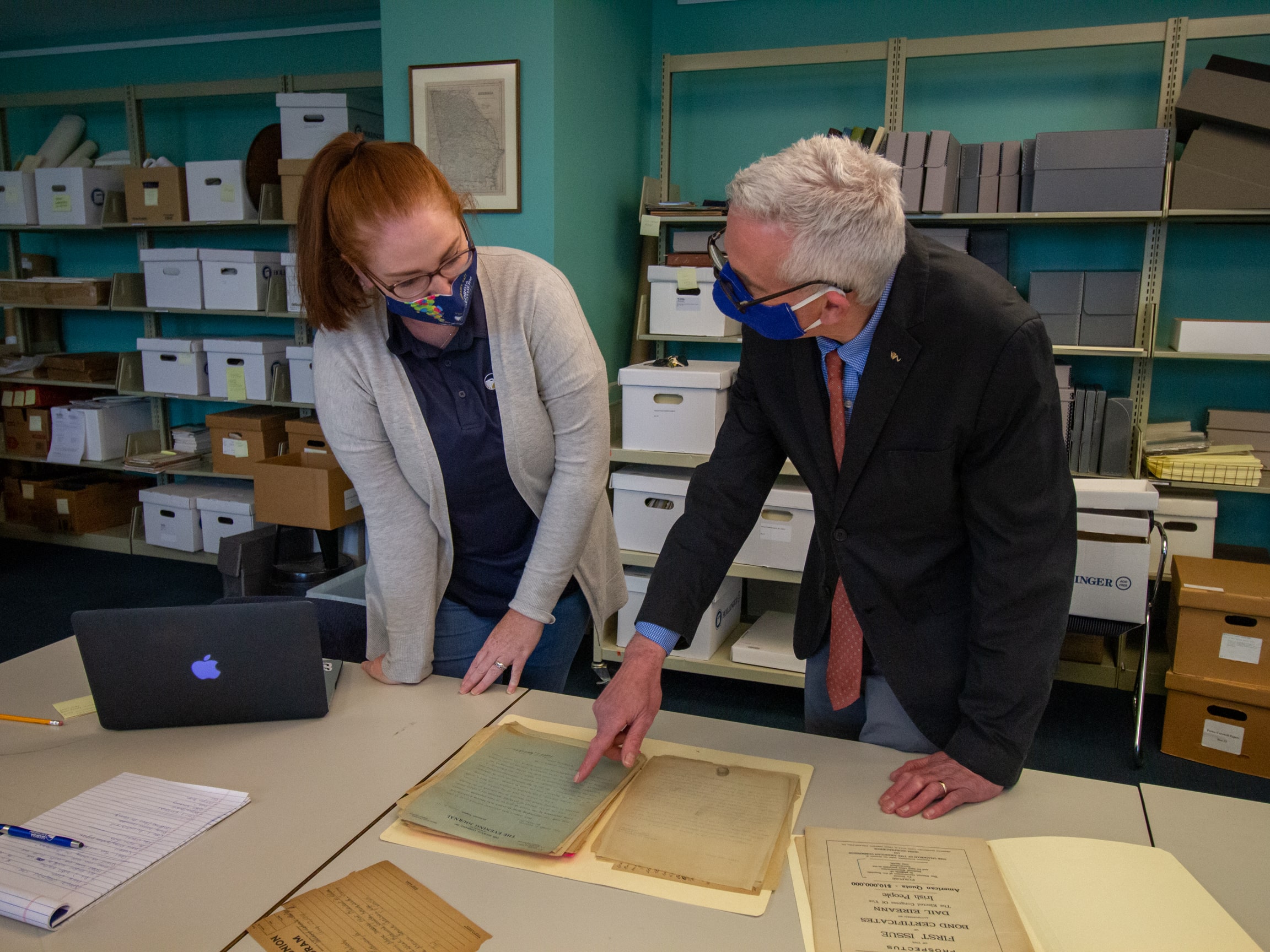
This year marks 100 years since the signing of the Anglo-Irish Treaty, which eventually would establish Ireland as a republic, and Georgia Southern University undergraduate student Caitlyn Hudson is getting a first-hand look at some historical documents that chronicle U.S. efforts to help establish Ireland’s freedom from British rule. Hudson is researching a collection of documents called the Lawless papers, which follow Virginia-native and Irish descendant Joseph Thomas Lawless’ involvement in the southern leg of an extensive U.S. tour by Éamon de Valera, a prominent political leader in Ireland’s history. “My favorite part of working on the project has to be the physical work with the documents,” Hudson said. “It is fascinating to see primary documents in hand rather than online. It provides a unique form of analysis.” The collection, which was gifted in Fall 2020 to the Center for Irish Research and Teaching (CIRT) at Georgia Southern, includes letters, advertisements and more that document an important narrative in modern Irish-American history, according to Howard Keeley, Ph.D., director of CIRT. “These documents shed significant new light on how Ireland perceived Savannah and our region at a critical time in Irish history: that nation’s War of Independence from 1919 to 1921,” Keeley said. “The collection helps us understand the network that Éamonn de Valera and other future leaders of an independent Ireland sought to build in the American South, using as one anchor the sizable and active Irish-American community in Savannah.” All of the Lawless papers were either written or received by Lawless, the son of immigrants from County Galway, Ireland. Lawless was involved in arranging southern stops on de Valera’s tour, which included a stop at the Chatham Artillery Armory in April 1920, in an effort to raise funds for the self-proclaimed Republic of Ireland. Lawless, who would go on to become a lawyer and prominent political figure in Virginia, was also very devoted to Ireland and involved in several prominent Irish-American organizations, including the Friends of Irish Freedom (FOIF), which advocated for political independence for Ireland. “De Valera’s fundraising tour of the U.S. is among the most important episodes in modern Irish-American history,” said Keeley. “The collection sheds significant light on how FOIF used the tour to advance a southern strategy. Clearly, Judge Lawless was key to those efforts.” Keeley also pointed out that in time, de Valera would become prime minister, and then president, of an independent Ireland, dominating the country’s politics for decades. The collection was gifted to CIRT by direct descendants of Lawless and is now housed in the special collections section of the Zach S. Henderson Library. “We are honored to be granted stewardship of these documents,” said Autumn Johnson, special collections librarian at Zach S. Henderson Library. “Having increased opportunities for Georgia Southern students to examine rare, one-of-a-kind collections, such as the Lawless papers, enriches the learning experience, particularly for our undergraduates.” Hudson said her work on the project has allowed her to fully understand the various aspects of potential careers she can pursue, as well as narrow down specific goals for her graduate school journey and beyond. “This type of work is generally done by graduate students, and it is amazing to know that I am able to gain experience in a field while an undergraduate,” said Hudson. “It has allowed me to learn career-relevant material earlier on and in turn has allowed me to better prepare for graduate school and my overall future goals.” Keeley added a collection like the Lawless papers allows students and faculty to conduct research on high-value primary source documents. The collection will also help further CIRT’s ongoing mission to increase research productivity, particularly with respect to the history of the Irish in Savannah and the state of Georgia. “The Irish experience in the south is open to much more study than has thus far been attempted,” Keeley said. “The generous gift of the Lawless papers to the Center for Irish Research and Teaching significantly enhances our drive to conduct meaningful research. For undergraduate students, such as Caitlyn, the opportunity to uncover knowledge by analyzing primary-source documents brings new levels of rigor and satisfaction to the college experience. And for our program, this collaboration with the Special Collections unit of University Libraries is a powerful way to honor our donors’ trust in us and, in addition, celebrate Irish heritage, especially around St. Patrick’s Day.” If you're a journalist looking to learn more about his project of the historical significance the Irish had on Georgia - then let us help. Dr. Howard Keeley is available for interviews — simply reach out to Georgia Southern Director of Communications Jennifer Wise at jwise@georgiasouthern.edu to set and time and date.

Criminal law expert on Derek Chauvin trial
Chris Slobogin, Milton R. Underwood Chair in Law and Director of Vanderbilt's Criminal Justice Program, is available for commentary and analysis on the murder trial of former Minneapolis police officer Derek Chauvin. Chris is an expert in criminal law and procedure, mental health law and evidence. He is the author of more than 100 articles, books and chapters and 200 judicial opinions, including three U.S. Supreme Court decisions. He has also served on the American Law Institute's Principles of Police Investigation Project, which focuses on the legal issues related to police procedures.



Solar geoengineering - it’s a topic that has caused an ethical lightening storm in the science community. The concept is complex. Should the world take on the crisis of climate change by attempting to artificially attempting to cool the earth? It’s an idea that has the National Academies of Sciences, Engineering and Medicine seeking a billion dollars in the next five years to investigate the theory. It’s a topic that is somewhat controversial, and journalists are looking to leading experts from across America for expert insight, opinion and perspective. Prakash Kashwan, a political scientist at the University of Connecticut, said he felt the report could have better emphasized the seriousness of some concerns over others. Uncertainties about the impacts of solar geoengineering on global weather patterns have the potential to affect some regions of the world more severely than others, he pointed out. Some experts have raised concerns about potential effects of geoengineering on monsoon rainfall in parts of Asia and Africa, he said. More than 2 billion people around the world rely on these rainfall patterns to support their water and agricultural needs. These kinds of issues should be given special weight, Kashwan suggested. "Some uncertainties are much more highly consequential for the global society, and especially for the poor and vulnerable," he told E&E News. Kashwan also reiterated concerns about potential political effects. While the report makes clear that geoengineering is not a substitute for climate mitigation, he suggests that this doesn't necessarily prevent policymakers from using it in that way. "The problem is the extent to which researchers are really helpless in deciding how research is used in the political system," he said. "That part has yet to be fully appreciated." Kashwan suggests that more dialogue might be warranted before funding a national research program, with greater input from both the international community and political experts who can weigh in on the ways that geoengineering research might affect political decisions. March 26, Scientific American It's a captivating idea – but it could have political, social and ethical consequences. Dr. Kashwan has also been interviewed by The New York Times. If you are a journalist looking to learn more about solar geoengineering, its possibilities and the reasons some scientists are worried – then let us help with your coverage. Prakash Kashwan is an Associate Professor of Political Science at UConn and an expert in the areas of environmental and climate justice, planetary justice, global commons, climate governance, and climate geoengineering governance. Dr. Kashwan is available to speak with media regarding this topic – simply click on his icon now to arrange an interview today.


What We Can Learn From Celebrating Irish-American Heritage Month
About two weeks ago, President Joseph Biden declared March 2021 Irish-American Heritage Month. In an official statement, the president said, "We owe a debt of gratitude to the Irish-American inventors and entrepreneurs who helped define America as the land of opportunity... The fabric of modern America is woven through with the green of the Emerald Isle." As the director of the Center for Irish Studies at Villanova University, an institution founded by Irish Augustinians to educate the children of Irish immigrants, Joseph Lennon, PhD, agrees. He hopes to use this presidential declaration as an opportunity to expand the conversation around what it means to be of Irish descent beyond wearing green and watching the annual St. Patrick's Day parade. The way Dr. Lennon sees it, "there is much more to Irish America than a parade and parties." With such a rich history of Irish immigrants and their descendants living in and contributing to the development of the United States, Dr. Lennon sees March 2021 as an important time to reflect on the "contributions and travails of this ethnicity" in a way that reaches beyond "silly slogans and marketing schemes." He reminds us, "there are over 30 million Irish Americans. The Irish contributed massively to the infrastructure of industrial America and later to the civil, education and business worlds—not to mention the Catholic Church." Dr. Lennon also hopes this month will help redefine the larger notion of what it looks like to be Irish and American. He notes that "38% of African Americans have Irish ancestry," but acknowledges that "this is a complicated issue," since in some cases this may stem from abuses suffered during the American practice of slavery. It is important conversations like these that Dr. Lennon wants to bring to light during Irish-American Heritage Month, and he stresses that "more research is needed into understanding this history—as well as the unions between Irish immigrants and northern-bound African Americans during the late nineteenth century." Per Dr. Lennon, these historical events are tied to our present day. He sees a need for "the level of recent racist attachments to Irishness... to be confronted with historical knowledge and anti-racist understandings." With such important issues in mind, Dr. Lennon wants to impart that "the Irish diaspora is global and diverse and Irish culture runs much more deeply and broadly in America than we might guess by just attending the St. Patrick's Day celebrations." He adds, "I'm curious to see if the conversation continues past St. Patrick's Day this year." Despite most St. Patrick’s Day events and programs being virtual in 2021, there are many opportunities to celebrate Irish-American heritage this year. At Villanova, the Center for Irish Studies is hosting a virtual St. Patrick's Day Celebration called "Links Across the Atlantic" on Wednesday, March 17, from 10:00 a.m. to 9:00 p.m. This free celebration will include live entertainment segments, from an Irish breakfast tutorial with study abroad director Mary Madec to lunchtime laughs with actor Johnny Murphy, and will culminate with a streamed Irish music fèis (or festival) in partnership with Tune Supply, featuring We Banjo 3, the Friel Sisters and One for the Foxes! For more information or to register for this event, please click here.



Fewer cars, but more fatalities - What's happening on America's pandemic roadways
Fewer vehicles are traveling on America's roadways during the ongoing coronavirus pandemic, but the number of fatal car crashes in 2020 increased exponentially compared to the same time period in 2019. UConn expert Eric Jackson, a research professor and director of the Connecticut Transportation Safety Research Center, and behavioral research assistant Marisa Auguste examined the increase in a recent essay published by The Conversation: Curious about traffic crashes during the pandemic, we decided to use our skills as a social scientist and a research engineer who study vehicle crash data to see what we could learn about Connecticut’s traffic deaths when the stay-at-home orders first went into place last March. A partnership between the Department of Transportation, local hospitals and the University of Connecticut discovered what many people intuitively knew: Traffic volume and multivehicle crashes fell significantly during the stay-at-home order. Statewide, daily vehicle traffic fell by 43% during the stay-at-home order compared to earlier in the year, while mean daily counts of multivehicle crashes decreased from 209 before the stay-at-home order to 80 during lockdown. What was unexpected, however, was the significant increase in single-vehicle crashes, especially fatal ones. During the stay-at-home period, the incidence rate of fatal single-vehicle crashes increased 4.1 times, while the rate of total single-vehicle crashes was also up significantly. Data about all crash types in the state, whether single- or multivehicle, tell a similar story. Although preliminary, police reports have placed the 2020 year-end total for traffic deaths at 308, a 24% increase from 2019. While the researchers said that it's unclear why this counterintuitive increase in fatalities on the roads has occurred, their advice to drivers? "Check your speed" and "don't drive angry." If you are a journalist looking to know more about this topic, let us help. Simply click on Eric Jackson’s icon to arrange an interview today.


Ten Years Later: Japan Society Remembers the Great East Japan Earthquake (3.11)
To Mark the 10th Anniversary of the Triple Disaster, Japan Society Will Present Programming Reflecting Upon the Aftermath, Recovery and Spirit of Resiliency After the Great East Japan Earthquake, tsunami and nuclear disaster devastated the Tohoku region of northeastern Japan on March 11, 2011 (3.11), Japan Society's Japan Earthquake Relief Fund (JERF) raised over $14 million from more than 24,600 donors from all 50 U.S. states and 55 countries, the largest amount raised by a nonprofit not specializing in disaster and emergency relief and the 7th largest fundraising campaign by a U.S. nonprofit organization. Through a series of events and videos leading up to the 10-year anniversary of 3.11, Japan Society invites our community to remember those who were lost, and to look toward Tohoku’s continued recovery. We also extend our sincere appreciation to all who donated to the Japan Earthquake Relief Fund (JERF), which was launched by Japan Society the day after the tragic events of 3.11. Since 2011, JERF has funded more than 65 grant projects and 45 organizations supporting Tohoku’s immediate relief and reconstruction efforts as well as the mid- to long-term recovery of these communities. In 2021, Japan Society has earmarked the remaining funds to support additional projects facilitating community-building and economic recovery in disaster-hit areas where challenges have become further exacerbated by the onset of the global pandemic and additional disasters that most recently struck the region on February 13. More information on these organizations and projects is available here. To mark the 10th anniversary of the triple disaster, Japan Society will report back on how JERF grants have contributed to Tohoku’s recovery, and highlight stories of what was witnessed in the aftermath of 3.11, including Tohoku’s resiliency, the bravery and initiative of all who responded to unprecedented challenges, the strength of U.S.-Japan relations, and the spirit of human generosity and goodwill. As we remember and draw lessons from the events of 3.11, we hope to nurture hope for the future of Tohoku and the world. “2021 is a year to reflect on resilience and recovery as we navigate the challenges of the COVID-19 pandemic and remember not just the tragedy of 3.11, but the strength of the Japanese people and the generosity of the world in its aftermath,” said Japan Society President and CEO Joshua W. Walker, Ph.D. “As we mark the 10-year anniversary of these events, we honor those who were lost, and extend our gratitude to the individuals and organizations who offered their support, including the donors to our relief fund.” Events include a contemporary theater performance “Ludic Proxy: Fukushima,” held live on March 6, 7 & 11 and available on demand from March 12 - 16. This video adaptation of Brooklyn-based theater-maker Aya Ogawa’s play Ludic Proxy follows a woman visiting her older sister, who lives on the outskirts of the Fukushima nuclear evacuation zone. The interactive play, which features a unique element of audience participation, explores the theme of human survival in the face of disaster. Taking advantage of our expertise in bringing together American and Japanese experts, a live U.S.-Japan symposium on March 9, 7-9pm EST, “Resilience & Recovery: A U.S.-Japan Dialogue Ten Years after 3.11”, will feature leading voices from Tohoku, Japan and the U.S. to discuss lessons learned from 3.11 on resilience and recovery from catastrophes. The symposium will be co-hosted with JERF recipient, ETIC., a Japanese nonprofit dedicated to nurturing social entrepreneurs and recovery efforts in Tohoku. As its first exhibition upon reopening to the public, Japan Society will also present When Practice Becomes Form: Carpentry Tools from Japan opening on March 11th. The exhibition celebrates the resilient spirit of Japanese architecture and craftsmanship through woodworking tools, architectural patterns, and models. The site-specific exhibition design, conceived by the esteemed architect Sou Fujimoto in collaboration with Brooklyn-based Popular Architecture, introduces major themes from the exhibition and is in dialogue with the gallery’s spaces, highlighting an enduring connection between traditional Japanese wooden construction and modern architecture. Viewing is available every Thursday through Sunday with advance timed-entry ticket reservations online. Further digital features include: Testimonials on the impact of JERF’s support from recipients and participants in fund-supported programs; A special season of Japan Society’s Tea Time series featuring six short interviews with key leaders from the U.S. and Japan including former U.S. Ambassador John V. Roos and retired General Ryoichi Oriki on their responses and lessons learned from the disaster; Dialogues between social entrepreneurs from Tohoku and their counterparts in New Orleans, LA and Wilmington, OH to discuss their work in using data, nurturing social entrepreneurship, and rebuilding communities recovering from natural disasters and economic crisis. These conversations feature alumni from “U.S.-Japan Leaders Exchange: Three-Year Training & Networking Program for Leaders in Tohoku’s Recovery and Reconstruction,” a multi-year program organized by Japan Society and ETIC from 2013-16. For a full list of programs and more information about JERF and the fund recipients, visit the Japan Society webpage. About Japan Society Founded in 1907, Japan Society in New York City presents sophisticated, topical and accessible experiences of Japanese art and culture, and facilitates the exchange of ideas, knowledge and innovation between the U.S. and Japan. More than 200 events annually encompass world-class exhibitions, dynamic classical and cutting-edge contemporary performing arts, film premieres and retrospectives, workshops and demonstrations, tastings, family activities, language classes, and a range of high-profile talks and expert panels that present open, critical dialogue on issues of vital importance to the U.S., Japan and East Asia. Japan Society is located at 333 East 47th Street between First and Second avenues (accessible by the 4/5/6 and 7 subway at Grand Central or the E and M subway at Lexington Avenue). www.japansociety.org