
Experts Matter. Find Yours.
Connect for media, speaking, professional opportunities & more.
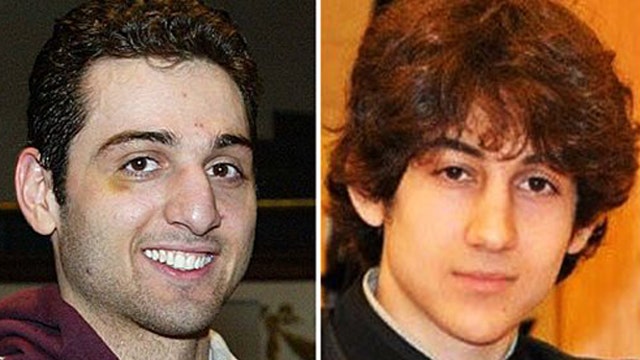
It was a news story that shook America and shattered the lives of many in Boston. Tamerlan Tsarnaev and Dzhokhar Tsarnaev set off two bombs at the Boston Marathon finish line. The ensuing manhunt and standoff had America on edge for days. Augusta University’s Dr. Craig Albert was front and center on national news during that time, helping journalists and audiences understand the motivation behind these horrible acts. His interview with Fox's Megyn Kelly is available below: Dr. Craig Albert is director of the Master of Arts in Intelligence and Security Studies at Augusta University. He is a leading expert on war, terrorism and American politics, and he testified before U.S. Congress regarding the threat from Chechnya following the deadly bombing. With this story now back in the headlines after a federal appeals court overturned the death sentence for Dzhokhar Tsarnaev, Albert is available to speak with media – simply click on his name to arrange an interview today.


This presidential election will undoubtedly be the most contentious, controversial, and probably extraordinary in American history. If you thought 2016 was a spectacle, now Joe Biden and Donald Trump are facing off during a global pandemic, which will inevitably force the traditional styles of campaigning like whistle stops and rallies to pivot toward digital town halls and online chats. Despite polling, both parties know they cannot take anything for granted. And there are a lot of factors at play: Has anyone done an almost exclusively online campaign before? What will a lack of massive rallies mean for Donald Trump? What can Joe Biden learn from the Clinton campaign? What are the key states at play and why do they matter so much? Can either candidate bridge the divide between a very divisive America? The next 99 days will be a long and drawn out marathon of drama, policies, and political punches. And if you are covering, let Dr. Stephen Farnsworth be your go-to for everything you need to know during this election. Dr. Stephen Farnsworth is a sought-after political commentator on presidential politics. He has been widely featured in national media, including The Washington Post, Reuters, The Chicago Tribune, and MSNBC. He is author or co-author of six books on presidential communication. Dr. Farnsworth is available to speak with media and help with your coverage – simply click on his icon to arrange an interview today.



Racial and LGBT bias persists in ridesharing drivers despite mitigation efforts
Despite efforts by ridesharing companies to eliminate or reduce discrimination, research from the Indiana University Kelley School of Business finds that racial and LGBT bias persists among drivers. Platforms such as Uber, Lyft and Via responded to drivers' biased behavior by removing information that could indicate a rider's gender and race from initial ride requests. However, researchers still found that biases against underrepresented groups and those who indicate support for the LGBT community continued to exist after drivers accepted a ride request -- when the rider's picture would then be displayed. In other words, their efforts shifted some of the biased behavior until after the ride was confirmed, resulting in higher cancellation rates. Understanding whether bias has been removed also is important for ridesharing companies as they not only compete against each other but also with traditional transportation options. "Our results confirm that bias at the ride request stage has been removed. However, after ride acceptance, racial and LGBT biases are persistent, while we found no evidence of gender biases," said Jorge Mejia, assistant professor of operations and decision technologies. "We show that signaling support for a social cause -- in our case, the lesbian, gay, bisexual and transgender community -- can also impact service provision. Riders who show support for the LGBT community, regardless of race or gender, also experience significantly higher cancelation rates." Mejia and co-author Chris Parker, assistant professor in the information technology and analytics department at American University in Washington, believe they are the first to use support for social causes as a bias-enabling characteristic. Their article, "When Transparency Fails: Bias and Financial Incentives in Ridesharing Platforms," is published in Management Science. They performed a field experiment on a ridesharing platform in fall 2018 in Washington, D.C. They randomly manipulated rider names, using those traditionally perceived to be white or Black, as well as profile pictures to observe drivers' behavior patterns in accepting and canceling rides. To illustrate support for LGBT rights, the authors overlaid a rainbow filter on the rider's picture profile. "We found that underrepresented minorities are more than twice as likely to have a ride canceled than Caucasians; that's about 3 percent versus 8 percent," Mejia said. "There was no evidence of gender bias." Mejia and Parker also varied times of ride requests to study whether peak price periods affected bias. They found that higher prices associated with peak times alleviated some of the bias against riders from the underrepresented group, but not against those who signal support for the LGBT community. They believe that ridesharing companies should use other data-driven solutions to take note of rider characteristics when a driver cancels and penalize the driver for biased behavior. One possible way to punish drivers is to move them down the priority list when they exhibit biased cancellation behavior, so they have fewer ride requests. Alternatively, less-punitive measures may provide "badges" for drivers who exhibit especially low cancellation rates for minority riders. But, ultimately, policymakers may need to intervene, Mejia said. "Investments in reducing bias may not occur organically, as ridesharing platforms are trying to maximize the number of participants in the platform -- they want to attract both riders and drivers," he said. "As a result, it may be necessary for policymakers to mandate what information can be provided to a driver to ensure an unbiased experience, while maintaining the safety of everyone involved, or to create policies that require ridesharing platforms to monitor and remove drivers based on biased behavior. "Careful attention should be paid to these policies both before and after implementation, as unintended consequences are almost sure to follow any simple fix."


Chatbots can ease medical providers' burden, offer trusted guidance to those with COVID-19 symptoms
COVID-19 has placed tremendous pressure on health care systems, not only for critical care but also from an anxious public looking for answers. Research from the Indiana University Kelley School of Business found that chatbots -- software applications that conduct online chats via text or text-to-speech -- working for reputable organizations can ease the burden on medical providers and offer trusted guidance to those with symptoms. Researchers conducted an online experiment with 371 participants who viewed a COVID-19 screening session between a hotline agent -- chatbot or human -- and a user with mild or severe symptoms. They studied whether chatbots were seen as being persuasive, providing satisfying information that likely would be followed. Their results showed a slight negative bias against chatbots' ability, perhaps due to recent press reports. When the perceived ability is the same, however, participants reported that they viewed chatbots more positively than human agents, which is good news for health care organizations struggling to meet user demand for screening services. "The primary factor driving user response to screening hotlines -- human or chatbot -- is perceptions of the agent's ability," said Alan Dennis, the John T. Chambers Chair of Internet Systems at Kelley and corresponding author of the paper, "User reactions to COVID-19 screening chatbots from reputable providers." "When ability is the same, users view chatbots no differently or more positively than human agents." Other authors on the paper, forthcoming in the Journal of the American Medical Informatics Association, are Antino Kim, assistant professor of operations and decision technologies at Kelley; and Sezgin Ayabakan, assistant professor of management information systems, and doctoral candidate Mohammad Rahimi, both at Temple University's Fox School of Business. Even before the pandemic, chatbots were identified as a technology that could speed up how people interact with researchers and find medical information online. "Chatbots are scalable, so they can meet an unexpected surge in demand when there is a shortage of qualified human agents," Dennis, Kim and their co-authors wrote, adding that chatbots "can provide round-the-clock service at a low operational cost. "This positive response may be because users feel more comfortable disclosing information to a chatbot, especially socially undesirable information, because a chatbot makes no judgment," researchers wrote. "The CDC, the World Health Organization, UNICEF and other health organizations caution that the COVID-19 outbreak has provoked social stigma and discriminatory behaviors against people of certain ethnic backgrounds, as well as those perceived to have been in contact with the virus. This is truly an unfortunate situation, and perhaps chatbots can assist those who are hesitant to seek help because of the stigma." The primary factor driving perceptions of ability was the user's trust in the provider of the screening hotline. "Proactively informing users of the chatbot's ability is important," the authors wrote. "Users need to understand that chatbots use the same up-to-date knowledge base and follow the same set of screening protocols as human agents. ... Because trust in the provider strongly influences perceptions of ability, building on the organization's reputation may also prove useful."

Clarifying the electoral college before this November’s election – let our experts explain
With a divisive and hyper-charged election on the horizon in America, the Supreme Court may have done the country a favor and avoided a constitutional crisis before it happened. The court delivered a unanimous opinion on faithless electors and how those who represent states are to cast their votes in the electoral college. The Supreme Court ruled unanimously Monday that a state may require presidential electors to support the winner of its popular vote and may punish or replace those who don’t, settling a disputed issue in advance of this fall’s election. Justice Elena Kagan wrote for the court as it considered for the first time the issue of “faithless electors” and whether the Constitution sees members of the electoral college — whose votes ultimately elect the president — as representatives of the intent of their state’s voters or as independent thinkers. The Washington state law at issue “reflects a tradition more than two centuries old,” Kagan wrote. “In that practice, electors are not free agents; they are to vote for the candidate whom the State’s voters have chosen.” In layman’s terms, it simply means representatives to the electoral college are not casting a vote of conscience, but a vote that follows the will and intentions of the popular vote of each specific state. Popular votes and the electoral college have been hotly debated topics during this century’s elections, and if you are a journalist covering this Supreme Court decision or have questions about the upcoming elections – then let our experts help. Dr. Craig Albert is an expert in American politics and he is available to speak with media – simply click on his name to arrange an interview today.

Overshadowed by COVID – The opioid pandemic is still taking its toll across America
For more than two decades opioids have been ravaging American cities, towns, and communities. It prompted national attentions and official commissions advising the President. But lately, as the world has turned almost all its focus on COVID-19, the opioid issue has been sitting in the shadows. Not necessarily idle or waiting, but just no longer the topic of a national conversation to find a cure. Before COVID-19 turned our nation upside-down, policymakers were taking steps to help patients access evidence-based treatment for opioid use disorder. This included focusing on removing health insurers’ barriers to medication and requiring insurers to provide parity for mental illness and substance use disorders — and holding them accountable for violations of the law in Massachusetts, Pennsylvania and New Hampshire, to name a few recent examples. While we continue to take steps to address COVID-19 to help keep the public safe, the American Medical Association has seen reports from more than 30 states concerning increases in opioid-related mortality, mental health crises, suicide and addiction-related relapse. Reports are from every region in the nation. This includes a 20 percent increase in calls to the Jacksonville, Fla., fire department concerning overdoses; an “unusual spike” in overdoses in DuPage County, Ill.; increased emergency department visits in coastal North Carolina and spikes in fentanyl-related overdoses in Seattle. Georgia, too, has not been spared, causing increased concern for many. - Dr. Patrice A. Harris is the immediate past president of the American Medical Association and chair of the AMA Opioid Task Force. So – at what cost or how far back have efforts been set by COVID-19? And how much harder will it be for America to regroup and take on its addiction to opioids? There are a lot of questions to be asked – and if you are a journalist covering this topic or looking to learn more about the state of the opioid epidemic in America – then let our experts help. Justin Cole is an expert in clinical pharmacy, Pharmacogenomics, and the pharmacy industry. Justin has been following this issue closely and is available to speak with media. Simply click on his icon to arrange an interview today.


Protests and politics – let our expert explain how one influences the other
The protests that have been occurring across most of America have seen politically charged language, action, and reaction. Calls for change have been made, and promises have followed by those seeking to attain office or remain in office once the dust has settled and America goes to the polls in the fall. In a recent essay, former President Barack Obama touched on how those protesting can translate emotions into action. “Throughout American history, it’s often only been in response to protests and civil disobedience that the political system has even paid attention to marginalized communities,” said Obama. ”Eventually, aspirations have to be translated into specific laws and institutional practices — and in a democracy, that only happens when we elect government officials who are responsive to our demands.” Social movement expert and Augusta University Sociology Professor Dr. Todd Powell-Williams says protest movements have a significant impact on politics. His research shows societal change not only happens as a result of the crowd but also because the protests get people politically activated. “From the Boston Tea Party to the protests of the Civil Rights Movement, protests have had some degree of success in changing the course of history,” said Powell-Williams. “The recent protests against racial injustice are no different and I’m sure it will influence the outcomes of upcoming elections.” If you are a journalist looking to cover this topic, then let our expert help with your questions and coverage today. Dr. Todd Powell-Williams is an expert in social movements, social control, religion, police science and symbolic interactionism. He is available to speak with media regarding this topic — simply click on his name to arrange an interview. Also, check out the Augusta University Expert Center to view a complete list of our experts.

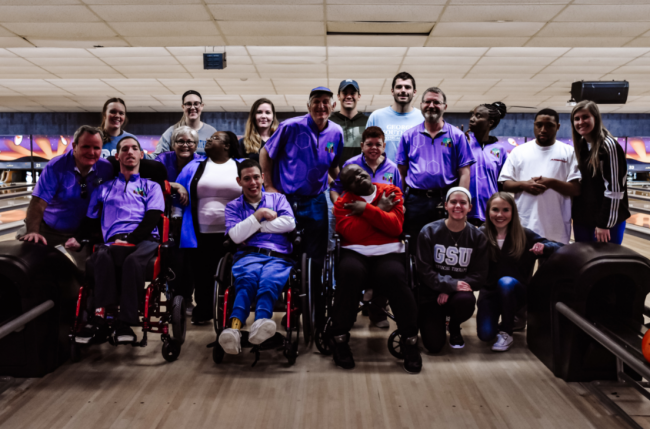
Twelve students in the Doctor of Physical Therapy (DPT) program at Georgia Southern University were awarded scholarships totaling more than $17,000 from the Savannah American Business Clubs (AMBUCS). “This is a recognition of the dedication we have to AMBUCS and helping others in our community,” said scholarship recipient and AMBUCS student leader Alexandra Adams. “Most of us are paying for our education with loans, and the scholarship helps relieve some of the financial burden that comes with pursuing a graduate degree. I am very thankful that AMBUCS has considered me for this scholarship the past two years.” The organization has hosted a League of Exceptional Bowlers on Saturdays for more than 50 years. The DPT students join the Savannah AMBUCS league to assist bowlers with physical and intellectual disabilities to promote an inclusive and competitive environment. In addition to the hands-on experiences, DPT students have the opportunity to interact with different members of the community. “It shows our commitment to the inclusion of our community and our passion for encouraging movement for everyone, despite their limitations, to increase their quality of life,” Adams said. “The program reinforces our classroom training, as well as, enhances our communication skills with others. Each member of our DPT program gets as much of a benefit from attending AMBUCS as the bowlers do.” A century-old membership organization dedicated to helping people with disabilities, the Savannah AMBUCS awards scholarships to students pursuing careers in the allied health professions and who volunteer with AMBUCs. If you’re a journalist looking to cover this story or would like to learn more about the physical therapy and other programs at Georgia Southern University – then let us help. Barry Joyner is the dean of Georgia Southern University’s Waters College of Health Professions - simply click on his icon to arrange an interview today.


Voice teachers and singers are facing an avalanche of questions while planning how to return to “normal operations” as restrictions ease from the COVID-19 pandemic. Singers generally expel more breath and saliva than normal talkers, so are their social distancing requirements different than most? If public health officials require six feet of separation at all times, how does a choir practice and perform? If voice lessons have to be done remotely, how can tone and pitch be properly evaluated via an internet connection? These are just some of the dilemmas facing voice teachers and music professors. “We are highly concerned in the arts related to how we deal with teaching when we return to campuses, classrooms and studios, particularly with singing,” said Allen Henderson, executive director of National Association of Teachers of Singing (NATS) and professor of voice at Georgia Southern University. “Singers are what we might call super-emitters — in terms of what is expelled in a breath. What kind of precautions do we need to take?” To help start answering such questions, Henderson and NATS organized a webinar called “A Conversation: What Do Science and Data Say About the Near-Term Future of Singing?” It is scheduled for Tuesday, May 5, at 5 p.m. He said within 24 hours of the webinar’s announcement, more than 2,000 people had signed up. “I was able to secure one of the major researchers on aerosolization of viruses,” Henderson said. “I suspect there will be a lot of higher education arts administrators in attendance and the information shared will be used widely in formulating responses to the unique problems of teaching music when reopening occurs.” Henderson noted that when the country shut down, the process was fairly quick and uniform. As organizations such as universities make plans to return to ‘normal’ operations, leaders will likely have to develop their own plans unique to their settings. “It will be complicated, and it’s about what protocols institutions and individuals have in place in regard to testing and contact tracing so that there’s a sense that we are creating as safe an environment as possible,” Henderson said. “Our job is to arm our colleagues with the best possible science-based information we can.” To learn more about the upcoming webinar, simply visit the story attached:

Does gender matter when it comes to COVID-19?
As America begins to adapt and adjust to the COVID-19 pandemic, details are emerging about who is more susceptible to the virus and why. The latest is gender. In fact, as some are observing, it seems men are more likely to fall victim to COVID-19 than women. A report published by the New England Journal of Medicine showed men not only made up 60% of the first 393 COVID-19 patients admitted in two New York City hospitals, but they were the highest group placed on ventilators. Another study of people hospitalized in the United States for COVID-19 in March similarly found that “males may be disproportionately affected by COVID-19 compared with females.” “The higher risk of COVID-19 among men we are seeing in New York City may be consistent in other US regions, including the southwestern Georgia area that has been disproportionately affected by COVID-19,” says Dr. Justin Moore, an assistant professor in the Department of Population Health Sciences in the Medical College of Georgia at Augusta University. “Researchers are still looking into why men, specifically African American men, are seemingly more susceptible to the virus. However, we know this may be due to underlying health issues, including hypertension, obesity and diabetes.” It’s a startling detail and one that needs to be communicated. If you are a journalist covering COVID-19 and how men may be more vulnerable than women during this crisis – then let our experts help. Dr. Justin Moore is an expert in spatial epidemiology and an associate professor at the Institute of Public and Preventive Health at Augusta University. He is available to speak with media regarding this topic – simply click on his icon to arrange an interview.