
Experts Matter. Find Yours.
Connect for media, speaking, professional opportunities & more.

Scapegoating During Pandemics Has Always "Plagued" Humanity
Though it was widely known that the first known cases of coronavirus could be traced back to Wuhan in China, many Americans were shocked and saddened to hear President Donald Trump repeatedly calling the illness the "Chinese virus" during a news conference in March. Though President Trump has insisted it's "not racist at all," Asian-Americans have reported incidents of slurs and physical abuse over the perception that China caused COVID-19. Rev. Joseph Ryan, OSA, PhD, teaches a course on the history of disease, with a focus on the bubonic plague, and notes that this type of xenophobic hysteria is not new when it comes to pandemics. “A theme that we can see with these epidemics is hysteria and the scapegoating of people who are liminal and have no defenders,” says Fr. Ryan. “We also see nativism and xenophobia evident in people's response to epidemic illness. Pandemics test the humanity of human populations and sometimes we are inhumane in the face of the fear of death from such diseases.” Here are a few examples from history of how humanity shifts blame during times of great pandemic-related stress: 1348: The Bubonic Plague A third of Europe's population was eliminated by this epidemic, which spread along trade routes. The event caused different expressions of hysteria among Europeans, including the persecution of the Jewish community. 1832: Cholera Like the bubonic plague, cholera traveled along trade routes. In the United States, Irish immigrants were scapegoated. 1918: Spanish Influenza It gained its name because the first journalists to talk about the disease were from Spain. Influenza came from Kansas and spread through the transport of American soldiers to Europe to fight in the First World War. Later, it traveled to British colonies in India and Africa via the transport of British troops, and the result was the rise of independence movements in these countries. 1980s: HIV/AIDS The HIV/AIDS crisis caused hysteria surrounding gay men. 2014: Ebola Another event that sparked hysteria was the recent outbreak of Ebola in West Africa. The governors of New York and New Jersey threatened to close their airports, though there was little chance of the virus breaking out in the United States. (To the best of Fr. Ryan's knowledge, only two Americans developed the disease.)


As the global pandemic touches almost all parts of the United States – it is essential that the public receives only accurate and definitive information from credible and expert sources as news, media and information reaches million of people across the country. An invisible enemy is killing thousands and forcing people worldwide to cower behind closed doors. Unfounded conspiracy theories and miracle “cures” abound on social media. Politicians and pundits send mixed messages about how to protect yourself. Who you gonna call? - Bedford Gazette, April 14 As the coronavirus rampages, the public increasingly is turning to experts in academia and government -- the educated, experienced “elites” that many Americans had tuned out. The Coronavirus 2019 (COVID-19) situation is certainly new to all of us. As guidance from the CDC changes and instructional methods transition, there are experts at Georgia Southern who can help to answer questions such as: How should we best address this pandemic as a nation? How should we best address this pandemic individually? What does it mean to “flatten the curve?" What is the economic impact of COVID-19? How do you best manage employees virtually? Why are grocery stores having trouble keeping inventory on their shelves? Should we prepare for a lapse in groceries and goods? What contributes to the fear and panic in disasters and pandemics? What do educators, parents and students need to know to prepare for online learning in the K-12 and college settings? If you are a reporter covering COVID-19, let the team of experts from Georgia Southern help with your coverage. Public Health: Atin Adhikari, Ph.D. Associate Professor of Environmental Health Sciences, Department of Biostatistics, Epidemiology and Environmental Health Sciences, Jiann-Ping Hsu College of Public Health Dr. Adhikari brings over 15 years of extensive research experience on aerosols, airborne microorganisms, other air pollutants, and related respiratory disorders. His current research areas include environmental air quality, exposure assessment, occupational health and safety, environmental microbiology, and respiratory health. Before joining JPHCOPH, Dr. Adhikari was also involved (Co-I) with two DoD-DTRA and U.S. Office of Naval Research funded projects on inactivation of hazardous microorganisms. Chun Hai (Isaac) Fung, Ph.D. Associate Professor, Department of Biostatistics, Epidemiology and Environmental Health Sciences, Jiann-Ping Hsu College of Public Health Dr. Isaac Chun-Hai Fung is a digital health expert and an infectious disease epidemiologist. He analyses social media data for public health surveillance and health communication and uses digital technologies for public health interventions. He investigates the transmission of communicable diseases with a focus on respiratory infections and environmentally transmitted infections. He applied a variety of methods, from classical statistical methods to machine learning and mathematical modeling, to address public health problems and to provide solutions to policy-makers. He is especially interested in assisting public health agencies in their responses to public health emergencies. He is currently a guest researcher with the Health Economics and Modeling Unit, Division of Preparedness and Emerging Infections, National Center for Emerging and Zoonotic Infectious Diseases, Centers for Disease Control and Prevention (CDC). Examples of his recent projects include: Surveillance of unplanned school closures through social media platforms, Analysis of social media posts pertinent to public health emergencies, such as Ebola, MERS and Zika. Jessica Schwind, Ph.D. Assistant Professor, Department of Biostatistics, Epidemiology, and Environmental Health Sciences, Jiann-Ping Hsu College of Public Health Dr. Jessica Smith Schwind is an epidemiologist and program evaluator. She joined the Department of Biostatistics, Epidemiology and Environmental Health Sciences at JPHCOPH in August 2017. Her current research interests include disease surveillance, capacity building and risk communication for the prevention and/or early recognition of outbreaks with a focus on: best practices for operationalizing the ‘One Health’ approach, understanding and improving capacity building efforts and priorities for increasing health surveillance, and improving early warning systems for disease detection and response by bridging the gap between global digital databases and local health information. Schwind also conducts SoTL research on innovative online/onsite teaching and evaluation with a focus on immersive and service-learning practices. Pandemics, panic and the public: Amy Ballagh, Ed.D. Associate Vice President of Enrollment Management Featured in the Washington Post : Jessica Schwind, Ph.D. Assistant Professor, Department of Biostatistics, Epidemiology, and Environmental Health Sciences, Jiann-Ping Hsu College of Public Health Dr. Jessica Smith Schwind is an epidemiologist and program evaluator. She joined the Department of Biostatistics, Epidemiology and Environmental Health Sciences at JPHCOPH in August 2017. Her current research interests include disease surveillance, capacity building and risk communication for the prevention and/or early recognition of outbreaks with a focus on: best practices for operationalizing the ‘One Health’ approach, understanding and improving capacity building efforts and priorities for increasing health surveillance, and improving early warning systems for disease detection and response by bridging the gap between global digital databases and local health information. Schwind also conducts SoTL research on innovative online/onsite teaching and evaluation with a focus on immersive and service-learning practices. Jodi Caldwell, Ph.D. Executive Director of the Georgia Southern University Counseling Center On a national level, Dr. Caldwell is currently serving her second elected term to the Directorate Board of the Commission for Counseling and Psychological Services of the American College Personnel Association and is a certified Red Cross Disaster Mental Health Responder. COVID-19 and logistics, the economy and the workforce: Alan Mackelprang, Ph.D. Associate Professor, Department of Logistics & Supply Chain Management Currently the director of the Ph.D. in Logistics and Supply Chain Management program, his research interests include examining interdependencies among supply chain partners, JIT/Lean production, manufacturing flexibility as well as supply chain integration. Scott Ellis, Ph.D. Associate Professor, Department of Logistics & Supply Chain Management Scott Ellis’ research interests center on the study of purchasing and supply management processes and functions. He has published in Journal of Operations Management and Journal of Supply Chain Management, among others. Richard McGrath, Ph.D. Professor, Parker College of Business Richard McGrath researches immigration, consumer survey methodology, and applied microeconomics. He is a long time expert on the economy in Savannah and the Coastal Empire. Michael Toma, Ph.D. Fuller E. Callaway Professor of Economics Michael Toma is a professor and lead analyst for the Center for Business Analytics and Economic Research, a student- and faculty-staffed applied research group focused on the Savannah-area economy that works with many local partners on special initiatives, customized applied business research and impact studies. Based on Toma's analytics, the Center publishes the quarterly Coastal Empire Economic Monitor, a closely watched economic report. Toma's community ties are also strong in the area. He serves on the Board of Directors for United Way of the Coastal Empire and on the organization's Executive Committee as chair of the Community Investments Committee. David Sikora, Ph.D. Assistant professor of management David Sikora’s research interests include strategic human resource management and the business impact of employee management practices. He has published his research in such journals as the Journal of Applied Psychology, Leadership Quarterly, Human Resources Management Review, International Journal of Selection and Assessment, and International Journal of Human Resources Development and Management. Prior to his academic career, David had extensive corporate experience in human resources and marketing including serving as human resources vice president at Cigna Corporation and director of human resources product management at Gevity HR, Incorporated. Steven Charlier, Ph.D. Associate Professor, Department of Management Charlier’s research interests are focused on the modern work environment, and include virtual teams, e-learning, leadership in a virtual world, and management education. His work has been published in several leading international academic journals, including The Leadership Quarterly, Human Resource Management, Journal of Organizational Behavior, Academy of Management Learning & Education, and Human Resource Management Review. Online teaching and learning: Charles Hodges, Ph.D. Professor, Department of Leadership, Technology and Human Development Hodges is a tenured professor of instructional technology at Georgia Southern with over 20 years of online teaching experience. As an active researcher in online teaching and learning, Hodges presents regularly at the national and international levels. He currently serves as the editor-in-chief of the journal and he is a long-time member of the Association for Educational Communications and Technologies, a professional organization for Educational Technology scholars and practitioners. Featured in the Inside Higher Ed article (published 3/11/20): Jeffrey Tysinger, Ph.D. and Dawn Tysinger, Ph.D. Professors, Department of Leadership, Technology and Human Development The Tysingers are one of very few individuals who are actively researching in the area of crisis preparedness in K-12 online learning Professors, Department of Leadership, Technology and Human Development The Tysingers are one of very few individuals who are actively researching in the area of crisis preparedness in K-12 online learning: o https://digitalcommons.georgiasouthern.edu/nyar/vol2/iss1/4/ o https://dl.acm.org/doi/10.5555/2811036.2811057 o https://eric.ed.gov/?q=Tysinger&id=EJ1147626 o https://eric.ed.gov/?q=Tysinger&id=ED595756 Dawn Tysinger, NCSP, serves as professor and program director for the nationally-recognized, National Association of School Psychologists-Approved Education Specialist program in school psychology at Georgia Southern University. Tysinger has contributed to her field through active participation in NASP, publications in school psychology journals, and presentations at the local, state, regional, national, and international levels. She currently serves on the NASP program review board for school psychology programs and as a member of the editorial boards of Journal of School Psychology, Psychology in the Schools, Trainers’ Forum: Journal of the Trainers of School Psychologists, National Youth-At-Risk Journal and Journal of Online Learning Research. Jeff Tysinger, NCSP, is a professor of school psychology at Georgia Southern University. He has been the president of the Kansas Association of School Psychologists (KASP), editor of the KASP Newsletter, KASP Futures committee member, KASP NCSP committee member, member of National Association of School Psychologists (NASP) since 1997, Nationally Certified School Psychologist since 1997, NASP Program Reviewer, NCSP Portfolio Reviewer, member of NCATE Board of Examiners, member of Georgia Association of School For parents at home with (k-12) children now distance learning: Chelda Smith Associate Professor, Department of Elementary and Special Education Smith’s master's thesis focused on parents as the first teachers of children and can speak to how parents can be empowered in that role. Her research agenda continues to focus on home and community assets, of which parents/caregivers are the primary influence and factor for positive outcomes. Lastly, as a parent of both a middle schooler and a toddler, Smith is navigating the process of being a primary educator in the home in real-time. Each expert is available to speak with media – simply contact Melanie Simon at 912.313.3245 to arrange an interview today.

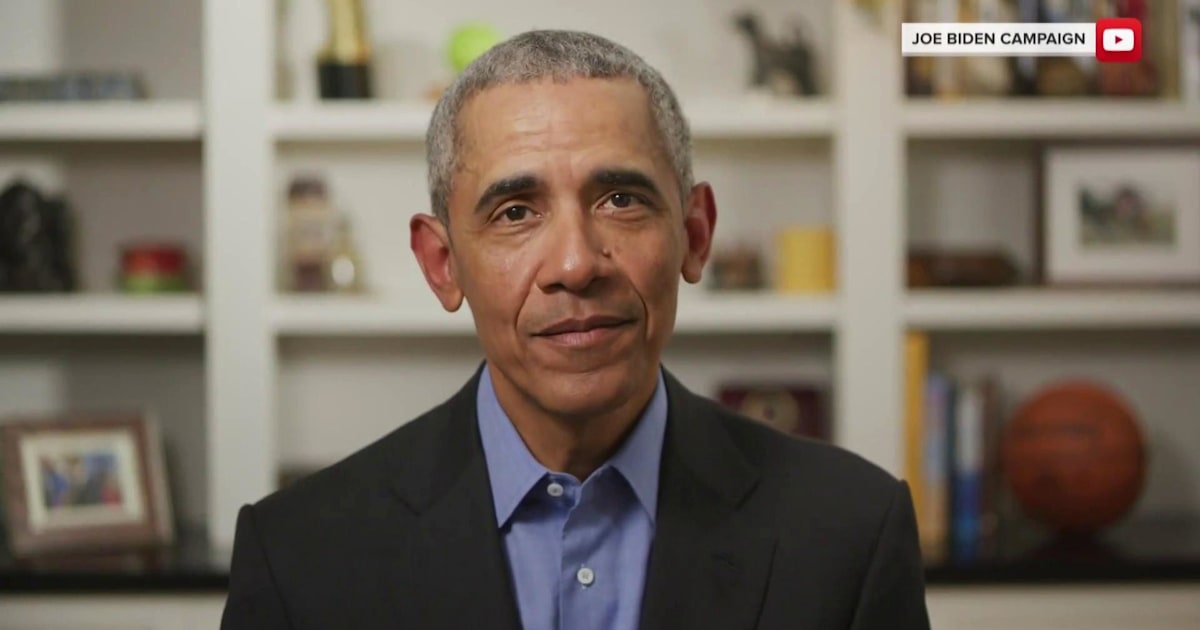
Endorsements are in – but what will it mean for Joe Biden?
And suddenly, they’re all lining up behind Joe Biden. With the nomination in the bag, the former Vice President and now candidate for the presidency has been receiving ringing endorsements from former challengers like Elizabeth Warren and Bernie Sanders and even his former partner-in-chief, President Barack Obama. It’s been said that endorsements aren’t worth the paper they are printed on if no one reads them, so why are these suddenly so significant? Has the DNC finally learned that a divided party can’t beat Donald Trump? Are these done to curry favor for future Cabinet spots and potentially a VP nod? And what took Barack Obama so long to get on side with his former Vice President? There are a lot of questions to be asked – and if you are covering American politics – let our expert help. Dr. Stephen Farnsworth is a sought-after political commentator on subjects ranging from presidential politics to the local Virginia congressional races. He has been widely featured in national media, including The Washington Post, Reuters, The Chicago Tribune and MSNBC. He is author or co-author of six books on presidential communication. His latest work, "Late Night with Trump: Political Humor and the American Presidency" examines the role late night television has played in shaping the perception of presidential politics. Dr. Farnsworth is available to speak with media and help with your coverage – simply click on his icon to arrange an interview today.



Bare shelves and closed facilities – is America facing a food shortage?
Earlier this week, South Dakota based, Smithfield Foods was ordered to closed its Sioux Falls pork production facility because workers at the plant tested positive for COVID-19. It may be one facility; however, it is responsible for five percent of all the packaged pork in America. While the plant is making the decision to close indefinitely, President and CEO Kenneth Sullivan said in the news release that the closure "is pushing our country perilously close to the edge in terms of our meat supply." The Sioux Falls, South Dakota, plant accounts for 4% to 5% of the nation's pork production, the company says. "We have continued to run our facilities for one reason: to sustain our nation’s food supply during this pandemic," Sullivan said. "We believe it is our obligation to help feed the country, now more than ever. We have a stark choice as a nation: We are either going to produce food or not, even in the face of COVID-19." The release said the plant will be shut down until "further direction is received from local, state and federal officials." Employees will be compensated for the next two weeks, but there was no mention of payment if the plant is closed for longer. April 13 – USA Today And it is not just Smithfield facing trouble. Tyson Foods and National Beef Packing are also shutting doors at facilities in Iowa. So, what will this mean for American supermarkets, consumers and a nation already worried about supply? Is there any way to keep production sustainable amidst a COVID-190 outbreak? If you are a journalist covering this emerging issue – then let our experts help. Dr. Zach Jenkins is an infectious disease expert at Cedarville University. He is available to speak with media about this topic – simply click on his icon to arrange an interview.



Think that call or online meeting is secure? You might want to ask an expert first?
As most of North America is now working from home, those trying to work are now finding board rooms and those always required meeting are now taking place online. Whether it is Webex, Zoom, Join.Me, Skype or even FaceTime – the convenience is ideal. But just how secure those calls are and whether or not someone is collecting, eavesdropping or recording might be altogether completely different. From Zoom’s CEO Eric Yuan: During normal operations, Zoom clients attempt to connect to a series of primary datacenters in or near a user’s region, and if those multiple connection attempts fail due to network congestion or other issues, clients will reach out to two secondary datacenters off of a list of several secondary datacenters as a potential backup bridge to the Zoom platform. In all instances, Zoom clients are provided with a list of datacenters appropriate to their region. This system is critical to Zoom’s trademark reliability, particularly during times of massive internet stress.” In other words, North American calls are supposed to stay in North America, just as European calls are supposed to stay in Europe. This is what Zoom calls its data center “geofencing.” But when traffic spikes, the network shifts traffic to the nearest data center with the most available capacity. China, however, is supposed to be an exception, largely due to privacy concerns among Western companies. But China’s own laws and regulations mandate that companies operating on the mainland must keep citizens’ data within its borders. April 03 - TechCrunch If you’re a journalist covering this topic, there’s still quite a few questions to be asked? What do users need to know about these platforms for meetings? Is there any information that shouldn’t be shared? Are there ways to guarantee enhanced security? And in these extraordinary times, does the risk outweigh the reward for businesses looking to carry on and stay afloat? If you’re asking – we’re here to help. Yoris A. Au is chair of the Department of Information Systems at Georgia Southern University. He is an expert in the areas of cyber security and telecommunications. Yoris is available to speak with media regarding this topic – simply click on his icon to arrange an interview.

The race for the White House is still on – is anyone paying attention?
No matter what, this is an election year. In fact, despite a crisis of any proportion, according to the U.S. Constitution, the end of term for any sitting President happens this January. But as the Democrats try and figure out what is left of their primary and President Trump is embroiled in the COVID-19 pandemic, what remains of the campaigns on either side of the aisle is anyone's guess. Journalists and pollsters are still paying attention, and no doubt the campaigns are keeping close watch, but how the candidates move forward without rallies, the requisite handshaking and the whistle-stop events may force a new approach to engaging voters and getting messages across for November. How each candidate behaves, reacts and endures during this crisis may also be critical to swaying voters about competence and leadership. Biden, who does not currently hold office, has been struggling to stay in the public eye as the coronavirus forced millions of Americans inside their homes. While Trump has held daily televised briefings about the virus, Biden has had to shut down fundraisers and other campaign events, and election officials in many states have postponed their nominating contests. Still, the poll found that the number of people who approve of Trump in general, and also those who like the way he has handled the U.S. coronavirus response, has changed very little over the past few weeks. About 44% said they approved of Trump's overall performance, and 48% said they liked the way he had responded to the coronavirus outbreak. April 01 - Reuters The election is going to happen this November - but how it is done and which campaign masters the new normal of politics is still unknown. If you are a journalist looking to know more or cover this topic – then let our experts help. Dr. Stephen Farnsworth is a sought-after political commentator on subjects ranging from presidential politics to the local Virginia congressional races. He has been widely featured in national media, including The Washington Post, Reuters, The Chicago Tribune and MSNBC. He is author or co-author of six books on presidential communication. His latest work, "Late Night with Trump: Political Humor and the American Presidency" examines the role late night television has played in shaping the perception of presidential politics. Dr. Farnsworth is available to speak with media and help with your coverage – simply click on his icon to arrange an interview today.
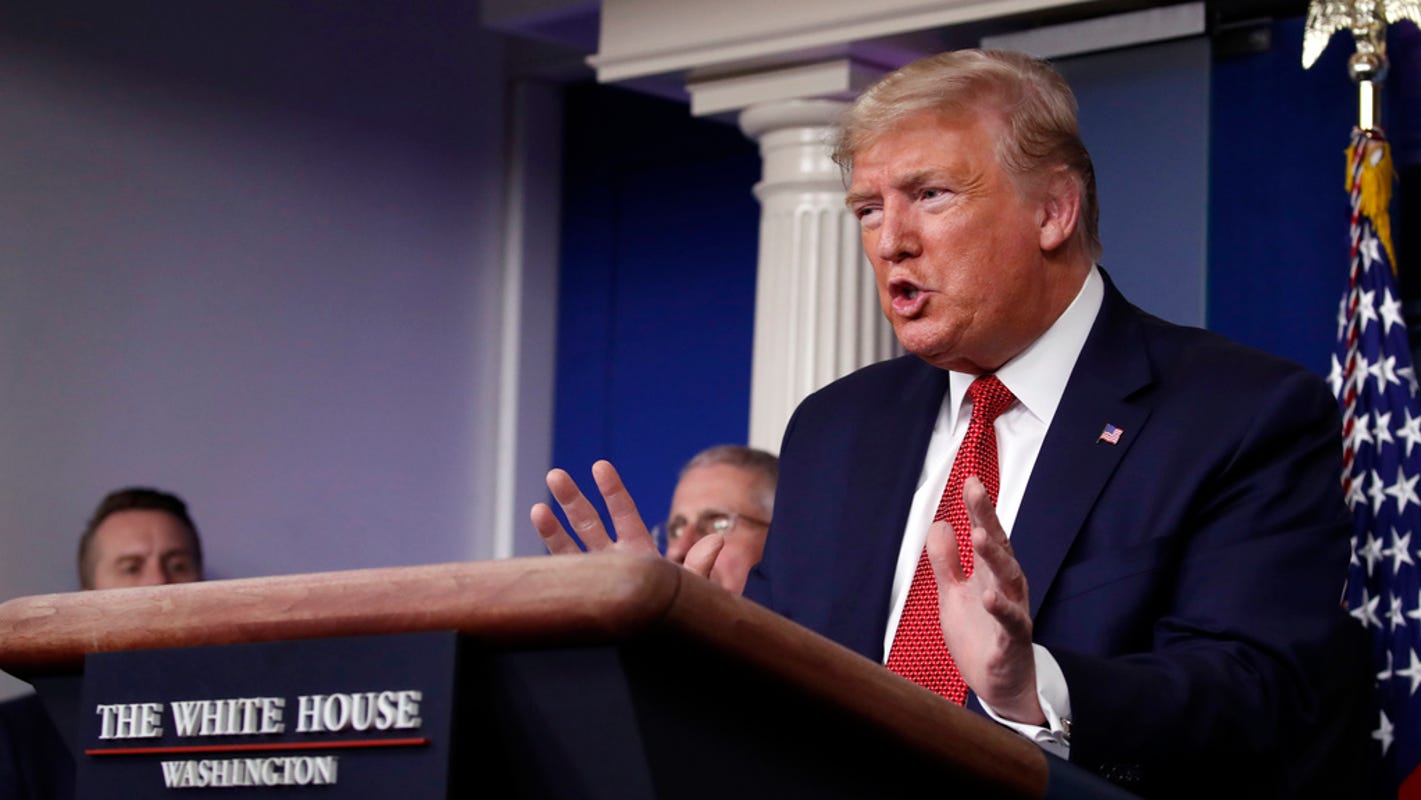
Op Ed: In coronavirus crisis, Don't prioritize economics over public health
The following is an excerpt from Op Ed that ran in the Detroit Free Press late last week. Th full piece is attached below for your reading pleasure. President Donald Trump said this week that he hopes to see economic activity ramped up and social distancing practices and other public health measures reduced by Easter, which is April 12. This is a recipe for disaster and it again vividly illustrates his dismissal of medical and scientific expertise for his own political goals. The rhetoric he uses suggests that the financial pain the nation will experience over the next year or longer is not worth the lives that will be lost as a result of dialing back public health restrictions. I am an ethicist. To me, Trump is forcing Sophie’s Choice decisions by people who have taken an oath to “first do no harm.” Trump and his advisers ignore the ethical pain that health professionals will have to endure who must decide who lives and who dies because we have too few ventilators or too few ICU beds to treat all the patients who need those beds for survival. Those harsh choices are very real right now. They would become even more tragic if public health measures now in place were loosened in order to improve economic activity. March 27 - Detroit Free Press There are many angles to explore and cover as the COVID-19 pandemic impacts just about every segment of American life. If you're a journalist covering the ethics involved and the leadership decisions taking place at each level of government, then let our experts help. Leonard M. Fleck is the Director of the Center for Ethics at Michigan State University. He is an expert in the areas of health care justice and served as a member of the Clinton Administration’s Health Care Reform Task Force in 1993 and as a state ethicist for Michigan regarding access to health care. Dr. Fleck is available to speak with media – simply click on his icon to arrange an interview.


Baylor Cultural Critic and Author of “Living with the Living Dead” Talks Books and Pop Culture During COVID-19 Time at home is increasing as shelter in place orders and working from home become the norm for many people during the COVID-19 pandemic. During this season of uncertainty, many turn to books, movies and other pieces of pop culture pass the time. Greg Garrett, Ph.D., professor of English at Baylor University and expert cultural critic, supports pop culture and literature as important to meaningfully escaping current fears as well as contextualizing experience and emotions. “A great novel, movie or memoir is a gift when we need distraction, but it can also offer us the dramatic reminder that these are the things that make us truly human: love, community, compassion and faith,” Garrett said. “The world may be shifting beneath our feet, but we’re going to be fine as long as we keep the important things in view.” In a Q&A with Garrett, he gave insight on what can be learned from zombie pandemic pop culture, touched on how literature has fit culturally into pandemic history and offered advice on books to pick up during extra free time at home. Q: You’re the author of “Living with the Living Dead: The Wisdom of the Zombie Apocalypse.” What can we learn from zombie pandemic pop culture? A: Our most pervasive form of pandemic literature in recent years is the story of the Zombie Apocalypse, which has been told in novels, movies, games and comics. It’s been the inciting conflict of “The Walking Dead,” and the underlying threat in “Game of Thrones,” two of the most popular television series in history. One of the attractions of zombie literature is that zombies can serve as a metaphor for lots of things at once: for pandemic, sure, but also for economic unrest, political chaos, terrorism and other things that keep us up at night. But as Max Brooks, author of the seminal zombie novel “World War Z: An Oral History of the Zombie War” (2006), notes: however difficult our lives might be at this moment, at least the dead are not wandering the earth and trying to eat us! We can, Brooks says, close the book, turn off the TV, and at least be secure in that. A book like “World War Z” or a movie like “Sean of the Dead” (2004) or “Zombieland” (2009) can soothe some of our tension since this story of a world coming off the rails is our story, yet clearly not our story. Q: How does literature fit into cultural history events like pandemics? A: One of the most important gifts that great stories can give us is the realization that we’re not alone in our experience, and that, in fact, our experience is not unprecedented. Anyone wanting to understand that this dark time is not in fact the darkest time should read historian Barbara Tuchman’s masterful “A Distant Mirror: The Calamitous 14th Century” (1978), which explores the Black Death of 1348-50, a pandemic so awful it killed a third of the populations of Europe and the Middle East. Daniel Defoe’s “A Journal of the Plague Year” (1722) is a novel recalling the horror of the Black Death in London some 60 years prior to its writing. In that book, Defoe’s narrator says he writes about his choices in such detail because he believes that they might be “of moment to those who come after me.” That is, he hopes his story might be of use to future sufferers like ourselves, and it is. Q: Literature can also provide escape from tough times. What other books should we be reading right now? A: In the zombie spirit, you could read “Pride and Prejudice and Zombies,” a 2009 parody by Seth Grahame-Smith of the Jane Austen novel. But if you’re simply seeking meaningful escape from our current story, you couldn’t do much better than reading (or re-reading) the actual “Pride and Prejudice” (1813), one of my favorite novels. I can’t wait to fall back into the world of the Bennets and worry about something besides viral curves and travel bans. During the weeks we expect to be largely confined to the house, my family and I are making reading lists. Mine includes Ernest Hemingway’s “The Sun Also Rises” (1926) and James Baldwin’s “The Fire Next Time” (1963), both of which I plan to teach in my American lit class at Baylor this fall, and Toni Morrison’s “Beloved” (1987), which will scare me and break my heart in ways that have nothing to do with this pandemic. ABOUT GREG GARRETT, PH.D. Greg Garrett, Ph.D., professor of English at Baylor University, is a popular theologian and cultural critic as well as the author of two dozen novels, memoir and nonfiction books including “Living with the Living Dead: The Wisdom of the Zombie Apocalypse” (Oxford University Press, 2017). ABOUT BAYLOR UNIVERSITY Baylor University is a private Christian University and a nationally ranked research institution. The University provides a vibrant campus community for more than 18,000 students by blending interdisciplinary research with an international reputation for educational excellence and a faculty commitment to teaching and scholarship. Chartered in 1845 by the Republic of Texas through the efforts of Baptist pioneers, Baylor is the oldest continually operating University in Texas. Located in Waco, Baylor welcomes students from all 50 states and more than 90 countries to study a broad range of degrees among its 12 nationally recognized academic divisions. THE COLLEGE OF ARTS & SCIENCES AT BAYLOR UNIVERSITY The College of Arts & Sciences is Baylor University’s oldest and largest academic division, consisting of 25 academic departments and seven academic centers and institutes. The more than 5,000 courses taught in the College span topics from art and theatre to religion, philosophy, sociology and the natural sciences. Faculty conduct research around the world, and research on the undergraduate and graduate level is prevalent throughout all disciplines. Visit www.baylor.edu/artsandsciences.


Stay-at-Home Parenting During the Pandemic
With the coronavirus-related death toll rising in the state of Pennsylvania, Governor Tom Wolf added two more counties to the growing list of those with a "stay at home" order, and thousands of parents and caregivers find themselves at home with their children indefinitely. Villanova philosophy professor Heather Coletti, PhD, spoke about the way the division of "caring labor" in traditional two-parent, male-female households might become a source of tension. Dr. Coletti points out that "[in] heteronormative households, women do the overwhelming bulk of caring labor for both children and adults—the statistics for this are consistent and slow to change. Today, most of these women have full-time jobs as well. When these heads-of-household are both working from home, very consciously trying to prove their value to their employer while working remotely, I think families are going to face very intensely the frustrations of the sexual division of labor over the next few weeks, i.e., that both heads of household are acting 'like men.'" "Are men prepared to be 'more like women' while working at home with children for a greater length of time?" Dr. Coletti asks. Unfortunately, much of the literature on the sexual division of labor suggests that this is quite unlikely. "Our society, including the women within it, do not seem to expect men to readily adopt the 'caring skills' traditionally and historically associated with women, even though women have proven that they are quite adept at adopting the 'work skills' that permeate career paths in the public sphere. But when children are present during these working hours (in the home) for these heads-of-household for several weeks... who will be interrupted to help with this or that? Break up that argument over that toy? Supervise homework that needs to get done? Who will find themselves negotiating 'five more minutes' to finish a conference call even though lunches need to be made for the 6- and 8-year-olds because it's already past noon?" According to Dr. Coletti, this task will likely still fall to mom. One of the hallmarks of the "masculine care model" (MCM) that American society is built around is the illusion that workers all have wives at home. The family becomes invisible—disappears—when we all go to work. Per Dr. Coletti, "People who 'visibilize' their families at work risk being characterized as distracted, sloppy or uncommitted to their work. This illusion has always been dangerous because we are and have always been connected to others. Denying this is, frankly, absurd." She continues, "Women are most tightly connected to their families through the patterns of the sexual division of labor and must work harder to 'invisibilize' their connections on a normal workday. Now that 'normal workdays' have been temporarily suspended... we are no longer in a position to ignore the overlap of (gendered) work in homes. I predict the coming weeks and months will challenge the illusions of both the MCM and sexual division of labor in unprecedented ways."

Myth-breaking and COVID-19 (Coronavirus) – Manhattanville Expert Answers Your Questions
Information, news stories, articles and advice are coming at Americans from all sides these days when it comes to COVID-19, its spread, prevention, those vulnerable, and whether America should continue to shut down or carry on carefully. There’s a lot to know and it is vitally important that accurate, credible and reliable information is what’s being shared. That’s where the experts from Manhattanville College can help. Orhan Hakli, RN, MS-FNP-C, is an administrator in the School of Nursing and Health Sciences at Manhattanville College. He is a certified Family Nurse Practitioner in private practice who has worked in various areas of health care including medical-surgical nursing, cardiology, geriatrics, wound care, hyperbaric medicine, and primary care. Here are a few of the questions he has been facing in recent days from patients. Below, he breaks down some of the myths that are surfacing with facts. I heard drinking alcohol- especially Vodka- decreases my risk of getting COVID-19. MYTH- There is no credible evidence to support that alcohol consumption decreases the risk of COVID-19. Using hand sanitizers that contain at least 60% alcohol to clean your hands can be helpful. So, using hand sanitizers with 60% alcohol yes, drinking to prevent COVID-19 is a hard no. I heard coronavirus comes from animals. I have a dog at home. Should I get rid of him/her? MYTH- It is true that Coronavirus is common in animals but not in household pets, so cuddle away but wash your hands afterwards for personal hygiene purposes. If I go out, I will get sick MYTH- We recommend social distance, not social isolation. As long as you keep 6 feet from people, do not touch your mouth, nose, or eyes and wash your hands frequently, you should be fine. If I was in contact with someone who had the coronavirus, I should start taking antibiotics immediately. MYTH- This is a viral disease; antibiotics have no effects on viral diseases. They are effective only on bacterial infections. Getting products in the mail from China will make people sick. MYTH- The Centers for Disease Control and Prevention (CDC) tells us that Coronavirus, like many other viruses, do not stay alive for very long especially on the product surfaces that are in transit for days. There are two major ways that the virus can spread. Either people who are in close contact (within about 6 feet) through respiratory droplets produced when an infected person coughs or sneezes (which is the main way) or touching a surface or object that is contaminated with the virus then touching your mouth, nose, or eyes. The second way is not thought to be the main way the virus spreads. Coronavirus can live up to two days on surfaces but loses its effect as time passes. Takeaway point - keep your 6-foot distance from people and do not touch your mouth, nose, or eyes after touching objects. I heard African-American people cannot get coronavirus. MYTH- The CDC clearly indicates that this is a virus that affects the respiratory system regardless of race. Everyone is at equal risk of getting COVID-19. If I have Coronavirus I will likely end up in the ICU and die. MYTH- The World Health Organization (WHO) indicates that most people- in fact up to 80%- will recover on their own having mild to no symptoms at all. How the disease will affect you depends on age and other comorbidities you may have. Orhan Hakli is available to speak with media about the virus as a contagious disease, prevention, myths, strains on the health care system and public health measures. He has recently been advising the food service industry on measures they can take to prevent the spread of Coronavirus. To book an interview – simply click on his icon to arrange a time.
