
Experts Matter. Find Yours.
Connect for media, speaking, professional opportunities & more.

What Makes Horror Movies Scary? “We do,” Says Baylor Film Expert
The best scary movies adapt to society’s current fears and turn current cultural, social and political preoccupations into elements of horror, says a Baylor University film historian and an expert on the horror film genre. “We are the monster,” said James Kendrick, Ph.D., associate professor of film and digital media in Baylor’s College of Arts & Sciences. Kendrick has authored three books: Darkness in the Bliss-Out: A Reconsideration of the Films of Steven Spielberg; Hollywood Bloodshed: Violence in the 1980s American Cinema; and Film Violence: History, Ideology, Genre. The themes of horror films have changed and developed over the years to capture the zeitgeist and adapt to societal fears, Kendrick said. However, as elements of fear transform with society, the elements of horror films remain. “Character and story, atmosphere and the monster,” Kendrick said. “That’s all you really need. Interesting, engaging characters in an effective setting pitted against some kind of monstrosity. That is the core of the genre, and anything and everything else grows from and functions to support those three elements.” The audience must be able to relate to characters and feel a sense of empathy for them, he said. The atmosphere must engage the audience and provide an effective platform for fear. Source:



Baylor Horror Film Expert Lists 10 Movies 'Everyone Should See'
October brings pumpkin spice, changing leaves, cooler temperatures and Halloween. And Halloween, of course, brings horror films. James Kendrick, Ph.D., associate professor of film and digital media in Baylor University’s College of Arts & Sciences, is a Hollywood film historian and an expert on cult and horror films. While horror is not everyone’s favorite genre, Kendrick says, horror films are known to have a universal appeal. “We all know what it means to be frightened, to feel dread, to want to look away,” Kendrick said. “On some level we all fear death and are aware of our human mortality, and the best horror films engage that fear in complex and challenging ways.” In honor of Halloween, Kendrick has developed a list of 10 horror classics he says “everyone should see.” 1. Nosferatu (F.W. Murnau, 1922) 2. The Bride of Frankenstein (James Whale, 1935) 3. Cat People (Jacques Tourneur, 1942) 4. Psycho (Alfred Hitchcock, 1960) 5. Night of the Living Dead (George A. Romero, 1968) 6. The Exorcist (William Friedkin, 1973) 7. Suspiria (Dario Argento, 1977) 9. The Shining (Stanley Kubrick, 1980) 10. The Babadook (Jennifer Kent, 2014) James Kendrick, Ph.D., serves as associate professor of film and digital media in Baylor University’s College of Arts & Sciences. Kendrick’s primary research interests are post-Classical Hollywood film history, violence in the media, cult and horror films, media censorship and regulation and cinema and new technologies. He has authored three books: Darkness in the Bliss-Out: A Reconsideration of the Films of Steven Spielberg, Hollywood Bloodshed: Violence in the 1980s American Cinema and Film Violence: History, Ideology, Genre. In addition to this, he is also the film and video critic for the website Qnetwork.com. Kendrick is a member of the Society for Cinema and Media Studies, the University Film and Video Association and the Online Film Critics Society. Source:

Movies like “Marshall” that are built around actors of color (Chadwick Boseman plays the iconic attorney) and have appeal to consumers of color historically see a significant surge in ticket sales in weeks five through eight – if producers are willing to keep them in theaters that long and allow for word-of-mouth advertising to build, said Tyrha Lindsey-Warren, Ph.D., clinical assistant professor of marketing in Baylor’s Hankamer School of Business. She studies consumer behavior, multicultural media, movies and entertainment. “I believe that Hollywood often pulls movies starring women and actors of color out of the theaters way too soon and before word-of-mouth has time to fully spread,” Lindsey-Warren said. “In my opinion, and according to our studies, Hollywood is leaving a great deal of money on the table.” Movies built around actors of color typically make money – in many cases as much or more than five times the budget, she said. For example, the 2017 comedy “Girls Trip,” which was built around four African-American female leads, was made for $19 million and has grossed more than $100 million at the box office. A challenge, Lindsey-Warren said, is that Hollywood expects to make its money back in the opening weekend. That strategy often doesn’t translate well to consumers of color. She cited a Nielsen study that showed African-Americans make an average 6.3 trips every year to see movies, and they tend to strongly support movies where there are characters like themselves and to whom they can relate. But they don’t rush to theaters for premier weekends. “Historically, African-American consumers have not been such early adopters of seeing movies on opening weekend and have typically waited to hear from trusted sources, by way of word-of-mouth, if the movie is worth seeing,” she said. “I call this behavior giving word-of-mouth time to spread. These are insights that Hollywood has not fully embraced regarding consumers of color and for movies built around actors of color.” Source:


Discrimination in the Shared Economy?
Is there a discrimination problem in the shared economy? According to research by Emory University’s Ruomeng Cui, users whose names suggest a certain race could result in discriminatory acts, particularly ignored or denied requests. Cui and her colleagues set up fictional, thinly-populated Airbnb accounts with traditional Caucasian and African American names. Requests from African American names were accepted nearly 20 less often than those from guests with white names. The average acceptance rate of white guests was 48 percent compared to 29 percent among African-Americans. But, by simply adding a positive review to the fictional account, results balanced — 56 percent acceptance for white guests and 58 percent for African American guests. Even negative reviews were found to eliminate discrimination in guest selection. "This shows the cause of discrimination stems from the lack of information,” Cui says. Users put more weight on details that are less obvious than names or perceived race, such as reviews and anecdotes. Cui and colleagues recommend platforms such as Airbnb, Uber, Lyft, LetGo or OfferUp encourage users to provide reviews and feedback whenever possible in order to eliminate discriminatory practices. Source:



Women in the Workplace – Still an Unfair Playing Field
It’s a trend that has many reeling and wondering how to correct: many women working in the financial services industry on Wall Street today don't believe there are opportunities to advance to the most senior positions. This comes as corporate, academic and government leaders push for greater gender diversity at American companies. A study by Lean In released today showed some startling statistics. Women in the Workplace 2017 took pipeline data from 222 companies employing more than 12 million people. As well, more than 70,000 employees completed a survey designed to explore their experiences regarding gender, opportunity, career and work-life issues. The results were not good. The report showed: “Women remain significantly underrepresented in the corporate pipeline. From the outset, fewer women than men are hired at the entry level. At every subsequent step, the representation of women further declines, and women of color face an even more dramatic drop-off at senior levels. This disparity is not due to company-level attrition or lack of interest: women and men stay at their companies and ask for promotions at similar rates.” In fact, from entry level, women represent 47 percent of all entry level hires, but only one in five women will become a C-Suite leader. For women of color, that number diminishes to one in 30. The report also shows that women are less likely to be promoted, receive raises or be supported throughout their careers. So, what will it take to reverse this trend and make corporate America an equal playing field for all? What barriers need to be removed and what policies need to be changed? Is this a cultural shift, should it be regulated and can it be done? The situation is clearly unfair and there are many questions to be asked. Yet answers and solutions are by no means simple or easy to come by. That’s where experts from Missouri State University can help. Dr. Shannon Wooden is a gender studies expert. She is also a published author. Dr. Wooden can speak about the gender pay gap and why companies need more female representation in senior and board levels. Click on her icon to contact her. Source:


World Heart Day: Do You Have an Exercise Regime to Protect Your Heart?
Sept. 29 is World Heart Day. It’s a day researchers, practitioners and health officials around the globe are taking part in to spread awareness about heart disease and stroke prevention. According to the World Heart Federation (WHF), heart disease and strokes kill more than 17 million people every year. It’s the leading cause of death on the planet, edging out cancer. One way to achieving better heart health is maintaining a healthy lifestyle by making physical fitness a key component of everyday life. But what makes an effective exercise program and what types of exercises are right for you? How do you start if you’re not used to being active? Missouri State University’s Dr. Barbara Bushman, an expert in health, wellness and exercise, can answer these questions and provide insight on reducing the risk of heart disease. She is editor of the first and second editions of American College of Sports Medicine’s Complete Guide to Fitness & Health. She has been quoted in news outlets and magazines, such as USA Today, The Boston Globe, Huffington Post and Reader's Digest. Click on her icon to contact her. Source:

Will Sept. 25 be Kurdish Independence Day?
On Sept. 25, a lot of the world’s important eyes will be watching the results of a referendum few have heard about. The Kurdistan Region of Iraq (KRI) is finally holding a referendum on its independence. It’s a referendum many object to – including those in Baghdad and in the United States. There are concerns that this path to independence will not be a smooth one and could further destabilize this already tumultuous region. Efforts and negotiations are ongoing in hopes that this historic vote can be delayed or even postponed. The stakes in this are high. In this region, relationships between the Kurds and Turkey are not good. Separating from Iraq could also see consequences. The threat of violence is very real and who will be there to support an independent KRI is also in question. There are many pieces at play. This involves a century of history, territory and tribalism all in an area that cannot afford another conflict. So, will the referendum take place even though Iraq's Supreme Court on Monday ordered the suspension of the referendum? If it does, what will be the outcome? Can America not support a group of people using democracy to determine its own fate? Are the costs of preventing this referendum worth it in the long run? How will the referendum affect politics in the Middle East and globally? Missouri State University’s Dr. David Romano, an expert in Middle Eastern politics, particularly the Kurdish region, is available to provide his insights on this complex and developing issue. He has been contributing to international discussion on this topic in his weekly column on Rudaw. Romano spent six months last year in Iraqi Kurdistan, behind the lines near Mosul. He believes the time is right for Kurdish independence. It’s also relevant to American interests due to the oil market and the international political landscape. Click on his icon to arrange an interview. Source:

Baylor DACA Expert Comments Following Trump's Announcement Re: Dreamers Program
Baylor Law School Professor Laura Hernandez, J.D., is an expert on DACA and the founder of the Baylor Law Immigration Clinic, which has assisted hundreds of Waco area residents – a number who are Dreamers – with immigration needs. She shared the following statement re: President Trump’s DACA announcement. “It is unfortunate that President Trump has chosen to withdraw authorization for the DACA program, a hugely successful program that allowed around 800,000 children and young adults to make a meaningful contribution to the country they love. The only country they have known. Moreover, DACA recipients have never threatened national security. Now, it is time for Congress to act to preserve the status of these DACA recipients while giving them a path to legal residency. Congress should resist allowing the Trump administration to use the fate of these ‘Dreamers’ as a bargaining chip for the construction of a wall that brings no greater safety to the United States, but does cost the American taxpayer millions of dollars in unnecessary expense.” Source:

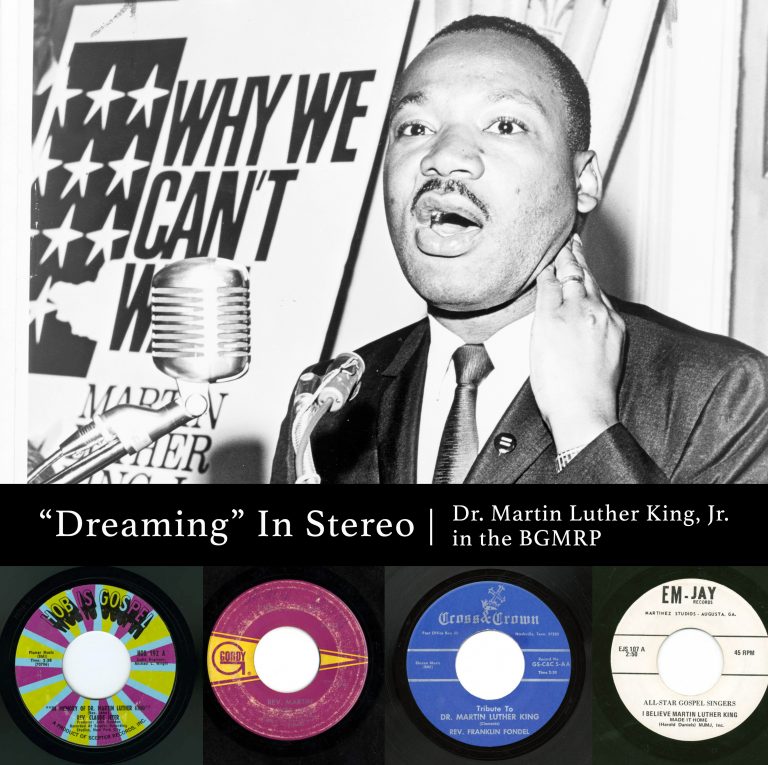
Baylor Gospel Expert: MLK’s ‘I Have a Dream’ Inspired Response from Black Gospel Artists
Fifty-four years ago this week. On Aug. 28, 1963, from the steps of the Lincoln Memorial in Washington, D.C., Dr. Martin Luther King Jr. delivered “I Have a Dream” – one of the most iconic speeches in American history and a defining moment of the Civil Rights Movement. For black gospel artists recording in the years after 1963, King’s speech was fertile ground for creative expression, said Robert Darden, professor of journalism and founder and director of Baylor’s Black Gospel Music Restoration Project (BGMRP). “These artists responded by creating songs that sampled portions of Dr. King’s recorded audio, drew inspiration from his words or supported the Civil Rights Movement in the wake of its delivery,” Darden said. Darden founded Baylor’s Black Gospel Music Restoration Project more than a decade ago in an effort to identify, acquire, preserve, digitize and catalog recordings from the black gospel music tradition. This music, from the Golden Age of Gospel from 1945 to 1975, was quickly vanishing as albums made the transition to CDs. Through the work of the Baylor Libraries’ Digital Projects Group, recordings from the BGMRP are available online in the Baylor Libraries Digital Collection, and in some cases includes other materials, such as taped interviews, photographs, press packets, tour books and programs, newspaper and magazine clippings, and sheet music. Music from the BGMRP also has been included in a permanent exhibit featuring African-American musical history at the Smithsonian Institution’s National Museum of African American History and Culture. Source:
Another Big Short or Better Off? 10 Years Later – Is there Another Financial Crisis Looming?
It was 10 years ago Wednesday that the world changed for just about everyone. It was on that afternoon when BNP Paribas announced it was ceasing activity in three hedge funds that specialized in U.S. mortgage debt. BNP Paribas was the first major bank to acknowledge the risk of exposure to the sub-prime mortgage market, and many look back at those days as the start of the worst financial crisis in American history since the stock market crashed in 1929. For a decade, America has been in a state of recovery. It took trillions of dollars in stimulus and bail outs. The real estate market almost collapsed on itself and millions were left unemployed. Some are still incapable of finding work and income that matched what they made back then. On the outside, America seems to be in complete recovery. Housing prices have bounced back, the DOW is soaring and unemployment rests at just 5.1 percent. However, some are skeptical. Americans are borrowing again at record rates. Credit is once again being offered abundantly and as people spend again – risk is climbing. Add in China’s shaky economy and there’s also talk of a double-bubble bursting. Understanding finance and economics is no easy task. It takes global understanding, a keen eye on micro and macroeconomics and sometimes a crystal ball. But on Wednesday, many people will remember exactly what they were doing when America’s economy tanked. So where are we now? Have we learned our lesson or are we doomed to repeat ourselves? Have the reforms on Wall Street worked or can the actions of a few big banks still derail one of the strongest financial engines in the world? None of these are easy questions to answer or explain. But experts from Missouri State University can help. Dr. David Mitchell is a Professor of Economics and Director of the Bureau of Economic Research at Missouri State. He is also an expert at economic forecasting and understanding market trends and direction. Dr. Mitchell can speak to the anniversary of the financial crisis and what may lie ahead for America’s economy. Click on his icon to arrange an interview. Source: