
Experts Matter. Find Yours.
Connect for media, speaking, professional opportunities & more.

Your First Scroll of the Day Is Wrecking Your Sleep and Focus, Says ADHD Therapist
For many people, the day doesn’t start with getting out of bed - it starts with reaching for the phone. Psychotherapist Harshi Sritharan, who specializes in ADHD and anxiety, says that tiny habit is doing more damage than most of us realize. “When you check your phone before you’ve even sat up, you’re flooding your brain with microbursts of dopamine,” she explains. “Dopamine is a key part of our motivation and reward system. Those quick hits of novelty - notifications, texts, news, social feeds - tell the brain, ‘This is where the good stuff is.’” The problem? That early surge doesn’t just switch on your day. It primes your nervous system to stay on high alert. “You’ve now trained your brain to expect that level of stimulation,” Sritharan says. “For many people with ADHD, nothing else in their day compares - school, work, chores all feel flat by comparison. That’s where that constant ‘I’m bored’ feeling can come from.” That ongoing “high alert” isn’t just about boredom, though. It’s also a sign of a dysregulated nervous system: your brain scanning for the next hit of information, your body sitting in low-level fight-or-flight. Over time, that uncertainty - What’s waiting for me in my inbox? Did I miss something? - can exacerbate anxiety and executive dysfunction. Nighttime habits make things worse. Those late-night emotional spikes from doom-scrolling, stressful emails, or intense content don’t just keep your mind busy. They can trigger the sympathetic nervous system - the body’s fight, flight, or freeze response - and potentially release stress hormones like cortisol and adrenaline. “That combination,” Sritharan notes, “blocks melatonin, dysregulates the nervous system, and sends your body the opposite message of what it needs before sleep. You’re basically telling your brain, ‘We’re in danger,’ and then expecting it to rest.” Instead of shaming people for these habits, Sritharan takes a “knowledge equals power” approach. “I don’t tell clients, ‘Just stop doing that,’” she says. “I teach them what’s happening in their brain and nervous system so they can understand why it feels so hard to put the phone down. Once people see the pattern, they feel less broken - and more motivated to experiment.” “Most people don’t need a total digital detox,” Sritharan says. “They need skills, not shame. When they understand how their brain is wired - especially with ADHD - they can design habits that work with their nervous system instead of against it.” Her message to anyone who feels stuck in the cycle: don’t blame your willpower. “This is your biology, not a personal failure,” she says. “When you understand what your brain is doing, you can finally start changing the script.” ⸻ About the Expert Harshi Sritharan is a psychotherapist who focuses on ADHD, anxiety, and intentional tech use. She helps clients understand dopamine cycles, rebuild healthy routines around sleep and screens, and create realistic boundaries that work in real life - not just on paper. Harshi is part of the Offline.now ADHD Expert Community.


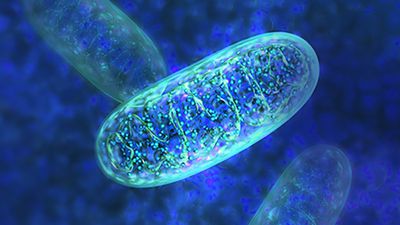
How mitochondria shape brain health from childhood to old age
From the first spark of neural development to the challenges of ageing, Dr Lissette Sánchez Aranguren is uncovering how the cell’s powerhouses — mitochondria — hold the key to a healthy brain across the human lifespan. Her pioneering research at Aston University explores how these microscopic energy generators safeguard the brain’s communication network and how their dysfunction may underlie conditions such as dementia, stroke, and neurodevelopmental disorders. Mapping the brain’s energy defence system Dr Sánchez Aranguren’s work focuses on the partnership between brain cells and the blood vessels that nourish them — a relationship maintained by the blood–brain barrier. When mitochondria fail, that protective interface can weaken, allowing harmful molecules to penetrate and trigger inflammation or cell loss. Her team’s studies show that mitochondrial malfunction disrupts the dialogue between neurons and vascular cells, an imbalance seen both in the developing and ageing brain. To counter this, she and her collaborators have engineered a mitochondria-targeted liposome, a nanoscale “bubble” that delivers restorative molecules directly where they are needed most. By re-balancing cellular energy and communication, this innovation could one day reduce brain injury or slow neurodegenerative decline. From heart cells to the human mind Originally trained in cardiovascular science, Dr Sánchez Aranguren became fascinated by how mitochondria regulate energy and stress in blood-vessel cells — insights that ultimately led her toward neuroscience. View her profile here “Mitochondria do much more than produce energy. They send signals that determine how cells communicate and survive.” That realisation inspired her to trace mitochondrial signalling across the continuum of life — linking early brain development to later-life vulnerability. Her research now bridges traditionally separate fields of developmental biology, vascular physiology, and ageing neuroscience, helping identify shared molecular pathways that influence lifelong brain resilience. Global collaboration for a healthier brain Her work thrives on multidisciplinary and international partnerships. At Aston, she collaborates with scientists from Coventry University, Queen’s University Belfast, and the University of Lincoln, alongside research partners in the Netherlands, Italy, Malaysia, and China. Together they integrate chemistry, biology, and computational modelling to understand mitochondrial function from molecule to organism — and translate discoveries into practical therapies. Towards mitochondria-targeted brain therapies The next frontier is refining these mitochondria-targeted nanocarriers to enhance precision and efficacy in preclinical models, while exploring how mitochondrial signals shape the brain’s vascular and neural architecture from infancy through adulthood. Dr Sánchez Aranguren envisions a future where protecting mitochondrial health becomes central to preventing brain disease, shifting medicine from managing symptoms to preserving the brain’s natural defence and repair systems. “If we can protect the cell’s own energy engines,” she says, “we can give the brain its best chance to stay healthy for life.”


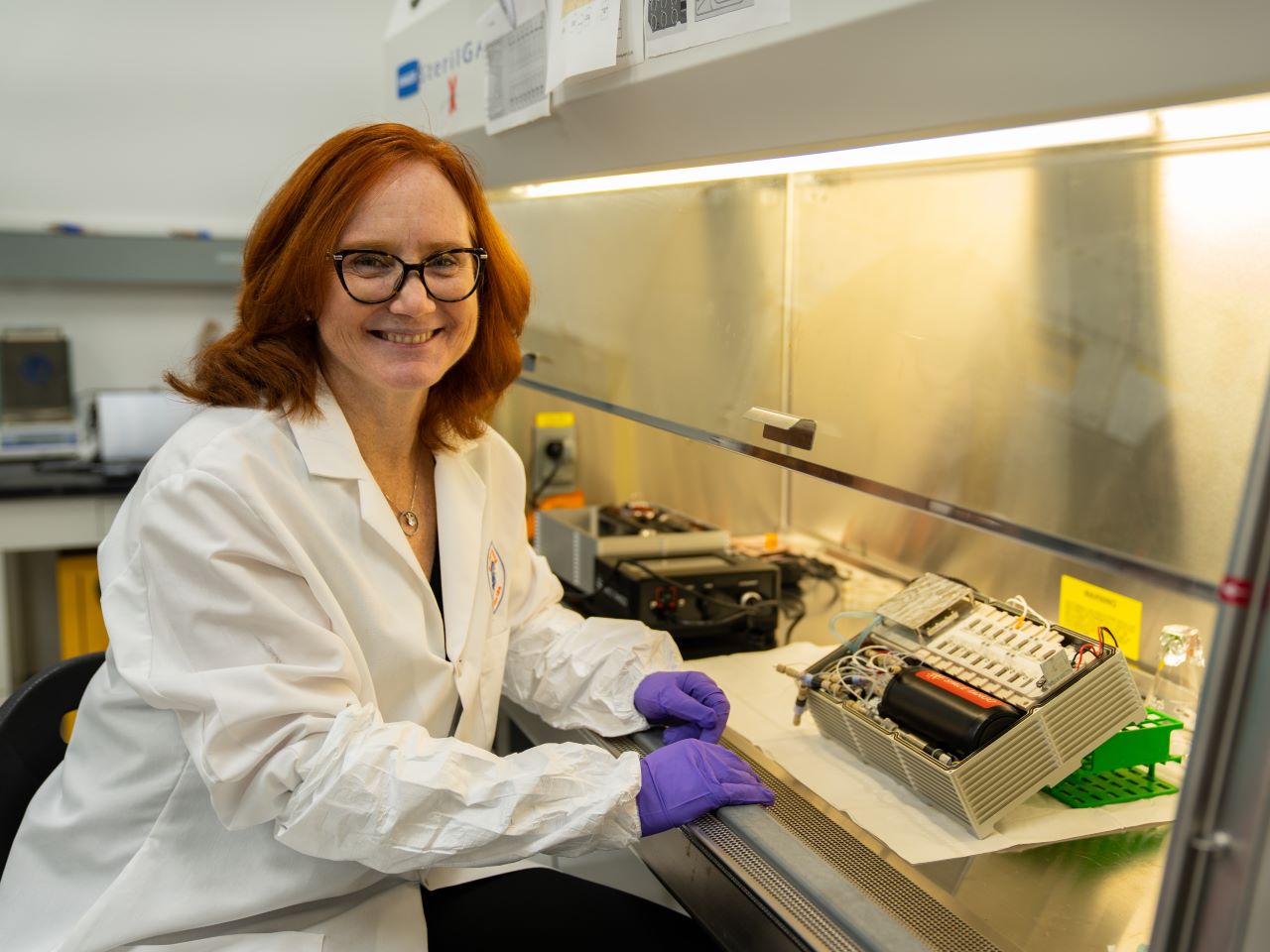
UF scientist studies muscle loss in space to benefit astronauts and patients on Earth
Astronauts traveling to Mars will face many challenges, but one of the most serious is muscle loss during long space missions. A new study led by University of Florida researcher Siobhan Malany, Ph.D., sheds light on how human biology changes in microgravity and could help protect astronaut health while also offering hope for patients with muscle-wasting diseases on Earth. Malany, an associate professor in the College of Pharmacy, a member of UF’s Astraeus Space Institute, and director of the in-space Biomanufacturing Innovation Hub, recently published findings showing how muscle cells adapt in space. Her team studied bioengineered three-dimensional muscle tissues derived from biopsy cells from both younger and older individuals and observed how they responded to electrical stimulation in microgravity. These micro-scale tissues called “tissue chips” were given nutrients and electric pulses autonomously in a miniature laboratory the size of a shoe box called a CubeLab.x. A camera system inside the box recorded the rate of muscle contraction. “This research is about more than just space,” Malany said. “By understanding how muscle tissue deteriorates much faster in microgravity, we can uncover new strategies to address muscle loss that occurs naturally with aging and with age-related diseases here on Earth.” Siobhan Malany studies the effects of microgravity on human muscle biology using an automated tissue chip system. View her profile here The study found that younger muscle tissue showed more pronounced changes in mitochondrial pathways — cellular systems that produce energy — than older tissue did when exposed to microgravity. Researchers also discovered that, on Earth, older muscle tissue responds less to electrical stimulation than younger tissue. But in space, the younger tissue showed a noticeable drop in its ability to contract, suggesting that younger muscle may experience a greater change when exposed to the space environment. These insights may help researchers design new treatments to protect muscles in astronauts during long missions, as well as develop therapies for people experiencing age-related muscle loss on Earth. The project was part of UF’s broader efforts to advance space biology. Through the Astraeus Space Institute, UF brings together experts across disciplines, from medicine and pharmacy to engineering and plant science, to address the unique challenges of space exploration. “UF researchers are helping lay the groundwork for humanity’s next giant leap,” Malany said. “It’s exciting to see our work contribute to both the health of astronauts and the lives of patients back home.” UF’s leadership in space biology is strengthened through collaboration with partners including the Kennedy Space Center Consortium and the Center for Science, Technology and Advanced Research in Space), both initiatives bringing together universities in Florida’s high-tech corridor, government agencies and industry leaders. Malany’s work also builds on long-term collaborations with AdventHealth, using donated tissue samples to model age-related muscle changes in space. Her team also works with SpaceTango, a NASA-certified aerospace company, to design the CubeLab that flew to the International Space Station on multiple SpaceX missions. Looking ahead, Malany and her team are developing new ways to study astronaut-derived cells, including both skeletal and heart muscle, generated from blood samples. These “avatars” could help researchers track changes before, during and after space missions, providing an unprecedented window into how microgravity affects the human body. “Now we can study cells from individual astronauts and see how they respond over time,” Malany said. “This helps us understand the risks of long-term spaceflight and also gives us a platform for testing potential treatments for muscle-wasting conditions on Earth.” By using tissue chips, small, bioengineered devices that mimic the structure and function of human organs, scientists in space can gather data more quickly and accurately than with traditional animal studies, potentially accelerating the discovery of therapies for aging-related muscle loss. Looking to know more about this amazing research or connect with Siobhan Malany - simply click on her icon now to arrange an interview today.


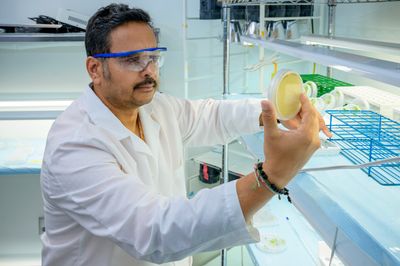
New path to combating global malnutrition found in soil
A new University of Delaware study has found that a naturally occurring soil microbe can boost protein-building amino acids in wheat. The finding by UD's Harsh Bais and others could pave the way for nutrient-rich staple crops — helping combat global malnutrition as fluctuations in weather reduce crop quality. In the study, published in the journal Frontiers in Microbiology, Bais and a team of researchers from UD, Stroud Water Research Center and the Rodale Institute investigated how a bacteria naturally found in the soil that is beneficial to human health can enhance the levels of the amino acid and antioxidant ergothioneine in spring wheat. The researchers grew the spring wheat — one of the most widely consumed cereal crops — in a laboratory. After letting the seeds germinate and grow for seven days, they added a strain of bacteria called Streptomyces coelicolor M145 to the spring wheat roots. After combining the bacteria and the plant, they separated the plant’s leaves and roots. Then, they extracted the amino acid ergothioneine from the samples, working to determine how much protein was in the plant’s roots and shoots. They found that 10 days after S. coelicolor had been added to the spring wheat roots, the bacteria was able to inhabit spring wheat’s roots and shoots, producing ergothioneine, bypassing the plant’s innate defense mechanisms, and fortifying the spring wheat. Wheat roots were inoculated with the benign bacteria Streptomyces coelicolor. The image shows the presence of bacteria on the root hairs on day 5. “It’s unusual," Bais said. “Unless there is a mutual advantage for either the plant or the microbe.” The findings suggest that an alternative plant breeding approach could be utilized to associate plants with benign microbes to increase protein content in staple crops. All of our cereal crops are very low in protein. Think rice and breakfast cereals, common foods people eat, derived from these crops. “This approach of harnessing a natural association of microbes with plants may facilitate fortifying our staple crops, enhancing global nutritional security,” Bais said. Bais said he believes using microbes to transport nutrients depends on the microbes’ relationship with plants’ roots. He continues to work to catalyze the colonization of plant roots by beneficial microbes. "Establishing a partnership with the appropriate types of microbes or microbial consortia for plants represents a method of engineering the rhizosphere — the region of the soil near plant roots — to foster a more favorable environment for either microbial associations that stimulate plant growth traits or enhance nutrient availability, which is the path forward,” Bais said. Bais, a professor of plant biology who was named a UD Innovation Ambassador earlier this year, said plants’ “below-ground” traits, such as how nutrient-dense they are, have long been overlooked. “As far as food security, we will have significant challenges by 2050 when the world’s population doubles,” Bais said. “We incentivize our farmers for crop yield; we don’t incentivize them for growing nutrient-dense crops. Growing nutrient-dense plants will enable the population to be fed better and avoid any potential nutrient deficiencies.” The study was funded by the U.S. Department of Agriculture and the Foundation for Food and Agriculture Research. Scientists have become more interested in soil bacteria as a means to solve issues with malnutrition and nutrient deficiencies. Alex Pipinos, the lead author and a UD Class of 2025 graduate with a master’s in microbiology, said environmental conditions are one factor diminishing protein content in plants. “Essentially, crops are becoming less nutrient-dense,” Pipinos said. “The more nutrients in crops, the more healthy humans can be.” Pipinos points to a strong link between soil microbes, plant health and human health. Ergothioneine, she said, has already been shown to lower the risk of cardiovascular disease. It’s also been shown to combat cognitive decline, with a strong link to healthy cognitive aging. “By enhancing ergothioneine in plants, we can improve human health,” Pipinos said. To reach Bais directly and arrange an interview, visit his profile and click on the contact button. Reporters can also contact UD's Media Relations Department.



Taking discoveries to the real world for the benefit of human health
It takes about a decade and a lot of money to bring a new drug to market—between $1 billion to $2 billion, in fact. University of Delaware inventor Jason Gleghorn wants to change that. At UD, Gleghorn is developing leading-edge microfluidic tissue models. The devices are about the size of two postage stamps, and they offer a faster, less-expensive way to study disease and to develop pharmaceutical targets. These aren’t tools he wants to keep just for himself. No, Gleghorn wants to put the patented technology he’s developing in the hands of other experts, to advance clinical solutions in women’s health, maternal-fetal health and pre-term birth. His work also has the potential to improve understanding of drug transport in the female reproductive tract, placenta, lung and lymph nodes. Gleghorn, an associate professor of biomedical engineering, was named to the first cohort of Innovation Ambassadors at UD, as part of the University’s effort to foster and support an innovation culture on campus. Below, he shares some of what he’s learned about translating research to society. Q: What is the problem that you are trying to address? Gleghorn: A lot of disease has to do with disorganization in the body’s normal tissue structure. My lab makes microfluidic tissue models, called organ-on-a-chip models, that have super-tiny channels about the thickness of a human hair, where we can introduce very small amounts of liquid, including cells, to represent an organ in the human body. This can help us study and understand the mechanism of how things work in the body (the biology) or help us do things like drug screening to test therapeutic compounds for treating disease. And while these little microfluidic devices can do promising things, the infrastructure required to make the system work often restricts their use to high-end labs. We want to democratize the techniques and technology so that nonexperts can use it. To achieve this, we changed the way we make these devices, so that they are compatible with standard manufacturing, which means we can scale them and create them much easier. Gleghorn: One of the problems with drug screening, in general, is that animal model studies don’t always represent human biology. So, when we’re using animal models to test new drugs — which have been the best tool we have available — the results are not always apples to apples. Fundamentally, our microfluidic devices can model what happens in humans … we can plug in the relevant human components to understand how the mechanism is working and then ask questions about what drives those processes and identify targets for therapies to prevent the dysfunction. Q: What is innovative about this device? Gleghorn: The innovation part is this modularity — no one makes these devices this way. The science happens on the tiny tissue model insert, which is sandwiched between two pieces of clear acrylic. This allows us to watch what’s happening on the tissue model insert in real time. Meanwhile, the outer shell’s clamshell design provides flexibility: if we’re studying lung tissue and we want to study the female reproductive tract, all we do is unscrew the outer shell and insert the proper tissue model that mimics the female reproductive tract and we’re off. We’ve done a lot of the engineering to make it very simple to operate and use, and adaptable to common lab tools that everyone has, to eliminate the need for financial investment in things like specialized clean rooms, incubators and pumps, etc., so the technology can be useful in regular labs or easily deployable to far-flung locations or countries. With a laser cutter and $500 worth of equipment, you could conceivably mass manufacture these things for maternal medicine in Africa, for example. Democratizing the technology so it is compatible and useful for even an inexperienced user aligns with the mission of my lab, which focuses on scaling the science and the innovation faster, instead of only a few specialized labs being a bottleneck to uncovering new mechanisms of disease and the development of therapies. We patented this modularity, the way to build these tiny microfluidic devices and the simplicity of how it's used as a tool set, through UD’s Office of Economic Innovation and Partnerships (OEIP). Q: How have you translated this work so far? Gleghorn: To date, we've taken this microfluidic system to nine different research labs across seven countries and four continents — including the United States, the United Kingdom, Australia, France, Belgium and South Africa. These labs are using our technology to study problems in women’s health and collecting data with it. We’re developing boot camps where researchers can come for two or three days to the University of Delaware, where we teach them how to use this device and they take some back with them. From a basic science perspective, there is high enthusiasm for the power of what it can tell you and its ease of use. As engineers, we think it's pretty cool that many other people are using our innovations for new discoveries. Q: What support and guidance have you received from the UD innovation ecosystem? Gleghorn: To do any of this work, you need partners that have various expertise and backgrounds. UD’s Office of Economic Innovation and Partnerships has built a strong team of professionals with expertise in different areas, such as how do you license or take something to patent, how do you make connections with the business community? OEIP is home to Delaware’s Small Business Development Center, which can help you think about business visibility in terms of startups. Horn Entrepreneurship has built out impressive programs for teaching students and faculty to think entrepreneurially and build mentor networks, while programs like the Institute for Engineering Driven Health and the NSF Accelerating Research Translation at UD provide gap funding to be able to do product development and to take the work from basic prototype to something that is more marketable. More broadly in Delaware is the Small Business Administration, the Delaware Innovation Space and regional grant programs and small accelerators to help Delaware innovators. Q: How have students in your lab benefited from engaging in innovation? Gleghorn: Undergraduate students in my lab have made hundreds of these devices at scale. We basically built a little manufacturing facility, so we have ways to sterilize them, track batches, etc. We call it “the foundry.” In other work, graduate students are engineering different components or working on specific system designs for various studies. The students see collaborators use these devices to discover new science and new discoveries. That's very rewarding as an engineer. Additionally, my lab focuses on building solutions that are useful in the clinic and commercially viable. As a result, we've had two grad students spin out companies related to the work we've been doing in the lab. Q: How has research translation positively impacted your work? Gleghorn: I started down this road maybe five years ago, seriously trying to think about how to translate our research findings. Being an entrepreneur, translating technology — it's a very different way to think about your work. And so that framework has really permeated most of the research that I do now and changed the way I think about problems. It has opened new opportunities for collaboration and for alternate sources of funding with companies. This has value in terms of taking the research that you're doing fundamentally and creating a measurable impact in the community, but it also diversifies your funding streams to work on important problems. And different viewpoints help you look at the work you do in new ways, challenging you to define the value proposition, the impact of your work.

Aging in context: Why culture matters in discussions on menopause
How do we age? Why do we age? And why are experiences of menopause and midlife so different across cultures? These are the driving questions behind the work of Melissa Melby, a medical anthropologist and professor at the University of Delaware. For more than 25 years, Melby has been exploring how biology and culture intersect to shape the way people experience aging and menopause. Her new book, Reframing Aging: Insights from Biology and Culture of Midlife Japanese, introduces a biocultural framework that goes beyond the “what” of aging to ask both how (the immediate mechanisms) and why (the deeper evolutionary reasons) we age and experience menopause the way we do. By weaving together insights from evolutionary biology, anthropology, medicine and lived experience, Melby challenges what many consider to be the “normal” path of midlife. Her research highlights how cultural expectations, medical practices, social structures and lifestyle habits can profoundly influence not just how symptoms are treated – but how they are perceived in the first place. What may be pathologized in one society could be understood as a natural stage of life in another. As conversations around women’s health, longevity and healthy aging gain overdue attention, Melby’s cross-disciplinary expertise offers journalists a fresh lens for exploring some of the most universal – and misunderstood – aspects of human life. For stories that bridge science, culture and health, Melby provides a rare perspective: one that reframes aging and menopause not as fixed biological destinies, but as experiences shaped by the complex interplay of our bodies, histories, and communities. Reporters interested in speaking to Melby can email mediarelations@udel.edu.

Swimming in the deep: MSU research reveals sea lamprey travel patterns in Great Lakes waterways
Why this matters: Invasive sea lampreys prey on most species of large Great Lakes fish such as lake trout, brown trout, lake sturgeon, lake whitefish, ciscoes, burbot, walleye and catfish. These species are crucial to Great Lakes ecosystems and to the region’s fishing industry. Understanding how sea lampreys migrate can inform management and conservation strategies, such as developing methods to catch the invasive fish that don’t involve dams, which reduce river connectivity, or lampricide, a pesticide that some communities and groups prefer not to use. The Great Lakes fishing industry is worth $7 billion and provides 75,000 jobs to the region. Reducing the amount of sea lamprey in waters is crucial for the industry’s well-being and the economic vitality of the Great Lakes. How do you catch an invasive fish that’s solitary, nocturnal and doesn't feed on bait? Researchers in the Michigan State University College of Agriculture and Natural Resources are one step closer to figuring it out. In a study published in the Journal of Experimental Biology and funded by the Great Lakes Fishery Commission, Kandace Griffin, a fisheries and wildlife doctoral student, and Michael Wagner, professor in the MSU Department of Fisheries and Wildlife, found that sea lampreys — a parasitic fish considered an invasive species in the Great Lakes region of the U.S. — follow a clear pattern of staying in the deepest parts of a river. These findings are important for informing sea lamprey management strategies, conservation of fish species native to the Great Lakes and protecting the region’s $7 billion fishing industry and the 75,000 jobs it provides. “We wanted to know how sea lampreys are making their movement decisions when migrating,” Griffin said. “Are they guided by certain environmental cues? Are they moving through areas that are safer? How can we potentially exploit those decisions or maybe manipulate them into going somewhere that they don’t want to go, like pushing them into a trap.” The primary methods used to control sea lamprey are dams that block them from entering waterways and lampricide, a species-specific pesticide that targets lamprey larvae. “Dams create a lot of challenges for conserving river ecosystems: They block all the other fish that are moving up and down in the system. Even though lampricide is proven to be safe and effective, there are communities that are uncomfortable with its use going into the future,” Wagner said. “Figuring out the right way to fish sea lamprey would decrease its population, lower reproduction rates and provide managers with the opportunity to match their control tactics to the community’s needs.” To track lamprey movements, Griffin and Wagner used a method called acoustic telemetry, which involved using sound emitted from a surgically implanted tag to track the movement of 56 sea lampreys in the White River near Whitehall, Michigan. Griffin likened acoustic telemetry to GPS. “There’s a tag that emits sound and has a unique transmission with a unique identification code, so I know exactly which fish is going where,” she said. “The receivers are listening for that sound and then calculating the time it reaches each receiver. We used this information to triangulate the position of the sea lamprey and analyzed it to find out how they’re using the river’s environmental traits to make decisions on where to swim.” Of the 56 lampreys studied, 26 of them (46%), consistently chose the deepest quarter of the river. “For nearly 20 years we have been discovering how sea lampreys migrate along coasts and through rivers. Now, thanks to Kandace’s work, we know where their movement paths come together near a riverbank — the perfect place to install a trap or other fishing device,” Wagner said. “That knowledge can be used to find similar sites across the Great Lakes basin.” Right now, a fishing device designed to catch bottom-swimming, solitary, nonfeeding, nocturnal sea lamprey doesn’t exist. However, Wagner notes there are places around the world — including Indigenous communities in the U.S. — where people have fished migratory lampreys of various species for hundreds of years and could help inform the creation of such a mechanism. “We have recently had a proposal funded to scour the Earth in search of knowledge, both scientific and traditional, about how to capture migrating lampreys and similar fishes,” Wagner said. “We want to talk with the communities of people who have histories fishing these animals and use this information, along with other data we’ve gathered, to conceive a device that could be used to fish sea lampreys.” Griffin views the new intel on lamprey migration patterns as a way to inform fishing practices to complement some of the existing control methods. “Hopefully, we can use this as a supplemental control method to the use of the barriers or dams,” she said. “We have societal pressure to remove barriers to enhance river connectivity, and some barriers are failing. Open water trapping is another way that we could try to still combat the invasive sea lamprey problem here but also promote river connectivity and other conservation goals for other species.” Wagner shares the same perspective. “When a community, or the Great Lakes Fishery Commission, or the governments of Canada and the U.S. come in and say, ‘We’d really rather be able to control this river with something other than lampricide,’ we want to be able to be able to provide 360-degree solutions that specify where to fish, when to fish and how to fish using fully prototyped and tested equipment,” he said. “We want our science to help solve real-world problems.”

Georgia Southern biology professor named 2025-26 Fulbright U.S. Scholar to Vietnam
Stephen Greiman, Ph.D., associate professor of biology in Georgia Southern University’s College of Science and Mathematics, has been awarded a 2025-26 Fulbright U.S. Scholar award to Vietnam where he will lead a teaching and research project focused on parasite diversity in bats. “Dr. Greiman is further proof that Georgia Southern faculty are among the best in their fields,” said Avinandan (Avi) Mukherjee, Ph.D., provost and executive vice president for Academic Affairs. “We are incredibly proud of this achievement and all the hard work that goes into such a celebrated milestone paying off.” Greiman’s Fulbright work will build on more than a decade of collaboration with Vietnamese scientists. During graduate school, he began working with parasitologists in Vietnam and participated in field expeditions in 2013 and 2014. That early partnership has since blossomed into multiple co-authored publications and enduring collegial friendships. Vietnam, Greiman explained, is a natural fit for this project. “Its exceptional biodiversity and the significant burden of parasitic infections across humans, domestic animals and wildlife make it a particularly relevant and meaningful host country for my research,” he said. “Our shared goal is to advance awareness and understanding of parasite diversity among students and the public.” During his grant period, Greiman will teach a parasitology course at Hai Duong Medical Technical University. He will also conduct field and laboratory research in partnership with the Vietnam Academy of Science and Technology’s Institute of Ecology and Biological Resources and the Department of Parasitology. His research will involve sampling and analyzing the parasites and microbiomes of Vietnamese bats—a project designed to engage both undergraduate and graduate students in hands-on scientific inquiry. “International collaborations often yield more impactful research than national projects alone,” Greiman noted. “This award not only strengthens our scientific goals but offers my family a chance to immerse ourselves in a new culture. It’s an experience we’re incredibly grateful for.” Beyond fieldwork, Greiman hopes the Fulbright project will open doors for new exchange programs between Georgia Southern and Vietnamese institutions. He envisions Georgia Southern students spending semesters abroad and returning with global perspectives that enrich their academic and personal growth. “The data and experiences I bring back will directly inform my courses, including parasitology and biology of microorganisms,” Greiman said. “I’ll also use our findings to support undergraduate and graduate research projects, pursue new grant opportunities and publish in high-impact journals.” He credits the Fulbright program with not only enabling his research abroad but also cultivating cultural exchange, particularly by allowing families to travel with awardees. His wife, who has a background in the arts, is excited to explore Vietnam’s artistic traditions, while their two young children will experience a culture far different from their own. “Vietnam is rich in natural and cultural history,” he said. “We’re looking forward to embracing it fully, both in the field and in everyday life.” Greiman’s selection is both a professional milestone and a personal journey—one shaped by long-standing collaborations, a deep commitment to global science, and the mentorship of Georgia Southern Vice President for Research and Economic Development David Weindorf, Ph.D. “Although I was initially hesitant to apply due to the program’s competitiveness, I was inspired by Dr. Weindorf’s own transformative experiences as a Fulbright Scholar and Specialist,” Greiman said. “His guidance and support helped me see the incredible potential of this opportunity—not just for my research, but for my family and our students.” That encouragement reflects a strong professional relationship rooted in mutual respect and a shared commitment to international collaboration. “I am so proud of Dr. Greiman’s selection as a Fulbright Scholar,” said Weindorf. “The benefits of the exchange will truly be lifelong, with new friends, colleagues and connections formed and cultivated. We look forward to celebrating the lives Dr. Greiman touches, both through his teaching and research, as a meritorious ambassador of Georgia Southern University.” For Greiman, the Fulbright award marks just the beginning of a broader vision. “This experience will generate foundational data for future National Science Foundation and National Institutes of Health proposals and deepen our international partnerships,” he said. “Being selected as a Fulbright Scholar is an extraordinary honor and a chance to contribute meaningfully to a global legacy of scholarship, cultural exchange and scientific discovery.” He encourages fellow faculty members considering the program to apply. “Go for it,” he said. “Your chances are zero if you don’t try. The Fulbright is one of the few opportunities that blends extended research, cultural immersion and family inclusion. It’s life-changing—and absolutely worth it.” If you're interested in knowing more about Stephen Greiman's work or more about his Fullbright award - simply contact Georgia Southern's Director of Communications Jennifer Wise at jwise@georgiasouthern.edu to arrange an interview today.


Life Hacks in Retirement: Strategies for Aging Well
If Jean Smart can star in Hacks at 72, clearly life hacking is age-appropriate. Hacks may be a TV comedy about a sharp-tongued, aging comic, but let’s face it: retirement needs a few hacks of its own. It turns out that aging well requires more than good genes—it demands good strategy. The goal isn’t perfection. It’s progress. Progress with fewer bruises, bigger laughs, and more money left at the end of the month than freezer-burnt chicken. So here are some tried-and-true hacks in three essential areas: Money, Muscle, and Mood. Let's get you hip, fit, and financially free. Ready, Set, Go! Money Hacks: Japan Might Have Found Something In Japan, there's a charming financial custom called Kuzukai, where men hand over all their income to their wives and receive a monthly allowance. No joke—it's a thing. And it works. Japan boasts: • One of the highest household savings rates at 23% (OECD, 2023) • Low household debt per capita (World Bank) • The lowest personal bankruptcy rate in the developed world (IMF Report) • And a whopping 74% of households follow this practice (Nikkei Asia, 2021) Maybe they’ve discovered the ultimate money hack: give the money to the person most likely to use spreadsheets recreationally. But you don’t need a spouse or a sushi habit to save big. Whether you're solo or shacked up, a homeowner or a renter, here are some effectively universal money-saving tips. Everyday Money-Saving Hacks: • Cut the Hidden Fees: Banking, streaming, delivery apps—if you’re not actively using them, cancel or deactivate. Your wallet will thank you. Read your bank and investment statements carefully, as if they were love letters from your money. That $3 “maintenance fee”? It might be costing you more than you realize. • Unsubscribe to Survive: Subscriptions are like house guests—pleasant at first but staying too long and costing too much. Establish a quarterly ritual—Subscription Audit Sunday. Review auto-renewals—Netflix, meditation apps, fancy sock clubs. If it doesn’t bring you joy or serve your needs weekly, cancel it. You might find enough loose change for a weekend escape. • Shop Daily, Eat Fresh: Instead of over-buying in bulk, buy just what you need for the day. It supports spontaneity and reduces waste. (Bonus: you can honour the “I feel like chicken wings” days guilt-free.). Power Tip: Shop daily, eat fresh. Channel your inner Parisian. Shop just for today—reducing waste, adding joy, and turning dinner into a choice rather than a guilt-ridden freezer excavation. • Use Senior Discounts Like a Boss: Shoppers Drug Mart (55+), Pet Valu (60+), movie theatres, golf, bowling… but only if you ask. Ask proudly: “I dare you, card me.” Mark senior days on your calendar like paydays, because they are. • Split with a Buddy: Share groceries with a friend. Half a BBQ chicken is more realistic (and less greasy) than the whole bird, and it reduces “fridge clutter”! • Ride Together: Share Ubers or Lyft. Or better yet, plan your errands with a friend and make a day of it; it will feel more like an adventure. • Scan for Free Fun: Check local listings for subsidized classes, outdoor concerts, and "pay what you can" events. Even dress rehearsals can be hidden gems at a discount. Money Traps to Avoid: 1. Subscription Creep – Set reminders to cancel trials. They add up faster than your grocery bill in the frozen aisle. 2. Silent Statement Siphons – Monitor your monthly expenses. Cut out what doesn’t bring joy or value. 3. Lifestyle Drift – Just because you can spend, doesn’t mean you should. You don’t need another air fryer. 4. Over-Gifting – Love isn’t measured in Amazon orders. The best gift is your time, or your famous banana bread. 5. Retail Therapy – If it’s cheaper than therapy, it’s probably just a distraction. But that doesn’t mean it’s helpful therapy. 6. Impulse Upgrades – Your current phone may be a few years old—but so are you, and you’re still fabulous. Your toaster doesn’t need Bluetooth, and neither do your socks. Physical Hacks: Train Like You Really Mean It The book ‘Younger Next Year’ (thank you, Bill P. and Steven H.) offers a wake-up call: Life is a test of endurance. Prepare yourself for it. In retirement, fitness isn’t just a hobby — it’s your new full-time job. And this job offers better hours, no toxic bosses, and a dress code that includes spandex. Fitness Hacks That Work 1. Schedule it: If it’s not on the calendar, it’s not happening. Even better, set a recurring date with a friend. Accountability is appealing. 2. Make it enjoyable: Not feeling spin class? Skip it. Try Zumba, power walking, or even disco gardening. Move as if no one’s watching (even if your neighbour is). 3. Start where you are: Don’t join Advanced Pickleball if your last workout was chasing a runaway dog in 2017. 4. Make It Social: Grab a friend or make new ones—bonus points for post-sweat smoothies and commiseration. 5. Keep Commitments (Especially to Yourself): Be a “serious person,” as Logan Roy would say. If you schedule a walk, show up—even if you’re in Crocs and a hoodie. 6. Track progress, not perfection: Count steps, not pounds. Celebrate consistency. Aim for “better than yesterday,” not “six-pack by September.” Fitness Traps to Avoid: 1. Choosing Something You Hate: If you dread it, you’ll ditch it. Guaranteed. 2. Overestimating Your Ability or Availability: Planning to run a marathon in 30 days after a decade on the couch? That’s... aspirational. 3. Overpaying for Motivation: Fancy gym + guilt ≠ results. Try a budget-friendly gym, or even YouTube workouts in your living room. 4. Ignoring Recovery: If you can’t walk after leg day, you’re doing it wrong—stretch, hydrate, nap. Repeat. 5. All-or-Nothing Thinking: Missing one workout doesn’t mean the week’s a write-off. Perfection is the enemy of progress. 6. Comparing Yourself to 30-Year-Olds on Instagram: Just… don’t. Unless you want to feel bad in high def. 7. Try "Fitness Snacking" Squats while the kettle boils. Do wall push-ups before brushing your teeth. Have a dance break during Jeopardy. Movement matters. 8. Stretch Before Bed Nightly stretches improve sleep and help you wake up feeling refreshed. It’s five minutes that pay dividends. Emotional Hacks: Mindset Is Your Muscle This is the part they don’t teach in school—or even in yoga class. Emotional health is what sustains you when the stock market tanks, your golf swing falters, or the kids “forget” to call. Emotional Hacks to Try 1. Upgrade Your Self-Talk: You hear your voice more than anyone else’s. Make it kind. Make it constructive. 2. Be Your Own Biggest Fan: Self-love isn’t arrogance. It’s survival. 3. Treat Yourself Like a Dear Friend: Would you tell your best friend she’s lazy, useless, and past her prime? No? Then stop saying it to yourself. 4. Forgiveness: Begin with yourself. Write that forgiveness letter, see a therapist, cry it out. Let go. No one leaves here flawless. 5. Basic Self-Care: Feed your body with wholesome food, ensure proper rest, and maintain regular grooming. Yes, plucking your chin counts. 6. Gratitude: morning and night. Focus on one thing you’re grateful for each day. It’s better than Botox. 7. Practice "Mental Hygiene" meditation, journaling, or a walk without your phone. It's like flossing for your nervous system. 8. Try Five-Minute Journaling: “What made me smile today?” “What felt hard?” “What do I want more of tomorrow?” Answer honestly—no grammar police. Emotional Traps to Avoid 1. Negative Self-Talk: There is zero upside. Science backs this up—positive self-talk improves performance and wellbeing. Try this: “Today wasn’t my best. I was tired and snappy. I’ll apologize and do better tomorrow.” or “I know I can do this. I need to practice and be patient with myself.” 2. Not Making Yourself a Priority: The oxygen mask rule is absolute. If you don’t take care of yourself, you can’t help anyone else. 3. Self-Medicating with Booze, Bingeing, or Buying: Feel the feelings. Don’t dodge them with Chardonnay or Amazon. 4. Righteousness Addiction: Would you rather be right or be happy? Being “right” is expensive—emotionally, physically, and energetically. 5. All-or-Nothing Perfectionism: Perfection is a myth—and frankly, a boring one. Flaws are where the fun and growth live. 6. Regret. Let’s face it, regrets are a part of life. The trick is not to dwell on them. Don’t store them in Samsonite to pull out whenever we want to beat ourselves up! Ever notice that the windshield on your car is much bigger than the rearview mirror? Read that again. The Social Capital Audit You are more than your RRSP and Fitbit stats. What do you bring to the table? Your kindness? Humour? Lived wisdom? A killer lemon loaf? Whatever it is—own it. Hone it. Make it your signature. Whether you’re the neighbourhood listener, laughter-bringer, or human glue-stick, your contribution matters. What Are You Proud Of… and Is It Still Serving You? Maybe once upon a time, you were known for your hair, your legs, your singing voice, or your abs of yesteryear. But here's the truth: gravity always wins. And that’s not failure—it’s biology. So if you’re still starting sentences with “Back in my day…”, you might be overdue for a mindset update. Choose something new to feel proud of now: your resilience, your sense of humour, your garden, or your ability to FaceTime your grandkid without accidentally hanging up. Adjust the metric. Celebrate the upgrade. Some Mantras for the Journey • “Done is better than perfect.” • “I am doing the best I can, and that’s enough.” • “Every day is a fresh start (even if my back cracks getting out of bed).” • “Progress, not perfection.” • “I am not too old, and it’s not too late.” • “If not now… when?” • “Stop acting my age.” The Final Hack: Don’t Just Celebrate – Throw Confetti Practice makes progress. And progress, my friends, is where the magic lives. Every step matters. Every stumble adds a twist. Perfection is overrated. Progress is the new gold standard. And as Mel Robbins reminds us: “There will be many people who won’t appreciate your value. Make sure you’re not one of them.” You’ve spent your life caring for others. Now it’s your turn to care for yourself—thoughtfully, warmly, and with plenty of good humour. Retirement isn’t the end. It’s the ultimate reboot. Be the Jean Smart of your own story. Jean, watch your back... and Kuzukai, watch our money. Star power meets allowance power. Don’t Retire…Re-Wire! Sue


Breaking: Justin Timberlake Reveals He Has Lyme Disease
When a major celebrity opens up about a personal health struggle, public attention often follows. That’s certainly the case after Justin Timberlake recently revealed that he is battling Lyme disease—a condition that affects nearly half a million Americans each year but remains widely misunderstood. Timberlake’s announcement is bringing renewed focus to the causes, risks, and complexities of Lyme disease, including how it spreads, where it’s most prevalent, and what individuals can do to protect themselves. With tick season still active in many regions, this moment offers an opportunity to better inform the public—and we’ve identified a group of leading experts who can help do just that. From microbiologists and epidemiologists to entomologists and disease ecologists, the following researchers bring a wide range of expertise on Lyme disease, tick biology, and environmental risk factors. Whether you're a journalist looking for credible sources, a public health communicator, or simply someone trying to make sense of this rising threat, these experts are available to provide clarity and context in the wake of this headline-making health disclosure. Featured Experts A highly media‑quoted microbiologist specializing in Lyme and other tick‑borne diseases. He runs TickReport, a service that tests ticks and interprets exposure risks. Insights on... How celebrities like Timberlake amplifying Lyme awareness may shift public perception and testing demand. The relevance of tick season timing and geographic risk zones. How tick testing works and what patients should know post‑exposure. Over two decades studying Borrelia burgdorferi and blacklegged ticks, with strong expertise in disease ecology and conservation medicine. Insights on... The biology of transmission and the tick’s life cycle—what leads to infection risk. How habitat and ecological shifts may affect Lyme exposure risks. Wildlife‑human disease interface in increasingly peri‑urban settings. Focuses on landscape ecology and patterns of vector‑borne disease emergence including Lyme disease. Insights on... How environmental changes (e.g. urban sprawl, climate trends) are altering Lyme disease risk maps. Predictive models: where Lyme is emerging next. Implications for public health messaging given high-profile cases like Timberlake’s. Specializes in tick taxonomy and vector species genetics—ideal for deeper background on tick diversity and distribution. Insights on... Which tick species carry Lyme and how misidentification can confuse diagnosis. Emerging tick species or genetic strains and what they mean for prevention. Geographic spread and species shift over time. His research examines geographic patterns of Lyme disease, including why incidence varies regionally in the U.S. Insights on... Why Lyme is more prevalent in certain states—even those outside Timberlake’s or his fans’ travel zones. Human behavioral and habitat factors (e.g. suburban greenspace vs. deep woods). What seasonal changes in tick behavior tell us about infection risk. Story Angles to Explore Celebrity spotlight on Lyme disease: How high‑profile cases can impact media attention, funding, public awareness, and testing demand. Diagnosis and prevention: From exposure to testing (e.g., TickReport), early symptoms, treatment windows, and what experts recommend post‑bite. Ecology and environment: Why Lyme is expanding geographically, and how climate and land‑use change influence risk. Tick evolution and identification: Educating the public on which ticks transmit Lyme, emerging strains, and challenges in correct tick identification. Regional variation in risk: Breakdowns of why some states or regions are Lyme hotspots and how that aligns with the celebrity’s likely exposure zones or fan geography. Looking for more Experts? Visit www.expertfile.com or download ExpertFile for your phone.
