
Experts Matter. Find Yours.
Connect for media, speaking, professional opportunities & more.

Experts in the Media – UMW entomologist is the go-to expert on the Spotted Lanternfly
Move over cicadas. Spotted Lanternflies are now in the spotlight, hitchhiking across America. The invasive species, which came via cargo from Asia, are now wreaking havoc through the East Coast. Just this week, University of Mary Washington Assistant Professor of Biology Josephine Antwi, whose research focuses on the effects that pests have on crops of economic importance, was interviewed by The Washington Post about the potential devastation these bugs can have on trees and agricultural crops like apples, grapes, stone fruits and hop plants. The New York Times and USA Today have also published stories about the insects. Despite having wings, the adults don’t fly far. The bugs are often spread by vehicles. Residents in quarantined counties are urged to inspect vehicles and goods for transport to ensure that the insects and their egg masses are not hitching a ride. “If females lay eggs on a substrate that eventually moves (e.g., automobiles or goods), then they quickly spread that way,” Josephine Antwi ... wrote in an email. If you're writing about the Spotted Lanternfly, Dr. Antwi is available to speak with media; simply click on her icon to arrange an interview today.


Aston University researchers based in the College of Health and Life Sciences have been awarded a Knowledge Transfer Partnership (KTP) project by Innovate UK, to bring its academic and scientific expertise to assist Catalent in the development of its Zydis® technology, the leading orally disintegrating tablet (ODT). The Zydis ODT fast-dissolve formulation is a unique, freeze-dried oral solid dosage form that disperses almost instantly in the mouth with no water required. It helps delivering treatments to patients and consumers who have difficulty swallowing conventional pills, or where rapid onset of action is desirable. The aim of the KTP partnership is to develop and prove an accurate predictive decision-making tool to pre-determine accurate levels of absorption enhancer for each Zydis product, potentially facilitating faster pharmaceutical development, improving efficiency, and reducing time to market. A Knowledge Transfer Partnership (KTP) is a three-way collaboration between a business, an academic partner and a KTP Associate. The UK-wide programme helps businesses to improve their competitiveness and productivity through the better use of knowledge, technology and skills. Aston University is the leading KTP provider within the Midlands. Academic lead on the project is Professor Afzal Mohammed, who is also chair in Pharmacy in the College of Health & Life Sciences (HLS) and a member of the Aston Pharmaceutics Group (APG) at Aston University. Afzal said: “This is a great opportunity for us to share and translate our academic experience in cell based models, excipient and formulation characterisation to develop an evidence based predictive tool that has the potential to expedite product development at Catalent.” Ralph Gosden, head of Zydis product development at Catalan, added: "We are excited to be working with Aston University on this project. Their expertise in drug transportation, cell biology, data analysis and model cell line design, coupled with its world-class facilities means that together, we will be able to achieve significant improvements in efficiency, and accelerate new product development.” Professor Mohammed will be supported by other colleagues from the Aston Pharmaceutics Group, including, Dr Dan Kirby, who has experience in drug delivery and improving patient acceptability of dosage forms gained through original research; Dr Affiong Iyire who has research expertise in the formulation of drugs for pre-gastric absorption and innovative cell models; and Dr Raj Badhan, who is a pharmacokinetics expert with vast knowledge of in silico methods. The outcomes of the project will be integrated into Aston University’s curriculum through teaching case studies, thereby developing well equipped graduates.


Sugar: why some people experience side-effects when they quit
It might surprise you to learn that sugar consumption has actually been steadily decreasing since 2008. This could be happening for any number of reasons, including a shift in tastes and lifestyles, with the popularity of low-carbohydrate diets, like keto, increasing in the past decade. A greater understanding of the dangers of eating excess sugar on our health may also be driving this drop. Reducing sugar intake has clear health benefits, including reduced calorie intake, which can help with weight loss, and improved dental health. But people sometimes report side-effects when they try eating less sugar – including headaches, fatigue or mood changes, which are usually temporary. The reason for these side-effects is poorly understood. But it’s likely these symptoms relate to how the brain reacts when exposed to sugary foods – and the biology of “reward”. Carbohydrates come in several forms – including as sugars, which can naturally occur in many foods, such as fructose in fruits and lactose in milk. Table sugar – known as sucrose – is found in sugar cane and sugar beet, maple syrup and even honey. As mass production of food has become the norm, sucrose and other sugars are now added to foods to make them more palatable. Beyond the improved taste and “mouthfeel” of foods with high sugar content, sugar has profound biological effects in the brain. These effects are so significant it’s even led to a debate as to whether you can be “addicted” to sugar – though this is still being studied. Sucrose activates sweet taste receptors in the mouth which ultimately leads to the release of a chemical called dopamine in the brain. Dopamine is a neurotransmitter, meaning it’s a chemical that passes messages between nerves in the brain. When we’re exposed to a rewarding stimulus, the brain responds by releasing dopamine – which is why it’s often called the “reward” chemical. The rewarding effects of dopamine are largely seen in the part of the brain involved in pleasure and reward. Reward governs our behaviour – meaning we’re driven to repeat the behaviours which caused dopamine to be released in the first place. Dopamine can drive us to seek food (such as junk food). Experiments in both animals and people have shown how profoundly sugar activates these reward pathways. Intense sweetness surpasses even cocaine in terms of the internal reward it triggers. Interestingly, sugar is able to activate these reward pathways in the brain whether it’s tasted in the mouth or injected into the bloodstream, as shown in studies on mice. This means its effects are independent of the sweet taste. In rats, there’s strong evidence to suggest that sucrose consumption can actually change the structures in the brain that dopamine activates as well as altering emotional processing and modifying behaviour in both animals and humans. Quitting sugar It’s obvious that sugar can have a powerful effect on us. So that’s why it’s not surprising to see negative effects when we eat less sugar or remove it from our diet completely. It’s during this early “sugar withdrawal” stage that both mental and physical symptoms have been reported – including depression, anxiety, brain fog and cravings, alongside headaches, fatigue and dizziness. This means giving up sugar can feel unpleasant, both mentally and physically, which may make it difficult for some to stick with the diet change. The basis for these symptoms has not been extensively studied, but it’s likely they’re also linked to the reward pathways in the brain. Although the idea of “sugar addiction” is controversial, evidence in rats has shown that like other addictive substances, sugar is able to induce bingeing, craving and withdrawal anxiety. Other research in animals has demonstrated that the effects of sugar addiction, withdrawal and relapse are similar to those of drugs. But most of the research that exists in this area is on animals, so it’s currently difficult to say whether it’s the same for humans. The reward pathways in the human brain have remained unchanged by evolution – and it’s likely many other organisms have similar reward pathways in their brains. This means that the biological impacts of sugar withdrawal seen in animals are likely to occur to some degree in humans too because our brains have similar reward pathways. A change in the brain’s chemical balance is almost certainly behind the symptoms reported in humans who remove or reduce dietary sugar. As well as being involved in reward, dopamine also regulates hormonal control, nausea and vomiting and anxiety. As sugar is removed from the diet, the rapid reduction in dopamine’s effects in the brain would likely interfere in the normal function of many different brain pathways, explaining why people report these symptoms. Although research on sugar withdrawal in humans is limited, one study has provided evidence of withdrawal symptoms and increased sugar cravings after sugar was removed from the diets of overweight and obese adolescents. As with any dietary change, sticking to it is key. So if you want to reduce sugar from your diet long term, being able to get through the first few difficult weeks is crucial. It’s important to acknowledge, however, that sugar isn’t “bad” per se – but that it should be eaten in moderation alongside a healthy diet and exercise

The sand dunes of Tybee Island have taken a beating in recent hurricane seasons. Georgia Southern University biology graduate student Shannon Matzke is researching ways to combat the destruction of the dunes for her restoration project by collecting data on the effects of various planting techniques to see which technique best increases the longevity of the dunes. As a part of the project, Matzke collects monthly data on the growth and survival of plants, as well as on the sand accumulation associated with different planting densities and groups of species. She also spends time analyzing data, exploring new techniques and tools to use in the field, researching dunes and vegetation, and conducting outreach for the project. “Working on the beach has been such a fun experience,” Matzke said. “It has also been rewarding to learn new techniques and how to use new equipment to answer more questions about the success of the restoration project. Perhaps my favorite part though has been the outreach associated with my project. The overall dune construction and beach nourishment is so important to island locals, and I’ve enjoyed being able to explain how my work fits in with the larger project.” Of the plants surveyed, 95% survived the first growing season. On average, plants doubled in height and canopy cover when compared to their size when initially planted. Matzke is also collecting data in areas of the constructed dune that were left bare to compare against the vegetated sites. Unlike the vegetated dunes, bare sites are experiencing erosion, which further relates the importance of adding native vegetation to any new dune construction. Matzke said she was drawn to Georgia Southern and the biology department because of proximity to the coast. She also appreciated her advisor Lissa Leege, Ph.D., who has worked with native and endangered plant species. “I am so glad that I chose to earn my master’s at Georgia Southern because I have been able to make connections with researchers inside and outside of my department, as well as with industry and government professionals,” she said. “I have also enjoyed being able to work on Tybee and the convenience of having the Armstrong campus close to where I live in Savannah.” Matze, who will graduate in fall 2021, hopes to continue her work with native plant ecology. “After I graduate from Georgia Southern, I’d like to work for a state or local agency continuing in the natural resources management field,” Matzke said. “I am interested in continuing working on invasive species research, endangered plant conservation and habitat restoration using native species. My research at Georgia Southern is the perfect introductory experience to the type of work that I would like to continue doing.” If you're a journalist looking to learn more about this exciting research — simply reach out to Georgia Southern Director of Communications Jennifer Wise at jwise@georgiasouthern.edu.


#SaveThePandas… and Save the Snakes, Too!
Every third Friday in May, the United States celebrates Endangered Species Day—a day set aside to draw attention to and share the importance of wildlife conservation and restoration efforts for all imperiled species. Aaron Bauer, PhD, a professor of biology at Villanova University, holds the record for identifying and naming the most species of gecko found on the planet. Dr. Bauer reinforces the importance of the “national day,” pointing out that, “it is too easy for most people to forget about endangered species, especially when the state of human affairs is so pressing. Having a day to focus society on this particular problem is a good reminder that we are not alone on Earth.” Dr. Bauer wants to use Endangered Species Day in 2021 to bring attention to species that people might not realize are endangered. He observes that “the tendency is for people to focus on the big charismatic organisms, like tigers, gorillas and whales. However, there are endangered species in every group of animals, plants and even fungi. These do not get enough attention because they lack the mass appeal of pandas and parrots, but raising awareness in general can help by generating support for agencies and projects devoted more broadly to conservation.” So, which animals need our care and attention this Endangered Species Day? “Scientists have become aware that amphibians, like frogs and salamanders, are in decline around the world,” says Bauer. “More than 30 years of research has demonstrated widespread declines, and today more than a third of their 7,000-plus species are threatened or endangered. Many more are too poorly known to even assess their conservation status. Many reptiles are likely in the same situation.” According to Dr. Bauer, some animals are so under-studied, scientists can’t be sure which species are becoming endangered. “We know that many turtles and nearly all crocodilians are endangered, but we don’t know much about the situation for lizards and snakes, which make up the vast majority of the 11,000-plus reptile species (especially because snakes are much maligned in popular culture).” So, how, with only one day of focus, can the average person make a difference for endangered species? Dr. Bauer recommends “starting them young.” He calls activities at zoos and other public outreach organizations “a wise investment of energy as kids that grow up knowing and caring about environmental issues, including endangered species, are likely to continue to care and to pass on their views in adulthood.” “Endangered Species Day is a reminder that a large percentage of the world’s biota is imperiled and, as stewards of the planet, it is our responsibility to try to improve their situation,” said Dr. Bauer. “Especially since we are mostly responsible for their current plight.”


Assessing Biden's "Green Infrastructure" Plan From a Climate Perspective
In a virtual climate summit attended by leaders from all over the globe, President Joseph Biden announced plans for the United States to cut carbon emissions by as much as 52% by the year 2030. This commitment was outlined in what the Biden administration is calling a "green infrastructure" bill, one that has echoes of the Obama-era Green New Deal. Samantha Chapman, PhD, a biology professor at Villanova University and co-director of the Center for Biodiversity and Ecosystem Stewardship, recently broke down the pros and cons of the bill with KYW Newsradio's Matt Leon. According to Dr. Chapman, the bill addresses what she identifies as the two major strategies for mitigating the negative effects of our warming planet: "preventing more climate change and adapting to climate change." Dr. Chapman considers that the strength of the bill lies in what she and Matt Leon refer to as "base hits" rather than the "home run" structure of the Green New Deal, meaning that Biden's plan relies on smaller, easily achievable goals—like incentivizing a switch to a more sustainable type of cement for building bridges—rather than sweeping reform in an effort to get the bill passed. Dr. Chapman calls the improvement of the power grid, which would support the manufacturing of electric cars and ease our nation's reliance on fossil fuels, "one of the biggest things in the bill." The professor also notes that she is hopeful about the installation of broadband in remote areas allowing for wider internet access and investment in energy-efficient affordable housing and job training to support communities that rely on the fossil fuel industries. "You can't just shut these people's livelihoods down and say 'okay, good luck' or just give them a payout. People want to have jobs that fulfill them," says Dr. Chapman. This direction, focusing on infrastructure with climate and equity at the center of the conversation, is in line with the Biden campaign's slogan to "build back better." Dr. Chapman points out that this bill creates an opportunity to focus on the word "better" by reevaluating the definition of infrastructure itself. "What is infrastructure?" she asks. "Is clean air infrastructure? Is clean water infrastructure? We know that natural infrastructures [feedback systems like our waterways and forests]—and we still have a lot of them in the U.S., thankfully—give us a buffer against climate change." As a climate scientist specializing in coastal ecosystems, Dr. Chapman told Leon she hopes to see an emphasis on these types of natural infrastructures. "I think that salt marshes and mangroves are really important in buffering our coast against big storms, so I want to see explicitly that we are going restore these places. It would be good for biodiversity; it would be good for people hanging out and kayaking; and it would help us protect against these big storms that are coming whether or not we cap our emissions. I think I would like to see more of these green barriers along our coast rather than big seawalls, and I haven't seen that exactly yet, but again the fine print's not there," she points out. "The bill's not done." Finally, Dr. Chapman spoke to how this infrastructure bill could have an impact on the future of the country if it is passed and observed. "I think there's still work to do on things like forests and biodiversity; there's always more work to do. I think it would be a massive step in the right direction. And then we'd have to go to the rest of the world and start doing some work there."

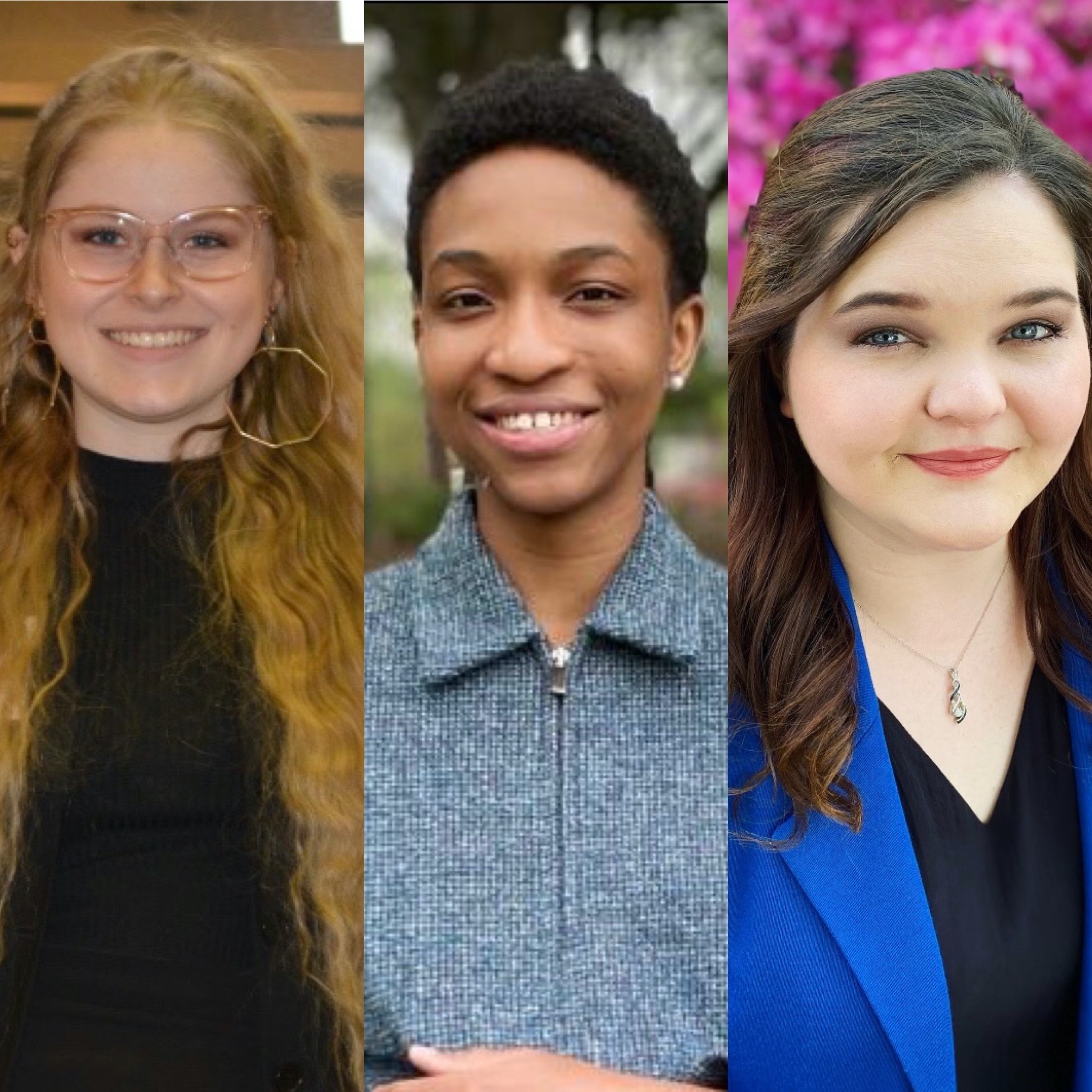
Ambitious student research collaborations with faculty members often lead to much more than good grades. The mentorships encourage professional growth, confidence and creativity, even in the midst of a pandemic. Georgia Southern University’s Spring 2021 Honors Research Symposium, which is being held virtually April 26 through April 30, will showcase faculty-student partnerships through a broad range of scholarly and creative research projects produced by more than 100 honors students across multiple disciplines on the Statesboro and Armstrong campuses. A few of the presenters include: Chelsea Riley, a triple major in international studies, political science and Spanish, worked with political science and international studies professor Srobana Bhattacharya, Ph.D., on her thesis, “The Culture Gap: The Role of Culture in Successful Refugee Settlement.” History and English major Jacey Thomas, mentored by associate professor of history Alan Downs, Ph.D., will present, “Irish Rock Music amid a Time of Troubles: Thin Lizzy and U2 as a Bridge During a Time of Division.” Biology major Susan Ihejirika’s presentation, “A Forward Genetic Screen to Identify Human Genes of Interest and Their Roles in Ovarian Cancer,” was guided by biology assistant professor Dongyu Jia, Ph.D. The Honors College, as the university-wide center for excellence in undergraduate education, plays a crucial role with undergraduate research at Georgia Southern. Since the beginning of the College, students have been required to complete honors theses or capstone projects. The faculty-mentored projects have spanned traditional research models, applied research and creative activities in all academic colleges and majors. “Through faculty-mentored research and scholarly activities, honors students create new knowledge and the Honors Research Symposium is the venue where we share it with the broader scholarly community,” said Honors College Dean Steven Engel, Ph.D. “ I am proud of the fact that they have been able to complete these projects despite the challenges of the past year.” Presentations will be posted on YouTube and the comments section will be open for audience engagement with presenters. If you're a journalist looking to learn more about this year’s Honors Research Symposium — simply reach out to Georgia Southern Director of Communications Jennifer Wise at jwise@georgiasouthern.edu.

With billions of cicadas set to emerge from the ground this spring, etymologist and professor of biology Dr. Vikram Iyengar is looking forward to what he calls “this rare opportunity” for scientists and onlookers alike. Scientists are referring to this massive group of cicadas resurging in North America as “Brood X,” since they are the tenth group to emerge since 1898, when scientists began tracking the cycle. “Some cicadas are annual (the ones we hear every summer), but the largest broods come out every 13 or 17 years,” Dr. Iyengar explains. “Some have guessed that, since most cicada predators (small rodents, etc.) have 4-year cycles, having 13- or 17-year cycles offsets that, making it hard for these predators to “predict” when the cicadas will reappear.” Dr. Iyengar reinforces that these clever bugs are nothing to be too concerned about. “There isn’t much you can ‘do’ about them…they will just be ubiquitous for a couple weeks, so we should all just take it in and try to enjoy this.” In the Philadelphia area, Dr. Iyengar expects there to be “thousands of cicadas [near Villanova’s campus alone].” He continues, “They are really just going to fly around and call loudly.” As the Northeastern United States prepares to enter the third summer of an infestation of spotted lanternflies, Dr. Iyengar “unfortunately” doesn’t think that it will do much long-term damage to the invasive lanternfly populations, “given that [the cicadas] are only around for a short period.” There might be an upside, however. “cicadas also feed on plant juices (like the lanternflies), so there should be a brief period where the cicadas outcompete the lanternflies.” Though it’s difficult to predict when exactly Brood X will make their appearance, Dr. Iyengar says that for those living in the region, “it could make for a very memorable event!” To speak with Dr. Iyengar, email mediaexperts@villanova.edu

Toolkit is easily incorporated into any laboratory science course Wilmington, Del., April 1, 2021 – St. Georges Technical High School in southern New Castle County, Delaware is the first high school in the United States to use ChristianaCare Gene Editing Institute’s innovative CRISPR in a Box Educational Toolkit™ in a science class. CRISPR in a Box brings to life the much-heralded CRISPR gene editing technology – the “genetic scissors” that allow scientists to edit DNA. The toolkit is designed for educational sessions in secondary and post-secondary schools and is suitable for remote learning. “Gene editing is the future of medicine,” said Eric Kmiec, Ph.D., director of ChristianaCare’s Gene Editing Institute. “Our partnership with the Delaware Department of Education will help cultivate the next generation of genetic scientists and enhance Delaware’s position as a leader in the biosciences.” “We are thrilled that students at St. Georges Technical High School will be the first In the United States to experience a live demonstration of CRISPR gene editing using our Innovative CRISPR in a Box educational toolkit,” said Siobhan Hawthorne, Education and Community Outreach leader at ChristianaCare’s Gene Editing Institute. “This toolkit will provide STEM students with a visual understanding of how the exciting CRISPR technology can unlock medical treatments to improve lives.” Delaware Secretary of Education Susan Bunting praised her department's partnership with ChristianaCare's Gene Editing Institute to develop the “Seeds of STEM” course that teaches high school students about gene editing. “Gene editing approaches diseases in new ways and will have significant impact in the health care and agriscience fields,” Bunting said. “This is a great example of an industry and education partnership investing in youth by providing hands-on knowledge and skills around emerging technology.” “We are so fortunate that ChristianaCare’s Gene Editing Institute reached out to our program to plan a high school ‘first’ opportunity with this new CRISPR experiment,” said Danya Espadas, one of the St. Georges biotech teachers. “Giving students the chance to use a cutting-edge, 21st century tool for medicine in their own high school lab – to have that technology at their fingertips – transcends what they see in a textbook or a video. By being able to do it themselves, it makes it real for them.” Espada said the experiment focuses on editing a gene of a non-infectious E.coli bacteria to become resistant to an antibiotic, thereby allowing researchers to create a new class of antibiotics that cannot be overcome by bacteria that are gene resistant. “We’re talking about eventually saving lives, here,” she said. “What can be more important than that?” The tools in CRISPR in a Box have been designed based on the pioneering discoveries of the Gene Editing Institute that are currently being used to explore next-generation medical therapies and diagnostics for diseases, including lung cancer and sickle-cell anemia. Component items in the toolkit include the CRISPR/Cas complex, a target DNA molecule, a mammalian cell free extract and a synthetic DNA molecule. All materials in the kit are safe, synthetic materials. There are no live cultures or viruses involved. The kit is meant to provide a hands-on demonstration of CRISPR’s capabilities, and not allow for manipulations of living organisms. “The kit is easy and fun to use,” said Kristen Pisarcik, research assistant at the Gene Editing Institute who has taught students at Delaware Technical Community College which first used the toolkit. “In a short period of time students will reliably and successfully complete the laboratory activity and be able to see the results of gene editing,” she said. Since the foundations of the kit touch upon key themes in biology, it can be readily incorporated into practically any science or biology course with a laboratory component, “One of the beauties of CRISPR in a Box is that there is no need to purchase specialized equipment. If a teaching lab can support bacterial cultivation, it can perform the in vitro gene editing lab activity,” Pisarcik said. CRISPR in a Box is the evolution of a partnership between the Gene Editing Institute, Delaware Technical Community College and Rockland Immunochemicals that began in 2017 with a National Science Foundation grant to develop the first-ever gene editing curriculum for community college students. Video and photo collection of first class in U.S. to use CRISPR in a Box™ educational gene editing toolkit. About ChristianaCare’s Gene Editing Institute The Gene Editing Institute, a worldwide leader in CRISPR gene editing technology and the only institute of its kind based within a community health care system, takes a patient-first approach in all its research to improve the lives of people with life-threatening disease. Since 2015, researchers at the Gene Editing Institute have been involved in several ground-breaking firsts in the field, including the development of the first CRISPR gene editing tool to allow DNA repairs outside the human cell which will rapidly speed therapies to patients and a unique version of CRISPR called EXACT that reduces the number of off-target edits to other areas of the genome, which is vital for further research and patient applications. Its researchers are currently developing a patient trial for lung cancer using CRISPR and employing the technology to combat the COVID-19 pandemic. About the biotech program St. Georges Technical High School The Biotech career program of study at St. Georges Technical High School is the first such program offered in a Delaware high school. With two teachers and approximately 100 students in grades 10-12, the program presents advanced content in biology and chemistry with opportunities for students to learn basic laboratory techniques and procedures and to maintain and operate common instruments and equipment used in a biotechnology laboratory. St. Georges is a comprehensive career and technical high school with 1,100 students who study in one of 16 different career pathways.


Kids in School: 3 Feet Apart or 6 Feet?
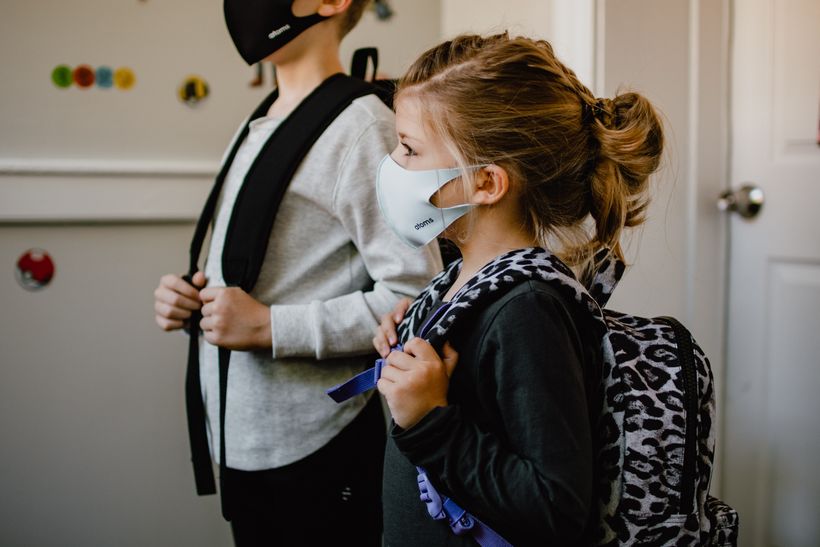
The Centers for Disease Control and Prevention (CDC) recently published updated guidelines for elementary schools, "now [recommending] that, with universal masking, students should maintain a distance of at least 3 feet in classroom settings" as opposed to the previous recommendation of 6 feet. While many have had strong reactions for and against this updated guidance, immunologist Joseph Comber, PhD, an associate teaching professor of biology at Villanova University, wants to add nuance to the conversation. On the one hand, Dr. Comber notes, when the CDC updates health and safety guidelines, the public can trust that as more information and data become available, the science behind the updates becomes more accurate. He stresses that studies "showed no difference in transmission between kids kept 3 feet apart or 6 feet apart in schools." Plus, Comber says, "we already know that kids younger than 10 and 11 are less likely to spread the virus than older kids and adults." However, Dr. Comber cautions that the subjects of the study followed "strict mask guidance and adherence to masking. We don't know what happens if schools enforce 3 feet of distance but are not strict with masking." He also points out that where the study was done can have an impact on the results. Comber emphasizes that "community spread is most important to the specific community and, as we've seen so far, different states and regions can spike with infections at different times." He wonders "if this is especially true in areas that have higher virus circulation than others." Dr. Comber notes that these guidelines are for elementary schools only, with one rather large caveat: "children are increasingly being infected." Another concern with these shifting regulations is whether they will impact public trust. Villanova professor Jie Xu, PhD, is an expert on science and health communications. Her concern about this change is minimal "because science is evolving." She emphasizes that "we need to be able to revise conclusions when new evidence comes in," and she sees the country's "highly politicized environment" as something to be taken more seriously, when it comes to public health. Dr. Xu cites "rising distrust in authorities and institutions (which has been going on for quite some time)" and notes that, when it comes to the nation’s children, in-person versus virtual schooling is a "highly charged issue." In the end, according to Dr. Comber, "it remains to be seen what happens when kids are packed 3 feet into classrooms on a broad scale."