
Experts Matter. Find Yours.
Connect for media, speaking, professional opportunities & more.
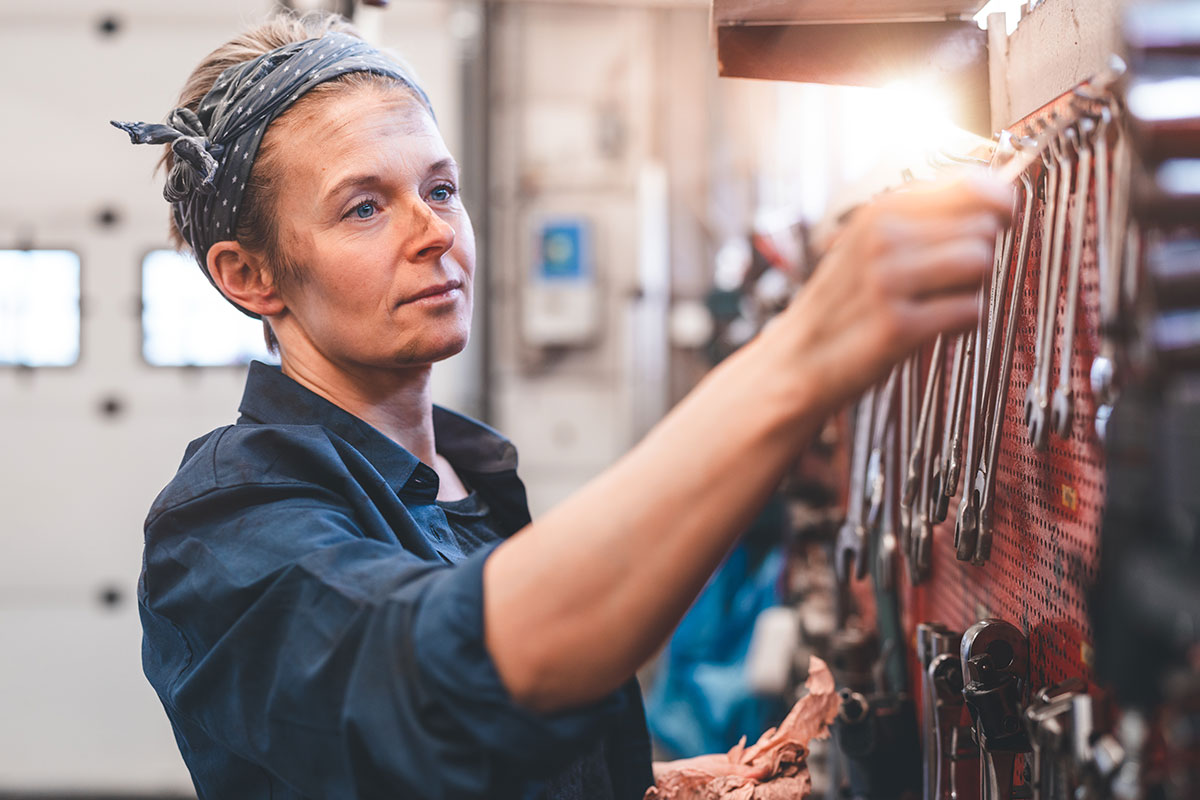
Social class has a significant role to play in career success in the United States. A growing body of research is shedding disquieting light on the extent to which working class Americans face discrimination in recruitment, pay and promotion – despite having a college degree. This demographic is up to four times less likely to get hired, 34% less likely to accede to leadership roles, and earns around 17% less on average than counterparts from middle or upper-class backgrounds. But while research is starting to document how class can impede or accelerate professional success, it remains unclear why these discrepancies exist. What are the mechanisms or dynamics at play that make it so much tougher for working class people to succeed than others? Goizueta Business School Assistant Professor of Organization & Management Andrea Dittmann has an interesting hypothesis. She believes that employees from different backgrounds can bring inherently different strengths and weaknesses to the workplace; advantages and disadvantages that speak to certain norms governing how we think about work and leadership. And it boils down, she says, to the way we work with others. “People from working-class backgrounds—those with blue-collar parents, who might be the first in their family to get a college degree—typically relate a certain way to other people. They are better connected to others, more team-like in their approach, than their middle-class counterparts who see themselves as more independent or unique,” says Dittmann. This team spirit could be working against lower-class employees, she says, in the sense that they see themselves or are perceived by bosses as being less adept at working autonomously or as individuals within organizations; and are therefore viewed by others as less poised to advance into roles of greater responsibility. On the flip side, this very capacity to work well with other people could actually give working class employees an advantage in team-based activities or cultures; an advantage that might translate into concrete benefits for organizations. To put this to the test, Dittmann conducted a series of studies aimed at unpacking how individuals perceive themselves within the context of work, and at the interactions that occur between employees and the workplace. Among these studies were qualitative interviews with MBA students from different social class backgrounds about their experiences navigating white-collar workplaces after graduating from college. She also ran a number of experiments to assess how well working-class people performed in teams and individually, and how environments that prioritize collaborative dynamics or interdependence might produce better experiences and outcomes for employees than environments geared to working individually or independently. A full article detailing Dittmann’s work is attached here and offers very compelling research showing how social class plays out in the workplace. It covers important aspects such as: The Catch-22 of Working Well with Others “It’s a kind of catch-22. Working class kids don’t make it into the gateway settings of school or college as much as middle-class kids in the U.S. They are significantly underrepresented in leading business schools like Goizueta, at roughly 15% of the student population,” she notes. “So, the higher-educational context—the talent pool for corporate America—is very much geared to a different social demographic and dynamic; one that inherently favors independent work ethics and approaches and sees them as the norm. Other ways of working, collaborating, and contributing risk are being undervalued as much as they are underrepresented.” When Considering Diversity, Companies Stand to Benefit “We know that companies that are more diverse perform better than others, and diversity needs to extend to social class. What my research and others are showing is that people from a working-class background tend towards behaviors that are more relational, that they are better at working together. If they fail to make it into the workforce in a more representative fashion, companies are basically missing out on opportunities to form better teams.” Faculty research like Dittmann’s is a critical element in Goizueta Business School’s drive to develop principled leaders who are better prepared to engage in the business of tomorrow. If you are interested in learning more, then let us help. Andrea G. Dittmann is an Assistant Professor of Organization & Management at the Goizueta Business School. She is an expert in the areas of diversity and inequality, particularly employees' social class backgrounds, aiming to promote equity and inclusion at work. Dr. Dittmann is available to speak with media about this research – simply click on her icon now to arrange an interview today.


New CBS Sitcom "United States of Al" Taps Experience of Social Work Student and Veteran
On April 1, 2021, CBS premiered United States of Al - a new comedy from producer Chuck Lorre (Two and a Half Men, Big Bang Theory) about a Marine combat veteran struggling to readjust to civilian life and the interpreter who served with his unit in Afghanistan and has just arrived to start a new life in America. The show explores the relationship between these two men and how they help each other adjust to their new lives. So, what does a CBS sitcom have to do with the USC Suzanne Dworak-Peck School of Social Work? Enter Master of Social Work (MSW) student Josh Emerson, who landed in the right place at the right time through his field internship at No One Left Behind. No One Left Behind (NOLB) is an all-volunteer, national nonprofit organization that supports recipients of the Special Immigrant Visa (SIVs), and those pursuing an SIV. The founders of No One Left Behind believe the U.S. has a moral obligation to protect these interpreters, and their families, who served side-by-side with American soldiers. Emerson, a veteran of the U.S. Army who deployed to Iraq and Afghanistan, is very familiar with Iraqi and Afghan interpreters. “I went on missions with these interpreters, got to know them, built relationships with them,” he said. “I was so very happy to be able to work with them in this capacity. In addition to providing resources for SIV ambassadors living in the United States, NOLB advocates on behalf of the SIV population to the executive and legislative branches of government provides subject matter expertise to the media, and partners with U.S. businesses to provide opportunities for what they call “this next generation of Americans.” Alea Nadeem, MSW ’15, is a board member of NOLB and reached out to USC with a field internship opportunity for social workers to do macro-level clinical work in a nonprofit setting. Nadeem became Emerson’s field instructor. “What Josh has brought to No One Left Behind has never been brought to the board before,” Nadeem said. “They now see the value in social work.” Bringing the issue to a larger audience Chase Millsap, a consultant and writer on United States of Al, is a former board member of No One Left Behind. “I am still very supportive, impressed and proud of all the work the NOLB team does on a daily basis,” he said. A veteran of the U.S. Marine Corps and U.S. Army Special Forces, he holds a master’s degree from USC Sol Price School of Public Policy. "USC helped me to learn the tools about how to connect entertainment and policy,” Millsap said. “United States of Al is a perfect example of those two worlds coming together in a powerful (and funny) way.” Millsap’s idea was to bring the issues around SIVs into America's living rooms, in a way that would make them relatable. Emerson’s experience as a veteran, his clinical and project management skills obtained through his social work studies and his stellar ability to work one-on-one with SIV recipients and applicants allowed him to inform the show’s stories with a wide breadth of knowledge. Emerson joined James Miervaldis, chairman of the NOLB board, in helping the writers and actors on the show understand the SIV issues, the ways in which NOLB provides assistance and advocacy, and sharing funny stories of cultural differences between Afghans and Americans. Emerson and Miervaldis have also been able to include some of NOLB’s SIV ambassadors in the process, those with an SIV who have already established themselves in the U.S. and are contracted by NOLB to help others assimilate. “They’re talking to the exact people they're portraying,” Emerson said. Nadeem sees Emerson’s contribution to the show as another platform through which to educate. “There are a lot of different tentacles to social work, and it may not seem like the most obvious place in TV and film, but it is,” she said. The show itself touches on everything social workers value ― service, challenging social injustice, dignity and worth of a person, the importance of human relationships and integrity. “This just makes so much sense that a social worker would be involved in this show because that's what we're always trying to communicate to a larger audience,” Nadeem said. “Through this show, you can make a greater impact for these folks to sort of assimilate them to be American citizens, and then also have the whole world appreciate their culture and appreciate what they've done for our nation to keep U.S. service members safe.” A valued member of the team Emerson, a father of five who resides in New Hampshire, knew he wanted to work with veterans after leaving military service. He felt that an MSW was the most versatile degree for this and chose the USC Suzanne Dworak-Peck School of Social Work because of its military social work track. “I think to be a good social worker you need to have experience in life,” Emerson said. “To have seen some things, or been through some things, to understand the population you're dealing with and what they're going through.” When Emerson began his internship at NOLB in 2020, Miervaldis immediately began working with him to focus on SIVs who recently had come to the United States. The first case Miervaldis assigned to Emerson was an SIV family with two young children who needed emergency surgery at a specialty hospital in Washington D.C. “This SIV packed up his family, his pregnant wife and the two kids, used up all his money to take them by bus from Texas to D.C. in the middle of a pandemic and ended up in a bad part of town,” Miervaldis said. As the SIV’s assigned caseworker, Emerson established a relationship and trust with the SIV, helped him obtain safe housing and a job interview, and coordinated details for the children’s surgery with the hospital. “He’s gone and done everything,” Miervaldis said. “We are very proud of Josh’s initiative and empathy for a family in such need. No One Left Behind is the safety net for our allies.” Last year, NOLB helped over 600 families with visas and resettlement. “Josh has exceeded all our expectations and done so while communicating with clients who speak in broken English, Dari and Pashtu, struggling during a pandemic,” Miervaldis said. “His professionalism and empathy are great credits to USC. We would not be where we are today without him. That is not hyperbole.” Miervaldis hopes NOLB will have more social work interns from USC to continue Emerson’s work. For him, Emerson’s project management skills have been the greatest asset, creating a new process for how NOLB provides help for SIV families. “We told Josh, you're a pathfinder, you're a pioneer,” Miervaldis said. “We need to figure out very quickly what works, what doesn't work, and he took it and said, ‘okay, point me in the right direction.’ He’s very much valued as a member of the team.” From advocacy to TV No One Left Behind gets about 20 messages every day from Iraqi or Afghan interpreters who served with U.S. forces in their countries, and who now receive daily death threats from the Taliban. “They're not allowed to live in their homes or their neighborhoods anymore because they helped the U.S.,” Emerson said. “Now the U.S. is withdrawing from all these countries, and the Taliban and terrorist activities in general are picking up, and these people are getting pressured and killed. NOLB has over 300 cases of SIVs who have been killed waiting for their visas.” Emerson hopes that the added exposure from United States of Al will bring awareness particularly to service members about what these interpreters are experiencing and how they can help. One of the requirements for an SIV is a letter of recommendation from the U.S. service member with whom they served, and those have been the most difficult items for SIV applicants to secure. “I have been able to provide some input to what should be addressed in the show,” Emerson said. “It's interesting to see how advocacy on an issue can turn into something this large scale.” See more news from USC Suzanne Dworak-Peck here.

How worried should you be about coronavirus variants? A virologist explains his concerns
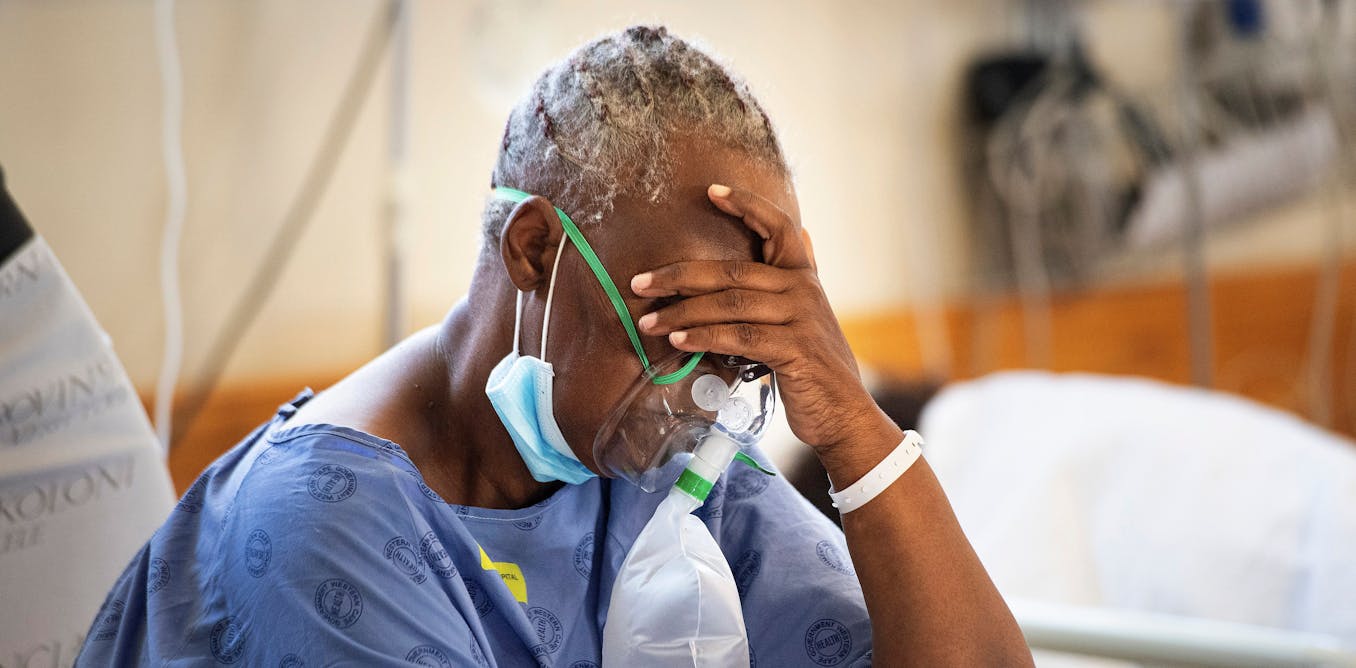
Paulo Verardi, Associate Professor of Virology and Vaccinology at UConn, was asked to lend his expertise and opinion to The Conversation about coronavirus variants and just how concerned Americans should be about the emergence of variants and the speed at which they are spreading across the country and the globe. Spring has sprung, and there is a sense of relief in the air. After one year of lockdowns and social distancing, more than 171 million COVID-19 vaccine doses have been administered in the U.S. and about 19.4% of the population is fully vaccinated. But there is something else in the air: ominous SARS-CoV-2 variants. I am a virologist and vaccinologist, which means that I spend my days studying viruses and designing and testing vaccine strategies against viral diseases. In the case of SARS-CoV-2, this work has taken on greater urgency. We humans are in a race to become immune against this cagey virus, whose ability to mutate and adapt seems to be a step ahead of our capacity to gain herd immunity. Because of the variants that are emerging, it could be a race to the wire. April 08 - The Conversation Dr. Verardi discusses the the five SARS-CoV-2 variants we all need to be watching, the rates of transmission and the severity of symptoms, and why we all need to remain on guard and get vaccinated. It is a great article, and if you are a journalist looking to cover this topic, then let us help with your stories. Dr. Paulo Verardi is a virologist who specializes in vaccine research and development and is a member of the Center of Excellence for Vaccine Research. Dr. Verardi is available to speak with media regarding variants and COVID-19 – simply click on his icon now to arrange an interview today.


How well do you know your sense of touch? UMW’s Sushma Subramanian explains it all in new book
The University of Mary Washington’s Sushma Subramanian’s latest book, How to Feel: The Science and Meaning of Touch, is now available on bookstore shelves and online retailers across America. The journalist, assistant professor and author was recently featured in Discover Magazine, where she shares her inspiration for the book and sits down to answer to serious questions about science and the need to touch. Several years ago, Sushma Subramanian was procrastinating on her work when she noticed her desk was a bit wobbly. It was a rather mundane moment, she recalls, and one that’s only a vague memory now. But as she began to fiddle with the shaky tabletop, the science journalist found herself noting how the experience felt: the grain of the wood against her fingers, the pinching of her skin and the sensation of her muscles straining to lift the desk. As Subramanian explains in her book, How to Feel: The Science and Meaning of Touch, it was a moment when she began to consider how little she knew about this multifaceted sense — “a capacity,” she writes, “that never shuts off.” The questions kept forming, eventually leading Subramanian, a professor of journalism at the University of Mary Washington, to write an article for Discover in 2015 about the development of tactile touch screens — which use haptic technology, such as vibrations in handheld devices. In her latest work, she dives deeper into that world, but also explores the limits of our sense of touch and what makes it so versatile. Discover caught up with Subramanian to talk about touch in the age of COVID-19, the future of tactile research and how we experience the sense differently across personal and cultural barriers. March 08 - Discover Magazine Her interview is also part of the attached article and is a very compelling read. If you are a journalist looking to speak with Sushma Subramanian about her latest book, then let us help. Simply click on Sushma’s icon now to arrange a time and interview.



Trump’s reaction to defeat further confirms urgency for school focus on social-emotional skills
Sandra Chafouleas, psychologist and behavioral health expert from the University of Connecticut, weighs in: Imagine what would happen if a preschooler didn’t “use their words” when they got upset about sharing, instead stomping around yelling while adults simply observed in silence. Think about what the school climate would feel like if a student punched another during recess while others watched without seeking help. Now consider the actions – and inactions – by Donald Trump on January 6 as the electoral vote counts occurred at the U.S. Capitol. Those behaviors show a desperate need for social emotional learning. According to the Collaborative for Academic, Social, and Emotional Learning (CASEL), social emotional learning involves five core competencies: self-awareness, self-management, social awareness, relationship skills, and responsible decision-making. Trump did not demonstrate these competencies when the election didn’t go the way he wanted. Connecting these school scenarios and Trump’s behaviors is not intended to contribute to the ever-mounting list of recommended consequences that could result from his fueling the insurrection that our nation has just experienced. It does bear noting, however, that if Trump were a Black teenager, he most certainly would have received exclusionary disciplinary action such as suspension and perhaps even expulsion from school. The purpose in connecting the two scenarios is to draw energies toward actions that propel us forward in bridging a divided nation. The responsibility for forward movement falls to future generations, which means it is critical that we pay attention to what happens in schools right now. We need to demand that policies and practice — and necessary resources — are put in place to strengthen school capacity to support students on their path to holding responsibility for democracy. Many excellent resources have quickly appeared to assist educators in teaching about the insurrection. Discussion guides are available to facilitate defining key terms, contrasting events through a social justice lens, and comparing justifications for action using fact checking. Other resources have been released that help adults talk about violence and support emotional safety of kids. What seems to be less prominent, however, is a direct connection to the social, emotional, and behavioral skills that we have just witnessed are missing. Education systems have begun the work of acknowledging their historic roles in contributing to exclusion, inequity, and intolerance of differences. Educators are working hard to turn the tide toward promising alternative approaches. Prominent among those approaches is a focus on social emotional skills. In either classroom scenario above, educators would be jumping into discussion about what supports are needed to address student needs. Social and emotional well-being fulfills us throughout every stage of life – integrating those skills should be in all that we do as adults to model, teach, and give feedback to our children. Of course schools must teach academic content areas and have high expectations, but there is tremendous potential to increase capacity to embed exploration, active practice, and positive feedback about social and emotional skills within each corner of the day. As one example, history professor Kellie Carter Jackson writes about challenges in teaching violence in political history. The author describes the need to question how political violence should be labeled, which could reveal an expression of unmet need by marginalized people. Learning through this analysis offers social and emotional parallels, such as examining biases, recognizing emotions, and examining integrity. As another, Facing History and Ourselves offers a classroom resource specific to the insurrection. Activities reference principles of social and emotional learning, such as steps for educators to practice self-awareness and relationship skills by examining their own emotions and perspectives. Student self-management and social awareness builds through reflection activity that builds civic agency. All of these examples offer incredible opportunity in social and emotional learning that could be advanced with more explicit connection. Entrenching social and emotional learning within the school day beyond this immediate teachable moment also is needed to enable sustained effort. CASEL identifies adults as key to social emotional strategies that will maintain safe, supportive, and equitable learning environments for this moment in history. To do so requires a strong collection of social, emotional, and behavioral education policies and practices. Responsibility for urgently resourcing this collection rests within each of us, right now, to ensure future generations who can and do take part in a resilient democratic nation. Dr. Chafouleas is licensed psychologist and Distinguished Professor, with expertise in school psychology and school mental health at the University of Connecticut’s Neag School of Education. If you’re a reporter looking to speak with Dr. Chafouleas about this topic – let us help. Simply click on her icon to arrange an interview today.


The Alexa Effect: How the internet of things (IoT) is increasing retail sales
Imagine this scenario. You’re out of coffee but with the click of a button or a simple voice command, you reorder a two months’ supply that will arrive the same day. And that almond milk you like? Well, imagine your fridge already knew you were running low on supplies and independently sent the order to restock before you ran out. The stuff of science-fiction until only recently, internet of things (IoT) technology is beginning to change the way we live and work. Simply put, IoT is a system of interrelated devices—things that can include gadgets, digital objects, or machines, wearables and so on—which have the capacity to send and receive data over a network without human agency or human interaction. As a technology, IoT is novel, and it’s poised to reconfigure a range of sectors and industries—among them, the world of retail. Amazon is a leader in the consumer-facing space with an ecosystem of apps like Alexa, Fire TV, and the now-defunct Dash Button. Meanwhile, tech-savvy retailers are using IoT to facilitate operations. Smart shelves in stores can detect the status of perishable goods or inventory requirements; radio frequency identification (RFID) sensors can actively track the progress of produce through the supply chain. Retailers can even use IoT to send customers personalized digital coupons when they walk into the store. As IoT continues to gain traction around the globe, the potential for efficiency-boosting innovation in retail is clear. Less clear, however, is its actual impact on consumer choices and behaviors. Sure, IoT can save time and mental effort, but how does that translate into real-world business outcomes? This is the question that underscores new research by Vilma Todri and Panagiotis Adamopoulos, both assistant professors of information systems and operations management at Emory’s Goizueta Business School. They were keen to understand whether consumer behavior is significantly changed under the regime of this new technology as it continues its roll out across the world. Specifically, they wanted to know if IoT technology actually increases demand for products. And it turns out that it does. “IoT technology in retail is really in its infancy, so understanding its impact on users and business is key,” Adamopoulos said. “We wanted to shed light on these dynamics at this early point to spark interest and generate more debate around how retailers can leverage this technology.” Together with Stern’s Anindya Ghose, he and Todri put together a large data-set with information about sales of certain products in countries with existing IoT retail markets and in others where the technology has not yet been introduced. “We needed to take into account these sorts of variables to really understand the effect,” Todri said. “So, we had our control group of non-IoT retail markets, and we were able to compare sales data for the same products in countries where the technology has been adopted.” The researchers also controlled for time trends, looking at the impact on sale prior to and post IoT adoption. “Looking at the data over time and pinpointing the exact moment when a product has been made available for sale via IoT sales channels across different countries and at different moments, we were able to infer the effect of the technology on product sales,” Todri said. In total, they looked at sales for the same or similar products in six countries between 2015 and 2017. They also compared sales across different retailers. “By analyzing the same sales information for different products in different markets using different channels across the world, we can see differences in the data that can only be attributable to this new technological feature,” Adamopoulos said. And the differences are significant. The concept is fascinating, and if you are interested in learning more, a complete article about this topic is attached: If you are a journalist or looking to learn more about IoT, our experts can help. Vilma Todri and Panagiotis Adamopoulos, both assistant professors of information systems and operations management at Emory’s Goizueta Business School. Both experts are available to speak with media; simply click on either expert's icon to arrange an interview today.


COVID-19 has raised the stakes for boards, argues Brunswick’s Paddy McGuinness, former UK Deputy National Security Adviser. We now live with COVID-19. Fewer business leaders are making the mistake of talking about “post-COVID” or “when this is over.” The better of them have factored in COVID-19 related constraints to their medium-term plans and are even thinking about how the world may change in the long-term. They are building capacity to take advantage of an early recovery within months, yet they are modeling and encouraging grit for current and indeed harder conditions to last much longer. In the past, when health emergencies—say the Spanish Flu pandemic of a century ago—subsided, there was a greater return to economic normality than had been expected during the crisis. Extreme events often heighten or even distort our perception of wider risks. That old journalistic cliché “one thing is certain, nothing will be the same again” is rarely true. But the pandemic has created the expectation that businesses will be resilient—that they will be able to respond to an event and recover to the state prior to the event, incorporating the lessons learned into business practice. Many business leaders feel they have not done too badly responding to a once-in-a-hundred-years event. Business Continuity Plans (BCPs), which were understandably sketchy for pandemics, were pulled out of second-line risk management and owned and improved in real-time by executive committees. The transition to remote working and, at least in Asia and some of Europe, the gradual return to offices again, has been managed. Services and even vital production have been maintained. Leaders have absorbed the personal and collective strain of this. Good reason then for some satisfaction as they delegate certain COVID-19 responses and focus on the economic tsunami that follows the pandemic. The public seems to largely agree with business leaders’ assessments. While many national and scientific leaders find themselves beset by “blamestorming,” corporate executives have been given more slack. They weren’t expected to have foreseen a pandemic. Their sometimes scrabbling responses are understood. However, behind this lucky pass lurks an expectation that businesses will now be more prepared for crises and foreseeable risks. Resilience cannot be relegated to BCPs and traditional risk-management structures. It is categorically a board issue—regulators, lawyers, politicians and the public say so. The reputations of individual board members and the collective are at stake. Think how fast leaders have been expected to respond to the issues raised by the Black Lives Matter movement. Alacrity will be required. The speed and scale of decisions in response to the pandemic leaves board committees playing catch up to assure themselves that risks have been managed. The move to working from home has been rapid, so too the digitization of the business. Some see these as new, streamlined ways of working, yet the negative consequences are not yet fully apparent. Working from home, for instance, is attractive to some employees as well as chief financial officers, who may relish the chance to reduce fixed costs. Concerns about the impact on the coherence of the business’s culture, its productivity and innovation, the security of data held at home, hardships for those in difficult home conditions, and, indeed, the needs of the younger demographic who seem to favor a return to the office, need to be given due consideration. It may be a case of “decide in haste, repent at leisure.” Resilience is categorically a board issue—regulators, lawyers, politicians and the public say so. The reputations of individual board members and the collective are at stake. Boards also need assurance that the business has regained its balance and can manage parallel or interrelated crises. In recent weeks we have been helping several clients respond to major cyber events unrelated to the COVID-19 outbreak. They have probably needed more external support than otherwise because their leadership capacity was inevitably denuded by pandemic response. And they have benefitted from us already knowing each other and having experience of how to work together in crisis. After the Great Financial Crash there was a heavy focus on balance-sheet resilience and having the requisite finance skills on boards. Business leaders are now beset by advice on the heightened obligation to be resilient in much a broader sense of the word. Regulators, lawyers and risk consultants are sharing checklists of factors for executive committees to take into account when managing risks and for boards to oversee. The challenge here is defining what changes your specific business needs and how to actually bring those about. Shareholders will be expecting a judicious move away from “just in time” systems to ones that can endure foreseeable risks. This isn’t just about potential legal liability or reputational risk. This is about setting your business culture for success. Undermanage risks and the business is wide open to damage from foreseeable shocks with all the loss of confidence and capability that follows. Overmanage and the business losses its competitive edge just when there is opportunity in the recovery. In order to track broader resilience, boards and their committees will need access to a wider set of skills and insight. Board membership emerges as an obvious area of focus. Yet each board will take more time and belonging to too many—“over boarding”—may well be unacceptable. Risk methodology and information flows will also have to be reviewed, alongside how to strengthen board members’ awareness and skills. Before the pandemic, chairs and CEOs were already wrestling with this for their difficult-to-price risks, such as data, technology risks and cyber. Individual experts on boards created siloed responsibility for what should have been a shared risk. A focus on process and method often led to a focus on the management, rather than genuine oversight of, risks. External advice didn’t always help (as we have learned from the plethora of competing advice around COVID-19). No single intervention will meet the new standard for resilience. Nor will simple prescription. A broader and more articulated approach is required if governance is to maintain stakeholder confidence and corporate reputation.



Cheap Energy Can Be a Bridging Fuel Needed to Get to the Endpoint of Renewable Energy Sooner
Far from banning fracking, the Biden/Harris ticket appears to be allowing it if not tacitly supporting it. This is not a contradictory stance to their aggressive renewable energy policy, according to Scott Jackson, a visiting professor of chemical and biological engineering at Villanova University's College of Engineering, who previously directed the microbial enhanced oil recovery program at DuPont Corporation. "Rather, it is recognition that cheap energy—especially natural gas produced as a result of fracking—can be a bridging fuel needed to get to the end point of renewable energy sooner," Jackson says. No one can dispute that the share of our energy coming from less efficient/more polluting coal has dropped dramatically despite the current administration’s attempts at supporting the coal industry. The reason is obvious—cleaner burning energy (less CO2 emissions) from gas fired turbine generators make more economic sense. Gas fired turbine generators are economical at a smaller scale and provides an energy source that can be rapidly turned on or off at any time. This helps to counterbalance the intermittency of renewable energy and, in some sense; this has allowed greater adoption of renewable energy. The cheapest energy source on the planet is land based wind power. The market has responded to this and now renewables make up 19 percent of our electricity. This percentage was thought to be impossible just a few years ago. Wind power energy payback time (time needed to recoup the energy invested) is measured in months and not years, and investors understand this. A much greater share of renewables (wind and solar) is very doable and makes economic sense. Jackson notes that development of cheap energy storage technology will help and must be implemented once economies of scale are achieved, however, a national power grid capable of moving energy from the wind- and sun-rich Midwest to the West Coast and East Coast will improve the reliability of renewables to the point where as much as 70% of our electricity can be sourced renewably—without new storage capacity (2018 study by the National Renewable Energy Laboratory). Improvements in battery technologies and economy of scale are starting to drive down the costs of electric transportation and storage. Eventually, natural gas sourced power generation will not be competitive to renewables," notes Jackson. "Despite the current low price of gasoline, in part as a result of fracking used in oil fields, electric cars are far more economical to operate. Companies like BP, Exxon-Mobile and Shell recognize that they are energy companies and are pivoting to more renewable sources of energy. "Ultimately, our government has a responsibility to invest in the technologies of the future that make economic sense—as renewables do—and not support the more costly and outdated fossil fuel industry," says Jackson.


More than just money – what corporate America needs to do to motivate today’s workforce
In a modern workplace no longer characterized by rigid hierarchies and where power is more diffused, traditional methods of motivation may no longer be enough. We have come to understand the value of providing people with ‘intrinsic motivation’ – a sense of purpose, the importance of creative, interesting work, and maintaining work-life balance. We have naturally moved away from a sole dependence on monetary incentives. However, in a New York Times opinion piece, management author Alfie Kohn asserts that “science has confirmed” that monetary rewards amount to “bribes” that don’t work. Somehow this doesn’t ring true. Has science really confirmed this? Would businesses continue to incentivize performance with monetary rewards if they did not work? And aren’t we all, at least to some extent, motivated by money? To understand if Kohn is right, or if there is a more nuanced answer, Karen Sedatole, Professor of Accounting at Emory University’s Goizueta Business School says we need to look at patterns of human behavior. The classical economic theory, which gave us ‘homo economicus,’ assumes people always behave in a rational way and, as with Gordon Gekko in the ‘Wall Street’ movies, selfishness predominates. Findings from psychology and particularly behavioral economics have started to show this to be incorrect. In fact, people tend to make illogical choices contrary to self-interest. Our capacity to think – via a mix of deep reflective thinking and rapid automatic thinking – can lead us to what economists might consider to be irrational behaviors – albeit with the cognitive biases behind our thinking staying mostly predictable. Do monetary incentives work? We all value money, but our perception of its value is influenced by the importance that we also place on reciprocity and fairness, social norms, trust, and trustworthiness. When it comes to monetary rewards for performance the results will also greatly depend on the quality of the performance measures, along with the type of task being rewarded, and the type of reward. Contrary to Kohn’s assertion, Sedatole points out there are many real-world examples that show monetary incentives can deliver big performance and productivity improvements. In fact, if uncontrolled, bonus incentives can be too powerful a motivator, causing damage – as the UK’s PPI and the Wells Fargo mis-selling scandals both firmly attest. There is also strong academic evidence that monetary rewards can have a positive effect, and equally strong evidence that, when over-used, they can elicit bad behavior. Based on relevant academic research in this area, Sedatole identifies four core principles for the use of monetary incentives: Payment for performance can certainly lead to people making a greater effort than when they are rewarded by salary alone, but only if these core principles are followed: 1. Performance targets – Performance targets should be difficult to hit but not too difficult. 2. Performance metrics – The way performance is measured should be sensitive to the employees’ perceptions and sense of control. Employees should believe that their increased effort improves performance, improved performance leads to greater reward, and reward is valued. Metrics must be precise and not prejudiced by external factors. And, from the organization’s perspective, metrics should be set to meet its objectives. 3. Fairness and social norms – Monetary rewards must be seen to be fair and to comply across organizations. They should also conform to social norms. 4. Characteristics of the task – The efficacy of monetary incentives can depend on the nature of the task and to what extent the task provides intrinsic incentives. Here Alfie Kohn has a point; in some cases, monetary rewards tend to undermine intrinsic incentives. ‘Boring’ tasks have little or no intrinsic motivation, whereas creative tasks – the work of a physician, designer, scientist, etc. – are intrinsically motivating. Where there is intrinsic motivation money can be less relevant and in extreme cases can be seen to devalue the intrinsic factors. Professor Sedatole’s recent webinar: ‘Irrational but Predictable! When to Use Monetary Incentives to Motivate Employees’ explains her findings in further details: simply visit it to view and watch for here: If you are journalist covering this topic – Professor Sedatole is available to speak with reporters – simply click on her icon today to arrange an interview.


Let Your Brain Rest: Boredom Can Be Good For Your Health
The human brain is a powerful tool. Always on, the brain is thinking and dealing with decisions and stressors and subconscious activities. But as much as the human brain function has a large capacity, it also has limits. Alicia Walf, a neuroscientist and a senior lecturer in the Department of Cognitive Science at Rensselaer Polytechnic Institute, says it is critical for brain health to let yourself be bored from time to time. Being bored can improve social connections. When neuroscientists do studies looking at brain activity they often compare what areas are “on” when people do a specific cognitive task and when they are told to do nothing. Remarkably, there is extensive activity in the do nothing part of the experiment. This has led social neuroscientists to discover that we have what is called a default mode network, many brain regions that are on by default, or when we are not doing other things. It also turns out that when we are not busy with other thoughts and activities, we focus inward as well as on social interactions. Being bored can help foster creativity. Many scientists and artists have reported being inspired or solving a complex problem when they have actually stopped thinking about it. This eureka moment is called insight. Neuroscientists have shown different patterns of brain activity when people solve problems compared to by working through them step-by-step. Even the ancient Greek Archimedes is known to come up with his major finding relating to displacement of water while taking a bath. Additionally, being bored can improve overall brain health. During exciting times, the brain releases a chemical called dopamine which is associated with feeling good. When the brain has fallen into a predictable, monotonous pattern, many people feel bored, even depressed. This might be because we have lower levels of dopamine. One approach is to retrain the brain to actually enjoy these less exciting, and perhaps boring, times. Especially when we are young, our brains are able to adapt to new ways to think and behave. “Give boredom a try and see what your brain comes up with,” says Walf.

