
Experts Matter. Find Yours.
Connect for media, speaking, professional opportunities & more.
Pope Leo XIV Releases First Encyclical, “Magnifica Humanitas”
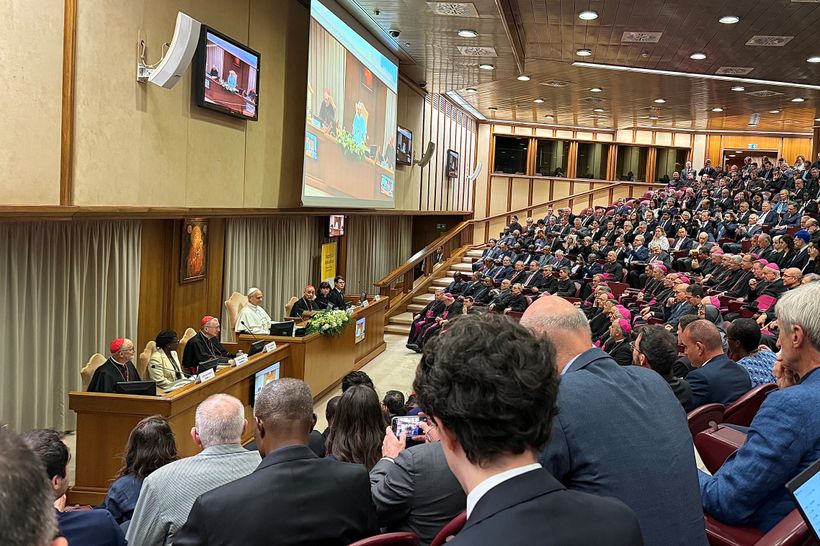
On May 25, 2026, Pope Leo XIV released his first papal encyclical, “Magnifica Humanitas: On Safeguarding the Human Person in the Time of Artificial Intelligence.” The letter—true to its title’s meaning of “magnificent humanity”—addresses how society, collectively, must preserve human virtues in a time of rapid technological advancement. The 42,000-word document features five distinct chapters, exploring various elements of the broader issue at hand and serving as a guidepost for moral and ethical use of technology, through the lens of Church teachings. It covers everything from the development and principles of Church social doctrine to technological responsibility, the culture of power, building civilization through love and preserving humanity through truth, work and freedom. “In recent years, it has become increasingly evident how rapidly and profoundly digitalization, artificial intelligence (AI) and robotics are transforming our world,” wrote Pope Leo in the encyclical’s introduction. “Technology should not be considered, in itself, as a force antagonistic to humanity. On the contrary… “Over the centuries, technological development has significantly improved the living conditions of humanity. At the same time, each phase of progress has also revealed the ambiguity of tools that can cause harm when not oriented toward the good… The power and prevalence of emerging technologies are interwoven into the fabric of daily life, shaping decision-making processes and deeply affecting the collective imagination: ‘Never has humanity had such power over itself.’ “[Most] people are watching and waiting, observing from afar and merely hoping for the best. For this very reason, crucial questions impose themselves on our conscience and can no longer be avoided: Where are we going? Toward what goal do we wish to orient ourselves? What direction should we choose as a people and as a human community?” What Is a Papal Encyclical? Popes have written more than 300 encyclicals—or “circulating letters”—since the mid-18th century. They were initially used to clearly communicate doctrine and guidance to priests throughout the world who were facing religious, political or social issues, which was especially useful as the world grew more interconnected and the Church grew larger. Beginning with Pope Leo XIII’s Rerum Novarum and continuing today, some papal encyclicals have been referred to as “social encyclicals” because they address a pervasive social issue through the lens of Catholic Social Teaching and are written not only for those within the Church, but laypeople as well. Some examples of those included Pope Saint John Paul’s 1987 Sollicitudo Rei Socialis on international inequality, and Pope Francis’ 2015 Laudato Si’ on environmental care and social justice. “[Pope Leo XIII and his successors] were developing a new way of teaching the world how to order itself according to Catholic principles, now translated into a vocabulary that would be intelligible to the larger world,” said Patrick Brennan, JD, Chair of Catholic Legal Studies at Villanova University Charles Widger School of Law, on LiveNow From Fox. “They try to address important social questions in ways that any person of goodwill can read and understand.” “Encyclicals contribute to our collective wisdom for how to live as community,” wrote Sally Scholz, PhD, professor of Philosophy at Villanova, in her recent contribution to Church Life Journal titled “What to Look For in Pope Leo XIV's First Social Encyclical.” “The principles and various themes they discuss offer guidance for day-to-day interpersonal interactions as well as for how to participate as a Catholic and as a “person of good will” at every level of social existence: in our families, our communities, our institutions, our states and in our ‘one human family.’” Observations From Magnifica Humanitas A New Twist on a Longstanding Issue While the types of technology being discussed in the letter—particularly artificial intelligence—are unique to our modern times, encyclicals addressing how to interact with contemporary technology are far from it. “Discussion of the relationship between humans and technology appears in many of the previous social encyclicals,” wrote Dr. Scholz in Church Life Journal. “It is a social phenomenon with so much promise but inspires so much fear for how it will change work and the workplace, communication, global trade, war and the family.” “Technology is integral to evolution. Understanding technology's relationship to human welfare means grasping its role within the flow of biological and human life,” wrote Sister Ilia Delio, OSF, PhD, the Josephine C. Connelly Endowed Chair in Christian Theology in the 2025 Global Sisters Report. What Pope Leo argues in his lengthy letter, boiled down to a few sentences, is that while technological advancements, and AI in particular, can be beneficial to society, they must never supersede human dignity, moral responsibility and the common good. A society that allows systems to replace human judgment, concentrate power or exploit workers risks dehumanization. For Jaisy Joseph, PhD, assistant professor of Theology and Religious Studies at Villanova University, particularly striking was something not written in the document itself, but rather spoken at the official promulgation of the letter in Rome. There, Pope Leo was joined in powerful reflection by Anthropic co-founder Christopher Olah. Olah analogized the current reality with bringing a fictional character to life, citing that while technical fields build the machinery of AI, “what character we choose, how it interacts with the world, how it ought to interact with the world— these are more clearly questions for the humanities, for religion, for philosophy, for society at large.” On that front, he then enlisted the help of the Church in addressing three pressing concerns related to AI and human flourishing, before ending with a request for the Church to continue to be an unyieldingly moral voice and informed critic. “The dynamic dialogue and discernment between Leo and Olah reflect a significant continuity with the Francis papacy,” Dr. Joseph said, referencing the late pontiff’s encouragement of “theology to adopt a transdisciplinary method that recognized how this discipline is part of a web of relationships among disciplines.” Technology Through the Lens of Augustinian Theology Throughout Magnifica Humanitas, Pope Leo’s ubiquitous thoughts and guidance on safeguarding humanity—particularly in the context of modern technology—are infused with references to the teachings of St. Augustine. “[Augustine’s teachings say] we need standards to guide our judgements and actions,” said Terence Sweeney, PhD, assistant teaching professor of Humanities at Villanova. “Pope Leo XIV, ‘a son of St. Augustine,’ offers us standards for how we judge our world in the age of AI. “One surprising standard in a document on Big Tech is that ‘a litmus test for social justice today is the treatment of migrants, refugees and those forced to move.’ Why this litmus test? Leo is shaped by Augustine’s rejection of communities of perfection where only the pure, powerful and perfect are welcome.” “Pope Leo beautifully aligns himself with traditional Catholic Social Teaching while grounding his vision in the theology of St. Augustine,” Dr. Joseph added. “The result is a groundbreaking defense of the human person in our new age of artificial intelligence.” Pope Leo, through a scriptural metaphor of the Tower of Babel, “resurrects Augustine’s famous warning that human history is a constant struggle between two loves fighting for our hearts,” Dr. Joseph said. He references how the builders of the tower tried to create “a single language, a single technology, a single direction” without reference to God. “The concluding paragraphs of chapter three highlight Pope Leo XIV’s distinctively Augustinian approach to evaluating the place of technology and scientific progress in the world,” said Emma Kennedy, PhD, assistant professor of Christian Ethics at Villanova University. “What we love, ‘both as individuals and as a society,’ will guide us to participate in ‘the rebuilding of Jerusalem’ or ‘the construction of Babel’––a contrast that hearkens back to Augustine’s ‘two cities.’” “Pope Leo [also] draws on an Augustinian spirituality that highlights fundamental desiring in the shared search for truth,” added Tim Hanchin, PhD, associate professor of Practical Theology at Villanova. “Our desire for truth, or wonder, reflects humanity’s transcendent origin and end. That we are created in the image and likeness of the Triune God (Genesis 1:26-27) distinguishes human knowing from mere data processing.” A Discussion on Slavery, Past and Present Intermixed with Pope Leo’s chapter four thoughts on modern slavery—such as various forms of human trafficking that he says are “directly linked to the digital economy”—he made an historic recognition and apology for the Church’s role in the transatlantic slave trade centuries ago. Tia Noelle Pratt, PhD, special assistant to the Vice President of Mission and Ministry at Villanova University, assistant professor of Sociology, and editor of the Journal of Catholic Social Thought, said that what makes this acknowledgement so important is how it differs from the way previous popes have addressed the issue, which have condemned slavery but remained at the individual level. “They spoke of their papal predecessors and those popes’ actions, but stopped short of invoking the institution itself and the institution's role in the promulgation of slavery,” Dr. Pratt said. Tying it back to current affronts on human dignity fueled by the digital age, Pope Leo penned his own papal version of the famous saying that “Those who cannot remember the past are condemned to repeat it.” “If we want to avoid the need to ask for pardon again in the future for having failed to respect the treasure of human dignity that is required by our faith, it falls to us today to denounce, clearly and firmly, trafficking in its many forms,” he wrote. “Pope Leo is telling us today that we cannot have detachment between the past and the present,” Dr. Pratt said. “We must see how these things are connected.” Inspired by Rerum Novarum, but Far From a Repeat Pope Leo XIV signed Magnifica Humanitas on May 15—the 135th anniversary of the release of Pope Leo XIII’s Rerum Novarum. That was the most famous social encyclical issued by the long-reigning pontiff and is considered to be a foundational text of modern Catholic Social Thought. It addressed numerous issues facing the working class during the time of the Industrial Revolution. On May 10, 2025—just two days after his election—Pope Leo referenced his namesake’s 1891 encyclical in an address to the College of Cardinals, foreshadowing the attention he intended to pay to the modern version of the same issue. “Pope Leo XIII in his historic encyclical Rerum Novarum addressed the social question in the context of the first great industrial revolution,” Pope Leo said in that address. “In our own day, the Church offers to everyone the treasury of her social teaching in response to another industrial revolution and to developments in the field of artificial intelligence that pose new challenges for the defense of human dignity, justice and labor.” Yet, while he was explicitly inspired by the 19th-century pontiff and his text, Pope Leo makes it clear early in Magnifica Humanitas that “While Leo XIII spoke in his time of ‘new things’ (rerum novarum), today we cannot limit ourselves simply to repeating his insightful teachings. “Instead, we must ask God for the wisdom to interpret the great trends of our time, particularly technological advances.”
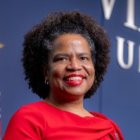





June 1 marks Marilyn Monroe’s 100th birthday. Despite her death in 1962, Monroe remains an icon of American pop culture. Amanda Konkle, Ph.D., researches film history, stardom and celebrity prominence. Konkle is an expert in Monroe’s rise to fame and her lasting relevance in modern style. She published the book “Some Kind of Mirror: Creating Marilyn Monroe,” along with several research papers detailing Monroe’s unique status in American history. Konkle can speak to how Monroe connected with audiences during her life by creating a new ideal of feminine power that defined an era. She can explore how Monroe’s acting methods mirrored society’s anxieties and desires, and why they still resonate today. Konkle is available virtually or for in-person interviews at the Armstrong Campus. Simply contact Georgia Southern's Director of Communications Jennifer Wise at jwise@georgiasouthern.edu to arrange an interview today.


Memorial Day: A Time to Remember, Reflect, and Honor
Every year, millions of Americans gather for backyard barbecues, parades, family gatherings, and the unofficial start of summer. But at its heart, Memorial Day is something far deeper - a national day of remembrance dedicated to the men and women who died while serving in the United States Armed Forces. Originally known as “Decoration Day,” the holiday emerged after the American Civil War, when communities began decorating the graves of fallen soldiers with flowers and flags. Over time, the observance expanded to honour all U.S. military personnel who made the ultimate sacrifice in service to their country. Memorial Day officially became a federal holiday in 1971 and is observed annually on the last Monday in May. Today, Americans commemorate the day in many ways. Traditional ceremonies include visits to cemeteries and memorials, moments of silence, flag placements on graves, military flyovers, and community parades. The National Moment of Remembrance at 3 p.m. local time encourages citizens across the country to pause and reflect on the cost of freedom and the lives lost defending it. While celebrations and long weekends have become part of the modern Memorial Day experience, historians and veterans’ advocates often remind people that the holiday’s true significance lies in remembrance, gratitude, and national reflection. It remains one of the most meaningful civic observances in the United States — a day that connects generations through sacrifice, service, and shared history. Story Angles Journalists May Explore The historical origins of Memorial Day after the Civil War How Memorial Day differs from Veterans Day The evolution of military remembrance traditions in America Why symbols like poppies, flags, and wreaths matter The role of cemeteries, monuments, and memorial sites in preserving national memory How younger generations are reshaping the meaning of patriotic observances Journalists covering Memorial Day, military history, civic traditions, remembrance culture, or the evolving meaning of patriotism may wish to connect with experts in American history, military studies, sociology, or cultural traditions surrounding national remembrance days. Covering or have questions? Our experts are here to help: To see all of our experts - simply visit www.expertfile.com


Beyond the Recipe: Rebecca Sharpless Explores the Hidden History of Southern Baking
Recently published stories exploring the history of baking traditions are shedding light on how many beloved holiday treats are rooted in centuries of trade, survival and innovation. According to Rebecca Sharpless, professor of history in Texas Christian University’s AddRan College of Liberal Arts, staples like gingerbread and fruitcake carry surprisingly deep historical connections, from medieval spice routes to 19th-century preservation methods that allowed cakes to survive nearly year-long journeys. Sharpless, whose upcoming book People of the Wheat examines the history of wheat culture in North Texas, says many foods now associated with “traditional” Southern baking are actually far more modern than people realize. From red velvet cake to pecan pie, marketing and industrial food production played a major role in shaping today’s culinary traditions. Her research also highlights the social and economic realities behind baking history, including how access to ingredients like wheat and sugar once reflected class, geography and race. The full article and interview is attached below - and if you're a baker, a foodie or a journalist looking to know more about this popular topic - it's a must read. For journalists exploring food history, holiday traditions, agriculture, or the cultural roots of Southern cuisine, Sharpless offers expert insight into how everyday recipes reveal larger stories about migration, labor, trade and identity. And if you're looking to connect with Rebecca Sharpless, simply contact Holly Ellman, Associate Director of Communication, today at h.ellman@tcu.edu.

Expert Insight: The Hidden Costs of Staying Neutral
Considering the number of hot-button issues and divisiveness in American culture, choosing a middle-of-the-road attitude might be seen as the best way to navigate an often volatile environment. But what about those individuals who choose neutrality as a means of staying below the radar and, thereby, avoiding the need to take any action? This is the question that Laura Wallace, assistant professor of organization and management at Emory’s Goizueta Business School, and coauthors ask in their new paper, The Preference for Attitude Neutrality. Published in the Journal of Experimental Psychology: General, the researchers explore individuals with a preference for neutrality and how their uncompromising commitment to neutral opinions, not only discourages rigorous debate but could have a deleterious impact on society. Emory Business recently caught up with Wallace to discuss her research. Emory Business: What sparked your interest in the preference for neutrality? Wallace: When we think about the problems in the world, often people point to too many extreme opinions as the source of much social ill, and, of course, they can be. But, when I thought about a lot of the issues that I cared about, like addressing climate change or gun violence, I felt that sometimes the issue was too much neutrality in the face of issues that were themselves pretty extreme. When I talk about this work, people can often picture someone who seems like a “Pref Neutral,” as we have affectionately nick-named them, that is someone who in the face of information suggesting that there is an extreme problem is not moved to address the issue. I could think of people in my life who had these reactions, and I was interested in understanding more about them. Emory Business: How did you identify these individuals? Wallace: We developed a scale to assess the extent to which people view neutrality as truer, more socially desirable, and more moral. For example, we ask people how much they agree with items like, “If you have all the facts about a topic, your opinion will generally end up somewhere neutral” and “There is something noble about remaining in the middle about controversial topics.” The more someone agrees with these items, the more we would say they have a preference for neutrality. Emory Business: How does this study fit in with your larger body of work? Wallace: I generally think of my program of research as studying the “psychology of social change.” Within that broad category, I study 1) how to change minds and build trust and 2) how to address societal disadvantage. I view this work as fitting in the first bucket about how we change people’s minds. What interests me about people who are high in the preference for neutrality is the fact that they seem to NOT change their minds in the face of extreme information suggesting that they should. These individuals represent a significant barrier to our ability to address pressing issues, so I view this work as very much tied into the overarching goal of my research program to understand social change (or the lack thereof). Laura Wallace is an assistant professor of organization and management at Emory University’s Goizueta Business School. Wallace studies how to build trust with implications for addressing societal disadvantage, changing minds, and fostering growth. View her profile Emory Business: Would you describe a preference for neutrality to be a mindset, strategy, or attitude/value? Wallace: I think of the preference for neutrality like an ideology or value system that guides people’s reactions across many issues and situations. Emory Business: Talk about the study design. It’s quite detailed and multilayered, with eight hypotheses and six different measures to account for potential bias that were then randomized to create different questionnaires given to a large pool of individuals. How did the coauthors agree on the structure? Wallace: First, I should take the opportunity to shout out Thomas Vaughan-Johnston, who led this work. He is a faculty member at Cardiff University and is just a very thoughtful, interesting researcher, and he’s great to work with. Second, there are a number of studies in the paper. For each, our research team worked together to design and interpret the studies. The paper paints a relatively negative view of Pref Neutrals. We did take measures to resist bias in our design. For instance, we didn’t just ask people how much they dislike extremists (which would have been biased towards making those with a preference for neutrality look bad), but also asked about attitudes towards neutrals (where those with a preference for neutrality may seem like “the nice people”). We are now starting research on contexts where a preference for neutrality can offer some advantages, hopefully without artificially striking a false balance. For instance, we are considering whether they can help reduce group polarization effects, especially where groups drift towards radicalism in conversation. Also, we have some preliminary data where they seem to be a bit more accurate when detecting neutral emotions and attitudes in others, which is a remarkable plus side. Basically, we think the preference for neutrality is a social concern, but we are trying to be fair-minded when considering why they think this about neutrality and when this trait is useful for the world. Emory Business: In the study, you note that preference for neutrality can be a sign of arrogance and that Pref Neutrals are uninterested in learning more or changing their stance. How is this arrogance exhibited? Wallace: I would say that they are more close-minded than arrogant and that they don’t seem to be particularly thoughtful. One way we have assessed this is by measuring their “intellectual humility,” which essentially captures how much people recognize the limits of their own perspectives and are open to changing their minds. Pref Neutrals tend to score low on intellectual humility. They also score a little low on the “need for cognition,” which captures how much people like to think. Emory Business: In one section it reads: “preference for neutrality (preference for extremity) should relate to seeing other people as moral, competent, and likeable, when those individuals have generally neutral (extreme) opinions.” Does this mean that they align with people who have their same opinion structure? Wallace: We find that people who score high on the preference for neutrality scale tend to have more favorable impressions of others who are more neutral and tend to be more persuaded by others who are labeled as holding neutral attitude positions. Emory Business: How would one identify this trait in a person, particularly, when the research shows they tend to self-censor? Wallace: In general, they are really hesitant to take stances on issues or they tend to avoid taking sides or expressing strong positions. And yes, they tend to self-censor, meaning they often avoid sharing their opinion at all. Emory Business: How does this preference for neutrality play out in a political sense? Specifically, if they are averse to extremes would they vote based on their values? Wallace: We have a lot of evidence that Pref Neutrals tend to be political centrists. We don’t have evidence for this, but I suspect that they sit out a lot of elections, and to the extent that they do vote, they favor more moderate candidates. They probably would not vote for a position or individual with an extreme view unless it was framed as neutral. This may sound like a silly, cerebral point, but I actually think it’s critical to the point we are making, as what is viewed as “extreme” in a given time is often socially determined. For example, now it would be viewed as an extreme stance to support slavery. However, in the early 1800s in the U.S., it would have been viewed as an extreme stance to oppose slavery. I imagine at the time, many Pref Neutrals were supportive of slavery as a means of being politically moderate. Emory Business: What was the most interesting result in this study for you? Wallace: We find that if you give Pref Neutrals the exact same information but label it as extreme or neutral, they are more persuaded by the exact same information when it is labeled as neutral. This results in a kind of ironic effect where they actually end up with a more extreme opinion when information has been labeled as neutral. Emory Business: Research wise, what’s next for you? Wallace: There are a few ways that we are following up on our work that I am excited about: First, we’re trying to understand more about how Pref Neutrals maintain neutral opinions in the face of extreme information. So, we are giving Pref Neutrals true, extreme facts, and then examining their thoughts to determine how they resist taking the extreme positions information would suggest that they should. Second, we thought that Pref Neutrals would be particularly likely to trivialize social issues, to say they are unimportant. We are actually finding that they rate all social issues as extremely important, which we are trying to understand more about. We suspect they might do this as a strategy to avoid taking action on social issues. If stubbed toes and human trafficking are both “extremely” important, then there are just too many issues to take action on, and so they are able to justify a lack of action. Third, we are interested in understanding what it is like to make decisions in a group with a Pref Neutral. There is a lot of evidence that groups tend to make bad decisions because people want to agree with each other. This might actually be an area where Pref Neutrals would shine – the fact that they don’t want to take a stance may force groups they are a part of to really think things through and make better decisions. This is all super preliminary, but it reflects the exciting work ahead and that there is much more to understand about these folks!



From “Covfefe” to commanding the algorithm: How Trump turned memes into political power
A recent analysis by CNN traces how Donald Trump’s relationship with internet culture has evolved from accidental viral moments into a deliberate, highly effective communications strategy. The article highlights how memes, once unpredictable and grassroots, have become a central tool in shaping political narratives, driving engagement and bypassing traditional media channels. Some of the great insight and perspective in the article comes from Dannagal Young, whose insights help explain why this strategy resonates so strongly. Young emphasizes that memes act as powerful emotional and cultural signals, allowing political messages to travel quickly while reinforcing identity and belief among audiences. What began with moments of internet spontaneity has matured into a calculated approach that blends humor, provocation and simplicity to dominate attention in a crowded digital landscape. “The entire ethos and aesthetic of this administration is spectacle and subversion of norms,” Young said. “You don’t do that through deliberation or argument, but through symbols.” Her perspective, as presented in the CNN article, underscores a broader shift: political influence is increasingly shaped by content that feels native to the internet, where relatability, repetition and shareability often matter more than traditional policy-driven messaging. ABOUT DANNAGAL G. YOUNG Dannagal G. Young is a Professor of Communication and Political Science at the University of Delaware where she studies the content, audience and effects of nontraditional political information. She has published over sixty academic articles and book chapters on the content, psychology and effects of political information, satire and misinformation.



CEOs 5 times more likely to survive fraud than a personal scandal
If the CEO of Astronomer had overseen tax fraud instead of being caught on a kiss cam cuddling his HR chief in an extramarital affair, he might still have a job. That’s because, according to a new study, CEOs are five times more likely to be fired for personal misconduct than for overseeing financial fraud. “For financial fraud, the CEO can easily say, ‘Hey, it wasn’t me,’” said Aaron Hill, Ph.D., an associate professor in the University of Florida Warrington College of Business who led the study. “With personal misconduct, there’s no excuse.” The research, forthcoming in Strategic Organization, examined 59 cases of personal misconduct and compared them with more than 300 financial scandals at publicly traded companies between 1997 and 2020. The personal cases included inappropriate relationships, drug or alcohol incidents, domestic violence, falsifying credentials and derogatory speech. Hill and his colleagues found that boards move decisively when a CEO’s private behavior becomes public. By contrast, financial misconduct — such as accounting restatements that can wipe out billions in shareholder value — often leaves room for a chief executive to deflect blame onto others in the organization. Recent company performance influenced how boards responded, to a point. A CEO whose company was thriving could often survive a financial scandal because directors had both plausible deniability and a strong incentive not to disrupt success. But good numbers offered little protection when the problem was personal behavior. For example, McDonald’s ousted Steve Easterbrook in 2019 over a consensual relationship with a subordinate, even though the company’s stock price had doubled under his leadership. Hewlett-Packard similarly dismissed CEO Mark Hurd after harassment allegations despite his reputation for turning the firm around. “Even strong performance can’t erase certain kinds of misconduct,” Hill said. “There are some things you just can’t excuse.” The study also uncovered how scandals influenced succession decisions. When personal misconduct led to a firing, boards were more likely to promote an insider, signaling that the problem lay with one person rather than the culture of the company. Financial scandals, on the other hand, often prompted boards to recruit outsiders as a way of reassuring markets that the firm was serious about change. “It’s a signaling move,” Hill said. “Bring in an outsider after fraud, and the market reacts positively. Stick with an insider after a personal scandal, and it says the organization itself is sound.” The researchers argue that these choices reveal how boards balance their fiduciary duty with the reputational risks of scandal. While dismissing a CEO can serve as a public relations reset, Hill emphasized that it is almost always a financially motivated calculation. “Boards are supposed to look out for the company and its shareholders,” he said. “But when they decide to keep a CEO after misconduct, I think it sends the wrong message — to employees, to investors and to the public.”



Union Hospital Earns Healthgrades 2026 Patient Safety Excellence Award for Second Consecutive Year
Union Hospital has once again been ranked among the top 10% of hospitals nationwide, earning the 2026 Healthgrades Patient Safety Excellence Award™ for the second year in a row. In a landscape where many hospitals struggle to maintain consistency, Union Hospital is delivering a sustained streak of high reliability, driven by disciplined safety practices and a culture that puts patient protection first. Campus president Joan Pirrung captures it well: “Our caregivers are relentless about safety. Achieving this honor two years in a row shows the unwavering commitment they bring to every patient, every day.” At the heart of this repeat achievement is a team of caregivers who’ve built a culture where safety isn’t a program—it’s a daily practice. If you’re interested in the story behind these results, I can connect you with campus president Joan Pirrung for additional insight or interviews.



One year after his pioneering flight aboard Blue Origin’s New Shepard rocket, University of Florida space biologist Rob Ferl, Ph.D., is still processing what it meant — not just for his career, but for science itself. “What stands out the most is just the overwhelming gratitude,” Ferl said. “It was such an amazing opportunity for a scientist to go to space and actually do science.” Ferl, a professor in UF’s Horticultural Sciences Department, Director of the Astraeus Space Institute, and Assistant Vice President of Research, became one of the first space biologists to fly alongside his own experiment — a moment that marked a new era in researcher-led missions. His suborbital journey provided a rare opportunity to study how terrestrial biology responds to the very first moments of spaceflight. “For decades, space biology has relied on professional astronauts to carry out experiments designed by scientists on Earth,” Ferl explained. “But to truly understand how biology works in space, I believe you - as the scientist - have to be there. You have to feel the environment.” This September, Ferl and longtime collaborator Anna-Lisa Paul, Ph.D., will be back at Blue Origin’s West Texas launch site, continuing their work with a new series of plant experiments. Ferl and Paul, who directs UF’s Interdisciplinary Center for Biotechnology Research and is a professor in Horticultural Sciences, are tracking fluorescently tagged genes in Arabidopsis plants to study how gene expression changes during the rapid shift from Earth’s gravity to the microgravity of spaceflight and back again. It’s a full-circle moment for Ferl, who remains deeply engaged in the same questions that sent him to space a year ago. Unpacking the Transition from Earth to Space Ferl’s experiment focused on the early metabolic responses of plants during the critical transition from Earth’s gravity to the weightlessness of space. “The scientific community has accumulated plenty of data comparing biology in orbit with that on Earth,” he said. “But we’ve known almost nothing about what happens in those first few minutes as organisms enter space and are exposed to microgravity.” Initial results from the flight reveal intense metabolic changes in the early moments of spaceflight. These changes are distinct from, but connected to, the long-term adaptations seen in orbit. Early Findings, Future Impact While the data from Ferl’s experiment are still on the way to being published, the findings are already shaping the direction of ongoing research. The work contributes to a growing understanding of how terrestrial life, from plants to humans, shares fundamental pathways in responding to the space environment. “This has real implications for the future of space missions,” Ferl noted. “As we send more people and more biology into space in support of exploration, we need a comprehensive understanding of how living systems adapt — right from the start.” Ferl and his team will return to Blue Origin’s launch site in Texas in September to continue their research, sending an uncrewed payload of plants into suborbital space. The flight carries no humans—but it does carry an automated experiment designed to advance their understanding of plant biology in space. It’s part of a broader effort to refine what Ferl calls “researcher-tended missions.” A New Course for UF Space Science The mission has not only shaped the trajectory of Ferl’s research, it has also energized Astraeus and the university’s space biology efforts. “This is about building a new kind of science culture,” Ferl said. “One where the scientists are embedded in every part of the mission, from experiment design to the moment of launch.” As the one-year anniversary of his flight approaches, Ferl remains focused on pushing the boundaries of what science in space can be. But he hasn’t forgotten the magnitude of the moment. “Even a year later,” he said, “the most powerful thing I feel is just: thank you. Thank you for the chance to go, to see it for myself, and to bring that knowledge back to Earth.”


From Saint to Shamrocks: How St. Patrick’s Day Became the World’s Biggest Irish Party
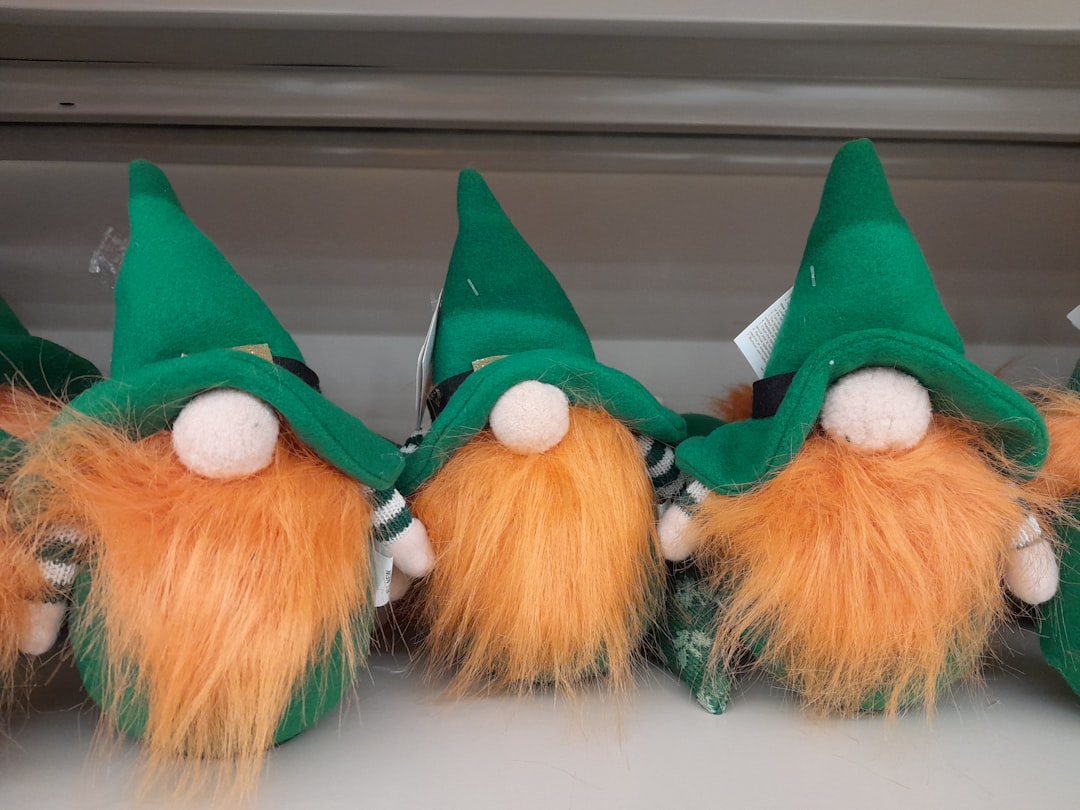
Every March 17, cities around the world turn green as millions celebrate St. Patrick’s Day with parades, music, traditional foods, and a strong dose of Irish pride. But the origins of the holiday trace back more than 1,500 years to St. Patrick, the 5th-century missionary credited with bringing Christianity to Ireland. Over time, the feast day commemorating Ireland’s patron saint evolved into a broader celebration of Irish heritage, folklore, and culture. Many of today’s traditions, wearing green, shamrocks, lively parades, and even the association with leprechauns — developed centuries later, particularly as Irish immigrants in North America began celebrating their heritage publicly. In fact, some of the world’s biggest St. Patrick’s Day traditions, including massive parades and even dyeing rivers green, originated in the United States and Canada rather than Ireland itself. From the real history of St. Patrick to the myths, symbols, and global traditions that followed, historians and cultural experts can help unpack how this ancient religious observance transformed into one of the world’s most recognizable cultural celebrations. ExpertFile connects journalists with historians, cultural scholars, and experts in Irish heritage who can provide insight on topics including: The real story of St. Patrick and his mission in Ireland How shamrocks, leprechauns, and the color green became iconic symbols Why parades and public celebrations grew in North America How Irish immigration shaped the modern holiday The cultural and economic impact of St. Patrick’s Day celebrations worldwide Journalists looking for fresh angles on the history, traditions, and cultural significance of St. Patrick’s Day can connect with experts available through the ExpertFile platform. Our experts can help! Connect with more experts here: www.expertfile.com