
Experts Matter. Find Yours.
Connect for media, speaking, professional opportunities & more.

Baylor Expert: Día De Los Muertos - A Celebration of Life and Death
Día De Los Muertos – or Day of the Dead – has grown in popularity in the United States over the past decade, with the 2017 Disney/Pixar film, Coco, bringing greater attention to the holiday and its colorful sugar skulls and skeleton decorations. Although these decorations can be found in stores next to Halloween items, this unique Mexican holiday – celebrated Nov. 1 through Nov. 2 – isn’t another version of Halloween but a way for families to honor and remember their loved ones who have died, said Baylor University death studies scholar and author Candi Cann, Ph.D. It’s importance to world culture as recognized in 2008 when UNESCO inscribed the holiday in the Representative List of Intangible Cultural Heritage of Humanity. Cann, who is an associate professor of religion in the Honors College at Baylor, said it’s not surprising that the holiday is becoming popular outside of Mexico. There are no other traditions in the United States about death that are not mournful. The opportunity to celebrate loved ones in a way beyond the funeral process resonates with people, Cann said. “It’s a beautiful tradition that helps people with the grief process,” she said. Día De Los Muertos is time for past and present generations to come together. Unlike Halloween, interacting with the dead isn’t scary, but more like a family reunion, Cann said. “On that day, the dead return to visit the living,” she said. “It is a time to have fun and celebrate our connection to our ancestors.” Traditional Día De Los Muertos Celebrations can include: Calaveras – The most recognized symbol of the holiday, sugar skulls are offered as gifts to both the living and the dead. A representation of the La Calavera Catrina, the skulls are decorated with colorful icing, sequins or feathers. The Ofrenda – Families will set up altars in their house or at the grave site to honor their family members. The Ofrenda is colorfully decorated with pictures of the deceased along with paper banners, candles, marigolds, small gifts, favorite foods and calaveras. Costumes – Colorful costumes with vibrant skull makeup reminiscent of the Calaveras are another way to celebrate Día De Los Muertos. Children and adults alike can dress up in Calaveras makeup. The purpose is not to look macabre but to be a festive way to celebrate all members of the family living and dead. Food and Drink – This not only is an offering to the deceased but a way for the living to come together and share a meal with their loved ones. Traditional dishes included tamales, Pan de Muerto (or “Bread of the Dead”) and Pan dulce. Cann suggests if you are interested in celebrating Día De Los Muertos, start by finding a community festival or parade, such as Saturday’s Día De Los Muertos Parade & Festival at Indian Spring Park in downtown Waco. “This is a great way to learn more about the holiday and how you can celebrate with your family,” Cann said. “Most importantly, keep the focus on the family. The heart of the holiday is on remembering and honoring our loved ones.”


Baylor Researcher Seeks to Understand the Drive for the Perfect Tan
Despite being one of the most preventable cancers, the desirability of tanning is often stronger than the dangers of harmful UV exposure. Getty Images With summer on the horizon, the quest for the perfect tan has begun. However, there is no such thing as a healthy tan. Despite being one of the most preventable cancers, skin cancer is the most common cancer in the United States, with more than 5 million cases of skin cancer diagnosed each year, according to the Skin Cancer Foundation. Baylor University researcher Jay Yoo, Ph.D., associate professor of apparel merchandising in Baylor’s Robbins College of Health and Human Sciences, found that the social and cultural influences on the desirability of tanning – which has been associated with good health and an active lifestyle since the 1920s – is often stronger than the dangers of harmful UV exposure. “The appeal of a tan is so strong in U.S. culture, it may be difficult for some people to stop or even reduce the amount of tanning,” Yoo said. In his 2019 study, “Identifying factors that influence individuals’ intentions to quit body tanning: A sociocultural perspective,”, published in the international journal Social Behavior and Personality, Yoo identified what motivates people to seek the “perfect” tan. Yoo surveyed 385 college students to understand how society effects their tanning behaviors and intention to quit tanning. His research found that the greatest influence on reducing risky tanning behavior was the perceived attractiveness from tanning, whereas skin-aging concerns positively influence their intention to quit tanning. FINDINGS Yoo’s findings provide important implications for skin cancer prevention campaigns. Instead of promoting the message of body tanning as an unhealthy behavior, focusing instead on untanned healthy bodies as a positive image can serve as an effective approach to decreasing skin cancer incidence. Using messages that accentuate a healthy body without tanned skin should be promoted to boost a positive body image and to reduce the likelihood of engaging in risky tanning behaviors. ACTIONS To protect yourself and look great, the Skin Cancer Foundation recommends: Avoid tanning entirely: It’s the best way to safeguard against unhealthy, unsightly skin damage. Fake, don’t bake: If you want a golden glow, consider sunless tanning products. There are many options, but remember, when in the sun, you still need sun protection. Tone, don’t tan: Get radiant skin through exercise. Working out feels good and boosts your mood. Hydrate and eat great: Drink lots of water and choose whole, unprocessed foods. You don’t need to tan to look slim and your skin will thank you.


CorpusCast with Dr Robbie Love: Dr Clyde Ancarno & Professor Insa Nolte on Anthropology
Hello, hello, hello, everyone! Welcome back to Corpuscast, the podcast that brings you the fascinating world of Corpus Linguistics. Can you believe it? We're already on episode 19! Since our launch in January 2022, we've been exploring the incredible impact of Corpus Linguistics on society. And trust me, today's episode is going to blow your mind! As always, I'm your host Robbie Love, a linguist from Aston University. Today, we dive deep into the realm of anthropology, the study of human societies and cultures. Get ready for an engaging discussion on the origins of humanity, the evolution of civilizations, and the incredible diversity that exists across our world. Our special guests for today's episode are none other than Professor Insa Nolte, a leading anthropologist from the University of Birmingham, and Dr. Clyde Ancarno, a brilliant corpus linguist and senior lecturer in Applied Linguistics and Education at King's College London. Together, Insa and Clyde collaborated on a groundbreaking research project in Southwest Nigeria, exploring how members of different religious groups coexist peacefully. Their findings shed light on the intricate social structures that maintain harmony within diverse communities. Join us as we delve into the thought-provoking questions that shape our understanding of humanity. Who are we and where do we come from? How have civilizations transformed throughout history? What factors contribute to the functioning of our societies? This captivating conversation will unveil the incredible insights brought forth by Corpus Linguistics and its intersection with anthropology. Discover how language and culture intertwine to shape our identities and communities. Don't miss out on this enriching episode! Tune in to Corpuscast below, and let's embark on this captivating journey together. Subscribe to Corpuscast on YouTube, Apple Podcasts, Spotify or wherever you get your podcasts, for more thought-provoking episodes exploring the boundless possibilities of Corpus Linguistics in education, health, technology, and beyond. Stay curious, stay inspired! ? #Corpuscast #Anthropology #CorpusLinguistics #Humanity #Culture #Diversity #Podcast #LanguageResearch


In this day and age, people of all ages are often on social media. While most of the platforms can be engaging for the good, there are always bad actors out there passing along misinformation. That’s the type of content younger students need to be aware of, according to an Augusta University faculty expert. Stacie Pettit, PhD, program director of the Master of Education in Instruction in the College of Education and Human Development, suggests there needs to be more media literacy and awareness of social media taught to students. With so many videos and posts claiming to be informative, how is one supposed to discern what is factual and what is not? Pettit feels people need to be more aware of how to tell when something is legit as opposed to something that is inaccurate. “Knowing what legitimate research is and what’s not, especially in this political climate, it can be tough to tell,” said Pettit. “More can be done in them understanding how deep it goes and what you search for, you’re going to get things that are skewing your mind to what you already want to believe. I feel like that component can be deeper.” Pettit realizes younger students know how to use social media, but using it in a responsible way can be just as important. People may post videos claiming one thing, but without fact checking, it may be inaccurate and can be a dangerous tool to mold a younger person’s mind. “If you already have your mind made up about something, you’re going to find things. It’s like the old phrase, ‘If you’re looking for a yellow cab, you’re going to find a yellow cab.’ This may be your context, your culture that you’re coming from, but put yourself in this place, how might they feel? Knowing there isn’t just one way to think about something, it’s not just a black and white answer to all these critical issues is important,” Pettit added. She knows it’s of the utmost importance for students to realize that every talking head they see in a video on social media isn’t always speaking the truth. Fact checking, finding another source to support a view and paying attention to the source in the first place can be key pieces of the puzzle students can use to find out the legitimacy of a post from the start. Amid all the misinformation, there are still plenty of legitimate uses for social media platforms. “There’s definitely educational and helpful things on YouTube. I encourage my kids a lot to go there because I’m trying to teach them to be more independent. She’s often like, ‘I don’t know how to do that’ but I tell her to find a video; this is what you’re going to have to do in college,” she said. If you're a journalist covering education and the impacts social media has on students, then let us help. Stacie Pettit, PhD, is a respected leader in middle level teacher education and meeting the needs of marginalized young adolescents. She's available to speak with media; simply click on her icon now to arrange an interview today.

Georgia Southern University opens doors to Gullah Geechee Cultural Heritage Center
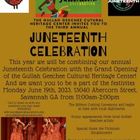
Georgia Southern University’s Gullah Geechee Cultural Heritage Center officially opened its doors with a grand opening and ribbon cutting on June 19. Coinciding with the Center’s Juneteenth celebration, the public was invited to attend the afternoon festivities at 13040 Abercorn Street in Savannah. The ribbon cutting saw many local dignitaries in attendence, including Savannah Mayor Van R. Johnson, Georgia Rep. Carl Gilliard, Georgia Sen. Derek Mallow and Chatham County Chairman Chester Ellis, as well as Gullah Geechee Cultural Heritage Corridor Executive Director Victoria Smalls, Gullah Geechee historian and preservationist Queen Quet and Georgia Southern Provost and Vice President for Academic Affairs Carl Reiber, Ph.D., offered opening remarks. “This is a monumental occasion,” said Maxine Bryant, Ph.D., director of the Gullah Geechee Center. “To celebrate our grand opening on the nationally recognized Juneteenth is extremely meaningful. We will simultaneously honor the freedom of enslaved Black Americans and the Gullah Geechee culture that has preserved more African traditions than any other group.” The Gullah Geechee people of Coastal Georgia are descendants of enslaved Africans from plantations along the lower Atlantic coast. Many came from the rice-growing region of West Africa and were brought to the Americas for their agricultural and architectural knowledge and skills. The enslaved Africans were isolated on the Sea Islands. This isolation enabled them to create and maintain a unique culture steeped in remnants of Africa. This culture became known as Gullah Geechee and is visible in the people’s distinctive arts, crafts, foodways, use of waterways, music, dance and language. Much of the Gullah Geechee community today, which is estimated to be a population of 1 million, can speak the African Creole language or tell the stories of their ancestors who are credited with influencing southern and American culture. Local Gullah Geechee artists and the McIntosh County Shouters showcased their talent at the event. The Gullah Geechee Cultural Heritage Center, established in 2019, honors myriad contributions made by Gullah Geechee people, provides educational resources for the public, promotes scholarship and research, and serves as a model for national reconciliation and reparations. It is part of the Gullah Geechee Corridor, which stretches across 27 counties in Georgia, South Carolina, North Carolina and Florida. If you're interested in learning more about Georgia Southern University’s Gullah Geechee Cultural Heritage Center - then let us help. Simply reach out to Georgia Southern's Director of Communications Jennifer Wise at jwise@georgiasouthern.edu to arrange an interview today.

Georgia Southern University names David Owen as new dean of the College of Arts and Humanities
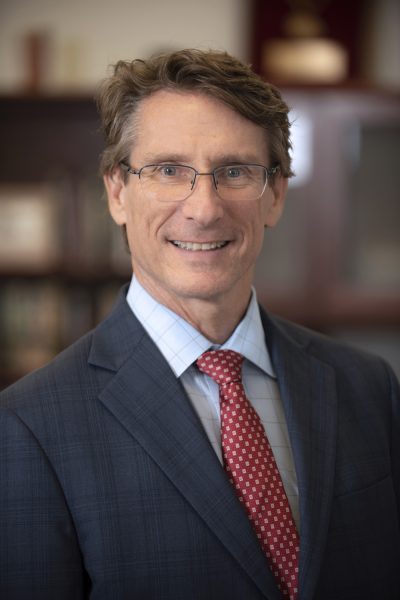
David Owen, Ph.D., will join Eagle Nation on July 1 to serve as the new Dean of the College of Arts and Humanities (CAH). “I am pleased to welcome David to Georgia Southern as the next generation of leadership for the College of Arts and Humanities,” said Provost and Vice President for Academic Affairs Carl Reiber, Ph.D. “David brings with him a wealth of knowledge and understanding in analytical and philosophical foundations that will prepare our students for vital roles in their professional communities.” Owen comes to Georgia Southern from the University of Louisville, where he has served as the interim dean of the College of Arts and Sciences since 2020. Among his many achievements, he transitioned the college to a new enrollment-based budget model, led the development of a three-year retention plan, and led morale improvement efforts among the College. While interim dean, Owen oversaw a budget of $62 million, including $4.8 million in funded research grants and a fundraising campaign that raised $4.3 million in 2021-2022. Prior to becoming interim dean, he was the chairperson of the Department of Philosophy at the University of Louisville. He is a three-time alumnus of the University of Illinois at Chicago, where he received his B.A., M.A. and Ph.D. “I am truly excited to be joining Georgia Southern as dean of the College of Arts and Humanities,” said Owen. “In my meetings, I found the faculty and staff of the College to be extraordinarily talented, and deeply committed to student success. The importance of the arts and humanities to a vibrant civic culture has never been more clear, and I look forward to working with the faculty and staff in CAH, Provost Reiber, colleagues from across campus, and alumni and friends of the college to advance the impact CAH has on students’ lives, on the wider community, and on civic culture.” To connect with David Owen or to learn more about Georgia Southern University — simply reach out to Georgia Southern's Director of Communications Jennifer Wise at jwise@georgiasouthern.edu to arrange an interview today.

Expertise Marketing and Content Marketing - Is There a Difference?
We often get asked the question about how Content Marketing compares to Expertise Marketing. It’s ironic that still to this day many of our academic clients don’t refer to what they do as “content marketing.” But corporate customers are well acquainted with the importance of developing content to build reputation, relationships and revenue. Adding to the confusion are all the names that are bantered about by marketing departments and agencies - There’s inbound marketing popularized by companies such as Hubspot. And there are more bespoke “Thought Leadership” programs that are often developed by outside agencies such as Weber Shandwick and Edelman. While there are a lot of common elements to these programs there are some important differences that we focus on when developing and launching Expertise Marketing programs with our institutional and corporate clients. Here’s a deeper dive to help you better understand the value of Expertise Marketing. Introducing Expertise Marketing Expertise marketing is the practice of making the knowledge and skills of your human resources more visible to your partners and audiences. It draws attention to the value that your people can bring as brand ambassadors and strategically leverages the work your experts are doing to tell a more personal story. In many cases, expertise marketing can also be used to showcase your strengths in research and innovation. Creating a stronger digital presence, expertise marketing more effectively uses your channels to connect with audiences such as media, customers, partners and donors. It builds a sense of trust with your customers and above all else, it helps establish your reputation as an industry leader. ex•per•tise mar•ket•ing 1. The practice of collectively promoting an organization’s experts as brand ambassadors to demonstrate their skills or knowledge. 2. Best practices to publish and connect The Value of Expertise Marketing Reputation - Positions research, client work, thought leadership perspectives and achievements in the context of relevant topics that are in the news. Market Awareness - Expertise marketing makes it easier for key audiences to find expert content and people in search engines and on the organization’s website. Audience Engagement - Provides more intuitive search features for visible content which can be expanded to include assets such as video, social, and publications to drive richer conversations with audiences. Metrics on performance in areas related to expert development, content contribution and audience engagement page views and inquiries can be tracked. Demand Generation - Increased number of direct leads/ inquiries from audiences such as: Customers/Students Industry Partners Alumni Donors Media New Employee Recruits Conference Organizers Talent - Better engage stakeholders, researchers & subject-matter experts in the development and distribution of content while improving recruitment and retention of talent. Internal Collaboration - Better coordinate the knowledge and resources across internal communications teams and other departments as they engage experts. Provide a faster, more efficient way to generate content for breaking news and events. Content Contribution - Increase the size of the organization’s digital footprint by aggregating more content and distributing it contextually to multiple websites and third-party databases. Efficiency - Help employees get their jobs done faster and more efficiently. Enable them to find information faster, speed up internal processes and foster collaboration among people in multiple locations. Leverage Current and Future Infrastructure - Properly integrated, new technology investments should integrate seamlessly to leverage existing/proposed infrastructure such as content management systems (such as WordPress™) and marketing automation systems (such as Hubspot) How is Expertise Marketing Different from Content Marketing? A More Human Approach: People buy from people. That’s why content that is more personalized and attributed to specific experts who are well-identified as expert sources is far more trusted than most company-sponsored content. A More Collaborative Process that Engages Employees: A more structured “win-win” model empowers experts to contribute their knowledge. Expertise marketing is a proven way to build culture and celebrate diversity which assists with talent retention and recruitment. An Efficient Way to Create More Content to Boost SEO & Website Traffic: Engaging your experts creates a larger hub of “owned” content that is proven to boost PageRank in search engines and site traffic. Expert content is used by organizations to enhance their “About Us” page, staff/faculty/physician directories, newsroom pages, research pages and speakers bureaus. Optimized Content Formats Better Connect with Audiences: A variety of short format, long format and visual content formats (such as expert profiles, blogs, Q&A and videos) are designed to engage specific audiences at various stages of the customer journey. Improved Calls to Action & Analytics Boost Demand Generation & Leads/Inquiries: Experts become more approachable as “lead magnets” that generate measurable inbound opportunities, avoiding common issues of lost customer leads due to poor processes and workflow. You might be surprised at how much value expertise marketing can bring to your organisation. The chances are, that the time you are currently spending on ineffective content marketing strategies will be greatly reduced with a redefined focus on expertise marketing. By putting the focus back on the skills and relevance of your experts, as people, you're not only making them more visible but also establishing your brand reputation which will simultaneously generate more leads and increase efficiency.




A new book, A Student’s Guide to Open Science: Using the Replication Crisis to Reform Psychology, has been published, providing students and researchers with a comprehensive guide to open science practices and how their implementation can enhance research transparency and rigour. In the book, Dr Charlotte Pennington who is a lecturer in psychology at Aston University, explores the "replication crisis" in psychology, which refers to the difficulties in reproducing research results to test the robustness of findings. Through the book, students will gain an understanding of the origins and drivers of the crisis and learn how open science practices can transform research practice, enhance research transparency, and improve replication and reproducibility. The book contains various features, including an overview of landmark events that will mark the history of the replication crisis in the years to come, case studies of classic psychological studies undergoing replication, ‘test yourself’ activities to reinforce learning of key concepts, and top tips for adopting open science practices. It also includes useful illustrations to aid understanding and facilitate revision. Dr Pennington said: "The replication crisis has highlighted significant issues in the field of psychology and beyond and has led to a lack of trust in some research findings. However, it also provides a platform for reform – to improve research practices and the wider culture, with the discipline of psychology paving the way. I am proud that there is now a textbox that provides students and researchers with a handy guide on how to improve transparency and rigor in research through open science practices. “It is essential for all students to have a fundamental understanding of the challenges posed by the replication crisis and how open science can address them." The book has received high praise from experts in the field. Professor Chris Chambers from Cardiff University said: "This book should be on the reading list for all university science degrees and on all library bookshelves. It is concise, accessible, and remarkably interactive, with brilliant use of examples and learning activities.” Dr Madeleine Pownall from the University of Leeds said: "It is essential reading for anyone who wants to make sense of open science, by covering complex content in an accessible and hands-on way. My hope is that every psychology student will finish their degree with a heavily annotated, well-thumbed copy of this important and timely book.” Professor Brian Nosek, executive director of the Centre for Open Science at the University of Virginia said: “The last 10 years have been a whirlwind in psychology: identification of faulty research practices, frequent failures to replicate findings, research on how the field could improve, and adoption of new solutions to make research more transparent and credible. It is a lot to take in and it is hard to know where to start. “I am frequently asked to recommend a reading that provides an overview of what has been learned during the last 10 years and a gateway for getting started with open science. With this book, now I have an answer.” A Student’s Guide to Open Science: Using the Replication Crisis to Reform Psychology is now available in print and online formats.
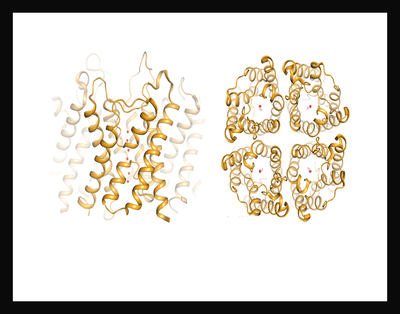
• Leading scientist wins €2.2 million ERC Advanced Grant • The five-year project will explore early dementia interventions through understanding how an aquaporin water channel regulates glymphatic clearance • ERC Advanced Grant funding is amongst the most prestigious and competitive of the EU funding schemes. A world leading scientist in the College of Health and Life Sciences at Aston University has been awarded a €2.2 million ERC Advanced Grant to understand how the movement of a protein known as aquaporin-4 in the brain can help slow cognitive decline. The FORTIFY project, which will run for five years, is led by Professor Roslyn Bill in the School of Biosciences. She will apply her discovery of the movement of aquaporin-4 to understand how the cleaning mechanism in the brain works during sleep. The research will focus on how aquaporin-4 controls the glymphatic system, which is the mechanism that allows us to clear waste products from our brains while we sleep. Her hypothesis is that the movement of aquaporin-4 in the brain changes the effectiveness of this cleansing mechanism - which lessens as people age. A greater understanding of this process could lead to an early intervention treatment that could slow the onset of dementia, such as Alzheimer’s and Parkinson’s Diseases. ERC Advanced Grant funding is amongst the most prestigious and competitive of the EU funding schemes, providing researchers with the opportunity to pursue ambitious, curiosity-driven projects that could lead to major scientific breakthroughs. Professor Bill said: “Every three seconds someone in the world develops dementia and there is no cure. I want to stop that from happening. By understanding the molecular mechanisms of brain waste clearance, we have an opportunity to develop medicines that can slow the onset of dementia, very much in the same way that statins are prescribed to control heart disease”. Roslyn Bill discovered that the water channel protein aquaporin-4 increases the permeability of brain cells to water after a brain or spinal cord injury. Around 60 million people a year suffer such injuries following falls or accidents. For example, after a skiing accident in the French Alps in 2013, Michael Schumacher suffered a severe head injury. He was placed in a medically induced coma and underwent several surgeries to treat his injuries. Until now doctors have only been able to manage the symptoms of brain injury (swelling on the brain) through interventions that may require surgery. Professor Bill and her team are due to start clinical trials in summer 2023, to test a method to stop the swelling from happening in its tracks, building on her discoveries. Roslyn’s new ERC-funded project, FORTIFY, will focus on how aquaporin-4 controls fluid flow in the healthy, uninjured brain. In this round of Advanced Grants, the European Research Council (ERC) is awarding €544 million to 218 outstanding research leaders across Europe, as part of the Horizon Europe programme. The grants will support cutting edge research in a wide range of fields, from medicine and physics to social sciences and humanities. The grant is awarded to established, leading researchers with a proven track-record of significant research achievements over the past decade. The funding will enable the researchers to explore their most innovative and ambitious ideas. Mariya Gabriel, European Commissioner for Innovation, Research, Culture, Education and Youth, said: “ERC grants are a top recognition and a significant commitment from our best researchers. The €544 million funding puts our 218 research leaders, together with their teams of postdoctoral fellows, PhD students and research staff, in pole position to push back the boundaries of our knowledge, break new ground and build foundations for future growth and prosperity in Europe” Maria Leptin, ERC President, added: "These new ERC Advanced Grantees are a testament to the outstanding quality of research carried out across Europe. I am especially pleased to see such a high number of female researchers in this competition and that they are increasingly successful in securing funding. “We look forward to seeing the results of the new projects in the years to come, with many likely to lead to breakthroughs and new advances.”

ChristianaCare Launches Supplier Diversity Program
Making the organization more reflective of the patients and communities we serve To advance its commitment to diversity and inclusion, ChristianaCare has launched a supplier diversity program – the first among hospitals in Delaware – that supports greater equity among suppliers and provides equal access to purchasing opportunities at the health system. The new program opens the door for small and diverse businesses owned and operated by ethnic minorities, women, veterans, service-disabled veterans, LGBTQ+ individuals and persons with disabilities to do business with ChristianaCare. “ChristianaCare’s commitment to expand and strengthen our partnerships with diverse vendors and suppliers is integral to our strategic plan to embed equity throughout our operations and culture,” said Jennifer Garvin, vice president of Supply Chain at ChristianaCare. “As the largest private employer in Delaware, we want to continue to grow and develop our diverse network of suppliers and vendors and obtain the best products at the best price. “This program gives us a platform to connect with smaller, historically disadvantaged firms. “We often look to the suppliers and business partners in our supply chain to bring new ideas and fresh insights to the table – and we believe everyone should have a seat at that table,” Garvin said. “By formalizing our commitment to supplier diversity, we are making ChristianaCare more reflective of the patients and communities we are privileged to serve.” By emphasizing a culture of diversity throughout their business operations, organizations tend to attract and retain top talent, increase employee satisfaction, outperform competitors and make better business decisions, according to research published by McKinsey & Company on the impact of diversity on businesses. “By being purposeful where we purchase our goods and services, we can make a meaningful, measurable and lasting impact on the wellbeing of our neighbors and our local economy,” said Etmara Offe, senior program manager of Supplier Diversity at ChristianaCare, and the first person to hold a position dedicated to supplier diversity at a health system in Delaware. “We want to ensure that a wide range of diverse suppliers and vendors have opportunities to work with us by growing and developing our network through outreach and educational programs,” she said. Offe said that plans are in the works for a supplier mentoring program and outreach events in the year ahead. For more information, visit ChristianaCare Supplier Diversity – ChristianaCare. Diverse businesses can apply using the Potential Supplier Intake Form on the website.
