
Experts Matter. Find Yours.
Connect for media, speaking, professional opportunities & more.

Laura Mauldin's rule of thumb is that if you think you're caregiving, you probably are. The University of Connecticut professor and author has a new book that just been released In Sickness and in Health, where an urgent argument is made that America’s caregiving crisis is not a private family matter, but a structural and political failure. Mauldin isn't just a scholar in the field. She also speaks from personal experience about the impact of caregiving -- as well as how society views and values it -- on both caregivers and those that they care for. It may not have been the birthday present then 32-year-old Laura Mauldin wanted to buy herself, but purchasing long-term care insurance was something she knew she needed. Mauldin, an associate professor in UConn’s Department of Social and Critical Inquiry, had been caring for her sick partner the five years prior, watching as cancer destroyed the promise of a long life. “It’s not about being morbid, rather it’s about recognizing the inevitability of a completely typical, expectable part of life,” Mauldin says of her advanced planning. “Why not just go ahead and in a neutral way have a plan? Then it’s there, you don’t have to worry, and you can feel more prepared.” A detailed account of her caregiving experience is the launching point for her new book, “In Sickness and in Health,” released this month by HarperCollins’ Ecco Press, in which she tells the story of a handful of couples from around the country who she came to know over years of spending time with them, oftentimes days and nights. “I grew to love these people and to care about them,” she says. “Their stories tell us something bigger about our culture, about our society, and about our choices around care policy and care systems. Theirs are the hidden stories that are going on behind millions of closed doors.” In her quest to bring discussions about caregiving to the light of day, Mauldin sat with UConn Today recently to talk about the different forms that caregiving can take, the result of absent social safety nets, and how ableism permeates the culture. February 2026 - UConn Today Drawing from her new book, Mauldin blends her personal experience with sociological research to show how love, marriage, and devotion are routinely forced to compensate for weak public policy, limited Medicaid support, and a culture shaped by ableism. Her work reframes caregiving as essential labor, deeply gendered, largely invisible, and profoundly political, and challenges the notion that “love is enough” in a system that offers far too little support. It’s an old adage: when people get married, they promise to stick together “in sickness and in health.” But that’s easier said than done when you’re caregiving for a spouse or long-term partner, when systemic failures often lead to burnout. In her new book, In Sickness and in Health: Love Stories from the Front Lines of America’s Caregiving Crisis, University of Connecticut professor Laura Mauldin explores the relationships between caregivers and their disabled and sick spouses, and the underlying lack of structural support in the US that makes unpaid care an inescapable feature of most such relationships. The topic is personal for her: Maudlin’s partner’s leukemia came out of remission as they were getting closer in 2006. “Falling in love with J had called upon me to increasingly fill a role that required meeting nearly every one of her needs,” Mauldin writes in her introduction. “This was more than just providing emotional support when the person you love is suffering.” J passed away in 2010. I spoke to Mauldin about crafting this book based on her lived experiences, how systems fail both disabled people and their caregivers, and what is at stake with Medicaid cuts exacerbating the damage to an already broken system. February 2026 - Mother Jones Dr. Laura Mauldin, an associate professor in the Department of Social and Critical Inquiry at the University of Connecticut, blends rigorous scholarship with lived experience to challenge prevailing assumptions about caregiving, disability, and public policy. Her work exposes how cultural norms and policy gaps intersect to offload care onto private homes, obscuring the true costs of care and the human toll of under-resourced support systems. She is available to speak with media - simply click on her icon now to arrange an interview today.



Brian Levine, M.D., Named Chief Academic Officer and Intellectual Property Administrator
ChristianaCare announced Feb. 12 the promotion of Brian Levine, M.D., to chief academic officer, along with his appointment as intellectual property administrator. He will also continue in his role as designated institutional official. As chief academic officer and leader of ChristianaCare’s Department of Academic Affairs, Levine oversees 38 residency and fellowship programs encompassing 315 residents and fellows, along with the education and training of students across the continuum of medical education. He leads the continued growth and strengthening of ChristianaCare’s undergraduate and graduate medical education infrastructure, ensuring that ChristianaCare continues to prepare physicians to care for our community well into the future. In addition, Levine oversees physician assistant education and allied health educational programming, supporting workforce development and long-term community health needs. As the largest academic medical center between Philadelphia and Baltimore, ChristianaCare has been a hub of academic excellence for over a century. ChristianaCare is one of the largest community-based teaching hospital systems in the United States. ChristianaCare also serves as the Delaware Branch Campus for Sidney Kimmel Medical College and the Philadelphia College of Osteopathic Medicine. This unique program allows medical students to complete their third and fourth years of clinical rotations exclusively at ChristianaCare, providing a clear pathway to launch their medical careers in Delaware. Each year, 55 students participate in the Branch Campus program, with many continuing into ChristianaCare’s highly sought-after residency programs and remaining in Delaware to serve local communities. ChristianaCare is a destination of choice for medical students and residents because of its strong patient-centered culture, reputation for excellence, and diversity of clinical experiences that include urban and suburban campuses with a wide range of pathologies. In his newly expanded role as intellectual property administrator, Levine manages and enforces ChristianaCare’s intellectual property policy, ensuring fair and consistent application in alignment with applicable laws and regulations. He also leads the multidisciplinary committee responsible for guiding organizational decisions related to intellectual property valuation, commercialization strategies and revenue distribution. Levine brings deep experience in academic medicine, health system education and scholarly publishing to these responsibilities. An emergency physician, he led the development of widely used clinical reference guides published by the Emergency Medicine Residents’ Association. These pocket-sized tools — covering topics such as antibiotic stewardship, orthopedic injury management, and EKG interpretation — are used by thousands of emergency medicine residents worldwide. Levine has held leadership roles at ChristianaCare for nearly two decades. Since 2018, he has served as associate chief academic officer and designated institutional official. Previously, he was program director of the Emergency Medicine Residency program from 2012 to 2018 and associate program director from 2006 to 2012. Levine is a clinical professor of Emergency Medicine at Sidney Kimmel Medical College at Thomas Jefferson University and previously served as associate medical director for the LifeNet aeromedical transport program. He earned his medical degree from the University of Vermont Larner College of Medicine and completed his emergency medicine residency at ChristianaCare.



‘Love Island’ isn’t real, but it might reflect the way we date
For millions of viewers, “Love Island” has been a summer obsession – a chance to peek in on a sunny villa full of beautiful singles looking for love. But according to Andrew Selepak, Ph.D., a media professor at the University of Florida, the reality show isn’t really about romance. “The reality of reality TV is that it doesn’t reflect reality,” Selepak said. “These are people who were selected; they were cast just like you would cast a movie or a scripted TV show.” Still, what happens on the island isn’t completely disconnected from real life. The show's format, which is built on snap decisions, physical attraction, and frequent recouplings, mirrors the current dating landscape in unsettling ways. “I think it's reflective of the current culture that young people are experiencing with dating, which is very superficial and doesn't lead to long-term lasting relationships because a long-term lasting relationship can't be based on superficial qualities,” Selepak said. Selepak compares “Love Island” to “TV Tinder.” Much like on dating apps, contestants size each other up based on looks and vibes rather than values or long-term compatibility. And while the show promotes the idea of finding “the one,” the numbers tell a different story. “It’s like less than 12% of the couples actually remain together for any period of time,” Selepak said. “At some point, you would think people would realize it’s fake.” However, viewers continue to watch, and contestants continue to sign up. Why? Because the point isn't necessarily to find love. It's about visibility, likes and followers. “This is where you have the social media aspect playing in, where people are looking to become influencers and to gain fame, notoriety, likes and follows,” Selepak said. “The people who are on the shows, these are people who intentionally have gone out and said, 'I want my dirty laundry to be on TV.’ There's a narcissistic aspect of wanting to be on a show like that. Most people, I think, would be hesitant to tell their deep, dark secrets – or tell the things about themselves that they would normally only share with a select few – to a large audience.” For contestants, this often means performing love rather than experiencing it – a behavior that echoes real-world dating on social media. For audiences, “Love Island” gives them the dissatisfaction of watching beautiful people experience the same dating struggles they do. In the end, “Love Island” may not teach us how to find lasting love, but it might explain why so many people are struggling to.



ExpertSpotlight: The Surprising (and Slightly Dark) History of Valentine’s Day
Valentine’s Day may now be synonymous with chocolates, flowers, and heart-shaped everything, but its origins are far more complex, blending ancient Roman traditions, Christian martyrdom, and medieval storytelling. What began as a mid-winter festival tied to fertility and renewal eventually evolved into a celebration of romantic love - one shaped as much by poets and pop culture as by saints and religious history. Ancient Roots: Before Romance, There Was Ritual Long before Valentine’s cards, ancient Romans celebrated Lupercalia, a mid-February festival focused on fertility, purification, and the coming of spring. The event included symbolic rituals meant to ward off evil spirits and promote health and fertility, far removed from today’s candlelit dinners. As Christianity spread through the Roman Empire, many pagan festivals were re-interpreted or replaced with Christian observances, laying the groundwork for what would become Valentine’s Day. Who Was Valentine, Anyway? There isn’t just one Valentine. Historical records point to multiple early Christian martyrs named Valentine, the most famous being Saint Valentine, executed in the 3rd century CE. One popular legend claims he secretly performed marriages for young couples despite a Roman ban, acts that ultimately led to his execution. While historians debate the accuracy of these stories, they helped cement Valentine’s association with love, sacrifice, and devotion. Love Enters the Story: Medieval Poets Change Everything Valentine’s Day as a romantic holiday didn’t truly take shape until the Middle Ages. English poet Geoffrey Chaucer is often credited with linking February 14 to romantic love in his poetry, helping popularize the idea that it was the day birds chose their mates. From there, the connection between Valentine’s Day and courtly love spread across Europe, especially among the nobility, eventually giving rise to handwritten love notes and tokens of affection. From Handwritten Notes to Hallmark By the 18th and 19th centuries, Valentine’s Day had become a popular occasion for exchanging cards, flowers, and gifts. The Industrial Revolution made printed cards widely available, transforming a once-elite tradition into a mass-market celebration. Today, Valentine’s Day is a global cultural phenomenon, equal parts romance, commerce, and tradition, evolving to include friendships, self-love, and inclusive expressions of connection. It isn’t just about romance, it reflects how traditions evolve over time, absorbing layers of culture, religion, and storytelling. Understanding its history helps explain how societies redefine love, relationships, and celebration across generations. Our experts can help! Connect with more experts here: www.expertfile.com


On February 8, 2026, 120 million-plus viewers worldwide are expected to tune into Super Bowl LX. However, the battle on the gridiron will be a secondary attraction for many, especially those from Puerto Rico and of Puerto Rican descent (colloquially known as "Boricuas"). Their attention will be focused on this year's halftime show, headlined by Bayamón-born rapper and producer Bad Bunny. Renowned for songs like "Yo Perreo Sola," "La Canción" and "Me Porto Bonito," the pop sensation is expected to bring a distinctive Latin American flair to his set, representing Puerto Rican culture and creativity to an audience unlike any other. Héctor Varela Rios, PhD, the Raquel and Alfonso Martínez-Fonts Endowed Assistant Professor in Latin American Studies at Villanova University, specializes in popular culture and writes extensively on the Boricua community, to which he himself belongs. From his perspective, Bad Bunny's upcoming performance in the Super Bowl halftime show marks "a high point for Puerto Rican pride," both within the U.S. territory and across the globe. "He is not the first Super Bowl performer to claim Puerto Rican ancestry—Jennifer Lopez performed alongside Colombia-born Shakira in 2020—but he is the first island-born Puerto Rican to perform," says Dr. Varela Rios. "At this moment, he is our brightest superstar and absolutely adored throughout Latin America and the world." To the professor's point, Bad Bunny is among the most successful musical acts touring today, having notched more than 7 million records sold, four diamond plaques and 11 platinums all before the age of 32. His popularity has not come at the expense of his art, either, with the rapper having won six Grammy Awards over the course of his career—including three for his latest album, "Debí Tirar Más Fotos." According to Dr. Varela Rios, Bad Bunny's widespread appeal and critical acclaim can be traced to his authenticity, courage and swagger. Singing in Spanish, making deep-cut cultural references and broaching sensitive, seemingly taboo topics, the Latin American pop star has effectively built a following by unabashedly embracing his own identity. (Perhaps tellingly, he titled his second album "Yo Hago Lo Que Me Da La," or "I Do Whatever I Want.") "Bad Bunny is proud of his Caribbean roots and keenly aware of the history of Puerto Rico, which influences his work," says Dr. Varela Rios. "In addition, he is very unapologetic about the content of his lyrics and performing style. It goes beyond mere shock with him; he relishes challenging assumptions of what being an artist should be, or needs to be in order to 'sell records.'" While this daring approach has netted Bad Bunny a number of accolades and a devoted legion of fans, it has not been without its share of detractors. Still, on the biggest stages and under the brightest lights, the celebrated artist has shown no inclination to alter or tone down his act. Dr. Varela Rios predicts the pop star's Super Bowl appearance will be no different. "Bad Bunny is a businessman, and one of the best I've ever seen," he adds. "This is an artist who knows what to do and how to do it, and when the Super Bowl halftime show's lights go down, his performance will certainly be remembered."


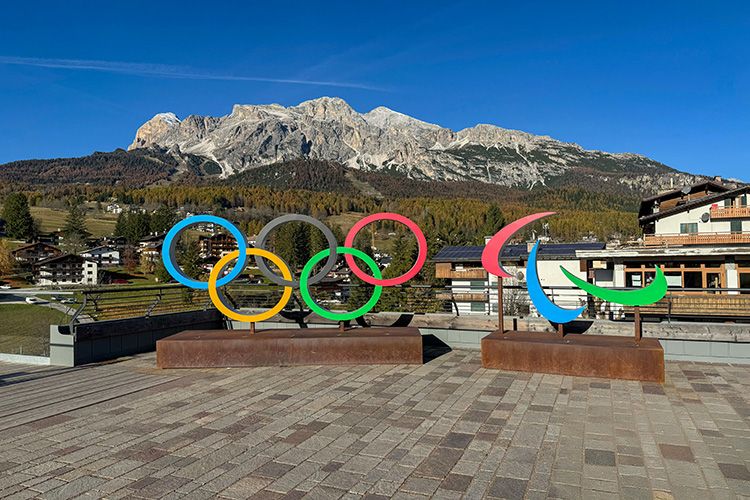
Long proclaimed Italy’s “moral capital,” Milan is renowned worldwide for its significant contributions to fashion, design and the arts. Soon, another point of pride will be added to the city’s storied history, when the regional hub—and partnering town Cortina d’Ampezzo—plays host to the 2026 Winter Olympics in February. Luca Cottini, PhD, is a professor of Italian Studies and an expert on the evolution of Italian culture, particularly through the 19th and 20th centuries. Recently, he shared some thoughts concerning Milan and Cortina’s successful joint bid for the Olympics, the themes and iconography expected to define this year’s opening ceremony and the symbolic significance of Italy’s selection as a host nation. Question: What was the role of past major events in Milan and Cortina—like the 2015 World’s Fair and the 1956 Winter Olympics—in helping to elevate their appeal for these games? Luca Cottini: I’ll start by saying that although people notice world’s fairs less than the Olympics, they are more impactful to a city and country because they generate more revenue, business, political relationships and positive reputation. They are events in which all the world comes together and each country exposes its excellence, while the host nation brings a visibility that it would not carry otherwise. In 2015, Milan hosted the world’s fair, which generated a completely new fairgrounds area and a visibility of politics, industry, technology and modernity in a way that brings the city to a global stage. I would say that is when the ascent of Milan really started, especially as a desirable destination. With Cortina, after the 2015 World’s Fair—and especially after the COVID-19 pandemic—the Dolomites became really a popular region for travelers to visit. Cortina is also symbolic to Olympic history, because it's the site of the first Olympics that took place in Italy, in 1956 during the reconstruction era. That was the Dolce Vita period, in the middle of the 1950s economic boom, and those games were followed by Rome’s Summer Olympics in 1960. They both represented a way in which Italy, coming out of the war destroyed, was reaffirming its rebirth. Over the years, fewer cities have wanted to host the Olympics because they tend to carry a lot of economic burden, financial debt and little return on investment. In this sense, Milan and Cortina, helped by increased popularity after the world’s fair, sold themselves as a sustainable Olympics. Ninety percent of the buildings were refurbished from older buildings, and they will serve purposes after the Olympics. It’s difficult to tell whether it’s economically sound or not, but it is a way to promote two cities that are in big moments of growth. Q: These Olympic Games will be celebrating Milan’s contributions to fashion. What is the city’s significance to the fashion world? LC: Milan is certainly the capital of fashion in Italy, and is one of the capitals of fashion in the world, along with Paris, New York and London. The fashion heritage that the city carries now in iconic brands like Armani, Versace, Moschino and Dolce & Gabbana is the outcome of a process that took shape in the late 1970s. Until then, fashion in Italy was mainly related to Rome, through cinema, and Florence, as that city represented a new Renaissance in the postwar years. But in the 1970s, much of this fashion world moved from those cities to Milan, because there was a conglomeration of labor, skills, capital and creativity that generated a complex productive and cultural system, or the so-called “Sistema Moda.” This is a particular approach to the industry in Italy that coordinates management and creativity around the figures of a big creative director and a big manager who work together in creating not just nice styles, but also sustainable outlets and markets in and outside Italy. In turn, with its reputation, Milan gives the Olympics that seal of grandeur and coolness. The connection with fashion and promotion of uniqueness is part of the national rhetoric that surrounds what we call “Made in Italy,” this idea of luxury, styling, beauty, order and measure that is endowed in the Italian DNA. Q: Andrea Bocelli—who also appeared in Torino’s 2006 closing ceremony—is supposed to sing once again in this year’s opening ceremony. Aside from his popularity, what is the symbolic significance of his selection as a performer? LC: Bocelli is an interesting case. He is a prototypical Italian success story, which is born in the peninsula but is then ratified outside of Italy. As Bocelli became a global sensation in the U.S., he then came back to his roots in Italy, where his voice has become a symbol of national unity, as epitomized in his solo concerto of Milan, during the pandemic, when he sang in front of the empty Piazza del Duomo, facing the city’s cathedral. In his Catholic faith and secular operatic repertoire, he symbolizes Italian culture as a similar piazza or open space where different voices can converge in a temperate balance. When you put together Bocelli, Mariah Carey and whoever else will be part of the ceremony, that same Italian identity will give rise to a new synthesis, as the encounter of tradition and novelty, grounded-ness and openness. Q: The Olympic flames are supposed to be lit in two cauldrons—one in Milan and one in Cortina—each with a design inspired by Leonardo da Vinci. What was da Vinci’s importance to Milan, specifically? LC: Da Vinci is part of the fabric of Milan. He spent 20 years in the city, painting “The Last Supper” and working at Castello Sforzesco, as well as many other places. His footprint is all over Milan, in its design, walls, canal system and more. He is an archetype of the Italian mind in as much as it represents the combination of engineering and beauty. The word Ingenium in Latin, meaning “genius,” overflows in English into the word “engineering” and also “ingenuity,” which reflects the creative mind. Da Vinci represents the synthesis of Italian Ingenium as a combination of aesthetics and problem solving, which you still see in the city today.

Baby, It's Cold Outside… And That's No Joke for Seniors
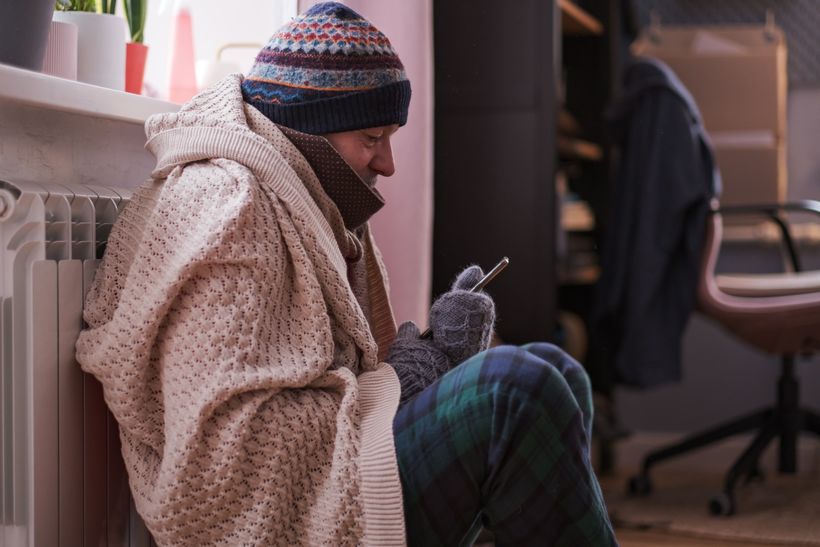
How cold is it? • It's so cold I saw a dog stuck to a fire hydrant. • It's so cold my words froze mid-air and my neighbour had to thaw them out to hear what I said. • It's so cold, I just saw a politician with his hands in his own pockets. Okay, I'm joking—but just a bit. Because while I enjoy a good cold-weather quip, hypothermia isn't funny. Currently, this severe Arctic blast is gripping Canada and large parts of the United States, dropping temperatures 20–40°F (11–22°C) below seasonal norms across a 2,000-mile stretch of North America. Nearly 80 million people are under winter storm warnings. Power outages are anticipated. Roads could be impassable. Travel is about as appealing as a root canal in a snowstorm. For many seniors on both sides of the border, this isn't just an inconvenience—it's a real safety risk. The Cold, Hard Stats (Brace Yourself) Looking at the research I couldn't believe what I found: Older adults are more than 5x as likely to die from hypothermia as younger adults (Kosatsky et al., 2015). In the U.S., approximately half of all hypothermia deaths are people over 65 according to data from the CDC. In Canada, adults over 75 are more than 5 times more likely to die from hypothermia than younger adults—and 87% of those deaths happen right in their own homes. (StatsCan Health Infobase ) Read that again. Slowly. Not on frozen lakes. Not stranded on highways. Instead, in familiar living rooms. Sitting on well-worn couches. Beneath afghans crocheted by someone who loved them. Why Your Body Becomes a Cold -Weather Traitor Our bodies change as we age, and not in the fun "I've earned every wrinkle" way. The insulating fat layer under the skin thins. Circulation slows. Metabolism drops like your interest in small talk. Certain medications—prescription and over-the-counter cold remedies—can interfere with temperature regulation and awareness. Your body's thermostat? It's on the fritz. Here's the math: Hypothermia doesn't require a blizzard. It can begin indoors when temperatures fall below 65°F / 18°C. And here's the truly dangerous part: hypothermia affects the brain first. Judgment declines before shivering becomes severe. You don't realize you're in trouble. You just feel "a bit chilly" while your core temperature quietly drops. Stop Acting Your Age! (But Also... Dress as if you know your age) I'm all for embracing life at every stage—hiking to Everest Base Camp at 60-something, teaching Zumba, and that MBA thing at 70, refusing to "act your age." But embracing life in this weather requires wisdom, not bravado. Cold weather brings real risks: • Slips and falls on icy surfaces (and no, we don't bounce like we used to) • Increased risk of heart attack and stroke because cold thickens the blood • Respiratory infections that linger far too long • Frostbite on fingers and toes • Hypothermia that clouds thinking before any alarms sound. The Indoor Survival Guide—Keep Up (Yes, You Can Get Hypothermia at Home) Set the thermostat to at least 68–70°F (20–21°C). This is not a time to be a miser. Heating bills can be expensive, but hospital stays are even more costly. And they don't even give you warm blankets anymore. Layer like a pro. This is not the time for fashion minimalism. Think: • Long underwear or thermal leggings • Pyjamas under clothes • Stockings or tights under pants • Two pairs of socks • Warm boots with good tread (essential for any outdoor ventures) • Shirts layered under sweaters When it's this cold, if you still own leg warmers—congratulations. Wear them. The warmth is worth the call from the '80s asking for them back. Hats indoors are permitted. This isn't a fashion show; it's survival style. You lose a lot of body heat through your head. Emulate your inner Elmer Fudd if you need to. Carbon monoxide alarms are essential & in many areas legally required. When temperatures drop, people get creative—and desperate. Space heaters, fireplaces, generators, kerosene heaters, or (please, dear God, don't) using gas ovens for heat. That last one is about as safe as texting while skydiving. And here's an important PSA: Starting January 1, 2026, Ontario's updated fire code mandates a functioning carbon monoxide alarm on every level of homes that have fuel-burning appliances. Remember to test alarms when you change your clocks for daylight saving time—it's easy to do, and not easy to forget. Block drafts like you're defending a castle. Roll towels under doors, seal windows, close unused rooms, open curtains during sunny days, and close them tightly at night. Check your medications. Ask your pharmacist or doctor if any prescriptions or over-the-counter remedies influence temperature regulation or alertness. Knowledge is power—and warmth. Check Food & Other Supplies. If venturing out feels risky, order groceries for delivery. Services like Voilà by Sobeys, Instacart, PC Express, and many local grocers deliver directly to your door. This isn't laziness—it's smart risk management. Most delivery services are free or inexpensive, especially when compared to the alternative: icy sidewalks, falls, broken hips, or getting stranded in extreme cold while wearing inadequate footwear because "it's just a quick trip." Clear Your Snow. Snow and ice hinder movement. Limited movement results in isolation. Isolation worsens depression and cognitive decline. Clear snow isn't just about safety—it's about dignity. Pro Tip: Protect Your Pipes (and Your Wallet). Winter power outages can mean burst pipes and serious water damage. If you expect a prolonged outage: • Know where your main water shut-off is • Turn it off • Open faucets to drain the lines It feels extreme—until it doesn't. Until you're standing in three inches of water at 2 a.m., wearing your emergency leg warmers. Know or Live Near an Older Adult? Here's Your Cold Weather Action Plan Don't ask if they need help—just do it. Clear the porch. Shovel a path. Salt the steps. Think of it as the winter cousin of snow angels: shovel angels. Be one! When people Are Shut In—Go check in with them. For those stuck indoors, reach out by video, not just text or voice. Seeing someone tells you far more than hearing "I'm fine." Use FaceTime, Zoom, WhatsApp, or Google Meet. Do this with older people you know. Because pride prevents people from asking for help. Shame prevents people from being honest—about empty fridges, sleeping in mittens, or wearing coats to bed. Look for these signs: • Confusion or slurred speech • Shivering—or lack of it (paradoxically dangerous) • Pale or bluish skin • Slow movements or lack of coordination • Extreme fatigue Know When to Call for Help If something feels off, err on the side of safety. In Canada: • Telehealth Ontario: 1-866-797-0000 • Quebec: 811 • Other provinces: Know your local health line If you notice any signs of distress—confusion, chest pain, shortness of breath, severe cold exposure—or if you're unsure, call 911. Cold-related emergencies escalate rapidly. The Culture Shift We Need—Right Now Cold snaps reveal faults in our systems and communities. This is the time to foster a check-in culture: a call, a knock, a cleared walkway, groceries dropped at the door. Preparation matters. Connection matters more. Winter is temporary. The habits we build to take care of one another are not. Be cool—and stay warm out there, friends. Sue Don’t Retire… Rewire! What are your best winter safety tips? Share them—because staying warm is better when we do it together. Want more of this? Subscribe for weekly doses of retirement reality—no golf-cart clichés, no sunset stock photos, just straight talk about staying Hip, Fit & Financially Free.



When Betting Goes Mobile: The Hidden Cost to Young Adults’ Finances
As online gambling and sports betting surge across the United States, concerns are mounting about the financial and social consequences—particularly for young people. Dr. Jared Pincin, Associate Professor of Economics at Cedarville University, offers journalists a data-driven economic lens on how the rapid expansion of digital gambling is reshaping personal finances and increasing financial risk among younger Americans. What's Happening Mobile betting apps have transformed gambling into an always-available activity, accessible anywhere and at any time. With aggressive marketing tied to professional and collegiate sports, online gambling has become normalized—especially among young adults. As participation rises, so do reports of debt, financial instability, and problem gambling, raising questions about consumer protection, regulation, and long-term economic impact. Dr. Jared Pincin primary research interests explore the intersection of public choice economics with foreign aid as well as issues in sports economics. Pincin has published in popular publications such as The Hill, Real Clear Markets, Foxnews.com, and USA Today and scholarly journals such as Oxford Development Studies, Applied Economic Letters, and the Journal of Sport and Social Issues. View his profile here Key Insights Online Gambling Is Built for Continuous Spending Modern gambling platforms are designed to encourage repeated engagement. Gamified interfaces, instant wagers, and constant prompts make it easy for users to lose track of spending, increasing the likelihood of financial loss over time. Young Adults Face Elevated Risk Young people, particularly college-age students and adults in their twenties, are among the fastest-growing users of online betting platforms. Limited financial experience, combined with easy credit access and social pressure, makes this group especially vulnerable to poor financial outcomes. Personal Finances Are Directly Impacted Gambling losses often come at the expense of savings, rent, tuition, and long-term financial planning. Dr. Pincin emphasizes that gambling platforms generate profit only when users lose, making sustained participation a negative-sum financial activity for individuals. Economic Incentives Drive Expansion From an economic standpoint, gambling growth is fueled by state revenue incentives and private profit motives. Dr. Pincin helps explain how these incentives can conflict with consumer well-being, particularly when regulatory safeguards lag behind technological innovation. About Jared Pincin Dr. Jared Pincin is an Associate Professor of Economics at Cedarville University. He holds a Ph.D. in economics and specializes in public choice, behavioral economics, and sports economics. His work examines how incentives shape individual decision-making and how policy choices affect financial outcomes at both the personal and societal levels. Let Us Help with Your Coverage Jared Pincin can assist reporters by: Explaining why online gambling participation has risen so quickly among young people Breaking down the economic mechanics of betting platforms and personal financial risk Providing context on the long-term financial consequences of habitual gambling Contributing expert insight to stories on regulation, advertising, and consumer protection Why This Matters As gambling becomes increasingly embedded in American culture, its financial consequences are no longer limited to isolated cases. Understanding how online gambling affects young people’s financial stability is essential for informed public reporting. Dr. Pincin offers clear, accessible analysis that helps audiences understand the economic realities behind the headlines.



Always On, Never Present: How Work Takes Over Your Life
In many workplaces, being “good at your job” has quietly become synonymous with being constantly reachable. Slack on the laptop, email on the phone, DMs on every platform and a creeping expectation that you’ll answer “just one more thing” at night, on weekends, and even on vacation. Psychotherapist Harshi Sritharan, MSW, RSW and Offline.now founder Eli Singer say this culture is pushing knowledge workers into a state of continuous partial attention: always connected, never fully present. “Most of my high-performing clients don’t have a time-management problem,” says Sritharan. “They have a boundary problem — and their phones are the device enforcing it. Every ping is a tiny dose of dopamine and a tiny spike of stress, and their nervous system never really shuts off.” Research on digital and media multitasking backs up what she sees clinically. Studies have linked frequent task-switching between apps and notifications to: Reduced sustained attention and working memory Slower task performance and more errors Greater mental fatigue and perceived stress Neuroscience and cognition papers also describe how multitasking conditions the brain to seek novelty and micro-rewards, making it harder to tolerate the “boredom” of deep work — exactly the kind of focus most knowledge jobs actually require. Singer argues that the issue isn’t just individual burnout; it’s organizational self-sabotage. Offline.now’s behavioral data show that people now spend about 10 of their 16 waking hours on screens — roughly 63% of the day — and that 8 in 10 want a healthier relationship with tech but feel too overwhelmed to know where to start. “We’ve built workplaces that confuse constant availability with value,” Singer says. “But when you look at the cognitive science, an always-on culture is actually an anti-productivity policy. ‘Do Not Disturb’ isn’t a luxury — it’s the competitive advantage most teams are missing.” The term “continuous partial attention” coined to describe the state of being perpetually attuned to the possibility of new information has been linked in emerging research and commentary to chronic stress, shallow thinking, and emotional exhaustion in modern knowledge work. “The moment you stop treating rest and focus as perks and start treating them as infrastructure, everything changes,” Singer says. “Teams ship better work, people make fewer mistakes, and employees don’t feel like they have to burn their nervous system to keep their job.” For journalists covering work culture, productivity, burnout, or the future of work, this story connects the dots between work apps, multitasking science and mental health and offers a concrete alternative to the “always on” norm. Featured Experts Harshi Sritharan, MSW, RSW – Psychotherapist specializing in ADHD, anxiety, burnout and digital dependency. She helps high-achieving professionals understand how constant notifications, late-night work and screen habits disrupt dopamine, sleep, and emotional regulation — and what sustainable boundaries actually look like. Eli Singer – Founder of Offline.now and author of Offline.now: A Practical Guide to Healthy Digital Balance. He brings proprietary behavioral data on digital overwhelm, the Offline.now Matrix framework, and case examples of organizations reframing “Do Not Disturb” as a strategic asset, not a sign of disengagement. Expert interviews can be arranged through the Offline.now media team.



Kwanzaa Explained: A Modern Celebration Rooted in Culture, Community, and Purpose
Observed from December 26 to January 1, Kwanzaa is a cultural celebration that centres on African heritage, shared values, and community renewal. While often grouped with year-end holidays, Kwanzaa is distinct in both origin and intent — designed not as a religious observance, but as a time for reflection, education, and collective responsibility. At its core, Kwanzaa asks a simple but powerful question: How do communities honour their past while shaping a stronger future? The Origins of Kwanzaa Kwanzaa was established in 1966 by scholar and activist Maulana Karenga during a period of social change in the United States. It was created to provide African Americans with a way to reconnect with African cultural traditions while reinforcing shared values that support family, community, and social progress. The name “Kwanzaa” is derived from a Swahili phrase meaning “first fruits”, reflecting harvest celebrations common across many African cultures. The Seven Principles: Nguzo Saba Each day of Kwanzaa focuses on one of the Seven Principles, known collectively as the Nguzo Saba. These principles guide the celebration and serve as a framework for reflection and action: Umoja (Unity) – Strengthening family and community bonds Kujichagulia (Self-Determination) – Defining and speaking for oneself Ujima (Collective Work and Responsibility) – Building together and solving problems collectively Ujamaa (Cooperative Economics) – Supporting and sustaining community businesses Nia (Purpose) – Contributing to the restoration and development of community Kuumba (Creativity) – Leaving communities more beautiful and beneficial than before Imani (Faith) – Belief in people, parents, teachers, leaders, and collective struggle Each evening, families light a candle on the kinara, symbolizing progress through these values. Symbols and Traditions Kwanzaa celebrations include meaningful symbols that reinforce its themes: Kinara – The candle holder representing roots and foundation Mishumaa Saba – Seven candles representing the Nguzo Saba Mkeka – A woven mat symbolizing tradition and history Mazao – Crops representing collective labour and productivity Kikombe cha Umoja – The unity cup used for communal reflection Zawadi – Gifts that emphasize creativity, learning, and cultural meaning Celebrations often include storytelling, music, poetry, shared meals, and discussions about cultural identity and social responsibility. Kwanzaa in Practice Today Kwanzaa is observed in the United States and internationally by people of African descent and others interested in African culture and values. It may be celebrated alongside religious holidays such as Christmas or Hanukkah, or on its own. Over time, Kwanzaa has become a platform for conversations about: Cultural identity Community empowerment Education and youth development Economic equity Social responsibility Story Angles for Journalists Why Kwanzaa was created — and why it still resonates today The role of culture in community resilience How Kwanzaa is celebrated across generations Education, identity, and the Nguzo Saba Kwanzaa’s place in modern multicultural societies How families blend Kwanzaa with other year-end traditions Why Kwanzaa Matters Kwanzaa offers a framework for reflection that extends beyond a single week. Its principles emphasize unity, purpose, and shared responsibility — themes that remain relevant in discussions about culture, equity, and community building. In a season often dominated by consumption and spectacle, Kwanzaa provides a values-driven pause — one rooted in heritage, intention, and collective progress. Let's get you connected to an expert! Find more experts here: www.expertfile.com