
Experts Matter. Find Yours.
Connect for media, speaking, professional opportunities & more.

How Philadelphia Eagles' head coach achieves Super success with 'Ted Lasso' management style
Not long after Nick Sirianni was hired by the Philadelphia Eagles in 2021, fans started noticing similarities between the head coach and TV’s Ted Lasso. The University of Delaware's Kyle Emich can discuss how Sirianni's team approach compares to the more top-down structure favored by Kansas City Chiefs coach Andy Reid. Like Lasso – a high school football coach on the Apple TV show of the same name who takes over an English soccer club with no prior experience – Sirianni is responsible for the culture, first and foremost. He relies on his coordinators, who call the plays. In essence, he is a more collaborative leader. By contrast, Reid is a top-down coach who currently calls the plays and always has, dating back to his time as coach of the Eagles. Philadelphia fans became more than a little weary of him saying "that's on me" at post-game press conferences following disappointing losses. With back-to-back Super Bowl titles under his belt with the Chiefs, it's difficult to argue with the success of Reid's style now. This could be fodder for sports talk radio, but it's also something Emich, a professor of management, can discuss from an academic perspective. The professor says there's advantages and disadvantages to both: • "The main advantages for the top-down approach are speed of decision-making and extreme novelty (you can do whatever pops into your head). The advantages of the coordinator approach are a larger information base to draw from and specialized knowledge." • "The more team-based approach has a lot of potential, but is difficult to execute well because it requires coordination." Emich, who has discussed management and sports teams several times in the past (including Super Bowl LII, when the Eagles defeated the New England Patriots), is available for interviews.


Expert Spotlight: Suicide Prevention and Health Care Acccreditation
Recently, Michael Johnson, MA, CAP, CARF International Senior Managing Director of Behavioral Health joined Adam Chu, MPH, from the Suicide Prevention Resource Center, and Kasie Pickart, MPH, from Hope Network in an interesting panel discussion where they shared insights on implementing the Zero Suicide model and integrating CARF's comprehensive suicide prevention standards. The discussion highlighted these key elements: Introduction to Suicide Prevention Resource Center The center's mission is to advance suicide prevention across diverse populations using training, consultation, and resources. CARF accreditation standards: CARF's consultative approach emphasizes quality improvement through peer-surveyed standards. Alignment with the Zero Suicide framework, incorporating risk assessments, safety planning, and care transition protocols. Hope Network's implementation journey: Leveraged a SAMHSA grant to adopt Zero Suicide practices across 200+ Michigan locations. Aligned practices with CARF standards for comprehensive suicide prevention. Developed standardized tools and a suicide care pathway for consistent risk management. Outcomes and challenges: Improved training and organizational culture around suicide prevention. Challenges include ensuring cross-team communication and sustaining practices post-grant funding. View the webinar: The discussion concluded with insights into maintaining long-term quality improvement and the benefits of CARF accreditation for suicide prevention efforts. Michael Johnson is the CARF International Senior Managing Director of Behavioral Health. If you are looking to know more or connect with Michael, view his profile below to arrange an interview today.


Return to Office Mandates: Top 3 Challenges for Employers and Employees
Full time return-to-office (RTO) mandates – most recently from JPMorgan Chase, Amazon and now the U.S. federal government – have made headlines across the country and caused consternation among remote and hybrid employees. Whether one is – or is not – a supporter of remote and hybrid work, the challenges that arise with RTO and with remote/hybrid arrangements are important to consider from both sides – employers and employees. Baylor University management expert Sara Jansen Perry, Ph.D., who studies employee stress and well-being, including the role of remote/hybrid work and leadership, said working from home has existed in some form for decades, and research suggests it will continue to be an option for many workers and organizations. "We know many employees value remote work so much as a benefit that they will choose jobs based on whether it is an option,” Perry said. “Fortunately, we have seen many benefits of remote work as well, including employee productivity, cost savings, enhanced work-life balance and well-being, to name a few. Even if employees return to the office a few days a week, these benefits can still be realized, including longer term organizational benefits in terms of retention and applicant attraction. However, if an organization is set on returning to office full time, there are some challenges they should consider and proactively address.” Perry highlights 3 key challenges about Return to Office mandates from the perspectives of both employers and employees, applying foundational topics in organizational psychology, among them leadership, trust, culture, performance management and retention. Those three key challenges are a must read and part of the entire article attached below: Are you a journalist looking to know more? The let us help. Sara Jansen Perry, Ph.D., The Ben Williams Professor of Management in the Hankamer School of Business at Baylor University, is a nationally recognized researcher on employee stress and well-being, including the role of remote/hybrid work and leadership. Sara is available to speak with media about the recent Return to Work announcement for the federal bureaucracy. Simply click on her icon now to arrange an interview today.


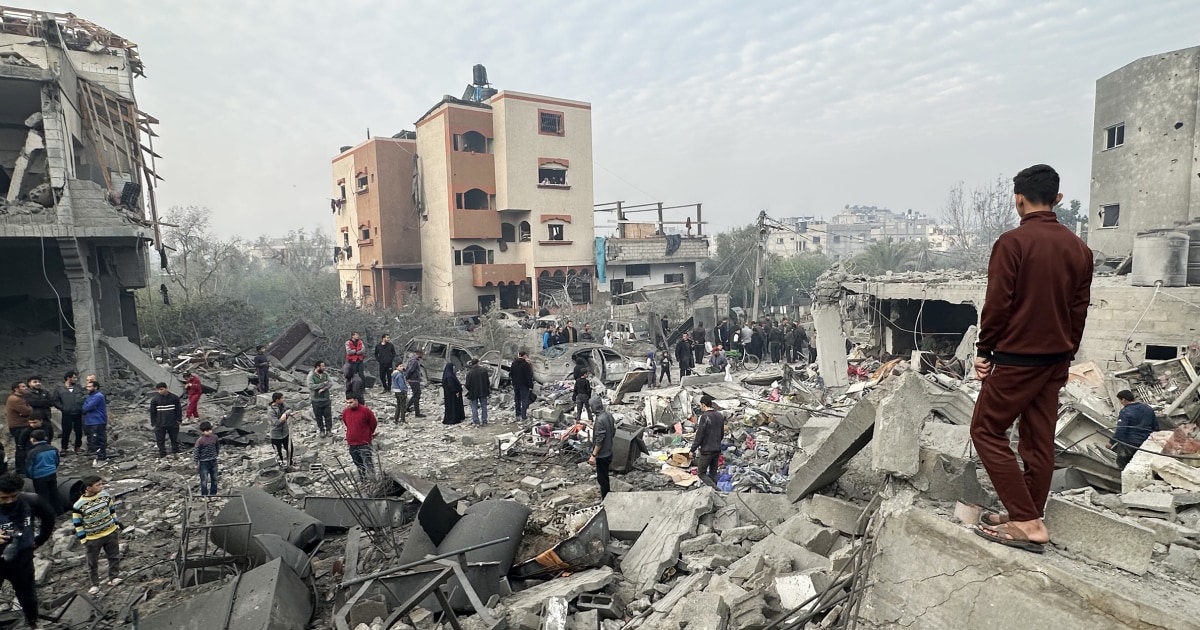
What does the Israel-Hamas ceasefire mean
After 15 months of war Israeli Prime Minister, Benjamin Netanyahu, announced Wednesday, January 15, his in the process of receiving approval for ceasefire from his security Cabinet in order to further the truce with Hamas. This ceasefire is not only expected to stop a war that has taken more that 46,500 lives, but also the phased release of dozens of American hostages and hundreds of Palestinians. Reports reveal that the ceasefire may be in effect by the end of the week. How will American citizens respond to what appears to be a resolution to the conflict in the middle east? International relations expert, Dr. Glen Duerr, has been a reliable source on the events occurring in the Middle East. Here are three valuable insights from a recent interview: Prime minister Benjamin Netanyahu needs the support from his security and full Cabinet to receive approval on will be a roughly six-week initial ceasefire phase. The Israel Supreme Court has up to 24 hours to approve The Prime Minister's ceasefire. It is estimated that the ceasefire will take full affect Sunday. What can we expect in the Middle East during the wait of the ceasefire? It was announced that there will be an emergency cabinet meeting held tomorrow renegotiating the deal after Prime Minister Netanyahu's office accused Hamas on reneging on part of the of the ceasefire. However a Hamas spokesperson Sami Abu Zuhri denied all accusations of Hamas reneging on the terms of the ceasefire. Is the conflict and delay of the ceasefire a prediction to the conflict that is to come? The first stage of the ceasefire will take about 6 weeks, allowing the phased release of American and Palestinian citizens. Hamas is expected to release at least 2 American citizens during the first phase and a a Senior administration official during the second phase. It is expected with each hostage released by Hamas a number of Palestinian detainees will be released. How will the phased release of Hamas hostages affect the culture of Americans? If you are a journalist covering the ceasefire between Israel and Hamas, look no further than our experts for valuable insight and expert knowledge. Dr. Duerr is an expert on this subject and is available to speak to media regarding this ongoing conflict in the Middle East and the ongoing the war between Israel and Hamas – simply click on his icon to arrange an interview. Or schedule an interview by contacting Mark Weinstein at mweinstein@cedarville.edu


Santa Ana Winds: Nature's Power and Its Impacts on Communities
The Santa Ana Winds, a defining phenomenon of Southern California, are more than just a weather pattern—they are a powerful force shaping the region's environment, safety, and culture. These hot, dry winds can dramatically exacerbate wildfire risks, affect air quality, and even influence human behavior. Understanding the Santa Ana Winds is vital for addressing broader issues of climate change, disaster preparedness, and community resilience. Their far-reaching effects provide journalists with a range of compelling story angles, such as: The meteorological science behind the Santa Ana Winds and why they occur Their role in intensifying wildfires and efforts to mitigate these risks Health impacts, including effects on air quality and respiratory conditions Psychological and behavioral studies linked to wind-driven stress and aggression Historical and cultural significance of the Santa Ana Winds in Southern California How climate change might alter the frequency and intensity of these winds If you're covering the massive fires in California, let us help with your ongoing coverage. Connect with an expert about the Santa Ana Winds: To search our full list of experts visit www.expertfile.com


Saving the world, one yard at a time
University of Delaware professor Doug Tallamy has a simple mission: Encourage people to rid their property of invasive plants and replace them with native ones. One of the ways he's tackling it is through a concept called “Homegrown National Park,” a grassroots initiative he co-founded to offer a simple solution for the biodiversity crisis — the decline of a variety of animals, plants and numerous species. Tallamy, the TA Baker Professor of Agriculture and Natural Resources at the University of Delaware, is trying to encourage everyone to do their part to protect the planet. If invasive plants (which don’t belong in an area and can ultimately harm the ecosystem by taking away essential resources from other plants) grow out of control, then an area loses its biodiversity, the ability for multiple plant and animal species to function at once and create a rich ecosystem. Invasive species are prolific. For example, many invasive plants produce berries, which some birds eat. The birds then spread those seeds around. So, once invasive plants are in an area, they’re hard to get rid of. The idea is to replace them with native plants, which have historically belonged to a region and provide critical habitat for insects, birds and other creatures. It's an uphill climb, but Tallamy persists and is trying to save the world, one yard at a time. “Everybody has a responsibility of doing things that sustain their little piece of the earth, and there are a whole bunch of things one individual can do to help in that regard,” Tallamy said. What’s not so simple, however, is getting the Earth’s 8 billion people (or, at least, anyone with property) to do this. “We are trying to change the culture so that [replacing invasive plants with native ones] becomes the norm, not the exception,” Tallamy said. “We’re not getting rid of lawns. But we don’t need 44 million acres of them. There are now so many people on the planet that natural systems are not functioning the way they need to sustain us.” A snowball effect Much of our current plant culture revolves around colorful, aesthetically pleasing ornamental plants that don’t support the local food web. When they grow out of control, a local yard or larger region loses out on biodiversity. The natural world is all connected. For example, Tallamy said, if we lose pollinators like our native bees that transport pollen between plants, then we also lose most of our plants that produce flowers and fruits. It’s a snowball effect. “If that happens, the energy flow through our terrestrial ecosystems is almost totally disrupted, which means the food webs that support our vertebrate animals, our amphibians, our reptiles, our birds and our mammals would collapse and all those animals would disappear,” Tallamy said. “Without insect decomposers, the creatures that break down dead material, mostly plants, would rot and only bacteria and fungi would endure.” “Homegrown National Park” has generated a lot of buzz for Tallamy, who received recognition for it in October by the Massachusetts Horticultural Society. The MHS awarded Tallamy with its highest honor, the George Robert White Medal of Honor, for eminent service in the field of horticulture. Conservation in action Tallamy’s quest to “change the culture” on planting can be witnessed in the fall at UD. On a warm October afternoon, he and a group of students from the Introduction to Insect and Wildlife Field Studies (ENWC 165) course trudged out to UD Wetlands to curtail some pesky invasive plants native to Asia. Equipped with clippers, loppers and handsaws, they walked behind Worrilow Hall, part of the College of Agriculture and Natural Resources’ 350-acre campus, which includes the UD Wetlands, an area that was formerly a dairy cow pasture but transformed into wetlands in 2008 because pollution from the farm was reaching the local watershed. The wetlands were created because wetlands, by design, absorb nitrogen from runoff before it goes into waterways. They then release it as a gas into the atmosphere. But the UD Wetlands repeatedly deal with pesky invasive plants such as Porcelain-berry and Chinese elm. Over the years, UD students have stymied the species from overtaking the area. “See this? This is a good guy,” said Tallamy to the students as he held up a fallen branch. “You just want to get the Porcelain-berry off of it. They’ll grow back very well. But we want to nip [the Porcelain-berry] in the bud.” Taylor Kelly, a senior wildlife ecology and conservation major who took part in the invasive species removal, said Tallamy has helped her better understand the interconnectedness of various ecosystems. “Native plants provide so much value to our local pollinators, which add value to our local birds because they feed on pollinators, seeds, fruit and trees,” Kelly said. When native plants are in their natural environment, she added, it is a beautiful thing to see. Gardening with intention Tallamy, who began his teaching career at the University of Delaware in 1982, has published numerous research papers about entomology and written three books about native plants, insects and ecosystems, with a fourth book soon to come out. Lately, much of his career has revolved around public outreach. He often lectures across the country about native plants and their ecosystem value and is regularly quoted in outlets like The New York Times, The Washington Post and Natural History Magazine. “Dr. Tallamy is a rare scientist that is able to explain his work to everyone,” said Jake Bowman, UD professor of wildlife ecology and chair of the Department of Entomology and Wildlife Ecology. “His passion for the importance of native plants has driven a major shift in thinking.” Years ago, when Tallamy first set out to spread his messages about native plants, he anticipated a lot of pushback from horticulture enthusiasts who he thought might be resentful about being told how to choose their plants. Instead, Tallamy found that many actually embraced his ideas, including Delaware’s own Master Gardeners, a group of about 300 volunteer educators trained by UD Cooperative Extension. Among his supporters are Delaware Master Gardeners Karen Kollias, Brent Marsh and Judy Pfister, who each praised Tallamy for the impact he has had on how they garden. Kollias now “gardens with intention”— not for herself or her neighbors, but for the environment. “I was a gardener before,” she said. “Now I consider myself an ecological gardener.” After Marsh received a copy of Tallamy’s 2007 book, Bringing Nature Home, which talks about the link between native plants and native wildlife, Marsh became a Master Gardener and began planting native species in his Georgetown lawn. Today, native plants such as woodland sunflowers and oak trees adorn Marsh’s yard, and he is grateful for the value of native plants that he learned through Tallamy’s book. “Someday, maybe 20 years from now when I’m 100 years old, somebody's going to buy my house and they’re going to say, ‘Who planted all these oak trees?!’” Marsh chuckled. “Doug Tallamy changed my life.” As Tallamy has sought to simplify scientific knowledge with the general public, Pfister has utilized Tallamy’s approach to do the same. “He has a way of just making the whole thing a big circle, tying the need for a plant back to the need for a bird back to the need for a tree,” she said. Tallamy, who has been delighted by the fervor ignited by his native plants teachings, said the future of the Earth and its diverse ecosystems will in large part depend on how people treat their yards. “In the past, we asked our landscapes to do one thing, and that was, be pretty,” Tallamy said. “Now we have to ask them to do two things: be pretty and ecologically functional. That's the horticultural challenge of today.” But it’s one Tallamy believes can be achieved. Sometimes, he wishes he could speak to his 10-year-old self and tell the young boy to dig another pond for the toads to colonize. Restore. Conserve. Focus on keeping nature’s ecosystems intact, he would say. “We have to do both,” Tallamy said. “Yes, we have to conserve what’s out there, but we have to get in the mindset that we can really put a lot of it back.” Tallamy and Homegrown National Park co-founder Michelle Alfandari have created a database for people to type in their zip code and discover which native plants are best for their area.


13 Georgia Southern faculty ranked among world’s top 2% of scientists
Thirteen distinguished faculty members from Georgia Southern University were ranked among the world’s top 2% of scientists. This list, published annually by Elsevier and Stanford University, recognizes the world’s top scientific researchers. The featured faculty are conducting cutting-edge research in disciplines ranging from glass science to cybercrime prevention. Georgia Southern’s research enterprise has grown tremendously in the last few years, even setting an institutional record for total research expenditures of over $43 million in FY ‘24. Bolstered by an unwavering commitment to discovery, creativity and innovation, the University is on track to achieve R1 status, the highest level of research activity, in the next three to four years. Vice President for Research and Economic Development David Weindorf, Ph.D., P.G. is among the faculty recognized and is humbled to be included. He sees his colleagues’ inclusion as indicative of an already prosperous research culture with ample opportunities for growth. “I am incredibly honored and humbled to work alongside some of the best and brightest at Georgia Southern,” said Weindorf. “I’m delighted our diligent efforts have resulted in such esteemed and well-deserved recognition. While I am grateful to be included in this list, I want to thank all those faculty who inspire me every day and continue to push us forward as we strive to elevate our University and the larger community.” The list and bios of the 13 Georgia Southern scientists are included in the attached release below: If you're interested in learning more or a reporter looking to speak with any of the scientists listed - simply contact Georgia Southern's Director of Communications Jennifer Wise at jwise@georgiasouthern.edu to arrange an interview today.


Notre Dame Cathedral, an iconic symbol of Paris and a masterpiece of Gothic architecture, has stood for centuries as a testament to human creativity, spirituality, and resilience. This historic landmark continues to captivate global attention not only for its artistic and religious significance but also for its ability to endure and inspire amidst challenges like the devastating 2019 fire. Notre Dame matters to the public because it embodies cultural heritage, historical memory, and the ongoing effort to preserve monuments of global importance. Key story angles that may interest a broad audience include: The architectural and artistic marvels of Notre Dame: Exploring its iconic design, stained glass windows, and cultural influence on art and literature. The 2019 fire and restoration efforts: Highlighting the international response, the challenges of restoring historical structures, and the role of modern technology in reconstruction. Notre Dame's role in French and global history: Examining its significance during key historical events, including coronations, revolutions, and wartime preservation. Religious and spiritual importance: Understanding the cathedral’s role as a center for Catholic worship and its influence on interfaith dialogue. The impact of Notre Dame on tourism and local culture: Analyzing how the cathedral shapes Parisian identity and attracts millions of visitors annually. The future of Notre Dame: Discussing sustainability in historical preservation and how the restoration aligns with broader cultural and environmental goals. Connect with an expert about Notre Dame: To search our full list of experts visit www.expertfile.com

Maureen Leffler, D.O., Named ChristianaCare’s Chief Wellbeing Officer
Maureen “Mo” Leffler, D.O., MPH, has been appointed chief wellbeing officer of ChristianaCare, effective Nov. 25. In her role, Leffler leads the ChristianaCare Center for WorkLife Wellbeing and strategies to enhance the professional fulfillment and well-being of ChristianaCare’s nearly 14,000 caregivers, overseeing advocacy programs and initiatives to optimize their experience and foster a culture of well-being throughout the organization. She works closely with leaders across key departments to address factors impacting caregiver well-being. Leffler most recently served as the inaugural chief wellbeing officer at Nemours Children’s Health, where she helped the organization to achieve the 2022 Joy in Medicine distinction from the American Medical Association for prioritizing proven efforts to enhance the professional fulfillment of physicians. There, she established a Center for Associate Wellbeing; led the first systemwide assessment to strategically address well-being and burnout; and implemented a peer support program and expanded the scope of resources available to support the emotional and mental health needs of employees. In collaboration with organizational leaders, she supported targeted clinical team assessments and systems-based interventions to foster well-being. Prior to this role, Leffler served as a pediatric rheumatologist at Nemours and as an assistant professor of pediatrics in the Division of Rheumatology at Thomas Jefferson University. Since 2017, Leffler has served as the course director of the Chief Resident Leadership Training Program for the Accreditation Council for Graduate Medical Education (ACGME). In response to the COVID-19 outbreak, she co-chaired ACGME’s National Task Force on Well-Being. She and her team developed a national graduate medical education well-being community, which she continues to convene, to understand the evolving challenges and share strategies to improve well-being. She represents the ACGME as a coach for the National Academy of Medicine Action Collaborative on Clinical Well-Being and Resilience. She also serves as a consultant to the Professional Satisfaction team at the American Medical Association. Leffler earned her medical degree from the Philadelphia College of Osteopathic Medicine, followed by a residency in pediatrics at Nemours and Thomas Jefferson University Hospital, where she served as chief resident. She subsequently trained in pediatric rheumatology at Nemours and Jefferson. She also earned a Master of Public Health from Temple University and studied chemistry at St. Joseph’s University. Recently, Leffler completed the Georgetown Executive Leadership Certification Program.


The Great Trillion Dollar Wealth Transfer
Summary: Between now and 2026, over $1 Trillion of wealth will move from Canadian Baby Boomers to younger generations. Dubbed the “Great Wealth Transfer,” this change is underscored by a cultural shift toward “giving while living,” where seniors are motivated to share their wealth during their lifetimes, driven by factors including personal satisfaction, rising costs for younger generations, and tax efficiency. These shifts in wealth highlight the importance of open, informed Intergenerational conversations and the need for trusted financial advice to manage this transfer effectively. However, it risks widening wealth gaps between the haves and have-nots. Better financial literacy, tax planning, and a better understanding of real estate’s role in estate planning and wealth management are essential for ensuring equity and sustainable financial legacies. What it Means • The Largest Transfer of Wealth Is Happening Now: Between now and 2026, over $1 Trillion of wealth will move across multiple generations from Canadian Baby Boomers to their GenX and Millennial heirs. • A Culture Shift is Happening: Older Canadians are now, more than ever, “giving while living.” They actively want to share their wealth with younger family members while still healthy. In many families going forward, you won't hear that familiar phrase, "Hey Gram, Stop Spending My Inheritance!" • We aren't fully prepared for this shift: Families need informed, intergenerational conversations among themselves and with trusted financial advisors. They also need to better understand how some of their more significant assets, such as real estate, can provide tax-efficient ways to unlock and share wealth with younger family members. Boomers are sharing their wealth while they still have their health. Many Canadians have joined the growing trend of “giving while living.” This trend is not only changing societal norms but is also spreading like wildfire. The current economic climate, with out-of-reach housing prices coupled with Boomers wanting to witness the impact of their financial gifts, makes for a perfect storm. This storm, valued at 1 trillion dollars, could rebalance the distribution of wealth for many fortunate beneficiaries. Let’s explore what is motivating the Baby Boom generation in Canada to leave a living inheritance to a younger generation: 1. Psychological Reasons: Many seniors want to help their children or grandchildren with significant expenses such as education or home purchases. This provides a gratifying sense of pride. The logic is that they (children or grandchildren) will eventually get their money, so why not give it to them now when they need it the most? 2. Economic Reasons: Some parents or grandparents feel compelled to step in and help financially as they see their adult children and grandkids struggling. It may be to help fund education or to pay off debt such as a student loan. The burden of debt often delays other decisions, such as having children, traveling, or saving for a down payment on a first home or a bigger home to accommodate a larger family. And the price of homes today is well beyond the means of the younger generation, even without student debt. 3. Personal Reasons: Older Canadians often find joy in seeing their financial contributions positively impact their loved ones during their lifetime. Sometimes, there are some less conspicuous motivators as well. Improving their children’s financial situation may entice them to have precious grandchildren, or providing financial assistance could allow the gift giver to have a say on how the money is spent—something they would have less control over if they were deceased. 4. Tax Savings: Distributing wealth while alive can reduce the size of an estate and minimize probate fees. And with the popularity of RESP's and TFSA's there are options to gift or contribute to these plans that may offer tax advantages. And some seniors aim to avoid conflicts by distributing assets directly, ensuring clarity and fairness. 5. Cultural Reasons: Traditional notions of inheritance and family values are evolving. Many Baby Boomers see their wealth as a tool to uplift and empower their families while they are alive and are able to counsel their families on preserving and spending the money wisely. This is an opportunity for seniors to create a legacy while alive. Sharing wealth can bring a sense of purpose, gratitude, and connection. For many, it’s an opportunity to strengthen family bonds and pass on values like generosity, financial literacy, and responsibility. Impact • A Wider Wealth Gap: This transfer of wealth could have a significant impact by increasing the income disparities between the haves and have-nots. According to figures from the Canadian Professional Accountants Association, at the end of 2022, the wealthiest families in Canada (the top 20 percent) accounted for two-thirds of the country’s net worth, while the bottom 40 percent accounted for just 2.6 percent. In this latest economic cycle of soaring inflation and growing credit card debt, the net worth of Canada’s least wealthy households is suffering. And while we’ve seen recent increases in capital gains taxes, more changes from the federal government will likely be required to bridge this wealth divide. • The Need for Honest Intergenerational Conversations. Let’s face it: having a transparent conversation with family members about death and money is awkward. But post-pandemic, we’re seeing more seniors looking closely at their financial and estate plans to see what they can do to pass on wealth to deserving and often younger family members. Getting to know the impact of one’s gifts has its practical advantages in addition to the karma generated. Whether it’s to help a family member buy their first home, pay down college debt or start a business, these gestures can be transformative for other family members and very satisfying for seniors. As the saying goes, "you can’t take it with you." • The Need for Trusted Advisors. For many of these younger beneficiaries lucky to receive this generational transfer, having a clear financial plan that extends to informed tax strategies will be vital. The entire community, from financial planners to accountants, lawyers and mortgage brokers, have a lot of work ahead of them, according to the research. A recent Ipsos Reid study suggests Canadians are primarily unprepared to manage their inherited money. The Ipsos poll (conducted on behalf of RBC Insurance) reveals that 61 percent of Canadians don’t feel knowledgeable about (or haven’t even heard of) the probate process or the process to establish the validity of a will, and 57 percent don’t know that specific insurance policies can mitigate estate tax burden. • Improved Financial Literary for All Ages. Conversations about money also need to extend to better discussions about how significant assets such as real estate holdings contribute to wealth. For instance, given a considerable proportion of many family estates are related to real estate and more seniors are looking to “Age in Place” at home, seniors and their adult children must understand various financial strategies, such as equity lending, that can give seniors the financial freedom to age in place while giving them the cashflow to help younger family members while reducing potential tax burdens. Getting to know the impact of one’s gifts has its practical advantages in addition to the karma generated. Whether it’s to help a family member buy their first home, pay down college debt or start a business, these gestures can be transformative for other family members and very satisfying for seniors. As the saying goes, "you can’t take it with you." The Bottom Line One thing is certain. This is an infrequent event, which, over the next few years, will benefit many. Much is on the line for families, the financial industry, and our government. We should expect to see more discussions on tax reform and addressing wealth disparities to ensure social stability and economic growth. And it will require the financial industry to adapt in a number of ways. For instance, how should we account for these demographic shifts and potentially longer lifespans in our guidelines and how we work with clients? I also hope we see more open and honest discussions about family legacy and financial literacy/education, which play a significant role in preparing the next generation to handle inherited wealth responsibly. As I continue research for my upcoming book, I'm looking closer at demographic trends, gaps in financial literacy, to how our industry needs to work better with Seniors in a way that recognizes these emerging cultural and economic shifts. I'd like to know what you think. Drop me a line in the comments, or reach out to me directly at our new website - www.retirewithequity.ca Don't Retire...Re-Wire! Sue

