
Experts Matter. Find Yours.
Connect for media, speaking, professional opportunities & more.

ExpertSpotlight: The True History of Thanksgiving in America
Thanksgiving is often seen as a time for gratitude and togetherness, but its origins tell a far more complex story that intertwines indigenous history, colonialism, and the reshaping of cultural narratives. Understanding the true history of Thanksgiving invites reflection on the ways history is remembered, celebrated, and taught. As the holiday approaches, uncovering its deeper meaning is vital to fostering awareness of indigenous perspectives, historical accuracy, and the evolution of American traditions. This topic presents rich opportunities for journalists to explore its broader societal implications, with story angles including: Indigenous Perspectives on Thanksgiving: Highlighting how Native American communities view the holiday, including the National Day of Mourning and efforts to preserve indigenous cultures and histories. The Pilgrim-Indian Narrative: Investigating the historical accuracy of the widely taught Pilgrim-Indian story and its role in shaping American identity and myth-making. The Role of Thanksgiving in National Unity: Exploring how Thanksgiving was solidified as a national holiday during the Civil War and its significance in fostering unity amid division. Food, Culture, and Tradition: Examining how Thanksgiving has evolved as a culinary and cultural tradition, including the blending of indigenous and immigrant foodways. Education and Historical Accountability: Analyzing how schools and institutions teach the history of Thanksgiving, with efforts to address inaccuracies and promote indigenous voices. Thanksgiving and Modern Social Issues: Investigating the holiday’s intersection with modern challenges, such as food insecurity, consumerism, and environmental sustainability. Revisiting the history of Thanksgiving offers a chance to deepen public understanding of American history, honor indigenous contributions, and spark meaningful conversations about cultural heritage and national identity. Connect with an expert about the History of Thanksgiving: To search our full list of experts visit www.expertfile.com

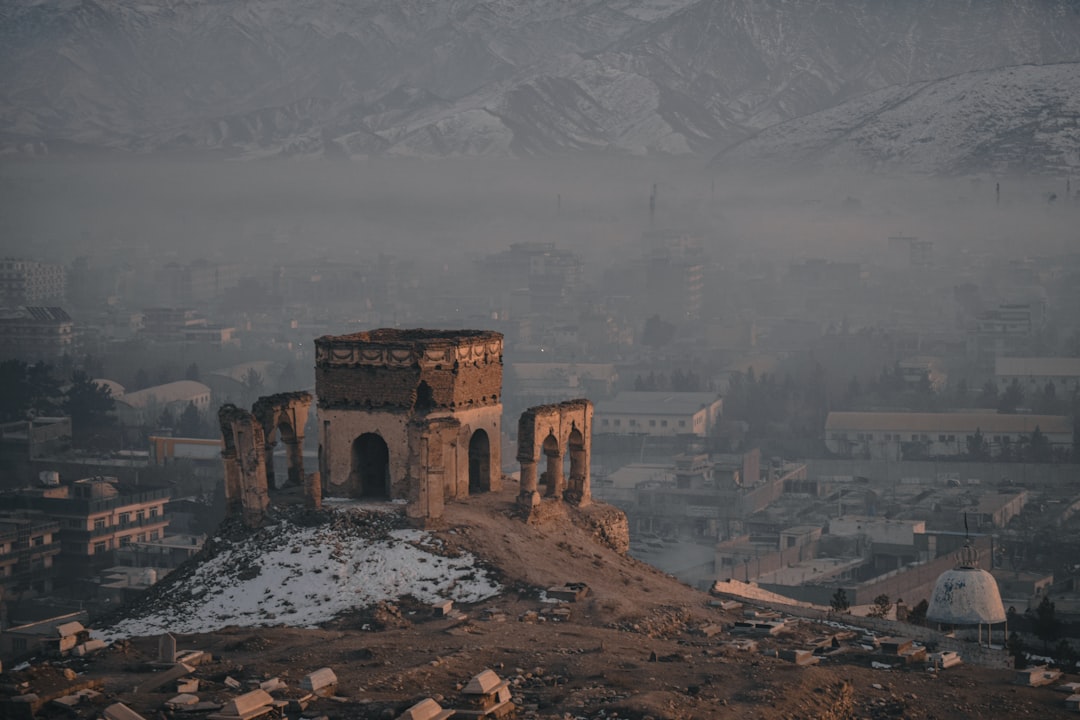
#ExpertSpotlight: A look at Afghanistan
Afghanistan has been at the center of international focus since 2001, enduring decades of conflict, social change, and efforts toward rebuilding. This topic remains significant as the world reflects on the lasting impact of the Afghanistan war, the country's evolving human rights landscape, and the enduring resilience of its people. For the public, understanding Afghanistan's history and current situation is essential to grasp the broader issues of international policy, humanitarian needs, and global security. This subject also highlights the importance of accountability and the role of the international community. Key story angles that may interest a broad audience include: The impact of foreign intervention on Afghan society: Exploring how two decades of international involvement have reshaped the country politically, economically, and socially. Human rights challenges and progress: Analyzing the state of women’s and minority rights, including access to education and healthcare under various regimes. Refugee crises and displacement: Examining the large-scale displacement of Afghans over the years and the humanitarian response by neighboring and Western nations. The resilience of Afghan culture and identity: Highlighting how art, music, and traditions have survived despite conflict, and how cultural preservation remains vital to Afghan communities. The future of Afghanistan’s youth: Discussing the aspirations and challenges facing a generation born into conflict, and the role of education and innovation. The international community’s role and response: Assessing current global engagement, diplomatic efforts, and the responsibilities of the U.S. and allied countries toward Afghanistan. Connect with an expert about the History of Conflict in Afghanistan: To search our full list of experts visit www.expertfile.com

International Education Week: University of Delaware leads the way in global studies
The University of Delaware has a lot to boast about in regards to International Education Week, which takes place from Nov. 18-22. This includes a four-year academic program that immerses students in both culture and classrooms of host countries; a mentoring program for international students on UD's campus; and the oldest study abroad program in the nation. UD's World Scholars program offers students a four-year global education that begins with a semester of study in Greece, Italy, England, New Zealand or Spain where students earn credits in their majors while becoming immersed in the culture and history of the respective host country. The 101-year-old Study Abroad Program – the oldest program founded by a U.S. institution – offers programs in 40 countries. More than 30 percent of UD undergraduates study abroad at least once, and while one in 10 American students study abroad, at UD the number is 3 in 10. Finally, UD’s Center for Global Programming and Services offers the iBuddy Mentoring Program, which pairs incoming international students with trained and experienced UD student mentors. After undergoing iBuddy training, these mentors offer friendship and guidance on academic matters, social life, housing options and more. They also organize events to help them get socialized.


From collecting candy to carving pumpkins, Halloween is defined by its traditions, and few are as time-honored as the telling of ghost stories. Whether recounted by crackling campfires, read from well-worn books or streamed on big-screen TVs, supernatural tales seem to take on a special resonance in the lead-up to October 31. And, on the whole, we seem more than comfortable enduring chills and braving thrills to enjoy them. But what draws our attention, season after season, to things that go bump in the night? And what makes the paranormal such a powerful, and persistent, storytelling device? Mary Mullen, PhD, is an associate professor of English at Villanova University and the instructor of the course "Ghostly Matters," which delves into haunting's role in culture, history and society. From her perspective, our longstanding fascination with spirits, specters and phantoms speaks as much to our concern for the world around us as to our interest in the hereafter. "At their core, ghost stories unsettle us," says Dr. Mullen. "They raise questions about what we consider normal, what we view as 'everyday life,' what we value as 'modern' and whether the past is still with us or not." As Dr. Mullen explains, when we're presented with something that's "haunted," we're essentially being asked to consider the reasons why. The very existence of spirits, emerging from beyond the grave, compels us to reflect on their presence's meaning—and to think about what developments might draw the ire, intrigue or intervention of the dead. (When watching Steven Spielberg's "Poltergeist," for instance, a viewer might feel the movie's ghosts are completely justified in terrorizing the profit-hungry real estate firm that disturbed their eternal slumbers.) Spirits, in turn, consistently set our focus on items left unsaid, unconsidered or overlooked. Departed yet still present, drifting somewhere between this plane and the next, they often challenge the living's notions of progress, propriety and success—and signal a last-ditch effort at preserving something that has all but faded from recollection. In effect, they bring the past into dialogue with the present for the sake of the future. "Ghost stories are really useful for contemplating transition and change and what's lost in the process," says Dr. Mullen. "They give a name to things that are liminal… For example, Luke Gibbons [a professor at Maynooth University] says that ghost stories, in modern Irish writing, are frequently connected to memories that haven't yet become public history. So, they speak to facets of social life that exist, or have existed, but are not present in monuments or official accounts." From Virginia Woolf's "A Haunted House" to Toni Morrison's "Beloved," tales of the supernatural provide us with what Dr. Mullen terms "glimmers of possibilities." They serve to mirror and embody our complicated feelings on transformative happenings, whether personal, communal or generational, and they afford us the language and vocabulary to express sadness over what is done and hope for what is yet to come. "There are certainly ghost stories, like Elizabeth Bowen's 'The Demon Lover,' that end in absolute terror with no seeming resolution," says Dr. Mullen. "But I think that, in a lot of these tales, haunting leads to reconciliation, or different kinds of healing or important acknowledgements—of things that need to be acknowledged." As Dr. Mullen proceeds to explain, it's no coincidence that the roots of the contemporary ghost story can be traced to the 19th century, a period of great social upheaval, cultural displacement and scientific and technological advancement. The product and reflection of a tumultuous "new age," the genre, as we know it, took hold as a means of reckoning with that which was lost, actively transpiring and still to occur. Perhaps it's no surprise then that, as the leaves begin changing and autumn starts giving way to winter, we have an affinity for tales that center on visits from the afterlife, bridging the past, present and future. "I think that we tell ghost stories when we're open to moving beyond our sense of 'the everyday,'" says Dr. Mullen. "And there are certain points of the year, like the holidays and gatherings with family and friends, that are so rich with emotion and memory that the boundary between this world and the 'otherworld' seems maybe—just maybe—capable of being crossed."


Villanova Professor Releases Study on Gender Dynamics in the Beer-Drinking Community
Earlier this month, thousands of revelers donned dirndls and lederhosen to mark Oktoberfest, the annual celebration of Bavarian fare, oompah music and, above all else, beer. The fall festival is just one of many occasions, including happy hours, brewery tours and sporting events, where Americans enjoy the beverage. In fact, based on a recent report by the Pew Research Center, the U.S. population consumes approximately 6.6 billion gallons of beer each year, which averages out to about 26.5 gallons per adult of legal drinking age. However, while ales, lagers and stouts remain popular choices that bring people together, not everyone feels equally included. A new study by Shelly Rathee, PhD, the Diana and James Yacobucci '73 Assistant Professor of Marketing and Business Law, highlights a gender-based divide within the beer-drinking community, with female consumers often feeling overlooked and left out. "Due to the structure of the beer industry and marketplace, there is reason to believe that firms overproduce products that appeal to male audiences and overly communicate masculine aspects of beer consumption," says Dr. Rathee. "As a result, female consumers are made to feel (and may continue to feel) excluded by beer culture, on average. From a business standpoint, the beer industry may be limiting its total market potential in the process." As Dr. Rathee explains, the beer industry and marketplace are predominately populated by men, and academic literature has long indicated that male dominance in a social or business setting can alter the behaviors of women in myriad ways. In her project, "The Female Consumer Response Implications of Male Dominance in a Product’s Online Community," the professor sought to understand how this trend might manifest itself in an internet forum for beer aficionados, hobbyists and critics. By examining customer review data from the online community BeerAdvocate and conducting tests aimed at assessing gender-based differences in contributions, Dr. Rathee found that female consumers are inclined to defer to the male majority in such settings. In general, women either refrain from sharing their perspectives on products or adopt language characterized by what are commonly referred to as "masculinity themes." "Masculinity and femininity themes were drawn from the text of the online reviews and were identified using dictionaries derived from previous research on these topics," shares Dr. Rathee. "For example, if the consumer liked the taste of the beer, a more feminine way of describing this might be 'pleasant,' while a more masculine way might be 'strong.'" In these terms, the difference in expression might seem subtle. However, as Dr. Rathee contends, the prevalence of tens of thousands of reviews that lean toward a more masculine tone, with few offering a counterbalance, can have noticeable effects. A quick look at the beer aisle in your local supermarket reveals its impact, with bottles and cans featuring images of axe-wielding warriors, dinosaurs and gargoyles. "We found in our research that male dominance in a marketplace leads to lower trial intentions [plans to try or buy something] and brand attitudes among women," elaborates Dr. Rathee. "Therefore, we can argue that companies are likely to produce products, and marketing appeals, that are more targeted at male audiences." Although men are currently more than twice as likely as women to name beer as their preferred alcoholic beverage, Dr. Rathee suggests that there is potential to create opportunities that encourage more female drinkers to engage with beer culture. By fostering environments where women can express their preferences and perspectives, she believes the beer industry can become more inclusive and representative, ultimately enriching the community as a whole. "When featuring reviews on websites, an effort to balance out the presentation of ideas from male and female voices could be helpful," Dr. Rathee says. "Special categories could also be created to drive interest based on demographic characteristics that may include gender, among other factors. A more extreme measure would be to simply avoid including gender as a reviewer characteristic that is publicly viewable." Much like opening tents beside a beer hall, these steps could provide the necessary space and conditions for a more open and robust discussion of products to take place—to the benefit of both consumers and the industry. In the event they're increasingly pursued, that's something to which we can all raise a toast.

DIY’ing Grief: How Modern Memorials Help Us Navigate the Death of Loved Ones
Americans really don't want to talk about it: Everyone dies, and everyone will experience the death of a loved one. Grief is a universal human experience – and a very challenging one – with its range of difficult emotions and processes. Baylor University researcher Candi Cann, Ph.D., has made it her life’s work to study death and dying. In fact, the associate professor of religion in the Baylor Interdisciplinary Core, is known as a “death scholar,” with media outlets ranging from NPR’s Science Friday to the Washington Post seeking her expertise about the impact of remembering (and forgetting) in shaping how lives are recalled, remembered and celebrated. Cann is the author of “Virtual Afterlives: Grieving the Dead in the Twenty-first Century,” and her research on modern grief has found that some Americans – in a move away from organized religion – have lost the grieving framework that prayer and Christian practices traditionally offered. She calls that framework the “syntax of grief” – the common language once rooted in religious practices – that has evolved over the generations, prompting people to seek more personal ways of expressing grief and memorialization customs. “This new language of mourning is being defined by the culture, rather than religious ritual,” Cann said. “And these new practices are emerging at the grassroots level in response to a popular need to express grief through more personal expressions in almost a do-it-yourself or DIY approach.” These DIY or modern remembrances – such as virtual memorials, tattoos and using cremains in creative ways – can help individuals navigate the grieving process. Virtual memorialization With contemporary grieving practices shifting from the physical to the online world, Cann said these virtual memorialization spaces, such as social media and memorial websites, are just as real and meaningful as physical spaces and can offer a shared space for more people to share in their grief. For example, Cann said funeral services have evolved to incorporate digital services such as a virtual memory page or guest book or live-streaming wakes. Social media profiles and websites are created as virtual locations for people to remember and mourn those who have died. “The internet can democratize grief. It allows people a way to have these conversations about the dead that they may not be able to do on an everyday basis,” Cann said. “You know, you’re at work and you’re grieving, but it’s not really an appropriate conversation. In this way, you can go online and leave a message and find a community of people who are also grieving with you.” Tattoos Tattoos have become a popular way for individuals, especially younger people, to carry their grief with them, Cann said. The inked images can function as a badge or emblem for the person, they tell stories, honor meaningful moments and allow people to carry their grief with them in both literal and virtual ways. "Tattoos allow people to occupy the space as a mourner, while also continuing to carry on with their everyday activities. Many people get tattoos to symbolize their first loss, like their grandparent or pet,” Cann said. “Though the body has disappeared, is remapped onto living flesh to become a symbol of mourning in a world where mourning is denied.” Use of cremains A growing trend is incorporating cremains (cremated remains) into various objects like tattoos, jewelry, records or even fireworks. This practice offers a portable and customizable way to keep a connection with the deceased, which is not an option with burials, Cann said. “Cremation has become much more widely accepted and much more widely practiced because it's cheaper, more economical, but also because of the options of what can be done with cremains in memorial,” Cann said. “Cremains are portable and divisible, so you can share them with other people. Plus, you can carry them in ways that disguise the fact that they are ashes, such as putting cremains in a locket.” The conversation These more personal expressions and do-it-yourself solutions to memorialize a death allow people to find places where they can feel and experience their grief more readily and move from the loss into a place of restoration, Cann said. While death is complete and universal, finding ways to grieve – from the traditional to the contemporary – helps process the loss, but it’s just as vital to have that difficult conversation about preparing for the death of loved ones. “I encourage everyone to have difficult conversations about death and discuss your wishes with your loved ones about what you want when you die,” Cann said. “Allowing death to be part of regular discussions can help your family and your friends deal with their sorrow when you die because the everyday practical matters of sorting through your estate or figuring out what you would have wanted are not compounding the grief. Talking about death is ultimately and way to show how much you love someone.” Looking to know more? We can help. If you're a journalist interested in speaking with Candi Cann, simply click on her icon now to arrange an interview today.


ExpertSpotlight: The History of Haiti
Haiti is prominent in the news cycle - let our experts give you some perspective on the island's history and background Haiti's rich history and its ongoing refugee crisis remain critical topics in global conversations about human rights, migration, and international aid. As the first independent Black republic, Haiti's historical significance is profound, but the nation continues to face complex political, economic, and environmental challenges that have contributed to the displacement of its citizens. For journalists, understanding Haiti's past and present is essential for shedding light on issues such as migration policies, international support, and the lived experiences of Haitian refugees. Here are several story angles that offer deeper insights into Haiti's enduring struggles and global connections: Haiti’s fight for independence and its global impact: Explore how Haiti's revolution shaped the political landscape of the Western Hemisphere and its lasting influence on anti-colonial movements worldwide. The root causes of Haiti's refugee crisis: Investigate the political instability, natural disasters, and economic challenges driving the exodus of Haitian citizens and the broader migration dynamics in the region. International responses to Haitian refugees: Examine the policies of neighboring countries, including the U.S., and international organizations in addressing the influx of Haitian migrants and their treatment in host nations. Diaspora communities and cultural resilience: Highlight the Haitian diaspora’s contributions to culture, economy, and politics in countries where they have resettled, as well as their role in supporting those still in Haiti. Humanitarian aid and development in Haiti: Assess the effectiveness of international aid programs in addressing the country's crises, and explore innovative approaches to sustainable development in the region. Environmental degradation and its link to migration: Analyze how deforestation, climate change, and natural disasters such as earthquakes and hurricanes are exacerbating Haiti’s humanitarian challenges and forcing people to flee. Connect with an expert about the the History of Haiti: To search our full list of experts visit www.expertfile.com

ExpertSpotlight: A Brief History of Espionage
The world was watching with wonder this week as news stories poured in about exploding pagers and how the armed devices made their way around an international supply chain and into the hands (and pockets) of Hezbollah. Espionage, a practice as old as civilization itself, has shaped the course of history by influencing wars, international relations, and technological advancements. From ancient times to the digital age, espionage has played a crucial role in national security and global diplomacy. This topic remains highly relevant today as concerns over cybersecurity, state-sponsored hacking, and corporate espionage dominate public discourse. Journalists covering this topic will find a rich array of story angles, including historical perspectives and modern implications. Key sub-topics that may interest journalists and the public include: Evolution of Espionage Tactics: Examining how espionage methods have developed from traditional spying techniques to modern digital surveillance, cyber-espionage, and the use of AI in intelligence gathering. Espionage and International Relations: Investigating the role of espionage in shaping diplomatic relations and its influence on global politics, alliances, and rivalries. Cybersecurity and Digital Espionage: Exploring how espionage has evolved in the digital age, focusing on cyber threats, hacking incidents, and the growing importance of cybersecurity in national defense. Famous Spies and Spy Agencies: Delving into the history of iconic spies and intelligence agencies, from World War II's codebreakers to Cold War espionage, and how these figures shaped the geopolitical landscape. Ethical and Legal Considerations: Analyzing the ethical dilemmas and legal boundaries surrounding espionage, including the balance between national security and individual privacy. Espionage in Popular Culture: Looking at how espionage has been depicted in literature, film, and media, and how these portrayals reflect and shape public perceptions of intelligence work. As espionage continues to evolve alongside technological advancements, it remains a critical issue in discussions of national security, global power dynamics, and privacy. This historical overview provides journalists with an opportunity to explore the enduring relevance of espionage in shaping both the past and future. Connect with an expert about the History of espionage: To search our full list of experts visit www.expertfile.com

#ExpertSpotlight: The Origin of Friday the 13th
Friday the 13th is a day shrouded in superstition and mystery, deeply rooted in historical and cultural significance. Often viewed as a day of bad luck, its origins stem from a combination of religious, historical, and folkloric traditions that date back centuries. The fear surrounding the number 13, known as triskaidekaphobia, along with the historically ominous associations with Fridays, have contributed to the day’s infamous reputation. As society continues to explore the psychological effects of superstition, Friday the 13th remains a fascinating topic for public discussion and cultural reflection. Key story angles of interest include: The historical and religious roots of the superstition surrounding Friday the 13th The psychological impact of superstition and its role in modern society The influence of Friday the 13th in popular culture, including movies, books, and folklore Triskaidekaphobia: why the number 13 is feared in many cultures How different cultures interpret and respond to Friday the 13th The commercialization of Friday the 13th in horror films and entertainment Connect with an expert about the Origin of Friday the 13th: To search our full list of experts visit www.expertfile.com Photo Credit: Library of Congress Blogs

In Ancient Egypt, One Villanova Professor Sees Modern Lessons
During the Old Kingdom (2700-2200 B.C.E.), Memphis was the epicenter of Egyptian civilization. A key strategic point in the Nile Delta region, it long served as the seat from which the Pharaoh ruled his domain, exerted his influence and marshaled his military might. Bustling with activity, it teemed with craftspeople, clerics and courtiers, and its whitewashed walls reverberated with the sounds of enterprise, exaltation and empire. Four-and-a-half millennia later, sifting through the silent sands near Mit Rahina, Villanova University associate teaching professor Kelly-Anne Diamond, PhD, is working to recover the last traces of this once-thriving metropolis. In collaboration with a team of academics, graduate students and Egyptian artisans, she hopes to shed new light on what life was like in the "lost city" of Memphis—and to explore its long-buried connections to the present day. The Memphis Kôm el-Fakhry Archaeological Project "We call our initiative the 'Memphis Kôm el-Fakhry Archaeological Project,' or 'MKAP' for short, and we're excavating one particular mound in a series that make up the ancient city," said Dr. Diamond, who co-directs the effort. "I was very excited when I was invited to join the project, especially at its inception. There aren't many settlement sites [like this one]. We could probably count them on one hand." With its focus on "settled" land, MKAP is contributing to a growing body of research in Egyptology, or the study of ancient Egyptian history, culture and society, that centers on the experiences of everyday people. It's an area of significant interest for Dr. Diamond, who's previously investigated mourning traditions and sex and gender in the pharaonic era. "Currently, most of our knowledge is about the king, his extended family and the people who worked for him," she said. "This is one of the reasons why I think working at Memphis is so fascinating. When you work at a settlement site, this is where you're going to find information about regular people—about women, about children, about the elderly, about family structure." Already, MKAP has yielded findings that could challenge contemporary understandings of life in ancient Egypt. In particular, the discovery of an Old Kingdom-aged adult skeleton, within the bounds of the excavated mound, has spurred questions. "What we found doesn't necessarily line up with what we currently believe about Old Kingdom burial practices, because other evidence suggests that where people lived and where people buried their dead were two separate locations," shared Dr. Diamond. "Generally, we say that they lived in Kemet—which is the 'black land,' or the land where there's very, very rich soil—and were interred in Deshret, or the 'desert.' "Now, we do know that there was a First Intermediate Period (2181-2055 B.C.E.) cemetery at the site, adjacent to the settlement. We also know that, as the town progressed and people continued to live there, access to the cemetery was cut off. As we were going deeper into the settlement, which means that we were going into earlier levels, this is where we found the adult skeleton. The pottery in the area seems to suggest that we hit Old Kingdom levels, which would take us earlier than the First Intermediate Period cemetery. "Potentially, we need to reevaluate what we know about Egyptian burial customs." From the Past to the Present For some, the significance of a centuries-old corpse might be lost. And, in an age of smartphones, electric cars and highspeed Internet, the world in which the Memphians lived might seem on its face absolutely foreign. But, in unearthing the contents of the MKAP mound and in studying the minutiae of ancient life, Dr. Diamond sees important lessons—lessons that echo throughout time. As she maintains, the remnants of communal meals, religious rituals and day-to-day work, and their existence in the distant past, serve as powerful reminders of our enduring humanity. "One of the things I find, with my students, is that they're surprised that ancient Egypt was such a complex civilization," said Dr. Diamond. "They're surprised when we talk about technologies and social mobility—that these early people, whether improving on weapons and farming tools or seeking promotions, had a sense of progress, efficiency and change. "But, most of all, they're surprised at how similar life in ancient Egypt was to what they experience on a regular basis today. And that's how I often introduce my courses: What you know about life, or life as you know it, started back in the ancient Near East, in Egypt and Mesopotamia. So, we can find the origins of all these things that we know by going back to the ancient Near East. "And history did not start in Greece and Rome. We have to go back earlier." Editor's note: Following the filming of the videos above, Dr. Diamond was promoted from assistant teaching professor to associate teaching professor.