
Experts Matter. Find Yours.
Connect for media, speaking, professional opportunities & more.
New clues about how earthquakes work
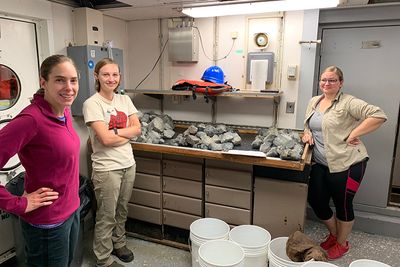
University of Delaware researcher Jessica Warren helped uncover evidence that sections of fast-moving underwater faults may act like “brakes,” controlling the occurrence of big earthquake events on transform faults. Warren can discuss what the findings, released today in the journal Science, mean for earthquake science and future modeling. Situated along a stretch of the equator in the Pacific Ocean, between Indonesia and Central America, the Gofar transform fault is one of the fastest moving faults on Earth — cruising along the seafloor at about 140 millimeters per year. This is over four times faster than the San Andreas fault is moving in California. “Geologically speaking, it's like looking at a moving Acela train next to a SEPTA train on the tracks,” said Warren, a professor of earth sciences at UD. Researchers know that the Gofar transform fault line has experienced a magnitude 6 earthquake about every five to six years over the last three decades. It’s been studied extensively, as these earthquakes occur at the same places along the fault and at the same intensity, time after time. What’s been unknown, until now, is why parts of this fault experience many small microshocks leading up to a main earthquake rupture, then shut down, while other parts of the fault are quiet before the big event and then experience many aftershocks. Now, a multi-institutional team of researchers, including UD’s Warren, reports that sections of the fault without large magnitude earthquakes actually act like brakes in a fast-moving car, controlling the occurrence of big earthquake events on transform faults. This finding is in contrast with currently accepted models of earthquake behavior. The team includes researchers from UD, Indiana University, Woods Hole Oceanographic Institution, Scripps Institution of Oceanography at UC San Diego, the U.S. Geological Survey, Boston College, Western Washington University, the University of New Hampshire and McGill University. In the study, the researchers analyzed two zones along the Gofar transform fault they say have stopped about 15 magnitude 6 earthquakes over the past 30 years. The study findings will inform globally what’s known about how faults and earthquakes behave, at sea and on land. Warren's contributions include leading the initial field research at sea in 2019 on the R/V Atlantis and interpreting results throughout the project, with a focus on connecting the earthquake observations to how rocks in the fault fracture and distort during an earthquake. Why were you studying the Gofar transform fault, in particular? Warren: Geoscientists want to understand faults and earthquakes because they are obviously a big hazard on land. The rocks that make up the seafloor are simpler than those found on land, providing a more controlled space to study earthquakes, despite the challenges of doing research underwater. If you want to understand how faults build up stress and then release it (and where), the Gofar transform fault is amazing, because it experiences earthquakes at reliable intervals of five to six years. This is a lot more regular than any other fault. In 2019, I led a research cruise on the R/V Atlantis that deployed 51 seismometers two miles down on the seafloor to detect these small events. We were able to compare the results of our measurements from 2019 to 2020 to an experiment conducted by my colleague Jeff McGuire on the same fault in 2008. The similarities in the two datasets brought us to the realization that fault sections without large magnitude earthquakes control the overall occurrence of big events on transform faults. When we had that observation in 2008, that might have been a one-off, but getting back this new data and seeing such similar behavior was a new insight into what's happening in the fault. How does that tell you about how earthquakes occur on land? Warren: On land, people spend a lot of time looking at how rainwater and groundwater move in a fault system, and how that influences the behavior of the fault. In the oceans, we have an unlimited amount of water. Once the rock cracks, the water is going to get in there. Being able to look at how a fault changes through the earthquake cycle — which we've now measured most of on this one fault — can help us understand what is universal about how faults work, and how rock friction works. And one of the big players is water. That's why the rock samples that my lab works on matter. Fault structure is another thing that we've been trying to understand. We know from on land that some parts of a fault are linear, while other parts have lots of strands and maybe contain more fractures and that, if you start putting water in the picture, this can limit or change how water moves into the system. Now, we have these very high-resolution maps of the seafloor, where we can see, for the first time, where the fault itself is. One of the next things we want to understand is how fluid gets into the fault, and then how friction in a fault changes when water is there. Why is this important? Warren: The next step is to translate the understanding that we've gained from this specific fault to understanding how faults behave in general. This is the longer path to really understanding earthquake hazards. It's not going to change our hazard models tomorrow, but hopefully it will in the decades to come. To reach Warren directly and arrange an interview, visit her profile and click on the "contact" button. Interested reporters can also email MediaRelations@udel.edu.



Expert Insight: The Hidden Costs of Staying Neutral
Considering the number of hot-button issues and divisiveness in American culture, choosing a middle-of-the-road attitude might be seen as the best way to navigate an often volatile environment. But what about those individuals who choose neutrality as a means of staying below the radar and, thereby, avoiding the need to take any action? This is the question that Laura Wallace, assistant professor of organization and management at Emory’s Goizueta Business School, and coauthors ask in their new paper, The Preference for Attitude Neutrality. Published in the Journal of Experimental Psychology: General, the researchers explore individuals with a preference for neutrality and how their uncompromising commitment to neutral opinions, not only discourages rigorous debate but could have a deleterious impact on society. Emory Business recently caught up with Wallace to discuss her research. Emory Business: What sparked your interest in the preference for neutrality? Wallace: When we think about the problems in the world, often people point to too many extreme opinions as the source of much social ill, and, of course, they can be. But, when I thought about a lot of the issues that I cared about, like addressing climate change or gun violence, I felt that sometimes the issue was too much neutrality in the face of issues that were themselves pretty extreme. When I talk about this work, people can often picture someone who seems like a “Pref Neutral,” as we have affectionately nick-named them, that is someone who in the face of information suggesting that there is an extreme problem is not moved to address the issue. I could think of people in my life who had these reactions, and I was interested in understanding more about them. Emory Business: How did you identify these individuals? Wallace: We developed a scale to assess the extent to which people view neutrality as truer, more socially desirable, and more moral. For example, we ask people how much they agree with items like, “If you have all the facts about a topic, your opinion will generally end up somewhere neutral” and “There is something noble about remaining in the middle about controversial topics.” The more someone agrees with these items, the more we would say they have a preference for neutrality. Emory Business: How does this study fit in with your larger body of work? Wallace: I generally think of my program of research as studying the “psychology of social change.” Within that broad category, I study 1) how to change minds and build trust and 2) how to address societal disadvantage. I view this work as fitting in the first bucket about how we change people’s minds. What interests me about people who are high in the preference for neutrality is the fact that they seem to NOT change their minds in the face of extreme information suggesting that they should. These individuals represent a significant barrier to our ability to address pressing issues, so I view this work as very much tied into the overarching goal of my research program to understand social change (or the lack thereof). Laura Wallace is an assistant professor of organization and management at Emory University’s Goizueta Business School. Wallace studies how to build trust with implications for addressing societal disadvantage, changing minds, and fostering growth. View her profile Emory Business: Would you describe a preference for neutrality to be a mindset, strategy, or attitude/value? Wallace: I think of the preference for neutrality like an ideology or value system that guides people’s reactions across many issues and situations. Emory Business: Talk about the study design. It’s quite detailed and multilayered, with eight hypotheses and six different measures to account for potential bias that were then randomized to create different questionnaires given to a large pool of individuals. How did the coauthors agree on the structure? Wallace: First, I should take the opportunity to shout out Thomas Vaughan-Johnston, who led this work. He is a faculty member at Cardiff University and is just a very thoughtful, interesting researcher, and he’s great to work with. Second, there are a number of studies in the paper. For each, our research team worked together to design and interpret the studies. The paper paints a relatively negative view of Pref Neutrals. We did take measures to resist bias in our design. For instance, we didn’t just ask people how much they dislike extremists (which would have been biased towards making those with a preference for neutrality look bad), but also asked about attitudes towards neutrals (where those with a preference for neutrality may seem like “the nice people”). We are now starting research on contexts where a preference for neutrality can offer some advantages, hopefully without artificially striking a false balance. For instance, we are considering whether they can help reduce group polarization effects, especially where groups drift towards radicalism in conversation. Also, we have some preliminary data where they seem to be a bit more accurate when detecting neutral emotions and attitudes in others, which is a remarkable plus side. Basically, we think the preference for neutrality is a social concern, but we are trying to be fair-minded when considering why they think this about neutrality and when this trait is useful for the world. Emory Business: In the study, you note that preference for neutrality can be a sign of arrogance and that Pref Neutrals are uninterested in learning more or changing their stance. How is this arrogance exhibited? Wallace: I would say that they are more close-minded than arrogant and that they don’t seem to be particularly thoughtful. One way we have assessed this is by measuring their “intellectual humility,” which essentially captures how much people recognize the limits of their own perspectives and are open to changing their minds. Pref Neutrals tend to score low on intellectual humility. They also score a little low on the “need for cognition,” which captures how much people like to think. Emory Business: In one section it reads: “preference for neutrality (preference for extremity) should relate to seeing other people as moral, competent, and likeable, when those individuals have generally neutral (extreme) opinions.” Does this mean that they align with people who have their same opinion structure? Wallace: We find that people who score high on the preference for neutrality scale tend to have more favorable impressions of others who are more neutral and tend to be more persuaded by others who are labeled as holding neutral attitude positions. Emory Business: How would one identify this trait in a person, particularly, when the research shows they tend to self-censor? Wallace: In general, they are really hesitant to take stances on issues or they tend to avoid taking sides or expressing strong positions. And yes, they tend to self-censor, meaning they often avoid sharing their opinion at all. Emory Business: How does this preference for neutrality play out in a political sense? Specifically, if they are averse to extremes would they vote based on their values? Wallace: We have a lot of evidence that Pref Neutrals tend to be political centrists. We don’t have evidence for this, but I suspect that they sit out a lot of elections, and to the extent that they do vote, they favor more moderate candidates. They probably would not vote for a position or individual with an extreme view unless it was framed as neutral. This may sound like a silly, cerebral point, but I actually think it’s critical to the point we are making, as what is viewed as “extreme” in a given time is often socially determined. For example, now it would be viewed as an extreme stance to support slavery. However, in the early 1800s in the U.S., it would have been viewed as an extreme stance to oppose slavery. I imagine at the time, many Pref Neutrals were supportive of slavery as a means of being politically moderate. Emory Business: What was the most interesting result in this study for you? Wallace: We find that if you give Pref Neutrals the exact same information but label it as extreme or neutral, they are more persuaded by the exact same information when it is labeled as neutral. This results in a kind of ironic effect where they actually end up with a more extreme opinion when information has been labeled as neutral. Emory Business: Research wise, what’s next for you? Wallace: There are a few ways that we are following up on our work that I am excited about: First, we’re trying to understand more about how Pref Neutrals maintain neutral opinions in the face of extreme information. So, we are giving Pref Neutrals true, extreme facts, and then examining their thoughts to determine how they resist taking the extreme positions information would suggest that they should. Second, we thought that Pref Neutrals would be particularly likely to trivialize social issues, to say they are unimportant. We are actually finding that they rate all social issues as extremely important, which we are trying to understand more about. We suspect they might do this as a strategy to avoid taking action on social issues. If stubbed toes and human trafficking are both “extremely” important, then there are just too many issues to take action on, and so they are able to justify a lack of action. Third, we are interested in understanding what it is like to make decisions in a group with a Pref Neutral. There is a lot of evidence that groups tend to make bad decisions because people want to agree with each other. This might actually be an area where Pref Neutrals would shine – the fact that they don’t want to take a stance may force groups they are a part of to really think things through and make better decisions. This is all super preliminary, but it reflects the exciting work ahead and that there is much more to understand about these folks!



UD experts break down the 2026 World Cup
As the world gears up for the 2026 FIFA World Cup, experts from the University of Delaware are available to provide timely insight on the science, business, and human impact behind the global tournament. Player Safety, Concussions and the Future of the Game Tom Kaminski, professor of kinesiology and applied physiology, is a leading authority on player safety and head injuries. As the sole U.S. representative on FIFA’s Heading Expert Group, Kaminski is helping shape international guidelines around heading in soccer—particularly for youth athletes. He can speak to concussion risks, prevention strategies, and how evolving safety standards are influencing the modern game. Joining him is Tom Buckley, who also specializes in concussion research and athlete health, offering additional perspective on injury trends and recovery in elite competition. The Business of the World Cup: Tourism and Global Impact Matt Robinson from UD’s Lerner College of Business and Economics explores how mega-events like the World Cup drive tourism, economic growth, and global connection. Robinson can discuss how host cities benefit, the long-term economic ripple effects, and how sports act as a powerful unifier across cultures. Youth, Development and the Next Generation of Fans Sara Goldstein brings expertise in adolescent development, offering insight into how traditions with family shape youth identity, social development, and engagement with physical activity. Her perspective is especially relevant for younger audiences experiencing the World Cup through schools and community programs, including UD’s Lab School initiatives. Inside the Game: Sports Analytics in Action With the rise of data-driven performance, UD’s new Sports Performance Analytics major is preparing students to analyze gameplay at the highest level. Martin Heintzelman, department chair, can connect media with program leaders and practitioners including Jack Davis and Christina Rasnake, who are helping students apply real-time analytics to global competitions like the World Cup. The Science Beneath the Game: Playing Surfaces World Cup matches are required to be played on natural grass—a costly and complex requirement, especially for indoor stadiums. Erik Ervin can discuss how turfgrass systems have evolved, the science behind maintaining elite playing surfaces, and the massive investment required to meet international standards. Why Watching Together Matters Amit Kumar studies the psychology of happiness and shared experiences. He can speak to why gathering to watch World Cup matches—whether in stadiums, bars, or living rooms—boosts well-being and strengthens social bonds, making the tournament as meaningful off the field as it is on it. Connect with UD experts to explore every angle of the 2026 World Cup – from the pitch to the people. Email mediarelations@udel.edu to connect with these experts.




Expert Insights: Want More Engagement? Eliminate the Barriers.
Anyone born in the 70’s or earlier will probably remember it well. Time was when playing any kind of video game meant physically disporting yourself to the local arcade—a twilight zone of flashing neon, electronic beeps and bops, and the clink of quarters hitting the slot. As technology advanced, the videogame came to you. Home consoles and TV stations rigged with joysticks duly became the mainstay of gaming. The Atari 2600 brought the arcade experience into dens all over the US; Pac-Man, Space Invaders, and Asteroids now at the fingertips of a generation of games who no longer needed to leave home to play. Fast forward to the era of smart phones and hi-tech, and gaming has evolved again. Today, Fortnite, Minecraft, and The Legend of Zelda can accompany you pretty much anywhere—onto a train or a bus, into the canteen at work or school, or under the covers at 2am. In our always-on, on-demand world, video gaming increasingly meets players where they are; a play-anywhere, digital user experience that empowers individuals to engage with their game of choice wherever they are, whenever it suits, and via whatever platform they prefer, desktop or mobile. For users, the benefits seem clear. But what about game producers? As availability expands to new channels and platforms, how does it change user behavior? Does it deepen engagement or does cross-platform continuity simply end up redistributing play—the addition of each new platform shifting players away from, and effectively cannibalizing, existing channels? It’s a conundrum, and not just for video game producers. Retailers, bankers, insurance firms, media, and hospitality providers—anyone with an online-first approach looking to meet their customers wherever they are—should also be cognizant of the potential downsides of channel expansion in the digital space. Weighing in here is research by Professor of Marketing and expert in the intersection of sports and cultural analytics and marketing Michael Lewis. Together with Wooyong Jo of Purdue, Lewis looks at the impact of omni-channel strategy on videogames—a proxy, he says, for other sectors and industries. What they find is critical for marketers and decision-makers in any context or business setting. Increasing the digital touchpoints between your product and customers does impact behavior—but the net results are overwhelmingly positive. Video game players play more, they spend more frequently, and they integrate gameplay more deeply into their everyday lives. In other words, the investment pays off. And the dividends in customer engagement are serious. Switching to the Switch To unpack all of this, Lewis and Jo partnered with a large US video game publisher to analyze player-level behavioral data for one its major titles in the Multiplayer Online Battle Arena, or MOBA genre. Players form teams and compete to destroy opposing team’s bases, selecting a character from a set of 100+ options. Revenue for the publisher comes from a “freemium” business model—users can make voluntary purchases to unlock new characters or buy cosmetic enhancements. These purchases are geared toward enhancing the gaming experience but don’t affect competitive outcomes, making them a critical measure of engagement. In 2019, the game was released for the Nintendo Switch, which can be docked in home consoles but is most commonly used as a mobile, hand-held device. PC players were given the option to download this new version and continue gameplay seamlessly using their existing accounts. Analyzing player behavior before and after the adoption of the new Switch platform, Lewis and Jo were able to zoom in on some critical measures of user engagement including game usage or the total number of matches played, in-game spending—what, when and how much players spent—and player inactivity or churn. “We were able to really get into player behavior over time, and what happens when you introduce the Switch option and remove the constraints of having to play in one place—the home or gaming PC,” says Lewis. “What happens when you make it possible for players to access the game they love while they’re commuting or on their lunchbreak?” Plenty, it turns out. Mobile access: gameplay, spending and churn Crunching the data, Lewis and Jo find that mobile access dramatically increases gameplay. Players who adopted the Switch version played approximately 31% more games than before—a dramatic uptick that underscores how flexibility gains translate into new opportunities to play and engage. And that’s not all. Lewis and Jo also find that gameplay becomes less concentrated within narrow windows—after school or work, say—and is now more spread out across the day, the result of the “ubiquity effect,” says Lewis. “Take away the constraints of having to be in a fixed location and you see players adding additional play sessions. Interestingly though, we don’t find any adverse effect on PC gaming. Players are simply playing more, and playing longer, rather than replacing PC time.” Then there’s in-game purchasing. MOBA-type games typically give players the option to voluntarily buy modifications for characters, known as “skins.” These skins are cosmetic enhancements: new armor, costumes, skill animations or effects. Crucially, these kinds of purchases don’t advance players to new levels of success in the game. Instead, they are used for personalization—to demonstrate status or to celebrate an in-game event. Lewis and Jo find that mobile adopters make more frequent in-game purchases. While the overall total doesn’t increase materially, these players are spending small amounts, more often—almost 7% more frequently than before. This makes intuitive sense, says Lewis. If players are logging in more often, they have more opportunities to feel inspired to want to spend on skins. But there’s another factor that may be at work. “With this kind of in-game purchasing, it’s likely that a lot of it is about credibility. When you buy a skin or a character pack, it’s like you have more aura within the game; you want to signal something to other players and let yourself be known. And this is more than just monetary, it’s about a deeper kind of engagement,” says Lewis. “It’s possible that as mobile access makes the game more of a frequent companion, as the rate of play increases, there’s this effect that players fall deeper into the community—their engagement deepens even more.” Interestingly, the shift to mobile access had the most significant impact precisely on those players whose pre-Switch in-game purchasing was lowest. These users, who were arguably most likely to disengage and drift away from the game, became significantly more active once the hand-held option became available. “If you have players spending less and less inside the game, the intuition is that these are the customers you are most at risk of losing,” says Lewis. “Bringing in the Switch has seen these customers—those more prone to churn—actively reengage with the game, maybe because they have greater propensity for the mobile version.” Either way, this should be a particularly interesting finding for marketers, he adds; retaining existing users is typically cheaper than attracting new ones. “The evidence suggests that mobile access can serve not only as a growth strategy, but also a defensive one if it helps keep marginal users engaged; those who might otherwise have detached from the product altogether.” Help Them Switch So far, so encouraging. There is one potential downside to porting a game or online product to a new channel, however, and that is usability. Lewis and Jo find that players who switched between platforms experience a slight, initial decline in in-game performance—likely because of differences in the control systems between devices. Players who’ve been using keyboard and mouse controls may need time to adapt to hand-held controllers. To mitigate this, he and Jo suggest that producers could offer tutorials or introductory gameplay modes that accelerate the learning curve as users adjust to the new interface. In most cases, usability should be factored in as an additional, hidden cost, when developers and organizations are contemplating investing in more online customer touchpoints. “Expanding your online channels will always have some cost. Taking a game from one platform and porting it to another one isn’t free, so you will want to anticipate the hurdles, even as you weigh up the clear benefits,” says Lewis. “The key is to make sure you protect your users. With things like video games, you want to think about how to guide or upskill your players, maybe have them play bots at first to ramp up their capabilities. Whenever you create a new channel that has a different operating system from the user’s perspective, you’re probably going to want to provide some aid to your fan community.” The benefits of omni-channel access should always be weighted against the costs involved, counsels Lewis. Even so, today’s competitive pressures—the seemingly inexorable march of technological innovation and evolving user expectations—are likely to make platform expansion unavoidable for most online businesses. In the world of video gaming, as major franchises release new products across multiple platforms, and player preferences become more sophisticated, companies may simply have to adopt similar strategies to remain competitive. “As everyone else invests in the same new technologies, you almost have to do the same—just as a matter of doing business,” says Lewis. “If you are launching a video game, you’ve got to compete with whatever Call of Duty or Grand Theft Auto are doing. You can’t just tell your players they can only engage on one platform. The competition is continuously raising the stakes just in terms of the bare minimum.” Building Fandom: the Connective Cultural Tissue More broadly, Lewis and Jo’s findings speak to how human beings form communities of shared passion around business entities and, perhaps more compellingly, around cultural phenomena: video games, for sure, but also sports teams, music, films, comic books, fashion, and more. Understanding the mechanisms that drive and deepen engagement sheds more light on what Lewis calls the “connective cultural tissue of fandom: ”the powerful social bonds, camaraderie, and shared identity that connect people to cultural entities and to each other. Fandom, he argues, is the “key to our world.” Understanding fan behavior is critical to understanding how it is that games, brands, sporting teams, or politics forge communities built on shared passion. “Whatever your organization or business is, you are going to be interested in driving passion. You want people to engage and love what you do. What we’re looking at in this study is a building block towards understanding how cultural entities fit into consumers’ lives, and how eliminating barriers helps to expand communities and drive relationships—extending reach and engagement by weaving cultural experiences more deeply into everyday life.” The real challenge in front of organizations, be they video game producers or online retailers, says Lewis, is to give their product the kind of “cultural meaning” that creates fans—and not just users. “When you think about the behavior of fans, the level of passion and engagement that exists around cultural phenomena—whatever they are from video games to FIFA, the English Football League to the Super Bowl, Taylor Swift to the Republican Party—that’s where you see the passion that really drives the world. And that to me, is critical in understanding how business works, how societies function, and how our world evolves.”


U.S. National Debt: How to Stop the Bleeding
The U.S. national debt exceeding the size of the American economy is a dubious milestone that has sparked alarm and confusion among policymakers who are asking how worried they should be and what can be done to stop the bleeding. David Primo, a political scientist and professor of business administration at the University of Rochester and a fiscal policy expert who has testified before Congress on the national debt, says Americans should be very concerned about the debt and, at the same time, know there is a solution. “The federal budget outlook is grim and threatens the economic future of the United States,” says Primo, the author of Rules and Restraint: Government Spending and the Design of Institution (University of Chicago Press). “If Congress waits to act, Americans will need to give up a bigger piece of the nation’s economic pie to stabilize the country’s finances.” Primo says a solution lies in a constitutional amendment restraining the federal budget. Specifically, such an amendment would clearly define spending and revenue, set spending limits based on a multiyear period, and allow for waiving the limit only with a large supermajority in Congress. “As it stands, Congress is constitutionally incapable of tying its own hands, making it difficult for legislators to implement durable changes to the federal budget,” Primo says. Recent data show the national debt has crossed 100% of the GDP threshold — roughly $31.27 trillion versus $31.22 trillion in economic output — marking the highest peacetime level in U.S. history. The Congressional Budget Office has projected that debt levels, if left unchecked, could reach 181% of GDP in the next 30 years. Primo says delaying implementing a solution raises the risk of increased interest rates, which would, in turn, reduce investment and, ultimately, economic growth. For journalists covering deficits, tax policy, and the long-term economic outlook, Primo offers key expertise and a clear lens on: • The implications of national debt exceeding GDP • Constitutional and institutional approaches to fiscal reform • Fiscal policy and political incentives “The United States is in precarious fiscal health,” Primo told Congress in 2023. “In the absence of a constitutional amendment, I fear it will take a fiscal crisis before Congress acts. Nobody wants that.” Connect with Primo by clicking on his profile.



New report proves earning potential of EVs equipped with vehicle-to-grid technology
The University of Delaware, Exelon Corporation/Delmarva Power and collaborators have released a new report showing that electric vehicles equipped with vehicle-to-grid (V2G) technology can be profitable for private owners and businesses alike, with data from real electricity markets to back up the claims. The report is the outcome of a pilot program announced in 2024 by UD, and completed at the offices of Delmarva Power, which is part of Exelon Corporation, to confirm the value of V2G services to the grid. Among the key findings: the collaborators report that a V2G-enabled passenger electric vehicle (EV) could earn as much as $3,359 per year, based on 2021-2025 market prices, for storing and supplying energy to the electric grid during times of need, otherwise known as providing grid services. Heavier vehicles, such as fleet vehicles, delivery trucks or school buses, could earn over $9,000 per year, per vehicle. That’s a powerful income generator, given that privately owned vehicles are parked 96% of the time, on average, in the United States. Company fleet vehicles — even those operating 40 hours per week — remain stationary 75% of the average work week. The pilot, which included collaborators Ford Motor Company, the region’s electric grid operator PJM Interconnection, and aggregator Nuvve Corp., was tested using a small fleet of Delmarva Power EVs retrofitted with the bidirectional charging technology and a new advanced communications standard. The term “bidirectional charging” means that the V2G technology enables electric vehicle batteries to store extra energy from the electric grid when there is a surplus and to discharge that energy back to the grid when it is needed. In this way, V2G-enabled EVs can help the grid stay balanced, strengthening grid resilience and reliability, especially during peak demand and extreme weather events. New PJM rules allow properly certified EVs to provide this balancing and be paid for it — and the pilot proved they can meet these requirements and be paid for the service. For UD Professor Willett Kempton, who invented the V2G technology with colleagues at the University nearly 30 years ago, it’s a pivotal moment. “Whether it could scale cost-effectively was an open question, and we’ve proven that it can — with the right combination of policies, standards and technology,” said Kempton, professor of marine science and policy. For businesses such as Exelon, the report makes clear that V2G technology can help offset the cost of fleet electric vehicles while supporting the electric grid. This is because when the batteries in the parked fleet vehicles are aggregated together, they can function as a virtual power plant. The result is energy storage and supply that is available to the electric grid significantly faster than other conventional power resources, with virtually no wait times needed to power up or down. Unlocking a parked vehicle’s earning power Since Kempton and colleagues pioneered the innovative V2G technology, UD researchers have kept the charge going, accelerating progress on everything from V2G technology development to new automotive communication standards (called LIN-CP) for electric cars. They have advanced policy innovations at the state and federal level to overcome barriers in widespread adoption by enabling V2G technology to compete in electric markets, too. The recent pilot with Exelon/Delmarva Power and others also revealed that the EV batteries used for V2G remained fully functional after a full year of market operation — with no measured reduction in battery health — all while providing pollution-free power. “Something that might not be obvious to everyone is that these payments are not a subsidy; these EVs are earning money by competing with legacy generators, which is novel in a lot of ways,” said Kempton. “And when you’re participating in the market instead of a fuel-burning generator, you’re also reducing pollution.” This makes the technology both economically smart and functionally sound in a world where the electric grid is expected to include more renewables in the coming years. Kempton explained that most U.S. planned future electricity generation is scheduled to come from wind and solar. This will create greater fluctuation in the electric grid, which means more storage for energy surpluses will be needed. That’s where V2G can help, Kempton said. According to Brian Derr, senior analyst, Exelon Technology and R&D, insights from the pilot will inform future deployments and support the company’s broader strategy to enable the clean energy transition while maintaining reliable service for the communities it serves. “By leveraging existing assets in new ways, Exelon is positioning itself to build a more flexible, resilient and customer-focused energy system,” said Derr. Accelerating progress toward a V2G industry Next steps to expand the V2G industry to support the grid will require mass manufacturing to scale up the number of individual cars or fleets that are participating and earning money, Kempton said. Until now, changes to V2G-enabled vehicles have been done by retrofitting existing EVs to accommodate the V2G technology. Now with lower-cost standards and realistic market revenue values that can be expected, Kempton is looking at how this becomes adopted in many cars and many charging stations. “We’ll need at least a few car companies and charging station companies to mass produce this V2G equipment, and to deploy the technology into vehicles in the factory,” Kempton said. “If it is designed in, and mass produced, it’s incredibly cheap, especially when you compare it to the potential yearly revenue.” At UD, faculty and students continue to play a large role in the work aimed at bringing a fully functioning V2G industry to fruition. Kempton, Rodney McGee and recent graduates John Metz and Catherine Gilman, for example, are focused on policy changes and standards to allow V2G-enabled electric vehicles to provide grid services in more states. Such policies currently exist in Delaware and Maryland. Kempton would like to see this number grow. Meanwhile, UD postdoctoral researcher Garrett Ejzak and alumnus Go Charan Kilaru are focused on other aspects of the work. Ejzak is developing and testing these new EV technologies, and Kilaru is designing cryptography measures to ensure security protocols for V2G communications. Concurrently, UD students Colden Rother, Jude Borden, Lucia Paye-Layleh and Emmie Rossi are examining ways UD could electrify some of its campus fleets, under the advisement of UD’s Kimberly Oremus, associate professor of marine science and policy, economics, and public policy and administration. To arrange an interview with Kempton, visit his profile page below and click on the "contact" button. For interviews with officials from Exelon/Delmarva Power, contact Matt Ford, in Delmarva Power Communications, at 302-429-3060.


Artemis II and why repeated missions are essential to lunar success
Getting to the moon wasn’t a one-and-done kind of effort. It took repeated missions, each one teaching scientists and engineers something new, and each one making the next attempt a little smarter and a lot safer. That’s a big reason lunar success eventually became possible: people kept going back, gathering more data, fixing problems, and building confidence step by step. With all eyes on the Artemis II mission's final hours, University of Delaware space professor Bennett Maruca can talk all things space exploration and the race to the moon. Have you ever wondered why Apollo 11 was named Apollo 11? It's because Apollo 1-10 were already taken! And mostly were fact-finding missions, with many barely leaving the ground, says Maruca. Space program launches can cost billions of dollars. In order to ensure that they are successful, trial runs need to take place. Space travel leaves very little room for guesswork, and even small mistakes can have serious consequences. By launching multiple missions, experts could spot weaknesses, improve hardware, and make sure astronauts were better protected before taking on even bigger risks. In a way, each mission was like a rehearsal that made the final performances much more reliable. Maruca can reveal facts like this and more. He has been featured in multiple publications. Click his profile to learn more.

New AI tool matches students with high-impact internships
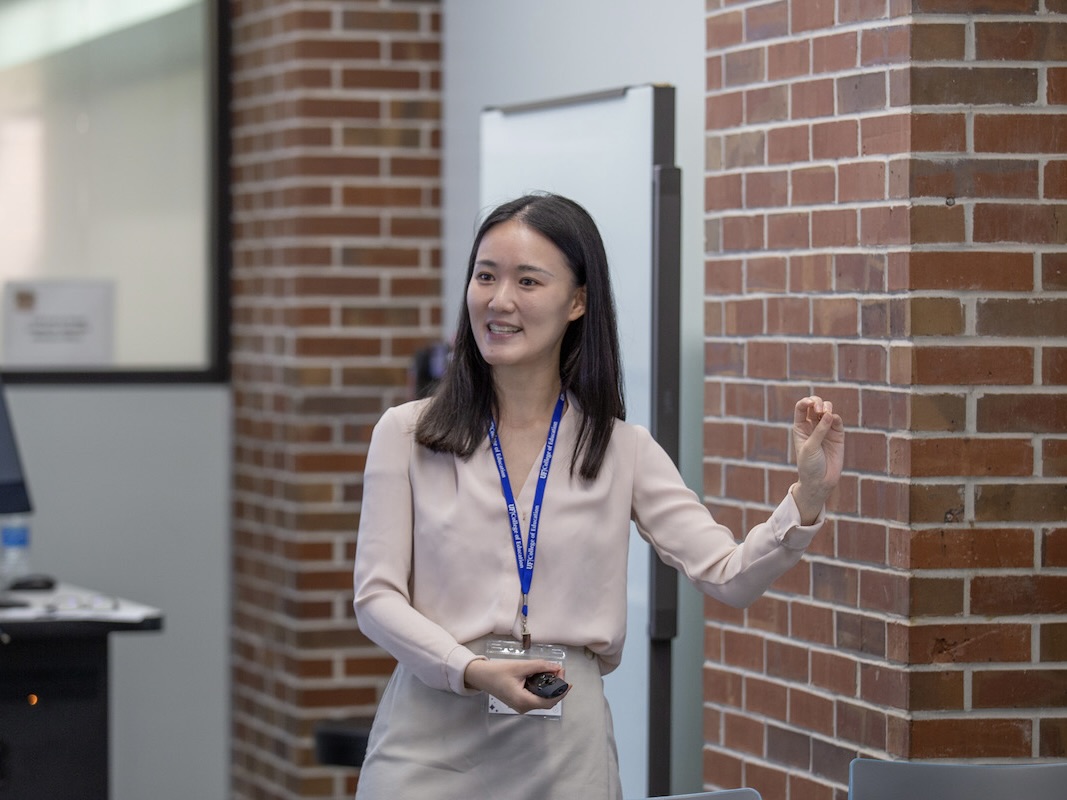
Finding the right internship can be an important step for students, but it’s not always clear which opportunities will lead to the strongest growth. To help solve that problem, University of Florida researchers have developed an AI-powered tool that helps students identify internships most likely to accelerate their technical and professional development. Unlike traditional recommendation engines, Pro-CaRE not only predicts which opportunities will lead to stronger outcomes, it also explains why each suggestion is a good fit. In testing data collected from the students, Pro-CaRE’s predictions proved highly accurate, accounting for more than 72% of the differences in learning gains among participants. While the pilot is being tested in engineering, the tool could be adopted for other disciplines. “Internships are one of the most critical parts of an engineering education, but students often struggle to know which experiences will actually help them grow,” said Jinnie Shin, assistant professor of research and evaluation methodology in the UF College of Education. “What makes Pro-CaRE unique is that it doesn’t just offer a list of options. It provides personalized recommendations backed by data and it tells students clearly why an opportunity is a good match for them.” Pro-CaRE creates matches by analyzing each student’s coursework, major, background and self-reported interest, confidence and self-efficacy in engineering skills. It then compares that profile with a carefully chosen set of similar peers to refine suggestions. The result is more precise guidance that adapts to students at different stages of their degree programs. “Students shouldn’t have to guess or hope that an internship will be worthwhile,” Shin said. “With Pro-CaRE, they can approach opportunities knowing they’re backed by evidence, whether the role is onsite, hybrid or remote and whether it’s at a startup or a Fortune 500 company.” The system is designed to work across a wide range of companies and contexts, giving students flexibility while ensuring their choices align with their personal and professional goals. Each recommendation comes with a clear “why this?” explanation, so students can make confident decisions and discuss options more effectively with advisors. Pro-CaRE was developed by a cross-disciplinary UF team combining expertise in education and engineering. Alongside Shin, the project’s co-principal investigators include Kent Crippen in the College of Education and Bruce Carroll in the Herbert Wertheim College of Engineering. The team is exploring external funding opportunities to expand the usage and test the efficacy on a larger scale. “Ultimately, our goal is to empower students to invest their time in experiences that will have the greatest impact,” Shin said. “Pro-CaRE bridges the gap between what students hope to gain and what internships can truly deliver.”



New light-based chip boosts power efficiency of AI tasks 100 fold
A team of engineers has developed a new kind of computer chip that uses light instead of electricity to perform one of the most power-intensive parts of artificial intelligence — image recognition and similar pattern-finding tasks. Using light dramatically cuts the power needed to perform these tasks, with efficiency 10 or even 100 times that of current chips performing the same calculations. Using this approach could help rein in the enormous demand for electricity that is straining power grids and enable higher performance AI models and systems. This machine learning task, called “convolution,” is at the heart of how AI systems process pictures, videos and even language. Convolution operations currently require large amounts of computing resources and time. These new chips, though, use lasers and microscopic lenses fabricated onto circuit boards to perform convolutions with far less power and at faster speeds. In tests, the new chip successfully classified handwritten digits with about 98% accuracy, on par with traditional chips “Performing a key machine learning computation at near zero energy is a leap forward for future AI systems,” said study leader Volker J. Sorger, Ph.D., the Rhines Endowed Professor in Semiconductor Photonics at the University of Florida. “This is critical to keep scaling up AI capabilities in years to come.” “This is the first time anyone has put this type of optical computation on a chip and applied it to an AI neural network,” said Hangbo Yang, Ph.D., a research associate professor in Sorger’s group at UF and co-author of the study. Sorger’s team collaborated with researchers at UF’s Florida Semiconductor Institute, the University of California, Los Angeles and George Washington University on study. The team published their findings, which were supported by the Office of Naval Research, Sept. 8 in the journal Advanced Photonics The prototype chip uses two sets of miniature Fresnel lenses using standard manufacturing processes. These two-dimensional versions of the same lenses found in lighthouses are just a fraction of the width of a human hair. Machine learning data, such as from an image or other pattern-recognition tasks, are converted into laser light on-chip and passed through the lenses. The results are then converted back into a digital signal to complete the AI task. This lens-based convolution system is not only more computationally efficient, but it also reduces the computing time. Using light instead of electricity has other benefits, too. Sorger’s group designed a chip that could use different colored lasers to process multiple data streams in parallel. “We can have multiple wavelengths, or colors, of light passing through the lens at the same time,” Yang said. “That’s a key advantage of photonics.” Chip manufacturers, such as industry leader NVIDIA, already incorporate optical elements into other parts of their AI systems, which could make the addition of convolution lenses more seamless. “In the near future, chip-based optics will become a key part of every AI chip we use daily,” said Sorger, who is also deputy director for strategic initiatives at the Florida Semiconductor Institute. “And optical AI computing is next.”


Villanova Tax Experts Break Down Legislative Changes, Best Practices Before Filing Deadline
It's time to collect your W-2s, 1098s and 1099s: On April 15, Americans are required to submit their annual tax returns—recapping earnings, income and life events from the past calendar year. Yet, as filers prepare their records and statements for 2025, they should anticipate some substantial departures from the 2024 season. According to Stephen Olsen, JD, faculty director of the Graduate Tax Program at Villanova University Charles Widger School of Law, and Luke Watson, PhD, associate professor of Accounting in the Villanova School of Business, one of the most significant drivers of change is the One Big Beautiful Bill Act (OBBBA), signed into law on July 4, 2025. A sweeping piece of legislation, OBBBA has instituted a number of new tax rules and regulations, including a deduction of $6,000 for taxpayers over 65 years of age, a deduction for certain overtime payments up to $12,500, a deduction for certain tips up to $25,000 and an increase in the state and local tax (SALT) deduction cap from $10,000 to $40,000. Given these policies, most taxpayers should expect a modest decrease in taxes owed this season, and refunds on average should trend higher than in 2025—something borne out by early data from the U.S. Department of Treasury. Of course, the full extent and range of the windfalls have yet to be discovered. "It is unclear if the average refund will be as high as estimated by the administration or what the actual distribution of those tax benefits will be," says Professor Olsen. "Not every taxpayer will receive a significant benefit, and there are so many factors that could cause someone's tax bill to increase, including increased taxable income, the loss of other deductions, changes in filing status and claimed dependents." "There are also many restrictions and phaseouts that changed with OBBBA," adds Dr. Watson. "For example, many seniors and tipped workers paid little to no income tax even under prior law, so they would not necessarily see much benefit with the new legislation." As Dr. Watson's remarks reflect, the question of who exactly qualifies for and benefits from OBBBA's provisions has preoccupied the general public for quite some time. In particular, the deduction-related measure tied to tips, or the "no tax on tips" policy, has sparked curiosity. "Like many things in the Internal Revenue Code, 'no tax on tips' sounds simple, but the actual law is a bit more nuanced," says Professor Olsen. "Only workers who are in an occupation that 'customarily and regularly' receives tips qualify for this deduction. This includes lots of people in transportation, personal services and the food, beverage and hospitality industries—even some in entertainment. "Certain professions, including those in healthcare, law, accounting, financial services and consulting, will likely be prohibited from taking the deduction… Importantly, qualifying workers will need to be able to prove their tip income to take the deduction." "It is also worth noting that, due to the generally lower-wage nature of tipped jobs and the historical underreporting of tips on returns, many taxpayers earning tips paid little to no tax on tips in prior years," says Dr. Watson. "So, they would not experience much of a change under OBBBA." Navigating new provisions like this one, during a process and time already known for provoking anxiety, can be a daunting prospect for many taxpayers. What's more, administrative adjustments at the Internal Revenue Service (IRS) could potentially exacerbate levels of stress. "IRS staffing remains lower than in past years, which could impact customer service and processing of returns," says Professor Olsen. "In addition, the current administration has elected to eliminate the IRS Direct File tool for income taxes that was available last year. Taxpayers who used the tool last year will need to find other options for the preparation of their income tax returns." For those concerned about filing and worried about abiding by the new rules and regulations, Professor Olsen and Dr. Watson highlight the importance of remaining organized, maintaining a game plan and, if necessary, seeking assistance. "First, taxpayers should be proactive," says Professor Olsen. "Start gathering information as soon as possible and start the process of preparing your returns as early as possible. That will provide you with more time to troubleshoot issues or find other information you may not have initially gathered." "Free resources are also available for taxpayers," says Dr. Watson. "There is a federal volunteer-run program called Volunteer Income Tax Assistance (VITA) that operates throughout communities to prepare tax returns for free, and many of the big tax prep companies do offer a free version of their software, despite trying very hard to sell a paid version. "That said, the best advice is to keep thorough tax and financial records throughout the year. Then, seek help—such as through VITA—when you need it. The better your records, the easier it will be for VITA or others to assist you."
