Experts Matter. Find Yours.
Connect for media, speaking, professional opportunities & more.

Beyond the Chair: How AI Is Transforming Modern Dentistry
A recently published article from Augusta University’s Jagwire is highlighting how artificial intelligence is rapidly changing the future of dentistry not only in patient care, but also in education, research and clinical decision-making. The article features insights from Theodore Ravenel and third-year dental student Reid Loveless, who discuss both the opportunities and risks associated with AI integration in the profession. Ravenel explains how AI-powered tools are already assisting dentists with cavity detection, orthodontic planning, bone-loss analysis, and treatment forecasting, while also helping researchers process enormous amounts of clinical data more efficiently. He also emphasizes the importance of ethical safeguards, patient privacy and ensuring that AI tools are trained using diverse and accurate datasets. “It is really reshaping dentistry and how we practice dentistry.” Theodore Ravenel, DMD Loveless offers the perspective of a future clinician learning in an increasingly technology-driven environment. He describes how AI-supported educational tools developed by faculty such as Rafael Pacheco are helping students navigate complex patient scenarios, receive immediate feedback, and strengthen clinical reasoning skills. The article also highlights emerging technologies being used at the Dental College of Georgia, including virtual reality simulators and AI chatbots that provide students with real-time evaluations of dental procedures. Researchers such as Zoya Kurago are also leveraging AI to analyze large-scale datasets tied to cancer and oral disease research. Despite the excitement surrounding these advances, the article stresses that AI is intended to support, not replace, human clinicians. Empathy, communication and patient trust remain essential components of quality care. To learn more about how Augusta University is preparing future dental professionals for an AI-driven healthcare landscape, contact Rafael Pacheco at rapacheco@augusta.edu.

Pope Leo XIV Releases First Encyclical, "Magnifica Humanitas"
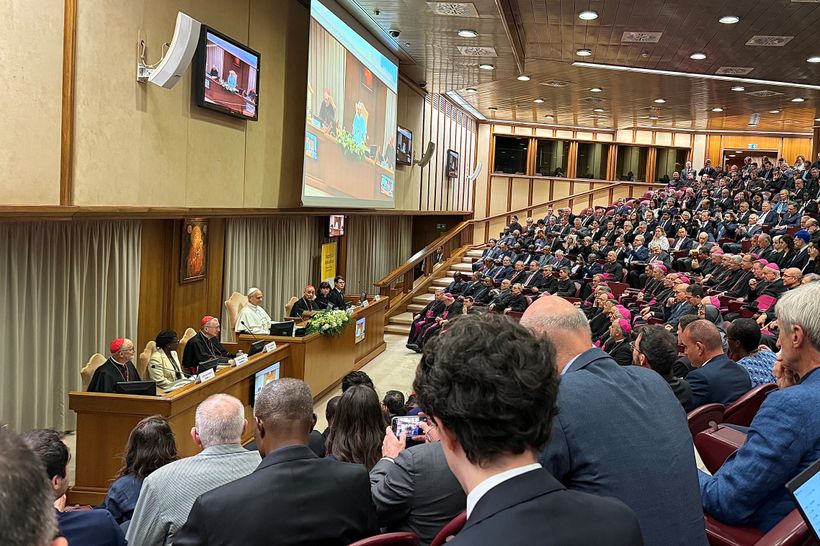
On May 25, 2026, Pope Leo XIV released his first papal encyclical, “Magnifica Humanitas: On Safeguarding the Human Person in the Time of Artificial Intelligence.” The letter—true to its title’s meaning of “magnificent humanity”—addresses how society, collectively, must preserve human virtues in a time of rapid technological advancement. The 42,000-word document features five distinct chapters, exploring various elements of the broader issue at hand and serving as a guidepost for moral and ethical use of technology, through the lens of Church teachings. It covers everything from the development and principles of Church social doctrine to technological responsibility, the culture of power, building civilization through love and preserving humanity through truth, work and freedom. “In recent years, it has become increasingly evident how rapidly and profoundly digitalization, artificial intelligence (AI) and robotics are transforming our world,” wrote Pope Leo in the encyclical’s introduction. “Technology should not be considered, in itself, as a force antagonistic to humanity. On the contrary… “Over the centuries, technological development has significantly improved the living conditions of humanity. At the same time, each phase of progress has also revealed the ambiguity of tools that can cause harm when not oriented toward the good… The power and prevalence of emerging technologies are interwoven into the fabric of daily life, shaping decision-making processes and deeply affecting the collective imagination: ‘Never has humanity had such power over itself.’ “[Most] people are watching and waiting, observing from afar and merely hoping for the best. For this very reason, crucial questions impose themselves on our conscience and can no longer be avoided: Where are we going? Toward what goal do we wish to orient ourselves? What direction should we choose as a people and as a human community?” What Is a Papal Encyclical? Popes have written more than 300 encyclicals—or “circulating letters”—since the mid-18th century. They were initially used to clearly communicate doctrine and guidance to priests throughout the world who were facing religious, political or social issues, which was especially useful as the world grew more interconnected and the Church grew larger. Beginning with Pope Leo XIII’s Rerum Novarum and continuing today, some papal encyclicals have been referred to as “social encyclicals” because they address a pervasive social issue through the lens of Catholic Social Teaching and are written not only for those within the Church, but laypeople as well. Some examples of those included Pope Saint John Paul’s 1987 Sollicitudo Rei Socialis on international inequality, and Pope Francis’ 2015 Laudato Si’ on environmental care and social justice. “[Pope Leo XIII and his successors] were developing a new way of teaching the world how to order itself according to Catholic principles, now translated into a vocabulary that would be intelligible to the larger world,” said Patrick Brennan, JD, Chair of Catholic Legal Studies at Villanova University Charles Widger School of Law, on LiveNow From Fox. “They try to address important social questions in ways that any person of goodwill can read and understand.” “Encyclicals contribute to our collective wisdom for how to live as community,” wrote Sally Scholz, PhD, professor of Philosophy at Villanova, in her recent contribution to Church Life Journal titled “What to Look For in Pope Leo XIV's First Social Encyclical.” “The principles and various themes they discuss offer guidance for day-to-day interpersonal interactions as well as for how to participate as a Catholic and as a “person of good will” at every level of social existence: in our families, our communities, our institutions, our states and in our ‘one human family.’” Observations From Magnifica Humanitas A New Twist on a Longstanding Issue While the types of technology being discussed in the letter—particularly artificial intelligence—are unique to our modern times, encyclicals addressing how to interact with contemporary technology are far from it. “Discussion of the relationship between humans and technology appears in many of the previous social encyclicals,” wrote Dr. Scholz in Church Life Journal. “It is a social phenomenon with so much promise but inspires so much fear for how it will change work and the workplace, communication, global trade, war and the family.” “Technology is integral to evolution. Understanding technology's relationship to human welfare means grasping its role within the flow of biological and human life,” wrote Sister Ilia Delio, OSF, PhD, the Josephine C. Connelly Endowed Chair in Christian Theology in the 2025 Global Sisters Report. What Pope Leo argues in his lengthy letter, boiled down to a few sentences, is that while technological advancements, and AI in particular, can be beneficial to society, they must never supersede human dignity, moral responsibility and the common good. A society that allows systems to replace human judgment, concentrate power or exploit workers risks dehumanization. For Jaisy Joseph, PhD, assistant professor of Theology and Religious Studies at Villanova University, particularly striking was something not written in the document itself, but rather spoken at the official promulgation of the letter in Rome. There, Pope Leo was joined in powerful reflection by Anthropic co-founder Christopher Olah. Olah analogized the current reality with bringing a fictional character to life, citing that while technical fields build the machinery of AI, “what character we choose, how it interacts with the world, how it ought to interact with the world— these are more clearly questions for the humanities, for religion, for philosophy, for society at large.” On that front, he then enlisted the help of the Church in addressing three pressing concerns related to AI and human flourishing, before ending with a request for the Church to continue to be an unyieldingly moral voice and informed critic. “The dynamic dialogue and discernment between Leo and Olah reflect a significant continuity with the Francis papacy,” Dr. Joseph said, referencing the late pontiff’s encouragement of “theology to adopt a transdisciplinary method that recognized how this discipline is part of a web of relationships among disciplines.” Technology Through the Lens of Augustinian Theology Throughout Magnifica Humanitas, Pope Leo’s ubiquitous thoughts and guidance on safeguarding humanity—particularly in the context of modern technology—are infused with references to the teachings of St. Augustine. “[Augustine’s teachings say] we need standards to guide our judgements and actions,” said Terence Sweeney, PhD, assistant teaching professor of Humanities at Villanova. “Pope Leo XIV, ‘a son of St. Augustine,’ offers us standards for how we judge our world in the age of AI. “One surprising standard in a document on Big Tech is that ‘a litmus test for social justice today is the treatment of migrants, refugees and those forced to move.’ Why this litmus test? Leo is shaped by Augustine’s rejection of communities of perfection where only the pure, powerful and perfect are welcome.” “Pope Leo beautifully aligns himself with traditional Catholic Social Teaching while grounding his vision in the theology of St. Augustine,” Dr. Joseph added. “The result is a groundbreaking defense of the human person in our new age of artificial intelligence.” Pope Leo, through a scriptural metaphor of the Tower of Babel, “resurrects Augustine’s famous warning that human history is a constant struggle between two loves fighting for our hearts,” Dr. Joseph said. He references how the builders of the tower tried to create “a single language, a single technology, a single direction” without reference to God. “The concluding paragraphs of chapter three highlight Pope Leo XIV’s distinctively Augustinian approach to evaluating the place of technology and scientific progress in the world,” said Emma Kennedy, PhD, assistant professor of Christian Ethics at Villanova University. “What we love, ‘both as individuals and as a society,’ will guide us to participate in ‘the rebuilding of Jerusalem’ or ‘the construction of Babel’––a contrast that hearkens back to Augustine’s ‘two cities.’” “Pope Leo [also] draws on an Augustinian spirituality that highlights fundamental desiring in the shared search for truth,” added Tim Hanchin, PhD, associate professor of Practical Theology at Villanova. “Our desire for truth, or wonder, reflects humanity’s transcendent origin and end. That we are created in the image and likeness of the Triune God (Genesis 1:26-27) distinguishes human knowing from mere data processing.” A Discussion on Slavery, Past and Present Intermixed with Pope Leo’s chapter four thoughts on modern slavery—such as various forms of human trafficking that he says are “directly linked to the digital economy”—he made an historic recognition and apology for the Church’s role in the transatlantic slave trade centuries ago. Tia Noelle Pratt, PhD, special assistant to the Vice President of Mission and Ministry at Villanova University, assistant professor of Sociology, and editor of the Journal of Catholic Social Thought, said that what makes this acknowledgement so important is how it differs from the way previous popes have addressed the issue, which have condemned slavery but remained at the individual level. “They spoke of their papal predecessors and those popes’ actions, but stopped short of invoking the institution itself and the institution's role in the promulgation of slavery,” Dr. Pratt said. Tying it back to current affronts on human dignity fueled by the digital age, Pope Leo penned his own papal version of the famous saying that “Those who cannot remember the past are condemned to repeat it.” “If we want to avoid the need to ask for pardon again in the future for having failed to respect the treasure of human dignity that is required by our faith, it falls to us today to denounce, clearly and firmly, trafficking in its many forms,” he wrote. “Pope Leo is telling us today that we cannot have detachment between the past and the present,” Dr. Pratt said. “We must see how these things are connected.” Inspired by Rerum Novarum, but Far From a Repeat Pope Leo XIV signed Magnifica Humanitas on May 15—the 135th anniversary of the release of Pope Leo XIII’s Rerum Novarum. That was the most famous social encyclical issued by the long-reigning pontiff and is considered to be a foundational text of modern Catholic Social Thought. It addressed numerous issues facing the working class during the time of the Industrial Revolution. On May 10, 2025—just two days after his election—Pope Leo referenced his namesake’s 1891 encyclical in an address to the College of Cardinals, foreshadowing the attention he intended to pay to the modern version of the same issue. “Pope Leo XIII in his historic encyclical Rerum Novarum addressed the social question in the context of the first great industrial revolution,” Pope Leo said in that address. “In our own day, the Church offers to everyone the treasury of her social teaching in response to another industrial revolution and to developments in the field of artificial intelligence that pose new challenges for the defense of human dignity, justice and labor.” Yet, while he was explicitly inspired by the 19th-century pontiff and his text, Pope Leo makes it clear early in Magnifica Humanitas that “While Leo XIII spoke in his time of ‘new things’ (rerum novarum), today we cannot limit ourselves simply to repeating his insightful teachings. “Instead, we must ask God for the wisdom to interpret the great trends of our time, particularly technological advances.”







Canada’s Retirement Problem Is Not “Boomer Luxury Communism”
A recent Washington Post column by Pulitzer Prize-winner George F. Will caught my attention. A prominent American conservative warns about a demographic apocalypse. Normal Monday. His argument: an aging population and a politically powerful senior cohort are driving unsustainable government spending, leaving younger generations to foot the bill. He even has a name for it: “Boomer Luxury Communism.” (Does George Will need a Snickers bar?) It made me wonder: are the same forces reshaping retirement here in Canada? I’ve heard the generational accusations. Boomers took the good pensions. Boomers drove up housing. Boomers left the mess. Boomers won’t move and sell me their house. But here’s the thing. Boomers don’t have a case of “Pierre don’t care.” Most of them are quietly terrified. After 25 years in financial services and a decade sitting across kitchen tables from Canadians over 55, I think the story is a lot more complicated than that. According to Statistics Canada data, nearly one in five Canadians (19.5%) is now aged 65 or older, representing more than eight million people nationwide, signalling significant growth in the demographic. Retirement itself has also changed dramatically. Fewer Canadians have access to defined benefit pensions. Costs are rising, from groceries to housing to healthcare. And most people want to remain in their homes as they age. The result is straightforward: retirement is lasting longer, costing more, and relying more heavily on individuals than ever before. That much we share with the United States. But the Canadian reality is more complicated. Canada’s Seniors Are Not Living the Way Many People Assume Where the comparison begins to break down is in how we interpret what’s happening. The idea that Canadian seniors are broadly living comfortably at the expense of younger generations simply doesn’t match what I see in practice. In fact, many older Canadians are experiencing something quite different: Financial uncertainty. Despite having significant assets. On paper, many retirees look secure. They may own their home outright. They may have some savings and receive income from programs like CPP and OAS. But much of that wealth is tied up in housing. Families led by someone aged 65 or older now have a median net worth exceeding $1.1 million, the highest of any age group. (Source: Statistics Canada, Survey of Financial Security) Yet the same data also reveals something important: The value of the principal residence for many seniors far exceeds their retirement savings. Many Canadians are increasingly finding themselves asset-rich on paper but cash-flow constrained in practice. The Rise of FORO: Fear of Running Out When you look more closely at the financial picture for many retirees, income streams are often modest and heavily exposed to inflationary pressures. Longevity adds another layer of uncertainty: A Canadian reaching age 65 today can expect to live another 20 years on average. Longevity is, of course, a triumph of modern society, although financially speaking, it has a way of extending the spreadsheet. Which leads to a question I hear repeatedly around the kitchen table: “Will I have enough money to retire?” This concern is so common that I’ve written extensively about it as FORO: "Fear of Running Out." It shows up in everyday decisions. Let’s call balls and strikes: FORO is real, and left unchecked, FORO thinking gets calcified into a permanent crouch. It’s cautious, it’s understandable — and it can quietly cost you your retirement. Worse than an ill-timed "reply all" to a company-wide email. • People delay travel • They hesitate to help their family. • They postpone home repairs • They underspend, even when they may not need to. I’ve met people who won’t replace a 20-year-old furnace because they’re saving money for an emergency. The furnace failing IS the emergency. This is not reckless consumption. It’s cautious financial restraint. A recent Healthcare of Ontario Pension Plan Retirement survey found that nearly half of Canadians approaching retirement worry about outliving their savings. Other research from Fidelity Canada shows that many retirees spend less than they comfortably could because they fear future financial shocks or healthcare costs. This anxiety matters because retirement is not just a math problem. It is also a confidence problem. This Isn’t Boomer Excess. It’s a System That Shifted What’s happening in Canada is not primarily a story of overconsumption by retirees. It is the result of a long-term structural shift. Canadians are living longer than ever. In fact, the number of Canadians over age 85 - already one of the country’s fastest-growing demographic groups, is projected to nearly triple over the next 25 years. (Source: National Institute on Aging) Over the past several decades, pensions have disappeared. Employers steadily moved away from guaranteed pensions while individuals assumed far greater responsibility for funding their own retirement years. Defined benefit pension coverage has declined significantly in the private sector, particularly among younger workers, leaving more Canadians to manage retirement risk on their own. The CD Howe Institute has written extensively on this topic, calling for pension reform. At the same time, housing became the country’s dominant store of wealth. For many Canadians, rising home values created the impression of growing financial security. But the current housing environment is far more complicated. Now, real estate markets have become less liquid. Some regions are now seeing much softer housing prices after years of extraordinary growth. Cue the song, "Those were the days, my friend, we thought they'd never end." The result is a retirement system increasingly dependent on housing wealth, whether policymakers openly acknowledge it or not. Government is beginning to feel the financial pinch as well. A recent report from the C.D. Howe Institute estimated that demographic aging alone could create more than $2 trillion in long-term fiscal pressure for provincial governments, driven largely by healthcare and age-related spending. In the mid-1970s, there were nearly seven working-age Canadians for every retiree (Source: Statistics Canada). Today, that ratio has fallen to closer to three-to-one. It's a profound demographic shift that is placing growing pressure on labour markets, healthcare systems, and public finances. As retirements accelerate, fewer younger workers are available to replace them, reshaping the country’s economic and fiscal balance. Even high levels of immigration are unlikely to fully offset Canada’s aging challenge over the long term. These pressures are real. But the Canadian story is still more complicated than the increasingly combative generational narratives emerging in the United States. Retirement Became a DIY Project Over time, we slowly moved away from a system that delivered predictable retirement income. Now we ask individuals to assemble their own retirement strategy from scratch. Choose your own adventure: except the stakes are your retirement, and there’s no going back to page one. That shift created flexibility but also risk. And today, that risk is showing up as uncertainty. And while it's tempting to frame this as a generational issue, the more meaningful divide in Canada increasingly looks like this: • homeowners versus non-homeowners • those with pensions versus those without • those with access to advice versus those navigating alone Looking at the issue through this lens helps us better understand how we arrived at this point, and why it should serve as a wake-up call for consumers, policymakers, and the financial industry. Still not convinced? Look at this data from the Statistics Canada Net Worth Report: Near-retirement households with both a workplace pension and homeownership had a median net worth exceeding $1.4 million. Remove those two structural advantages, however, and the financial picture changes dramatically: renters without pensions had a median wealth of less than $12,000. Let me stop and let this one land. Pause, breathe, and read on. The wealth gap, when you look at homeownership and pensions, is staggering. It reveals how profoundly retirement security in Canada is shaped not only by age but also by structural access to housing and pension systems. Two Canadians of the same age can now face entirely different retirement realities depending on just a few foundational variables. That’s not a generational conflict. It’s a serious design problem — a bug, not a feature. The Accumulation Paradox Here is another gap that rarely gets discussed. Canada has done a reasonably good job of helping people accumulate assets. BUT We have done a much poorer job helping them convert those assets into sustainable income. This is especially true when it comes to housing. Research from the National Institute on Ageing and CMHC consistently shows that the overwhelming majority of older Canadians want to age in place rather than downsize or move into institutional care. But Canada’s retirement system increasingly depends on housing wealth, even as many retirees remain reluctant to use it strategically. For many Canadians, home equity is their single largest financial resource. Yet, culturally and psychologically, it is often treated as something to preserve rather than deploy. The result is what I call the Asset Accumulation Paradox: People can be asset-rich and cash-flow constrained at the same time, a perfect example of 2 things being true at the same time. That disconnect sits at the heart of much of the retirement anxiety we see today. Where Canada Stands Compared to the United States In some important ways, Canada is better positioned than the United States. The Canada Pension Plan is actuarially reviewed and designed to remain sustainable over the long term. (Source: Office of the Chief Actuary). And according to International Monetary Fund data, Canada’s public debt burden also remains materially lower than that of the United States as a share of GDP. But that does not mean we can afford complacency. Because beneath the surface, there is a growing gap between what Canadians have and what they feel confident using. If we want to improve retirement outcomes, we need to focus less on assigning blame and more on improving design. That means better tools, better guidance, and more open conversations, especially about how to turn assets into income. The warnings coming out of the United States are worth paying attention to. But Canada’s challenge is different. The risk is not that seniors are taking too much.It’s that too many Canadians are living with uncertainty despite having more options than they realize. The challenge now is not simply helping Canadians accumulate wealth. It is helping them use that wealth with greater confidence, flexibility, and security. So, let’s call this what it is. George Will is not entirely wrong. The numbers are real, the fiscal pressure is real, and yes, someone is going to have to deal with it. But the story he’s telling is a blunt instrument in a situation that requires a scalpel. Canada’s retirement challenge isn’t Boomer Luxury Communism. It’s more like Boomer Luxury Paralysis: sitting on a million-dollar asset, terrified to touch it, underspending in the present to guard against a future that may never arrive. FORO doesn’t discriminate by generation. It just quietly rearranges your life until you’re postponing the trip, skipping the furnace repair, and waiting for permission to enjoy the retirement you actually saved for. The good news? The options are better than most people think. The conversation isn’t about giving anything up. It’s about using what you already have. Sue Don't Retire...ReWire! My Book is Now Available for Pre-Order I hope you will consider pre-ordering a copy of Your Retirement Reset for you, a friend or loved one. It's available September 8, 2026 - You can now order on the ECW Press site here. And if you love supporting Canadian booksellers, please also check with your local independent bookstore. Most can easily order it for you.


New clues about how earthquakes work
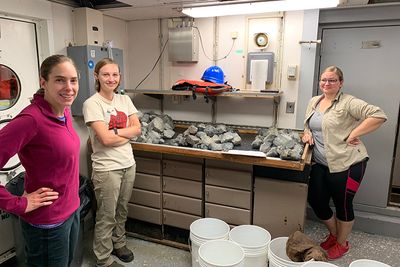
University of Delaware researcher Jessica Warren helped uncover evidence that sections of fast-moving underwater faults may act like “brakes,” controlling the occurrence of big earthquake events on transform faults. Warren can discuss what the findings, released today in the journal Science, mean for earthquake science and future modeling. Situated along a stretch of the equator in the Pacific Ocean, between Indonesia and Central America, the Gofar transform fault is one of the fastest moving faults on Earth — cruising along the seafloor at about 140 millimeters per year. This is over four times faster than the San Andreas fault is moving in California. “Geologically speaking, it's like looking at a moving Acela train next to a SEPTA train on the tracks,” said Warren, a professor of earth sciences at UD. Researchers know that the Gofar transform fault line has experienced a magnitude 6 earthquake about every five to six years over the last three decades. It’s been studied extensively, as these earthquakes occur at the same places along the fault and at the same intensity, time after time. What’s been unknown, until now, is why parts of this fault experience many small microshocks leading up to a main earthquake rupture, then shut down, while other parts of the fault are quiet before the big event and then experience many aftershocks. Now, a multi-institutional team of researchers, including UD’s Warren, reports that sections of the fault without large magnitude earthquakes actually act like brakes in a fast-moving car, controlling the occurrence of big earthquake events on transform faults. This finding is in contrast with currently accepted models of earthquake behavior. The team includes researchers from UD, Indiana University, Woods Hole Oceanographic Institution, Scripps Institution of Oceanography at UC San Diego, the U.S. Geological Survey, Boston College, Western Washington University, the University of New Hampshire and McGill University. In the study, the researchers analyzed two zones along the Gofar transform fault they say have stopped about 15 magnitude 6 earthquakes over the past 30 years. The study findings will inform globally what’s known about how faults and earthquakes behave, at sea and on land. Warren's contributions include leading the initial field research at sea in 2019 on the R/V Atlantis and interpreting results throughout the project, with a focus on connecting the earthquake observations to how rocks in the fault fracture and distort during an earthquake. Why were you studying the Gofar transform fault, in particular? Warren: Geoscientists want to understand faults and earthquakes because they are obviously a big hazard on land. The rocks that make up the seafloor are simpler than those found on land, providing a more controlled space to study earthquakes, despite the challenges of doing research underwater. If you want to understand how faults build up stress and then release it (and where), the Gofar transform fault is amazing, because it experiences earthquakes at reliable intervals of five to six years. This is a lot more regular than any other fault. In 2019, I led a research cruise on the R/V Atlantis that deployed 51 seismometers two miles down on the seafloor to detect these small events. We were able to compare the results of our measurements from 2019 to 2020 to an experiment conducted by my colleague Jeff McGuire on the same fault in 2008. The similarities in the two datasets brought us to the realization that fault sections without large magnitude earthquakes control the overall occurrence of big events on transform faults. When we had that observation in 2008, that might have been a one-off, but getting back this new data and seeing such similar behavior was a new insight into what's happening in the fault. How does that tell you about how earthquakes occur on land? Warren: On land, people spend a lot of time looking at how rainwater and groundwater move in a fault system, and how that influences the behavior of the fault. In the oceans, we have an unlimited amount of water. Once the rock cracks, the water is going to get in there. Being able to look at how a fault changes through the earthquake cycle — which we've now measured most of on this one fault — can help us understand what is universal about how faults work, and how rock friction works. And one of the big players is water. That's why the rock samples that my lab works on matter. Fault structure is another thing that we've been trying to understand. We know from on land that some parts of a fault are linear, while other parts have lots of strands and maybe contain more fractures and that, if you start putting water in the picture, this can limit or change how water moves into the system. Now, we have these very high-resolution maps of the seafloor, where we can see, for the first time, where the fault itself is. One of the next things we want to understand is how fluid gets into the fault, and then how friction in a fault changes when water is there. Why is this important? Warren: The next step is to translate the understanding that we've gained from this specific fault to understanding how faults behave in general. This is the longer path to really understanding earthquake hazards. It's not going to change our hazard models tomorrow, but hopefully it will in the decades to come. To reach Warren directly and arrange an interview, visit her profile and click on the "contact" button. Interested reporters can also email MediaRelations@udel.edu.



Expert Insight: The Hidden Costs of Staying Neutral
Considering the number of hot-button issues and divisiveness in American culture, choosing a middle-of-the-road attitude might be seen as the best way to navigate an often volatile environment. But what about those individuals who choose neutrality as a means of staying below the radar and, thereby, avoiding the need to take any action? This is the question that Laura Wallace, assistant professor of organization and management at Emory’s Goizueta Business School, and coauthors ask in their new paper, The Preference for Attitude Neutrality. Published in the Journal of Experimental Psychology: General, the researchers explore individuals with a preference for neutrality and how their uncompromising commitment to neutral opinions, not only discourages rigorous debate but could have a deleterious impact on society. Emory Business recently caught up with Wallace to discuss her research. Emory Business: What sparked your interest in the preference for neutrality? Wallace: When we think about the problems in the world, often people point to too many extreme opinions as the source of much social ill, and, of course, they can be. But, when I thought about a lot of the issues that I cared about, like addressing climate change or gun violence, I felt that sometimes the issue was too much neutrality in the face of issues that were themselves pretty extreme. When I talk about this work, people can often picture someone who seems like a “Pref Neutral,” as we have affectionately nick-named them, that is someone who in the face of information suggesting that there is an extreme problem is not moved to address the issue. I could think of people in my life who had these reactions, and I was interested in understanding more about them. Emory Business: How did you identify these individuals? Wallace: We developed a scale to assess the extent to which people view neutrality as truer, more socially desirable, and more moral. For example, we ask people how much they agree with items like, “If you have all the facts about a topic, your opinion will generally end up somewhere neutral” and “There is something noble about remaining in the middle about controversial topics.” The more someone agrees with these items, the more we would say they have a preference for neutrality. Emory Business: How does this study fit in with your larger body of work? Wallace: I generally think of my program of research as studying the “psychology of social change.” Within that broad category, I study 1) how to change minds and build trust and 2) how to address societal disadvantage. I view this work as fitting in the first bucket about how we change people’s minds. What interests me about people who are high in the preference for neutrality is the fact that they seem to NOT change their minds in the face of extreme information suggesting that they should. These individuals represent a significant barrier to our ability to address pressing issues, so I view this work as very much tied into the overarching goal of my research program to understand social change (or the lack thereof). Laura Wallace is an assistant professor of organization and management at Emory University’s Goizueta Business School. Wallace studies how to build trust with implications for addressing societal disadvantage, changing minds, and fostering growth. View her profile Emory Business: Would you describe a preference for neutrality to be a mindset, strategy, or attitude/value? Wallace: I think of the preference for neutrality like an ideology or value system that guides people’s reactions across many issues and situations. Emory Business: Talk about the study design. It’s quite detailed and multilayered, with eight hypotheses and six different measures to account for potential bias that were then randomized to create different questionnaires given to a large pool of individuals. How did the coauthors agree on the structure? Wallace: First, I should take the opportunity to shout out Thomas Vaughan-Johnston, who led this work. He is a faculty member at Cardiff University and is just a very thoughtful, interesting researcher, and he’s great to work with. Second, there are a number of studies in the paper. For each, our research team worked together to design and interpret the studies. The paper paints a relatively negative view of Pref Neutrals. We did take measures to resist bias in our design. For instance, we didn’t just ask people how much they dislike extremists (which would have been biased towards making those with a preference for neutrality look bad), but also asked about attitudes towards neutrals (where those with a preference for neutrality may seem like “the nice people”). We are now starting research on contexts where a preference for neutrality can offer some advantages, hopefully without artificially striking a false balance. For instance, we are considering whether they can help reduce group polarization effects, especially where groups drift towards radicalism in conversation. Also, we have some preliminary data where they seem to be a bit more accurate when detecting neutral emotions and attitudes in others, which is a remarkable plus side. Basically, we think the preference for neutrality is a social concern, but we are trying to be fair-minded when considering why they think this about neutrality and when this trait is useful for the world. Emory Business: In the study, you note that preference for neutrality can be a sign of arrogance and that Pref Neutrals are uninterested in learning more or changing their stance. How is this arrogance exhibited? Wallace: I would say that they are more close-minded than arrogant and that they don’t seem to be particularly thoughtful. One way we have assessed this is by measuring their “intellectual humility,” which essentially captures how much people recognize the limits of their own perspectives and are open to changing their minds. Pref Neutrals tend to score low on intellectual humility. They also score a little low on the “need for cognition,” which captures how much people like to think. Emory Business: In one section it reads: “preference for neutrality (preference for extremity) should relate to seeing other people as moral, competent, and likeable, when those individuals have generally neutral (extreme) opinions.” Does this mean that they align with people who have their same opinion structure? Wallace: We find that people who score high on the preference for neutrality scale tend to have more favorable impressions of others who are more neutral and tend to be more persuaded by others who are labeled as holding neutral attitude positions. Emory Business: How would one identify this trait in a person, particularly, when the research shows they tend to self-censor? Wallace: In general, they are really hesitant to take stances on issues or they tend to avoid taking sides or expressing strong positions. And yes, they tend to self-censor, meaning they often avoid sharing their opinion at all. Emory Business: How does this preference for neutrality play out in a political sense? Specifically, if they are averse to extremes would they vote based on their values? Wallace: We have a lot of evidence that Pref Neutrals tend to be political centrists. We don’t have evidence for this, but I suspect that they sit out a lot of elections, and to the extent that they do vote, they favor more moderate candidates. They probably would not vote for a position or individual with an extreme view unless it was framed as neutral. This may sound like a silly, cerebral point, but I actually think it’s critical to the point we are making, as what is viewed as “extreme” in a given time is often socially determined. For example, now it would be viewed as an extreme stance to support slavery. However, in the early 1800s in the U.S., it would have been viewed as an extreme stance to oppose slavery. I imagine at the time, many Pref Neutrals were supportive of slavery as a means of being politically moderate. Emory Business: What was the most interesting result in this study for you? Wallace: We find that if you give Pref Neutrals the exact same information but label it as extreme or neutral, they are more persuaded by the exact same information when it is labeled as neutral. This results in a kind of ironic effect where they actually end up with a more extreme opinion when information has been labeled as neutral. Emory Business: Research wise, what’s next for you? Wallace: There are a few ways that we are following up on our work that I am excited about: First, we’re trying to understand more about how Pref Neutrals maintain neutral opinions in the face of extreme information. So, we are giving Pref Neutrals true, extreme facts, and then examining their thoughts to determine how they resist taking the extreme positions information would suggest that they should. Second, we thought that Pref Neutrals would be particularly likely to trivialize social issues, to say they are unimportant. We are actually finding that they rate all social issues as extremely important, which we are trying to understand more about. We suspect they might do this as a strategy to avoid taking action on social issues. If stubbed toes and human trafficking are both “extremely” important, then there are just too many issues to take action on, and so they are able to justify a lack of action. Third, we are interested in understanding what it is like to make decisions in a group with a Pref Neutral. There is a lot of evidence that groups tend to make bad decisions because people want to agree with each other. This might actually be an area where Pref Neutrals would shine – the fact that they don’t want to take a stance may force groups they are a part of to really think things through and make better decisions. This is all super preliminary, but it reflects the exciting work ahead and that there is much more to understand about these folks!



UD experts break down the 2026 World Cup
As the world gears up for the 2026 FIFA World Cup, experts from the University of Delaware are available to provide timely insight on the science, business, and human impact behind the global tournament. Player Safety, Concussions and the Future of the Game Tom Kaminski, professor of kinesiology and applied physiology, is a leading authority on player safety and head injuries. As the sole U.S. representative on FIFA’s Heading Expert Group, Kaminski is helping shape international guidelines around heading in soccer—particularly for youth athletes. He can speak to concussion risks, prevention strategies, and how evolving safety standards are influencing the modern game. Joining him is Tom Buckley, who also specializes in concussion research and athlete health, offering additional perspective on injury trends and recovery in elite competition. The Business of the World Cup: Tourism and Global Impact Matt Robinson from UD’s Lerner College of Business and Economics explores how mega-events like the World Cup drive tourism, economic growth, and global connection. Robinson can discuss how host cities benefit, the long-term economic ripple effects, and how sports act as a powerful unifier across cultures. Youth, Development and the Next Generation of Fans Sara Goldstein brings expertise in adolescent development, offering insight into how traditions with family shape youth identity, social development, and engagement with physical activity. Her perspective is especially relevant for younger audiences experiencing the World Cup through schools and community programs, including UD’s Lab School initiatives. Inside the Game: Sports Analytics in Action With the rise of data-driven performance, UD’s new Sports Performance Analytics major is preparing students to analyze gameplay at the highest level. Martin Heintzelman, department chair, can connect media with program leaders and practitioners including Jack Davis and Christina Rasnake, who are helping students apply real-time analytics to global competitions like the World Cup. The Science Beneath the Game: Playing Surfaces World Cup matches are required to be played on natural grass—a costly and complex requirement, especially for indoor stadiums. Erik Ervin can discuss how turfgrass systems have evolved, the science behind maintaining elite playing surfaces, and the massive investment required to meet international standards. Why Watching Together Matters Amit Kumar studies the psychology of happiness and shared experiences. He can speak to why gathering to watch World Cup matches—whether in stadiums, bars, or living rooms—boosts well-being and strengthens social bonds, making the tournament as meaningful off the field as it is on it. Connect with UD experts to explore every angle of the 2026 World Cup – from the pitch to the people. Email mediarelations@udel.edu to connect with these experts.




Expert Insights: Want More Engagement? Eliminate the Barriers.
Anyone born in the 70’s or earlier will probably remember it well. Time was when playing any kind of video game meant physically disporting yourself to the local arcade—a twilight zone of flashing neon, electronic beeps and bops, and the clink of quarters hitting the slot. As technology advanced, the videogame came to you. Home consoles and TV stations rigged with joysticks duly became the mainstay of gaming. The Atari 2600 brought the arcade experience into dens all over the US; Pac-Man, Space Invaders, and Asteroids now at the fingertips of a generation of games who no longer needed to leave home to play. Fast forward to the era of smart phones and hi-tech, and gaming has evolved again. Today, Fortnite, Minecraft, and The Legend of Zelda can accompany you pretty much anywhere—onto a train or a bus, into the canteen at work or school, or under the covers at 2am. In our always-on, on-demand world, video gaming increasingly meets players where they are; a play-anywhere, digital user experience that empowers individuals to engage with their game of choice wherever they are, whenever it suits, and via whatever platform they prefer, desktop or mobile. For users, the benefits seem clear. But what about game producers? As availability expands to new channels and platforms, how does it change user behavior? Does it deepen engagement or does cross-platform continuity simply end up redistributing play—the addition of each new platform shifting players away from, and effectively cannibalizing, existing channels? It’s a conundrum, and not just for video game producers. Retailers, bankers, insurance firms, media, and hospitality providers—anyone with an online-first approach looking to meet their customers wherever they are—should also be cognizant of the potential downsides of channel expansion in the digital space. Weighing in here is research by Professor of Marketing and expert in the intersection of sports and cultural analytics and marketing Michael Lewis. Together with Wooyong Jo of Purdue, Lewis looks at the impact of omni-channel strategy on videogames—a proxy, he says, for other sectors and industries. What they find is critical for marketers and decision-makers in any context or business setting. Increasing the digital touchpoints between your product and customers does impact behavior—but the net results are overwhelmingly positive. Video game players play more, they spend more frequently, and they integrate gameplay more deeply into their everyday lives. In other words, the investment pays off. And the dividends in customer engagement are serious. Switching to the Switch To unpack all of this, Lewis and Jo partnered with a large US video game publisher to analyze player-level behavioral data for one its major titles in the Multiplayer Online Battle Arena, or MOBA genre. Players form teams and compete to destroy opposing team’s bases, selecting a character from a set of 100+ options. Revenue for the publisher comes from a “freemium” business model—users can make voluntary purchases to unlock new characters or buy cosmetic enhancements. These purchases are geared toward enhancing the gaming experience but don’t affect competitive outcomes, making them a critical measure of engagement. In 2019, the game was released for the Nintendo Switch, which can be docked in home consoles but is most commonly used as a mobile, hand-held device. PC players were given the option to download this new version and continue gameplay seamlessly using their existing accounts. Analyzing player behavior before and after the adoption of the new Switch platform, Lewis and Jo were able to zoom in on some critical measures of user engagement including game usage or the total number of matches played, in-game spending—what, when and how much players spent—and player inactivity or churn. “We were able to really get into player behavior over time, and what happens when you introduce the Switch option and remove the constraints of having to play in one place—the home or gaming PC,” says Lewis. “What happens when you make it possible for players to access the game they love while they’re commuting or on their lunchbreak?” Plenty, it turns out. Mobile access: gameplay, spending and churn Crunching the data, Lewis and Jo find that mobile access dramatically increases gameplay. Players who adopted the Switch version played approximately 31% more games than before—a dramatic uptick that underscores how flexibility gains translate into new opportunities to play and engage. And that’s not all. Lewis and Jo also find that gameplay becomes less concentrated within narrow windows—after school or work, say—and is now more spread out across the day, the result of the “ubiquity effect,” says Lewis. “Take away the constraints of having to be in a fixed location and you see players adding additional play sessions. Interestingly though, we don’t find any adverse effect on PC gaming. Players are simply playing more, and playing longer, rather than replacing PC time.” Then there’s in-game purchasing. MOBA-type games typically give players the option to voluntarily buy modifications for characters, known as “skins.” These skins are cosmetic enhancements: new armor, costumes, skill animations or effects. Crucially, these kinds of purchases don’t advance players to new levels of success in the game. Instead, they are used for personalization—to demonstrate status or to celebrate an in-game event. Lewis and Jo find that mobile adopters make more frequent in-game purchases. While the overall total doesn’t increase materially, these players are spending small amounts, more often—almost 7% more frequently than before. This makes intuitive sense, says Lewis. If players are logging in more often, they have more opportunities to feel inspired to want to spend on skins. But there’s another factor that may be at work. “With this kind of in-game purchasing, it’s likely that a lot of it is about credibility. When you buy a skin or a character pack, it’s like you have more aura within the game; you want to signal something to other players and let yourself be known. And this is more than just monetary, it’s about a deeper kind of engagement,” says Lewis. “It’s possible that as mobile access makes the game more of a frequent companion, as the rate of play increases, there’s this effect that players fall deeper into the community—their engagement deepens even more.” Interestingly, the shift to mobile access had the most significant impact precisely on those players whose pre-Switch in-game purchasing was lowest. These users, who were arguably most likely to disengage and drift away from the game, became significantly more active once the hand-held option became available. “If you have players spending less and less inside the game, the intuition is that these are the customers you are most at risk of losing,” says Lewis. “Bringing in the Switch has seen these customers—those more prone to churn—actively reengage with the game, maybe because they have greater propensity for the mobile version.” Either way, this should be a particularly interesting finding for marketers, he adds; retaining existing users is typically cheaper than attracting new ones. “The evidence suggests that mobile access can serve not only as a growth strategy, but also a defensive one if it helps keep marginal users engaged; those who might otherwise have detached from the product altogether.” Help Them Switch So far, so encouraging. There is one potential downside to porting a game or online product to a new channel, however, and that is usability. Lewis and Jo find that players who switched between platforms experience a slight, initial decline in in-game performance—likely because of differences in the control systems between devices. Players who’ve been using keyboard and mouse controls may need time to adapt to hand-held controllers. To mitigate this, he and Jo suggest that producers could offer tutorials or introductory gameplay modes that accelerate the learning curve as users adjust to the new interface. In most cases, usability should be factored in as an additional, hidden cost, when developers and organizations are contemplating investing in more online customer touchpoints. “Expanding your online channels will always have some cost. Taking a game from one platform and porting it to another one isn’t free, so you will want to anticipate the hurdles, even as you weigh up the clear benefits,” says Lewis. “The key is to make sure you protect your users. With things like video games, you want to think about how to guide or upskill your players, maybe have them play bots at first to ramp up their capabilities. Whenever you create a new channel that has a different operating system from the user’s perspective, you’re probably going to want to provide some aid to your fan community.” The benefits of omni-channel access should always be weighted against the costs involved, counsels Lewis. Even so, today’s competitive pressures—the seemingly inexorable march of technological innovation and evolving user expectations—are likely to make platform expansion unavoidable for most online businesses. In the world of video gaming, as major franchises release new products across multiple platforms, and player preferences become more sophisticated, companies may simply have to adopt similar strategies to remain competitive. “As everyone else invests in the same new technologies, you almost have to do the same—just as a matter of doing business,” says Lewis. “If you are launching a video game, you’ve got to compete with whatever Call of Duty or Grand Theft Auto are doing. You can’t just tell your players they can only engage on one platform. The competition is continuously raising the stakes just in terms of the bare minimum.” Building Fandom: the Connective Cultural Tissue More broadly, Lewis and Jo’s findings speak to how human beings form communities of shared passion around business entities and, perhaps more compellingly, around cultural phenomena: video games, for sure, but also sports teams, music, films, comic books, fashion, and more. Understanding the mechanisms that drive and deepen engagement sheds more light on what Lewis calls the “connective cultural tissue of fandom: ”the powerful social bonds, camaraderie, and shared identity that connect people to cultural entities and to each other. Fandom, he argues, is the “key to our world.” Understanding fan behavior is critical to understanding how it is that games, brands, sporting teams, or politics forge communities built on shared passion. “Whatever your organization or business is, you are going to be interested in driving passion. You want people to engage and love what you do. What we’re looking at in this study is a building block towards understanding how cultural entities fit into consumers’ lives, and how eliminating barriers helps to expand communities and drive relationships—extending reach and engagement by weaving cultural experiences more deeply into everyday life.” The real challenge in front of organizations, be they video game producers or online retailers, says Lewis, is to give their product the kind of “cultural meaning” that creates fans—and not just users. “When you think about the behavior of fans, the level of passion and engagement that exists around cultural phenomena—whatever they are from video games to FIFA, the English Football League to the Super Bowl, Taylor Swift to the Republican Party—that’s where you see the passion that really drives the world. And that to me, is critical in understanding how business works, how societies function, and how our world evolves.”


U.S. National Debt: How to Stop the Bleeding
The U.S. national debt exceeding the size of the American economy is a dubious milestone that has sparked alarm and confusion among policymakers who are asking how worried they should be and what can be done to stop the bleeding. David Primo, a political scientist and professor of business administration at the University of Rochester and a fiscal policy expert who has testified before Congress on the national debt, says Americans should be very concerned about the debt and, at the same time, know there is a solution. “The federal budget outlook is grim and threatens the economic future of the United States,” says Primo, the author of Rules and Restraint: Government Spending and the Design of Institution (University of Chicago Press). “If Congress waits to act, Americans will need to give up a bigger piece of the nation’s economic pie to stabilize the country’s finances.” Primo says a solution lies in a constitutional amendment restraining the federal budget. Specifically, such an amendment would clearly define spending and revenue, set spending limits based on a multiyear period, and allow for waiving the limit only with a large supermajority in Congress. “As it stands, Congress is constitutionally incapable of tying its own hands, making it difficult for legislators to implement durable changes to the federal budget,” Primo says. Recent data show the national debt has crossed 100% of the GDP threshold — roughly $31.27 trillion versus $31.22 trillion in economic output — marking the highest peacetime level in U.S. history. The Congressional Budget Office has projected that debt levels, if left unchecked, could reach 181% of GDP in the next 30 years. Primo says delaying implementing a solution raises the risk of increased interest rates, which would, in turn, reduce investment and, ultimately, economic growth. For journalists covering deficits, tax policy, and the long-term economic outlook, Primo offers key expertise and a clear lens on: • The implications of national debt exceeding GDP • Constitutional and institutional approaches to fiscal reform • Fiscal policy and political incentives “The United States is in precarious fiscal health,” Primo told Congress in 2023. “In the absence of a constitutional amendment, I fear it will take a fiscal crisis before Congress acts. Nobody wants that.” Connect with Primo by clicking on his profile.



New report proves earning potential of EVs equipped with vehicle-to-grid technology
The University of Delaware, Exelon Corporation/Delmarva Power and collaborators have released a new report showing that electric vehicles equipped with vehicle-to-grid (V2G) technology can be profitable for private owners and businesses alike, with data from real electricity markets to back up the claims. The report is the outcome of a pilot program announced in 2024 by UD, and completed at the offices of Delmarva Power, which is part of Exelon Corporation, to confirm the value of V2G services to the grid. Among the key findings: the collaborators report that a V2G-enabled passenger electric vehicle (EV) could earn as much as $3,359 per year, based on 2021-2025 market prices, for storing and supplying energy to the electric grid during times of need, otherwise known as providing grid services. Heavier vehicles, such as fleet vehicles, delivery trucks or school buses, could earn over $9,000 per year, per vehicle. That’s a powerful income generator, given that privately owned vehicles are parked 96% of the time, on average, in the United States. Company fleet vehicles — even those operating 40 hours per week — remain stationary 75% of the average work week. The pilot, which included collaborators Ford Motor Company, the region’s electric grid operator PJM Interconnection, and aggregator Nuvve Corp., was tested using a small fleet of Delmarva Power EVs retrofitted with the bidirectional charging technology and a new advanced communications standard. The term “bidirectional charging” means that the V2G technology enables electric vehicle batteries to store extra energy from the electric grid when there is a surplus and to discharge that energy back to the grid when it is needed. In this way, V2G-enabled EVs can help the grid stay balanced, strengthening grid resilience and reliability, especially during peak demand and extreme weather events. New PJM rules allow properly certified EVs to provide this balancing and be paid for it — and the pilot proved they can meet these requirements and be paid for the service. For UD Professor Willett Kempton, who invented the V2G technology with colleagues at the University nearly 30 years ago, it’s a pivotal moment. “Whether it could scale cost-effectively was an open question, and we’ve proven that it can — with the right combination of policies, standards and technology,” said Kempton, professor of marine science and policy. For businesses such as Exelon, the report makes clear that V2G technology can help offset the cost of fleet electric vehicles while supporting the electric grid. This is because when the batteries in the parked fleet vehicles are aggregated together, they can function as a virtual power plant. The result is energy storage and supply that is available to the electric grid significantly faster than other conventional power resources, with virtually no wait times needed to power up or down. Unlocking a parked vehicle’s earning power Since Kempton and colleagues pioneered the innovative V2G technology, UD researchers have kept the charge going, accelerating progress on everything from V2G technology development to new automotive communication standards (called LIN-CP) for electric cars. They have advanced policy innovations at the state and federal level to overcome barriers in widespread adoption by enabling V2G technology to compete in electric markets, too. The recent pilot with Exelon/Delmarva Power and others also revealed that the EV batteries used for V2G remained fully functional after a full year of market operation — with no measured reduction in battery health — all while providing pollution-free power. “Something that might not be obvious to everyone is that these payments are not a subsidy; these EVs are earning money by competing with legacy generators, which is novel in a lot of ways,” said Kempton. “And when you’re participating in the market instead of a fuel-burning generator, you’re also reducing pollution.” This makes the technology both economically smart and functionally sound in a world where the electric grid is expected to include more renewables in the coming years. Kempton explained that most U.S. planned future electricity generation is scheduled to come from wind and solar. This will create greater fluctuation in the electric grid, which means more storage for energy surpluses will be needed. That’s where V2G can help, Kempton said. According to Brian Derr, senior analyst, Exelon Technology and R&D, insights from the pilot will inform future deployments and support the company’s broader strategy to enable the clean energy transition while maintaining reliable service for the communities it serves. “By leveraging existing assets in new ways, Exelon is positioning itself to build a more flexible, resilient and customer-focused energy system,” said Derr. Accelerating progress toward a V2G industry Next steps to expand the V2G industry to support the grid will require mass manufacturing to scale up the number of individual cars or fleets that are participating and earning money, Kempton said. Until now, changes to V2G-enabled vehicles have been done by retrofitting existing EVs to accommodate the V2G technology. Now with lower-cost standards and realistic market revenue values that can be expected, Kempton is looking at how this becomes adopted in many cars and many charging stations. “We’ll need at least a few car companies and charging station companies to mass produce this V2G equipment, and to deploy the technology into vehicles in the factory,” Kempton said. “If it is designed in, and mass produced, it’s incredibly cheap, especially when you compare it to the potential yearly revenue.” At UD, faculty and students continue to play a large role in the work aimed at bringing a fully functioning V2G industry to fruition. Kempton, Rodney McGee and recent graduates John Metz and Catherine Gilman, for example, are focused on policy changes and standards to allow V2G-enabled electric vehicles to provide grid services in more states. Such policies currently exist in Delaware and Maryland. Kempton would like to see this number grow. Meanwhile, UD postdoctoral researcher Garrett Ejzak and alumnus Go Charan Kilaru are focused on other aspects of the work. Ejzak is developing and testing these new EV technologies, and Kilaru is designing cryptography measures to ensure security protocols for V2G communications. Concurrently, UD students Colden Rother, Jude Borden, Lucia Paye-Layleh and Emmie Rossi are examining ways UD could electrify some of its campus fleets, under the advisement of UD’s Kimberly Oremus, associate professor of marine science and policy, economics, and public policy and administration. To arrange an interview with Kempton, visit his profile page below and click on the "contact" button. For interviews with officials from Exelon/Delmarva Power, contact Matt Ford, in Delmarva Power Communications, at 302-429-3060.


Artemis II and why repeated missions are essential to lunar success
Getting to the moon wasn’t a one-and-done kind of effort. It took repeated missions, each one teaching scientists and engineers something new, and each one making the next attempt a little smarter and a lot safer. That’s a big reason lunar success eventually became possible: people kept going back, gathering more data, fixing problems, and building confidence step by step. With all eyes on the Artemis II mission's final hours, University of Delaware space professor Bennett Maruca can talk all things space exploration and the race to the moon. Have you ever wondered why Apollo 11 was named Apollo 11? It's because Apollo 1-10 were already taken! And mostly were fact-finding missions, with many barely leaving the ground, says Maruca. Space program launches can cost billions of dollars. In order to ensure that they are successful, trial runs need to take place. Space travel leaves very little room for guesswork, and even small mistakes can have serious consequences. By launching multiple missions, experts could spot weaknesses, improve hardware, and make sure astronauts were better protected before taking on even bigger risks. In a way, each mission was like a rehearsal that made the final performances much more reliable. Maruca can reveal facts like this and more. He has been featured in multiple publications. Click his profile to learn more.