
Experts Matter. Find Yours.
Connect for media, speaking, professional opportunities & more.

April 1st is the one day we all expect to be fooled. Scammers are counting on the other 364
Breaking News: Free Cruise for All Retirees! Congratulations!!! If you are reading this, you have just been chosen for a luxury Caribbean cruise, a $5,000 shopping spree, and a lifetime supply of… well, something vaguely exciting. All you need to do is: Click this link, enter your banking info, confirm your SIN, and maybe your childhood pet's name for good measure. Still reading? Good. Because if that opening gave you even the tiniest thrill, the little flutter of wait, really? You've just experienced exactly what scammers are counting on. APRIL FOOL'S!!! And also: welcome to the world of phishing. Population: way too many of us. Phishing vs. Fishing: A Retirement Skill You Didn't Know You Needed There are two kinds of fishing in retirement. One involves a dock, a thermos of good coffee, and no deadlines at all. The fish might or might not cooperate. That's fine. That's the whole point. The other scenario involves someone trying to steal your identity by congratulating you on a cruise you never booked, a prize you never won, and a windfall that demands your banking details, your SIN, and, just for fun, the name of your first pet. (Buttons. It's always Buttons.) Let's make sure you're fluent in the first kind and bulletproof against the second. Fraud Doesn't Just Happen to Fools Here's something important to say aloud before we proceed. Fraud isn't caused by people being careless, gullible, or old. It is orchestrated by professionals whose full-time job is to manipulate human behaviour under pressure. There is a clear difference between these two, and how we discuss fraud influences whether victims come forward or stay silent out of shame. This issue is more significant than most realize. Canadians lost over $638 million to fraud in 2024, an increase from $578 million the previous year, according to the Canadian Anti-Fraud Centre. However, that figure only tells part of the story. The CAFC estimates that just 5 to 10 percent of total fraud losses are ever reported. Think about that for a moment. The number we see is already staggering, and the real total is almost certainly ten times higher. Seniors make up a disproportionate share of those losses, especially in investment fraud, romance scams, and the grandparent scam. But here's the part the statistics don't show: fraud is improving at its craft. These aren't the poorly written emails of 2005. Today's scams are refined, patient, and psychologically targeted. They're designed to create urgency, confusion, and fear — aiming to override careful thinking precisely when it's needed most. So let's talk about what that actually looks like. A Very Personal Fraud Story That Will Stay With You A family reached out to me recently, after reading one of my earlier posts on fraud and seniors. Their father had been the victim of a prolonged scam, one that unfolded over months and caused significant financial damage. They only found out after he passed away. Three things about this story stopped me cold. First, their father kept meticulous records. He journaled every interaction, every step, every decision. There was essentially a play-by-play account of how he became entangled and how difficult it became to find a way out. Second, he was an intensely private person. Not a single family member knew any of it was happening while it was happening. Third, he was a chartered professional accountant. Decades of financial training, discipline, and experience. Someone who understood numbers, risk, and how money moves better than most people ever will. And still. Under the right conditions, with the right psychological pressure applied at the right moments, he was drawn in. That is not a story about a foolish man. That is a story about how sophisticated fraud has become. And it is a story that is playing out in living rooms and email inboxes across this country every single day. Why Seniors Are Targeted (And It's Not What You Think) Scammers don't just go after older adults because they think we're naive. They go after us because we have assets. Savings. Home equity. Good credit. Pension income that actually shows up every month. We're not easy targets; we're valuable ones. They also go after us because retirement can come with conditions that fraud is specifically designed to exploit: financial anxiety about making savings last, changes in how we process decisions under pressure, and, for many, reduced opportunities to run something by a trusted person before acting. Social isolation is not a character flaw. It is a vulnerability, and the people running these operations know exactly how to use it. The Scams You Actually Need to Know About The Grandparent Scam. You get a call. It's your grandchild. They're in trouble, arrested, in an accident, stranded, and they need money right now. Please don't tell Mom and Dad. The caller may not even sound exactly right, but panic has a way of filling in the gaps. Sometimes a fake lawyer or police officer jumps on the line to add credibility. The script is designed to bypass your rational brain and go straight for your heart. If this ever happens: hang up. Call your grandchild directly on a number you already have. Every time. The CRA Impersonation Call. This one is especially popular at tax time. An official-sounding voice informs you that you owe back taxes and if you don't pay immediately via e-transfer or gift cards, a warrant will be issued for your arrest. The Canada Revenue Agency does not call you out of the blue demanding gift cards. Full stop. If you're ever unsure, hang up and call the CRA directly as 1-800-959-8281. The Romance Scam. Someone finds you online, charming, attentive, almost too good to be true. Weeks or months in, a crisis emerges. Could you help, just this once? These scams are emotionally brutal and financially devastating. If an online relationship moves unusually fast and a financial request follows, that's not love. That's a script. The Investment Opportunity. Guaranteed returns. Exclusive access. Limited time. These words belong together the way "healthy" and "deep-fried" don't. Legitimate investments don't come with countdown clocks. Phishing Emails and Texts. These mimic your bank, Canada Post, Service Canada, Amazon, and anything you'd recognize. They look almost right. The email address is a little off. The link goes somewhere slightly wrong. They want you to click, to enter information, to act now before something bad happens. The urgency is the tell. No Shame. Seriously. None. If this has happened to you, or someone you love, please hear this: falling for a scam does not mean you are getting old, losing it, or slipping cognitively. It means you are human and were placed under carefully engineered psychological pressure by someone who practices this for a living. That is it. The end. And if you need a reminder that this crosses every age and profession, consider the case of a retired district court judge who lost the equivalent of over $100,000 to a digital arrest scam. Fraudsters called claiming his phone number was linked to a trafficking investigation. Despite decades on the bench watching deception unfold in real time, fear and intimidation did what all that professional knowledge could not protect against. A judge. Still got hooked. That is what these scams do when they are built well. (Source: Devdiscourse) RCMP Sergeant Guy Paul Larocque of the Canadian Anti-Fraud Centre puts it plainly: "Fraudsters are professional salespeople who work a target until they close the deal and get their money." That framing matters. You would not blame yourself for being sold something by a skilled salesperson operating under false pretenses. This is no different. The embarrassment is real and completely understandable. However, it does not fairly reflect what occurred. The CAFC has pointed out that many individuals feel ashamed of being victims of fraud and hesitate to report it, but every report helps break up fraud schemes and protect others. Reporting to the Royal Canadian Mounted Police is not a sign of failure; it is a vital way to safeguard the next person. A Word to Family Members re: Fraud: Drop It Like It's Hot If someone you care about has been scammed, put down whatever you are holding, take a breath, and read this carefully. Do not scold them. Do not lecture them. Do not "grandsplain" them into the ground. Grandsplaining, for the uninitiated, is mansplaining for the aged, and it is just as unwelcome. Nobody needs a slow, patient, thoroughly detailed breakdown of everything they should have done differently while they sit there wishing the floor would open up and swallow them whole. They already know. They feel terrible. They have probably been replaying every moment of it since it happened, asking themselves how they missed it, why they trusted it, and what they were thinking. What they do not need is you asking those same questions out loud. Your role at this moment isn't to be the smartest person in the room. It's not to claim you would never have fallen for something like this. And it's certainly not to start a sentence with "well, I always said you should..." because if you finish that sentence, you're on your own. Your job is to be kind. Full stop. Help them contact the bank. Sit with them while they file the report. Make the tea. Handle the phone call they are too rattled to make. Be the calm in the room. That is what love looks like in a crisis, and this is a crisis. Now here is the part where the tables turn, so pay attention. Scammers are not ageist. They are not sitting in a room somewhere saying, "Let's only go after the over-65s today." They go after anyone with money, a phone, and a moment of distraction. Which means they go after everyone. Your inbox is not immune. Your judgment under pressure is not immune. Your "I would never fall for that" confidence is, frankly, exactly the kind of thing scammers count on. Fraud can happen to anyone, and sharing your experience with others, whether or not money was lost, can help prevent them from being victimized by the same or a similar fraud. Nobody is too sharp, too young, or too digitally savvy to be targeted. The call is coming for all of us eventually. So when it comes for you, and you call your mother in a panic, wouldn't you rather she answer with warmth instead of a very long "I told you so"? Be nice to her now. Consider it an investment. One day, she might be the one sitting you down for "the talk." And at that point, the only appropriate response is to make the tea and keep your opinions to yourself. What the Experts Say: Practical Tips to Stop Fraud In my book "Your Retirement Reset" (ECW Press: Now available for Pre-Order here), I cover the topic of fraud and scams." I wanted to address this issue in depth because fraud prevention is not a footnote in retirement planning. It belongs front and center. Here is an excerpt of Chapter 9 of the book: "Remember the old saying, 'Nothing ever comes free'? While it is hard for many seasoned Canadians not to trust a caller, unfortunately, that's the way of the world today. Here are some tips for protecting yourself. Be skeptical. Be wary of unsolicited phone calls, emails, or messages, especially those asking for personal information or money. Don't take their word for it. Ask the person for their details. If they say they are calling from your bank, get their name and branch number and call your bank for verification. If the message is in an email, contact the institution identified in the email. Do not respond right away, ever. Don't share personal information. Never share personal, financial, or health information with unknown individuals or organizations. Consult trusted individuals. Discuss suspicious offers or communications with family members, friends, or trusted advisors. This is especially important if you are asked to donate to a charity or make any kind of financial investment. Use technology wisely. Install antivirus software, create strong passwords, and stay alert to phishing tactics such as harmful links in texts or emails. Use the block feature on your phone to cut off repeat callers you suspect are fraud artists. Work closely with your financial institution. Ask your bank to send alerts for any unusual activity on your account. Review your statements every month and report unauthorized transactions immediately. Report suspicious activity. If you suspect a scam has targeted you, contact the police. Stay informed. Keep up to date on prevalent scams aimed at older adults. A quick Google search on any unsolicited information request can often tell you whether it has already been flagged. These scams are frequently reported to authorities and featured in the media and on consumer advocacy websites." How to Stay Off the Hook When It Comes to Fraud A little friction can be helpful. Scammers depend on speed, on you reacting before you think. The best thing you can do is slow down. Avoid clicking links in unexpected messages; instead, go directly to the company's website by typing it yourself. Call back on a number you find independently, not one provided in the suspicious message. Check email addresses carefully, as a transposed letter can sometimes be all it takes. Keep your devices updated, since those updates fix real vulnerabilities. Discuss these topics openly. With your kids, friends, book club, or the person behind you in the coffee line. Scams flourish in silence and shame. Talking honestly is one of our strongest protections. In retirement, urgency belongs in spin class. Not your inbox. What to Do If You Took the Bait No judgment here. These scams are truly sophisticated. Smart, experienced, financially educated people fall for them, as we've just established. If you think you've been scammed, stop engaging immediately, change your passwords, contact your bank to flag or freeze your account, run a security scan on your device, and report it to the Canadian Anti-Fraud Centre at 1-888-495-8501. Reporting matters even if you cannot recover the money. It protects the next person in line. Think of it as cutting the line before the fish swims off with your whole tackle box. 3 Things Worth Setting Up This Week to Protect Yourself from Fraud These take 20 minutes and quietly protect you around the clock. Two-factor authentication (2FA) adds a second verification step. It's usually a text code. And it helps ensure that a stolen password alone won't give access to your accounts. Credit Card controls allow you to lock and unlock your debit or credit card instantly through your bank's app, so if something seems suspicious, you can freeze it within seconds. Real-time alerts enable you to set notifications for any transaction over a threshold you specify, so if someone is spending your money, you are informed immediately, rather than finding out at the end of the month when the damage is already done. Don't Get Hooked by Fraud. Retirement should be about freedom. The freedom to fish from a proper dock, travel somewhere warm, and spend your money on things that truly bring you happiness. It's not meant to involve fake urgency, suspicious links, or people who want your SIN and the name of your childhood cat. We Need to Do More to Protect Seniors The fraud prevention system in this country, to be frank, hasn't kept pace with the rise of fraud itself. That gap is real, it's growing, and it needs more attention than it currently gets. Meanwhile, the best we can do is stay informed, keep in touch with trusted people, and not let embarrassment prevent us from seeking help or reporting what happened. You worked hard for what you have. You deserve to enjoy it without looking over your shoulder. So enjoy the lake. Take the cruise — a real one that you booked yourself. Spend wisely, live well, and protect what's yours. And if anyone ever tells you that you've won something you never entered? Smile. Wish them a Happy April Fool's. Then hang up. Have a scam story, a close call, or thoughts on what fraud prevention is getting right or getting wrong? I would love to hear from you. Drop it in the comments or send me a note. This is exactly the kind of conversation we should all be having, and the more real experiences we share, the better equipped we all are to protect each other. Sue Don't Retire…ReWire! My Book is Now Available for Pre-Order If this message speaks to you, or to someone you love, I hope you will pre-order a copy of Your Retirement Reset. Available September 8, 2026. Here's the link. And if you love supporting Canadian booksellers, please also check with your local independent bookstore. Most can easily order it for you.


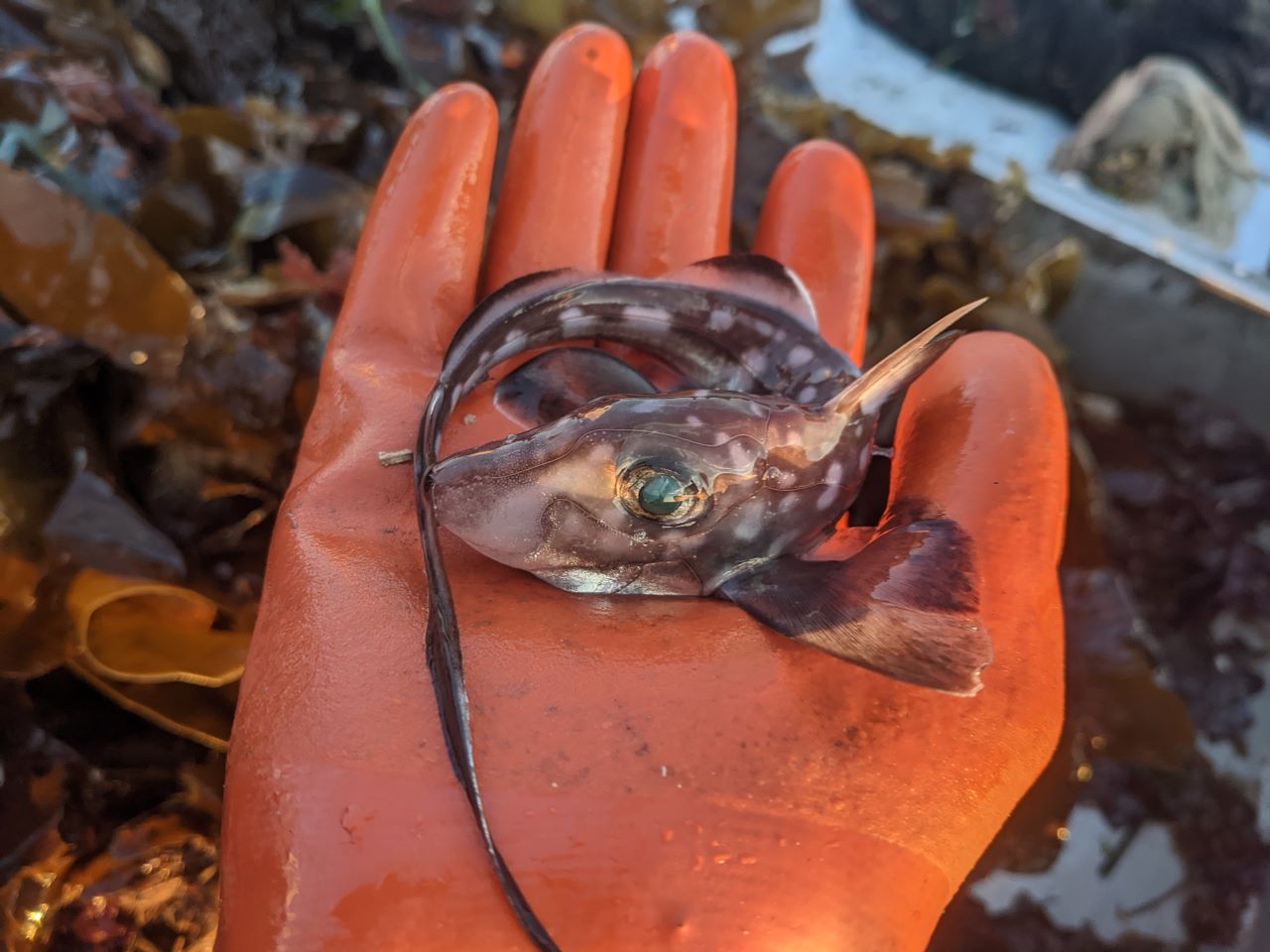
Ghost sharks grow forehead teeth to help them have sex
Male “ghost sharks” — eerie deep-sea fish known as chimaeras that are related to sharks and rays — have a strange rod jutting from their foreheads, studded with sharp, retractable teeth. New research reveals these are not merely lookalikes, but real rows of teeth that grow outside the mouth. What’s more, the toothy appendage is likely used for mating. Found only in males, the forehead rod — called a tenaculum — is the ghost sharks’ only source of distinct teeth, and it seems to be used to grasp females in much the same way sharks use their toothy mouths in mating. “If these strange chimaeras are sticking teeth on the front of their head, it makes you think about the dynamism of tooth development more generally,” said Gareth Fraser, Ph.D., a professor of biology at the University of Florida and senior author of the study. “If chimaeras can make a set of teeth outside the mouth, where else might we find teeth?” The team, including scientists from the University of Washington and the University of Chicago, studied both fossils and living specimens to solve the mystery. A 315-million-year-old fossil showed the tenaculum attached to the upper jaw, bearing teeth incredibly similar to those in the mouth. Modern chimaeras collected from Puget Sound revealed the same tooth-growing process on the head, seen in modern-day shark jaws. And genetic testing confirmed they expressed the same tooth-specific genes as oral teeth. “What we found is that the teeth on this strange appendage look very much like rows of shark teeth. The ability to make teeth transferred onto that appendage, likely from the mouth,” Fraser said. “Over time, the tenaculum shortened but retained the ability to make oral teeth on this forehead appendage.” Fraser collaborated with Washington’s Karly Cohen, Ph.D., and Michael Coates, Ph.D., from Chicago on the study, which was published this week in the Proceedings of the National Academy of Sciences. As experts in shark evolution and anatomy, the scientists were intrigued by these tooth-filled rods sprouting from the ghost shark foreheads. The central mystery: Is the tenaculum covered in true teeth related to oral teeth or more similar to the tooth-like scales plastering the skin of sharks and some ghost sharks? CT scans of the fossils and modern chimaeras gave the scientists unprecedented, detailed insights into the development of the tenaculum teeth, which looked remarkably similar to the teeth of today’s sharks. The nail in the coffin came from genetic evidence. The tenaculum teeth express genes found only in true teeth, never in shark skin denticles. "What I think is very neat about this project is that it provides a beautiful example of evolutionary tinkering or ‘bricolage,’” said Coates, a professor of biology at the University of Chicago. “We have a combination of experimental data with paleontological evidence to show how these fishes co-opted a preexisting program for manufacturing teeth to make a new device that is essential for reproduction." Cohen, a postdoctoral researcher at the University of Washington’s Friday Harbor Labs and first author of the paper, said scientists had never spotted teeth outside the mouth in this way before. “The tenaculum is a developmental relic, not a bizarre one-off, and the first clear example of a toothed structure outside the jaw,” she said. The bizarre path from a mouth full of teeth to forehead teeth used for mating demonstrates the impressive flexibility of evolution, the researchers say, always ready to repurpose structures for strange and unexpected new uses. “There are still plenty of surprises down in the ocean depths that we have yet to uncover,” Fraser said.


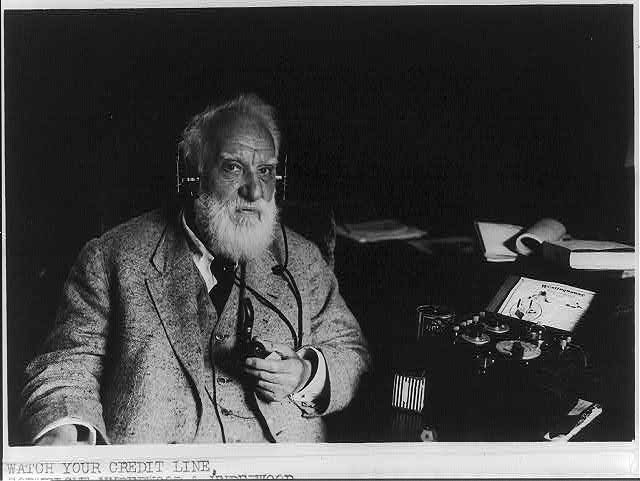
On March 10, 1876, Alexander Graham Bell spoke the first words ever transmitted over telephone: “Mr. Watson, come here; I want you.” This simple request to Bell’s assistant, Thomas Watson, marked a significant milestone in direct person-to-person communication. Now, 150 years later, this message has paved the way for advanced cellular technology in the form of satellites, wireless networks and the personal devices we carry everywhere. For Mojtaba Vaezi, PhD, associate professor of electrical and computer engineering at Villanova University and director of the Wireless Networking Laboratory, Bell’s few words spoken over telephone marked the beginning of an ongoing technological revolution. “One hundred fifty years ago when telephone communication first started, there was essentially a wired line and a transmitting voice,” said Dr. Vaezi. “That simple, basic transmission has transformed the field of communication technology in unimaginable ways.” According to Dr. Vaezi, five shifts have defined the past century and a half of communication technology: wired devices to wireless, analog to digital, voice to data, fixed landlines to mobile phones and human-to-human communication giving way to an increasing focus on machines and artificial intelligence. Early wireless networks were built around one device per person. Today's networks must support multiple devices per person, plus the technology behind innovations such as smart homes, driverless cars and even remote surgery. “Applications are much more diverse now, so communication has to follow,” said Dr. Vaezi. “A big portion of communication now, in terms of number of connections to the network, is from machine to machine—not human to human or even human to machine." The growing number of connections can cause a host of issues for users. When multiple users share the same wireless spectrum simultaneously, their signals interfere with one another—a problem that is becoming more acute as the number of connected devices increases exponentially. Dr. Vaezi’s research at Villanova focuses on developing techniques that allow multiple users to transmit messages on the same frequency at the same time and still be understood. Another vibrant research area of Dr. Vaezi’s involves Integrated Sensing and Communication (ISAC). This field of study focuses on integrating wireless communications and radar so they can function within the same spectrum. “Historically, radar and wireless communication work in different bandwidths or spectrums and use separate devices. Although they are related, they happen in different fields,” said Dr. Vaezi. “Almost every communication scheme that has been developed has focused on this: How can we better utilize the spectrum?” ISAC is increasingly important as new innovations like driverless cars become fixtures in everyday life. These vehicles rely on radar to continuously scan for hazards, and when a hazard is detected, a signal must be sent to trigger safety mechanisms. Currently, the radar and communications systems operate on separate bandwidths using separate hardware. Dr. Vaezi's research explores how both functions could be housed in a single device running on one shared spectrum. Areas of study like Dr. Vaezi’s that focus on machine to machine communication are becoming increasingly relevant as communication technology evolves and moves away from simple person to person messaging. As for the next big milestone in communications, Dr. Vaezi is looking ahead to the implementation of 6G by 2030, though he tempers expectations. For most users, the change will feel modest, amounting to slightly faster device speeds. The most massive shift with 6G will be the amount of added coverage in areas that previously did not have network accessibility. “Say you order a package and it’s coming from somewhere abroad,” explained Dr. Vaezi. “6G will add network coverage over oceans, so you’ll be able to track your package in real time using that satellite technology.” The sixth generation of cellular technology will continue to connect our world and optimize current communications to accommodate more users and devices that need network access each day. It is far different from Alexander Graham Bell’s historic phone call 150 years ago. That brief exchange over a single wired line laid the groundwork for a communications ecosystem that now supports billions of devices, complex data networks and emerging technologies yet to be seen. It also serves as a reminder that despite how far communication technology has come, and how complex it has gotten, it all shares a common, simple goal: to transmit information from one point to another.


Strategic Closure of Strait of Hormuz Puts Pressure on U.S., Threatens Global Oil Trade Stability
Less than a week after the onset of the war in Iran, and amid escalating conflict in the region, Iran effectively closed the Strait of Hormuz to shipping tankers moving oil from the Middle East by threatening attacks against any vessel who entered the waterway. Thus, the small body of water, which moves a large percentage of the world’s crude oil, has become one of the most discussed places in the world in recent days. Frank Galgano, PhD, is a professor of Geography and the Environment at Villanova University. He is an expert in military and Middle East geography and has also studied global maritime shipping and access to natural resources. Dr. Galgano says there geographic, geopolitical, military and economic factors at play, along with widespread potential consequences, as Iran holds steady on their closure of the strait and the U.S. considers how, or if, it will attempt to help escort oil ships through. Geography and Significance of Strait of Hormuz Situated between Iran to the north and Oman and the United Arab Emirates to the south, the Strait of Hormuz is a narrow shipping lane that connects the Persian Gulf to the Gulf of Oman and, further out, the Arabian Sea. It is one of the most vital chokepoints in the Middle East, along with the Suez Canal, Straits of Tiran, Bab al-Mandab and the Turkish Straits. “Right now, because of oil, it is the most important,” Dr. Galgano said. “Every day, roughly 20 percent of global petrochemical use goes through Hormuz.” The strait itself is barely over 20 nautical miles at its narrowest, but only a small portion of that is shipping lanes. Depth constraints limit shipping to two lanes, each two miles wide, with a two-mile buffer between. “You’re essentially looking at all of that shipping constrained to six nautical miles, and the ships are relatively slow,” Dr. Galgano said. “There are usually about 14-25 tankers every 24 hours transiting the Gulf, so there is always a ship in line." By Iran threatening military action against any oil-carrying ships in Hormuz—and by shipping companies refusing to attempt to traverse it— one-fifth of the global oil trade is essentially cut off indefinitely. That is concerning, given that it takes very little to send global oil prices skyrocketing. Dr. Galgano referenced the 2010-11 Somali pirate issue that caused supertankers—which cost upward of $50,000 a day to operate—to be rerouted. “That alone caused gas prices to raise 10 cents per gallon,” he said. In this case, the biggest impact will be felt throughout Asia, which relies more heavily on oil imports. But the U.S., despite being the second-biggest producer of crude oil last year, will still feel significant effects, since oil is traded globally. “It takes these supertankers eight or 12 days to reach the East Coast from Hormuz,” Dr. Galgano said. “So, a few days later you might see diminished supplies, but there is a critical point where we would face a real shortage.” Attempting to Move Ships Through Hormuz Poses Huge Danger Unlike the Iranian-backed Houthi rebels attacks on Israeli ships and those belonging to its allies in the Red Sea last year, Iran itself has far more sophisticated weapons, along with a strong motive to do whatever it can to put pressure on the U.S. and involved allies. In addition to drones designed for attacking ships—like the ones used by Houthis—Iran also possesses Chinese and Russian anti-ship missiles, according to the professor. “Ships are very vulnerable,” he said, then referencing the 2000 bombing of the USS Cole by Al Qaeda operatives. “That was just two guys in a rubber boat with an explosive device, and it almost sunk the whole ship. If one is carrying oil, it becomes almost like a large fuel bomb.” The United States has weighed the idea of sending a convoy to help escort and protect these ships. They did as much in the late 1980s in Operation Earnest Will, in which President Reagan ordered Kuwaiti supertankers—which were being fired at—to reflag under the U.S. flag so the Navy could legally escort them. But weapons technology has changed, and while U.S. naval ships could certainly defend themselves, “supertankers are slow and it is still an incredibly dangerous operation,” Dr. Galgano said. “The convoy would have to be lucky 100 percent of the time. Iran would only have to be lucky once to hit a ship and cause an immediate fiasco, both physically and in the media.” Global Dependance on Shipped Goods According to Dr. Galgano, between 75 and 90 percent of all items you handle on a day-to-day basis come from inside the hull of a ship: shocks on your car, clothes on your back, or components of your computer. When shipment is disrupted, it can cause supply chain and cost issues. “During the pandemic, Ford was waiting on chips for F-150s, and HP was waiting in chemicals to make ink,” Dr. Galgano said. “Even the ship that got stuck in the Suez Canal a few years ago caused $10 billion in losses per day due to the backup.” For commodities like oil, the indefinite inability to utilize perhaps the most important shipping lanes in the world due to large scale conflict quickly raises the economic stakes to even greater levels. “Iran absolutely knows that, and they see this as a bargaining chip,” Dr. Galgano said. “Cause economic pain to force cessation of the attacks.”


FAU ‘Shark-Repellent’ Method Can Reform Fisheries by Curbing Bycatch
Study Snapshot: Shark bycatch is a major global problem, with millions of sharks caught unintentionally each year in fisheries targeting tuna, swordfish and other species. Even in U.S. waters, sharks are frequently caught on longlines, and many are discarded dead. Because sharks grow and reproduce slowly, these high bycatch rates threaten already vulnerable populations and disrupt marine ecosystems. Researchers at FAU’s Charles E. Schmidt College of Science have developed a patent-pending zinc-and-graphite device to address the problem. The metals generate a small electric field that repels sharks from baited hooks while leaving target species unaffected. In Florida field trials, the device reduced shark bycatch by more than 60%. Inexpensive, scalable and practical for fishers, this technology has the potential to dramatically reduce bycatch and support more sustainable fisheries. For decades, sharks have been the unintended victims of longline fisheries aimed at tuna and swordfish. Rising accidental catches have contributed to population declines and created serious challenges for both conservation and commercial fishing. And the impacts go beyond the sharks themselves – every time a shark takes the bait, hooks are lost to target species, gear gets damaged, costs climb, and crews face added risks when handling or releasing the animals. Although some gear modifications can reduce bycatch, they often also cut into catches of valuable species, making it hard to protect sharks without putting fisheries at a disadvantage. To tackle this challenge, researchers at Florida Atlantic University’s Charles E. Schmidt College of Science have developed an innovative, patent-pending shark deterrent. The device works by pairing zinc and graphite in seawater. The zinc reacts with the graphite to produce a small electric field in the surrounding seawater through a galvanic chemical reaction. This electric field can be detected by the sharks, repelling them from the bait without affecting target fish. To test the efficacy of the zinc/graphite treatment at deterring elasmobranch species, longline fishing gear was deployed to target demersal sharks (live and hunt near the sea floor) off the Florida panhandle and Massachusetts, and pelagic sharks (live and hunt in open water) in the Gulf of America. The results of the field trials, published in the Canadian Journal of Fisheries and Aquatic Sciences, delivered striking results. In Florida, the zinc/graphite treatment reduced the catch of coastal sharks on demersal longlines by 62% to 70% compared to untreated hooks. The effect was particularly strong for Atlantic sharpnose (Rhizoprionodon terraenovae) and blacktip sharks (Carcharhinus limbatus), two common coastal species. “Sharks have an incredible ability to sense even the smallest electric fields, and our tests show that this new approach can be used to keep them away from baited hooks,” said Stephen Kajiura, Ph.D., senior author, inventor and a professor in the FAU Department of Biological Sciences. “At the same time, important target species like tuna and swordfish are completely unaffected. What makes this approach so exciting is its practicality – zinc and graphite are inexpensive, widely available, and already familiar to fishers because zinc is commonly used to prevent corrosion on boats. This means it could be adopted quickly and cost-effectively, providing a real solution to reduce shark bycatch while supporting sustainable fisheries.” Importantly, the treatment did not reduce catches of commercially important fish species. Preliminary pelagic trials suggest swordfish and yellowfin tuna were caught at similar or slightly higher rates on treated hooks, showing the approach could protect sharks without hurting the catch of target species. The study also outlines practical considerations for real-world use. Because the electric field is strongest close to the hook, each line would need its own zinc-graphite device. The zinc anode slowly wears down, but it’s cheap and easy to swap out. Shark bycatch is a widespread and pressing problem, both in the United States and around the world. Globally, millions of sharks are caught unintentionally every year in fisheries targeting other species, and some estimates suggest tens of millions fall victim to bycatch annually. In U.S. waters, despite strict regulations, sharks are still caught incidentally on longlines and other gear. Because sharks reproduce slowly and have long lifespans, these high bycatch rates can push populations toward dangerously low levels. The scope of shark bycatch, from small coastal fisheries to large international fleets, makes it a global conservation challenge with serious ecological consequences. “Our approach could be scaled up to pelagic longline fisheries, where millions of sharks are caught as bycatch annually,” said Kajiura. “Even a 60% to 70% reduction in shark bycatch, like that observed in Florida demersal trials, could have a dramatic impact on global shark populations. The zinc/graphite treatment offers a practical, affordable and environmentally responsible tool for reducing shark bycatch while maintaining commercial catch rates.” Study co-authors are FAU graduate students Tanner H. Anderson and Kieran T. Smith; co-inventor on the patent application; Cheston T. Peterson, a Ph.D. student at Florida State University; Bryan A. Keller, Ph.D., a foreign affairs specialist at NOAA Fisheries; and Dean Grubbs, Ph.D., a full research faculty and associate director of research at FSU. This research was supported by the Florida SeaGrant awarded to Kajiura and Grubbs. The patent-pending device works by pairing zinc and graphite in seawater, creating an electric field that can be detected by the sharks, repelling them from the bait without affecting target fish.



What Time Should You Actually Turn Off Your Phone at Night?
Everyone’s heard you’re “not supposed to be on your phone before bed” but what does that actually mean in 2026? Most major sleep organizations now recommend putting devices away at least 30–60 minutes before bedtime to protect melatonin and help the brain wind down. The National Sleep Foundation and the American Academy of Sleep Medicine both advise turning off screens about an hour before bed; other experts say a 30–60 minute window is the minimum. (Advisory) Research on blue light shows that evening screen exposure suppresses melatonin and delays sleep, especially when you’re scrolling something stimulating. (Sutter Health) Psychotherapist Harshi Sritharan, MSW, RSW, who specializes in ADHD and digital dependency, puts it bluntly: “To ensure quality sleep and peak performance—whether in sports, work, or school—avoid using your phone after 11 p.m.” For teens and adults with ADHD or anxiety, she says, late-night doomscrolling is especially brutal: screens keep dopamine and stress high at exactly the time the nervous system should be powering down. Harshi says: "The quality of sleep determines your level of executive functioning the next day" She also makes an important distinction: if you are on a device in the evening, active use (choosing a show, talking to friends, looking up something specific) is less harmful than passive use: “Don’t do passive tech use — that doom scrolling, content just being thrown at you,” Sritharan says. “Be more active about your tech use.” That kind of passive feed is more likely to serve up emotionally intense content kids didn’t ask for and aren’t ready to process. You Don’t Need a Perfect Curfew to See Results The good news: the science suggests you don’t have to quit completely at night to feel a difference. A JAMA Network Open study on young adults found that reducing social media use for just one week — not going cold turkey — led to about a 24.8% drop in depression, 16.1% drop in anxiety and 14.5% improvement in insomnia symptoms. Offline.now founder Eli Singer argues that the real challenge is confidence, not willpower. Their data show 8 in 10 people want a healthier relationship with tech, but more than half feel too overwhelmed to know where to start. The platform’s behavior data also show that late afternoons and evenings are when phones dominate use and when people are actually most motivated to make changes. We have less in the tank at night, don't trust willpower to transition off. Have a system/routine of pre-decided of low-effort (potentially fun) activities to help the transition off phones. “We tell people: don’t start with a perfect 8 p.m. curfew,” Singer says. “Start with one realistic phone-off window — even 30 minutes before bed — and prove to yourself you can protect that. That first win matters more than an ideal schedule you’ll never keep.” A Simple, Science-Aligned Answer For most people, Offline.now’s experts land on a practical, high-compliance answer to the question “What time should I turn off my phone?” Aim to put your phone away 30–60 minutes before your target bedtime Make everything after that screen-free by default (books, stretching, music, talking, journaling) If you must be on a device late, keep it brief, low-drama and intentional — no infinite feeds, no emotionally loaded content It’s a small change, but in the context of a day where we’re already on screens for roughly 10 of our 16 waking hours, that last hour matters. Featured Experts Harshi Sritharan, MSW, RSW – Psychotherapist specializing in ADHD, anxiety, insomnia and digital dependency. She explains how late-night and early-morning phone use hijack dopamine, disrupt sleep and make it harder for kids and adults to function the next day. Eli Singer – Founder of Offline.now and author of Offline.now: A Practical Guide to Healthy Digital Balance. He speaks to the platform’s behavioral data on when people are most ready to change, and how 20-minute micro-experiments (like one phone-off window at night) build real confidence over time. Expert interviews can be arranged through the Offline.now media team.




Do Teens Secretly Want Phone Boundaries More Than Adults Think?
Ask a parent about phones and teens, and you’ll hear the same story: “They’re glued to that thing and don’t care.” But when you ask teens themselves, a different picture emerges. A recent Pew Research Center study found that about 95% of U.S. teens have access to a smartphone — and around 4 in 10 say they spend too much time on it. (Pew Research Center) Coverage of the same data notes that over 70% of teens say they feel happiness or peace when they’re not tethered to their device, even as they rely on it for social life. (KTUL) Psychotherapist Harshi Sritharan, MSW, RSW, who works with teens and young adults on digital dependency, sees that ambivalence every day. “I have 12- to 15-year-olds who come in and say, ‘I know I’m kind of addicted to my phone,’” she says. “When a teenager says that, I’m relieved — it means we have something to work with.” She stresses that most young people don’t actually want to be left alone with endless scrolling — they want help making sense of it. Teen Limits Work Better Than Parents Think New data suggests that reasonable limits can help and that many teens benefit when parents set them thoughtfully. A tool parents can use is collaborative problem solving. This involves parents and teens working together to come up with a plan for the best strategies that combat everyone’s concerns while compromising. A 2024 Springtide Research Institute survey of 1,112 13-year-olds found that teens whose parents limit their screen time are less likely to be heavy users: only 32% of those with limits use their phone 5+ hours a day, compared with 55%of those with unlimited time. Just 24% of teens with limits said they’d felt like they had a mental health problem, versus 32% with no limits.(Springtide Research Institute) In other words, boundaries are mildly protective, not cruel, especially when they’re explained instead of imposed. Sritharan cautions against “no phones ever” rules that ignore school and social realities: “We can’t make blanket statements of ‘no screens’,” she says. “We shape how kids use devices so they can still get things done and spend more time engaging with their family.” That might mean agreeing on tech-free windows (like family dinners or the hour before bed) and tech-friendly ones (like a 45-minute bus ride where a teen can listen to music or message friends). Teens Are Leading a Quiet “Cutback” Movement Parents often feel like the only ones craving less screen time, but surveys show Gen Z is already trying to dial things down. A global survey cited by Tech Times and ExpressVPN found that about 46% of Gen Z are actively taking steps to limit their screen time, more than older generations.(Tech Times) Another U.S. poll commissioned by ThriftBooks found half of respondents are cutting back on screens, with Gen Z and millennials leading — and 84% adopting analog habits like printed books, paper planners and board games.(New York Post) Reporting on the “board game revival” among Gen Z echoes the same trend: young people are consciously seeking offline, face-to-face ways to connect.(Woke Waves) For Offline.now experts, this adds up to a simple message: teens aren’t fighting all boundaries — they’re fighting feeling controlled or misunderstood. Parents as Co-Pilots, Not Phone Police Executive Function Coach Craig Selinger, M.S., CCC-SLP says the real leverage point isn’t just new rules; it’s how parents model and co-create them. “If you want behavior change in kids, start with the parent model,” he says. “A 12-year-old will not put their phone away at dinner if their parents won’t.” He encourages families to focus on “little moments” where phones quietly block connection — especially car rides and in-between times when kids might naturally open up: “In the car, your kid is trapped with you,” Selinger says. “That’s when they start talking. If they’re on their phone the whole time, you lose those big conversations hiding in the boring moments.” Both experts emphasize co-designing boundaries with teens: agreeing together on tech-free times and how late-night scrolling affects mood and school performance. When teens feel heard — and see adults following the same rules — boundaries feel less like punishment and more like shared protection. For journalists, the story isn’t “teens vs phones” or “parents vs teens.” It’s that both sides are quietly overwhelmed, and many young people are more open to limits than adults realize — if those limits are built with them, not against them. Featured Experts Harshi Sritharan, MSW, RSW – Psychotherapist specializing in ADHD, anxiety, insomnia and digital dependency. She helps teens and young adults understand dopamine cycles, distinguish passive vs active tech use, and build realistic phone boundaries that support sleep, school and mental health. Craig Selinger, M.S., CCC-SLP – Executive Function Coach and child development specialist (Brooklyn Letters). He focuses on how tech use shapes learning, attention and family dynamics, and how parents can model healthy habits and co-create screen rules that actually stick. (Expert interviews can be arranged through the Offline.now media team.)


It's a recent news story that has captured international attention and has parents, experts and child care advocates swirling: US boy, 11, allegedly shoots father to death after Nintendo Switch taken away If you’re planning a story on screen-time conflict, Harshi, a Digital Dependency therapist, is available for on-the-record comment, rapid written quotes, and short interviews on practical de-escalation and safer screen-limit routines. “The headline is about a device. The deeper story is what happens when a predictable boundary becomes an unplanned confrontation without a de-escalation routine.” Offline.now is a new wellness platform dedicated to helping families achieve healthy digital balance. What Harshi can help journalists cover On-the-record context and practical guidance for stories touching screen-time conflict, including: Why device removal moments can trigger outsized reactions in some kids (transition & regulation) How parents can de-escalate safely without turning limits into power struggles How to design screen rules that rely on systems, not willpower What to do after a blow-up (repair & resetting the plan) When “this-is-bigger-than-screens” and families should seek professional support Insights from our expert Use any of these as on-the-record quotes: Start with regulation, not the rule. “When emotions spike, it’s not a teachable moment. The first goal is to help everyone get calmer, then you can talk boundaries.” Don’t match intensity with intensity. “If you argue, lecture, or negotiate in the heat of the moment, you keep the conflict alive.” Use a short script - and stop talking. “Two sentences is enough: ‘I’m not debating this. We’ll talk when we’re calm.’ Then pause. Silence can be a tool.” Avoid surprise confiscations. “Taking a device without warning can feel like an ambush. Predictable routines reduce the power struggle.” Offer an off-ramp, not a cliff. “Transitions are hard. A timer, a closing ritual, and a clear ‘what’s next’ can prevent escalation.” Make boundaries about the system, not the child’s character. “This isn’t ‘you’re bad’ or ‘you’re addicted.’ It’s ‘our home has screen rules and we follow them consistently.’” Repair matters more than punishment. “After a blow-up, repair is the reset - name what happened, reset the plan, and practice the next transition.” Know when this is bigger than screens. “If threats, aggression, or extreme reactions show up, that’s a signal to seek professional support - not just enforce a stricter rule.” What parents can do right now Create a neutral device ‘parking spot.’ Devices live in one predictable place (not a tug-of-war in someone’s hand). Use a consistent transition routine. When time’s up, share a “shut it down” cue, park the device, and then move on to a 2-minute action (teeth, pajamas, snack, shower). Pick one calm script and repeat it verbatim. “I’m not debating this. We’ll talk when we’re calm.” (Then disengage and model calm.) Important context Harshi does not speculate about individuals involved in the news story and does not claim that gaming or screens “cause” violent behavior. Her focus is on what families can do - before conflicts escalate - using practical de-escalation tools, predictable routines, and supportive repair strategies.

Always On, Never Present: How Work Takes Over Your Life
In many workplaces, being “good at your job” has quietly become synonymous with being constantly reachable. Slack on the laptop, email on the phone, DMs on every platform and a creeping expectation that you’ll answer “just one more thing” at night, on weekends, and even on vacation. Psychotherapist Harshi Sritharan, MSW, RSW and Offline.now founder Eli Singer say this culture is pushing knowledge workers into a state of continuous partial attention: always connected, never fully present. “Most of my high-performing clients don’t have a time-management problem,” says Sritharan. “They have a boundary problem — and their phones are the device enforcing it. Every ping is a tiny dose of dopamine and a tiny spike of stress, and their nervous system never really shuts off.” Research on digital and media multitasking backs up what she sees clinically. Studies have linked frequent task-switching between apps and notifications to: Reduced sustained attention and working memory Slower task performance and more errors Greater mental fatigue and perceived stress Neuroscience and cognition papers also describe how multitasking conditions the brain to seek novelty and micro-rewards, making it harder to tolerate the “boredom” of deep work — exactly the kind of focus most knowledge jobs actually require. Singer argues that the issue isn’t just individual burnout; it’s organizational self-sabotage. Offline.now’s behavioral data show that people now spend about 10 of their 16 waking hours on screens — roughly 63% of the day — and that 8 in 10 want a healthier relationship with tech but feel too overwhelmed to know where to start. “We’ve built workplaces that confuse constant availability with value,” Singer says. “But when you look at the cognitive science, an always-on culture is actually an anti-productivity policy. ‘Do Not Disturb’ isn’t a luxury — it’s the competitive advantage most teams are missing.” The term “continuous partial attention” coined to describe the state of being perpetually attuned to the possibility of new information has been linked in emerging research and commentary to chronic stress, shallow thinking, and emotional exhaustion in modern knowledge work. “The moment you stop treating rest and focus as perks and start treating them as infrastructure, everything changes,” Singer says. “Teams ship better work, people make fewer mistakes, and employees don’t feel like they have to burn their nervous system to keep their job.” For journalists covering work culture, productivity, burnout, or the future of work, this story connects the dots between work apps, multitasking science and mental health and offers a concrete alternative to the “always on” norm. Featured Experts Harshi Sritharan, MSW, RSW – Psychotherapist specializing in ADHD, anxiety, burnout and digital dependency. She helps high-achieving professionals understand how constant notifications, late-night work and screen habits disrupt dopamine, sleep, and emotional regulation — and what sustainable boundaries actually look like. Eli Singer – Founder of Offline.now and author of Offline.now: A Practical Guide to Healthy Digital Balance. He brings proprietary behavioral data on digital overwhelm, the Offline.now Matrix framework, and case examples of organizations reframing “Do Not Disturb” as a strategic asset, not a sign of disengagement. Expert interviews can be arranged through the Offline.now media team.

Why Your Digital Detox Resolution Fails by January 15
Every January, millions of people make the same promise: “This year I’m going to spend less time on my phone.” By mid-month, most are back to doomscrolling in bed, feeling like they’ve failed yet another resolution. According to Offline.now founder and author Eli Singer, that story is not about laziness, it’s about confidence. Offline.now’s proprietary research shows 8 in 10 people want to change their relationship with technology, but more than half feel so overwhelmed by their habits they don’t know where to start. “If you don’t learn how to manage the screens in your life, they will manage you,” says Singer. “When people tell us they feel overwhelmed, it’s not laziness. It’s a crisis of confidence. And confidence is something that can be built.” At the heart of the platform is the Offline.now Matrix, a behavioral framework that maps people into four quadrants: Overwhelmed, Ready, Stuck, or Unconcerned - based on their motivation and confidence levels. Someone who is “Overwhelmed” needs reassurance and tiny first steps; someone who is “Ready” can handle bigger commitments. Treating everyone as if they’re in the same place (“just delete Instagram”) virtually guarantees most resolutions will collapse. Psychotherapist Harshi Sritharan, MSW, RSW, who specializes in ADHD and modern anxiety, sees how this plays out in the brain. For many of her clients, especially those with ADHD, digital devices provide a fast dopamine hit that everyday life simply can’t match. “With ADHD, you’re working with a dopamine deficiency,” she explains. “Phones and apps are designed to give you highly stimulating, personalized content. You get this huge dopamine surge, and when you put the device down, everything else feels flat, boring and harder to start.” She notes that common habits like checking your phone the second you wake up, quietly undermine even the best January intentions: “If you’re on your phone first thing in the morning, you hijack your attention and dopamine for the rest of the day. Your brain has already tasted the highest stimulation it’s going to get, and it will keep seeking that level. That’s not a willpower issue, it’s neuroscience.” The good news: the science suggests you don’t need a perfect detox to see benefits. A JAMA Network Open study on young adults found that reducing social media use for just one week - without going completely offline; led to about a 24.8% drop in depression, a 16.1% drop in anxiety, and a 14.5% drop in insomnia symptoms. “Lasting change doesn’t require deleting Instagram or TikTok tomorrow,” says Singer. “You need to win one personal victory today, and then another tomorrow. That’s how confidence rebuilds.” Featured Experts Eli Singer – Founder of Offline.now and author of Offline.now: A Practical Guide to Healthy Digital Balance. Speaks to the behavioral data behind failed resolutions, the confidence gap, and the Offline.now Matrix framework. Harshi Sritharan, MSW, RSW – Psychotherapist specializing in ADHD, anxiety and digital dependency. Explains the dopamine science behind compulsive scrolling and offers brain-friendly strategies that work better than “willpower.” Expert interviews can be arranged through the Offline.now media team.