
Experts Matter. Find Yours.
Connect for media, speaking, professional opportunities & more.

Bowel or fecal incontinence, according to the Mayo Clinic, “is the inability to control bowel movements, causing stool (feces) to leak unexpectedly from the rectum. Also called bowel incontinence, fecal incontinence ranges from an occasional leakage of stool while passing gas to a complete loss of bowel control. Common causes of fecal incontinence include diarrhea, constipation, and muscle or nerve damage. The muscle or nerve damage may be associated with aging or with giving birth.” Dr. Satish Rao is a seasoned gastroenterologist and an expert in digestive health, particularly the brain-gut connection. Rao, a professor of medicine at the Medical College of Georgia at Augusta University, recently offered a Q&A on the topic of fecal incontinence with the journal Gastroenterology & Hepatology. What is the prevalence of fecal incontinence in the adult population? Surveys have indicated a prevalence of approximately 9% to 10% in the United States. A recent study reported a 14% prevalence, although this study was Internet-based and, thus, may not have included many elderly patients, as they may not be as computer-savvy as younger patients. It is safe to say that one in seven Americans currently suffers from fecal incontinence. Prevalence appears to be equal in men and women, although women outnumber men almost three to one when it comes to gastroenterology clinic visits and health care-seeking. Men may be too embarrassed to bring the issue of fecal incontinence to the attention of a physician, but when asked about it, they will admit and discuss it. Also, extracting information from a patient about fecal incontinence depends on how the question is asked. Asking patients whether they have daily leakage vs whether they ever have had leakage or have had leakage in the past month will elicit different responses that a clinician may interpret differently. It is important to remember that leakage is not a physiologic event that a healthy adult should have at any time, even once a month or once a year. Not having the capacity to control bowel evacuation or having leakage unaware of its occurrence signals an abnormality. What are notable risk factors for fecal incontinence? In women, pregnancy can be a risk factor, particularly if giving birth involves pelvic tissue damage, such as injury inflicted by forceps use or the unfortunate occurrence of a significant tear. Neurologic or back injuries are other common risk factors. Also, chronic diarrhea can progress to fecal incontinence owing to severe irritation of the rectum or irritants in stool. Further, any condition that changes the ability of rectal capacity can result in fecal incontinence. These circumstances can include surgery or radiation to the rectal area. Hear from a patient and learn more about Rao's research using magnetic stimulation to treat fecal incontinence. What treatment modalities are currently available? Simple, conservative treatment consists of educating patients about fecal incontinence and instructing them to avoid precipitating events. For example, although many people love to have a meal followed by a cup of coffee and a walk, such a sequence of activities is ill-advised for an incontinent patient: the meal provokes a gastric-colonic response, coffee is a powerful colonic stimulant, and exercise also stimulates motility. This triad creates the perfect storm for a stool leakage or accident while the patient is out on the after-dinner walk. Antidiarrheal therapies can be very effective but only in approximately 15% to 20% of patients. Another treatment is biofeedback, which can correct muscle weakness using behavioral techniques. Biofeedback provides resolution in approximately 50% to 70% of patients. The traditional model of office-based biofeedback requires that the patient make 6 or even up to 10 visits to a specialty clinic. This may mean that some patients must drive very long distances to an appropriate care facility that is staffed with trained personnel or physical therapists. This scenario presents a significant challenge for many patients, which is increasingly being recognized by health care professionals and researchers. Good devices for home-based biofeedback have been scarce; however, such a device was recently approved by the US Food and Drug Administration. The research center at Augusta University has tested it in a clinical trial setting and found it to be quite effective as a home biofeedback treatment. Dextranomer is another treatment modality. It involves injection of small beads of dextran polymers into the anorectal region. The beads form a protective cuff or a buffer to stop stool leakage. Another treatment modality is sacral nerve stimulation using the Medtronic InterStim system. The patient is outfitted with a pacemaker-like device with wires that continuously stimulate the sacral nerves that control stool events. In the case of a torn muscle, suturing the torn ends to reduce the size of the anorectal opening is usually useful for women postpartum, although the effect may not be sustained in the long term. What emerging treatments and research should clinicians be aware of? One emerging treatment developed at Augusta University’s Clinical Research Center is called translumbosacral neuromodulation therapy (TNT). TNT is similar to TAMS and involves the fecal delivery of magnetic energy through an insulated coil to the lumbosacral nerves that regulate anorectal function. The pulses generated are of the same strength as those of magnetic resonance imaging. The team at Augusta University’s research center has shown that TNT mechanistically improves nerve function and substantively improves stool leakage. A sham-controlled study and long-term study are currently underway at Augusta University and Harvard University’s Massachusetts General Hospital. These studies are being sponsored by the National Institute of Diabetes and Digestive and Kidney Diseases. A multicenter study sponsored by the National Institutes of Health that the team at Augusta University also is involved with is the FIT (Fecal Incontinence Treatment) trial. This randomized study compares biofeedback with dextranomer injection. Also, as mentioned, tools are becoming available for home biofeedback that should allow many more affected patients to receive treatment because they can do so in the comfort of their own home. The research center at Augusta University is working on a novel home biofeedback protocol for the treatment of constipation and fecal incontinence. Thus, novel noninvasive tools are emerging for fecal incontinence. The repertoire of current and emerging tools holds the promise of improved outcomes for patients with fecal incontinence. Rao is also the founder of the Augusta University Digestive Health Center. He is available to speak to media regarding any aspect of digestive health -- simply click on his icon now to arrange an interview today.


How to protect yourself against financial fraud as a newcomer in Canada
As a newcomer in Canada, your financial security is of prime importance. However, fraudsters and scammers recognize that newcomers can be easy targets, as they don’t necessarily have the information needed to protect themselves against fraud. Being in a new country, you may not be aware of the ways in which financial fraud occurs, how to identify fraudulent situations, or where to report fraud. This article gives you an overview of the various types of financial fraud and scams that occur in Canada and provides valuable tips to help protect you against financial fraud as a newcomer. Recognizing common financial fraud and scams in Canada Phishing emails or text messages Phishing emails or text messages are often designed to look like they are from a source or website you trust, like your bank or an online store. The sender will ask you to click on a link or download a file, or will try to create a sense of urgency, such as saying there has been some suspicious activity from your account or that you need to update your payment information to keep your account active. Be sure to check the email address the email originated from. If the domain name doesn’t match the organization’s name, it’s likely a phishing attempt. Other red flags can be bad grammar, a generic greeting, or unsolicited attachments in the message. If you suspect that an email or text is fraudulent, call the organization to verify before clicking on any links or sharing any personal information. Generally, Canadian banks will never ask you to share personal information, such as account numbers or Social Insurance Number (SIN), over email or text message. Debit or credit card fraud Debit or credit card fraud happens when someone steals your credit card, PIN, or bank card information and uses it to make purchases or withdrawals from your account. Fraudsters can use different ways to get your credit card information, including stealing bank statements from your mailbox or garbage, hacking into company databases to steal information, prompting you to use your credit card on a fake website, or through phishing emails. You can prevent debit and credit card fraud by keeping your credit card and personal information safe. Check your bank statements or banking app regularly to ensure that you can identify all the transactions. If you think you have been a victim of credit card fraud, call the phone number on the back of your credit card immediately to get in touch with your bank and lock your card to avoid additional fraud. Immigration and citizenship fraud There are several private immigration consulting organizations that specialize in helping newcomers come to Canada. However, if you come across a website that asks you to pay for immigration or application forms or guides that are otherwise available for free on the Immigration, Refugees, and Citizenship Canada (IRCC) website, it might be fraudulent. You may also receive fraudulent phone calls or emails from someone posing as an immigration or citizenship service provider, claiming that they can guarantee entry into Canada, provide jobs, or fast-track your immigration processing for a fee. Never share your financial details with such organizations without contacting the website owner and checking online reviews to confirm the legitimacy of the business. Also, learn about the immigration and citizenship process so you can identify fake claims. Employment fraud While looking for a job as a newcomer in Canada, be on your guard against fake “employment agencies” who ask you to pay for “training” in order to get a job or promise you a guaranteed job if you pay a large upfront fee. Legitimate recruiters or agencies in Canada will never guarantee job placements or force you to undergo mandatory training. Typically, when employers use external recruiters or agencies to find candidates, the organization, not the candidate, pays the agency’s fee. Fake phone calls from “CRA” or tax fraud Many newcomers receive fraudulent phone calls from someone claiming to be from the Canada Revenue Agency (CRA) or Service Canada. Typically, the caller (or recorded message) will state that you have unpaid tax liabilities or that your Social Insurance Number (SIN) has been compromised. In some instances, scammers may even claim there is a warrant out for your arrest, which can be quite alarming. They may ask you to share your SIN number or make a payment through wire transfer, bitcoin, or prepaid gift cards. These callers are often aggressive and use threatening language to scare the recipient. In a variation of this type of fraud, the caller (supposedly the CRA) will claim that you’re entitled to a tax refund and will need to share your banking information to get it. The CRA typically contacts individuals by message in their secure online portal, so if there is an issue with your tax return, you will see a message about it there. If you’re unsure about the legitimacy of a call, hang up and call the agency to verify its authenticity. Educate yourself on the ways legitimate government agencies can contact you and the questions they may ask. Pyramid or Ponzi schemes A pyramid scheme is a business model where you’ll be offered payment or commission for enrolling other members, rather than for selling actual products or services. You’ll be asked to pay an upfront “membership fee,” with promises of being able to turn a profit once you start bringing in more members. A Ponzi scheme is a type of fraud where you’re lured into investing money with the promise of very attractive dividends. In reality, your money is not being invested anywhere and is instead being used to pay “dividends” to other investors. Investors may receive lucrative dividends for some time until the pool of new investors dries up. If the promised returns seem too good to be true, it may be a Ponzi scheme. Be sure to carefully vet investment opportunities or speak to your financial advisor before making any investments. Catphishing or romance fraud If you’re active on dating sites or apps, keep an eye out for romance fraud. Catphishing, or catfishing, is when a person pretends to be someone else online, using a fake name, photograph, or story. A fraudster may spend time talking to you online, and once they’ve established a romantic connection, they’ll ask you for money, claiming that they need it to help a sick relative or get over a bad stretch. In some cases, the scammer may even meet you in person to make the relationship seem more legitimate. Fake computer virus or ransomware In this type of scan, the victim gets a call or email claiming that their computer has been infected with a virus. The scammer may ask for money to remove the virus or could try to access personal information and passwords through their device. Be sure to install an anti-virus to protect your laptop and mobile device. Fake prizes If you receive a message, email, or phone call saying you’ve won a prize for something you don’t remember participating in, it’s probably a scam. Fraudsters may use this opportunity to collect your personal information or verify your contact details, so avoid responding to such messages or sharing any information. If you’re unsure about the legitimacy of the prize, check the organization’s website to confirm whether the contest or offer is real. Tips to protect yourself against financial fraud as a newcomer Financial fraud can impact your financial stability and, as a newcomer, it’s important to safeguard yourself against potential threats and fraudulent activities. Here are some key things you should keep in mind to protect yourself against financial fraud: Keep close track of finances. Review your bank account, credit card statements, and credit report regularly and report any inconsistencies early. If you’re unsure about what to look for, speak to a financial advisor for more information. Protect your personal and financial information. Change your banking passwords often and don’t write them down. Keep your credit card and credit card information safe, and don’t use your credit card on untrustworthy websites. Don’t share your personal or financial information, including your SIN, unless you know why it’s needed and how it will be used. Educate yourself on who can ask for your SIN or credit history, and only share this information if it’s absolutely necessary. Learn to identify fraud. If an offer seems too good to be true, it’s likely fraudulent. Always review the terms and conditions of the service or financial product you’re purchasing before making any payments. Borrow only from trustworthy financial institutions. Credit is an essential part of Canada’s financial ecosystem. Financial institutions like banks, credit unions, mortgage providers can provide you with credit to cover your expenses. Avoid going to illegitimate local lenders or payday loan providers as they could misuse your financial information or lead you into debt. Verify suspicious phone calls or emails and report fraud. If you’re unsure about the legitimacy of an email or call you received, check for signs of phishing or contact the organization or agency to verify whether the information is accurate. Don’t share your financial or personal information with anyone or click on any links until you’ve verified the authenticity of the message. If you suspect that you’ve received a fraudulent phone call or email, report it to the Canadian Anti-Fraud Centre by telephone at 1-888-495-8501, through their website, or by email (info@antifraudcentre.ca). If your SIN has been stolen, report it to Service Canada at 1-866-274-6627 as soon as possible. Keep your laptop and mobile devices safe. Never give physical or virtual access to your devices to someone who isn’t an authorized service professional or someone you didn’t contact for service or repair. Your devices may contain saved passwords, login details, or other personal information that fraudsters can extract and misuse. Always wipe your devices by restoring factory settings before selling or scrapping used laptops or mobile phones. As a newcomer in Canada, receiving phone calls from someone posing as a CRA official can be alarming. By learning to recognize common financial scams and verifying potentially fraudulent claims, you can safeguard yourself against fraud. Remember, by reporting fraudsters, you are protecting not just yourself but also countless others who may otherwise be targeted by financial scams. Original article located here, published by Arrive. About Arrive Arrive is powered by RBC Ventures Inc, a subsidiary of Royal Bank of Canada. In collaboration with RBC, Arrive is dedicated to helping newcomers achieve their life, career, and financial goals in Canada. An important part of establishing your financial life in Canada is finding the right partner to invest in your financial success. RBC is the largest bank in Canada* and here to be your partner in all of your financial needs. RBC supports Arrive, and with a 150-year commitment to newcomer success in Canada, RBC goes the extra mile in support and funding to ensure that the Arrive newcomer platform is FREE to all. Working with RBC, Arrive can help you get your financial life in Canada started – right now. Learn about your banking options in Canada and be prepared.


The modern office has changed. According to some experts, it’s much overdue. For others, the idea of the separation of domestic and professional lives is still something to accept. Either way, with the onset of COVID-19 and as workplaces adjust to life after the pandemic, working from home is the new norm for many people and it’s likely going to stay that way indefinitely for some. With that reality also comes the fact that your home office needs to be just as safe and secure as your former place of work once was. Worry not – we’ve got experts who can help. It’s why we asked Augusta University’s Dr. Jeffrey Morris, assistant professor in the School of Computer and Cyber Sciences, for some easy tips and helpful advice on making that happen. How to separate home or work? The best way to keep work materials safe would be to have a separate device that is used only for work, such as a company-supplied laptop. Since most of us will not have devices supplied to us, the next best would be to use a device that has minimal other use: Try not to use a computer that the rest of the family uses. If others use the computer, create a new user login and use that for work only. Keep all your work files in an encrypted folder. Ensure you have security software installed on the computer you are using for work. Some of the other ways include using a Virtual Private Network, which I’ll address in the next question. What's the best way to secure your connection? Using a Virtual Private Network (VPN) is a must. Hopefully, your work will provide a VPN connection for use. With the spread of cloud data storage, ensuring all connections are secured (the little lock icon in your browser is visible) is a must. If you have a work laptop/computer assigned to you, do you need to take additional steps to secure it while working from home? Much like being in the workplace, the same rules apply: You should log out of the device once you are done working for the day. This prevents accidental use of the computer by others in the home. Turning the device off when not in use is a good way to ensure this. The device needs to be physically secured as well. If the device does not have an anti-virus software program installed from work, you need to ensure it has it before you use it at home. What are the biggest red flags you should look out for? Be wary of emails. Many people mix their work and personal emails when working from home. You may receive a phishing email to your personal email that is aimed at accessing your work email and computers. Cybercriminals are aware that many people are working from home and trying to gain access to company networks by breaking into home computers and waiting for the user to log into company networks or cloud storage. And don’t forget … Updates. Do them as often as possible. Keep your computers updated. This includes not only the operating system but all the other programs installed on the machine. Cybercriminals are targeting all the other software on the computers as the operating systems are getting harder to exploit. There are programs available that can inventory the software on a computer and tell you which programs need updating. Looking to know more? Then let us help. Dr. Jeffrey Morris is an assistant professor at Augusta University’s School of Computer and Cyber Sciences. He’s available to speak about keeping your home office safe – simply click on is icon now to arrange an interview today.


Ray A. Blackwell, M.D., MJ, chief of Cardiac Surgery and the W. Samuel Carpenter, III, Distinguished Chair of Cardiovascular Surgery at ChristianaCare, received the 2021 Tilton Award from the Medical Society of Delaware on Oct. 28 at the Tilton Mansion, now the University & Whist Club in Wilmington, Del. The award recognizes Dr. Blackwell as a pre-eminent cardiac surgeon the past 21 years and for his life-long commitment to service for the betterment of patients, the local community and the nation. The award is named for James Tilton, M.D., the first U.S. Army Surgeon General of the United States and the first president of the Medical Society of Delaware. “Dr. Blackwell is an outstanding choice for this prestigious award,” said Kirk Garratt, M.D., medical director of ChristianaCare’s Center for Heart & Vascular Health. “He has given a great deal to his patients, his colleagues and his profession. His strong leadership and clinical expertise have led to optimal health and an exceptional experience for many patients in our community. In addition to being an excellent surgeon, Dr. Blackwell has been dedicated to driving innovations that improve patient outcomes and has been committed to finding ways of keeping patients healthy and preventing cardiovascular disease.” Since joining ChristianaCare in 1996, Dr. Blackwell has been recognized among the top cardiac physicians in our region and has been instrumental to the development of the cardiac surgery program. In 2011, he became the surgical director of the Mechanical Circulatory Support Program and led the initiative to establish Christiana Care’s Ventricular Assist Device Program. In 2017 he was named Chief of Cardiac Surgery and has since led the health system’s team of highly skilled and experienced heart surgeons who perform more than 700 heart surgeries each year. Dr. Blackwell is a clinical assistant professor of Surgery at Sidney Kimmel Medical College of Thomas Jefferson University. He served as the chair of ChristianaCare’s Blood Pressure Ambassador Advisory Committee. Dr. Blackwell has dedicated his life to service of others, especially on behalf of underprivileged and underrepresented people. As a high school student, he participated in A Better Chance Program, which places underprivileged, underrepresented and underfunded students in better academic environments. He is still active with the organization. He also served on the minority admissions subcommittee and later became a regional recruiter for Dartmouth College and Dartmouth Medical School. In 2019, he received a lifetime achievement award as part of a Dartmouth College celebration, “Standing at the Threshold,” honoring Dr. Martin Luther King Jr. Dr. Blackwell also received the Raising Kings award in 2018 from the One Village Alliance, an agency dedicated to elevating positive images and setting high expectations for Wilmington’s Black men and boys, He is a regional alumni council member of National Medical Fellowships, which funds underrepresented and underfunded medical students and is co-founder of the Association of Black Cardiovascular and Thoracic Surgeons, which supports and develops upcoming and practicing cardiothoracic surgeons. He has also held numerous leadership board positions for Delaware organizations, including the Delaware Medical Education Foundation, the Delaware Board of Medical Licensure and Discipline, the New Castle County and Great Rivers Affiliate Boards of Directors for the American Heart Association. He is also a board member of the Friends of Hockessin Colored School 107C and Indoor Track Delaware. Dr. Blackwell is also a recipient of the James H. Gilliam, Jr. Award from the American Heart Association for his contributions to the health, welfare and benefit of the community.


Podcast: 3D printing’s vital solution to medical problem caused by COVID-19
"They were looking to solve a problem and I was able to use my additive manufacturing knowledge to help them out, and the result of that was that we developed a new technology and span a company out of it." Dr Mark Prince Senior Lecturer in Mechanical Engineering Aston University New device created in Aston University lecturer's home during coronavirus lockdown Aston Business School expert explains how 3D printers are already used to make hearing aids, dental crowns and hips ‘Imagination is the only limit’ for additive manufacturing’s future, according to Dr Ahmad Beltagui A senior lecturer at Aston University is helping ear, nose and throat (ENT) clinics around the world by using the hi-tech ingenuity of 3D printing. Dr Mark Prince used 3D printing to prototype and produce a valve for a mask so that ENT surgeons could continue to examine and treat patients without fear of spreading the virus. Dr Prince, a senior lecturer in mechanical engineering at Aston University, was talking about his experiences in the latest episode of the 'Aston means business' podcast, presented by journalist Steve Dyson. The podcast also features Dr Ahmad Beltagui from Aston Business School, who talks about the wider benefits, some downsides and future potential of 3D printing in successfully disrupting traditional manufacturing. Dr Prince said his interest in additive manufacturing, or 3D printing, peaked after meeting two consultant ENT surgeons in the West Midlands. He said: "They were looking to solve a problem and I was able to use my additive manufacturing knowledge to help them out, and the result of that was that we developed a new technology and span a company out of it. "The company is Endoscope-i Ltd, founded in 2012 and now with an annual turnover of £200,000. The idea was simple: can we get medical endoscopic images of the ears and throat using a smartphone and we came up with a technique to do that." He said that, traditionally, he would have used large, expensive equipment to prototype the systems and new products. However, that wasn't possible with most of the university closed down at the height of the pandemic last year. He, therefore, had to look at other technologies that were safe to use in the home without breaking lockdown restrictions. Dr Prince explained: "When we are looking at diseases or concerns of the throat and nose we often stick an endoscope up the nose and down the throat, but of course you can't do that through a mask. "One of the founding members, Mr Ajith George, suggested that we could put a valve in the mask that allowed an endoscope to pass through it and allow the procedure to go ahead without breaking containment." "Work on the device started in mid-March 2020 and was ready for free supply to the NHS in November. Dr Prince added: "What that has allowed the NHS to do is any ENT clinic was able to fit it to a mask, put the mask on the patient, and carry on with an endoscopy procedure without all of the concerns of the pandemic." Meanwhile, Dr Ahmad Beltagui, a lecturer in operations and information management at Aston Business School, said you could get 3D printers from as little as £200 all the way up to expensive versions working with "exotic materials" like titanium. He said there were four main benefits to manufacturers: "Compared to traditional manufacturing methods you can produce shapes that are harder to produce; you can produce things in very small volumes; you can innovate faster and produce lots of prototypes, and you can produce things nearer to where they are required so you don't have to produce in a factory in one place and transport somewhere else." Dr Beltagui said: "The COVID-19 pandemic saw 3D printers used in homes to produce equipment such as cheap face visors for their local hospitals. The great thing about 3D printing is anyone can produce anything they want. "That's also the biggest risk – there is no control over what people produce or how safely they produce it. "At the beginning of the pandemic, someone in Italy found that they could produce some spare parts to keep the ventilators in their local hospital going. But then a few days later the manufacturer of those ventilators was considering whether or not it should take legal action." However, he said the printing machines had gradually become more reliable and there was a better level of quality, while the cost was coming down. Dr Beltagui added: "As to the future, the only limit is your imagination."



Quarterly Tech Brief - Your Canadian digital resiliency guide for the post-pandemic era
June 2021 Editor's Comments There's cautious optimism brewing in Canada as we enter the Summer months. Life-saving vaccines are finally getting into the arms of millions of Canadians and the COVID-19 case counts are starting to decline. We can see a path to the national and provincial economies opening again very soon. What does all of this mean for Canadian businesses and organizations? Hopefully, you've weathered the worst of the pandemic storm, and are coming out of it stronger and more prepared for the digital era that lies ahead. Although the pandemic forced many Canadian organizations further along their digital transformation journey than they had planned out of necessity, it appears that those digital preferences will continue over the foreseeable future. In this edition of IDC Canada's Quarterly Tech Brief, we explore more real-life best practice digital transformation stories from Canadian CIOs and technology leaders through our recent and upcoming events. We also reveal the most up-to-date Canadian survey results, market forecasts and market trends through our new research reports, blogs and IDC Directions Canada event. Finally, we explore IDC's new Digital Resiliency Framework to help organizations evaluate their readiness, risks and prioritize technology projects. Find out why so many organizations trust IDC to be their technology research advisor through this sampling of our research. FEATURED: Looking for ideas on how to simplify your own company's digital transformation journey or those of your customers? Join us on June 16! Hear from industry-leading tech executives in the June session of our IDC CIO Panel Series, Accelerate & Simplify Your Canadian Digital Transformation Journey. This CIO Panel Series is designed to help you better enhance your digital strategy programs and understand your customers to deliver more impactful experiences. In this 90-minute live webinar, you’ll learn about the impact of the pandemic in major industry sectors in Canada, digital resiliency trends, and new customer expectations. You’ll also hear best practices from Canadian IT leaders as they unpack how 2020 accelerated their digital transformation journey, and what we should be prioritizing in 2021. Check out the stellar CIO panelist lineup and save your virtual seat for June 16. It's going to be a fabulous event - register now to save your spot. Stay tuned for information on our next CIO Panel Session in September. Your Canadian Research Checklist Here are some of our most popular Canadian reports of the quarter to help you understand changing market conditions and succeed in 2021. ✓ Canadian Tech Market Update: 2021 Outlook ✓ IDC Survey: Canadian Organizations on the Road to Recovery Revisited ✓ Brand Perceptions of Managed Security Service Providers in Canada, 2021 ✓ East Meets West: Canada's Rogers Communications Agrees to Buy Shaw Communications ✓ Canadian Communication Services Market Shares, 2020: Who's Who in the Zoo 20 IDC THOUGHT LEADERSHIP: NEW FRAMEWORKS Explore IDC's new Digital Resiliency Framework IDC’s digital resiliency framework shows CEOs, CIOs, and other business leaders how technology can support the entire organization through the different stages of any business crisis. Understanding the Digital Resiliency Framework is critical not just for organizations working to improve their resiliency, but for their technology partners as well. IDC recognizes the challenges organizations are looking to solve and can help demonstrate how technology solutions can help overcome these obstacles in our new eBook: IDC THOUGHT LEADERSHIP: BLOG HIGHLIGHTS Enabling Digitally Resilient Organizations in Canada: A New Approach - Learn how to leverage IDC's new framework to help your customers thrive in the next normal with IDC Canada's George Bulat. Read More → Cloud Adoption and Usage is Growing in Canada, But Cloud Maturity is Not -Explore how cloud adoption and maturity have changed in Canada during the pandemic with IDC Canada’s Jason Bremner. Read More → Growing at the Edge - In 2024, the Canadian edge computing market will reach C$7.5 Billion. Explore what’s driving growth in edge computing and the opportunities it offers to end-users and tech suppliers with IDC Canada’s Tarun Bhasin. Read More → Consumer Device Refresh Rates – Why Demographics & Psychographics Matter PC & tablet refresh rates were lower in 2021 than in past years. See how consumer demographics and psychographics contextualize refresh rates with IDC’s David Myhrer. Read More → ICYMI: IDC DIRECTIONS 2021 CANADA Didn't get a chance to attend our IDC Directions Canada 2021 virtual event live back in April? Now's your chance to catch up on our uniquely Canadian perspectives. On the afternoon of April 22, IDC's thought leaders, Rick Villars, Tony Olvet, Megha Kumar, Nigel Wallis, and Jason Bremner presented their expert insights, intelligence, and guidance for finding success in the next normal. Learn about the future enterprise, digital resiliency, digital innovation, and the future of digital infrastructure in this session. Watch Now On-Demand → ICYMI: IDC FIRESIDE CHAT: CREATING SEAMLESS CONTENT EXPERIENCES Did you miss this insightful webinar on streamlining your content experiences a few weeks ago? Now’s your chance to catch up! The live IDC Fireside Chat webinar may be over, but you can still watch this enlightening event on-demand. Hear Barry Hensch, SVP & Head of Technology Enablement at ATB Financial, share his content management successes and challenges and why they're critical to senior IT leaders in Canada. While Barry’s experiences and tips steal the show, you can also hear insights from IDC Canada’s cloud and collaboration expert, Megha Kumar and seasoned content management leader, Varun Parmar as they share insights to help you move forward on your path to seamless digital experiences in the post-pandemic era. Watch Now On-Demand → Thanks for reading this IDC Quarterly Tech Brief Newsletter. Don’t forget to subscribe to be notified quarterly when the next issue comes out.


Why is the FDA funded in part by the companies it regulates?
In a recent piece published in The Conversation, C. Michael White, Distinguished Professor and head of the Department of Pharmacy Practice at the University of Connecticut shares his perspective on the Food and Drug Administration and its past and current role and influence in America. “The Food and Drug Administration has moved from an entirely taxpayer-funded entity to one increasingly funded by user fees paid by manufacturers that are being regulated. Today, close to 45% of its budget comes from these user fees that companies pay when they apply for approval of a medical device or drug. As a pharmacist and medication and dietary supplement safety researcher, I understand the vital role that the FDA plays in ensuring the safety of medications and medical devices. But I, along with many others, now wonder: Was this move a clever win-win for the manufacturers and the public, or did it place patient safety second to corporate profitability? It is critical that the U.S. public understand the positive and negative ramifications so the nation can strike the right balance.” May 13 - The Conversation The entire piece is a captivating read and a remarkably interesting topic with regards to accountability, transparency, and the influence big pharma holds across many levels of the United States government. And if you are a journalist looking to cover this topic, then let us help. Dr. White is available to speak with media -- click on his icon now, to arrange an interview today.


Eliminating The Barriers To Telehealth & Patient Retention
During the ongoing national pandemic, healthcare is in a period of rapid evolution, bringing telehealth to the forefront of patient care. Telehealth is a proven strategy to improve health outcomes, but it’s gated behind socioeconomic privilege and leaves behind many of our community’s most vulnerable patients. One such disparity is the inability of many Americans to access digital health care. This silent epidemic affects lives daily. Many patients, especially those in rural communities, face obstacles when trying to get the care they need. From access to reliable transportation and affordable child care to financial instability and lack of culturally competent providers, there is no shortage of hurdles standing in the way of disadvantaged populations accessing quality care. Well-implemented telehealth services can offer a clear path through these common barriers to care while improving health outcomes and boosting patient retention. “We know that mobile health intervention is an effective tool for retaining patients in care, but it’s only as effective as it is accessible,” said Richard Walsh, our CEO. “It would be negligent to assume that every individual has access to the devices, internet, or knowledge necessary to engage in telemedicine.” Like other leaders in the industry, we know telehealth is a privilege, but at Continuud, we believe it should be a right.” As Nathan Walsh, our CXO, said, “During a public health crisis such as this, we have to be proactive in ensuring that underserved communities have access to the care that they need in every way possible.” Through our research and conversations with community health leaders, we have identified 4 common barriers to telehealth success: access to video-ready phones or tablets, access to a reliable & affordable internet connection, an understanding of how to use the device to access services, and trust in technology being used for health services. Our solution is to create a platform that not only solves these problems but also enhances the patient experience and drives the best possible outcome of telehealth intervention. Our platform, Access, provides 8-inch tablets with an unlimited data connection to patients. Each device ships with a secured environment and limited functionality customized by the health care provider to include the tools that patients need to access care. We have created a simple deployment and warehousing solution to make it easy for organizations to get started quickly. Our end-to-end deployment and recall services handle every aspect of the platform so organizations can remain focused on serving their patients. The platform supports patient-by-patient interface customizations, so each patient’s experience is tailored to their unique treatment plan. We have device insurance and same-day replacement built into the program to account for loss, theft, and damaged devices, so organizations will always have access to the inventory they need to serve their clients. At Continuud, we offer an integrated ecosystem designed from the ground up to enable health care providers to work more efficiently toward a common goal of driving positive health outcomes in their communities. Continuud is known throughout Indiana for our innovative approach to connecting high-risk populations to care and implementing strategic technology to help retain and learn from patients so providers can evolve with the needs of their patients. To learn more about our platform, click here to visit our homepage. If you would like to schedule a demo with our team to talk about the platform in greater detail, click here.



On January 06, America watched with shock as a mob of protesters stormed the gates in Washington, D.C. and invaded the Capitol buildings. For hours, the rioters looted and occupied America’s halls of power and though some were apprehended, many found a way to get out and get back home avoiding arrest. However, media coverage was substantial and some of the protesters were even bold enough to be caught posing for social media. Slowly, authorities are tracking them down, and Dr. Derek Riley, an expert at Milwaukee School of Engineering (MSOE) in the areas of computer science and deep learning, has been explaining how artificial intelligence (AI) technology that’s taught at MSOE is capable of enabling law enforcement's efforts to identify individuals from pictures. "With these AI systems, we’ll show it example photos and we’ll say, 'OK, this is a nose, this is an ear, this is Billy, this is Susie,'" Riley said. "And over lots and lots of examples and a kind of understanding if they guess right or wrong, the algorithm actually tunes itself to get better and better at recognizing certain things." Dr. Riley says this takes huge amounts of data and often needs a supercomputer—like MSOE's "Rosie"— to process it. To get a computer or software to recognize a specific person takes more fine-tuning, Riley says. He says your smartphone may already do this. "If you have a fingerprint scan or facial recognition to open up your phone, that’s exactly what’s happening," Riley said. "So, they’ve already trained a really large model to do all the basic recognition, and then you provide a device with a fingerprint scanning or pictures of your face at the end to be able to fine-tune that model to recognize exactly who you are." Riley says this technology isn't foolproof—he says human intelligence is needed at every step. He added we might be contributing to the data sources some of the technology needs by posting our pictures to social media. "Folks are uploading their own images constantly and that often is the source of the data that is used to train these really, really large systems," Riley said. January 14 – WTMJ, Ch. 4, NBC News The concept of facial recognition and the use of this technology in law enforcement (and several other applications) is an emerging topic – and if you are a reporter looking to cover this topic or speak with an expert, then let us help. Dr. Derek Riley is an expert in big data, artificial intelligence, computer modeling and simulation, and mobile computing/programming. He’s available to speak with media about facial recognition technology and its many uses. Simply click on his icon now to arrange an interview today.


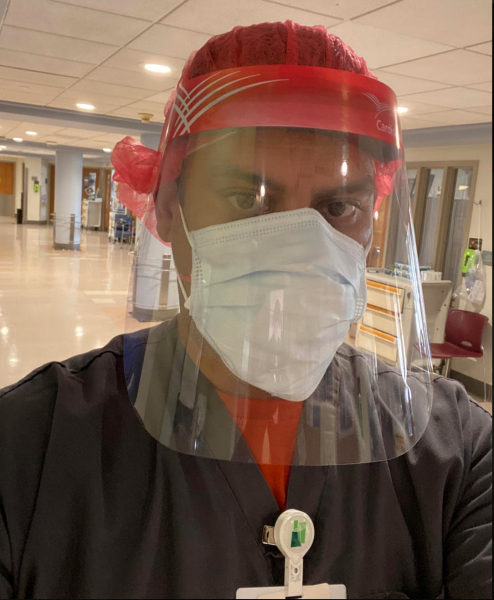
When the first cases of the novel coronavirus arrived in Chatham County, Georgia, Rafael Agosto, who has been a respiratory therapist at St. Joseph’s/Candler Hospital in Savannah for 17 years, had to recalibrate his approach to lung care. “Initially, it was kind of wild because we didn’t know what to expect and how to manage any of these patients,” said Agosto. “What are we looking for, and how do we treat this?” The primary role of a respiratory therapist is to assist patients who have trouble breathing by administering oxygen, managing ventilators and measuring lung function, among other methods. COVID-19 symptoms include fatigue, fever, cough and shortness of breath, and at the onset, Agosto and his colleagues raced to stabilize patients who tested positive for the precarious disease. “We were trying to keep them oxygenated,” he said. “It was sort of like pneumonia, but we wouldn’t treat it like a normal pneumonia because it’s like a deadly pneumonia. Patients were declining very fast so you didn’t have time like you normally would with other patients. And they were of all ages. That’s what was so scary.” While grappling with patient care, Agosto and his co-workers were also dealing with fear for their own safety with exposure to the virus in such close proximity. St. Joseph’s/Candler, Agosto’s employer since he graduated with a B.S. in respiratory care from Georgia Southern University’s Armstrong Campus in 2003, made it a priority to outfit the health care workers with proper personal protection equipment (PPE), Agosto said. “That was scary but they made sure we had what we needed,” he explained. “Safety was the number one key. So the proper PPE, it was everything. We had all of it. A face shield, goggles, scrub cap and masks. They were not comfortable at all. At least here when I wore them I had downtime, but in Boston, holy moly, my face was bruised.” Agosto registered for a four-week rotation with a crisis nurse staffing company that placed him at Good Samaritan Medical Center in Brockton, Massachusetts, a suburb of Boston. COVID-19-related deaths in Massachusetts were outpaced only by New York and California, and Brockton was the second hardest-hit community in the state. “The reason I went was the opportunity to help patients, number one, and to learn how they were managing their ventilator patients there so it could help here,” he explained. On April 19, Agosto reported to the facility, suited up for his first 12-hour shift. “I was in complete shock when I got in there,” Agosto said. “The ICU was full. Every single floor was possible for COVID.” The hospital averaged 80 to 90 cases throughout his stay, and the intensive care unit remained full. Days were hectic and taxing; lunch was an afterthought. His focus was on keeping patients off of ventilators, as global reports show that more than half of ventilated coronavirus patients don’t survive. Yet, “it started becoming hard to get them off ventilators,” and his group often didn’t have a choice but to put patients on 100% oxygen. Stress didn’t let up, but Agosto found moments of solace in interactions with patients. “I would walk into patients’ rooms and they all kept telling me the same thing — they’re scared,” he said. “Because they don’t know anything. It’s like a ghost town because the nurses are running around. Patients felt they weren’t being seen much.” In response, Agosto offered his undivided attention. “That’s one thing that made me feel really good,” Agosto continued. “Just to sit there and talk with them for a few minutes. Or just listening to them. That’s what we’re here for, and they were appreciative.” Agosto returned to Savannah healthy and with a new oxygen delivery device to share with his co-workers at St. Joseph’s/Candler. His manager ordered the devices to serve local patients. “The most important thing I took out of this is that it’s serious, and people are doing everything they can,” Agosto said. “They’re putting their lives in jeopardy for the patients, and I’m glad I had the opportunity to do that.” The accomplishment of his goals in a time of crisis and his continued dedication as a respiratory therapist leave Agosto fulfilled. “I didn’t get sick,” he said. “I helped as much as I possibly could. I did what I wanted to achieve. I’m so happy and blessed because I still love my job.” If you’re a journalist covering COVID-19 and how Georgia Southern University is helping mitigate the spread of this virus – then let us help. Barry Joyner, Ph.D., is the dean of Georgia Southern University’s Waters College of Health Professions - simply click on his icon to arrange an interview today.

