Experts Matter. Find Yours.
Connect for media, speaking, professional opportunities & more.

The Canadian Housing Market is a Mess
The Social Contract is Broken—And We Forgot to Tell Our Kids There was a time in Canada when the rules seemed straightforward: work hard, stick to the plan, and your kids would have an even better future than you did. That was the unspoken social contract—not legally binding, but deeply believed. A handshake between generations, sealed with maple syrup and mutual optimism. You purchased a modest home, stayed with one employer for 30 years, and retired with a gold watch, a pension, and a house you owned outright. Life wasn’t flashy, but it was fair. And your kids? They would climb even higher. Well… about that! The Housing Market: From Stepping Stone to Stumbling Block Homeownership used to be a rite of passage. Now it feels more like winning The Amazing Race: Toronto Edition. According to Statistics Canada housing data, in 1990, the average Canadian home sold for approximately $215,000. Fast-forward to late 2023–early 2024, and that number has ballooned to around $670,000–$700,000 on average —a more than 200–225% increase in just over three decades. Meanwhile, wages didn’t get the memo. Since 1990, they’ve only doubled. So, while home prices soared, incomes shifted to the kitchen for more instant noodles. It's not just a gap—it’s a canyon. Sure, there was a housing correction in the early ’90s. But if you’re under 40, you’ve never seen a price drop—only stable prices (on a good day). Meanwhile, boomers and older Gen Xers bought homes when down payments didn’t require a GoFundMe page. Boomers Rode the Rocket—Then Pulled Up the Ladder Let’s be honest: we did quite well. If you purchased property in the ’70s, ’80s, or ’90s, you benefited from a wave of equity that transformed retirement into a cruise ship brochure. For many, the house became the largest—and only—source of real wealth. We got used to it. Then we got protective. Then... well, a bit smug. • NIMBYism? Guilty. • Zoning restrictions? Voted yes. • Capital gains reform? Over my arthritic body. • Preferred Pronouns – Me, Myself and I We feared anything that could lower our property values. A 25% correction? Not in my golden years! But that might be what it takes to give our kids a fair shot. We told them to "work hard," then quietly reinforced a game they couldn’t win. We Told Them to Hustle—Then Rigged the Game Today’s young Canadians aren’t lazy; they’re exhausted. They’ve done everything we asked—degrees, careers, even side hustles—and still can’t afford a 500-square-foot shoebox in Toronto without cashing in their RRSPs or moving back into our basements. By the way, they’re doing this—not because they missed us, but because rent is eating up half their paycheque and still asking for dessert. Even worse? Many are looking abroad, not for a gap year, but for an economy in which they can participate—one where they might be able to afford a home and groceries in the same month. If the best and brightest are quietly packing their bags, it’s not wanderlust; it’s a policy failure. There’s now a whole ecosystem catalyzed by everything from consultants to cloud-based software and payment platforms that has aided a global movement of “creative-class” digital nomads. For those who want a more affordable cost of living and have the skills necessary to work remotely, this generation has options to move. In "Intelligent Money," author Chris Skinner envisions a future where AI-powered financial systems won’t just advise against homeownership—they’ll actively discourage it. Why commit to mortgage debt when you can rent flexibly, invest digitally, and maintain liquidity in your life? Not a dream, but a necessity. We told them to pull up their socks. They’re wondering if we sold their shoes. What Happened to Profit Sharing? Remember when companies used to share their success? Microsoft, Google, and yes, still Costco, offered profit-sharing or stock options that turned employees into unexpected millionaires. It wasn’t charity; it was a fair deal. Then gig work emerged, HR departments disappeared, and the only thing we shared was burnout. We need to restore fairness—perhaps even incentivize companies that value loyalty. Renter Equity Accounts: A Radical Concept—Equity You're not building wealth if rent is more than 30% of your income. You’re funding someone else’s retirement. So, here’s a thought: when rent exceeds 30%, why don’t we match the excess—25% to 50%—and deposit it into a locked “Renter Equity Account”? It grows tax-free and can be used for: • A down payment • Retirement savings • Student debt relief • Emergency funds Employers could contribute to REA plans. Governments could provide incentives, and renters could finally receive more than just a rent receipt and a pat on the back. It's Time for Bold, Practical Ideas We can’t rewind to 1990. (Although the fashion world is trying.) But we can fix what’s broken: Let Canadians earn their first $250,000 tax-free, provided it is used for a down payment or to eliminate student loans. That’s helping reduce overall debt. Ensure zoning reform is effective by linking federal infrastructure funding to genuine housing development. Establish public wealth tools - TFSA-style accounts for low-wealth, high-effort Canadians. Forgive student loans for public service, specifically for individuals filling positions such as nurses, teachers, early childhood educators, and tradespeople, with added incentives for those relocating to underserved areas. Invest in them, and they will reinvest in us. What Families Can Do—Right Now No, you can’t rewrite national policy from the kitchen table. (Unless you’re Chrystia Freeland.) But here’s what you can do: Start a down payment fund—consider using a TFSA or an investment account to help your kids build capital. Create an ADU—laneway homes, granny suites, legal basement rentals. Housing and support combined. Access your home equity—HELOCs or reverse mortgages can be lifelines, not luxury options. Create a rent-to-own family plan—turn monthly rent into future equity. Discuss finances—share your successes, warn against mistakes, and share the financial knowledge you’ve gained from hard lessons. An Apology—from the Heart To our kids and to the next generation, we should say we’re sorry. We didn’t plan for this outcome. We assumed the paths we walked would still be open for you, that the same rules would still apply, and that equity would be available to all. We forgot that a contract—even an unspoken one—still needs to be honoured. But it’s not too late. We can speak out. We can share our thoughts. We can change the policies, shift the mindsets, and reopen the doors that have been closed, because the future of this country shouldn’t be something you have to leave to find. Let’s fix this. So, you can stay. And thrive. And lead. Let’s rebuild the contract together. Deal? Don’t Retire … Re-Wire! Sue


BEPI Poll: Hispanic Economic Outlook Drops Amid Tariffs, Rising Prices
As households face increasing prices for goods and talk of new tariffs, Hispanic optimism in the economy waned in the first quarter of 2025, according to a poll from the Business Economic and Polling Initiative at Florida Atlantic University. The Hispanic Consumer Sentiment Index (HSCI) decreased to 85.7 in the first quarter of 2025, down from 89.6 in the fourth quarter of 2024. When compared to the fourth quarter of 2024, there was a decrease in optimism in four out of five questions used to generate the HCSI. Looking at the year ahead, 53% of Hispanics said they expect the country to experience good business conditions, a decline from 61% in the prior quarter; and 64% of Hispanics indicated they will be better off over the next year, down from 70% in the last quarter of 2024. In terms of the long-run economic outlook of the country, Hispanics are less optimistic in the first quarter of 2025 compared to the fourth quarter of 2024 (52% vs. 58%). Only 51% of Hispanics think it is a good time to buy big-ticket items, compared to 52% in the last quarter of 2024. Only one question had an increase in confidence: 63% of Hispanics said they are better off financially than a year ago, which is 8 percentage points (55%) higher than the last quarter of 2024. “Sentiment softened in four of the five questions this quarter,” said Monica Escaleras, Ph.D., chair and director of BEPI. “Persistently high borrowing costs and everyday price pressures – together with talk of new tariffs and a possible recession – are weighing on household outlooks. These headwinds are keeping many Hispanic families cautious about the economic outlook in the United States.” The poll is based on a sample of 542 Hispanic adults over 18 years old. The survey was administered using both landlines via Interactive Voice Response data collection and online data collection using Dynata. Respondents were sampled between Jan. 1 and March 31 with a margin of error of +/- 4.21 percentage points. Responses for the entire sample were weighted to reflect the national distribution of the Hispanic population by region, education, gender, age and income according to the latest American Community Survey data. Full results can be found here: Looking to know more? We can help. Monica Escaleras is available to speak with media about the BEPI Hispanic Consumer Sentiment Index . Simply click on her icon now to arrange an interview today.


The Impact of Counterfeit Goods in Global Commerce
Introduction Counterfeiting has been described as “the world’s second oldest profession.” In 2018, worldwide counterfeiting was estimated to cost the global economy between USD 1.7 trillion and USD 4.5 trillion annually, as well as resulting in more than 70 deaths and 350,000 serious injuries annually. It is estimated that more than a quarter of US consumers have purchased a counterfeit product. The counterfeiting problem is expected to be exacerbated by the unprecedented shift in tariff policy. Tariffs, designed as an import tax or duty on an imported product, are often a percentage of the price and can have different values for different products. Tariffs drive up the cost of imported brand name products but may not, or only to a lesser extent, impact the cost of counterfeit goods. In this article, we examine the extent of the global counterfeit dilemma, the role experts play in tracking and mitigating the problem, the use of anti-counterfeiting measures, and the potential impact that tariffs may have on the flow of counterfeit goods. Brand goods have always been a target of counterfeits due to their high price and associated prestige. These are often luxury goods and clothing, but can also be pharmaceuticals, cosmetics, and electronics. The brand name is an indication of quality materials, workmanship, and technology. People will pay more for the “real thing,” or decide to buy something cheaper that looks “just as good.” In many cases, “just as good” is a counterfeit of the brand name product. A tariff is an import tax or duty that is typically paid by the importer and can drive up the cost of imported brand name products. For example, a Yale study has shown that shoe prices may increase by 87% and apparel prices by 65%, due to tariffs. On the other hand, counterfeit products don’t play by the rules and can often avoid paying tariffs, such as the case of many smaller, online transactions, shipped individually. Therefore, we expect to see an increase in counterfeit products as well as a need to increase efforts to reduce the economic losses of counterfeiting. The Scale of the Counterfeit Problem In their 2025 report, the Organisation for Economic Co-operation and Development (OECD) and the European Union Intellectual Property Office (EUIPO), estimated that in 2021, “global trade in counterfeit goods was valued at approximately USD 467 billion, or 2.3% of total global imports. This absolute value represents an increase from 2019, when counterfeit trade was estimated at USD 464 billion, although its relative share decreased compared to 2019 when it accounted for 2.5% of world trade. For imports into the European Union, the value of counterfeit goods was estimated at USD 117 billion, or 4.7% of total EU imports.” In a 2020 report, the US Patent and Trademark Office (USPTO) estimated the size of the international counterfeit market as having a “range from a low of USD 200 billion in 2008 to a high of USD 509 billion in 2019.” According to the OEDC / EUIPO General Trade-Related Index of Counterfeiting for economies (GTRIC-e), China continues to be the primary source of counterfeit goods, as well as Bangladesh, Lebanon, Syrian Arab Republic, and Türkiye. Based on customs seizures in 2020-21, the most common items are clothing (21.6%), footwear (21.4%), and handbags, followed by electronics and watches. Based on the value of goods seized, watches (23%) and footwear (15%) had the highest value. However, it should be noted that items that are easier to detect and seize are likely to be overrepresented in the data. Although the share of watches declined, and electronics, toys, and games increased, it remains unclear whether this represents a long term trend or just a short term fluctuation. In general, high value products in high demand continue to be counterfeited. Data from the US Library of Congress indicates that 60% – 80% of counterfeit products are purchased by Americans. The US accounts for approximately 5% of the world’s consumers; however, it represents greater than 20% of the world’s purchasing power. Though it is still possible to find counterfeit products at local markets, a large number of counterfeit goods are obtained through online retailers and shipped directly to consumers as small parcels classified as de minimis trade. This allows for the duty-free import of products up to USD 800 in value. Counterfeit items may be knowingly or unknowingly purchased from online retailers and shipped directly to consumers, duty-free. Purchased products can be shipped via postal services, classified as de minimis trade. Approximately 79% of packages seized contained less than 10 items. Given the size and volume of the packages arriving daily, many or most will evade scrutiny by customs officials. This means of import is increasing over time. In 2017-19 it was 61% of seizures. By 2020-21, it was 79%. Economic Impact of Counterfeiting The scale of the counterfeiting problem has significant impacts on the US economy, US business interests, and US innovations in lost sales and lost jobs. Moreover, counterfeit products are often made quickly and cheaply, using materials that may be toxic. The companies producing these goods may not dispose of waste properly and may dump it into waterways, causing significant environmental consequences. Counterfeit products from electrical equipment and life jackets to batteries and smoke alarms may be made without adhering to safety standards or be properly tested. These products may fail to function when you need it and may lead to fire, electric shock, poisoning, and other accidents that can seriously injure and even kill consumers. Counterfeit cosmetics and pharmaceuticals can also lead to injuries by either including unsafe ingredients or by failing to provide the benefits of the real product. The Tariff Counterfeit Connection Tariffs may be seen as a tax on consumers and raise the price of imported products that are already the target of counterfeiters such as luxury leather products and apparel. It’s commonly understood that raising prices on genuine products can only drive up the demand for counterfeit goods. In general, consumers will have less disposable income and the brand goods they desire will cost more which is bound to increase the demand for counterfeit goods. Although recent changes removing the USD 800 tax exemption on de minimis shipments from China and Hong Kong will make it more expensive for counterfeiters to ship their goods internationally, tariffs are typically applied as a percentage of the cost of an object. This will cause the price of more expensive legitimate goods to increase even more than the cheaper counterfeit goods and likely make the counterfeit products even more attractive economically. Therefore, we expect to see an increase in counterfeit products as well as an increase in efforts to reduce the economic losses of counterfeiting. The Role of Technical Experts in Counterfeit Detection Technical experts play an important role in both the prevention and detection of counterfeits and helping to identify counterfeiting entities. Whether counterfeit money, clothing, shoes, electronics, cosmetics or pharmaceuticals, the first step in fighting counterfeits is detecting them. In some cases, the counterfeit product is obvious. A leather product may not be leather, a logo may be wrong, packaging may have a spelling mistake, or a holographic label may be missing. These products may be seized by customs. However, some counterfeit products are very difficult to detect. In the case of a counterfeit memory card with less than the stated capacity or a pharmaceutical that contains the wrong active ingredient, technical analysis may be needed to identify the parts. Technical analysis may also be used to try and identify the source of the counterfeit goods. For prevention measures, manufacturers may use radio frequency identification (RFID) or Near Field Communication (NFC) tags within their products. RFID tags are microscopic semiconductor chips attached to a metallic printed antenna. The tag itself may be flexible and easy to incorporate into packaging or into the product itself. A passive RFID requires no power and has sufficient storage to store information such as product name, stock keeping unit (SKU), place of manufacture, date of manufacture, as well as some sort of cryptographic information to attest to the authenticity of the tag. A simple scanner powers the tag using an electromagnetic field and reads the tag. If manufacturers include RFID tags in products, an X-ray to identify a product in a de minimis shipment (perhaps using artificial intelligence technology) and an RFID scanner to verify the authenticity of the product can be used to efficiently screen a large number of packages. Many products also may be marked with photo-luminescent dyes with unique properties that may be read by special scanners and allow authorities to detect legitimate products. Similarly, doped hybrid oxide particles with distinctive photo-responsive features may be printed on products. These particles, when exposed to laser light, experience a fast increase in temperature which may be quickly detected. For either of these examples, the ability to identify legitimate products, or – due to the absence of marking – track counterfeit products, allows authorities to map the flow of the counterfeit goods through the supply chain as they are manufactured, shipped, and are exported and imported to countries. For many years, electronic memory cards such as SD cards and USB sticks have been counterfeited. In many cases, the fake card will have a capacity much smaller than listed. For example, a 32GB memory card for a camera may only hold 1GB. Sometimes, these products may be identified by analyzing the packaging for discrepancies from the brand name products. In other cases, software must be used to verify the capacity and performance of each one, which is time-consuming when analyzing a large number of products. Forensic investigators, comprised of forensic accountants and forensic technologists, are heavily involved in efforts to combat this illicit trade. By analyzing financial records, supply-chain data, and transaction histories, they trace the origins and pathways of counterfeit products. Their work often involves identifying suspicious procurement patterns, shell companies, and irregular inventory flows that signal counterfeit activity. Forensic investigators often begin by mapping the counterfeit supply chain, an intricate web that often spans continents. Using data analytics, transaction tracing, and inventory audits, they identify anomalies in procurement, distribution, and sales records. These methodologies help pinpoint the origin of counterfeit goods, the intermediaries involved, and the final points of sale. By reconstructing the flow of goods and money, forensic investigators can begin to unmask activities. Cross-border partnerships are essential for tracking assets, sharing insights, and coordinating with financial regulators. Public-private partnerships further enhance the effectiveness of anti-counterfeiting efforts. Forensic investigators often serve as bridges between government agencies, brand owners, and financial institutions, facilitating the exchange of key information. These partnerships increase information-sharing, streamline investigations, and amplify the impact of enforcement actions. A promising development in this space is the World Customs Organization’s Smart Customs Project, which integrates artificial intelligence to detect and intercept counterfeit goods. Forensic investigators can leverage this initiative by analyzing AI-generated alerts and incorporating them into broader financial investigations, which allows for faster and more accurate identification of illicit networks. Jurisdictional complexity is a major hurdle in anti-counterfeiting efforts. Forensic investigators work closely with legal teams to navigate these challenges to ensure that investigations comply with local laws, and evidence is admissible and can withstand scrutiny in court, especially when dealing with offshore accounts and international money laundering schemes. Forensic investigators follow the money, tracing illicit profits through bank accounts, shell companies, and cryptocurrency transactions. Their findings not only help recover stolen assets but also support disputes by providing expert testimony that quantifies financial losses and identifies the bad actors. Conclusion Imitations of brand name products have become more convincing, harder to detect, and the sources of the counterfeit goods more difficult to identify. While counterfeiting clearly has evolved because of technological advancements, e-commerce, and the growing sophistication of bad actors, the process has now been complicated even further by the unpredictable tariff and trade policies that are affecting businesses worldwide. Consequently, companies need to take a multi-faceted approach to these new challenges introduced into the counterfeiting of products by tariffs. By engaging high-tech product authentication measures, utilizing technology-based alerts about counterfeits, and retaining the specialized skills of forensic investigators and other experts, companies will be able to navigate the risks posed by the complex and changing relationship between tariffs and counterfeit goods. To learn more about this topic and how it can impact your business or connect with James E. Malackowski simply click on his icon now to arrange an interview today. To connect with David Fraser or Matthew Brown - contact : Kristi L. Stathis, J.S. Held +1 786 833 4864 Kristi.Stathis@JSHeld.com


What's the True Story on the State of Tourism in Florida?
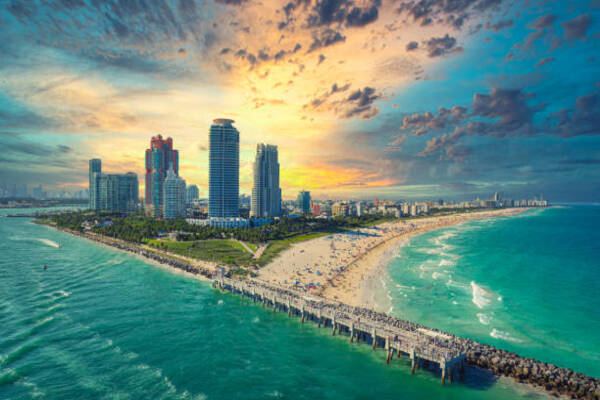
Tourism is one of the key economic drivers in Florida. The sector is responsible for approximately 10 percent of the Gross State Product (GSP), employs millions, and contributes billions to the state's economy. But how are things in the sector? It depends on the day, what you're reading or what you're watching: the industry in Florida is either booming or in a vulnerable situation. Here are two examples: Rising tariffs, visa delays, and shifting global travel trends have created a perfect storm, leading to a sharp drop in tourist numbers across Florida and several other U.S. states. The U.S. tourism industry is facing unprecedented challenges as international visitors choose alternative destinations amid political and economic shifts. According to recent data from the U.S. Travel Association, international visits to the U.S. saw a 14% decline in March, reflecting a broader global trend. However, the most significant impact has been felt among Canadian travelers, with a staggering 20.2% decrease in the number of Canadians visiting the U.S. This marks a troubling shift for the U.S., which has long relied on its neighboring country as a key source of international tourism. Florida, which has seen a decrease in tourism since the pandemic, is now facing a compounded crisis. The state, which historically attracted millions of international visitors, is seeing fewer long-term snowbirds, as well as a general decline in international arrivals. The state’s tourism sector, once a booming economic engine, is facing significant challenges. With both fewer foreign visitors and changes in local tourism trends, the state’s economy is under increasing strain. According to the World Travel & Journalism Council, the U.S. is on track to lose more than \$12 billion in international travel spending this year alone due to the decline in visitor numbers. June 06 - Travel and Tour World Whereas government officials are painting a very different picture. Florida welcomed 143 million visitors in 2024, setting a new tourism record for the state. State officials said this is the most visitors in a single year in Florida's history. The trend isn't slowing down, as more than 41 million people visited Florida in just the first three months of this year. May 21 - ABC News So there are questions that need to be answered: What is the current state of tourism in Florida? Have tariffs impacted visits from abroad? Does the high US dollar have anything to do with fewer people coming to the Sunshine State from outside of America? Has domestic travel increased with more Americans choosing Florida as a destination? If the sector is suffering from a decline in visitors, how can it adapt to be more attractive to tourists? If you are a reporter following the tourism industry - we're here to help. Peter Ricci is the Director of the Hospitality and Tourism Management program in Florida Atlantic University’s College of Business. He is a hospitality industry veteran with more than 20 years of managerial experience in segments including food service, lodging, incentive travel and destination marketing. Peter is available to speak with the media about tourism in Florida and the potential for gambling. Simply click on his icon to arrange an interview.


Lending Survey Results Reveal Recent and Dramatic Concern Due to Tariff Policy
Global consulting firm J.S. Held releases its proprietary “Lending Climate in America” survey results from Phoenix Management, a part of J.S. Held. The second quarter survey results highlight lenders’ views on important issues, including policy decisions along with their national and global impact. Each quarter, Phoenix Management, a part of J.S. Held, surveys lenders to identify important trends focused on the latest economic issues, business drivers, and credit trends in the current lending climate. The “Lending Climate in America” survey provides valuable information to lenders, attorneys, private equity sponsors, and the financial news media, exploring topics like: What factors do lenders see as most likely to impact the US economy in the next six months? Phoenix’s Q2 2025 “Lending Climate in America” survey asked lenders which factors could have the strongest potential to impact the economy in the upcoming six months. Sixty-seven percent of lenders are paying the most attention to the possibility of a U.S. recession, while 40% of lenders believe overall political uncertainty has the strongest potential to impact the economy. Lenders also expressed moderate concern regarding the possibility of constrained liquidity in capital markets. To see the full results of Phoenix’s “Lending Climate in America” Survey, please visit: https://www.phoenixmanagement.com/lending-survey/ What shifts do lenders observe in their customers’ hiring and capital improvement plans? Lenders revealed what actions their customers may take in the next six months. Over half of the surveyed lenders believe their customers will raise additional capital. Most telling was that lenders believe only 3% of their customers have plans to hire new employees (down from 56% in 1Q) and only 23% have plans for capital improvements (down from 67% in 1Q). Which industries are expected to see the most volatility over the next six months? For the first time in recent memory, the 3 industries that respondents identified as most likely to experience volatility in the next six months were different from the prior quarter - consumer products (60.0% versus 20.7%), retail trade (43.3% versus 31.0%), and manufacturing (33.3% versus 20.7%). How do lenders plan to adjust their loan structures? Additionally, Phoenix’s “Lending Climate in America” survey asked lenders if their respective institutions plan to tighten, maintain, or relax their loan structures for various sized loans. For larger loan structures (greater than $25M), the plan to maintain loan structures remained relatively constant from Q1 to Q2, decreasing by 8 percentage points. As loan sizes decrease, the percentage of lenders that plan to maintain (as opposed to increase) their loan structures increased – quite dramatically in the under $15M range. How has lender sentiment toward the US economy changed from Q1 to Q2? Lender optimism in the U.S. economy decreased for the near term, moving from 2.33 in Q1 2025 to 2.10 in Q2 2025. In this current quarter, there is heavy expectation of a C level performance (63%), with the remainder split between D and B levels. More telling, lender expectations for the U.S. economy’s performance in the longer term increased sharply from 2.11 to 2.53. Of the lenders surveyed, 57% believe the U.S. economy will perform at a B level during the next twelve months, a hefty increase from the prior quarter. The “Lending Climate in America” survey is administered quarterly to lenders from various commercial banks, finance companies, and factors across the country. Phoenix Management, a part of J.S. Held, collects, tabulates, and analyzes the results to create a complete evaluation of national attitudes and trends. To view the full results, click on the button below: To connect with Michael Jacoby or for any other media inquiries, please contact: Kristi L. Stathis, J.S. Held +1 786 833 4864 Kristi.Stathis@JSHeld.com

J.S. Held Announces the First Global Consulting Company Chief Intellectual Property Officer
Global consulting firm J.S. Held proudly announces the appointment of intellectual property (IP) expert James E. Malackowski as the first Chief Intellectual Property Officer (CIPO) of a global consulting company. J.S. Held Chief Executive Officer Lee Spirer observes, “In today's knowledge-based economy, the role of CIPO serves an important strategic and operational role both internally and in support of clients.” Protecting J.S. Held Intellectual Property and Other Intangible Assets J.S. Held experts have developed methodologies, frameworks, proprietary tools, and research that support client work. The CIPO partners across the business to ensure that these intangible assets are identified, protected, and leveraged to benefit the business. “Having dedicated IP leadership will help the company move faster in developing and deploying new methodologies, while ensuring reasonable measures of protecting our innovations,” noted James E. Malackowski. Managing J.S. Held Intellectual Property and Other Intangible Assets J.S. Held maintains a robust portfolio of patents including a “System and Method for Financing an Insurance Transaction”, trademarks, data, trade secrets, and other proprietary technologies that support client work. “As CIPO, I intend to partner with company leadership and our professional experts across the globe to manage and monetize the many patent, trademark, data, and other proprietary assets that set J.S. Held apart among our competitors, benefitting clients and our investors,” added James E. Malackowski. Industry’s Most Comprehensive Global Intellectual Property Consulting Group Ocean Tomo, a part of J.S. Held, is rooted in an expansive understanding of intellectual property (IP) value and risk, providing a foundation of Expertise for the Innovation Economy™. Built upon more than three decades of experience assessing IP in the most rigorous of venues - state, federal, and international courts, Ocean Tomo clients benefit from continuous feedback between litigation economic damage outcomes, transaction pricing, capital market valuations, debt financing terms, equity assessments, and deep technical insight. The team possesses the most comprehensive and market-tested understanding of IP value. Financial, market, and technical experts uniquely understand the contributory value of patented inventions, know-how, brands, and copyrights that permeate every business, viewing IP not simply as an isolated asset, but as an integral component of enterprise value. Multidimensional Intellectual Property-Informed Experts Benefit J.S. Held Clients Intellectual property expertise permeates the global organization. Beyond the expertise within J.S. Held’s dedicated IP practice Ocean Tomo, a part of J.S. Held, multidisciplinary experts across J.S. Held combine intellectual property expertise to core specializations, including: • Artificial Intelligence (AI) • Business Intelligence • Construction Advisory • Enterprise Risk Management • Fraud Investigations • Forensic Accounting • Insurance Claims Consulting • Restructuring, Turnaround, Receivership, and Bankruptcy Tangible and Intangible Asset Value Understanding The depth and breadth of J.S. Held’s work in the property and casualty insurance market and Ocean Tomo’s work across all forms of intellectual property and other intangible assets uniquely combine to create a strong foundation in risk assessment, data analysis, global awareness, regulatory compliance, technological adaptability, and risk mitigation. Collectively, these skills better equip J.S. Held experts to assess business risk across diverse geographies, geopolitical landscapes, regulatory frameworks, and technological advancements for the benefit of our clients. Learn more about the new J.S. Held Chief Intellectual Property Officer, James E. Malackowski: Looking to know more or connect with James E. Malackowski? Simply click on the expert's icon now to arrange an interview today. For any other media inquiries - contact : Kristi L. Stathis, J.S. Held +1 786 833 4864 Kristi.Stathis@JSHeld.com

Supply Chain Report: Logistics Leaders Predict Tight Capacity, High Prices Through Mid-2026
The Logistics Managers’ Index rose for the second consecutive month due to rising costs as the economy remains uncertain, according to researchers at Florida Atlantic University and four other schools. May’s index read in at 59.4, up slightly from April’s reading of 58.8. The reading is up 3.8 from the year prior. A score above 50 indicates that the logistics industry is expanding, while a score below 50 indicates that the industry is shrinking. Costs, particularly inventory costs, led to this month’s expansion. Inventory costs rose to 78.4, the highest level since October 2022, while inventory levels were only 51.5. The gap between the two suggests that many inventories are sitting stagnant. “The persistent uncertainty with respect to tariffs seems to be causing upward pressure on inventory costs, likely because of stockpiling effects,” said Steven Carnovale, Ph.D., associate professor of supply chain management in the College of Business. “The previous pause on tariffs opened up an opportunity to stockpile, which is also likely reflected in the rise in warehousing utilization and costs, as well as the rise in upstream warehouse utilization.” The LMI, a survey of director-level and above supply chain executives, measures the expansion or contraction of the logistics industry using eight unique components: inventory levels, inventory costs, warehousing capacity, warehousing utilization, warehousing prices, transportation capacity, transportation utilization and transportation prices. Along with FAU, researchers at Arizona State University, Colorado State University, Rutgers University and the University of Nevada at Reno calculated the LMI using a diffusion index. Warehousing readings also point to further uncertainty among firms on the direction of the U.S. economy and tariff policy. Warehousing capacity was flat at 50, while warehousing costs and warehousing utilization read at 72.1 and 62.5, respectively. The readings suggest that inventories are sitting longer amid slower consumer demand and firms have been holding goods in anticipation of future tariff changes. “At a certain point, the see-saw effect of increased/decreased tariffs is likely going to lead to firms stockpiling when tariffs come down, and likely be forced to sit on excess inventory,” Carnovale said. “In this case, the decision will be: are the holding costs of excess inventory less than the (potential) future tariffs? And to what degree will these increased prices pass through to consumers?” Overall, respondents expect inventory levels to increase in the year ahead, with capacity growing tighter and costs expanding, highlighting the overall sentiment that trade issues and uncertainty will be wrapped up by the end of the year. Looking to know more - we can help. Steven is a supply chain strategist specializing in interfirm networks, risk management and global sourcing/production networks. He is available to speak with media. Simply click on his icon now to arrange an interview today


Since its creation in 1792, the penny has had a notable role in American currency. But 2026, will mark the end of the one cent after 233 years. In June of 2025, the U.S. Treasury made its final order for penny blanks. The U.S. Mint stated that it's lost $85.3 million on the 3.2 billion pennies they produced in the 2024 fiscal year. It is estimated that the government will save $56 million annually once the production of the penny stops. The penny was one of the first coins produced by the U.S. Mint in 1792 and was originally designed by Benjamin Franklin. Since then, the penny has been used to mark significant events in American history as its design has changed over the years. The penny, starting in 1857, has been the smallest form of currency used in America. Now the nickel will become the smallest coin to be used in cash purchases. With this change it is expected that getting your exact change will become difficult, causing businesses to either round up or round down to the nearest five cents. Dr. Jared Pincin is an expert on economics and is available to speak to media regarding penny production and the economy – simply click on his icon or email mweinstein@cedarville.edu to arrange an interview.


What's That Smell? Something is Rotten and Florida Atlantic's Seaweed Expert has the Answers
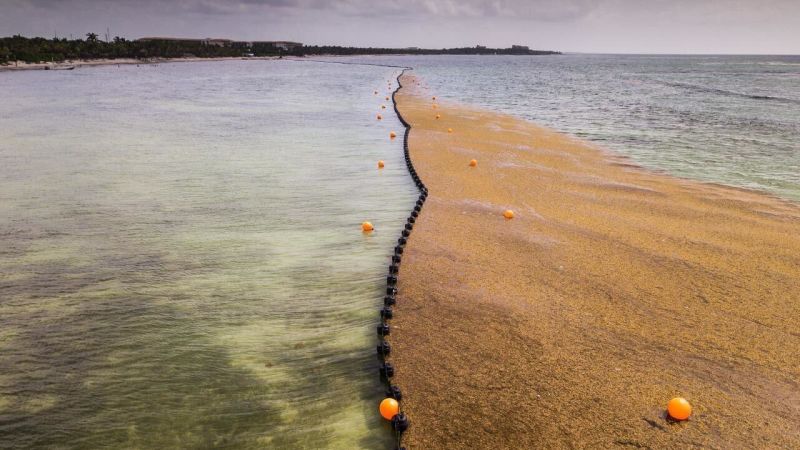
It’s back…and bigger than before. This summer, Floridians can expect a record amount of it! Sargassum, it smells like rotting eggs and a 'mega bloom' of the algae is expected to wash up on beaches soon. Sargassum is essentially a brown seaweed and also a type of algae. When out at sea, it's an essential item that helps feed fish, turtles, crabs and an array of ocean life. But once it hits land, it begins to rot and can be at the very least annoying and even potentially dangerous to humans by emitting harmful gases. The topic is getting a lot of media coverage - with reporters connecting with experts like Florida Atlantic's Brian LaPointe to get the answers and explanations they need. The Atlantic Ocean has a toxic seaweed problem. Floating in brown islands of algae, this year’s sargassum bloom has already broken its own size record by millions of tons — and the growing season isn’t done yet. Now stretching across some 5,500 miles of ocean, the annual bloom is more than just an eyesore: Sargassum hurts ecosystems and economies wherever its overgrown arms reach. And they are spreading into Florida’s waterways, coating marinas and beaches in the Miami area. “Sargassum goes from being a very beneficial resource of the North Atlantic to becoming what we refer to as … a harmful algal bloom, when it comes ashore in excessive biomass,” said Brian LaPointe, a research professor at Florida Atlantic University’s Harbor Branch Oceanographic Institute. For more than a decade, Atlantic coastal communities have been inundated by more and more sargassum. Images of white sand beaches stretching into azure waters have been altered by the toxic and putrid invasion. In the water, it’s home to larvae and other organisms that can irritate the skin of any passing swimmers. As it rots on shore, it emits harmful gases— an infamous stench. It’s a blight on beaches that repels tourists during the high-travel season, ultimately hurting towns that rely on tourism to fuel their economy. Rising ocean temperatures due to human-caused climate change have spurred this sargassum surplus, supercharging the seaweed. In April, the University of South Florida estimated this year’s bloom is already at 31 million tons — “40% more” than the previous record from June 2022, according to LaPointe. May 15 - CNN Looking to know more? We can help. Brian LaPointe is available to speak with media about seaweed, sargassum and what beachgoers can expect this summer in Florida. Simply click on his icon now to arrange an interview today.


When an invitation to sit on the Georgia Governor’s Council of Economic Advisers arrived in an informal email from a colleague, Michael Toma, Ph.D., welcomed the chance to share his ongoing research on the economic health of southeastern Georgia with Gov. Brian Kemp, the Georgia House of Representatives and Senate leadership and their constituents. However, when he joined a small group of colleagues from around the state in a legislative office near the capitol in Atlanta late last year, the opportunity felt far from casual. “It does seem like it’s an honor because I looked around the table and there were only 10 or so of us from the entire state of Georgia,” said Toma, the Fuller E. Callaway professor of economics in Georgia Southern University’s Parker College of Business. “It’s nice to be invited to join this council informing the executive and legislative branches of government about economic conditions in the state of Georgia. I know the southeastern part of the state, so it’s nice to be recognized and be invited to speak about this region to a state-level audience.” The Governor’s Council of Economic Advisers is a select group of mostly higher education economists from various University System of Georgia institutions, in addition to the chief economist from Georgia Power, who meet annually. Toma, who specializes in macroeconomics and regional economics, is well known for his expertise throughout Savannah and the surrounding region. Since 2000, he has written and distributed The Economic Monitor, a quarterly publication housed within Georgia Southern’s Economics Department and Center for Business Analytics and Economic Research. The economic analysis offers a snapshot of the Savannah Metropolitan Statistical Area economy, including Bryan, Chatham and Effingham counties, and informs business owners across the Coastal Empire. He also regularly speaks to chambers of commerce and business groups in the region. In the governor’s council meeting, which was televised to state legislators, the economists took turns speaking about their respective areas of expertise to Gov. Kemp as part of an educational process and annual update for the executive and legislative branches. “The academics from the different institutions discussed economic conditions in their regions of the state,” Toma said. “I highlighted the activity here in Savannah, the growing manufacturing base and the wages associated with the Hyundai plant being injected into the regional economy, and the build-out of the supply chain for the Hyundai plant. “I discussed manufacturing development in the context of broader economic growth within the region that’s layered on top of our normal growth pattern, and that the economic development initiative is starting to pay the dividends it was anticipated to pay.” Following each individual presentation, the governor held an open forum for all in attendance to speak more fluidly with the group. “He had questions for the panel in general about small business activity,” stated Toma. “So I was able to characterize the ecosystem for small businesses in Chatham County. “He said that was a great report.” Toma holds a Ph.D. in economics from George Mason University. He joined Georgia Southern on the Armstrong Campus in Savannah in 1997. If you're interested in learning more about this topic and want to book time to talk or interview with Michael Toma then let us help - simply click on his icon now or contact Georgia Southern's Director of Communications Jennifer Wise at jwise@georgiasouthern.edu to arrange an interview today.