
Experts Matter. Find Yours.
Connect for media, speaking, professional opportunities & more.

Tick Population Surge Raises New Lyme Disease Concerns
A surge in tick activity across Connecticut is renewing concerns about Lyme disease, prompting experts to examine the environmental factors driving tick populations, the challenges of prevention, and the future role of vaccines. Recently reported by CT Community News and CTNewsJunkie, researchers are seeing unusually high numbers of ticks infected with the bacteria that causes Lyme disease, with infection rates reaching levels typically not observed until peak season. Experts point to a combination of environmental conditions, including a snowy winter that insulated overwintering ticks, milder seasonal temperatures, and continued residential expansion into wooded areas where ticks thrive. According to Dr. David Banach, an infectious disease specialist and epidemiologist at UConn Health, the increase in Lyme disease cases is influenced by multiple factors. While improved reporting may account for some of the rise, environmental conditions continue to play a significant role in the number of infections seen by clinicians each year. “Lyme disease is chronically underreported.” Dr. David Banach Dr. David Banach is an infectious diseases physician who leads UConn Health's Infection Prevention Program and serves as hospital epidemiologist. View his profile The article also explores ongoing efforts to develop new Lyme disease vaccines. Dr. Paulo Verardi, head of UConn's Department of Virology and Vaccinology, notes that vaccines could become an important tool in reducing disease risk, but cautions that vaccination alone will not solve the broader challenge posed by expanding tick populations and changing environmental conditions. Effective control, he argues, will require a combination of public education, land management, and efforts to reduce tick abundance. “To really control tickborne diseases, there needs to be more land management, public education and a drop in the overall tick population.” Dr. Paulo Verardi Dr. Paulo Verardi is a virologist who specializes in vaccine research and development. He is a Department Head and Associate Professor at UConn and a member of the Center of Excellence for Vaccine Research. View his profile As Lyme disease continues to spread across North America, understanding the intersection of climate, ecology, public health, and vaccine development is becoming increasingly important. Researchers are working to better understand why tick populations are expanding, how disease risk is changing, and what strategies can best protect people who live, work, and spend time outdoors. Covering Lyme or other tickborne diseases? We can help. To learn more about Lyme disease, tick-borne illnesses, vaccine development, infectious disease trends, and public health preparedness, connect with experts such as Dr. David Banach and Dr. Paulo Verardi, whose research and expertise help explain the growing challenges posed by tick-borne diseases.


Make your university the visible authority
DATA & TIME Monday, June 22, 2026 - 11:00 am EDT (1 hour) Your university has the expertise. The question is whether the world can find it. In this webinar, we'll show you exactly how leading institutions are building topical Authority Hubs that get their faculty in front of journalists, students, and partners at the moments that matter most. We'll walk through three real examples: Performing Arts -- Carnegie Mellon University The exclusive higher education partner of the Tony Awards since 2014. With 60+ alumni wins and 15 consecutive years of nominations, CMU built an Authority Hub that makes decades of genuine institutional strength finally visible and media-ready. Papacy & Catholic Studies -- Villanova University When Pope Leo was elected, Villanova had qualified scholars ready. Their topical hub connected journalists with the right experts within hours -- showing what it looks like when a university moves at the speed of the news cycle. Sports Events & Research -- University of Delaware Multiple topical hubs built around major events and enduring institutional strengths -- serving media relations, prospective students, and research partners with one repeatable, scalable approach. WHAT YOU'LL LEARN How to identify the moments and topics where your institution already has authority How to structure faculty expertise so journalists and AI platforms can find it How to go from idea to live hub fast -- without technical resources or coding What makes an Authority Hub perform over time, not just at launch WHO SHOULD ATTEND University communications and media relations teams, research communications leads, and anyone responsible for faculty visibility and institutional reputation.



Georgia Southern recognized by Forbes on list of America’s Best Employers for Company Culture 2026
Georgia Southern University has received high honors from Forbes in recognition of its commitment to institutional culture with the recent announcement of the publication’s list of “America’s Best Employers for Company Culture 2026.” Out of 600 companies on the list, Georgia Southern impressively landed in the top tier at #33. “At Georgia Southern, we prioritize investing in our people, being accountable leaders, and fostering an environment of high performance, evidenced by results aligned with institutional goals and ultimately, student success. It is that alignment and commitment to continuous growth (growing ourselves to grow others) that creates a positive institutional culture at Georgia Southern University,” said Georgia Southern University President Kyle Marrero. “The successful implementation of our strategic plan and the achievement of our institutional goals, aligned with our strategic priorities, are only accomplished if each and every faculty and staff member is actively engaged.” This is the second year Forbes has published the list, and the University was recognized this year for the first time. Representing the education industry, Georgia Southern was second on the list behind Columbia University (#10). Marrero emphasized that persistent efforts to strengthen institutional culture must produce measurable results that positively impact faculty and staff. To support this, the institution tracks its initiatives, evaluates them through ongoing feedback, and uses key performance indicators to assess their effectiveness. “A positive culture is maintained through continuous communication and connecting to the ‘why’ and ‘how,’ empowering the collective intellect to help be part of solving the challenges (solve and evolve),” he added. “We are in this together, always focused on the ‘why’ of student success!” Georgia Southern University has also been recently recognized on the Forbes lists for America’s Best Large Employers 2026 (#171), America’s Best Employers by State 2025 (#58 – Georgia), and America’s Top Colleges 2026 (#243 in Research Universities and #100 in the South). Looking to know about these awards or Georgia Southern University? Simply contact Georgia Southern's Director of Communications Jennifer Wise at jwise@georgiasouthern.edu to arrange an interview today.


Georgia Southern selected as Census Bureau hub
Georgia Southern University’s Statistical Consulting Unit (SCU) in the College of Science and Mathematics has been selected as the Census Bureau Higher Education Consortium – Southern Hub. The partnership places the University as an access point between regional experts and the public to make the vast data of Census reports usable for research, business and individual discovery. SCU director Divine F. Wanduku, Ph.D., says that cooperation is the key element of the program. “We want to facilitate high-level access to this data and the tools to apply it,” noted Wanduku. “We are the liaison between other universities, the government and those who could use this information if they can learn how it works.” As a regional Census hub, Georgia Southern will host a series of webinars. Experts from Georgia Southern, partner universities and the Census Bureau will address specific methods to access and analyze otherwise overwhelming data. Wanduku says the partnership opens up development opportunities for everyone involved. “This will help students prepare for jobs in the federal government or anywhere that uses government data because they get to try it out themselves,” said Wanduku. “It also helps to show how faculty are able to impart knowledge of research and then make recommendations to the Census Bureau about what works. So the federal government helps higher education institutions provide access to the raw material and then we help the Census Bureau by making recommendations on where our research is going and what data is most useful.” Beyond the webinar series, Wanduku sees the partnership as a stepping stone to future collaborations. “This expands our network with everyone from other universities to contractors,” said Wanduku.”We get to meet each other and find out what we’re all working on separately and turn it into projects we can work on together.” Looking to know more about the Census Bureau Higher Education Consortium or Gerogia Southern University? Simply contact Georgia Southern's Director of Communications Jennifer Wise at jwise@georgiasouthern.edu to arrange an interview today.
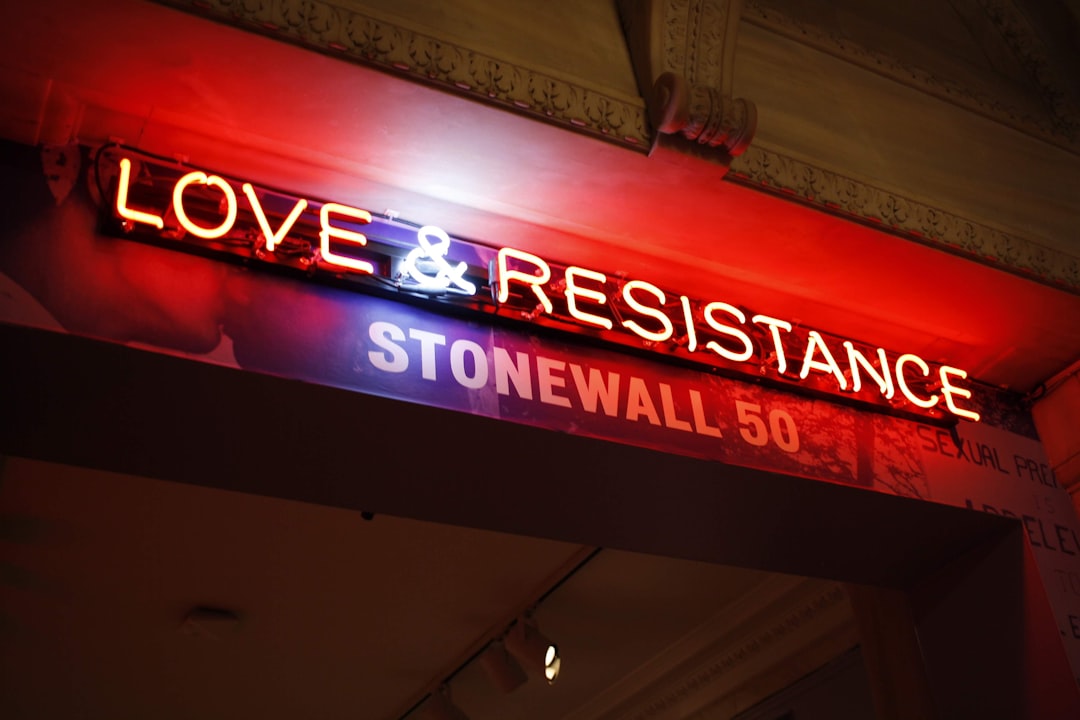
Pride Month: From Protest to Global Celebration
Pride Month is celebrated each June to honour the 1969 Stonewall Uprising in New York City, when LGBTQ+ patrons resisted a police raid at the Stonewall Inn. The uprising lasted several days and became a defining moment in the modern LGBTQ+ rights movement. One year later, the first Pride marches were held, transforming public protest into an annual call for visibility, dignity, safety, and equality. Today, Pride is marked around the world in many different ways. In Canada, the United States, and much of Europe, celebrations often include parades, festivals, concerts, flag-raisings, community events, and public education campaigns. In places such as Brazil, Mexico, South Africa, Japan, India, and Australia, Pride can blend celebration with activism, reflecting local histories, cultures, and legal realities. In countries where LGBTQ+ rights remain restricted or unsafe, Pride may take the form of smaller gatherings, private events, online campaigns, or human-rights advocacy rather than large public parades. What makes Pride powerful is that it is both celebration and protest. It recognizes progress, honours those who fought for change, and draws attention to the discrimination, violence, and legal barriers still faced by LGBTQ+ people in many parts of the world. For journalists, Pride Month offers a timely opportunity to explore history, human rights, culture, public policy, youth identity, corporate participation, faith communities, education, health, and the changing meaning of inclusion across borders. Connect with experts who can speak to the history of Pride, LGBTQ+ rights, identity, culture, and how communities around the world continue to mark this important month. Discover all of our experts here: www.expertfile.com

Georgia Southern University has named Jennifer Schroeder, Ph.D., as dean of the Jack N. Averitt College of Graduate Studies, effective July 1. Schroeder will lead efforts to expand graduate education, enhance student success and strengthen research and workforce alignment across the university. Schroeder joins Georgia Southern from East Texas A&M University, where she serves as dean of the Graduate School, supporting more than 3,000 graduate students across a wide range of programs. Throughout her career, she has focused on improving access to graduate education, strengthening academic programs and building systems that support student success. “Dr. Schroeder brings a strong record of leadership in graduate education and a deep commitment to student success,” said Avinandan Mukherjee, Ph.D., provost and executive vice president for Academic Affairs. “Her collaborative approach, experience in program innovation and focus on aligning graduate education with workforce needs make her an outstanding addition to Georgia Southern. I am confident she will play a key role in advancing our graduate and research programs and expanding opportunities for our students.” Schroeder is recognized for her ability to bring together faculty, staff and institutional partners to create new opportunities for students. During her tenure at East Texas A&M, she helped launch a master’s degree in artificial intelligence and worked across campus to enhance admissions processes, student support services and program development. Her background includes experience as a program coordinator, department head and dean, with academic training in school psychology. Her leadership reflects a commitment to access, quality and innovation in graduate education. “I am excited to begin this new chapter at Georgia Southern University,” said Schroeder. “I’m looking forward to working with faculty, staff and students to build on the university’s strong foundation and advance graduate education to expand opportunity, strengthen research and support student success.” Schroeder’s appointment marks a continued investment in graduate education at Georgia Southern, positioning the University to meet evolving student and workforce needs while strengthening its academic and research mission. Looking to connect with Jennifer Schroeder in person or virtually? Simply contact Georgia Southern's Director of Communications Jennifer Wise at jwise@georgiasouthern.edu to arrange an interview today.
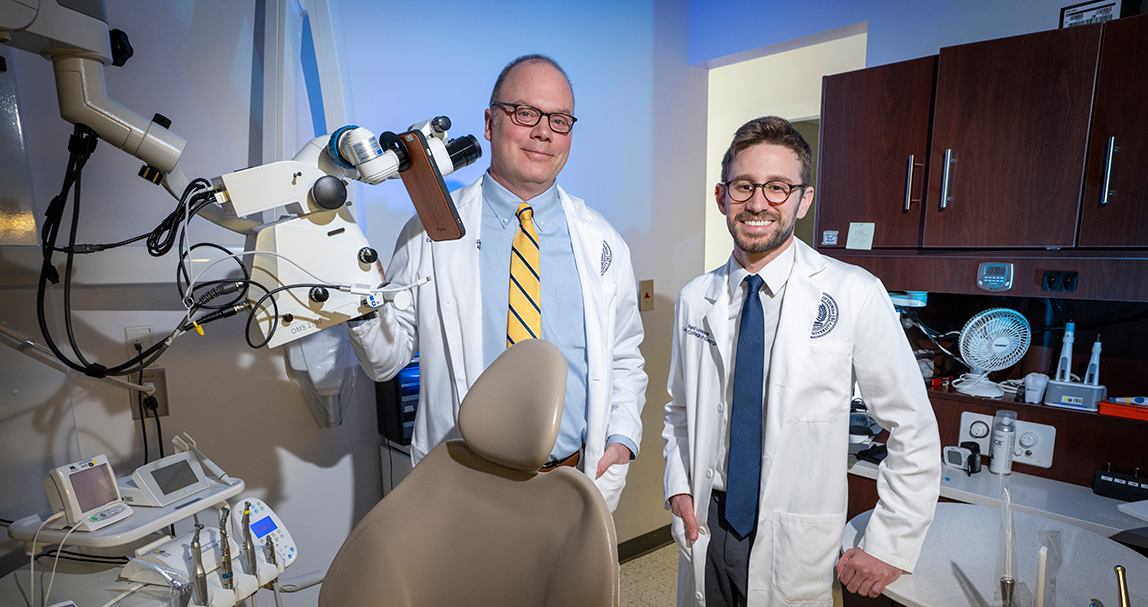
Beyond the Chair: How AI Is Transforming Modern Dentistry
A recently published article from Augusta University’s Jagwire is highlighting how artificial intelligence is rapidly changing the future of dentistry not only in patient care, but also in education, research and clinical decision-making. The article features insights from Theodore Ravenel and third-year dental student Reid Loveless, who discuss both the opportunities and risks associated with AI integration in the profession. Ravenel explains how AI-powered tools are already assisting dentists with cavity detection, orthodontic planning, bone-loss analysis, and treatment forecasting, while also helping researchers process enormous amounts of clinical data more efficiently. He also emphasizes the importance of ethical safeguards, patient privacy and ensuring that AI tools are trained using diverse and accurate datasets. “It is really reshaping dentistry and how we practice dentistry.” Theodore Ravenel, DMD Loveless offers the perspective of a future clinician learning in an increasingly technology-driven environment. He describes how AI-supported educational tools developed by faculty such as Rafael Pacheco are helping students navigate complex patient scenarios, receive immediate feedback, and strengthen clinical reasoning skills. The article also highlights emerging technologies being used at the Dental College of Georgia, including virtual reality simulators and AI chatbots that provide students with real-time evaluations of dental procedures. Researchers such as Zoya Kurago are also leveraging AI to analyze large-scale datasets tied to cancer and oral disease research. Despite the excitement surrounding these advances, the article stresses that AI is intended to support, not replace, human clinicians. Empathy, communication and patient trust remain essential components of quality care. To learn more about how Augusta University is preparing future dental professionals for an AI-driven healthcare landscape, contact Rafael Pacheco at rapacheco@augusta.edu.


Abhijit Bhattacharyya, Ph.D., has been named the next dean of Georgia Southern University’s Allen E. Paulson College of Engineering and Computing. He will begin his role July 1. Bhattacharyya currently serves as the inaugural dean of the College of Engineering and Computer Science at Arkansas State University, where he has led a period of strategic growth focused on student success, workforce development and research expansion. During his tenure, the college launched new academic programs in high-demand fields, strengthened industry partnerships and advanced initiatives supporting student recruitment, retention and career readiness. “I have the honor and privilege to join Georgia Southern at an exciting time in its journey as it soars beyond its current very strong position in the state of Georgia,” said Bhattacharyya. “The energy on campus and within the college was palpable during my visit, and I look forward to working alongside my colleagues to build on that strong foundation and create a national brand.” Prior to his current role, Bhattacharyya held several leadership positions at the University of Arkansas at Little Rock, including interim vice provost for Research and dean of the graduate school, as well as associate dean of Engineering and Information Technology. He began his career as a faculty member committed to teaching, research and service, and remains an active scholar with externally funded research from federal agencies. Bhattacharyya earned his Ph.D. in mechanical and aerospace engineering from Rutgers University, along with a master’s degree in applied mechanics. He also holds a bachelor’s degree in mechanical engineering from the Indian Institute of Technology, Kharagpur. He is a fellow of the American Society of Mechanical Engineers and serves as an ABET program evaluator. Provost and Executive Vice President for Academic Affairs Avi Mukherjee, Ph.D., said Bhattacharyya’s experience and leadership align strongly with the University’s strategic priorities. “Dr. Bhattacharyya brings a proven record of growing engineering education, advancing academic programs, bolstering research, managing accreditation, strengthening industry partnerships and positioning engineering and computer science for long-term impact,” said Mukherjee. “His commitment to faculty excellence, student success and workforce development will be instrumental as we continue to expand opportunities for our students and elevate the national profile of the Allen E. Paulson College of Engineering and Computing.” Looking to connect with Abhijit Bhattacharyya? Simply contact Georgia Southern's Director of Communications Jennifer Wise at jwise@georgiasouthern.edu to arrange an interview today.

Approximately 4,400 degrees conferred during Georgia Southern’s 2026 Spring Commencement ceremonies
Last week, approximately 4,400 graduates from Georgia Southern University’s Statesboro, Armstrong, Liberty and Swainsboro campuses received associate, baccalaureate, masters, specialist and doctoral degrees in five Spring 2026 Commencement ceremonies. Georgia Southern President Kyle Marrero welcomed the graduates and their guests to the ceremonies, held at the Allen E. Paulson Stadium and Jack and Ruth Ann Hill Convocation Center in Statesboro, Enmarket Arena in Savannah and East Georgia Campus in Swainsboro on May 11, 13 and 14. “To our graduates, congratulations,” Marrero welcomed the crowds. “Today we recognize and honor your hard work, perseverance and personal growth throughout your academic journey. The road to this moment has not been without its challenges, and your presence here is a reflection of your dedication, resilience and strength. You have every reason to be proud. This commencement is a meaningful milestone not only for each of you personally, but for the entire Georgia Southern community.” The Commencement speakers included: Bob Somers (’83) Nick Westbrook (’20) Berry Aldridge (’15) Kim Hartsock (’20, ’21) Rep. Butch Parrish Somers opened the ceremonies at Paulson Stadium with words of encouragement for the new graduates. “While this day marks your formal education coming to a close, the truth is your education and life is just now beginning,” he said. “When I look out at you, I don’t look at graduates. I see future leaders. And our future is bright because of what you’re going to bring to this world. “Georgia Southern gave me structure, opportunity and people who believed in me. One of my proudest moments was graduating from this incredible institution. Find your north star. What kind of person are you? What are your values? Be genuine with yourself and others. If you’re authentic, people will trust you and they will follow you. Be comfortable being uncomfortable. Real leadership requires vulnerability.” Westbrook relayed the importance of service and character alongside leadership. “You will have the opportunity to influence people, organizations, companies and industries,” he said. “Use that influence for good. Your opportunity will not only be for a better job, more income or a higher position. The highest calling of your opportunity will be what you can do for the people who are affected by your influence. In a world that is becoming increasingly transactional, be the leader that goes the extra mile to make your world a little more relational, more kind, more human.” Aldridge enthusiastically challenged graduates to consistently recalibrate the way they think, and to consciously surround themselves with support. “Class of 2026, you’ve accomplished something incredible, but you’ve done it during a very strange and chaotic time in history,” he said. “I’m not breaking any news when I say that we are standing on the edge of a massive change to our jobs, our technology, our society. “I don’t know how AI is going to change the way we work or influence the job market. I challenge you to be skeptical even in your own most passionately held beliefs. That’s the only way to keep ourselves in check, and it’s the only way to keep ourselves growing. Nurture three types of relationships — one who lifts you up, another who tells you the truth, and one who will always show up — in order to succeed, he continued. And then be that person for others. Hartsock reflected on the generational impact of earning a degree. “For some of you, this is not just a personal achievement, it’s a historic one,” she shared. “You may be the first in your family to earn a college degree, and that accomplishment carries special significance. You are changing the trajectory of your family and setting an example for generations to come.” She asked them to be intentional about who they learn from. “Seek out people who can teach you things that books never will,” she said. “It’s important to look for leaders whose lives are marked not only by achievement, but also by joy and purpose. “Invest in this university. Join the alumni association. Help recruit future Eagles. Create a scholarship. Create opportunities for students to learn from you and work with you. Stay involved,” she said. “You never know, 25 years from now, you might be standing right here where I am. Congratulations, class of 2026 and Hail Southern!” In the closing ceremony in Swainsboro, Parrish encouraged graduates to continue learning. “Today is by no means an end,” he said. “It’s just the beginning. Your education has prepared you for what lies ahead. Your education allows you to create your own path forward. You have a unique opportunity to define your own path. You don’t have to follow anymore. Education is like insurance for whatever you’ll be facing in the future. “Education comes in many forms. There’s formal and informal, traditional, nontraditional and learned education, just to name a few. So, I encourage you to pursue a career in something that you really have a passion for and something that you really want to do. Whatever you decide to do is up to you, and your future is bright and it’s unlimited.” Video and Photo Links Spring 2026 Commencement ceremony 9 a.m. video on May 11 in Statesboro Spring 2026 Commencement ceremony 6 p.m. video on May 11 in Statesboro Spring 2026 Commencement ceremony video on May 13 in Savannah Spring 2026 Commencement ceremony video on May 14 in Statesboro Spring 2026 Commencement photos here Credit: Courtesy of Georgia Southern University Georgia Southern University, a public Carnegie Doctoral/R2 with a Carnegie Community Engagement classification, offers approximately 149 different degree programs serving nearly 31,600 students through 11 colleges on four campuses in Savannah, Hinesville, Statesboro, Swainsboro and online instruction. Founded in 1906, Georgia Southern is a leader in higher education in southeast Georgia with expert faculty and a focus on public impact research and engaging learning opportunities through knowledge and know-how that prepare our students to soar beyond and take ownership of their lives, careers and communities. Visit GeorgiaSouthern.edu.
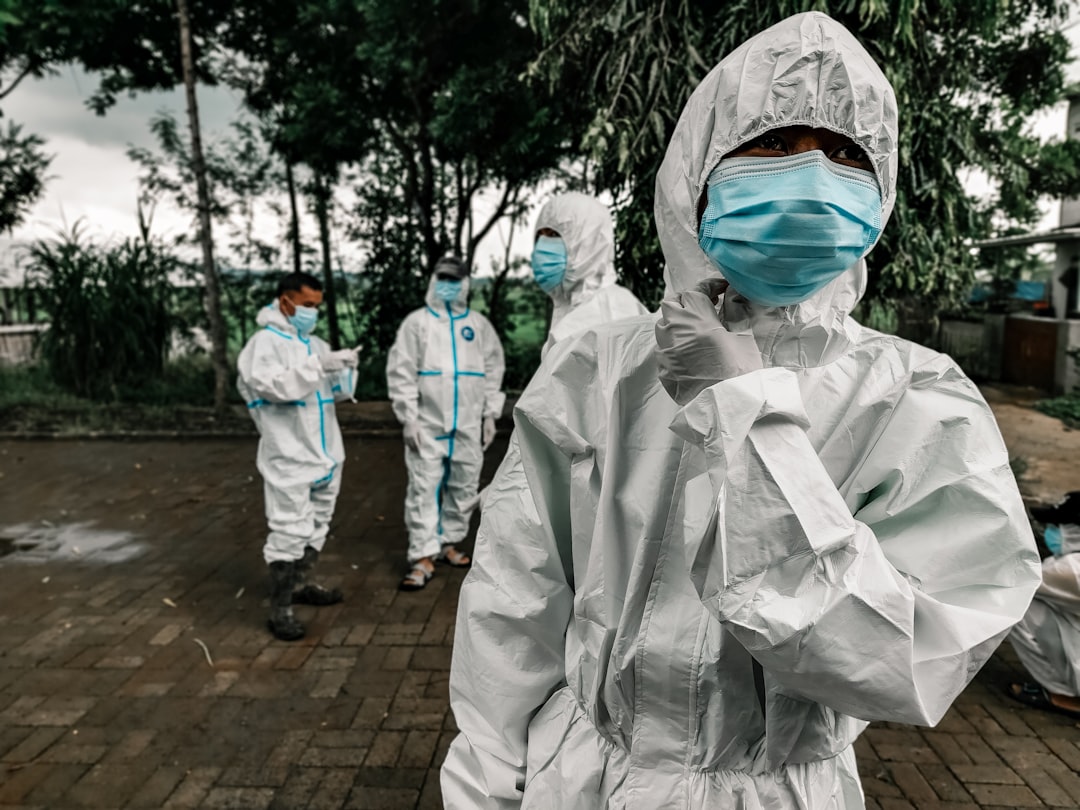
ExpertSpotlight - Ebola: What It Is, How It Spreads, and Whether the Public Should Be Concerned
Few diseases in modern history have generated the level of fear associated with Ebola. With graphic symptoms, high mortality rates, and images of overwhelmed treatment centres etched into public memory, Ebola became synonymous with the dangers of global outbreaks long before COVID-19 reshaped how the world thinks about pandemics. But what exactly is Ebola? Where did it come from? How dangerous is it today? And should the public still be worried? A Deadly Virus with a Modern Legacy Ebola virus disease was first identified in 1976 during simultaneous outbreaks in what is now the Democratic Republic of the Congo and South Sudan. The virus was named after the nearby Ebola River, and from the beginning it proved exceptionally dangerous, capable of causing severe hemorrhagic fever with fatality rates that have ranged from 25 to 90 percent depending on the outbreak and available medical care. For decades, Ebola outbreaks were typically isolated to remote regions of Central and West Africa. That changed dramatically in 2014 when the largest Ebola outbreak in recorded history spread through Guinea, Liberia, and Sierra Leone, infecting more than 28,000 people and killing over 11,000. The crisis exposed major weaknesses in global health preparedness and demonstrated how quickly infectious diseases can overwhelm healthcare systems and destabilize economies and communities. The outbreak also fundamentally changed international public health policy. Governments, hospitals, and health organizations around the world began investing more heavily in infectious disease surveillance, emergency response planning, quarantine procedures, and vaccine development. What Ebola Actually Does to the Body Ebola begins much like many common viral illnesses, which can make early detection difficult. Initial symptoms often include: Sudden fever Severe fatigue Muscle pain Headache Sore throat As the disease progresses, patients may develop: Vomiting and diarrhea Rash Liver and kidney impairment Internal and external bleeding Multi-organ failure The virus attacks the immune system and damages blood vessels and organs, often leading to shock and death in severe cases. Patients who survive can still face long-term complications including joint pain, neurological problems, eye disorders, and ongoing fatigue months or even years later. How Ebola Spreads - And How It Does Not One of the most important public health facts about Ebola is that it does not spread through the air like influenza or COVID-19. Transmission occurs through direct contact with: Blood or bodily fluids of infected individuals Contaminated needles or medical equipment Infected animals Surfaces contaminated with infectious fluids This means Ebola is highly contagious in healthcare settings and among close family caregivers without proper protective equipment, but far less transmissible in casual public settings than many people assume. Funeral practices involving direct contact with deceased individuals have also historically contributed to outbreaks in some regions, making culturally sensitive public health education critically important during containment efforts. Treatments and Vaccines Have Changed the Outlook For years, Ebola was viewed almost as a death sentence. That perception has begun to change. Major advances in medicine and outbreak response have significantly improved survival rates, including: Rapid testing and surveillance systems Specialized isolation units Improved supportive care and hydration Monoclonal antibody treatments Effective vaccines for certain Ebola strains The development of the rVSV-ZEBOV vaccine represented a major breakthrough and has helped contain several recent outbreaks before they expanded into international crises. Global health organizations are now far better equipped to identify and isolate cases quickly compared to the early years of Ebola response. Should the Public Be Worried? Ebola remains a serious and deadly disease, but experts generally emphasize that widespread public panic is not warranted. Most outbreaks remain geographically limited and are aggressively monitored by national governments, the World Health Organization, and international health agencies. Countries with advanced healthcare systems also have far stronger infection prevention and containment capabilities than existed during earlier outbreaks. Still, Ebola continues to command attention because it highlights how interconnected global health has become. International travel, fragile healthcare systems, political instability, climate pressures, and human interaction with wildlife all increase the risk of future outbreaks of emerging infectious diseases. In many ways, Ebola serves as both a warning and a lesson: deadly viruses can emerge unexpectedly, but rapid science, coordinated public health measures, and global cooperation can dramatically reduce their impact. The world’s experience with Ebola helped shape many of the outbreak response systems now used to confront emerging diseases today, and public health experts continue to view it as one of the clearest examples of why pandemic preparedness remains essential. Connect with an expert: